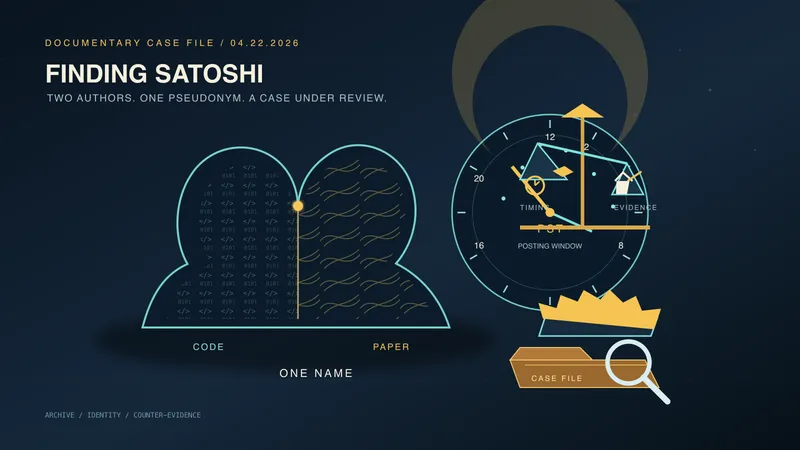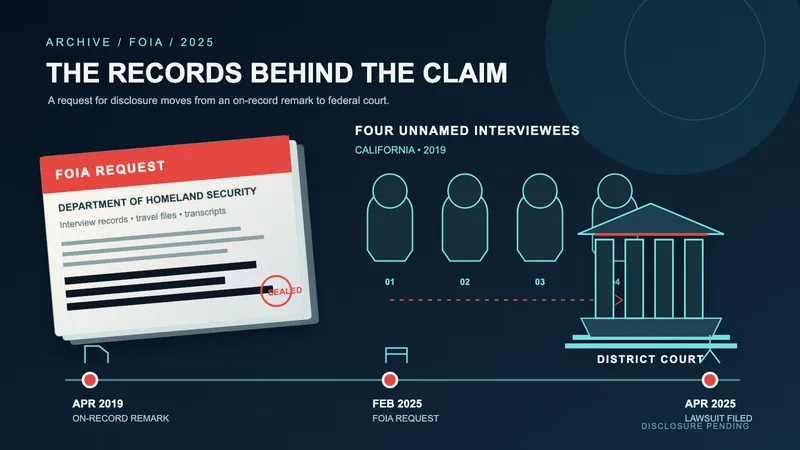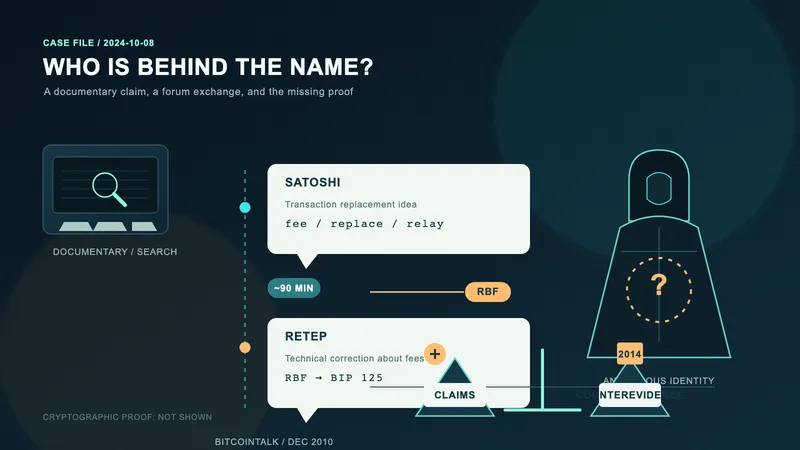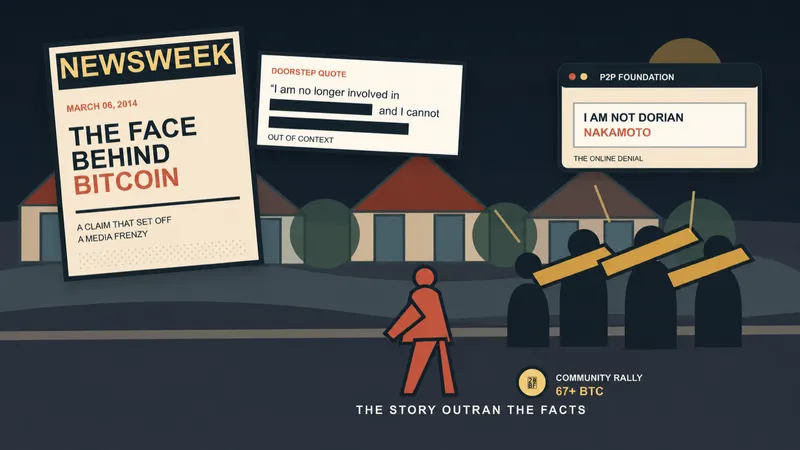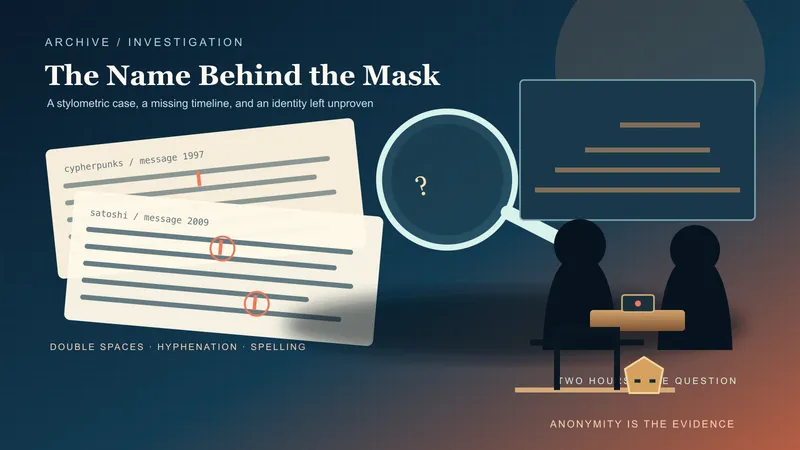

Who Satoshi Nakamoto really is remains unknown. Newsweek named the wrong man, HBO made a documentary about it, The New York Times ran its own investigation, and a UK court ruled that Craig Wright had forged evidence on a grand scale to support his claim. Even the US government has been hit with a freedom-of-information request over it. None of that has settled anything. What follows is where the record continues.
Satoshi and identity
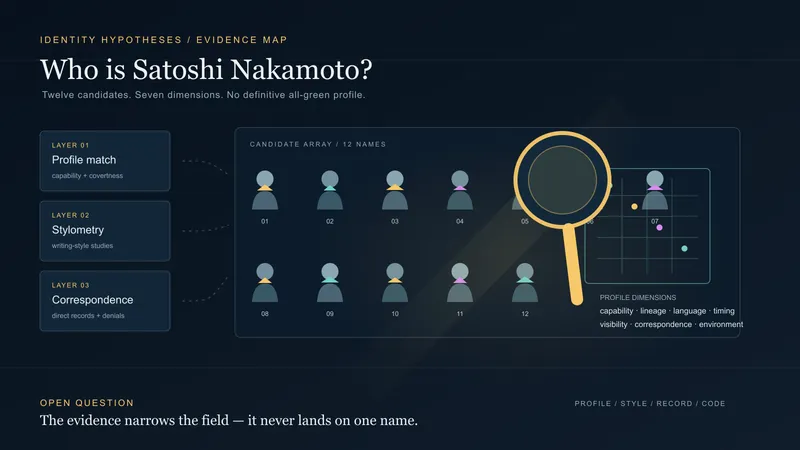
Who is Satoshi Nakamoto?
Every named candidate with a documented case in this archive is compared in one place; none is confirmed.
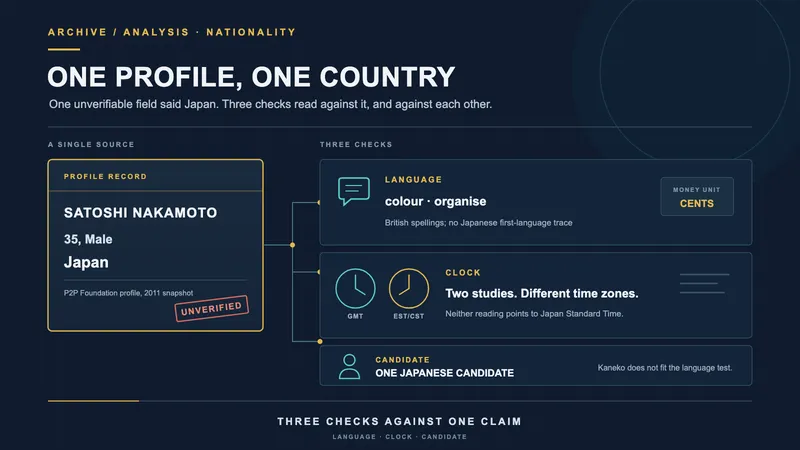
Was Satoshi Nakamoto Japanese?
Satoshi’s own self-claim is one unverifiable profile field, and the language and timestamp evidence argue against it.
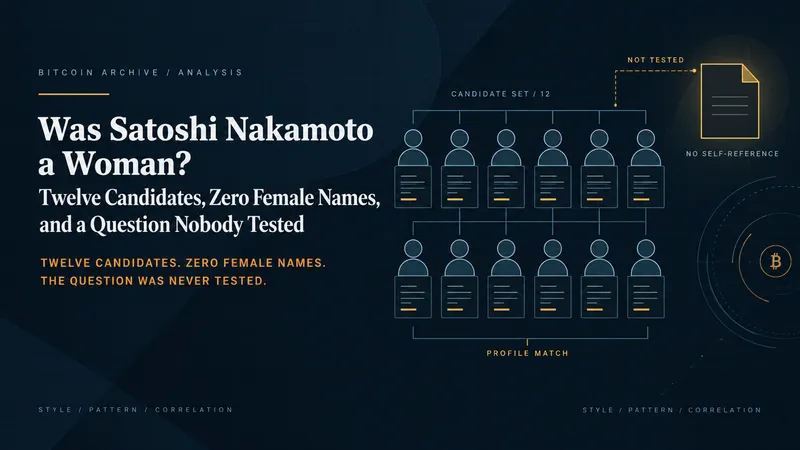
Was Satoshi Nakamoto a woman?
Nobody has shown that, but nobody checked either — every named candidate is a man, and none of the archive’s own layers of evidence ever ruled out a woman in the first place.
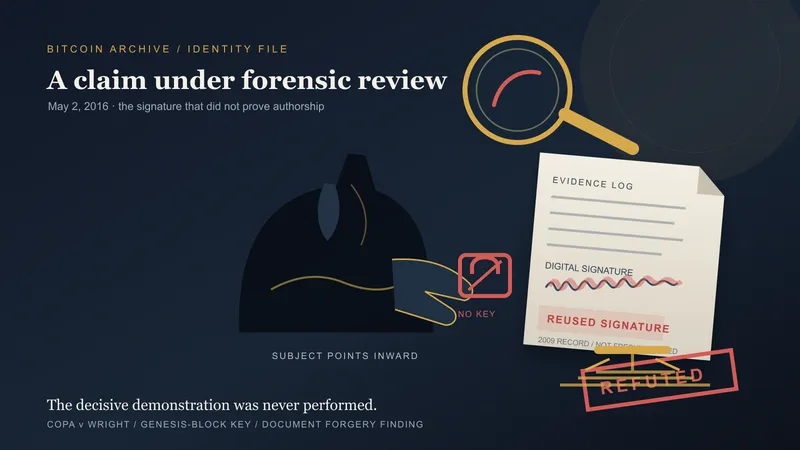
Did Craig Wright prove he was Satoshi?
A UK court found the opposite: that he forged evidence on a grand scale to support the claim.
Could Satoshi have been more than one person?
One documentary names two collaborators dividing the work, and a separate federal FOIA suit targets a 2019 government claim of four; other researchers dispute the documentary’s timing.
Why did Satoshi disappear?
The record shows when, not why — his earliest withdrawal signal predates the events near his final messages by seven months, so those events did not start it.
Satoshi’s holdings and activity
How much Bitcoin does Satoshi hold?
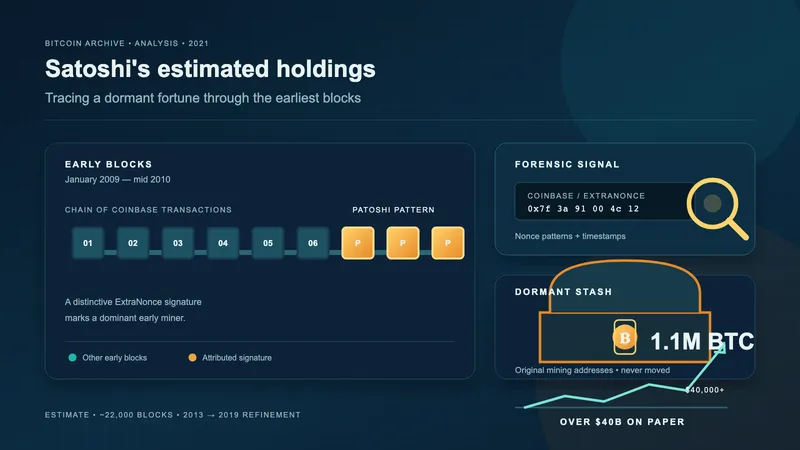
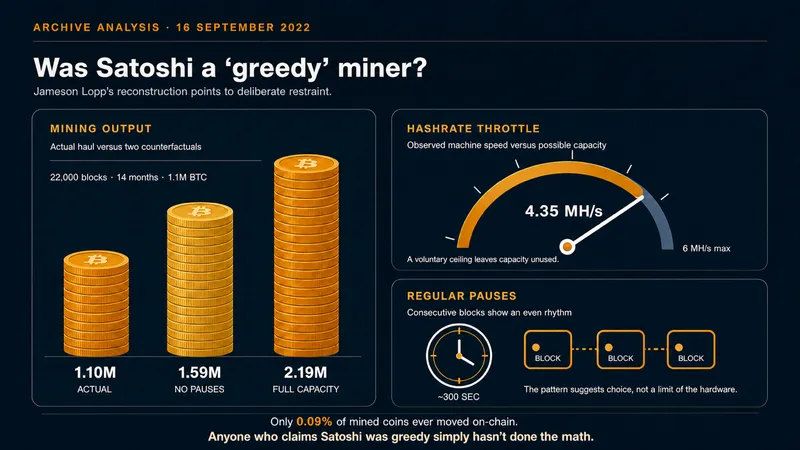
On-chain analysis estimates roughly 1.1 million BTC across early-mined blocks.
Has any of Satoshi’s Bitcoin ever moved?
Almost none. Each analysis finds a small spent fraction, and the counts differ with the block list: Lerner saw about 100 BTC in 2013, Whale Alert 907 BTC in 2020, and Lopp fewer than 20 blocks (0.09%) in 2022. Counted on Lopp’s own list, 31 block rewards, 1,550 BTC, have moved. The rest has not moved since it was mined.
Who received the first Bitcoin transaction?
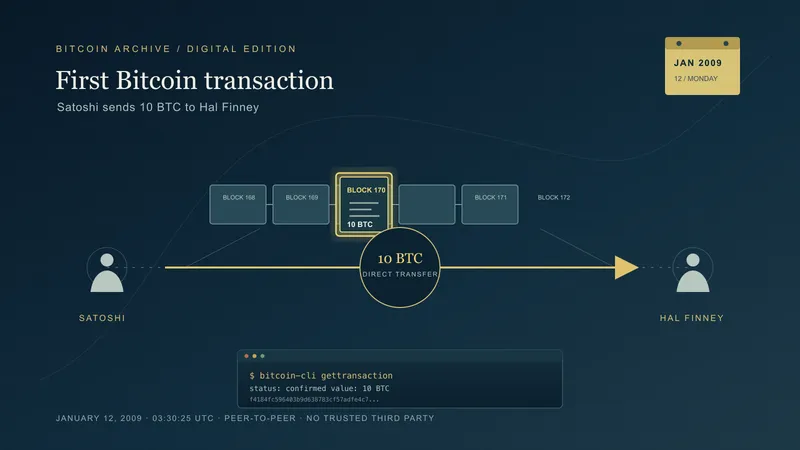
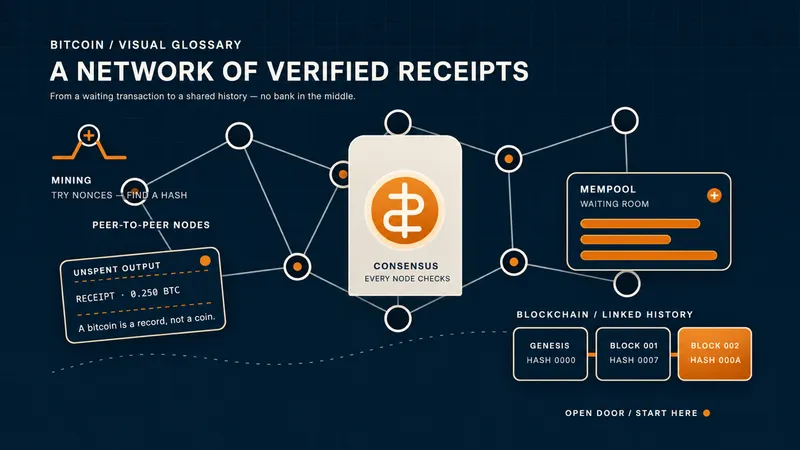
Hal Finney, who received 10 BTC from Satoshi in Block 170 — the first person-to-person transfer.
Bitcoin’s design
Why 21 million Bitcoin?
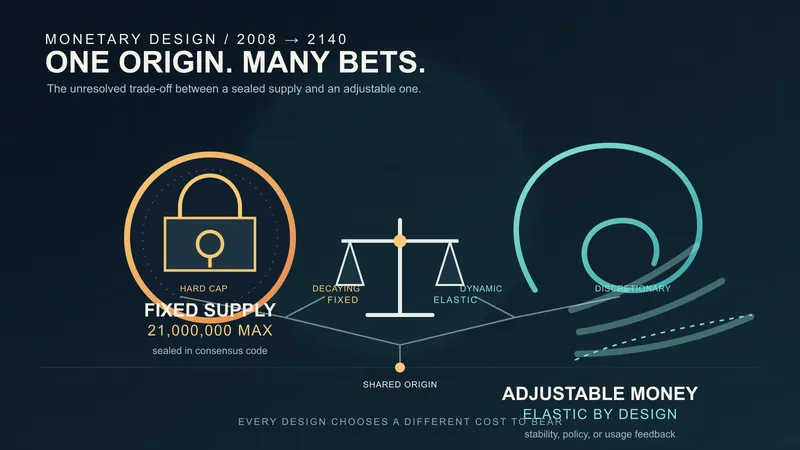
An “educated guess,” tuned to the halving math and to amounts that would feel neither too scarce nor too abundant.
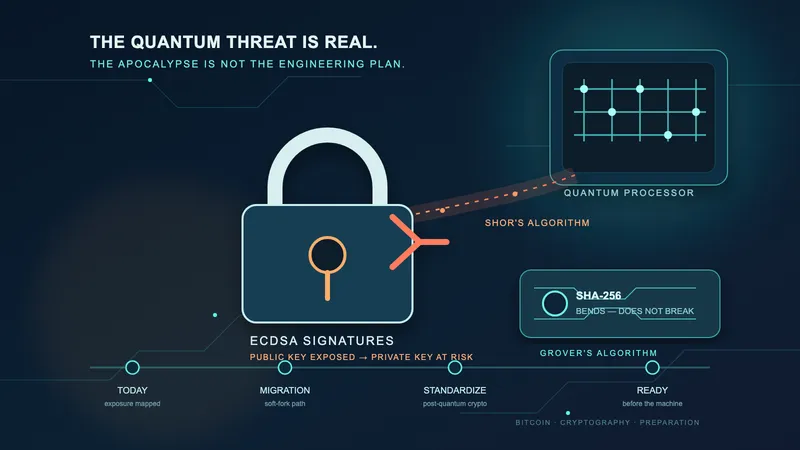
Will quantum computers break Bitcoin?
Not the ones that exist today. A migration proposal exists (BIP 360), but it’s still a draft, covers only part of the threat, and has no developer consensus yet.
Early people and transactions
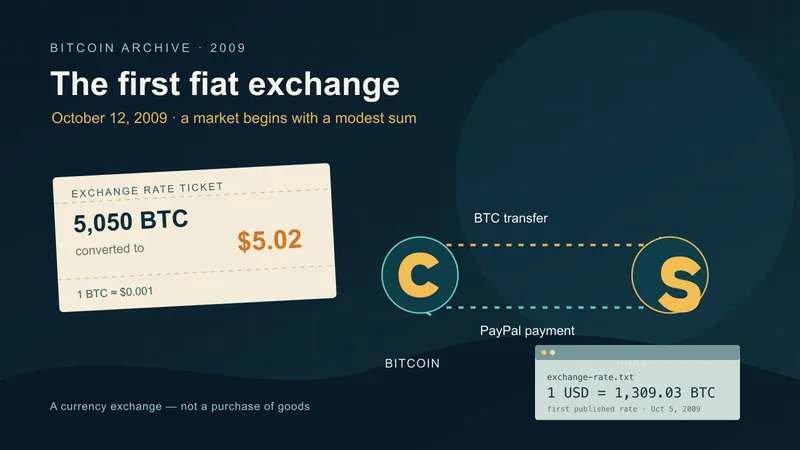
Who bought Bitcoin first?
NewLibertyStandard, who paid Martti Malmi $5.02 for 5,050 BTC in October 2009.
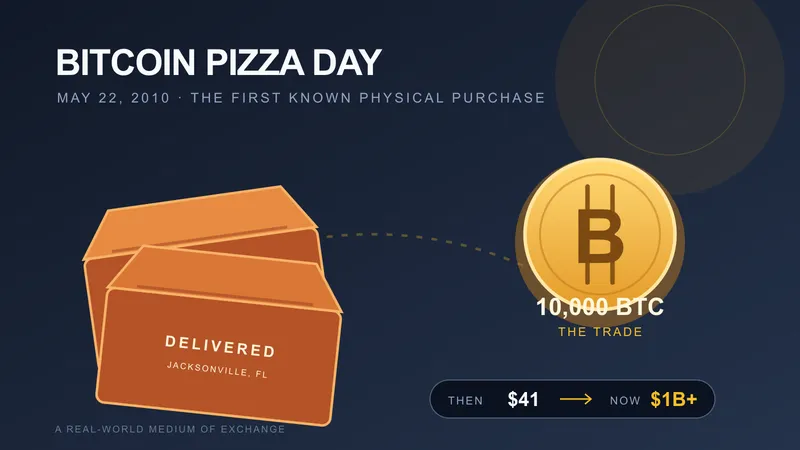
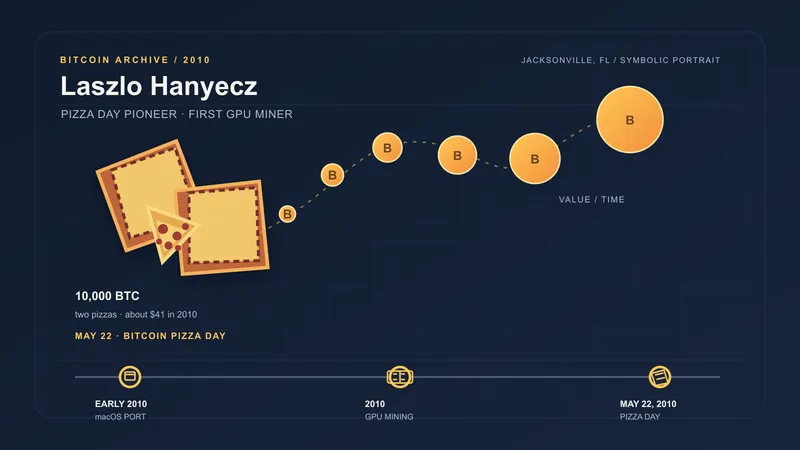
What happened to the guy who bought pizza with Bitcoin?
Laszlo Hanyecz, a Florida-based software developer, has no regrets — in February 2018 he bought pizza again over the Lightning Network to demonstrate Bitcoin’s layer-2 scaling technology.
Early history and incidents
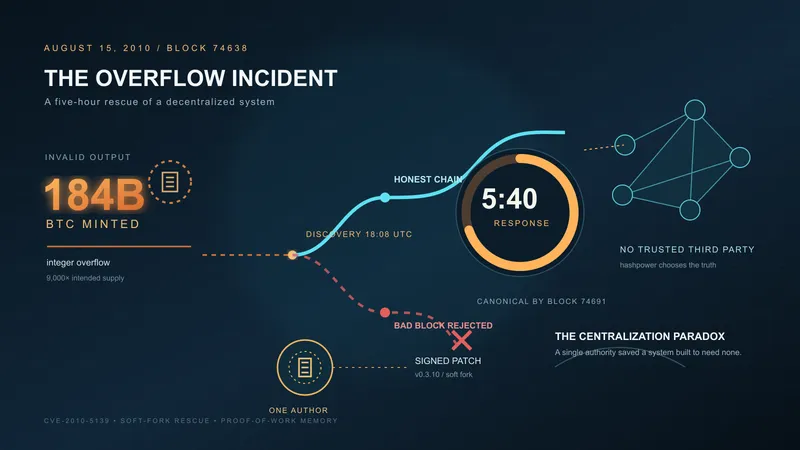
What was Bitcoin’s biggest bug?
On August 15, 2010, a single transaction minted 184 billion BTC. Satoshi shipped a patch less than six hours after it was spotted, but the network didn’t fully reverse the transaction until the corrected chain overtook the bad one roughly 15 hours after the incident.
If none of these is the question you came with, search the full archive — thousands more primary records and readings, and this page is just one way in. Came for Bitcoin’s mechanics rather than its mystery? In that case, start with how Bitcoin actually works.