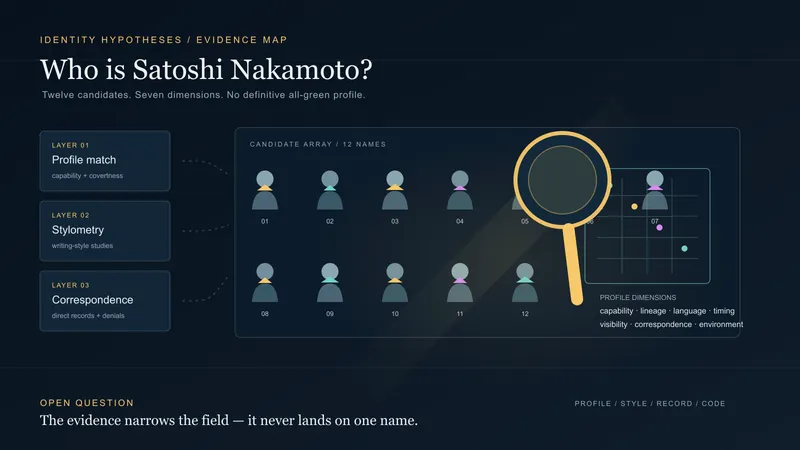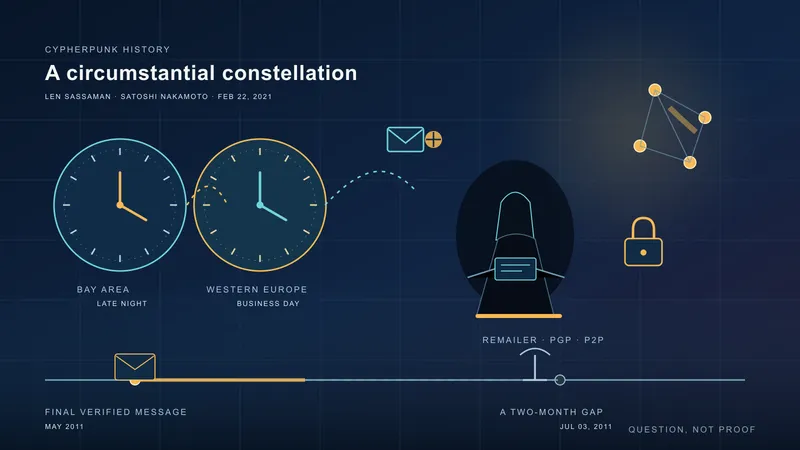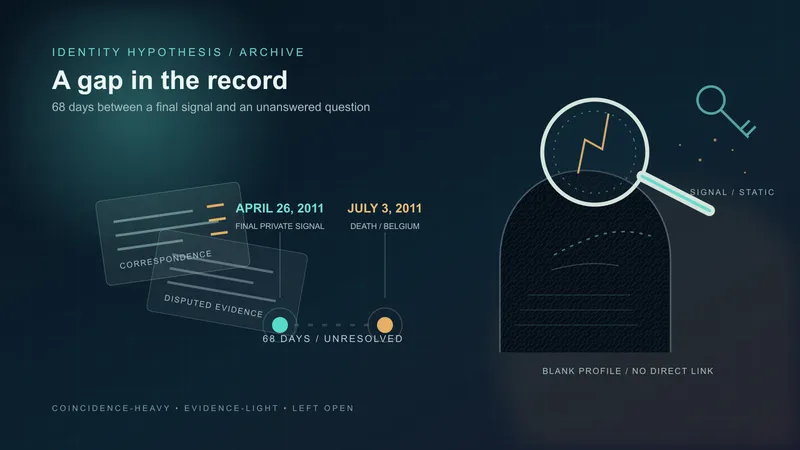

On October 8, 2024, HBO released “Money Electric: The Bitcoin Mystery,” a documentary directed by Cullen Hoback (known for “Q: Into the Storm”). The film named Bitcoin Core developer Peter Todd as a candidate for Bitcoin’s pseudonymous creator, Satoshi Nakamoto — displacing Len Sassaman, who had been the name most widely speculated ahead of the reveal.
The forum post theory
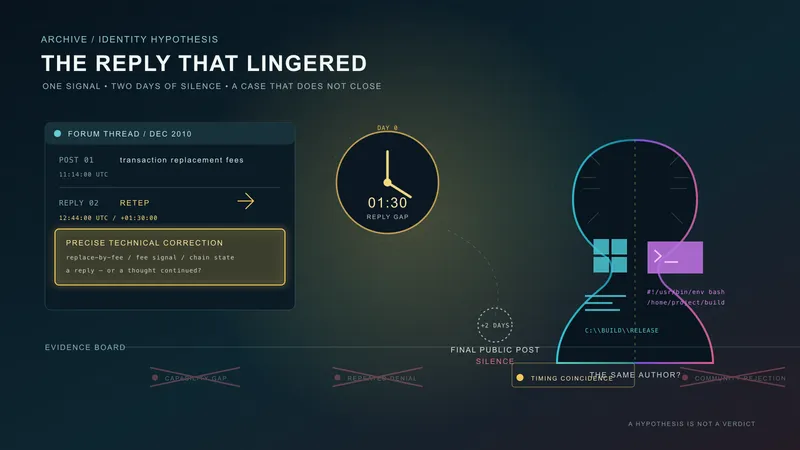
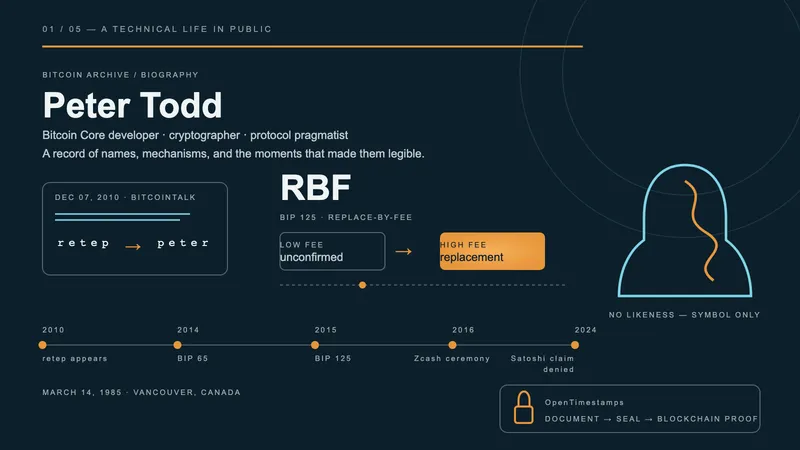
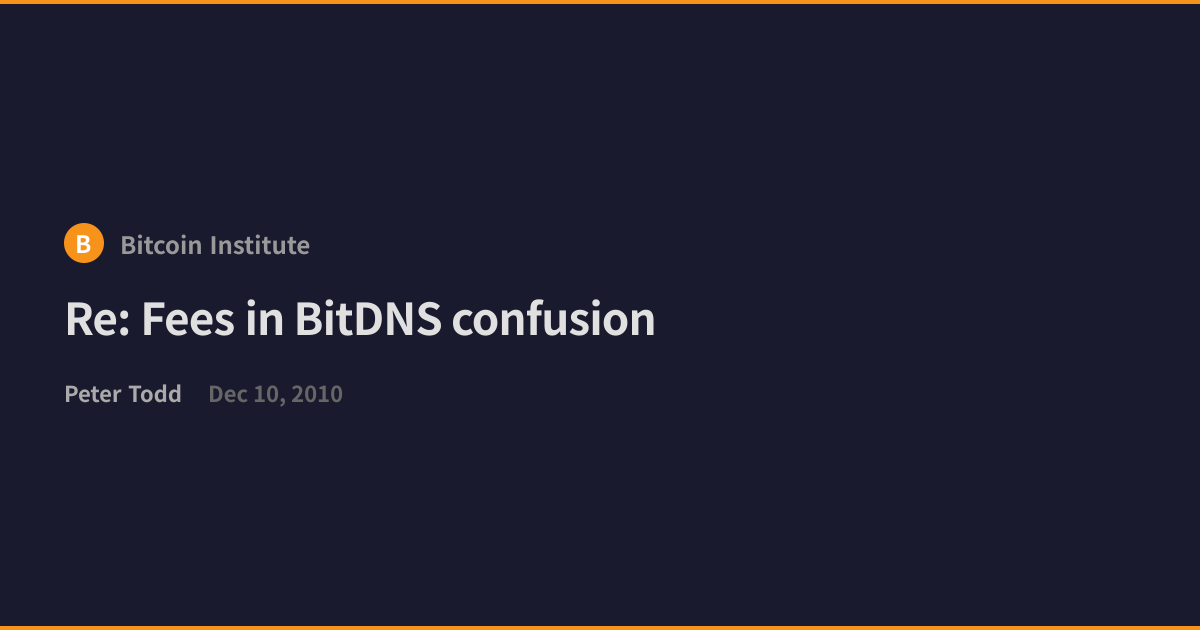
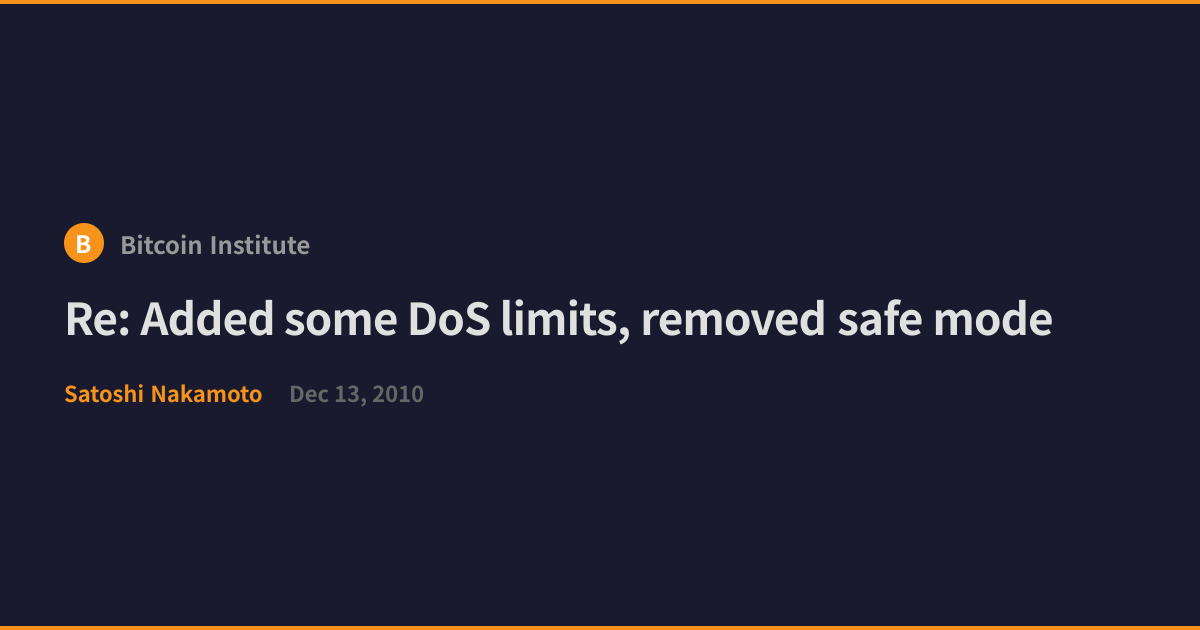
The documentary’s central piece of evidence was a December 2010 exchange on BitcoinTalk. Satoshi had described a concept for transaction replacement — what would later become Replace-by-Fee (RBF). Approximately 1.5 hours later, Todd (posting under the username “retep,” his name spelled backwards) replied with a technical correction:
Peter Todd (BitcoinTalk post, December 10, 2010, 1:27:59 AM UTC)Of course, to be specific, the inputs and outputs can’t match exactly if the second transaction has a transaction fee.
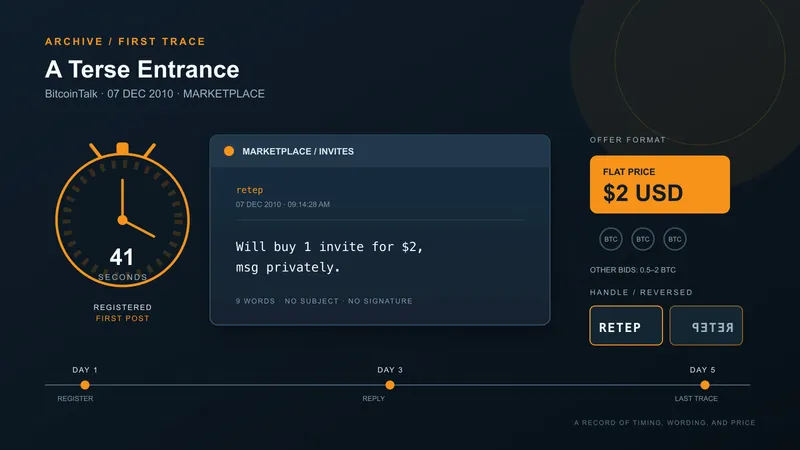
This was only Todd’s second post on BitcoinTalk, made three days after registering. Hoback argued that Todd had accidentally posted from his own account instead of Satoshi’s — that the reply was a continuation of Satoshi’s thought, not a response to it. Both accounts fell silent in the days that followed. Satoshi’s last public post came two days later, on December 12, 2010.
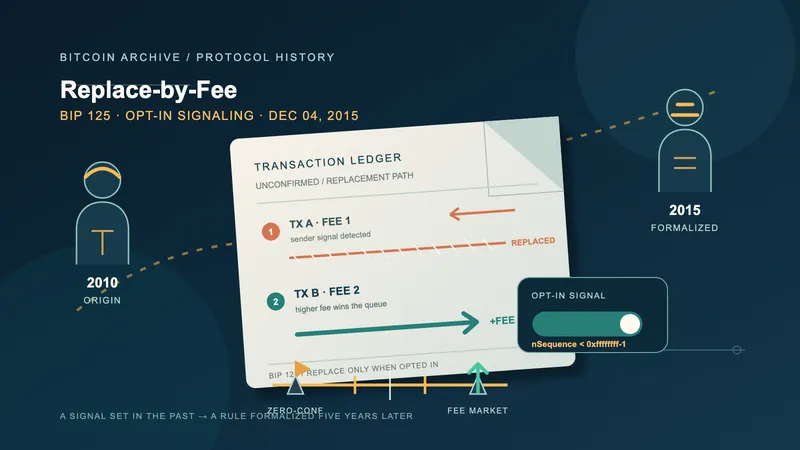
The RBF connection
The documentary drew a line from this exchange to Todd’s later work formalizing Replace-by-Fee in BIP 125 (2015), arguing that Todd completed what Satoshi had started — because they were the same person. Hoback also noted that Todd had previously used an alternate persona to submit an RBF patch, suggesting a pattern of operating under different identities.
Additional circumstantial evidence
- Todd was pursuing a fine arts degree at OCAD University (graduating 2011) when Bitcoin launched in 2008–2009
- Todd’s alignment with Adam Back and Gregory Maxwell at Blockstream
- An alleged 2014 email from Satoshi’s address during the block size debate
Todd’s response
Todd dismissed the allegations with sarcasm and anger. On the day of broadcast he was direct, calling the filmmaker “grasping at straws”:
Peter Todd (CoinDesk interview, October 8, 2024)Of course, I’m not Satoshi.
After Hoback laid out his theory on camera, Todd laughed and answered sarcastically:
Peter Todd (HBO documentary "Money Electric: The Bitcoin Mystery," October 8, 2024)It’s ludicrous. But I’ll say, yeah, of course I’m Satoshi. And I’m Craig Wright.
He called the documentary “irresponsible” and said it put his safety at risk, noting that identifying someone as the holder of an estimated $70 billion in Bitcoin could make them a target. Todd stated he did not begin working on Bitcoin until 2014, years after Nakamoto’s disappearance.
Critical reception
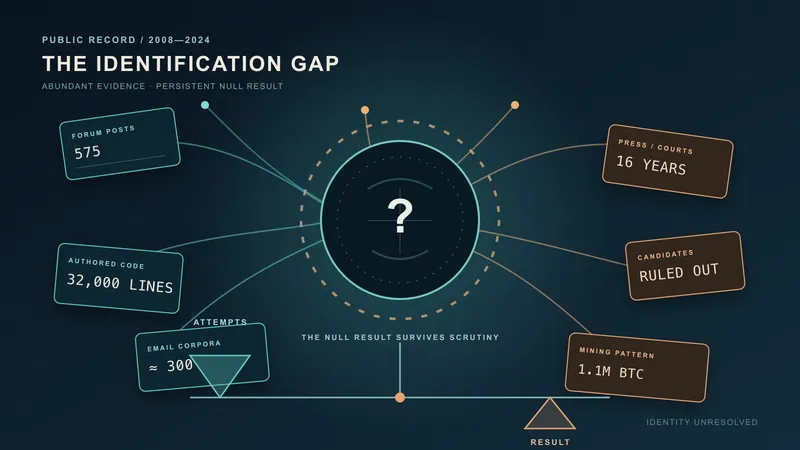
The documentary was widely criticized by the Bitcoin community. Bitcoin Magazine called it “An Insult to Bitcoin — Cynical, Stupid, and Dangerous.” Critics noted that the film relied entirely on circumstantial evidence and coincidence-based reasoning, with no cryptographic proof, no writing style analysis, and no explanation for how an art student could have designed a novel consensus mechanism.
Todd later described the film’s methodology as “coincidence-based conspiracy thinking.”
The documentary was Hoback’s second investigation into pseudonymous internet figures, following his 2021 series “Q: Into the Storm” about the QAnon movement. Unlike that investigation, which was generally well-received, “Money Electric” was broadly rejected by both the Bitcoin community and mainstream reviewers.
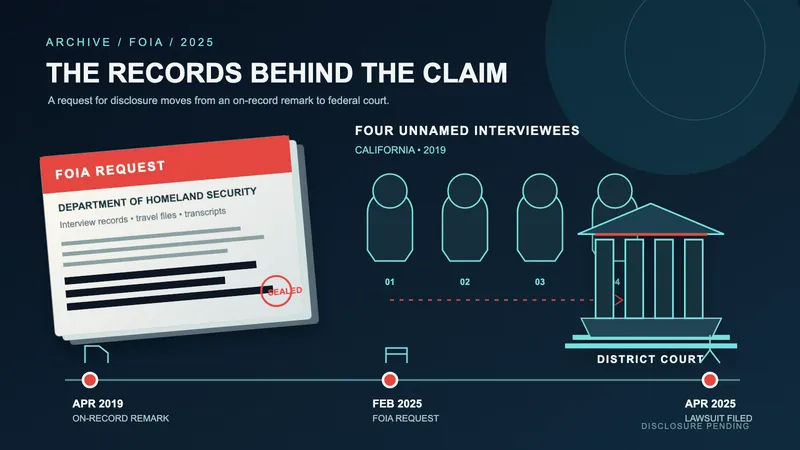
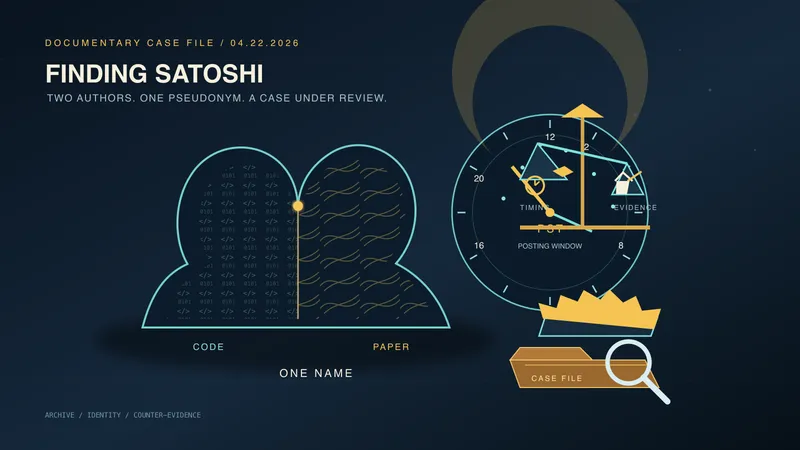
The HBO documentary opened a post-2024 wave of major-press Satoshi identifications. The 2026 NYT Carreyrou investigation named Adam Back on stylometric grounds; the Finding Satoshi documentary proposed a multi-person reading naming Hal Finney and Len Sassaman as co-creators; and the parallel Murphy v DHS FOIA action seeks DHS records on a 2019 agent’s claim to have interviewed four people behind Bitcoin. Each rests on a different evidence base; none has produced cryptographic confirmation.
For the analytical treatment of the Todd = Satoshi hypothesis (the documentary’s evidence weighed against the public record on Todd’s age, OCAD timeline, pre-2012 cypherpunk record, writing-style progression, and development-activity timeline), see the Peter Todd = Satoshi identity hypothesis entry.
Two adjacent records fill in the December 2010 thread the film builds on: Todd’s first BitcoinTalk post — the “retep” Diaspora-invite request, registered three days before the reply to Satoshi — documents the account mechanics the documentary leans on, and the BIP 125 Replace-by-Fee article covers the 2015 formalization the film treats as Todd completing Satoshi’s design.