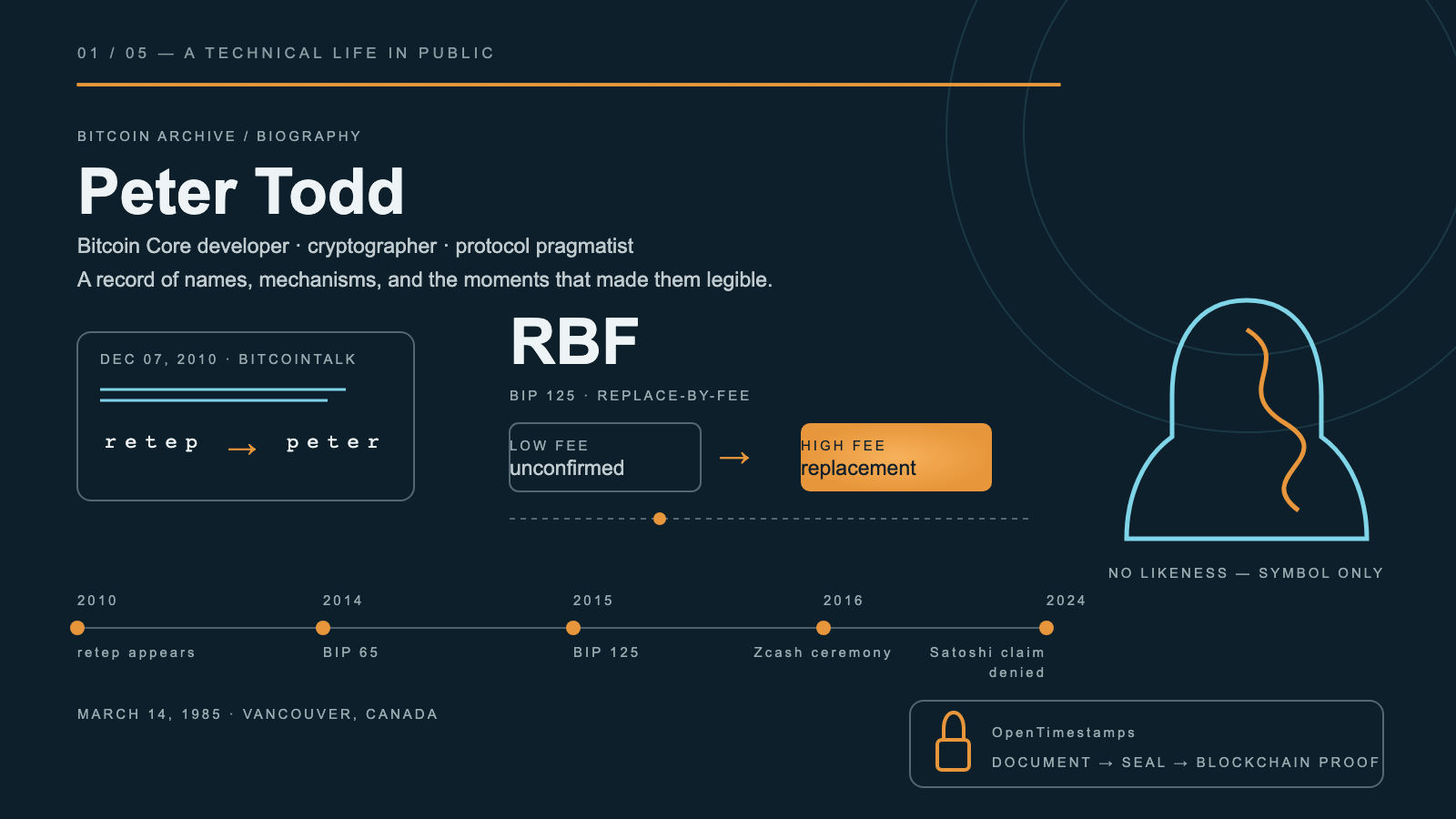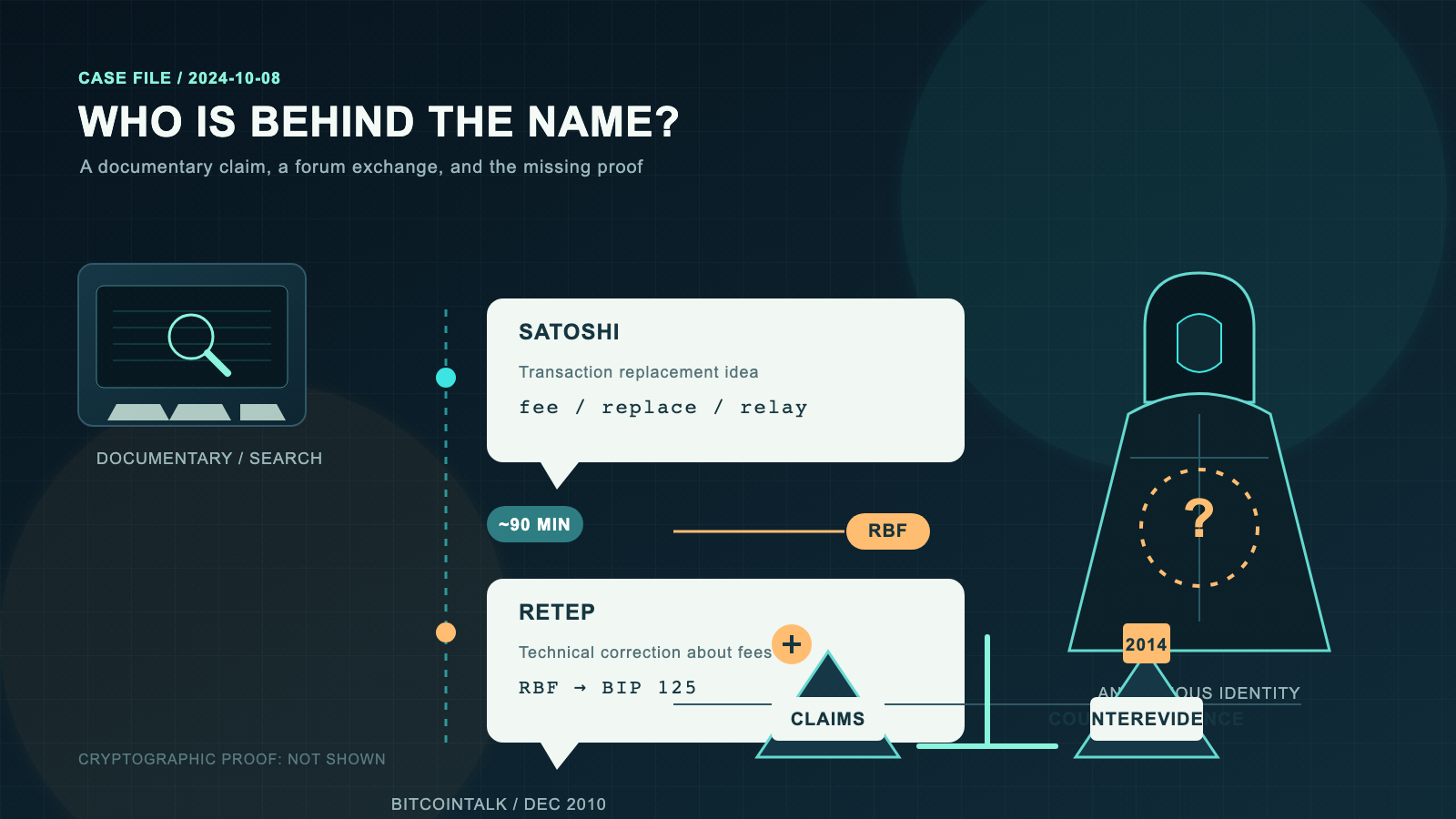
“retep” is “peter” spelled backwards. Bitcoin Core developer Gregory Maxwell took nearly a decade to notice. The handle belonged to an account that registered on BitcoinTalk on December 7, 2010 and, three days later, replied to a Satoshi thread on transaction-replacement fees. Two days after that, Satoshi posted his last public message. HBO’s 2024 documentary Money Electric: The Bitcoin Mystery (directed by Cullen Hoback, released October 8, 2024) used that December 2010 sequence as its central evidence and named Peter Todd as Satoshi.
1. The evidence
Todd is the person behind the Satoshi Nakamoto pseudonym. His publicly-stated start of Bitcoin work in 2014 misrepresents an earlier involvement, and the December 2010 BitcoinTalk thread cited by the documentary captures a moment of accidental same-person scaffolding.
The earliest public articulation of the claim identified in this archive’s research is the HBO documentary itself (October 8, 2024). The documentary attracted broad press coverage and was rejected by both the Bitcoin technical community and mainstream reviewers within days of release.
1.1 The December 2010 BitcoinTalk thread
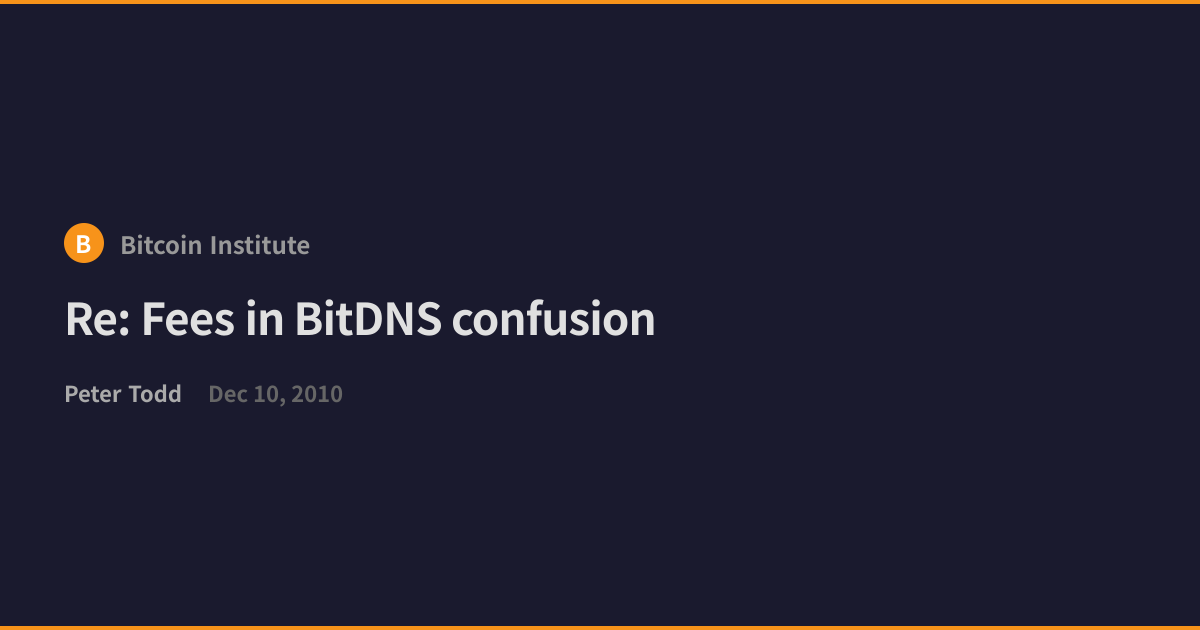
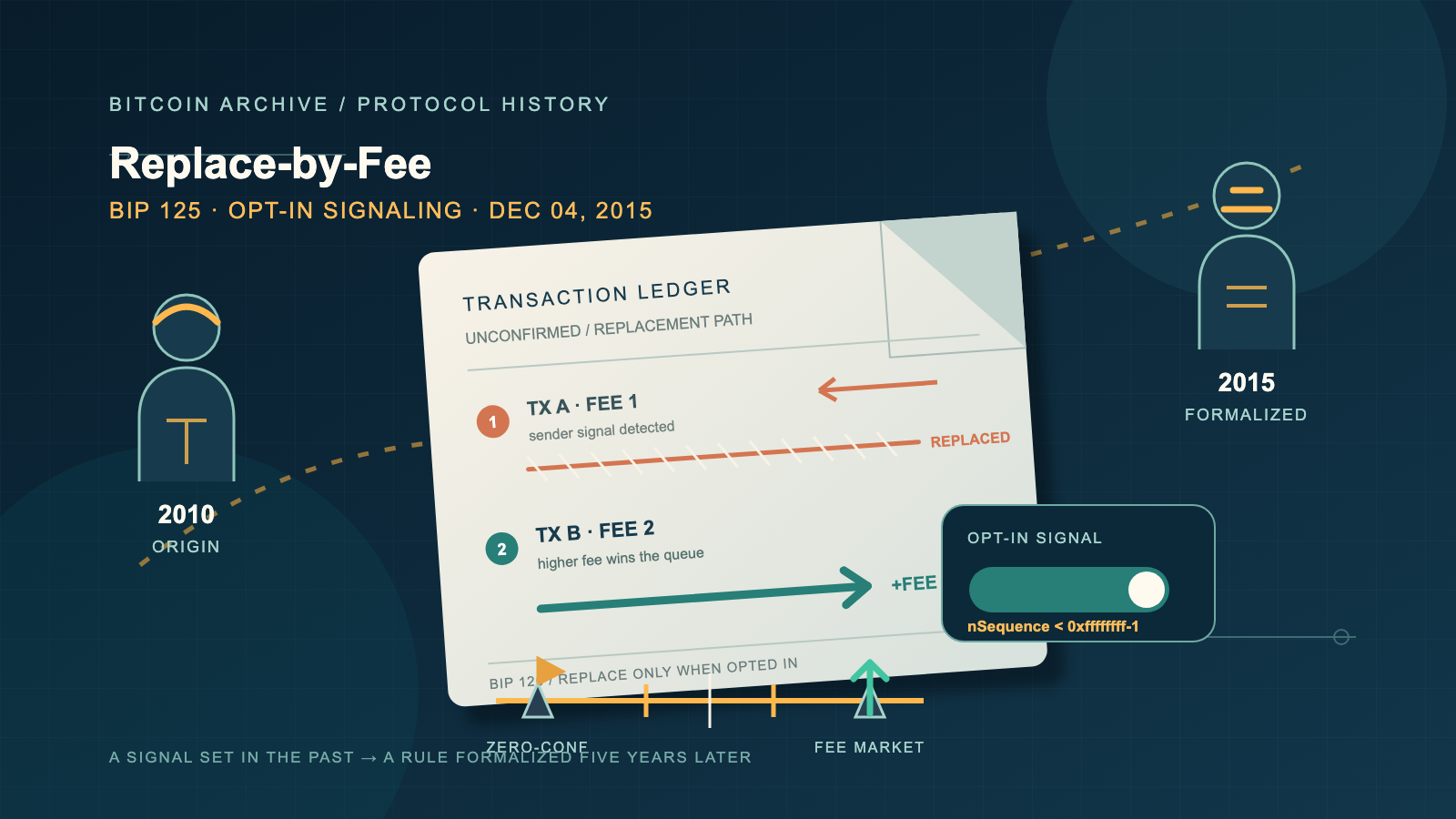
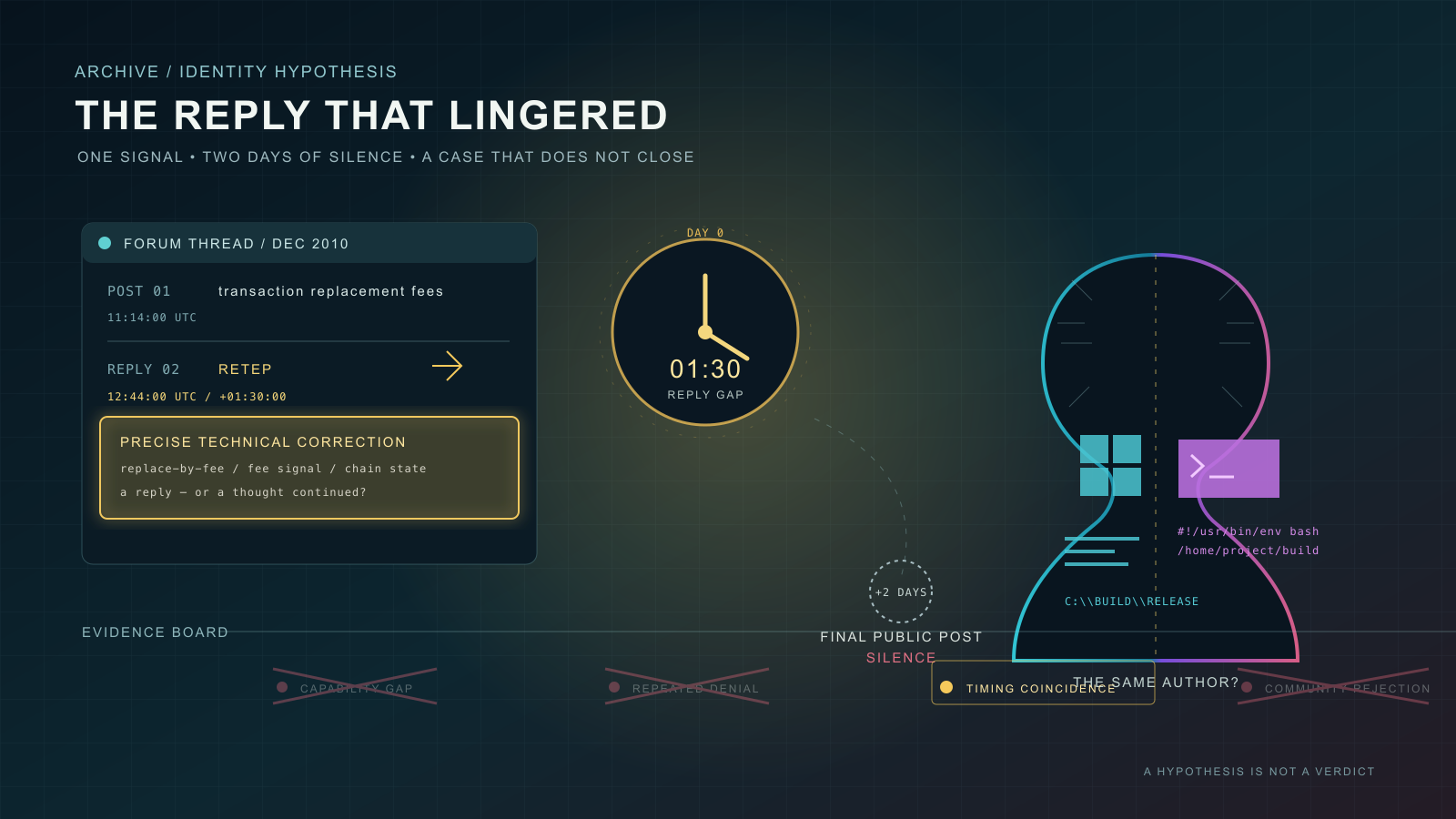
The documentary’s central piece of evidence is a December 2010 exchange on BitcoinTalk. Satoshi described a transaction-replacement mechanism — what would later be formalized as Replace-by-Fee. Approximately 1.5 hours later, Todd (under the username “retep,” his name spelled backwards) replied with a technical correction:
Quote from: Peter Todd on December 10, 2010, 1:27:59 AM UTC“Of course, to be specific, the inputs and outputs can’t match exactly if the second transaction has a transaction fee.”
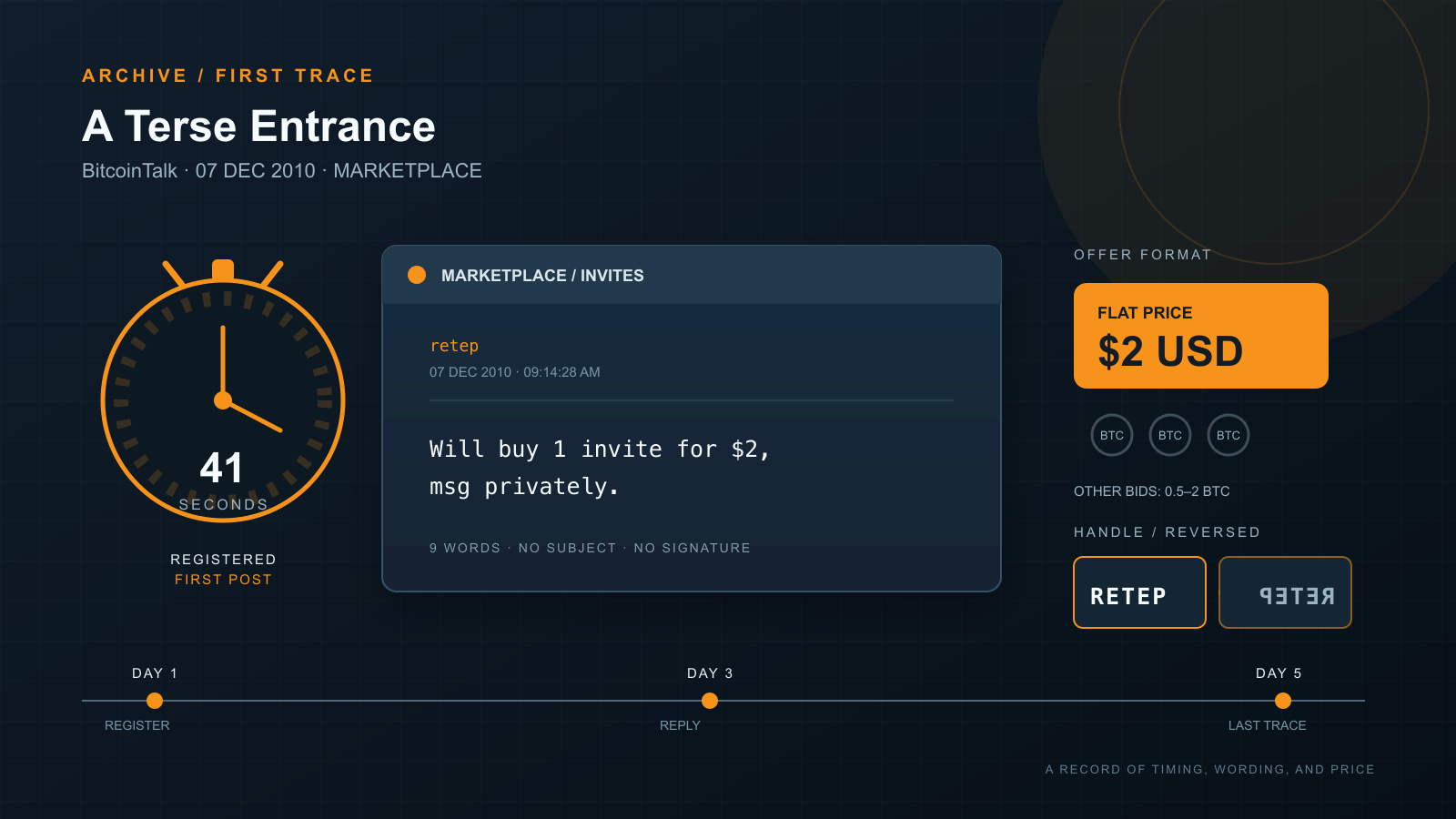
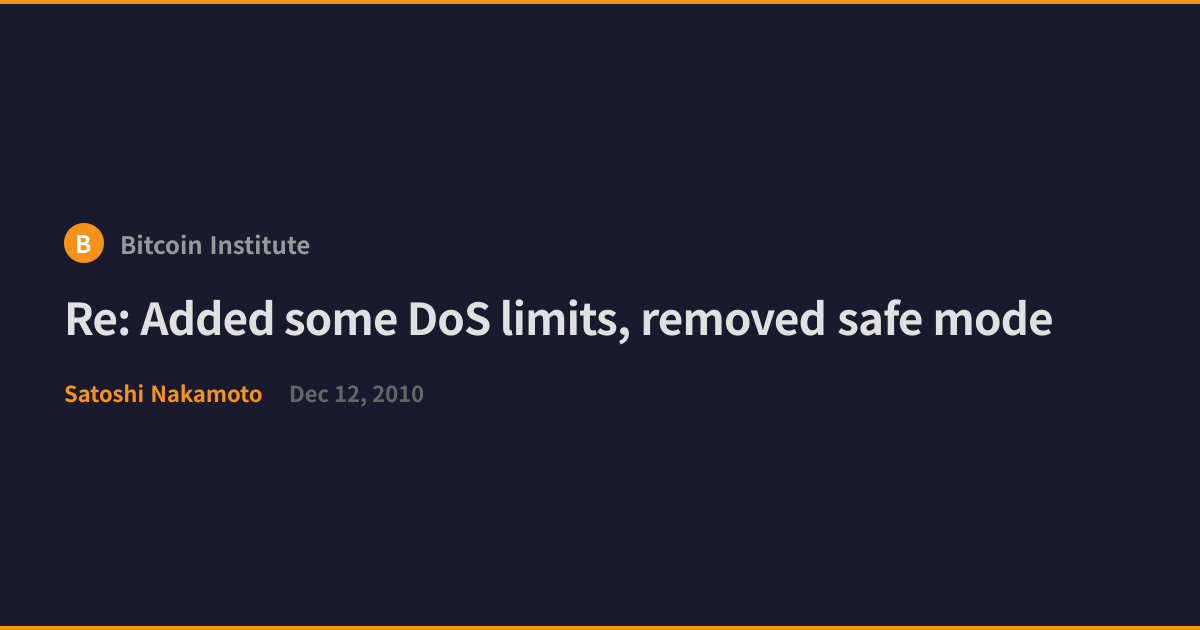
This was Todd’s second post on BitcoinTalk, made three days after registering. Hoback argued that Todd had accidentally posted from his own account instead of Satoshi’s — that the reply was a continuation of Satoshi’s thought rather than a response to it. Both accounts fell silent in the days that followed: Satoshi’s last public post came two days later, on December 12, 2010, and Todd did not return to BitcoinTalk for sixteen months.
The counter-argument: a 1.5-hour-after-Satoshi reply is not implausible same-author behavior, but neither is it implausible that an attentive reader noticed the same edge case Satoshi had been articulating. The “Of course, to be specific” register — a calm, technically-precise correction with a hint of casual authority — is suggestive but does not on its own carry the weight of authorship.
1.2 The RBF / BIP 125 connection
The documentary draws a line from the December 2010 exchange to Todd’s later formalization of Replace-by-Fee in BIP 125 (2015), arguing that Todd completed what Satoshi had started — because they were the same person. Hoback also noted Todd’s prior use of an alternate persona to submit an RBF patch, suggesting a pattern of operating under different identities.
The objection: many Bitcoin Core contributors have built on partial mechanisms that Satoshi sketched but did not complete. Picking up such a mechanism years later is a generic Core-developer pattern, not specifically a same-author signal.
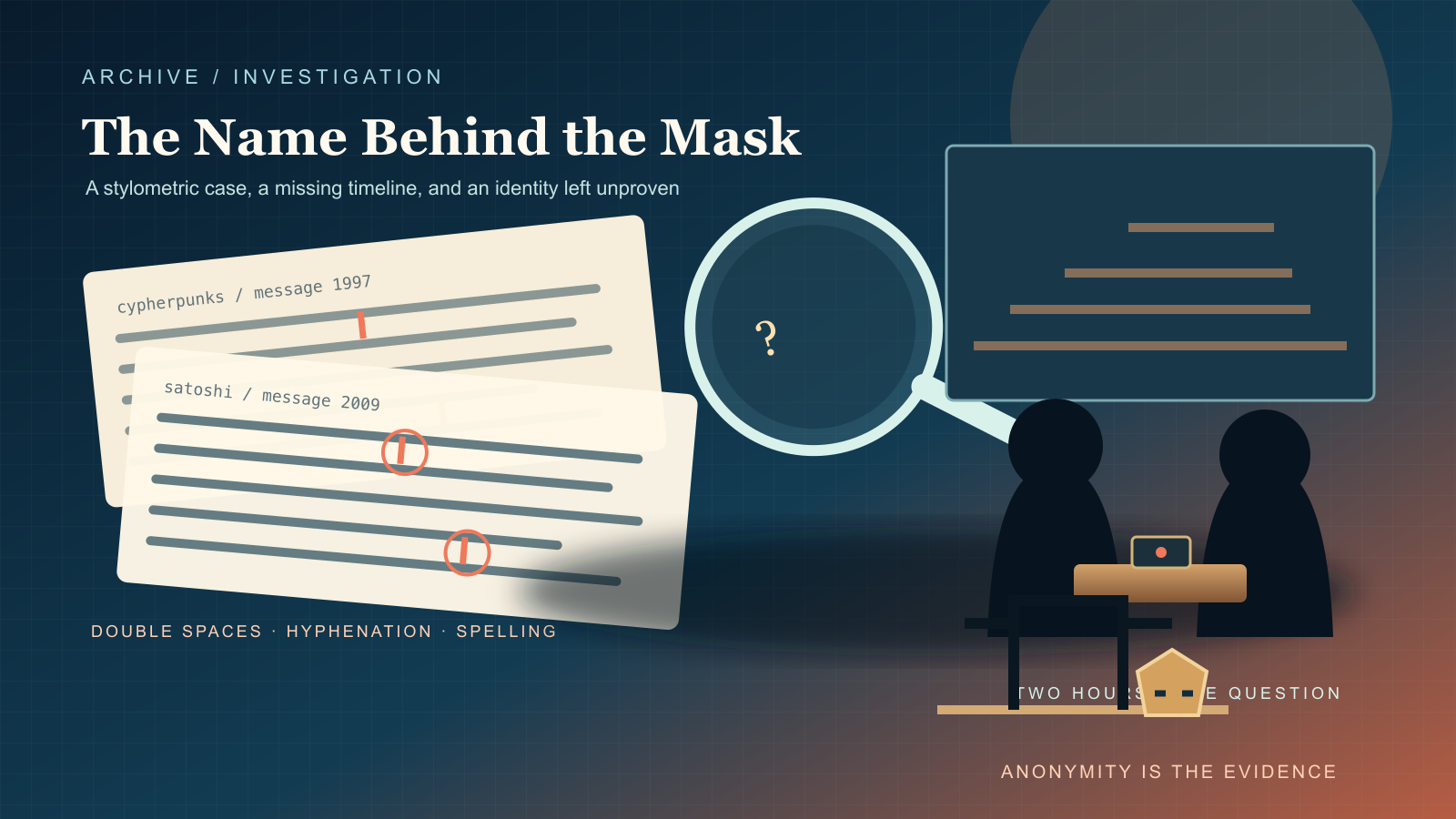
1.3 Writing style across three periods
Todd’s public writing appears to shift noticeably across three periods:
- First post (December 7, 2010): His BitcoinTalk debut — “Will buy 1 invite for $2, msg privately.” — is maximally terse. No subject pronoun, no full words where abbreviations suffice, no personality. The text reads like a classified ad, stylistically indistinguishable from any anonymous user. Neither Todd’s later voice nor Satoshi’s restrained precision is evident.
- Second post (December 10, 2010): His reply to Satoshi — “Of course, to be specific, the inputs and outputs can’t match exactly if the second transaction has a transaction fee.” — is calm, technically precise, and measured. The opening “Of course” carries a tone of casual authority, but the overall register is neutral. It does not yet display the profanity, self-deprecation, or combative sarcasm that would later define Todd’s public persona.
- 2012 onward: Todd’s writing develops a highly distinctive and consistent voice: frequent profanity, self-deprecating humor, rhetorical aggression, heavy use of asterisk emphasis, and a confrontational style. This voice remained remarkably stable across blog posts, mailing list exchanges, and social media for over a decade.
The progression — from no personality, to neutral precision, to an unmistakably idiosyncratic style — is the documentary-supporting reading: most writers, the argument runs, show more personality early and develop restraint over time, not the reverse.
The objection: a single classified-ad-style first post followed by a single technical-correction second post is too small a sample to establish a writer’s range. A person’s mature public-writing voice typically forms over their early-to-mid twenties, and the absence of Todd’s later confrontational register in two short BitcoinTalk posts at age 25 is consistent with that voice not yet being formed, rather than with that voice being deliberately suppressed.
1.4 Development-activity timeline
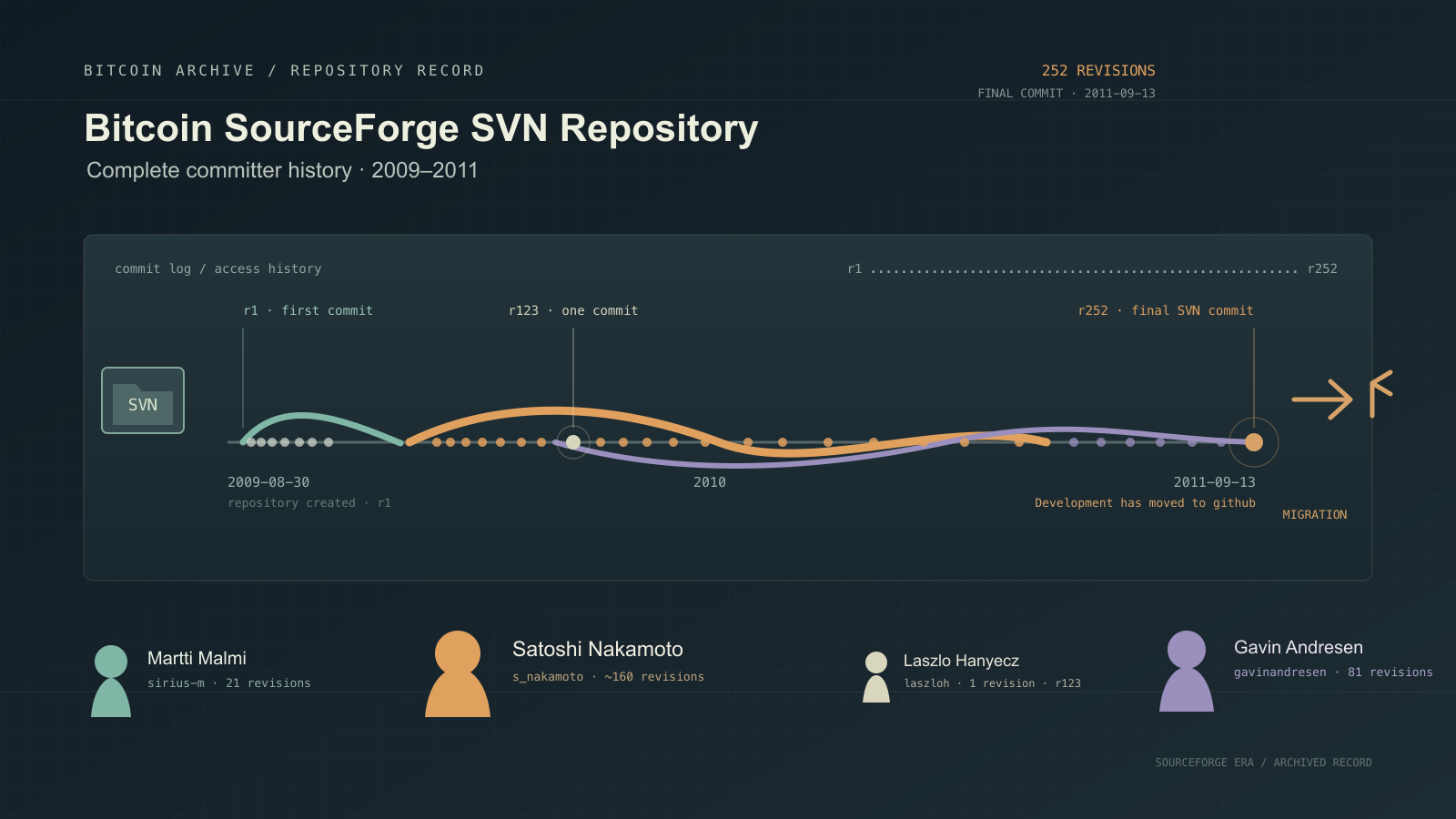
Todd registered his GitHub account on April 13, 2008. Satoshi Nakamoto developed Bitcoin on SourceForge (SVN). Their public activity records:
| Period | Todd’s public record (GitHub) | Satoshi’s activity (SourceForge / BitcoinTalk) |
|---|---|---|
| Apr–Dec 2008 | Active, 15 repos — all hardware/electronics (clocks, entropy oscillators, counters, firmware, PCB). Two projects have “Shipped” commits. Last commit: Dec 9 | Oct 2008: Whitepaper published |
| 2009 | Zero commits, zero new repos | Jan: Genesis block. Active development on SourceForge, forum participation on BitcoinTalk |
| 2010 | Nearly dormant — 1 small repo (Feb), no sustained activity. BitcoinTalk: registration (Dec 7), reply to Satoshi (Dec 10) | Active on SourceForge / BitcoinTalk until Dec 12 (last public post) |
| 2011 | Zero new repos. OCAD University graduation (Integrated Media) | Departure. Final known private emails |
| May 2012 | First Bitcoin repo — hardware-bitcoin-wallet | — |
| Sep 2012 | Forks Bitcoin Core. Rapid Bitcoin development begins | — |
The gap in Todd’s public GitHub activity — roughly December 2008 through early 2012 — overlaps with Satoshi’s active period.
Todd’s GitHub repositories created between 2008 and 2011:
| Repository | Created | Language | OS clues | Description |
|---|---|---|---|---|
| vimfiles | 2008-04-15 | VimL | ~/.vim (Unix) | Shared vim configuration (from work) |
| alternate-pace | 2008-05-24 | — | A clock with an alternate pace | |
| alternate-pace.elec | 2008-05-28 | Shell | #!/bin/sh, Unix pipelines | Alternate Pace — Electronics |
| alternate-pace.firm | 2008-05-28 | C | /usr/share/sdcc/, /usr/share/gputils/ (Linux FHS) | Alternate Pace — Firmware |
| entropy-oscillator | 2008-05-25 | — | An entropy oscillator | |
| entropy-oscillator.elec | 2008-08-28 | Python | Entropy Oscillator — Electronics | |
| entropy-oscillator.firm | 2008-08-28 | — | Entropy Oscillator — Firmware | |
| meter-clock | 2008-06-07 | — | Meter Clock | |
| meter-clock.schem | 2008-06-07 | Shell | Meter Clock — Schematics | |
| meter-clock.hard | 2008-06-07 | — | Meter Clock — PCB layout and hardware design | |
| meter-clock.firm | 2008-11-09 | — | Meter Clock — Firmware | |
| 64-bit-counter | 2008-06-09 | — | A 64-bit non-volatile counter fed by a 64MHz source | |
| 64-bit-counter.elec | 2008-06-09 | KiCad | 64-bit Counter — Electronics | |
| 64-bit-counter.firm | 2008-06-09 | C | 64-bit Counter — Firmware | |
| metesky | 2008-08-20 | Python | Bill of materials tools | |
| (2009 — no repositories) | ||||
| congestion | 2010-02-24 | Python | #!/usr/bin/python, PyGTK (GNOME/Linux), vim modelines | Traffic congestion simulation (Python/Cython, Cairo). ~30 commits over Feb–Apr 2010, then inactive. Possibly an OCAD coursework project |
| (2011 — no repositories) |
All OS indicators in those repositories point to Linux — hardcoded Linux FHS paths (/usr/share/), Unix shebangs, PyGTK (a GNOME/Linux-native GUI toolkit). No Windows-related files, paths, or tools appear in any repository.
The objection: an undergraduate’s nearly-empty public GitHub commit graph during 2009–2011 is not unusual. The gap is consistent with focusing on coursework, not with running a parallel pseudonymous Bitcoin development effort under separate infrastructure.
2. The counter-evidence
2.1 Age and OCAD timeline
Todd was born on March 14, 1985 in Vancouver, Canada (Wikidata Q130523424). In mid-2007, when Satoshi’s documented pre-release Bitcoin work begins — approximately 18 months of intensive coding within the pre-release work Satoshi later put at “Since 2007” / “2 years of development before release” — Todd was 22 years old, an undergraduate at OCAD University pursuing an Integrated Media (fine arts) degree. He graduated in 2011. The claim requires this person to have, in parallel with the OCAD program, designed a novel consensus mechanism, written the whitepaper, shipped the v0.1 codebase, run the network, and corresponded as Satoshi for two and a half years — while leaving no documented cryptographic or distributed-systems coursework, mailing-list activity, or other technical-protocol work in his pre-2012 public record. Possible, but not without cost.
2.2 No documented cypherpunk presence pre-2012
Wei Dai’s 2014 identifiability argument (in his LessWrong AALWA thread) suggests Satoshi was not visibly active in the cypherpunks mailing list, metzdowd Cryptography List, or related fora during 2007–2008. This argument neither rules in nor rules out Todd specifically — Todd’s lack of documented cypherpunk-mailing-list presence pre-2012 fits the “structurally outside” reading. However, the argument also requires Satoshi to have nonetheless absorbed the technical and conceptual depth that Bitcoin v0.1 demonstrates. The claim requires Todd to have done this reading and synthesis somewhere unrecorded — possible, but the burden of explanation falls on the claim to specify where.
2.3 Self-denial
Todd publicly denied the claim before and after the documentary’s release. His responses ranged from in-film sarcasm (“It’s ludicrous. But I’ll say, yeah, of course I’m Satoshi.”) to the same-day CoinDesk denial (“Of course, I’m not Satoshi.”) to anger, calling the documentary “irresponsible” and noting that identifying someone as the holder of an estimated $70 billion in Bitcoin could put their personal safety at risk. Todd characterized the film’s methodology as “coincidence-based conspiracy thinking” and stated he did not begin working on Bitcoin until 2014.
A self-denial is not by itself dispositive — Wright self-claimed and the COPA court ruled against him; Dorian Nakamoto self-denied and the external evidence aligned (Satoshi’s p2pfoundation account post “I am not Dorian Nakamoto,” widespread criticism of Newsweek’s identification methodology, Bitcoin community support for Dorian). Todd’s self-denial is information that the claim must address.
2.4 OS environment divergence with Windows-only Bitcoin v0.1
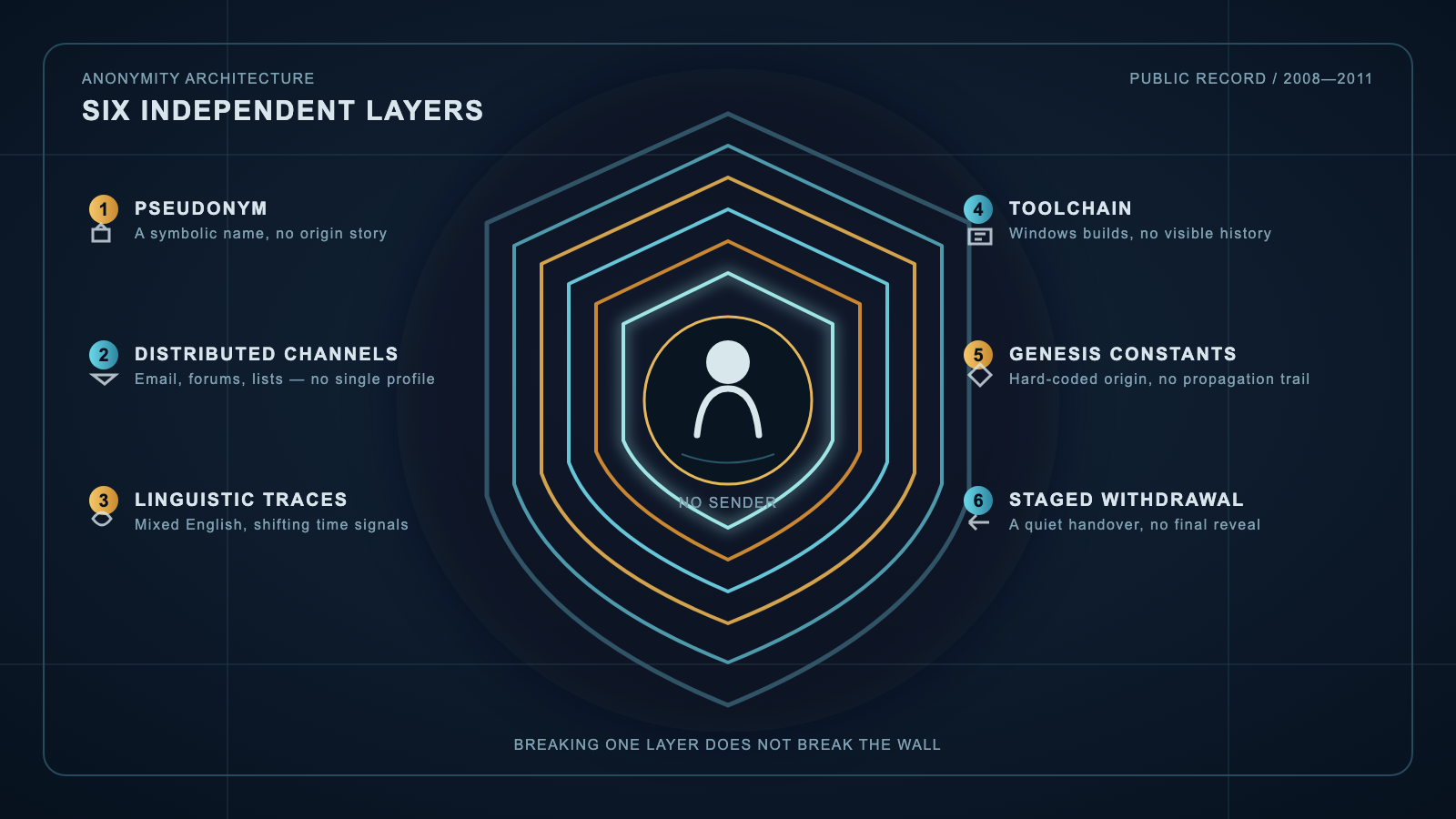
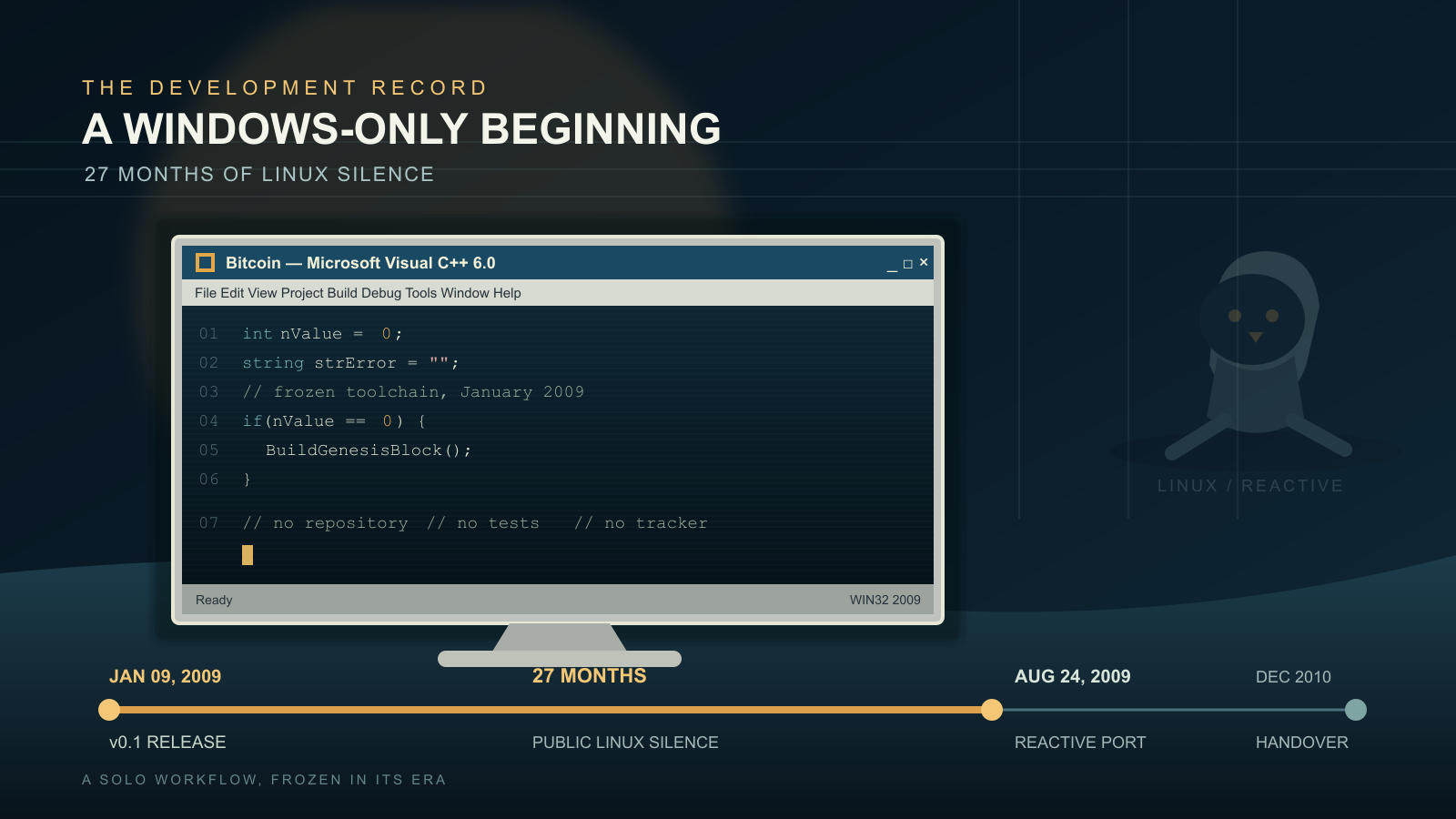
Bitcoin v0.1’s development environment was Windows-only across the full Phase 1 / Phase 2 / Phase 3 record — the v0.1 readme.txt names “Microsoft Visual C++ 6.0 SP6” and “MinGW GCC (v3.4.5)” as the supported compilers, the source uses Microsoft Hungarian notation, the v0.1.x series shipped as Windows-only .rar archives, and Satoshi’s final email in February 2011 still carried a GnuPG v1.4.7 (MingW32) - WinPT 1.2.0 Windows-only PGP signature footer. Todd’s own GitHub repositories of the overlapping period (§1.4 above) point uniformly to Linux: hardcoded /usr/share/ Linux FHS paths, Unix shebangs, PyGTK (a GNOME/Linux-native GUI toolkit), with no Windows-related files, paths, or tools in any repository. The claim would require Todd to have run a parallel Windows environment for everything visible under “Satoshi” — distinct from the Linux environment visible under his own name — for the entire 2007–2011 window, without that split appearing in any contemporaneous personal repository.
2.5 Bitcoin community technical critique
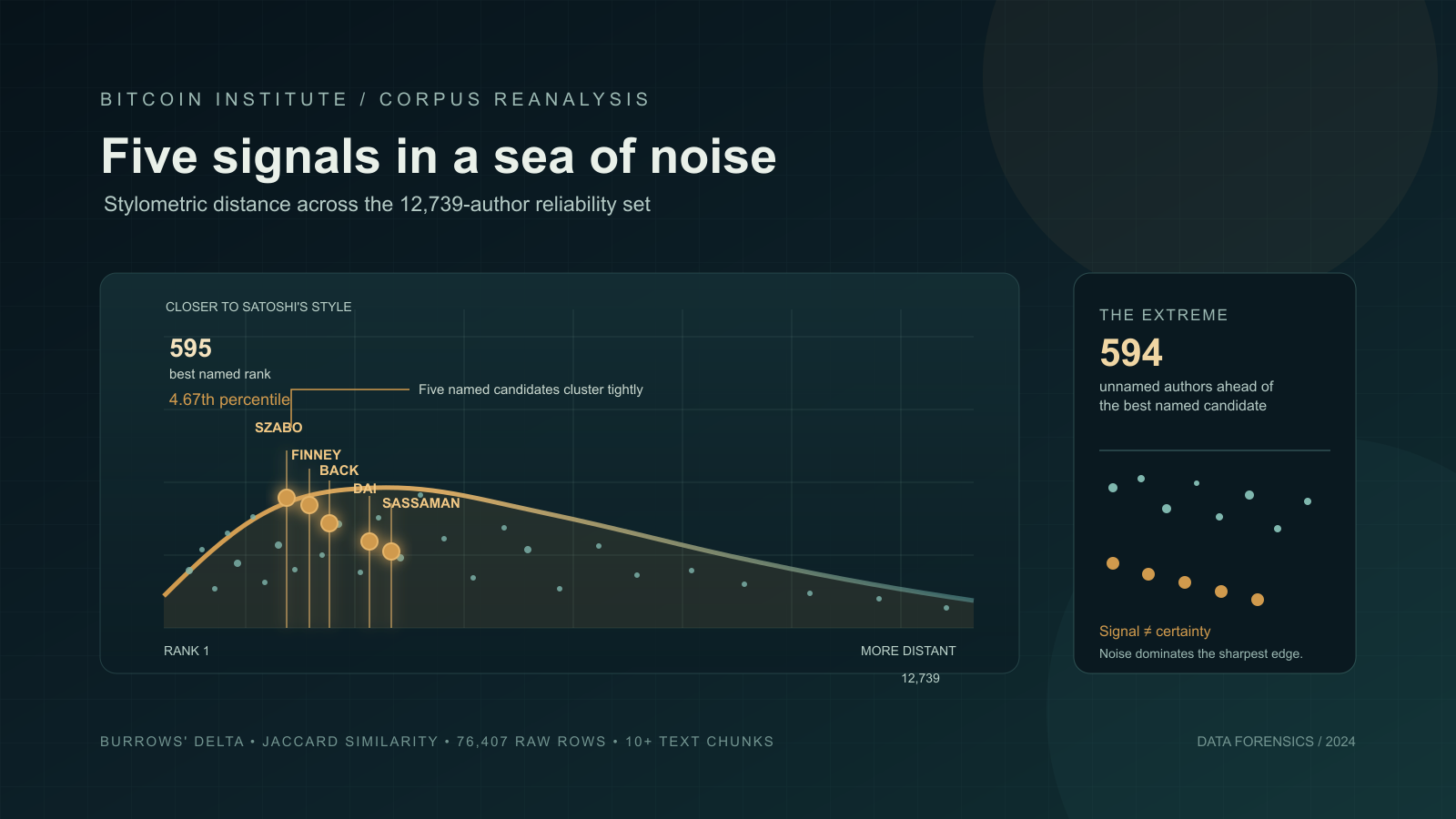
The documentary was widely criticized by the Bitcoin technical community within days of release. Bitcoin Magazine called it “An Insult to Bitcoin — Cynical, Stupid, and Dangerous.” Cointelegraph catalogued specific factual errors. Critics noted that the film relied entirely on circumstantial evidence and coincidence-based reasoning, with no cryptographic proof, no formal stylometric analysis, and no explanation for how an undergraduate fine-arts student could have designed a novel consensus mechanism. That quantitative gap remains open — Bitcoin Institute’s reanalysis of van Dorst’s stylometric corpus ranks five other named candidates against 12,739 mailing-list authors, but Todd himself was not active in the 1992–2000 cryptography-mailing-list community that corpus covers and so has never been given the same quantitative treatment.
The technical-community rejection of the documentary’s evidence does not by itself rule out the underlying claim — community sentiment is not evidence. But it does mean that the documentary’s specific evidentiary case has not survived expert review.
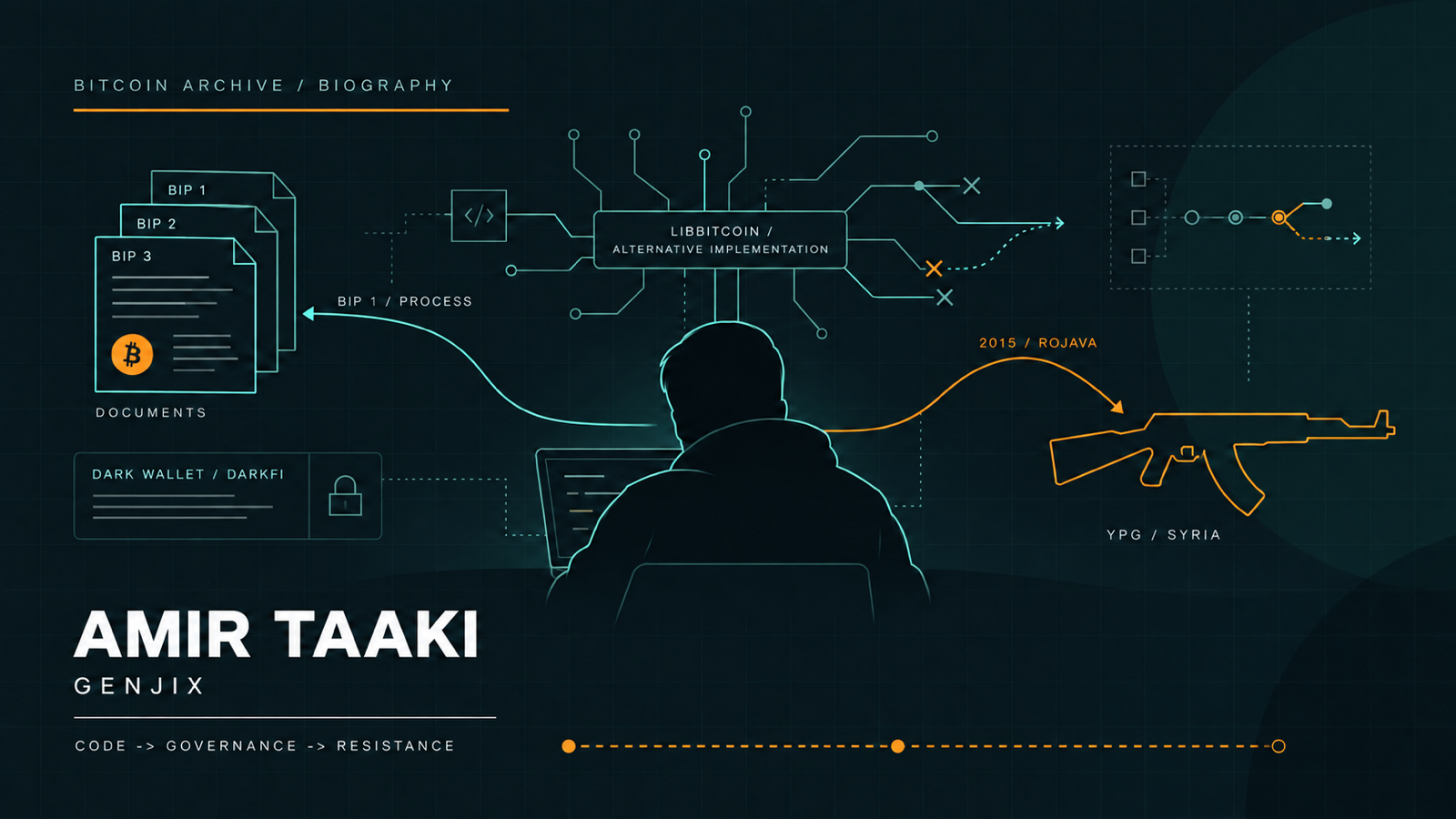
Among the critics was Amir Taaki, who had worked directly with Todd as Dark Wallet’s “Chief Scientist” and had made his own public guess at Satoshi’s age from the code back in 2011. Taaki rejected the theory on a different axis than the writing-style analysis in §1.3 above — the code itself: “Whenever anyone says X is Satoshi, my first response is always ‘show me the code.’” He argued that Satoshi’s notation and quirks pointed to an older programmer than Todd, adding, “To be fair to Peter Todd, he handled it well and didn’t try to claim undue credit.” A collaborator’s read, made in the same technical vocabulary the documentary’s own evidence turns on.
3. Within the broader documentary record
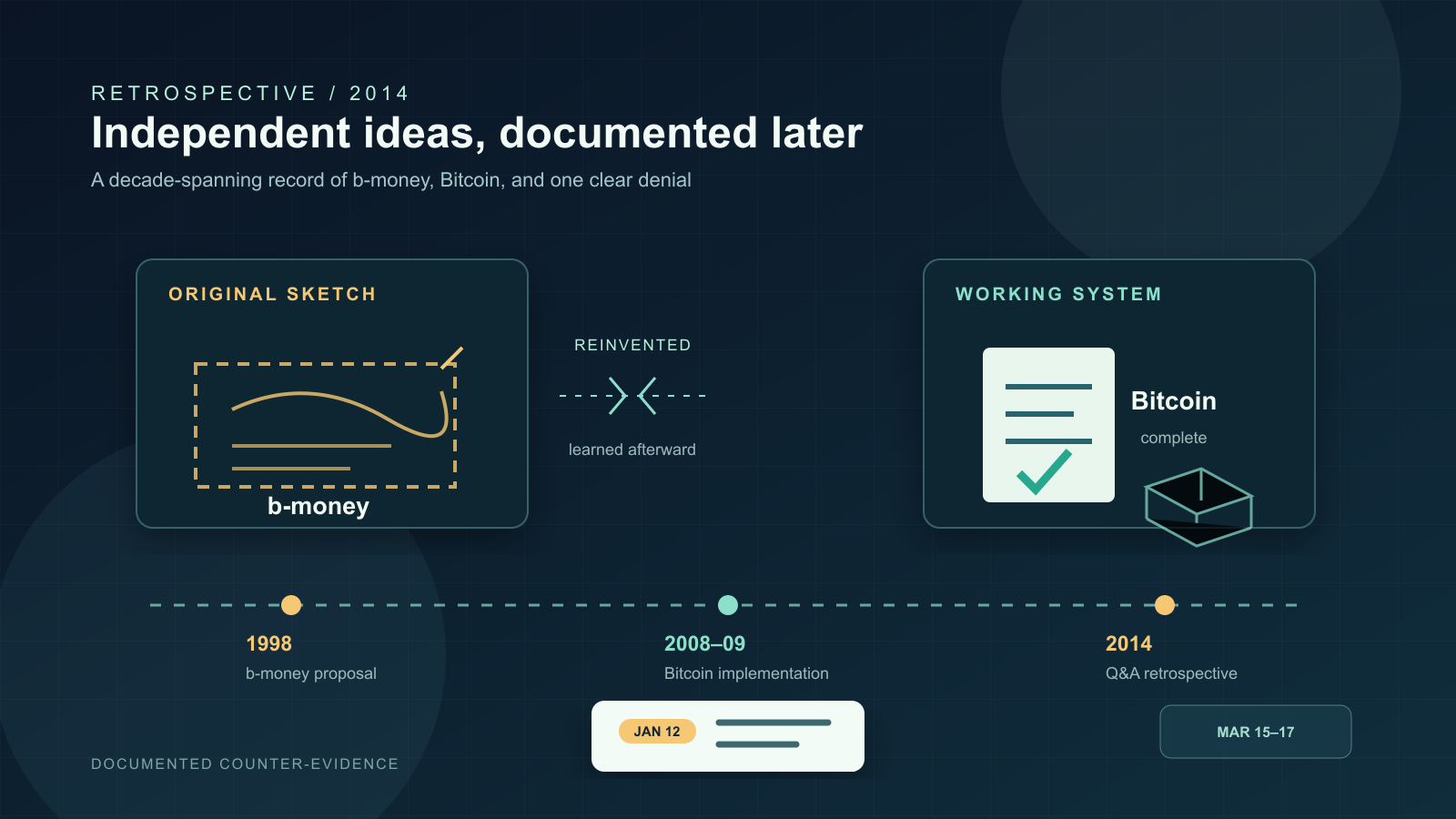
The strongest claim the public record supports about Satoshi himself is that he was structurally outside the visible cypherpunk community during the Bitcoin development period — Wei Dai’s 2014 identifiability argument, plus Satoshi’s own admission of not having known b-money during development, support a “not a visibly active cypherpunk during 2007–2008” reading.
That reading does not rule out Todd, but it does not select him either. The capability profile Bitcoin v0.1 demonstrates (cryptographic protocol design, distributed-systems engineering, monetary mechanism design, Bitcoin-source-level shipping in C++, near-native English) is what one would expect of someone with deep cypherpunk-cryptographic experience, not someone whose documented record consists of hardware-electronics projects and an OCAD fine-arts program.
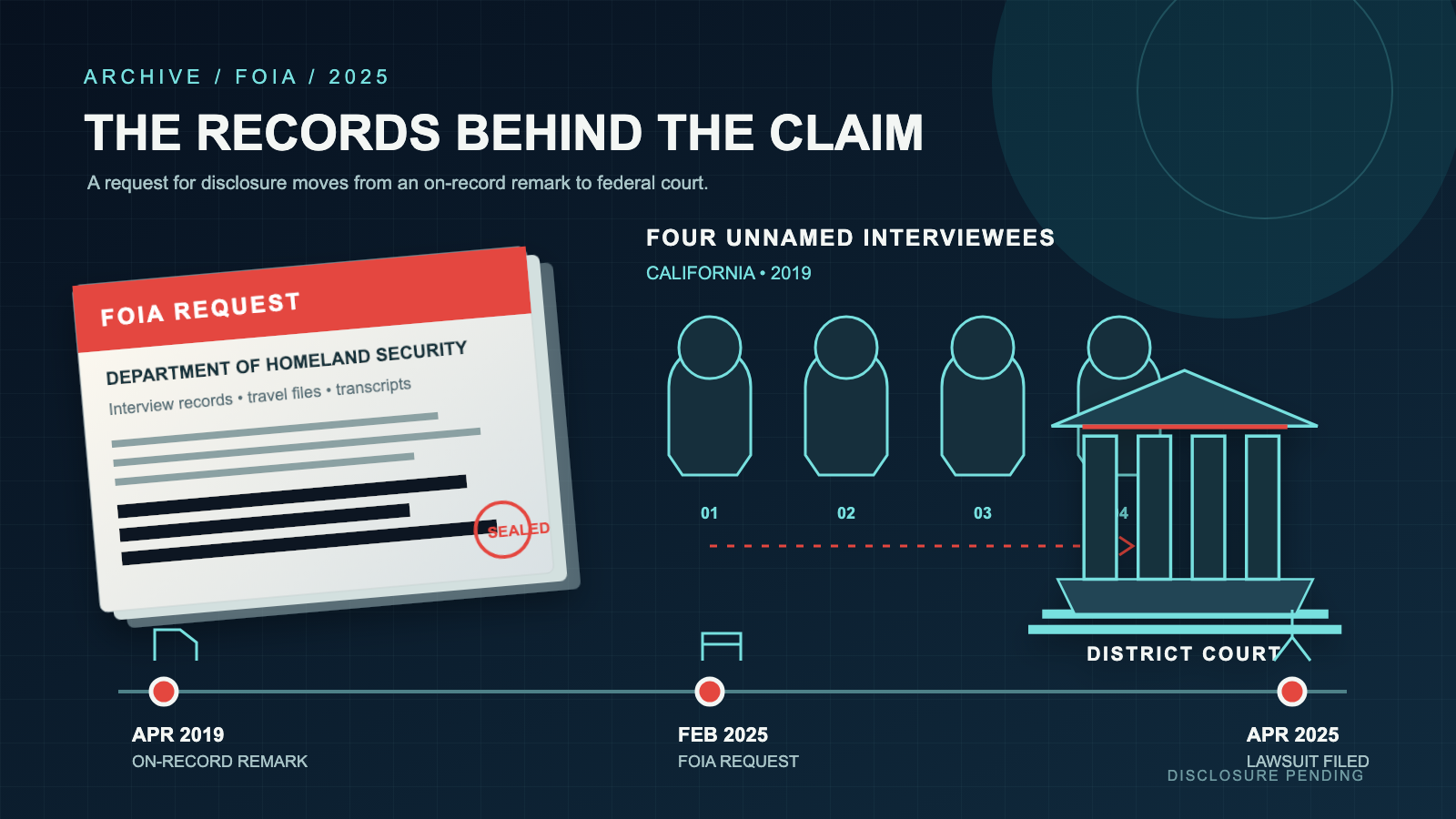
The HBO documentary naming Todd sits alongside three other major-press or documentary identifications from the same 2024–2026 wave: the 2026 NYT/Carreyrou investigation (Adam Back, stylometric), the Finding Satoshi documentary (Finney and Sassaman jointly), and the Murphy v DHS FOIA action (a government-record route). None of the four has produced cryptographic confirmation.
For comparison with other named-candidate Satoshi-identity hypotheses (Sassaman, Kaneko, Finney, Szabo, Back, Dai, Dorian, Wright, Le Roux), see the Satoshi-identity hypotheses overview, which provides a single candidate profile comparison and external-status notes for each candidate.
4. Limits of this entry
- This entry does not present new evidence. It compiles publicly available material.
- If new evidence surfaces — direct documentary links, technical fingerprints in the v0.1 code matching Todd’s other published code, comments by Todd or other witnesses that contradict the public record — this entry should be updated.
The HBO Money Electric documentary entry is the public articulation where the evidence in §1 starts. The satoshi-identity-hypotheses overview places the Todd claim in Group C of its necessary-but-not-sufficient evaluation.
The documentary found a pattern and called it a person. What it named was a 25-year-old fine-arts student whose public code pointed at Linux while Satoshi’s pointed at Windows, and whose voice, when it finally arrived, sounded like no one else. I keep the pattern; I cannot make it into a man.