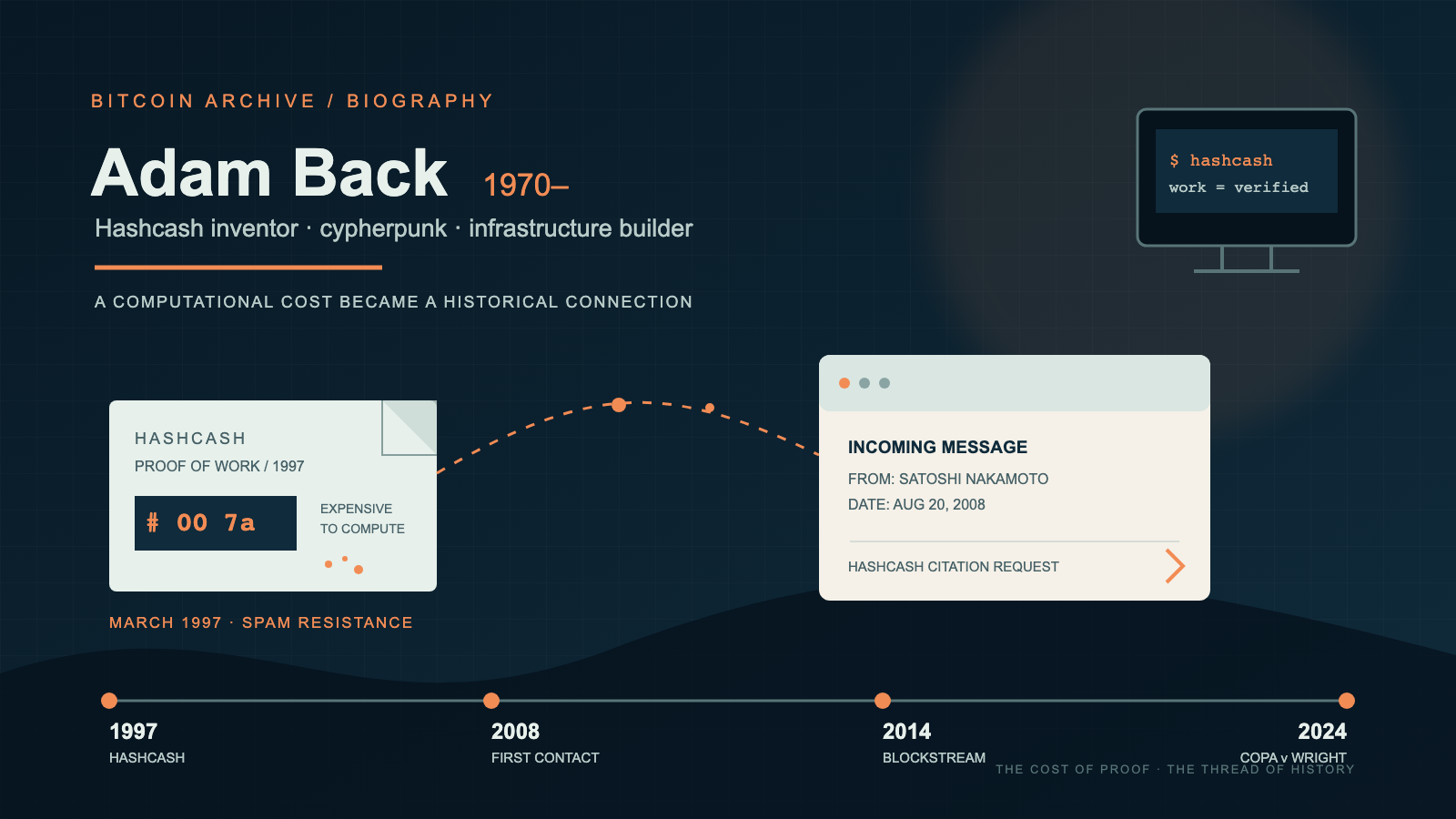
On April 8, 2026, John Carreyrou — the Pulitzer Prize–winning journalist who broke the Theranos story — published a roughly 10,000-word New York Times investigation, “My Quest to Solve Bitcoin’s Great Mystery,” identifying Adam Back, CEO of Blockstream and inventor of Hashcash, as the most likely person behind the Satoshi Nakamoto pseudonym. Back denied the identification.
The investigation
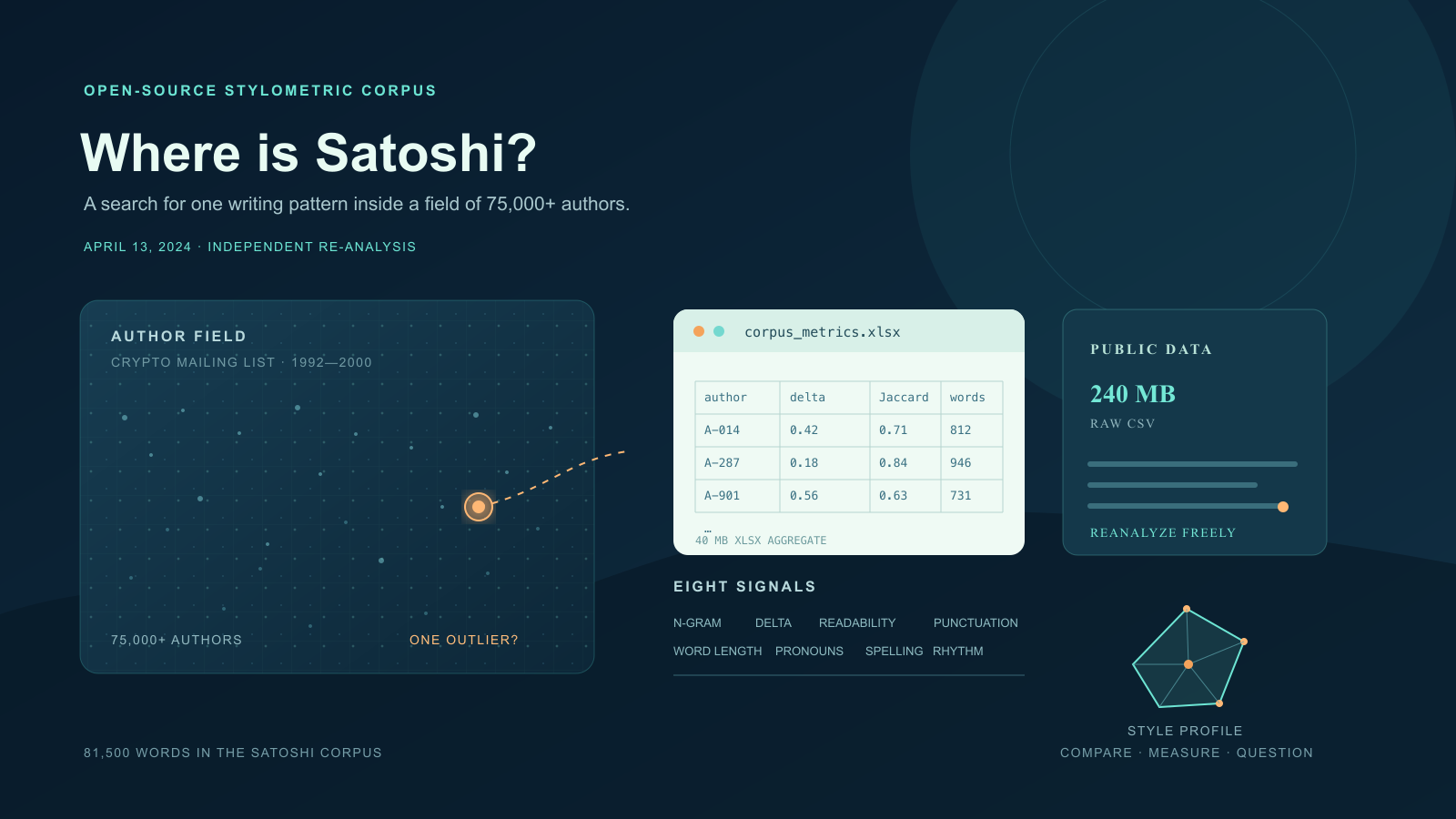
Carreyrou spent 18 months on the investigation, working with NYT AI expert Dylan Freedman. The methodology centered on stylometric comparison of cypherpunk-era writing:
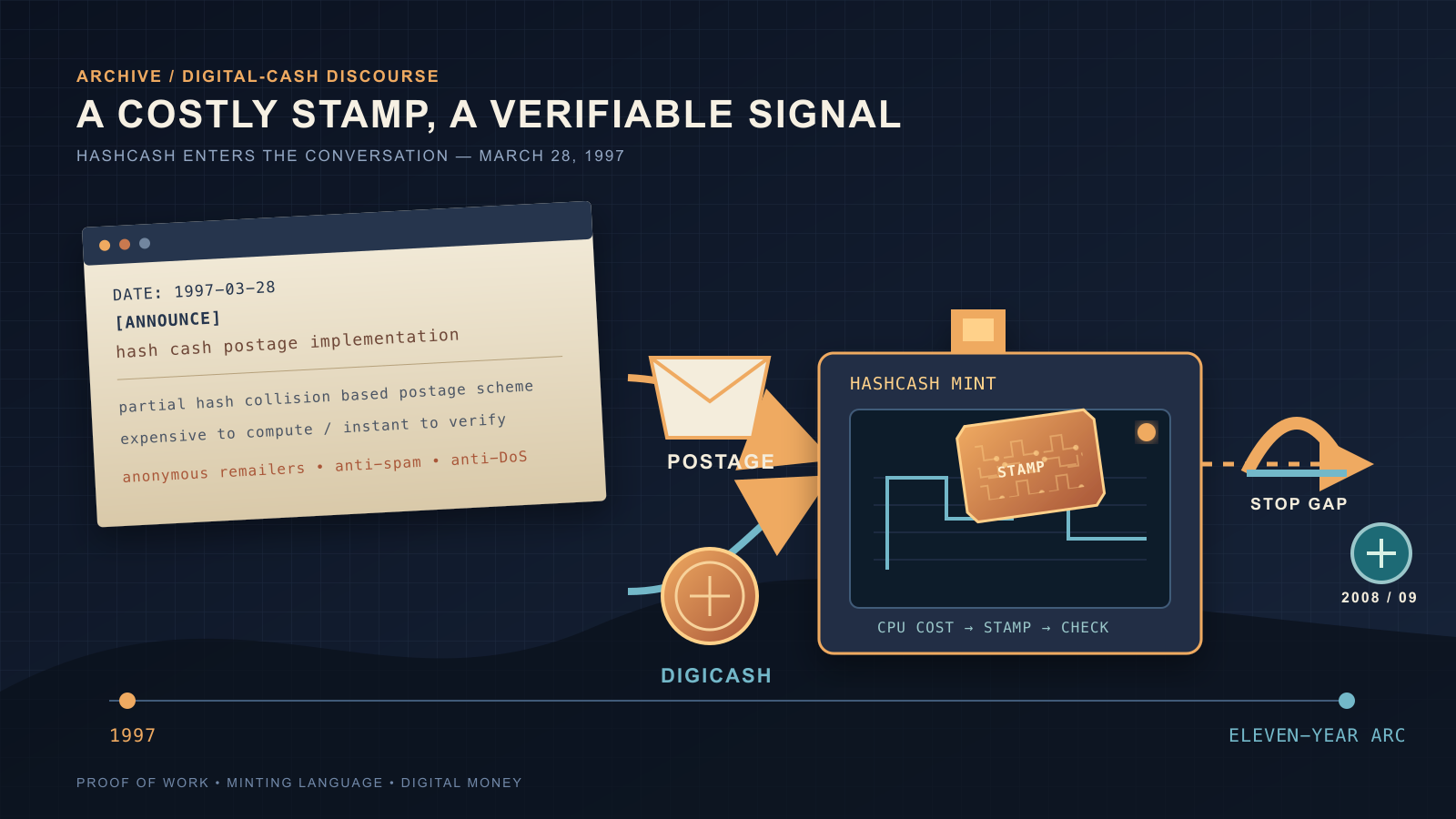
- Compiled correspondence from three cypherpunk mailing lists spanning roughly 1992 through 2008: the Cypherpunks list, the Cryptography list (metzdowd.com), and the Hashcash mailing list. The third list — Hashcash — was the announce/discussion list for Adam Back’s own 1997 proof-of-work proposal, which means Back’s writing volume on that list is structurally elevated for reasons unrelated to whether Back is Satoshi. Back has publicly objected on methodological grounds: he wrote far more on those lists than most other contributors over the same decade, so any pattern-matching system has much more of his text to train on, and a top match against his corpus mostly reflects how much he wrote rather than identifying him as Satoshi.
- Filtered to the 620 writers who had posted at least 10 messages on cryptography mailing lists before Bitcoin’s 2008 launch.
- Ran per-writer stylistic-fingerprint comparisons against Satoshi’s known writing.
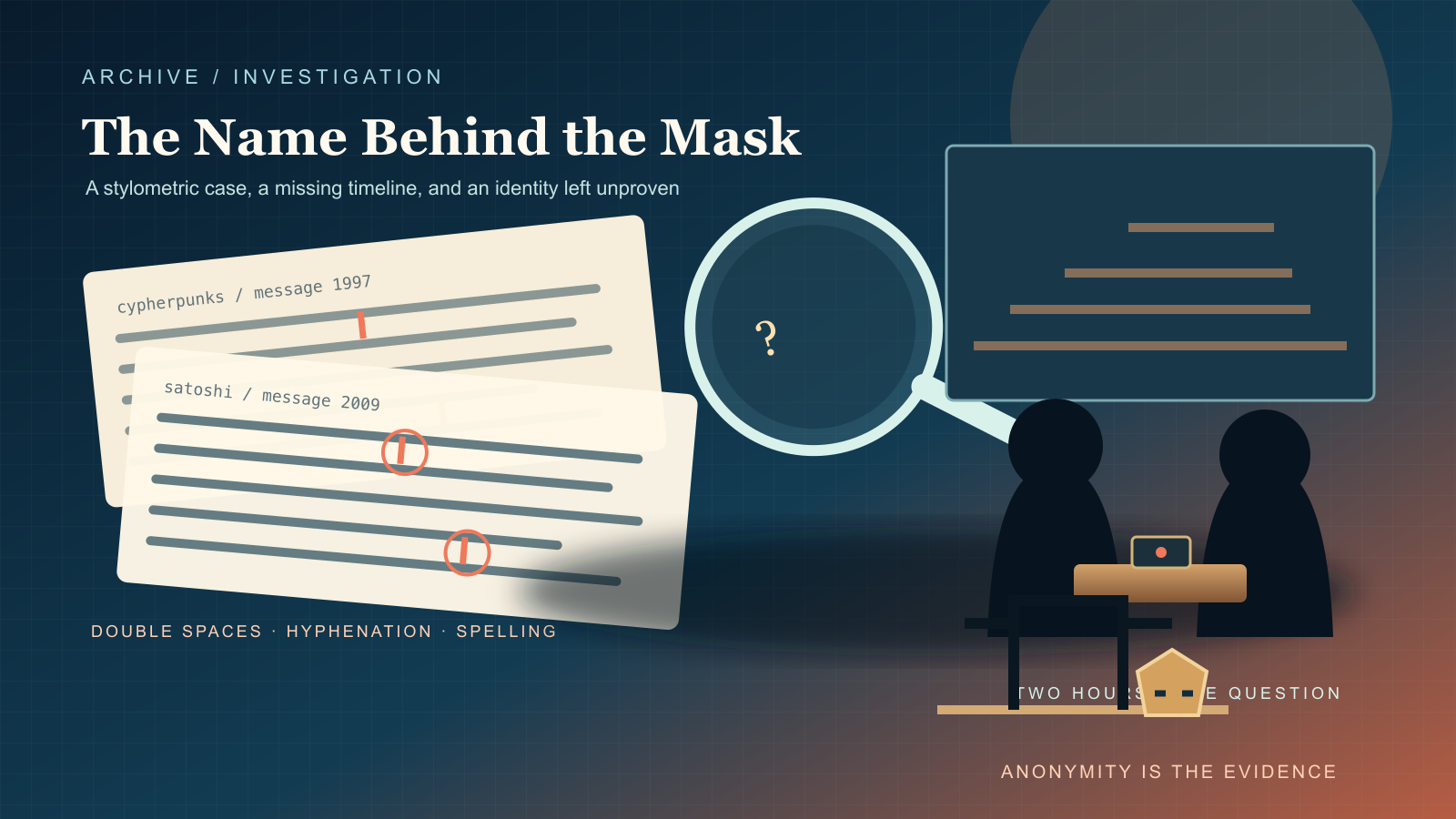
- Identified three markers where Back’s writing matched Satoshi’s distinctively: double-spacing after periods, British spellings (with Satoshi’s same mixed British/American pattern) — the same spelling evidence a 2020 Chain Bulletin analysis had already used to argue for a London-based Satoshi — and a specific class of hyphenation misuse.
- Catalogued 325 instances of nonstandard hyphenation in Satoshi’s writing; Back’s writing matched 67 of those exact errors — far above the next-closest match.
- Published a wider inventory of shared habits: both wrote “backup” and “bugfix” as one word and “half way” and “down side” as two, both alternated between “cheque” and “check” and between “e-mail” and “email,” and both used the same distinctive phrases — “partial pre-image,” “burning the money,” and “proof-of-work” with the hyphen. Back, the article adds, often confused “it’s” and “its” and had a habit of ending sentences with “also.”
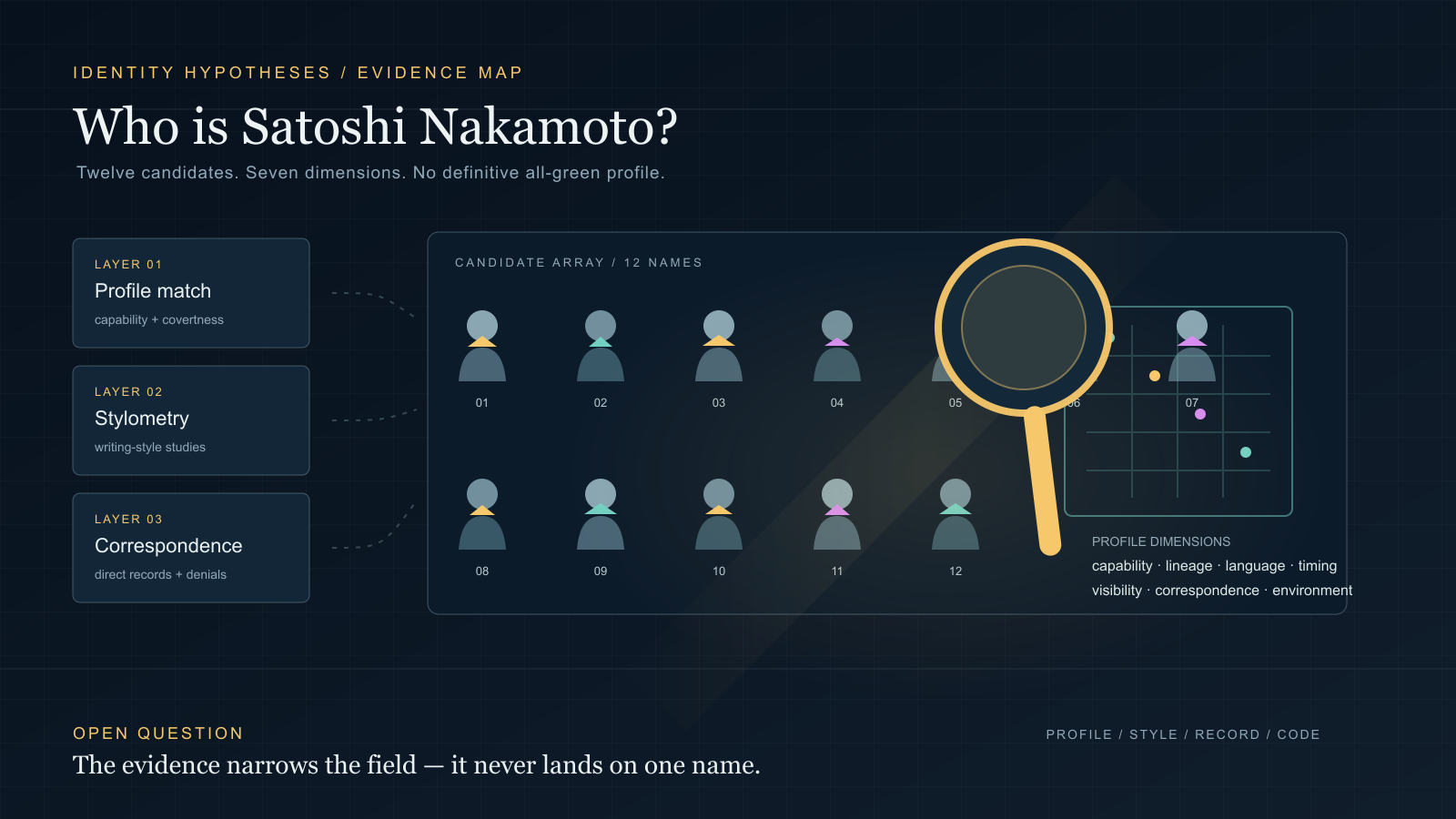
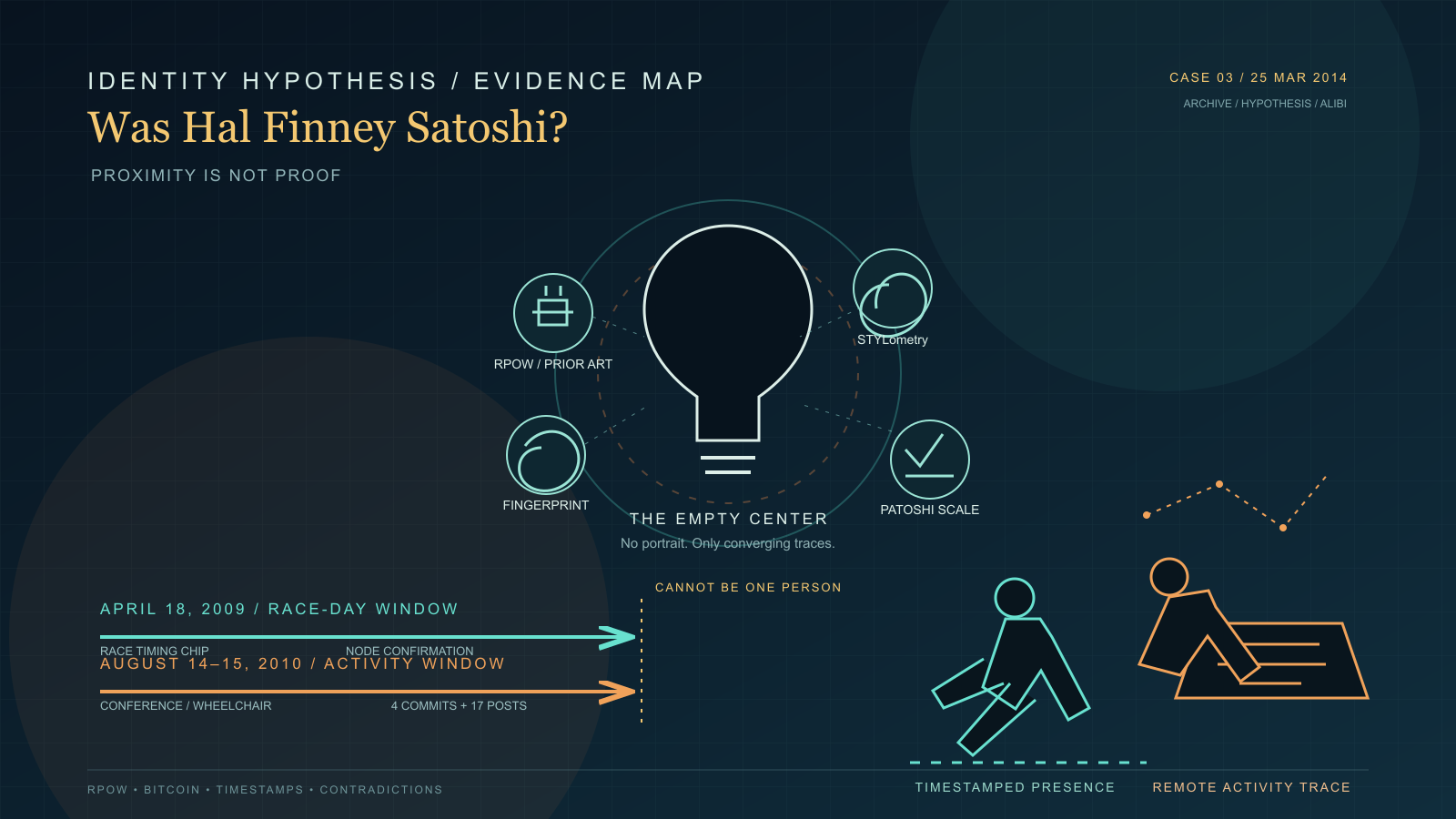
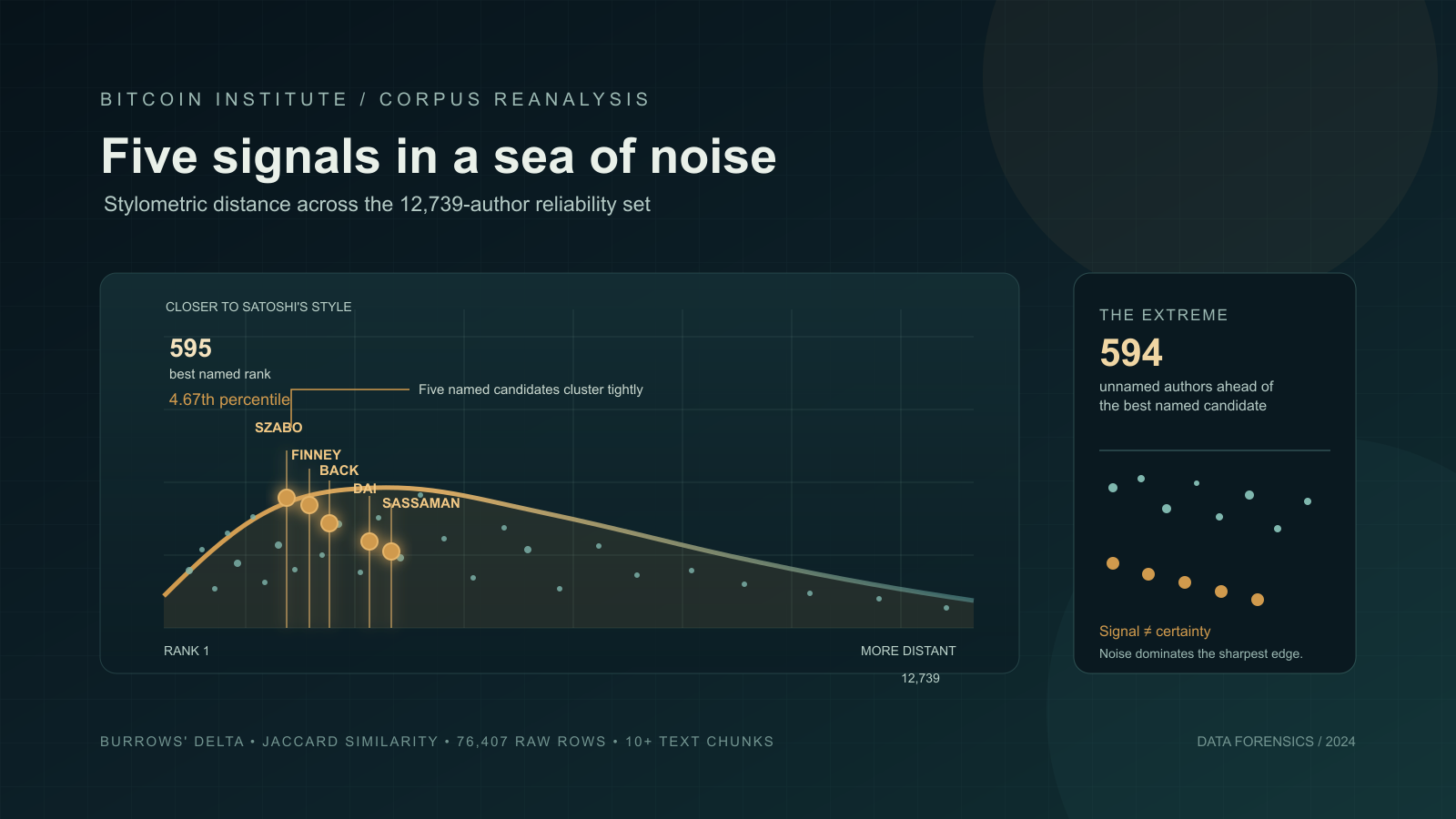
Independent stylometric analysis by linguist Florian Cafiero, commissioned for the investigation, ranked Back highest among 12 candidates but Cafiero himself described the result as inconclusive. Hal Finney — subject of his own dedicated identity hypothesis — nearly tied with Back for the top spot in Cafiero’s ranking.
Beyond the stylometry, the investigation assembled a set of circumstantial timeline claims:
- A 1997 electronic-cash blueprint. On April 30, 1997, Back proposed on the cypherpunks list an electronic cash system “entirely disconnected” from the banking system, with four attributes — privacy for payer and recipient, distribution across networked computers, built-in scarcity, and no trusted individuals or banks — plus a fifth added two days later, a publicly verifiable protocol. The article maps all five onto Bitcoin’s eventual design.
- A “conspicuous gap.” Although Back had been engaged in cypherpunk discussions about electronic cash for years, his online posting went quiet in the period around Bitcoin’s late-2008 announcement and stayed quiet for the roughly two and a half years Satoshi remained active. Summarizing the pattern on NPR, Carreyrou reached for a comic-book image: “It’s like Bruce Wayne and Batman. When Batman comes out, Bruce Wayne is nowhere to be seen.”
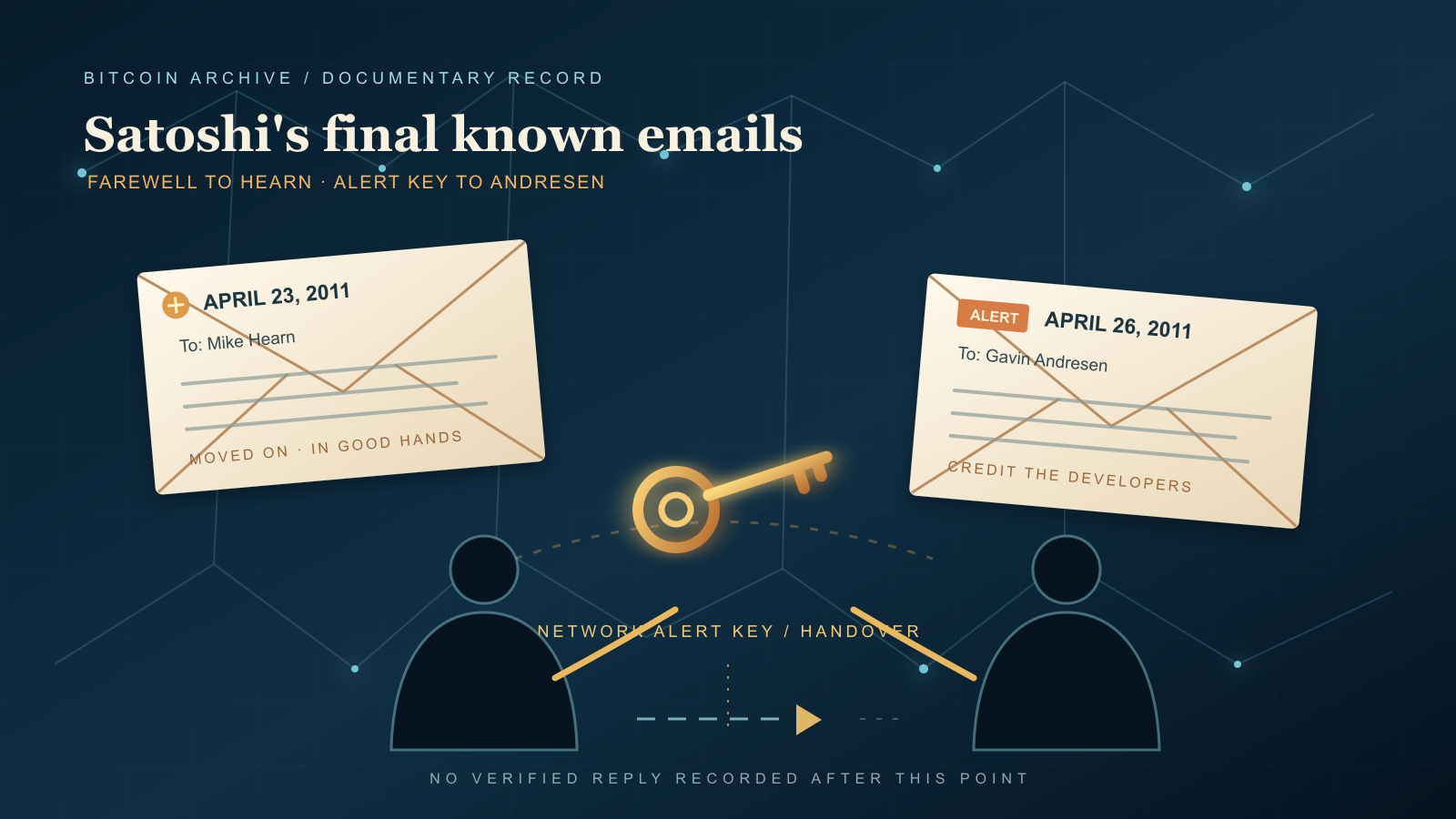
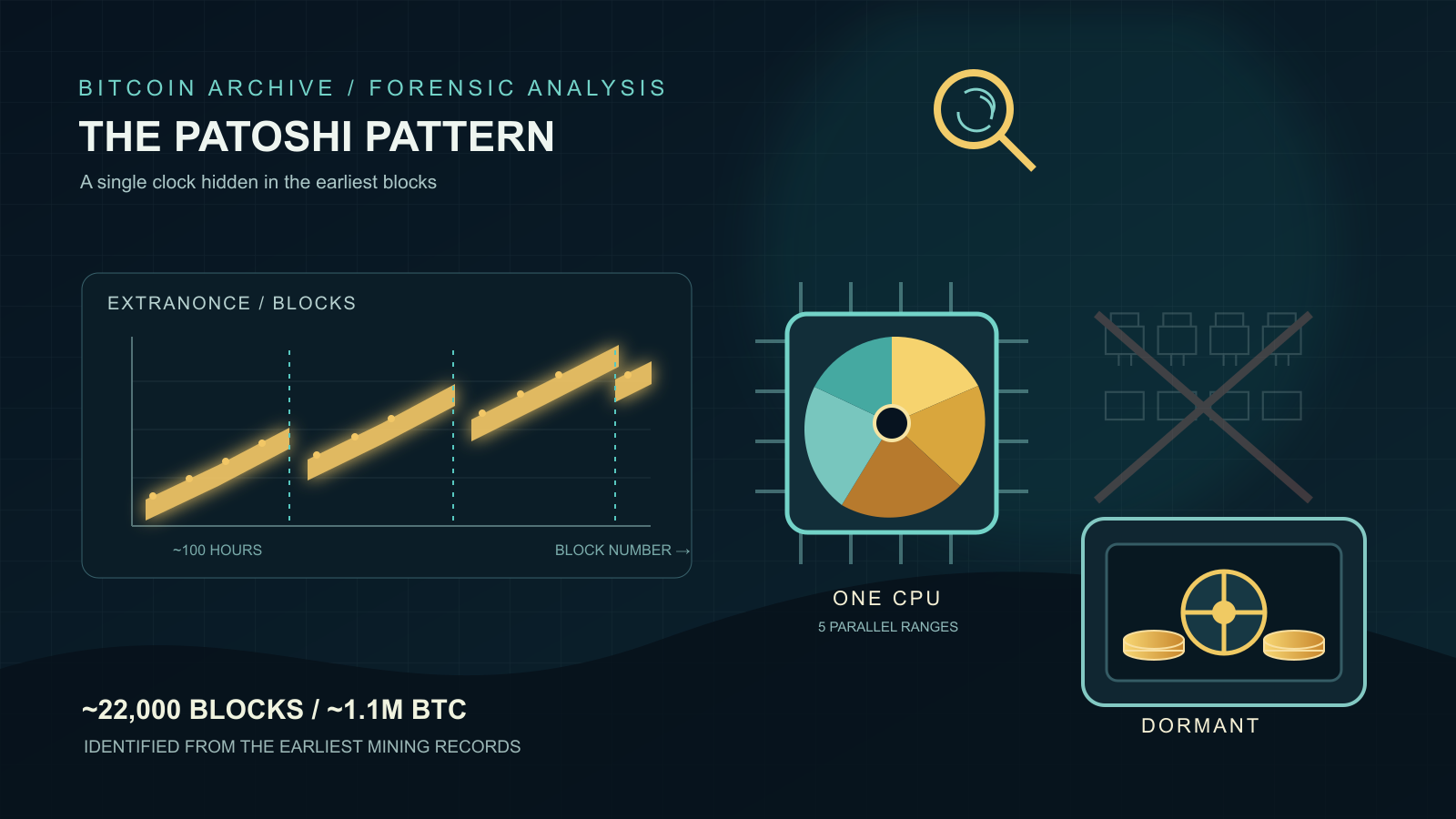
- A mirrored return. Satoshi’s last known email is dated April 26, 2011; six weeks later, in June 2011, Back made his first public comment about Bitcoin, on the same cryptography mailing list. He joined BitcoinTalk on April 17, 2013 — in the immediate wake of Sergio Lerner’s Patoshi analysis, which had just put a public figure on the fortune attributable to Satoshi’s early mining — and within two weeks was demanding that Wikipedia restore its stand-alone Satoshi Nakamoto page.
- The HBO scene. Carreyrou’s account traces part of his initial focus on Back to a scene in the 2024 HBO documentary “Money Electric”: at the mention of his own name, Back tensed up, strenuously denied being Satoshi, and asked that the conversation be kept off the record.
The El Salvador interview
Carreyrou put the evidence to Back in person in late January 2026, in a two-hour hotel-room interview on the sidelines of a Bitcoin conference in San Salvador (Back lives in El Salvador). Back denied the identification more than six times, attributing the accumulated matches to coincidence:
“Ultimately, it doesn’t prove anything. And I will reassure you, it’s really not me.”
The published account pairs those denials with Carreyrou’s first-person reading of Back’s demeanor:
“But at times, his body language told a different story. His face reddened and he shifted uncomfortably in his seat when confronted with things that were harder to explain away.”
The recorded remark Carreyrou heard as a slip
Listening back to his interview recording afterward, Carreyrou fixed on one moment. He had brought up Satoshi’s November 2008 line “I’m better with code than with words”; Back had answered:
“I did a lot of talking though for somebody, I mean … I mean, I’m not saying I’m good with words but I sure did a lot of yakking on these lists actually.”
Carreyrou heard the reply as Back speaking of Satoshi’s mailing-list writing as his own — in the article’s words, a few seconds in which Back “had let the mask fall and turned into Satoshi.” Confronted by email a few days later, Back denied any slip:
“I was just responding conversationally to a general observation about technical people often feeling more comfortable expressing ideas in code than in prose.”
The article closes on this exchange — Carreyrou writes that it removed “any lingering doubt” in his mind that he had the right man, and in the NPR interview five days after publication he described himself as “somewhere between 99 and 100% certain.” Both the demeanor reading and the slip reading are the reporter’s interpretation of a remark whose meaning Back disputes.
Back’s responses
In a follow-up Yahoo Finance interview on April 10, 2026, Back articulated his objections to the methodology:
“There’s an element of confirmation bias in it.”
“You are inherently selecting people who are interested in similar things… They’re going to sound similar.”
He framed the question against the high-public-visibility identification:
“I think the most probable situation is that Satoshi is somebody who’s not talking to documentary film crews, to investigative journalists.”
He argued that Satoshi’s continued anonymity is structurally beneficial to Bitcoin:
“It’s actually positive and fortunate for bitcoin… it helps bitcoin seem more like a discovery and an asset class.”
Back also denied the claim on social media, consistent with his prior public position across multiple interviews and conference talks. The denial pattern matches his February 2024 sworn testimony in COPA v Wright, where he submitted his complete email correspondence with Satoshi as witness evidence under oath.
Pre-existing archive context relevant to the investigation
The archive holds primary-source material that bears directly on the NYT claim:
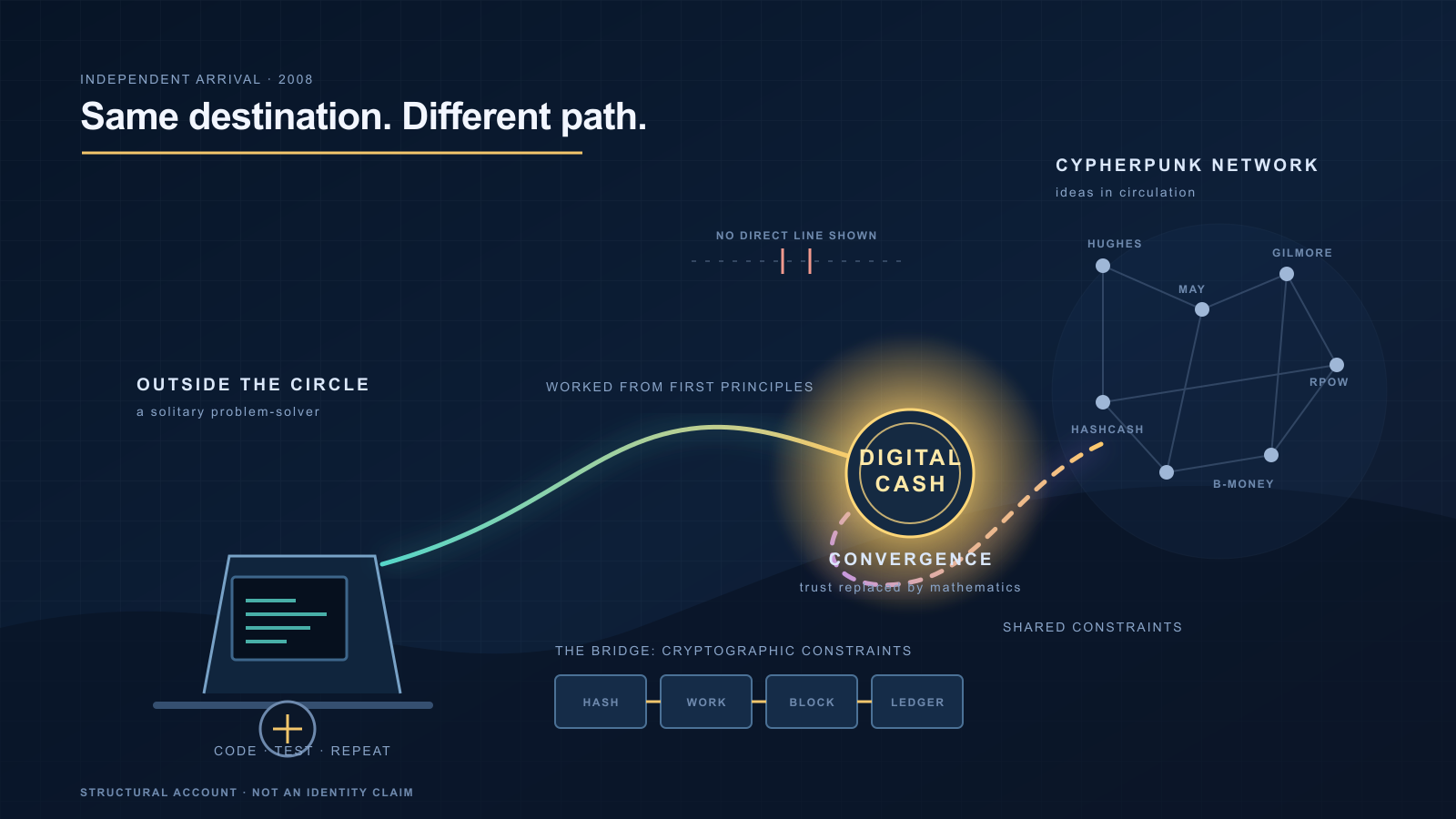
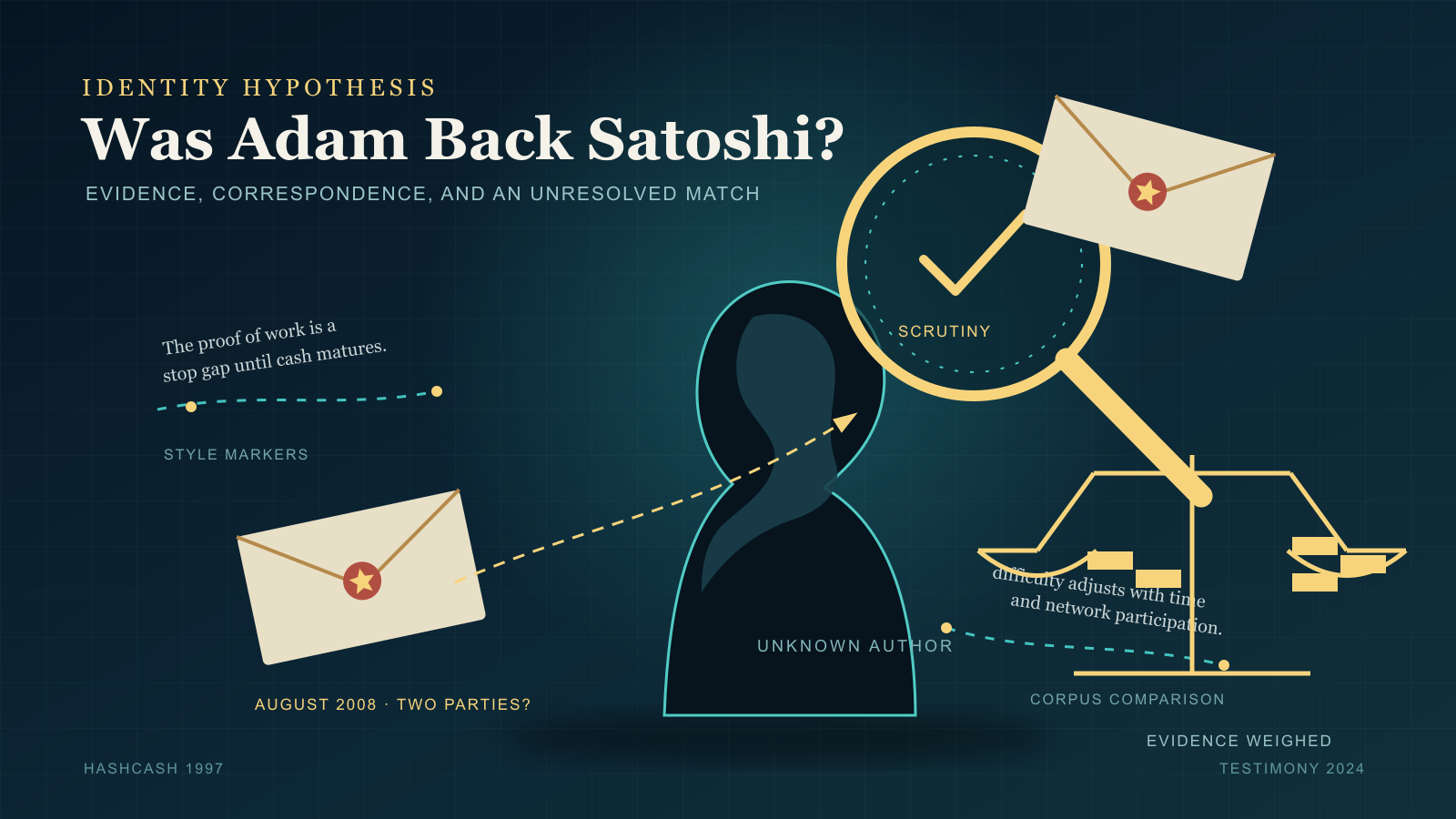
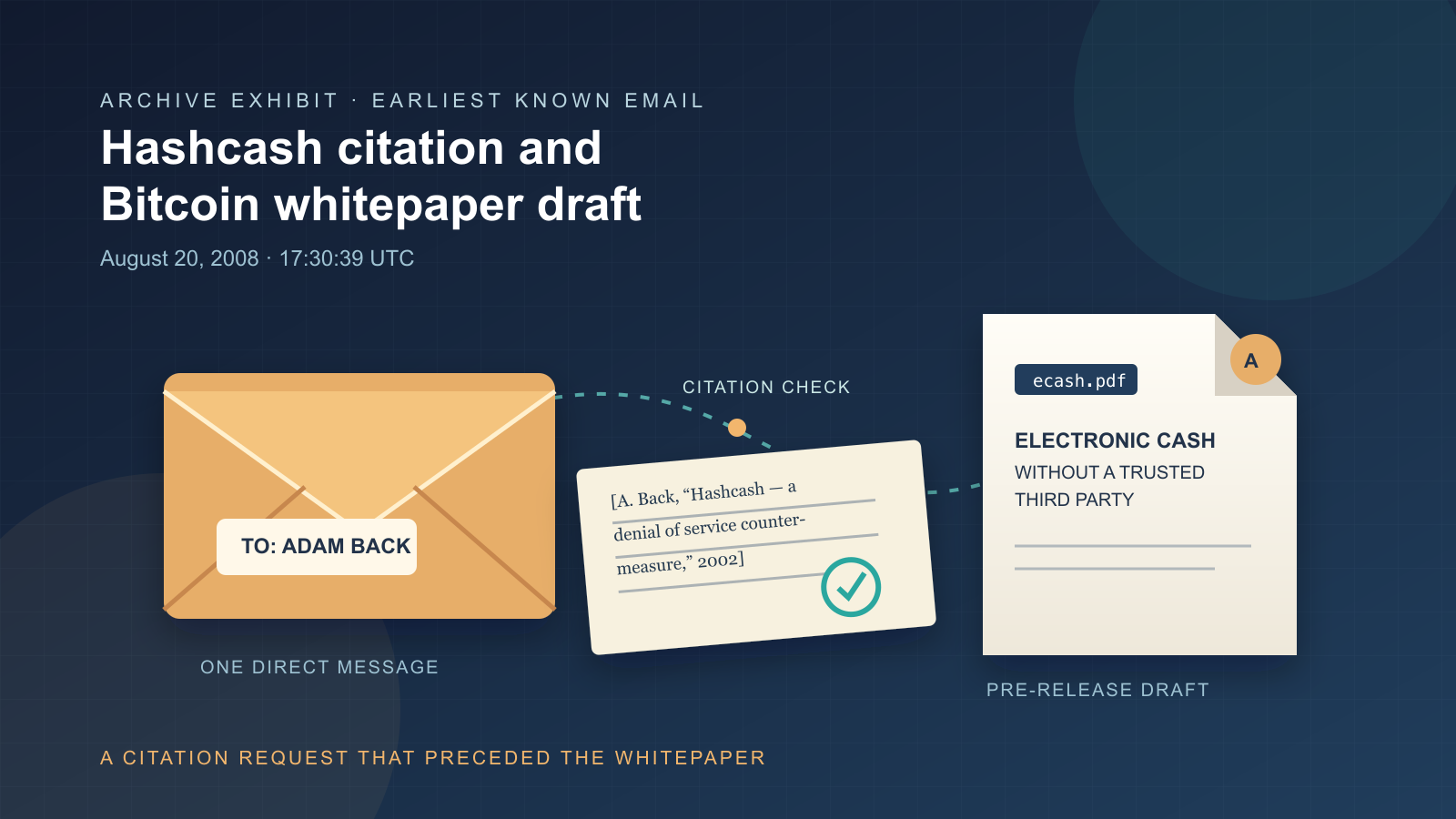
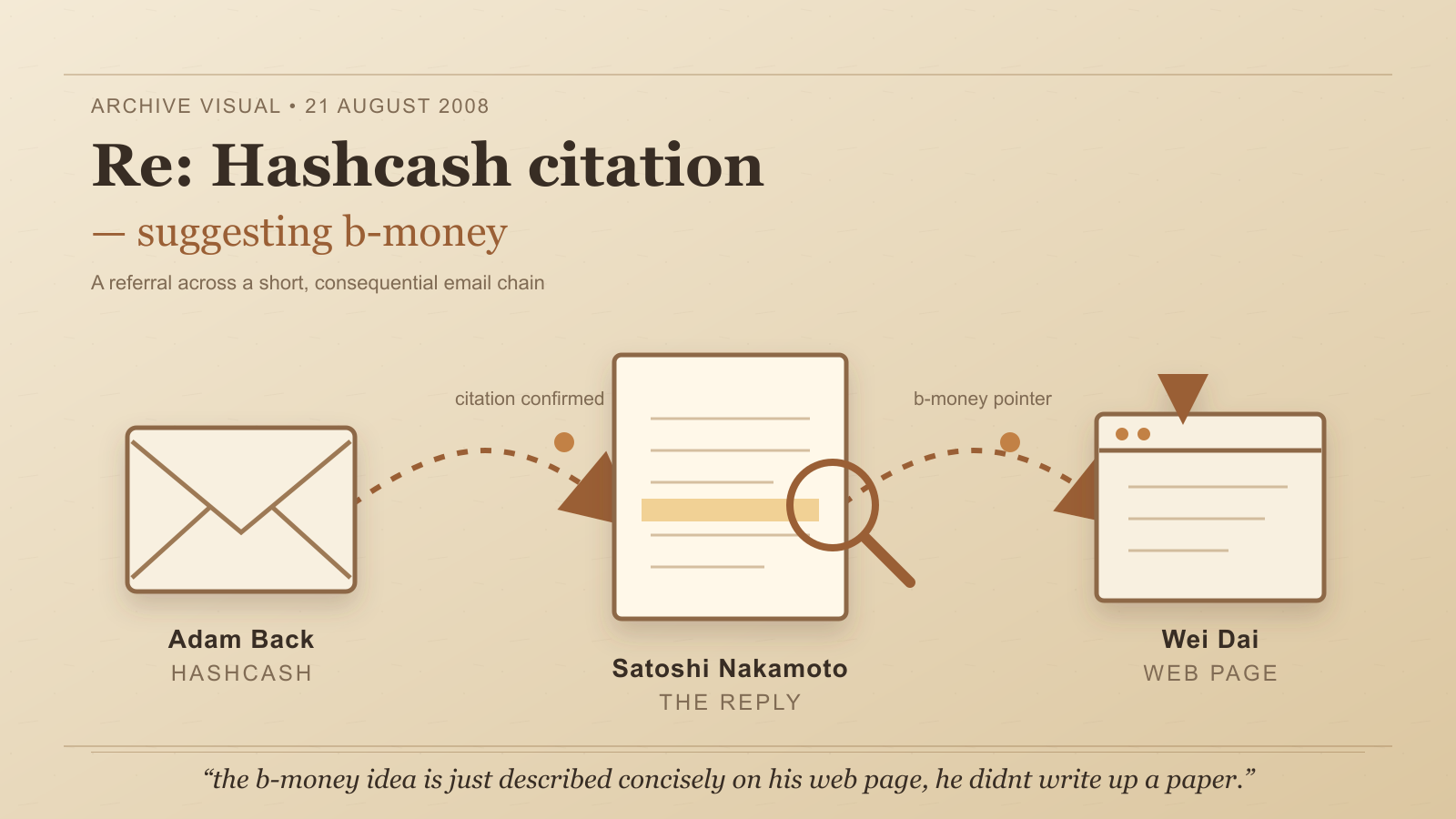
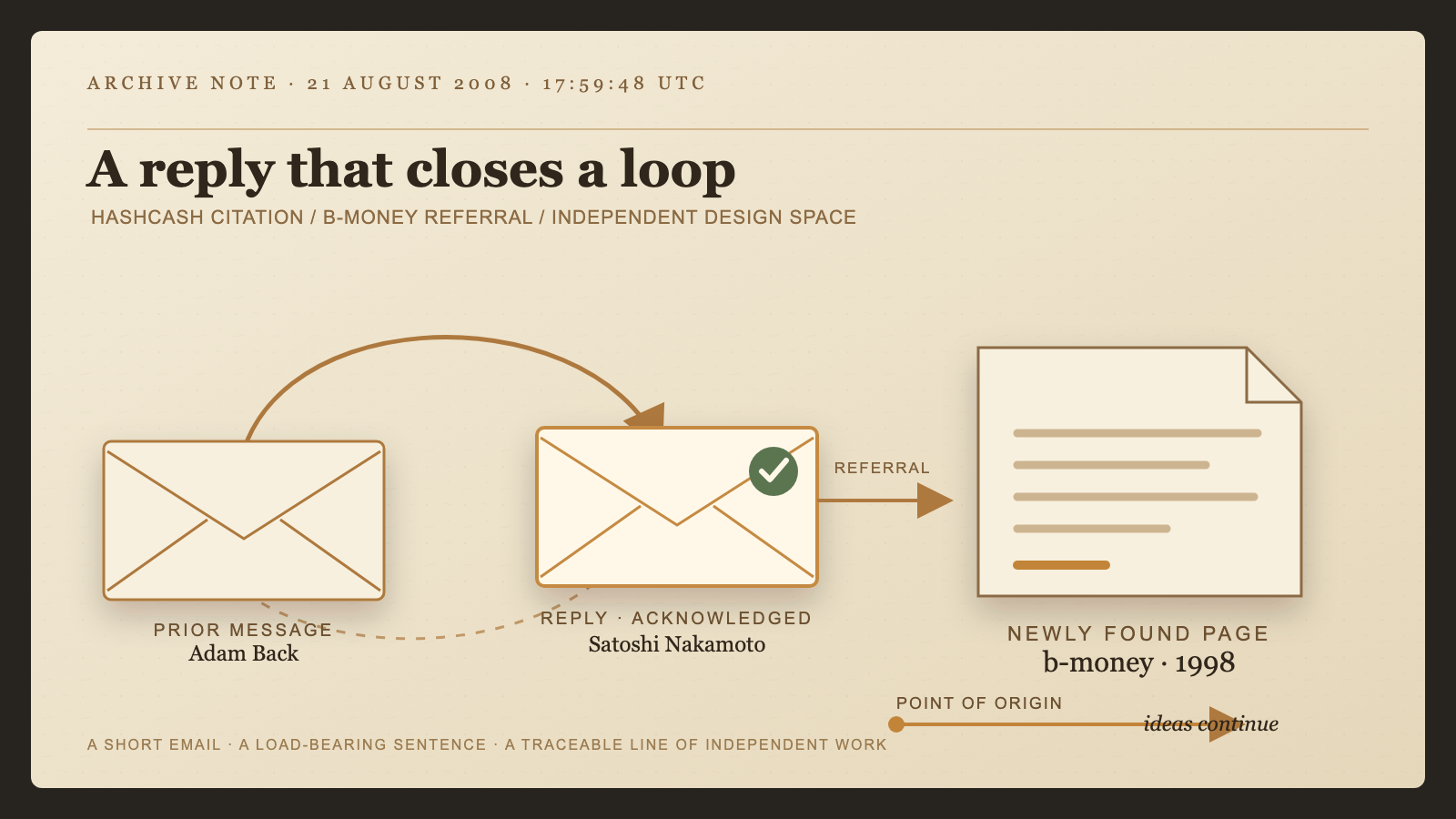
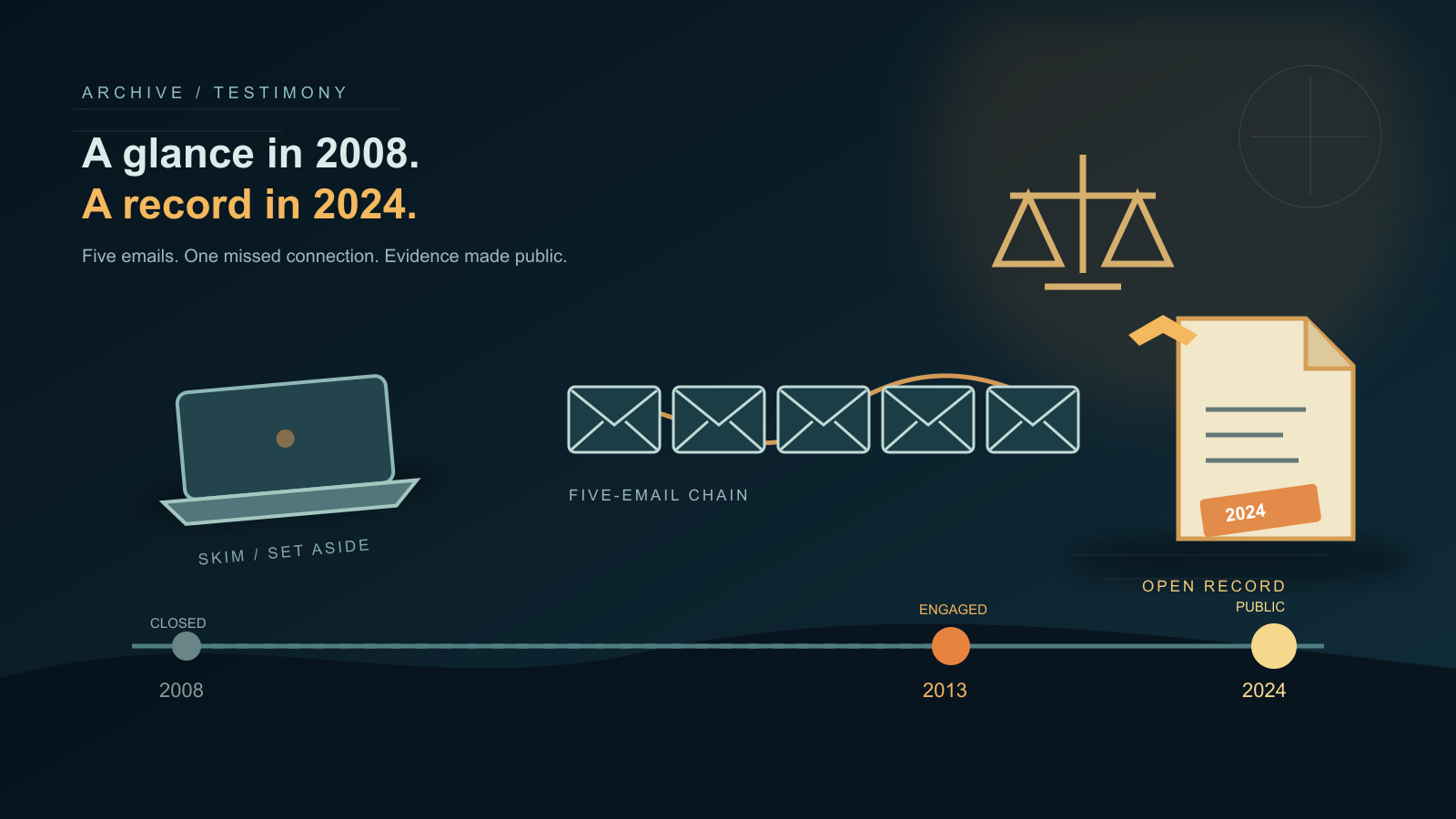
- The August 20–22, 2008 email exchange between Satoshi and Back — including Back’s August 21 reply suggesting Satoshi look at Wei Dai’s b-money, and Satoshi’s August 22 reply stating “I wasn’t aware of the b-money page” and the same-day email to Wei Dai.
- Back’s February 2024 COPA v Wright testimony submitting these emails as witness evidence, treating Satoshi as a separate person under oath.
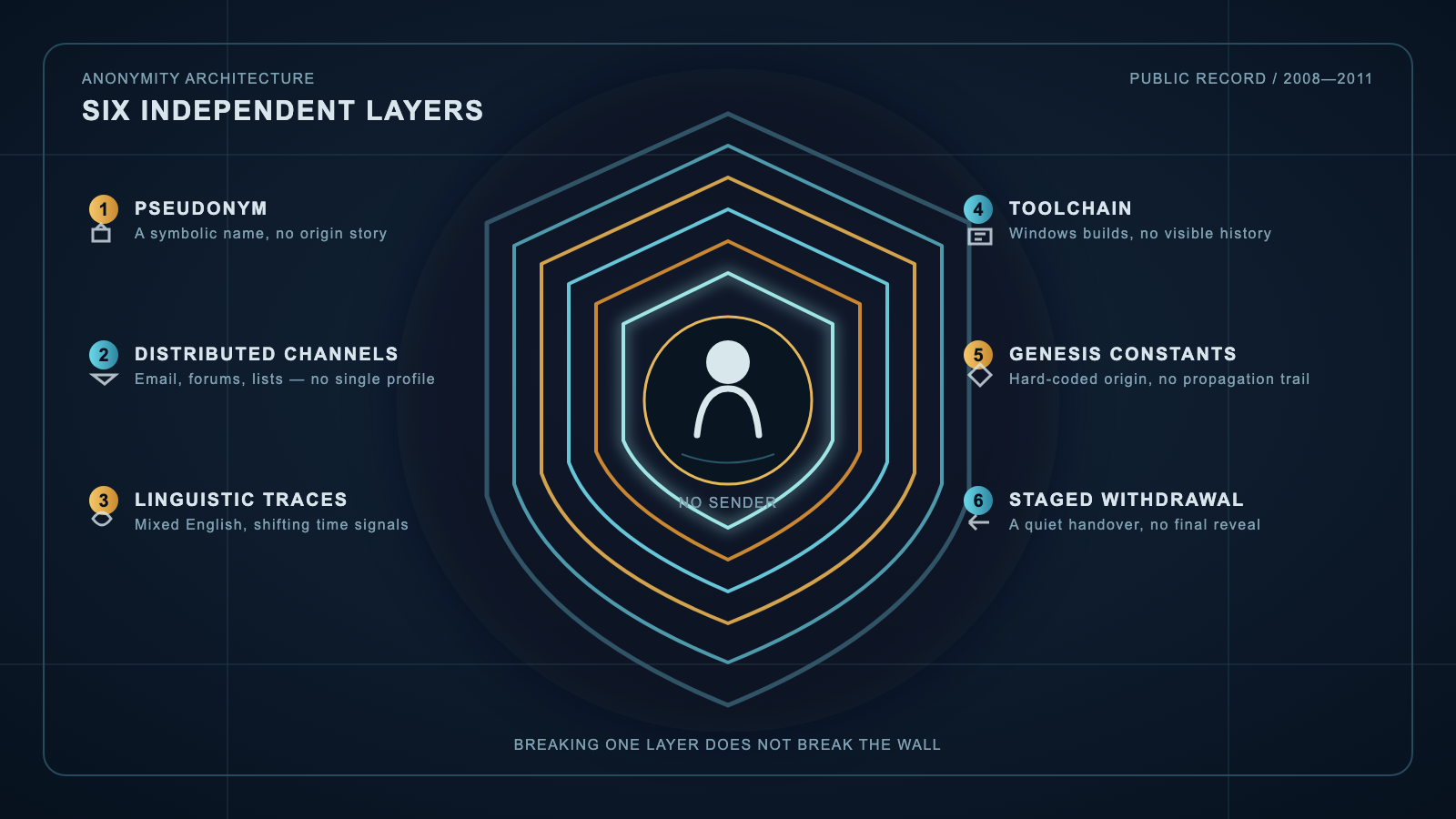
- Wei Dai’s 2014 retrospective on the AALWA thread, which argues Satoshi was “not previously active” in the visible cypherpunk community during the development period — a framing that selects against any candidate visibly active in cypherpunk-list discussion during 2007–2008, which is exactly the population the NYT stylometric analysis draws its candidates from.
Critical reception
Coverage in cryptocurrency-focused media was mixed but largely skeptical of the identification. Fortune emphasized that the investigation “may have” found Satoshi rather than that it had. Unchained reported community consensus aligning with Back’s denial. The methodology was widely framed in Bitcoin community responses as suggestive but not dispositive — particularly given Cafiero’s own “inconclusive” characterization and the near-tie with Finney.
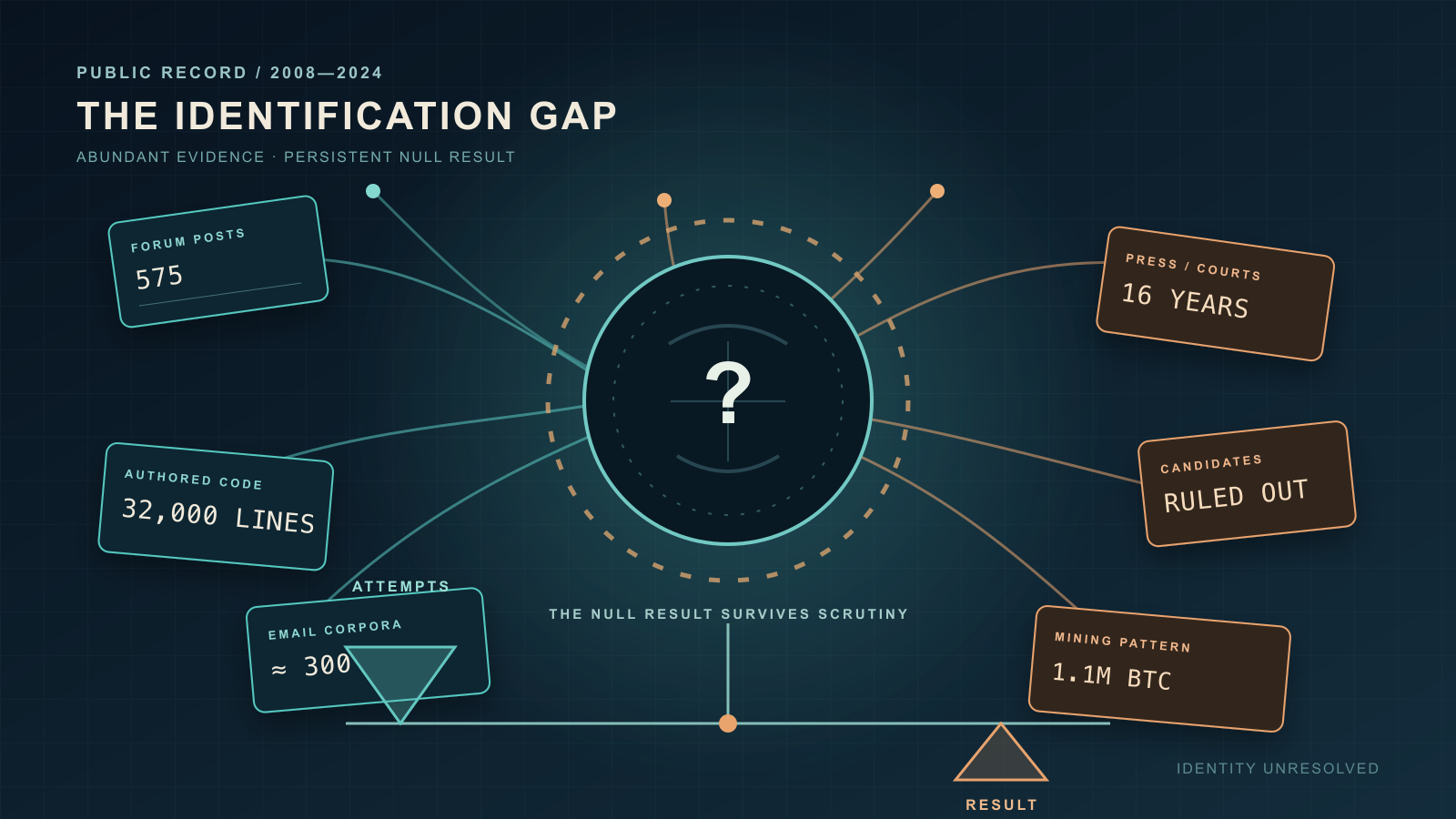
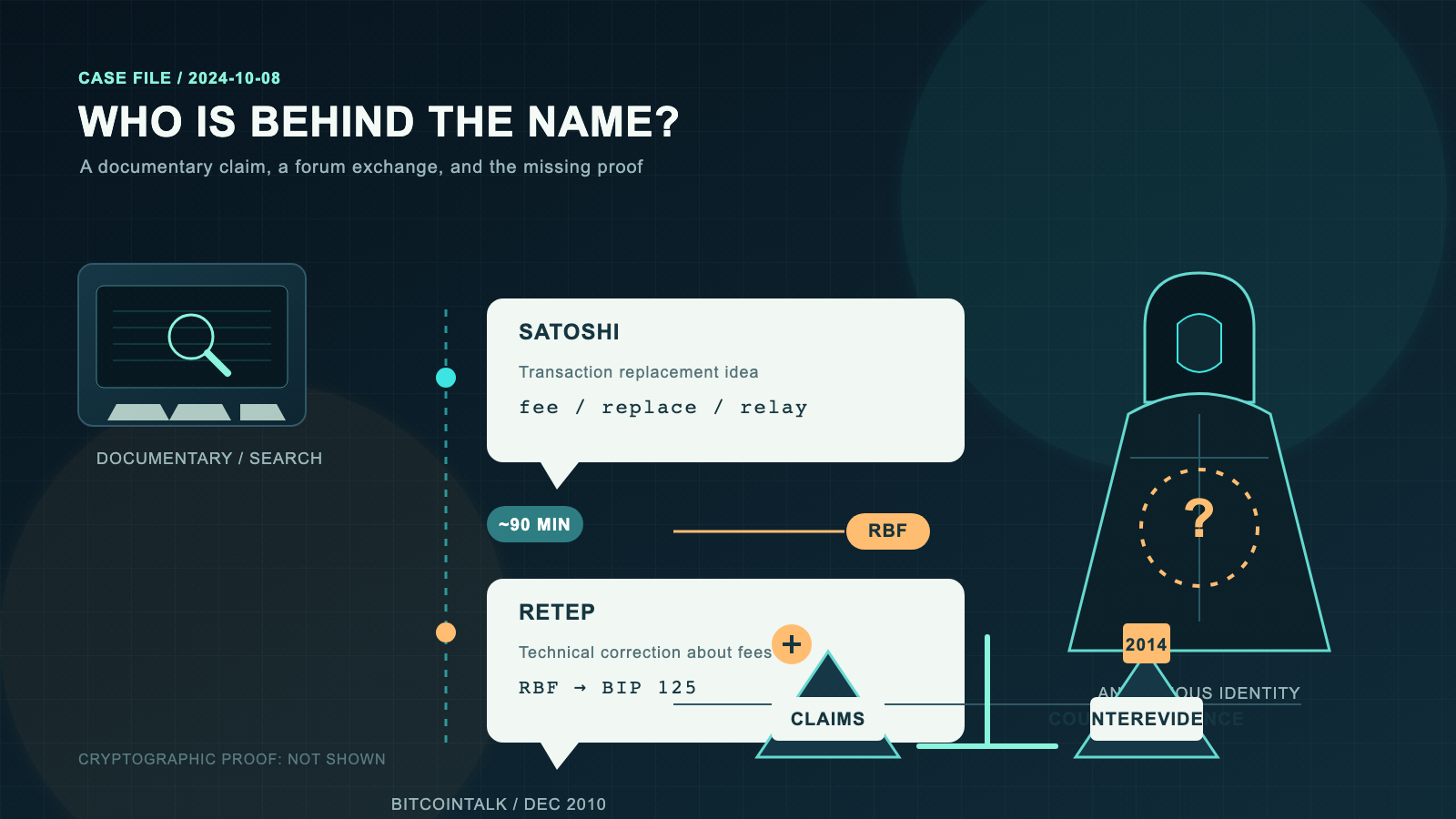
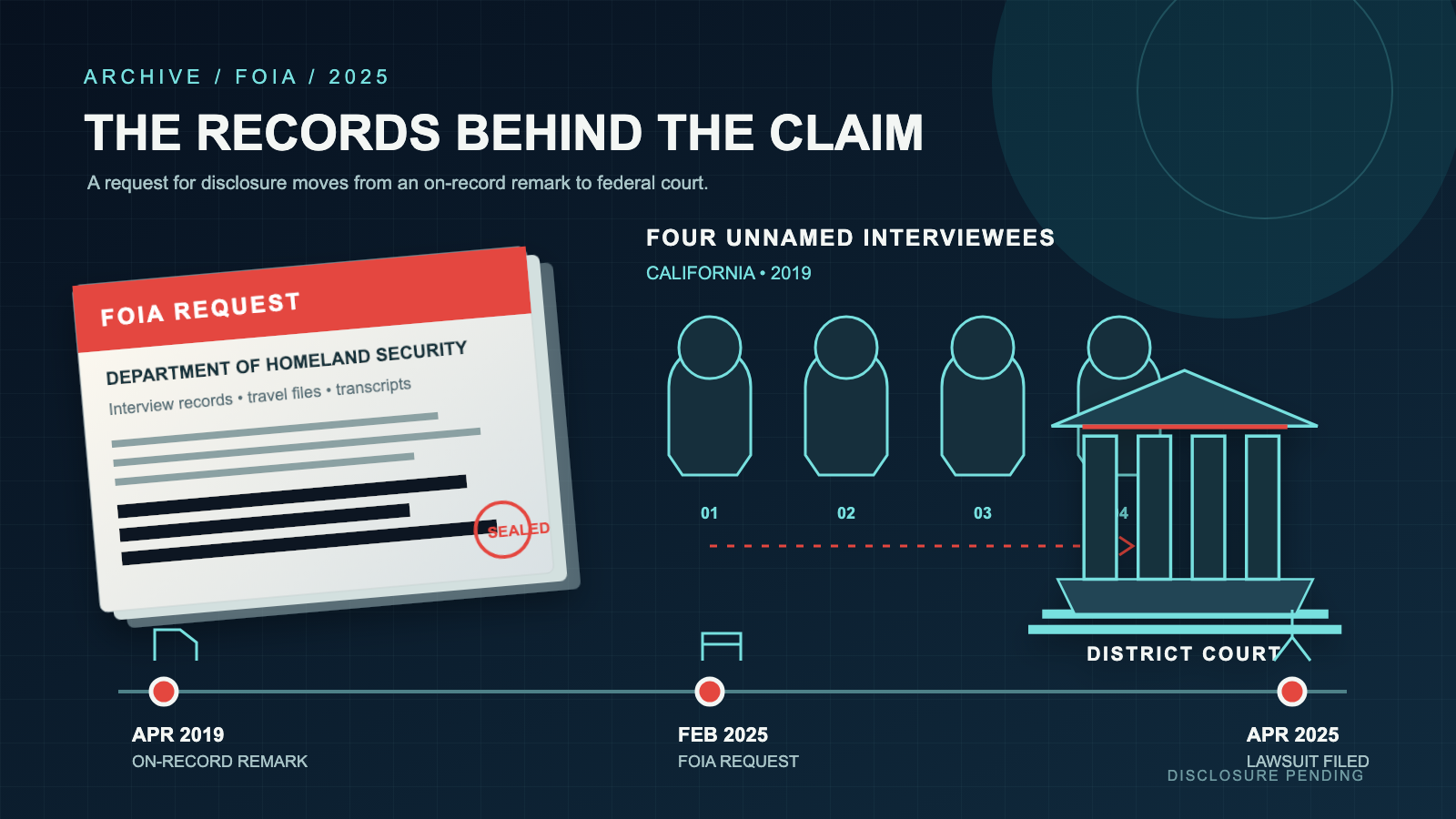
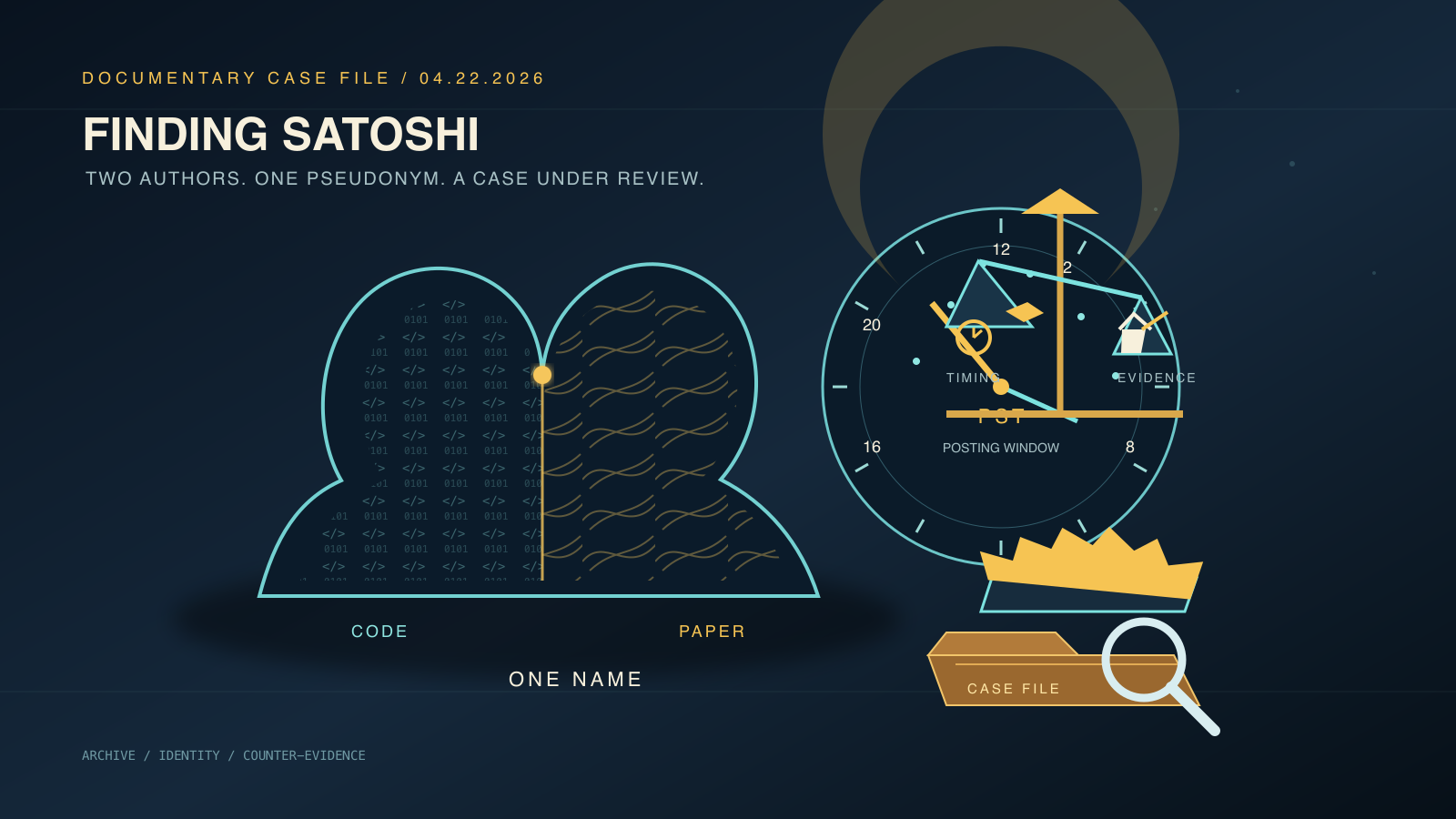
The Carreyrou investigation is one of four major-press / documentary Satoshi identifications in the 2024-2026 wave. The 2024 HBO documentary named Peter Todd on a forum-post-timing argument; the Finding Satoshi documentary (April 2026) proposed a multi-person reading naming Hal Finney and Len Sassaman as co-creators; and the Murphy v DHS FOIA action (April 2025) pursues a government-record route for the same question. None of the four has produced cryptographic confirmation.
For the analytical treatment of the Adam Back = Satoshi hypothesis (this investigation’s evidence weighed against the August 2008 email exchange, the 2024 COPA testimony, and the broader documentary record), see the Adam Back = Satoshi identity hypothesis entry.
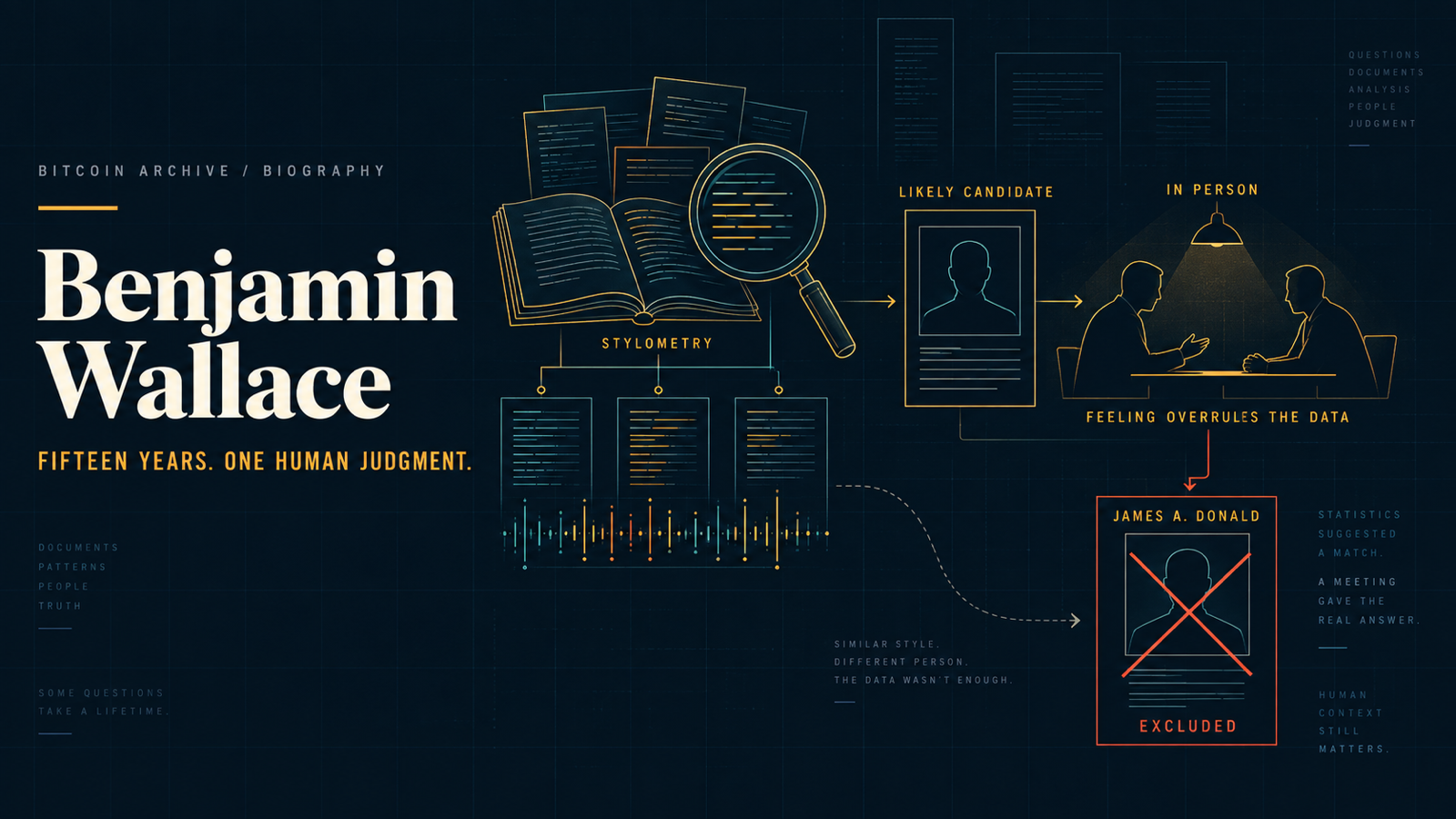
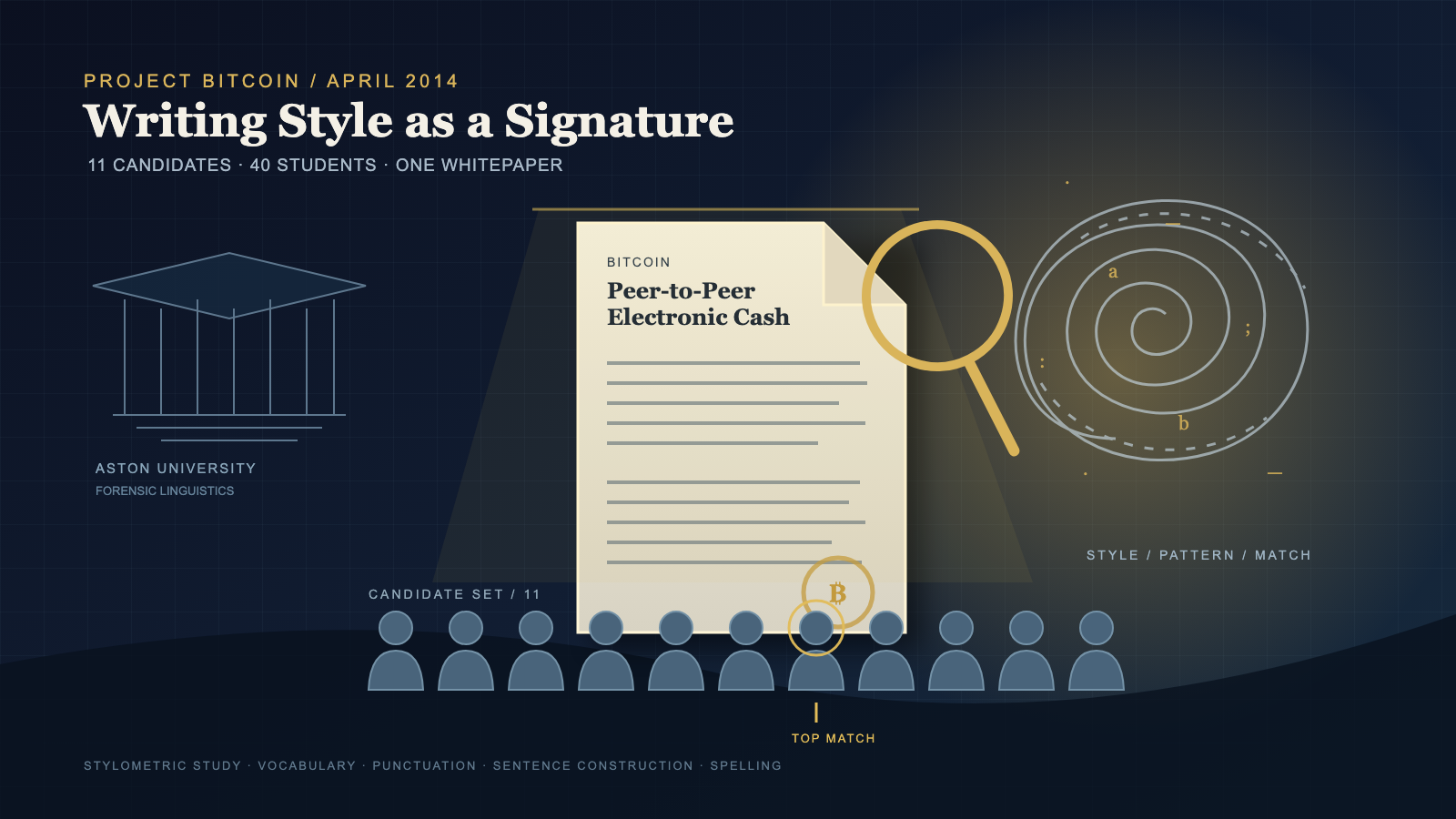
The investigation sits at the end of a long line of attempts. The Adam Back biography records it as the most recent journalistic one; the stylometric side runs through the 2014 Aston University study, van Dorst’s 2024 corpus and the 2026 reanalysis of named candidates; and the identity-hypotheses overview sets all of them side by side. Benjamin Wallace’s book on James A. Donald runs the identical arc a year earlier — a stylometric case built for a named candidate, then an in-person read of the man himself, not the data, that decided the outcome.