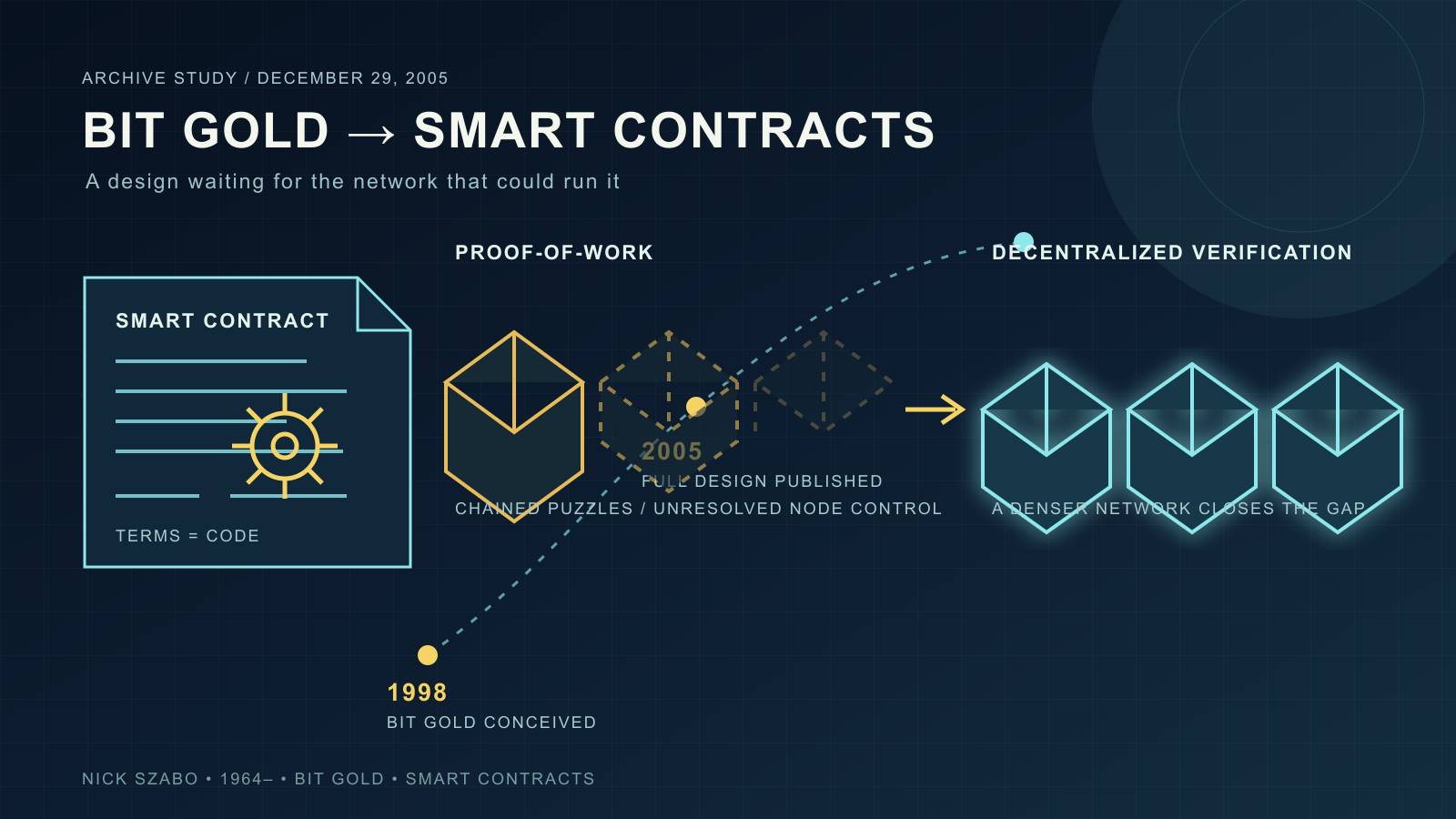
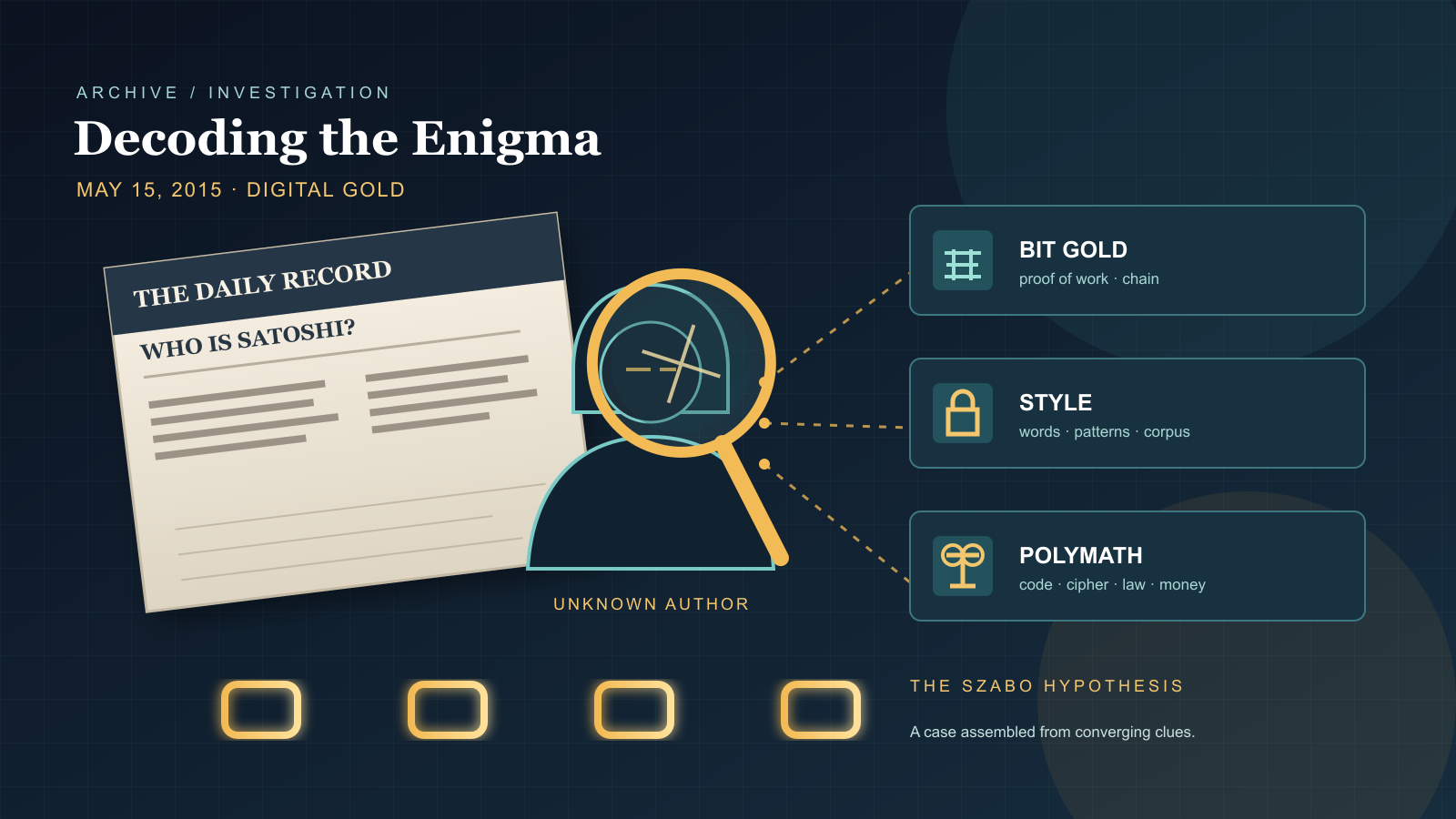
On May 15, 2015, the New York Times published “Decoding the Enigma of Satoshi Nakamoto and the Birth of Bitcoin” by Nathaniel Popper, the paper’s cryptocurrency reporter. The article was an excerpt from Popper’s book Digital Gold: Bitcoin and the Inside Story of the Misfits and Millionaires Trying to Reinvent Money, published the same month by Harper. The piece concluded that Nick Szabo — the cypherpunk-era cryptographer who designed Bit Gold (conceived in 1998, fully published December 29, 2005) and coined the term “smart contracts” (1994) — was the most likely individual behind the Satoshi Nakamoto pseudonym.
The reporting
Popper had spent roughly two years on the book, interviewing dozens of figures across the early Bitcoin and cypherpunk communities. The Szabo-identification line of reasoning, as presented in the article, rested on three principal threads:
- Bit Gold conceptual proximity. Szabo’s Bit Gold proposal — a chain of computational proof-of-work artifacts authenticated by a Byzantine-fault-tolerant network of servers — anticipated the architectural problem space of Bitcoin more closely than any other published precursor. Popper described Bit Gold as “the closest precursor to Bitcoin.”
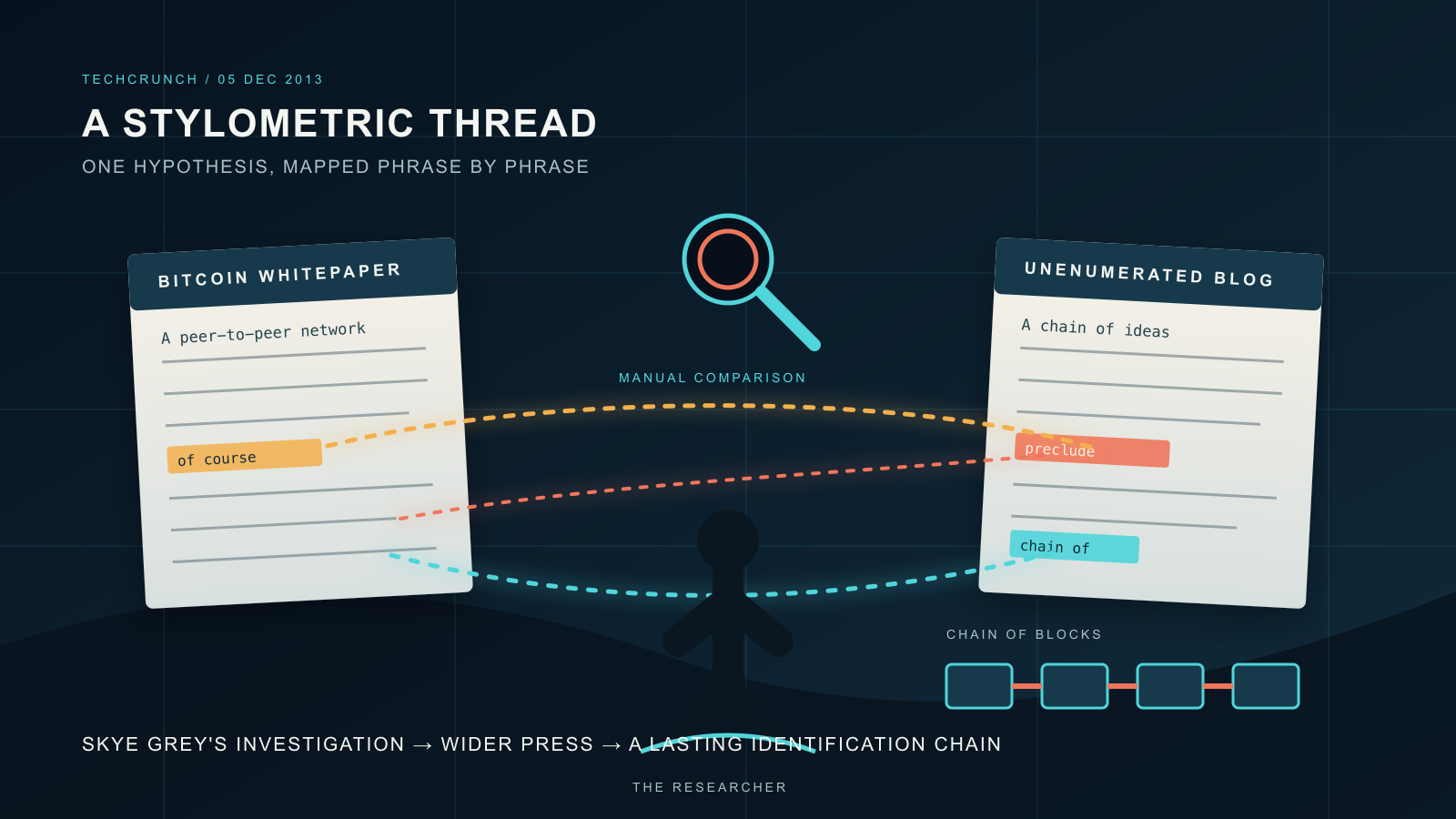
- Stylometric and intellectual fingerprint. Popper drew on the prior pseudonymous-blogger Skye Grey investigation (December 2013) and on his own reading of Szabo’s writing across the Unenumerated blog and earlier mailing-list posts, finding what he described as a recurring overlap of phrasing, reference, and analytical register with the Satoshi corpus.
- Polymath profile fit. Szabo’s combination of computer science, cryptography, monetary economics (he had explicitly engaged with Austrian-school monetary theory), and legal scholarship matched the unusually wide skill range visible in Satoshi’s writing and code.
Szabo’s denial
Popper met Szabo at a party in 2014. When Popper cited what was being said about him on the internet, Szabo bristled and told him, “I am not Satoshi.” Popper asked again by email more than a year later, and Szabo repeated the denial. Szabo also acknowledged that there are many parallels between his work and Bitcoin.
Reception
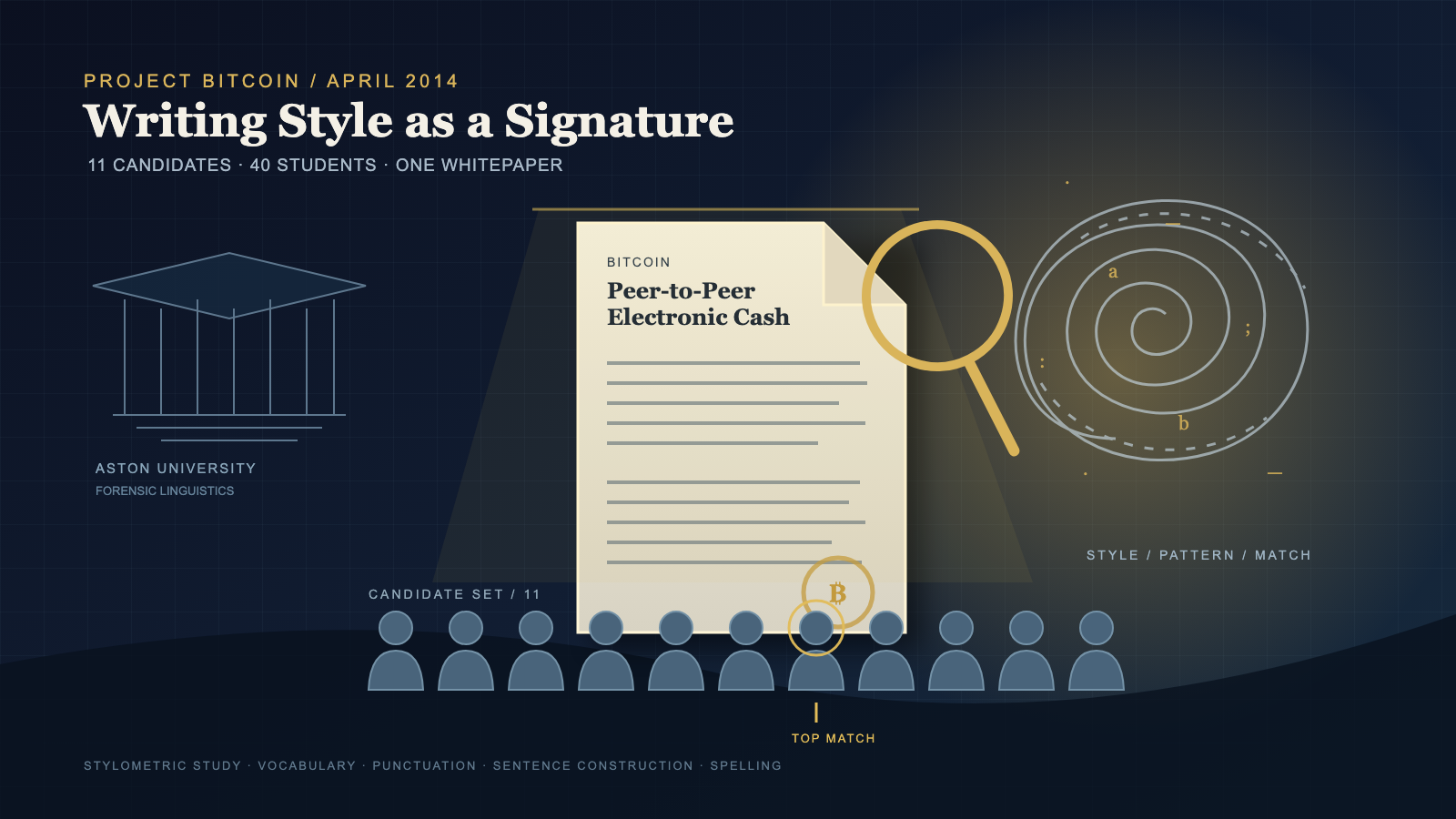
The Popper piece marked the point at which the Szabo-as-Satoshi hypothesis crossed from cypherpunk-community discussion (Skye Grey’s December 2013 LikeInAMirror article, the April 2014 Aston University forensic-linguistic study) into the mainstream U.S. paper of record. Digital Gold itself became the standard journalistic history of Bitcoin’s origin period. Later pieces that return to Szabo include:
- Tim Ferriss Show #244 (June 4, 2017), a long-form interview with Szabo co-hosted by Naval Ravikant.
- Jeff John Roberts / Fortune, “Is There Any Doubt This Man Created Bitcoin?” (October 31, 2018), which cites Popper’s book and argues that Szabo is the likeliest creator.
Archive material relevant to the article
The archive holds primary-source material that bears directly on Popper’s identification and on Szabo’s denial:
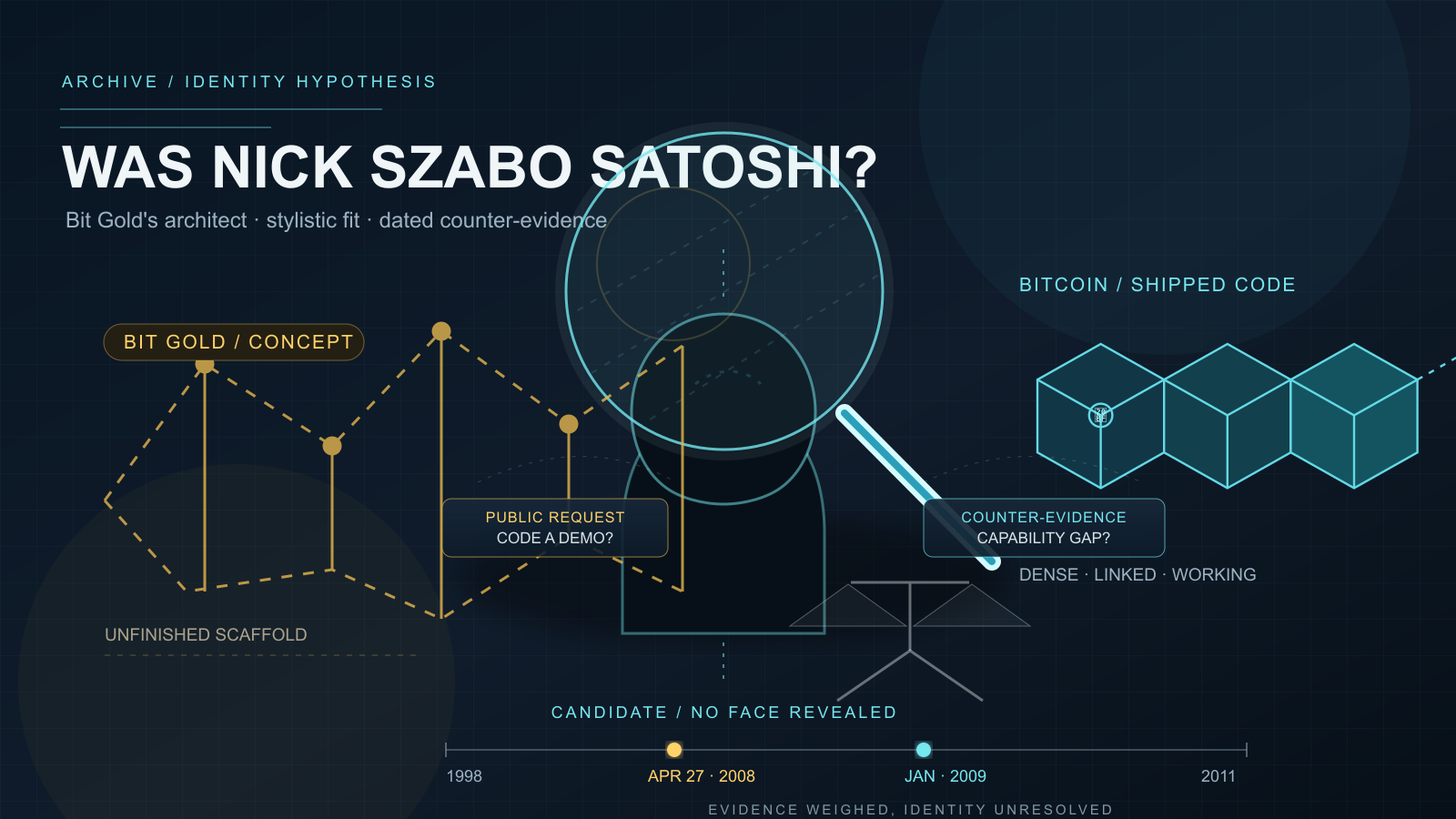
- Szabo’s April 10, 2008 comment on his Unenumerated blog — six months before the Bitcoin whitepaper — asking “anybody want to help me code one up?” for Bit Gold. The comment is the strongest single counter-signal to the identification: it places Szabo, in April 2008, publicly soliciting implementation help for a system architecturally simpler than the one the Bitcoin whitepaper would describe in October.
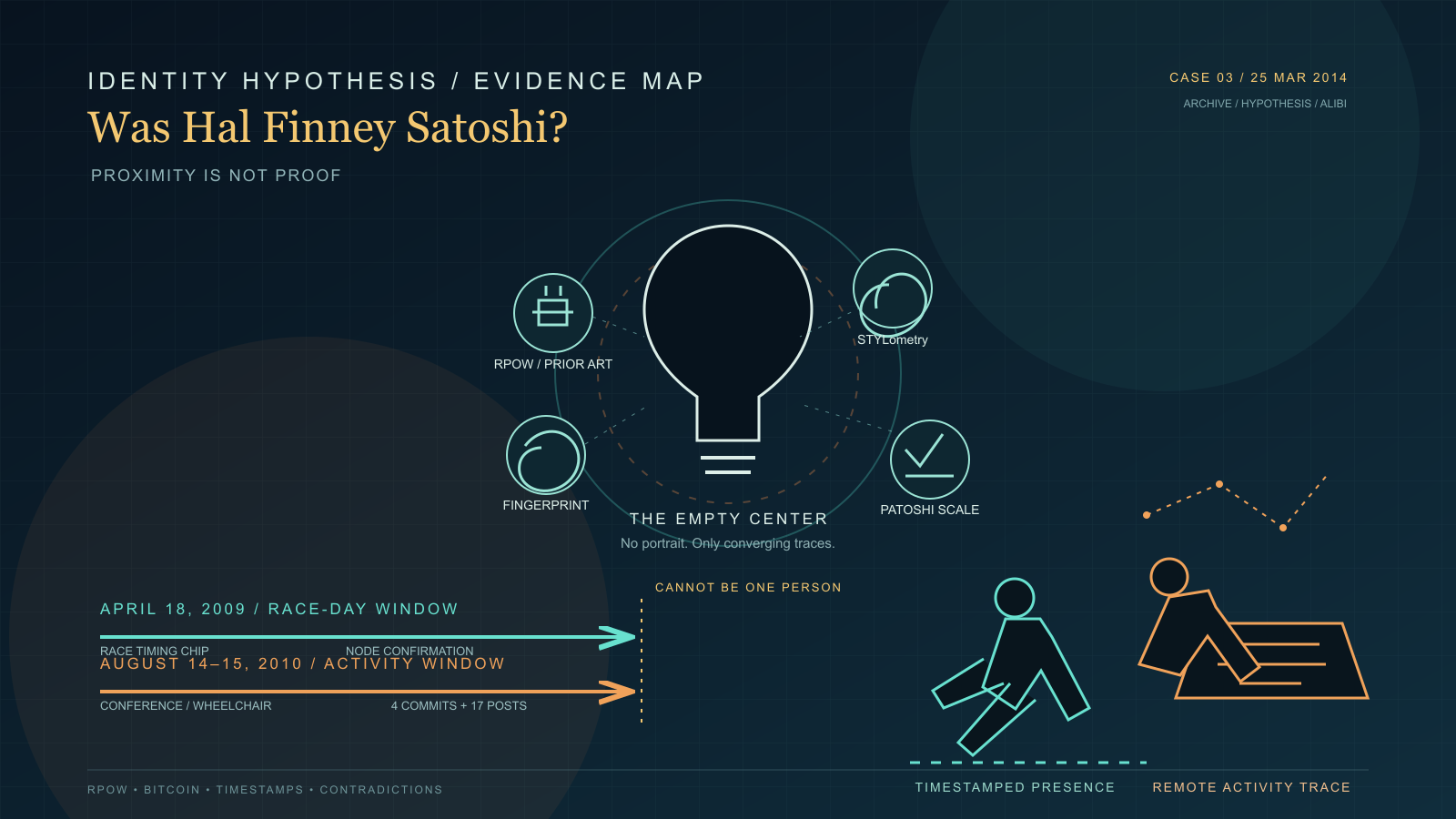
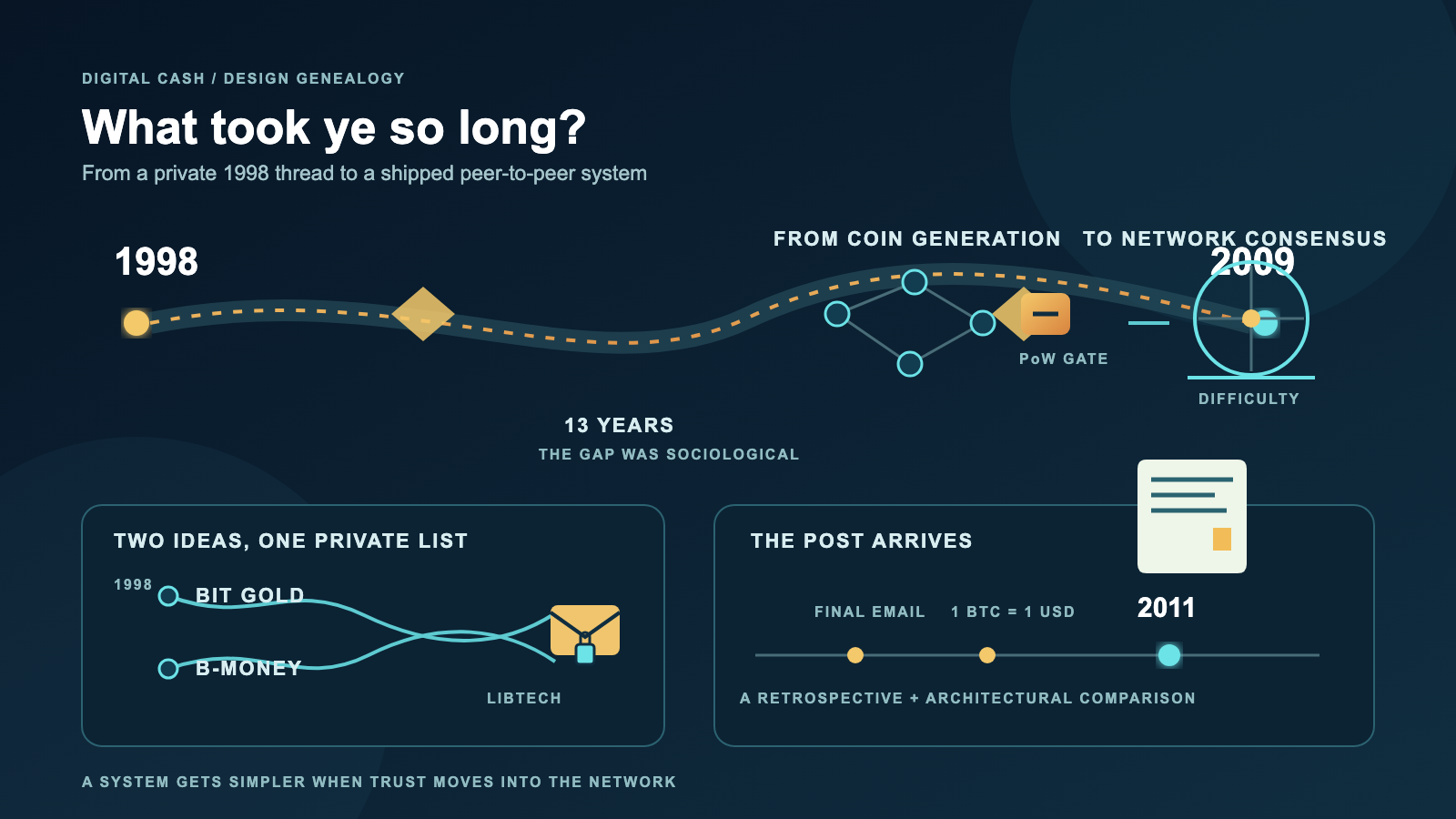
- Szabo’s May 28, 2011 Unenumerated post “Bitcoin, what took ye so long?”, in which Szabo wrote “Nakamoto improved a significant security shortcoming that my design had” — discussing Nakamoto in the third person while crediting himself with Bit Gold’s design. The same post names Wei Dai and Hal Finney beside Szabo as the only people he knew of who pursued the idea to any significant extent before Nakamoto, “assuming Nakamoto is not really Finney or Dai” (see the Wei Dai and Hal Finney hypothesis entries).
- The Szabo biography page covering the full Unenumerated and Bit Gold record.
Methodological framing
Popper’s identification, like Skye Grey’s before it, was stylometric and circumstantial rather than forensic. No code, no key, no email metadata, and no financial trail were tied to Szabo. The hypothesis rests on conceptual proximity (Bit Gold → Bitcoin) and pattern matches in writing and biography. Szabo’s denial is the position on record from the named individual; the structural arguments against the identification are laid out in the analytical entry.
The Popper / NYT 2015 article and Digital Gold remain, eleven years on, the highest-profile mainstream-press identification of Szabo as the likely Satoshi. The 2026 John Carreyrou / NYT investigation named Adam Back as its leading candidate using a different methodology (large-population stylometric comparison with independent linguistic review). The two NYT identifications, separated by eleven years, name different candidates by different methods — both are denied by their named subjects.
For the analytical treatment of the Nick Szabo = Satoshi hypothesis (Popper’s evidence weighed against the April 2008 implementation request, the May 2011 third-person framing, the continuous Unenumerated visibility throughout 2007–2008, and Szabo’s repeated denials), see the Nick Szabo = Satoshi identity hypothesis entry.