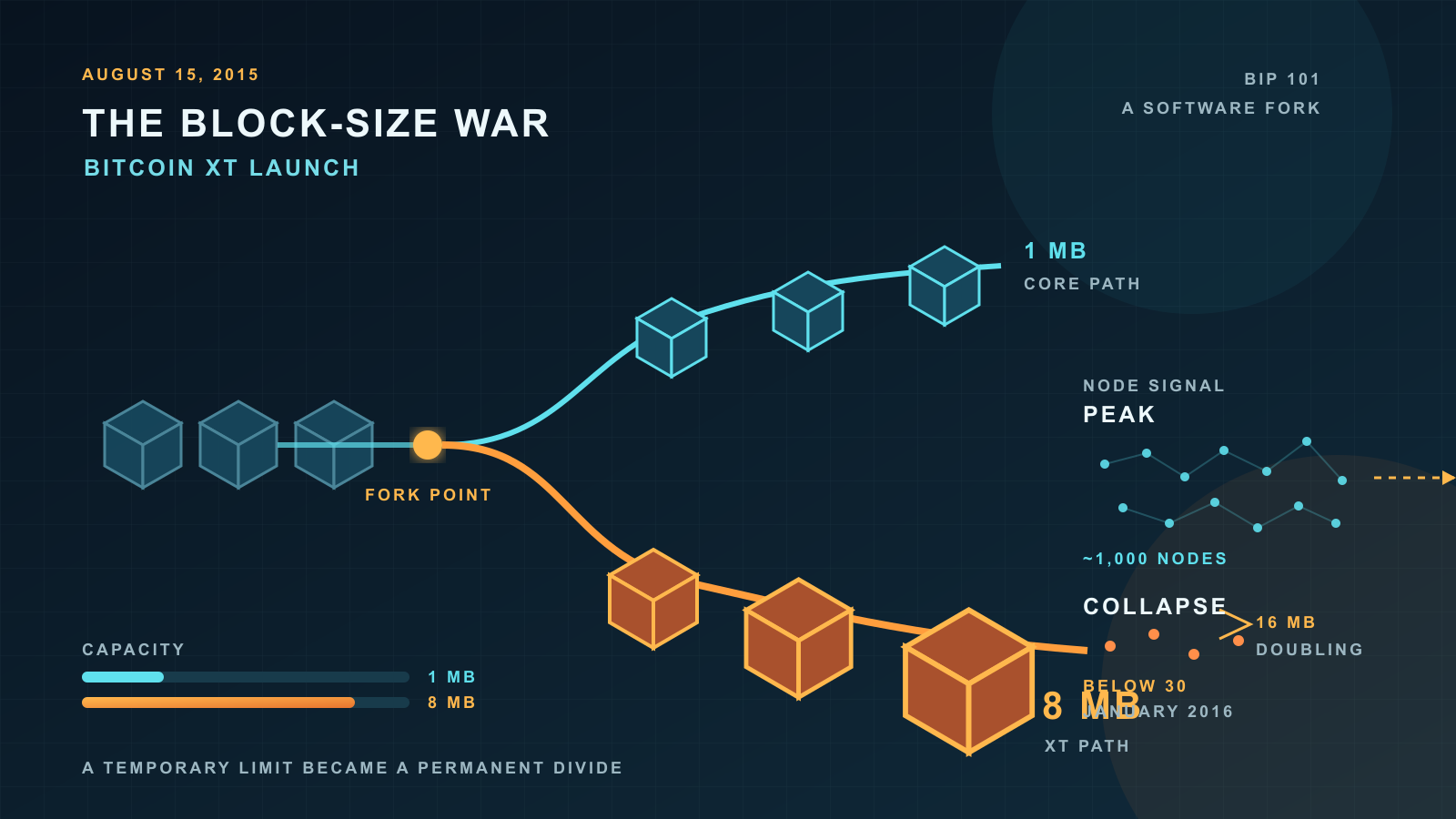
On August 15, 2015, Mike Hearn released Bitcoin XT version 0.11A, a fork of Bitcoin Core that implemented BIP 101. Gavin Andresen, then the lead Bitcoin Core maintainer, had authored BIP 101 two months earlier and supported the XT release.
BIP 101 proposed raising Bitcoin’s 1 MB block-size limit to 8 MB starting January 11, 2016, and doubling every two years thereafter, reaching 8 GB by 2036. Activation required a 75% supermajority of mined blocks signaling support over a 1,000-block window.
The launch was the public-fork phase of a dispute that had been building since 2013, when block fullness first became a recurring concern. Hearn and Andresen argued that the 1 MB limit — added by Satoshi in September 2010 as a temporary anti-spam measure — would soon throttle Bitcoin’s ability to confirm transactions, and that a hard fork to a larger limit was the only credible path to scaling.
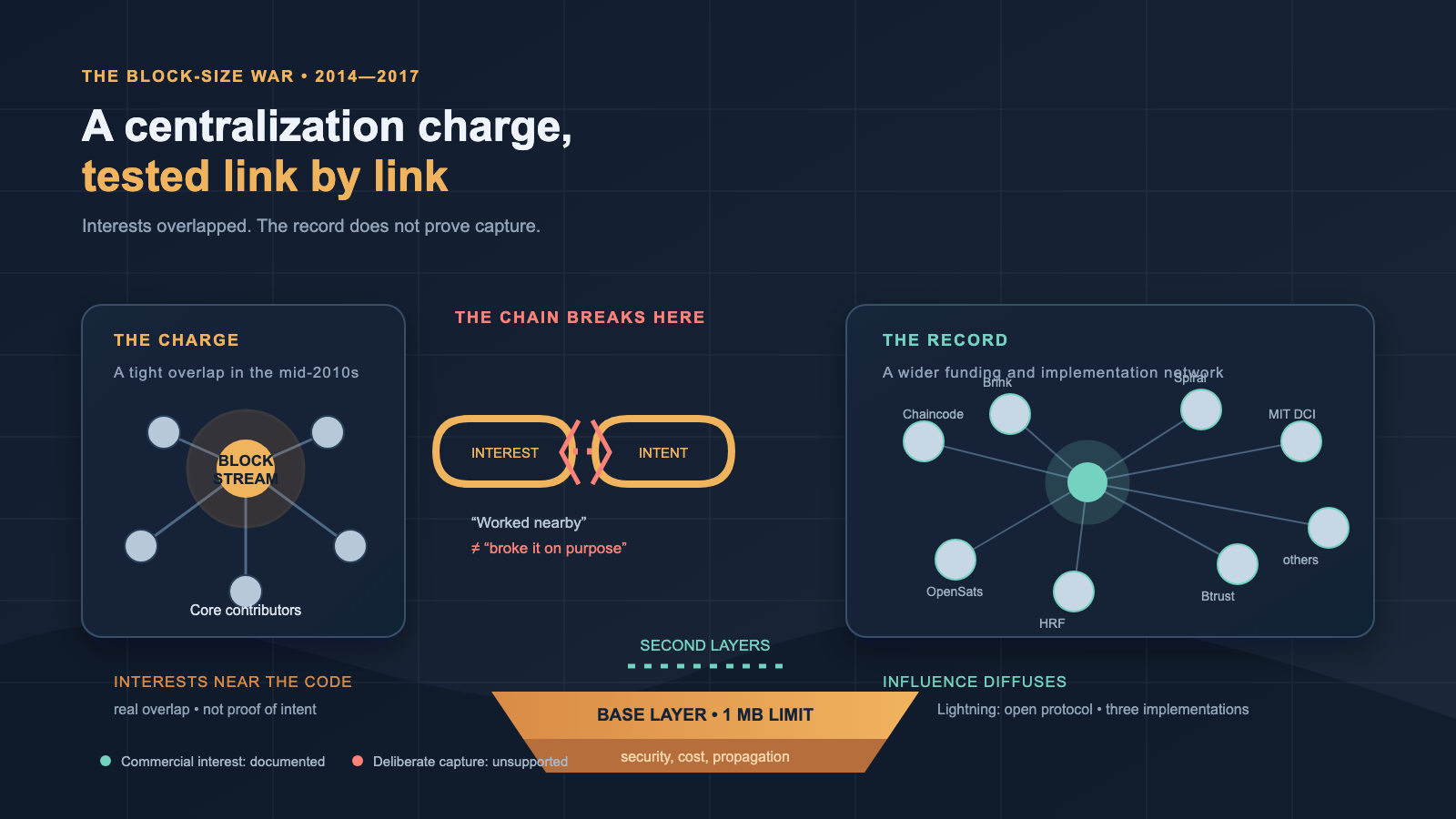
Their critics — most prominently the Bitcoin Core developers led by Gregory Maxwell, Pieter Wuille, and Wladimir van der Laan — argued that a contentious hard fork would split the network, that scaling could be achieved via off-chain layers and protocol upgrades like Segregated Witness, and that BIP 101’s growth schedule risked centralizing node operation to a small set of well-resourced operators. Maxwell and Wuille had co-founded Blockstream nine months earlier; the Blockstream-centralization analysis traces how this same fight over XT fed the “Blockstream controls Bitcoin” charge leveled against them.
Bitcoin XT briefly attracted around 1,000 nodes in late 2015 but never approached the 75% activation threshold. By January 2016, node count had collapsed below 30, and Hearn published “The resolution of the Bitcoin experiment”, declaring Bitcoin had failed and selling all his coins. XT continued to exist as a small network but was effectively dead as a competitor to Bitcoin Core.
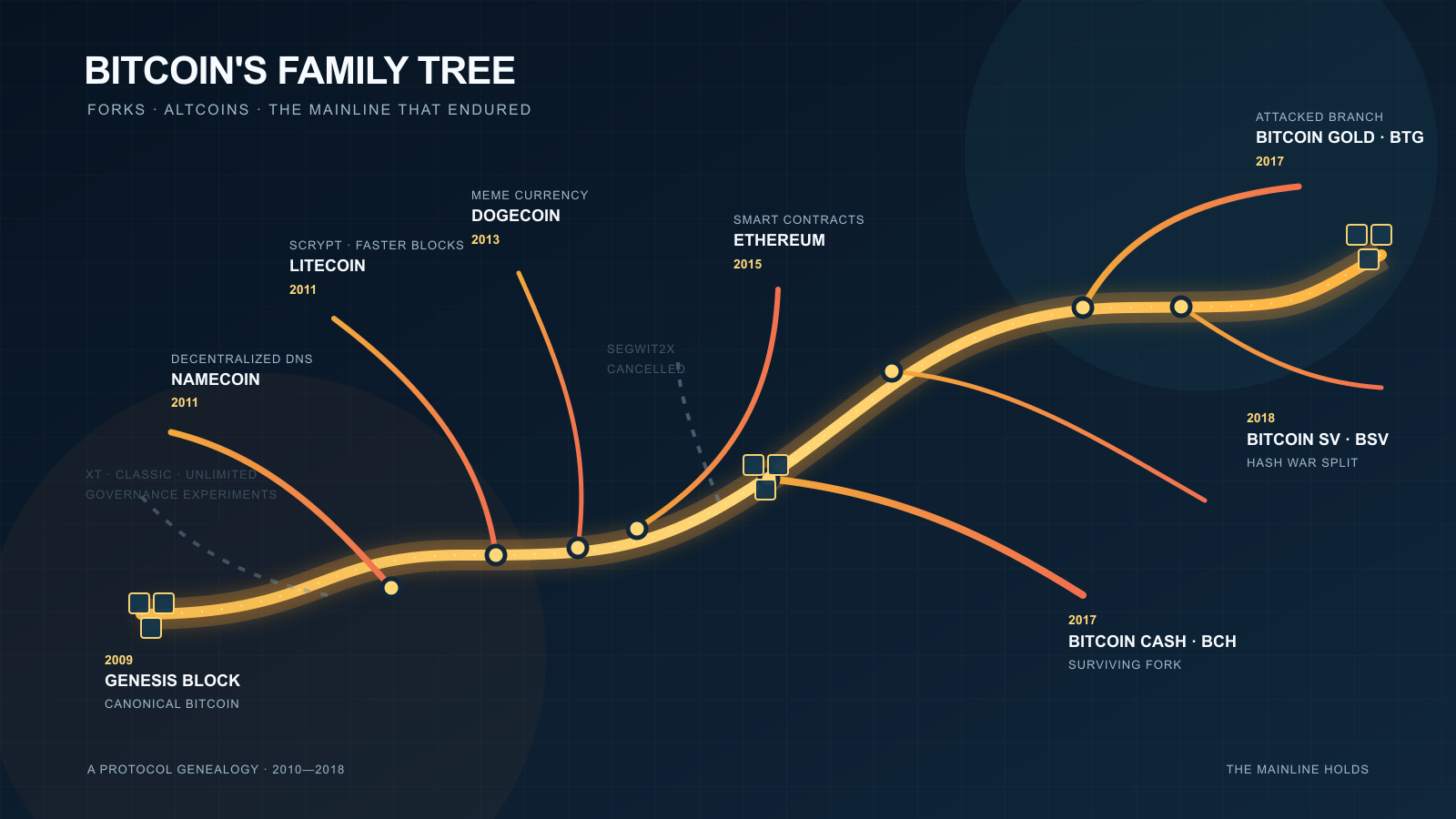
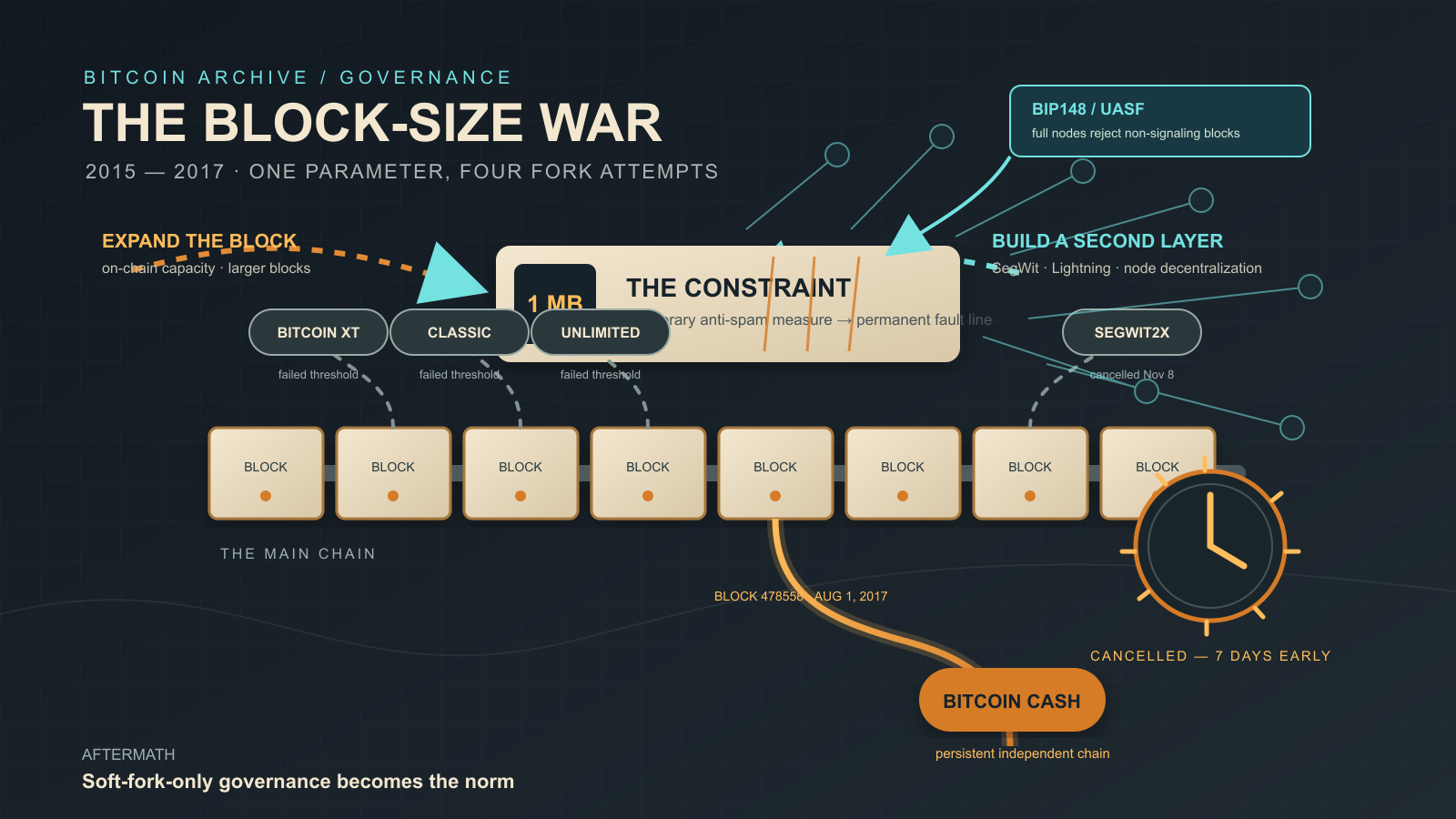
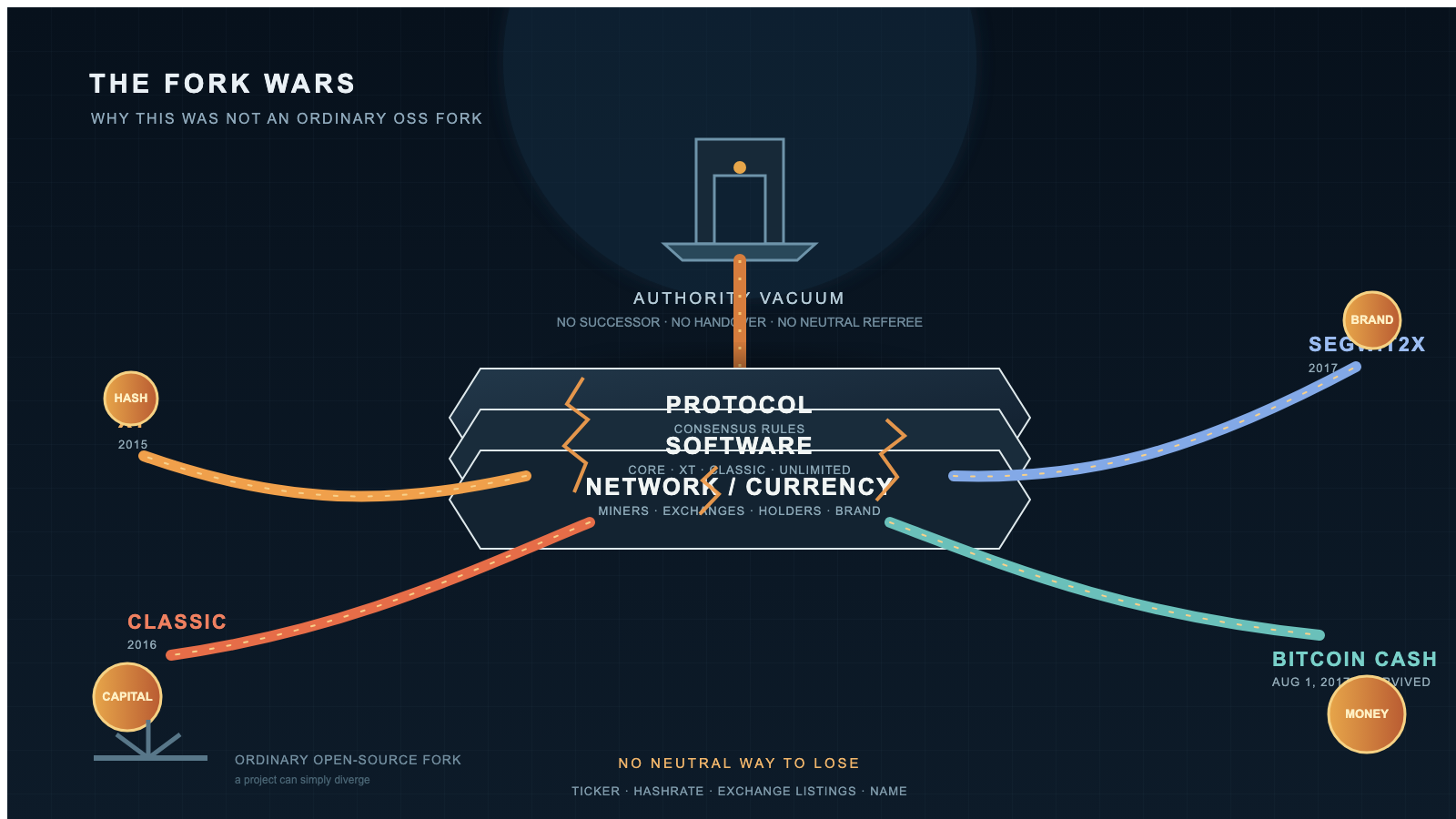
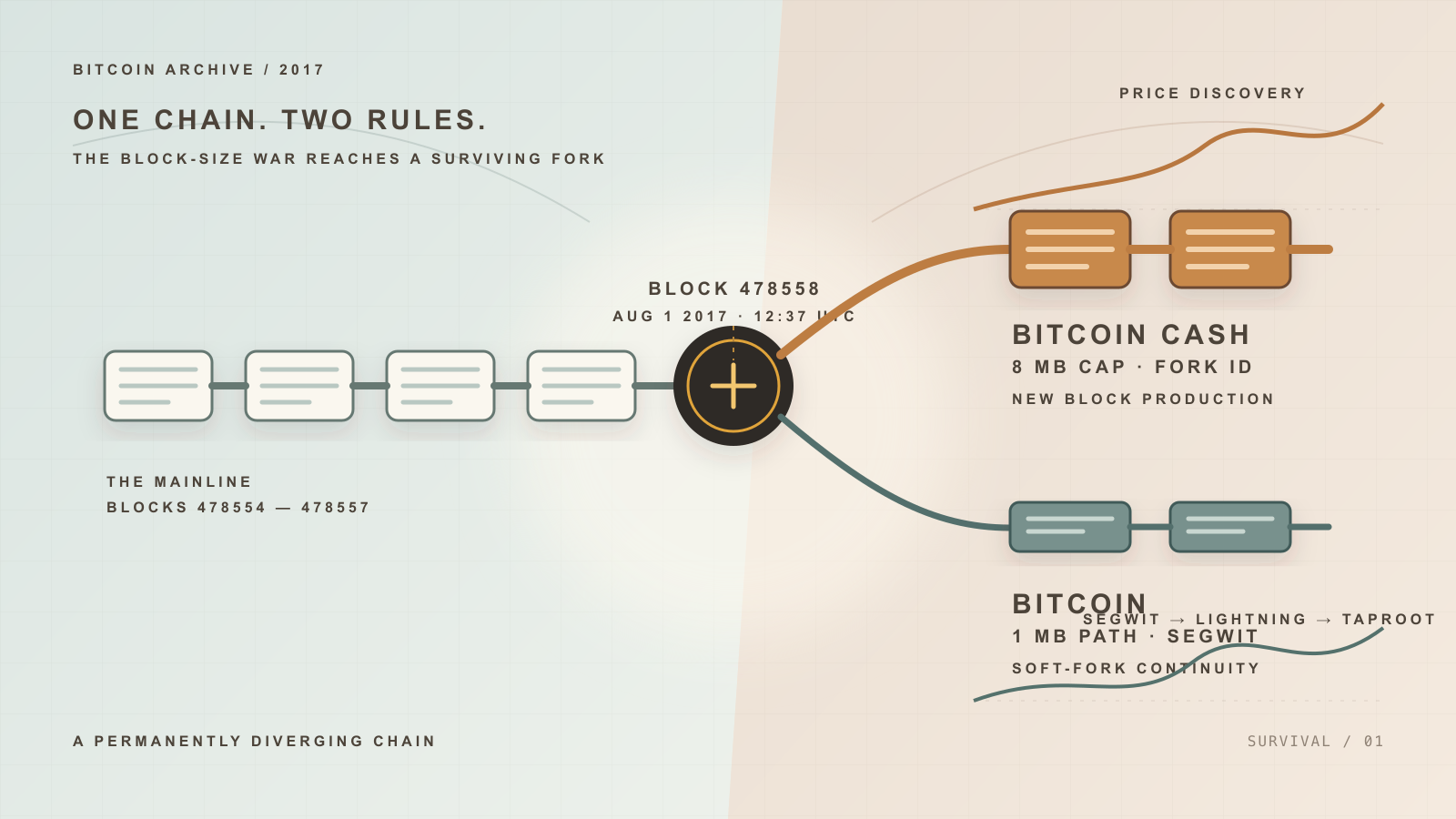
The block-size war did not end with XT. Bitcoin Classic launched in February 2016 with a similar 2 MB proposal; Bitcoin Unlimited followed in October 2016 with a flexible miner-driven approach; the New York Agreement in May 2017 attempted a SegWit + 2 MB compromise; and the dispute culminated in the Bitcoin Cash hard fork on August 1, 2017. The phase-by-phase chronology, the three factions, and the post-2017 governance consequences are collated in the block-size war overview (2015–2017); the broader fork-and-altcoin tree (BCH, BSV, and the wider lineage) is in the Bitcoin family-tree analysis.
The XT launch is the chronological start of the public-fork phase of the dispute. Earlier disagreement existed in mailing-list and BitcoinTalk threads, but August 15, 2015 is the date a Bitcoin Core fork was released as production software, with installable binaries and a published activation schedule.
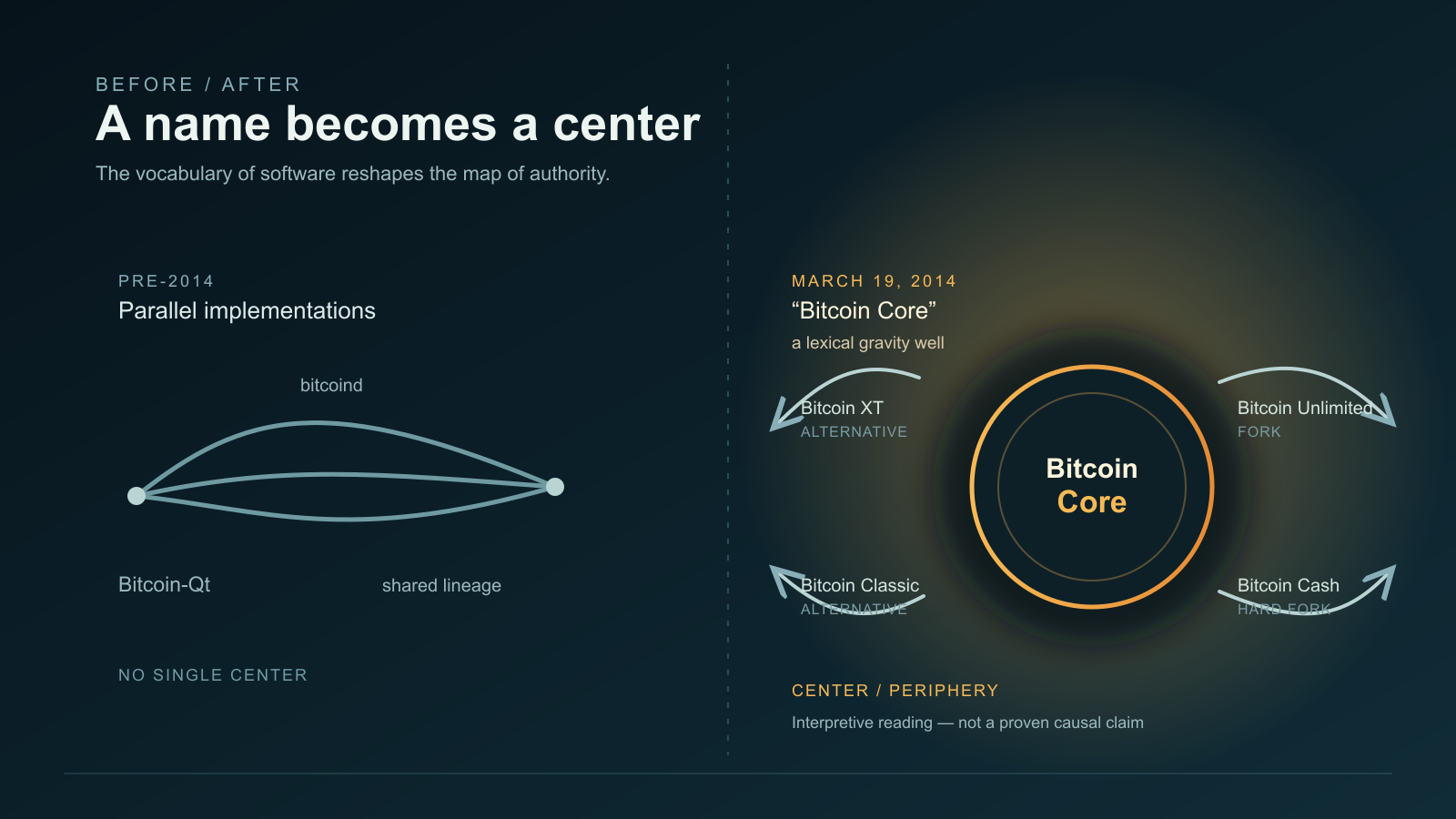
For a reading of the fork attempts from XT through Bitcoin Cash as a fight over who could still call a chain “Bitcoin,” see the “fork wars as not OSS” analysis.