
On January 14, 2016, Mike Hearn — one of the earliest Bitcoin contributors and a developer who had corresponded directly with Satoshi Nakamoto — published a lengthy blog post titled “The resolution of the Bitcoin experiment” on his personal blog (blog.plan99.net, hosted on Medium).
In the post, Hearn declared:
“Bitcoin has failed.”
He announced that he had sold all of his bitcoins and was leaving the project entirely. At the time, Bitcoin was trading at approximately $400.
On why it had failed, Hearn was blunt:
“What was meant to be a new, decentralised form of money that lacked ‘systemically important institutions’ and ‘too big to fail’ has become something even worse: a system completely controlled by just a handful of people.”
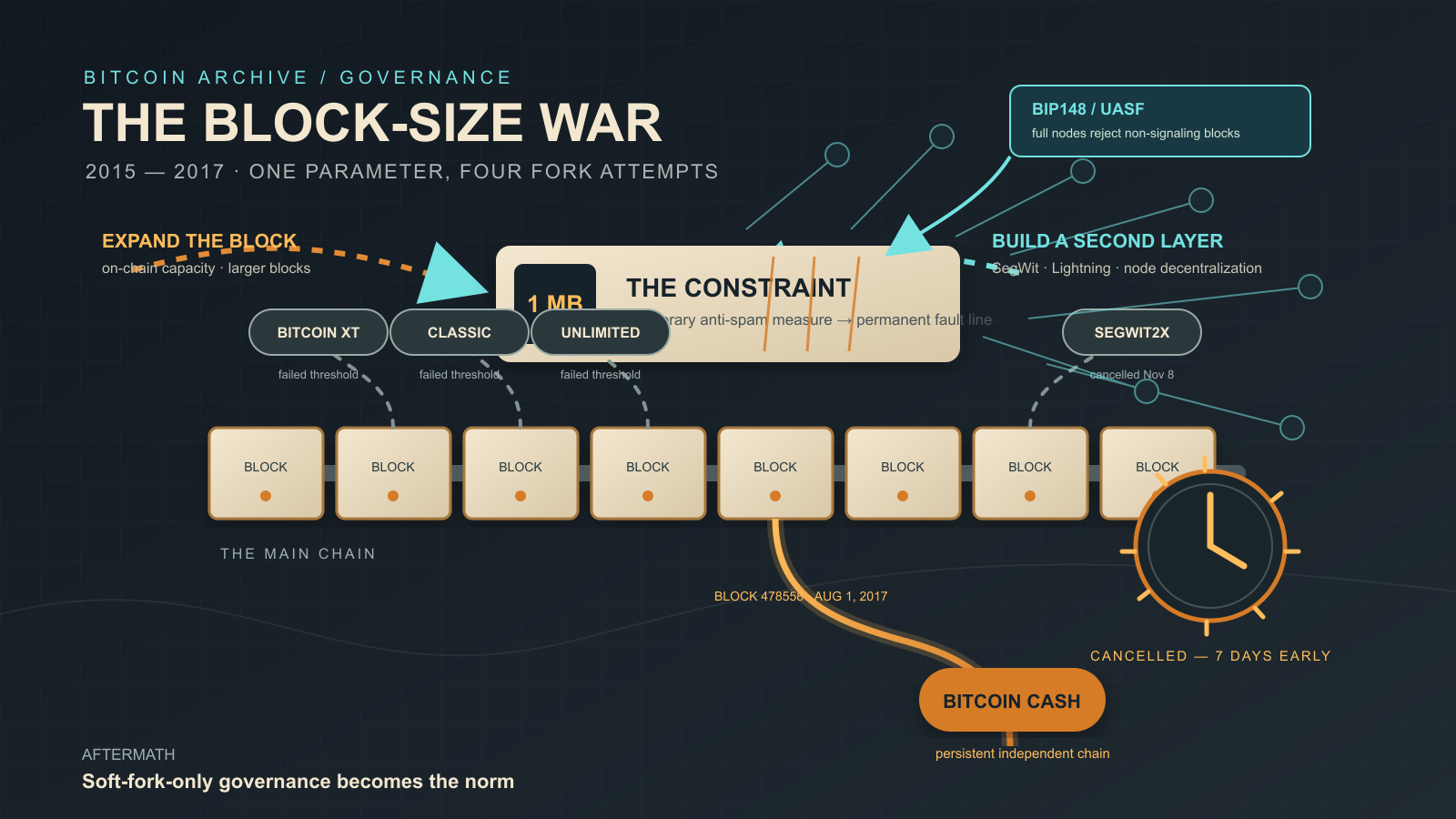
Hearn argued that an “entirely artificial capacity cap of one megabyte per block, put in place as a temporary kludge a long time ago, has not been removed,” and that the failure to increase the block size had rendered Bitcoin incapable of scaling.
On scaling, Hearn quoted Satoshi’s response to early bandwidth concerns:
Satoshi Nakamoto“The bandwidth might not be as prohibitive as you think … if the network were to get [as big as VISA], it would take several years, and by then, sending [the equivalent of] 2 HD movies over the Internet would probably not seem like a big deal.”
He also noted that Satoshi had told him directly that Bitcoin “never really hits a scale ceiling.”
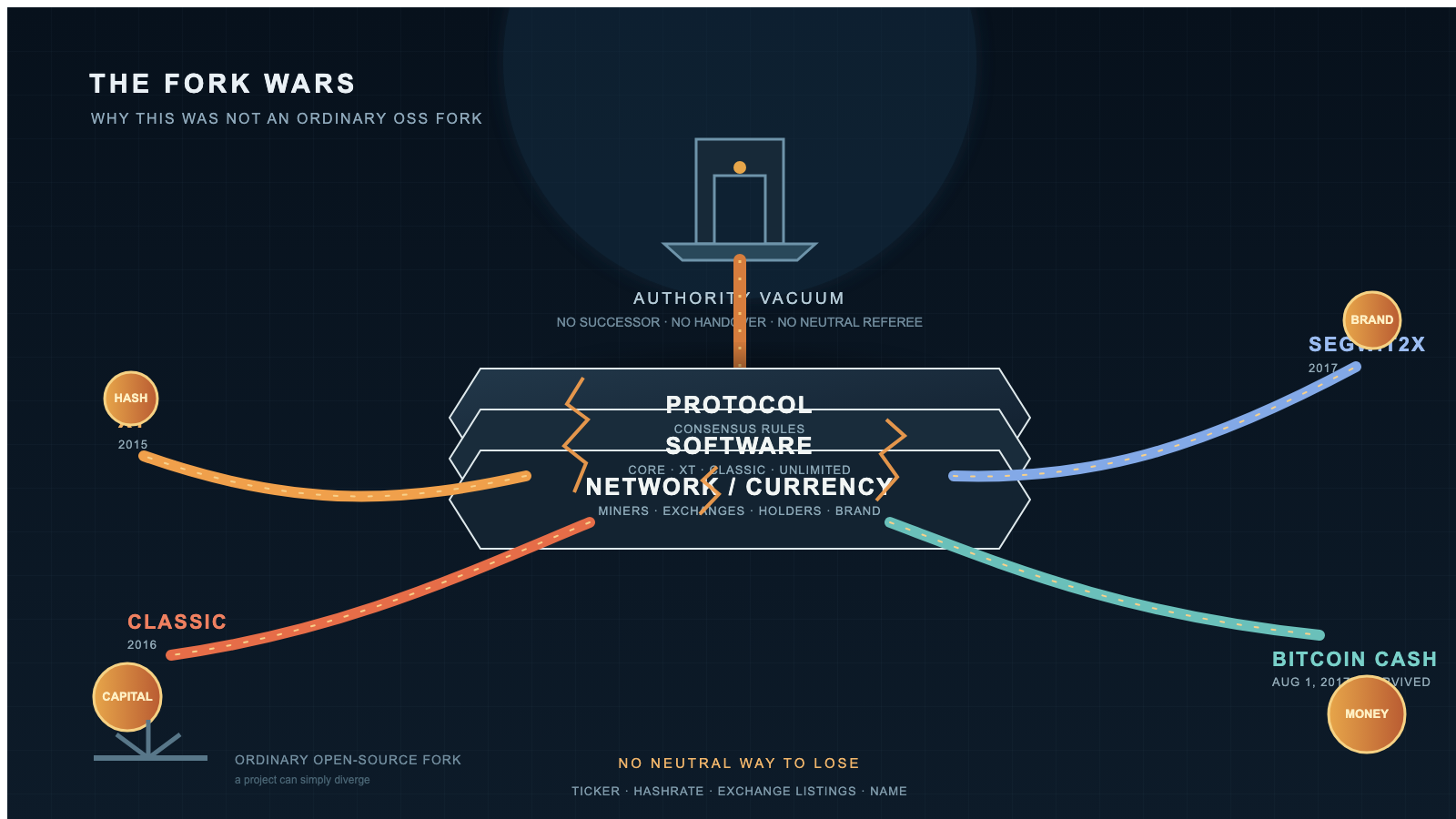
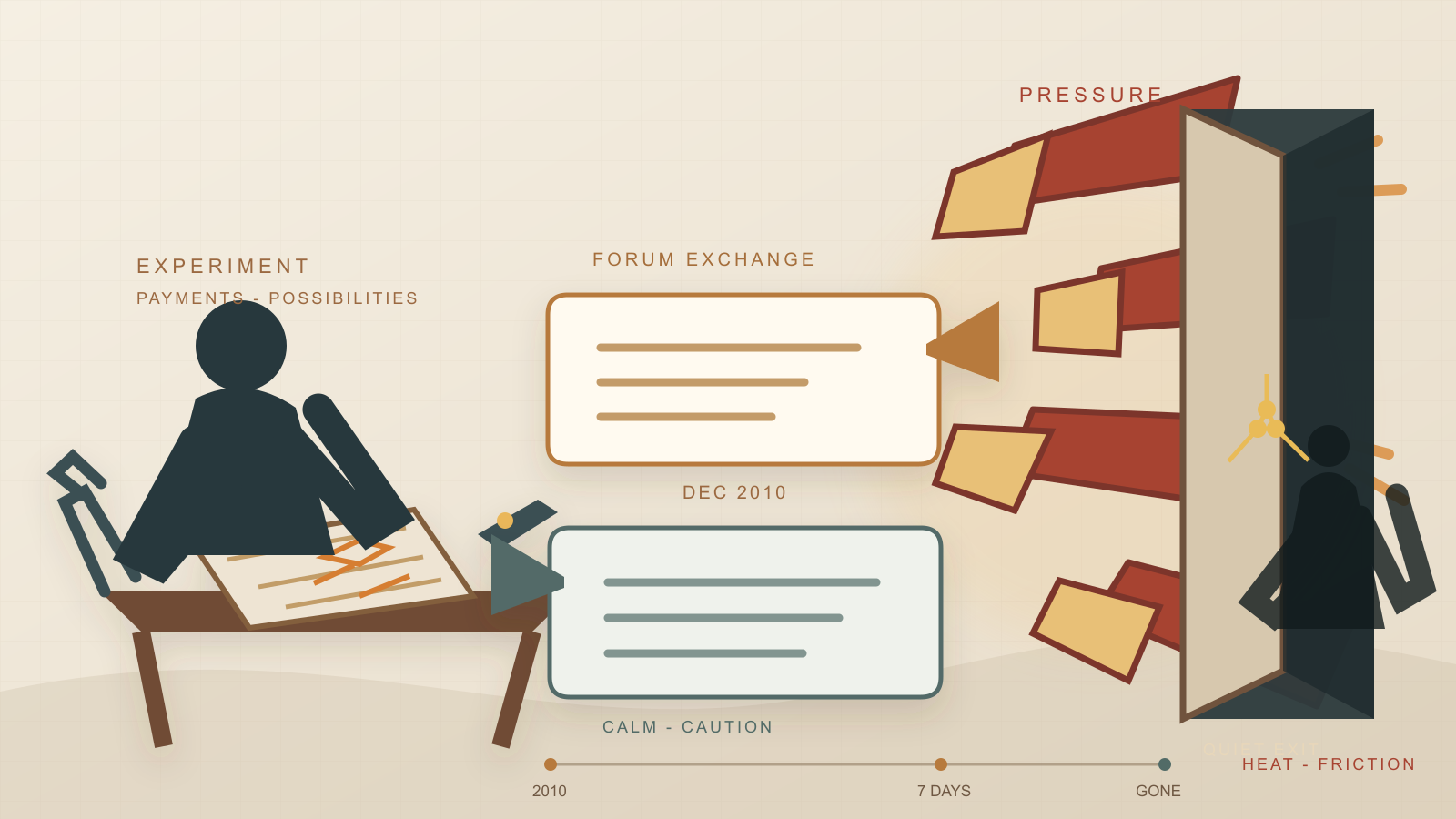
On the handover, Hearn described how Satoshi’s departure left an unplanned governance vacuum — the same withdrawal recorded from the other side in Satoshi’s April 2011 email to Hearn (“I’ve moved on to other things. It’s in good hands with Gavin and everyone”):
“When Satoshi left, he handed over the reins of the program we now call Bitcoin Core to Gavin Andresen, an early contributor.”
After praising Gavin’s judgement — calling it one of the reasons Hearn had quit Google to work on Bitcoin full time — he added:
“Only one tiny problem: Satoshi never actually asked Gavin if he wanted the job, and in fact he didn’t.”
“So the first thing Gavin did was grant four other developers access to the code as well. These developers were chosen quickly in order to ensure the project could easily continue if anything happened to him. They were, essentially, whoever was around and making themselves useful at the time.”
Bitcoin XT
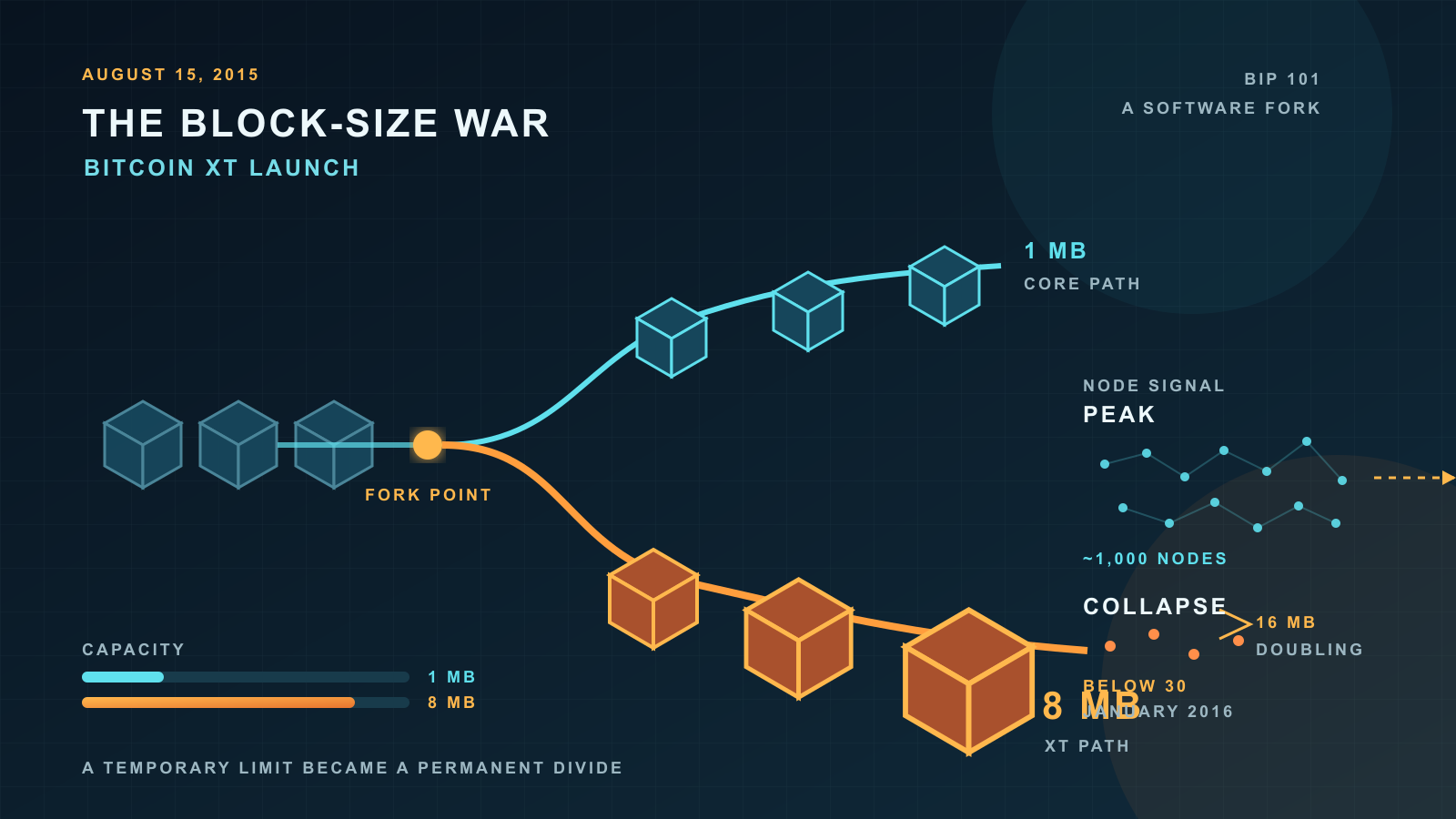
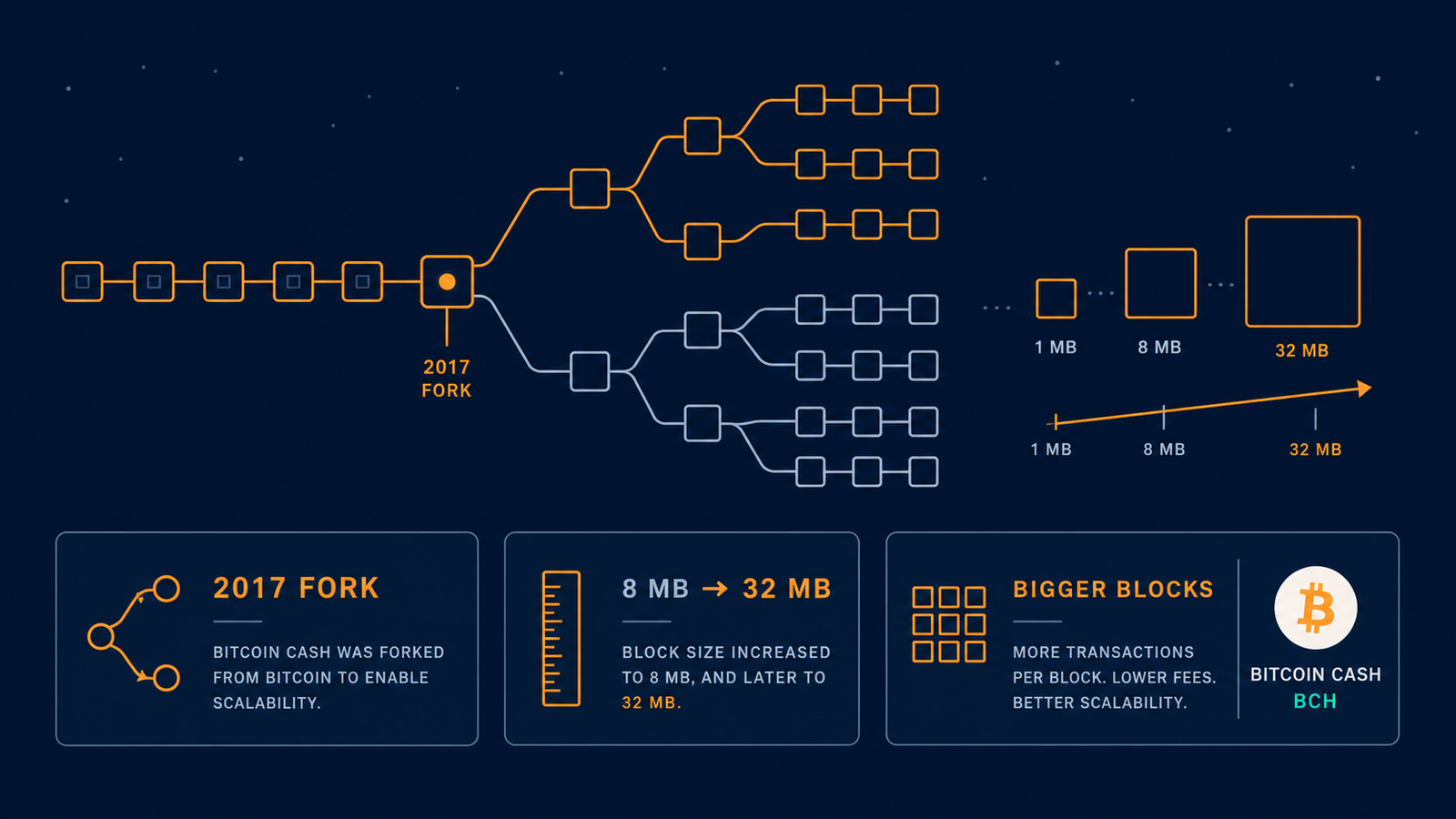
Prior to this post, Hearn had developed Bitcoin XT — an alternative Bitcoin client that proposed increasing the block size from 1 MB to 8 MB initially, doubling every two years until reaching 8 GB. The project failed to gain sufficient adoption, which Hearn cited as evidence that the governance model was broken.
Aftermath
The blog post caused an immediate media firestorm. Bitcoin’s price briefly dropped, and the post became a widely cited criticism of Bitcoin’s governance.
Hearn subsequently joined R3, a blockchain consortium, where he co-led the development of Corda, an enterprise distributed ledger platform. Nine years later, he revisited the same departure and the same governance failure in a CoinGeek interview reflecting on Satoshi’s personality and Bitcoin’s social failure.
In a historical irony, Bitcoin’s price would rise dramatically in the years following Hearn’s departure — reaching nearly $20,000 by December 2017, and eventually exceeding $60,000. Technologies such as Segregated Witness (SegWit) and the Lightning Network were introduced to address the scaling challenge through alternative approaches.
Hearn later reflected in a 2018 Reddit AMA on r/btc that the Bitcoin Cash community should “liberate themselves from just proceeding along the path Satoshi imagined and be willing to think radical, even heretical thoughts.”
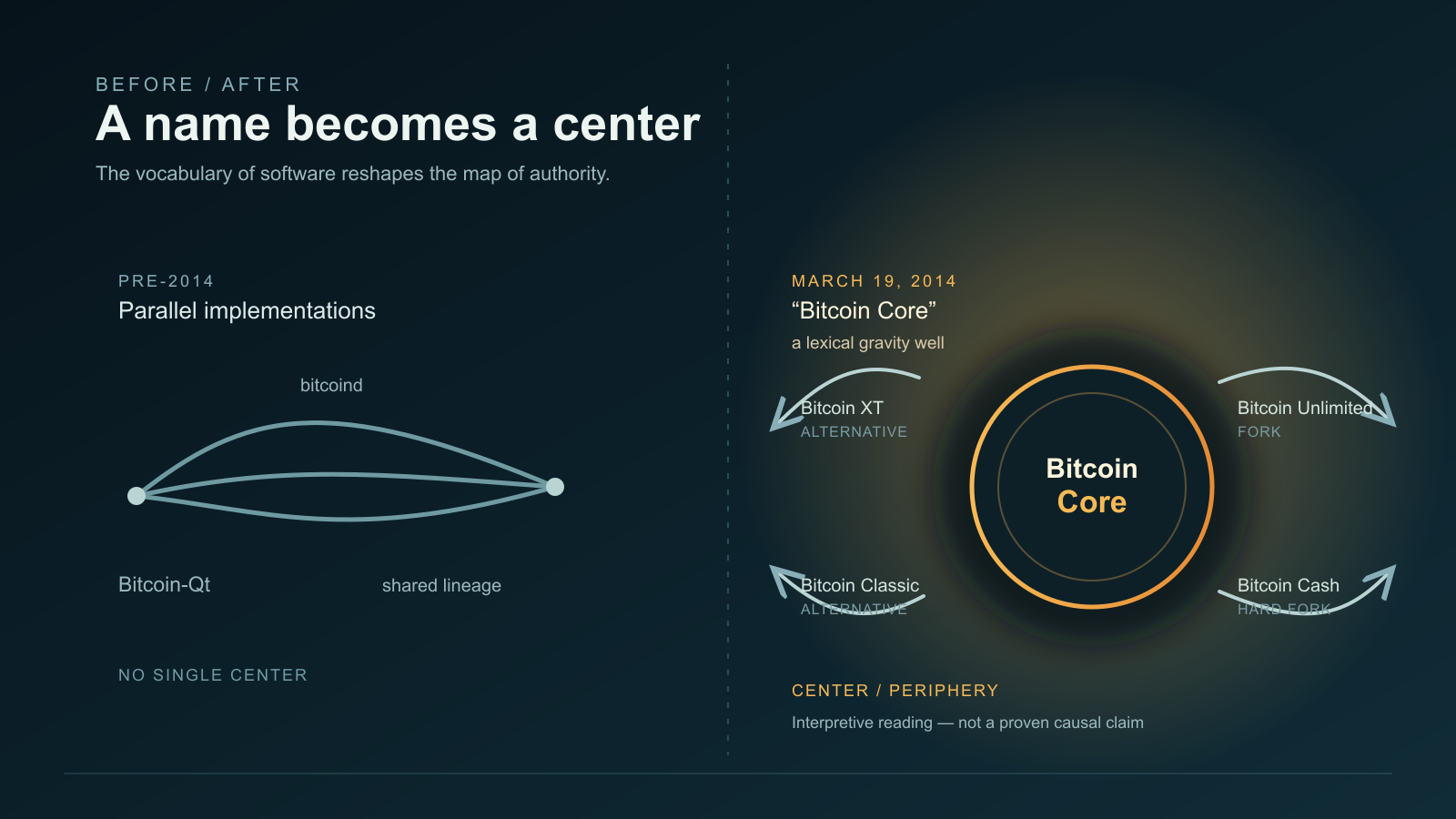
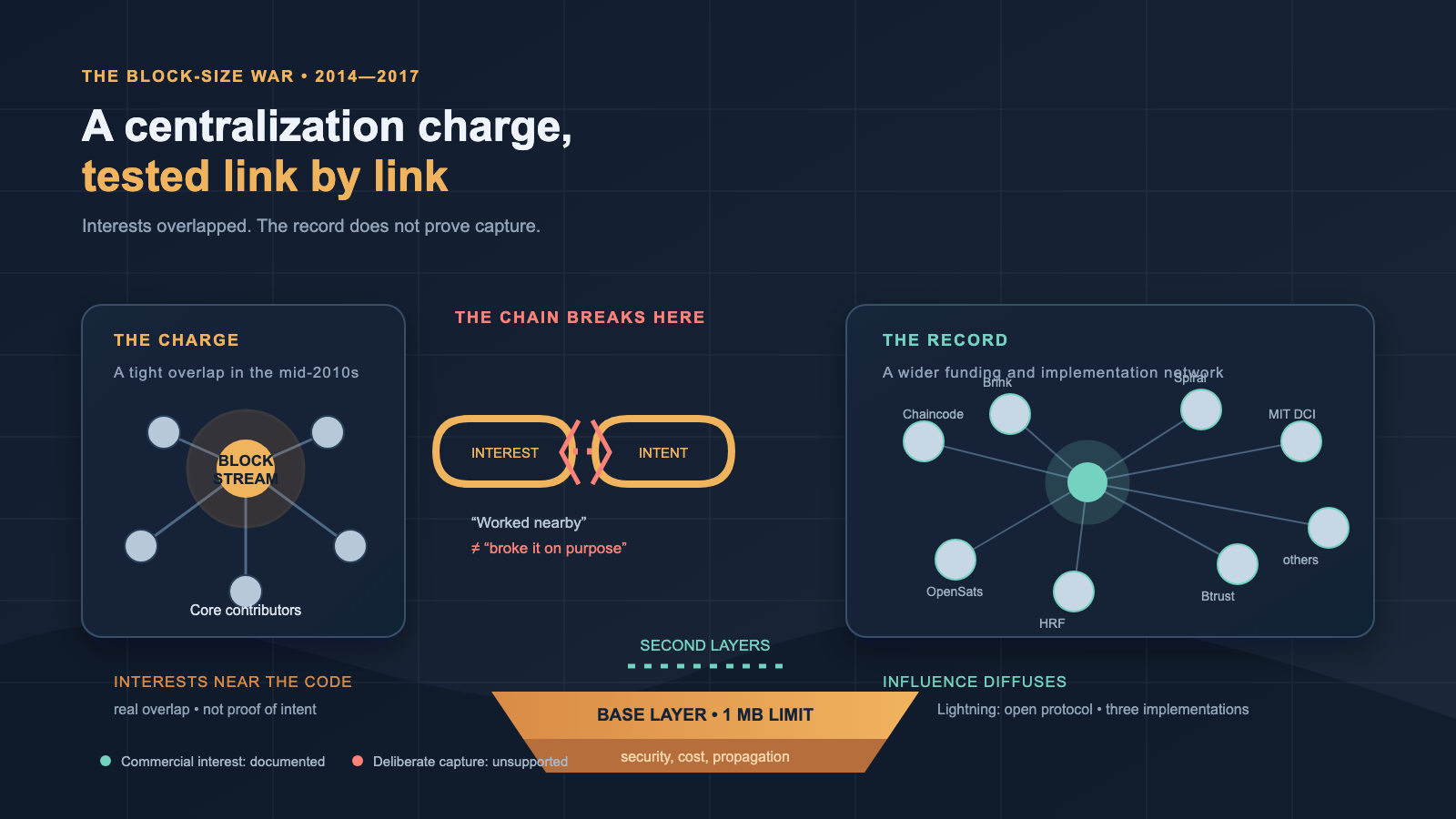
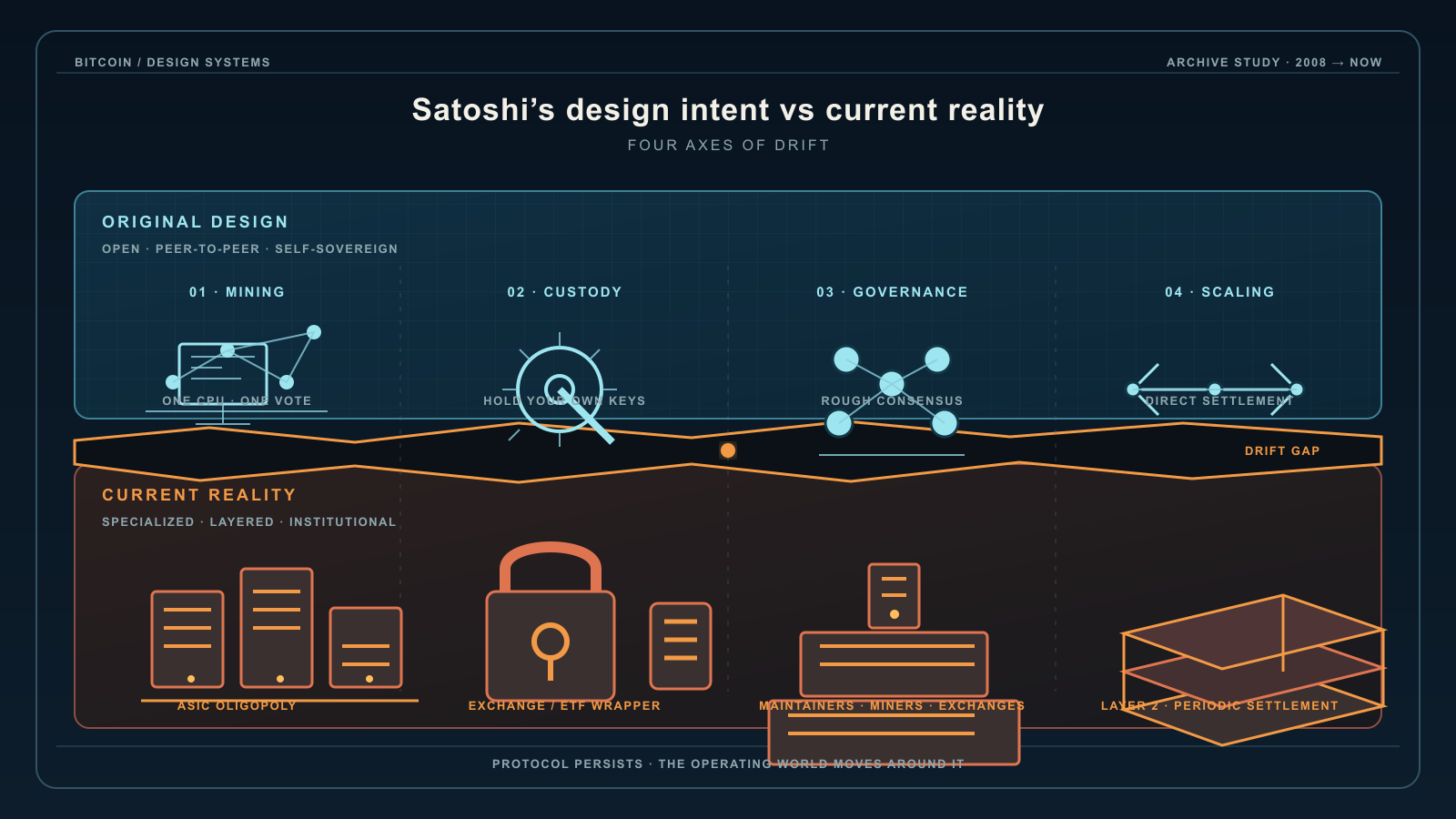
The Bitcoin XT launch entry sets out the proximate context of Hearn’s departure: the block-size dispute that drove the XT client and then collapsed it. The Core-rebrand authority-effects analysis and the fork-wars-as-not-OSS analysis both draw on Hearn’s account of the handover from Satoshi to Gavin Andresen. The fork-and-altcoin family-tree analysis and the overview of the 2015–2017 block-size war both place the post in their timelines of the block-size war that produced the 2017 Bitcoin Cash split. The Satoshi-design-vs-current-reality analysis cites it as one of the inflection points in Bitcoin’s drift from Satoshi’s design.