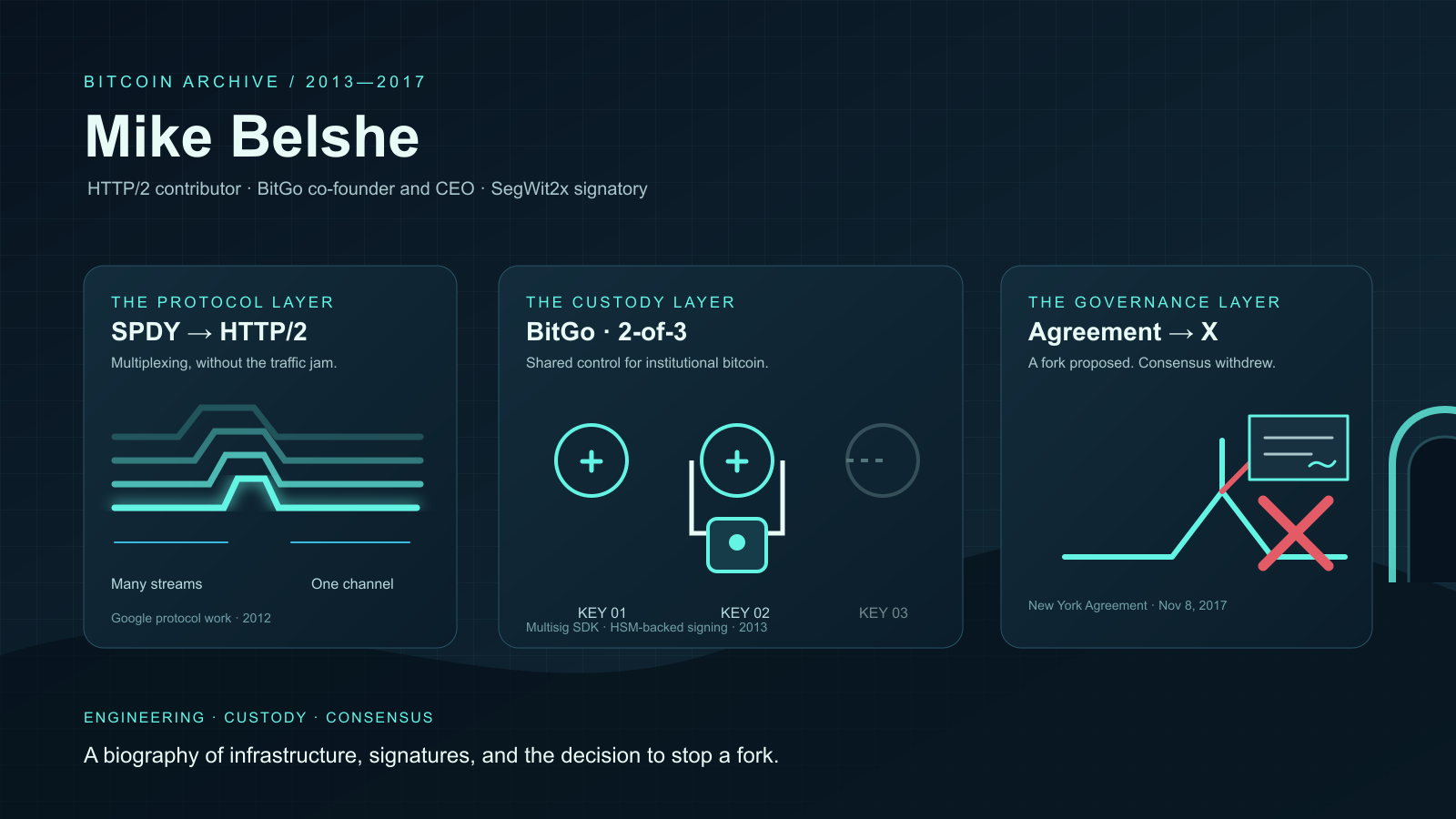
On November 8, 2017, Mike Belshe announced on the bitcoin-segwit2x@lists.linuxfoundation.org mailing list that the SegWit2x hard fork — scheduled for block 494784, approximately one week later — was being suspended. The full message:
“Our goal has always been a smooth upgrade for Bitcoin. Although we strongly believe in the need for a larger block size, there is something we believe is even more important: keeping the community together. Unfortunately, it is clear that we have not built sufficient consensus for a clean blocksize upgrade at this time. Continuing on the current path could divide the community and be a setback to Bitcoin’s growth. This was never the goal of Segwit2x.”
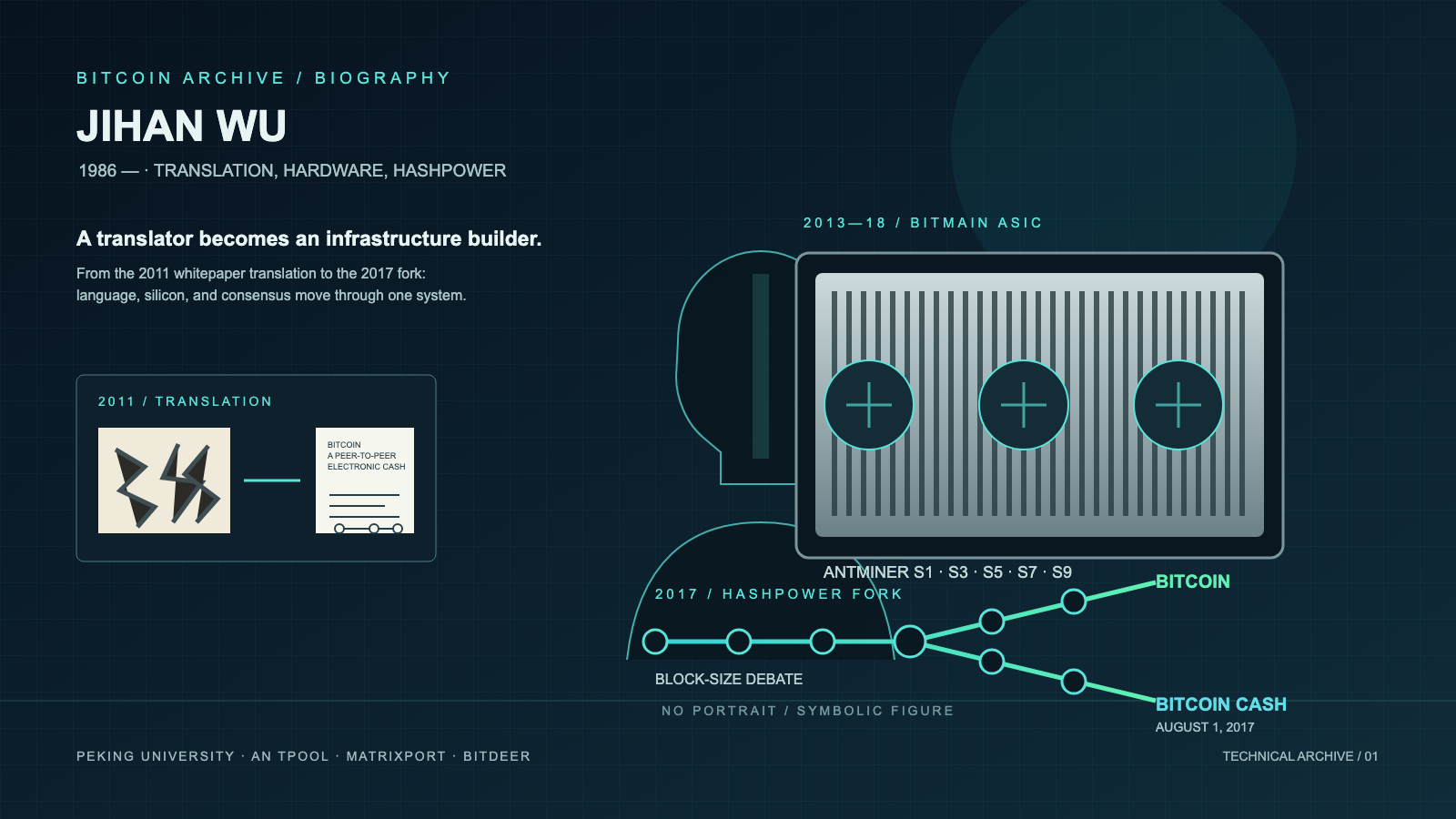
The post was co-signed by Belshe, Wences Casares, Jihan Wu, Jeff Garzik, Peter Smith, and Erik Voorhees — five of the original signatories of the New York Agreement.
SegWit2x had been the central commitment of the New York Agreement (NYA), reached at the Consensus 2017 conference on May 23, 2017 by representatives of 58 major Bitcoin businesses and miners. The agreement bundled two protocol changes:
- First half: Activate Segregated Witness (BIP 141) on the main chain via the BIP 91 lock-in mechanism. This shipped on August 24, 2017.
- Second half: Hard-fork the Bitcoin protocol to a 2 MB block size limit, three months after SegWit activation. This was the half cancelled on November 8.
The cancellation was forced by a coalition of Bitcoin Core developers, full-node operators, and exchanges who refused to support a hard fork they considered insufficiently reviewed and contested. Without their participation, the hard fork would have produced a minority-hashrate chain split rather than a network-wide upgrade. Belshe’s message acknowledged this rather than fighting a losing activation.
The SegWit2x cancellation closed the main-chain side of the block-size war that had been running since the Bitcoin XT launch in August 2015. The larger-block faction had already split off into Bitcoin Cash on August 1, 2017; the cancellation of SegWit2x meant the main chain would not also undergo a contested hard fork. After November 8, no further main-chain hard-fork attempt has been organized; the protocol has evolved through soft forks (Taproot, 2021-11) instead.
Belshe’s mailing-list post is the literal end of the New York Agreement. The signatures on the cancellation message are not all of the original NYA signers, but the absence of a contradicting signed message from any other signer functioned as a community-wide acceptance of the cancellation. The cancellation’s place in the war’s phases and factions is covered in the block-size war overview; the wider fork-and-altcoin tree is in the Bitcoin family-tree analysis.