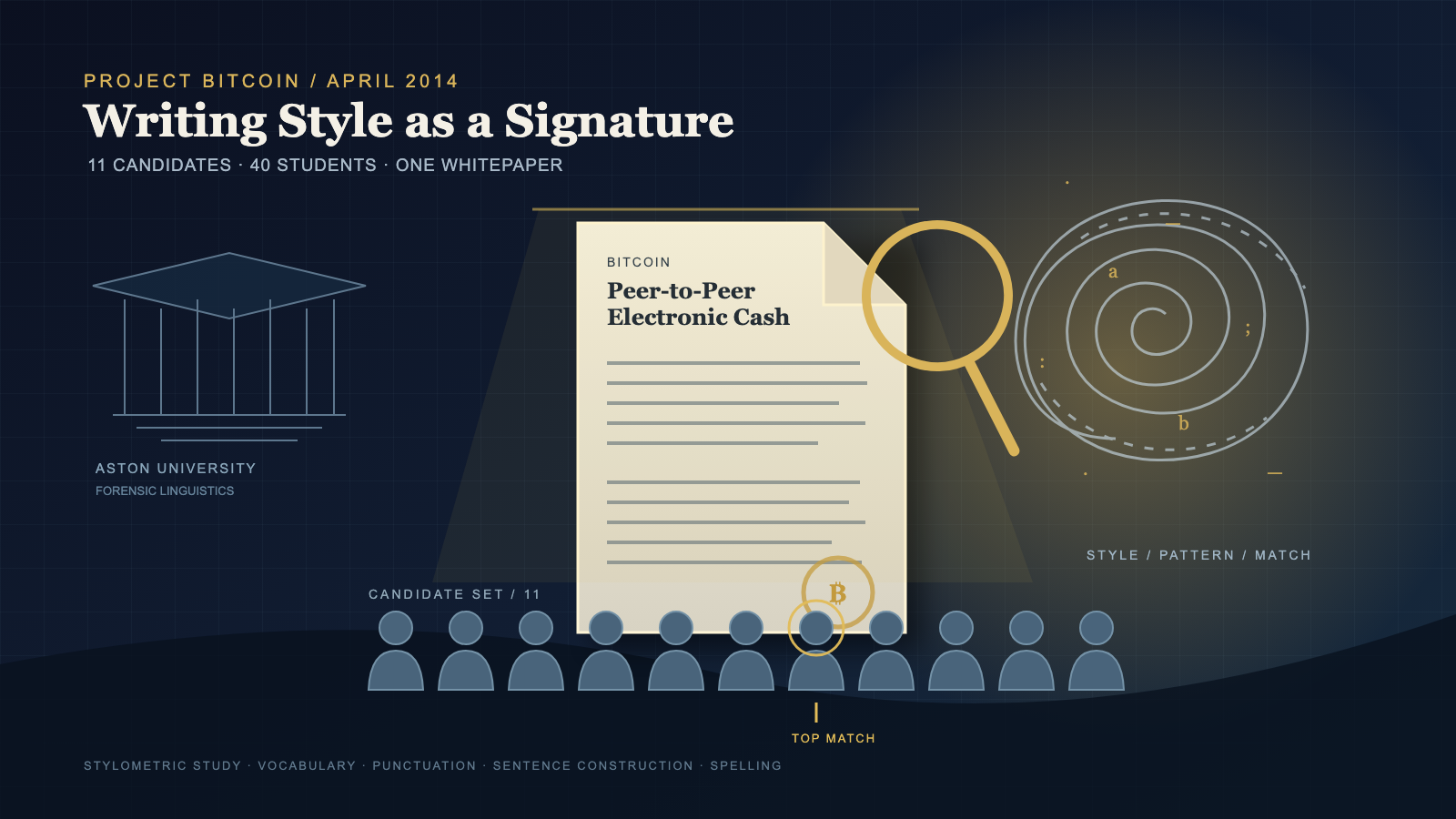
In April 2014, the Aston University Centre for Forensic Linguistics (Birmingham, UK) released the results of “Project Bitcoin” — a stylometric study led by Dr. Jack Grieve, then Lecturer in Forensic Linguistics, with a team of 40 final-year forensic linguistics students. The study identified Nick Szabo as the most likely author of the Bitcoin whitepaper out of 11 candidates examined. The result was reported by CoinDesk on April 16, 2014 and picked up by ScienceDaily, Slate, Sci.News, Phys.org, and Cointelegraph in the days that followed.
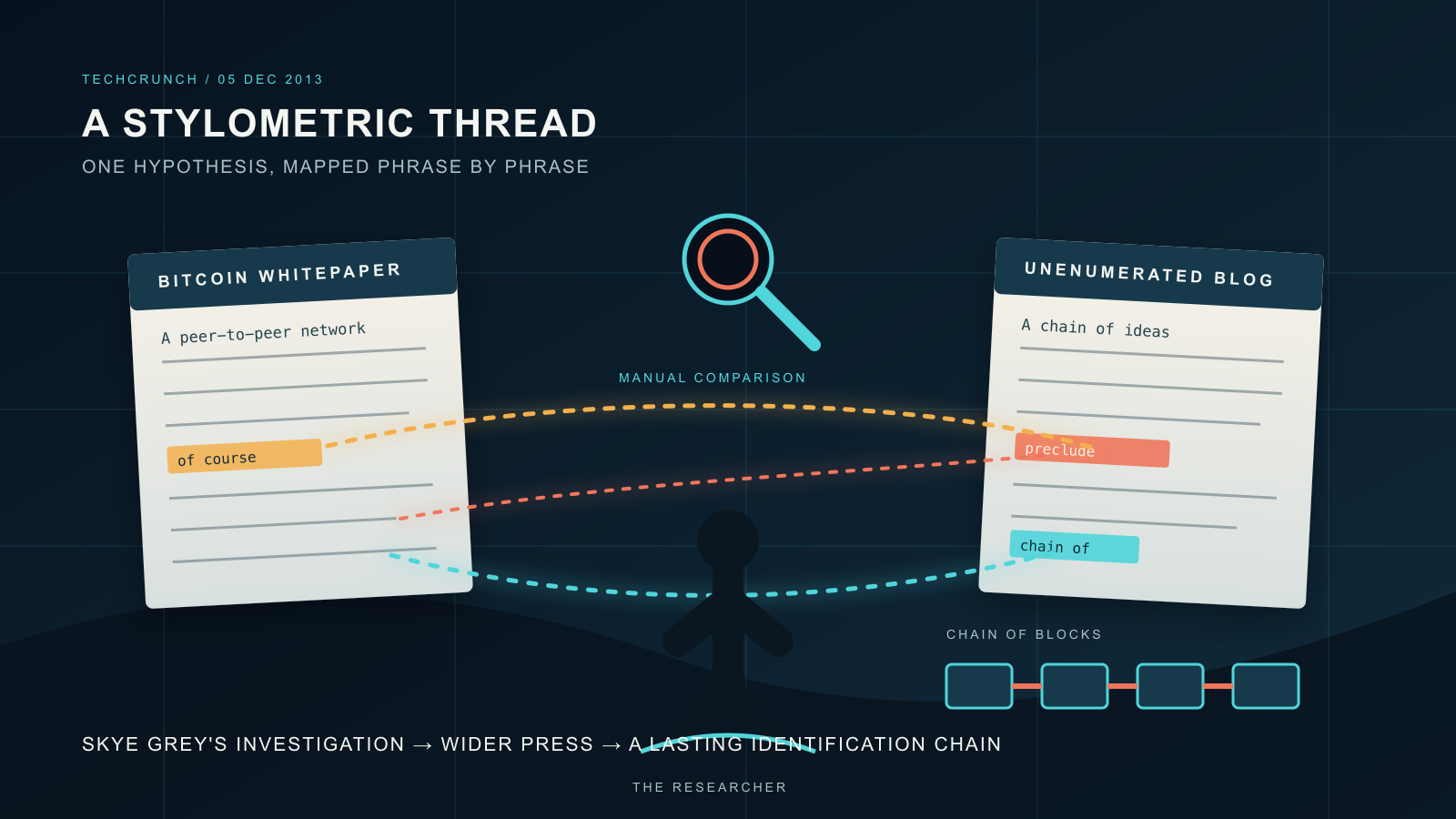
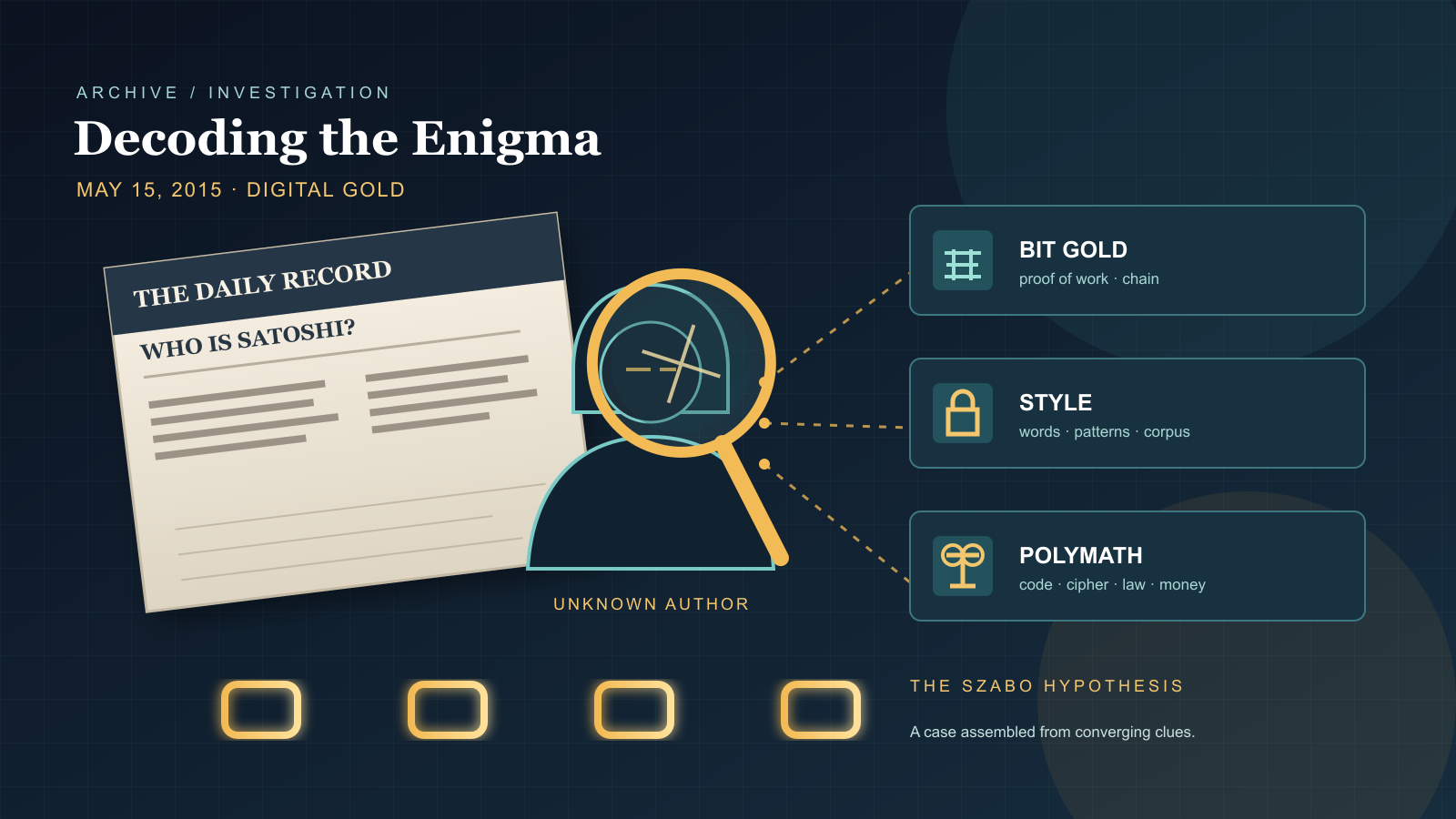
This was the first multi-candidate academic stylometric examination of Satoshi Nakamoto authorship. It came after the December 2013 Skye Grey LikeInAMirror investigation, arrived at the same leading candidate (Szabo), and was subsequently cited in Nathaniel Popper’s 2015 New York Times investigation and Digital Gold book.
The candidate set
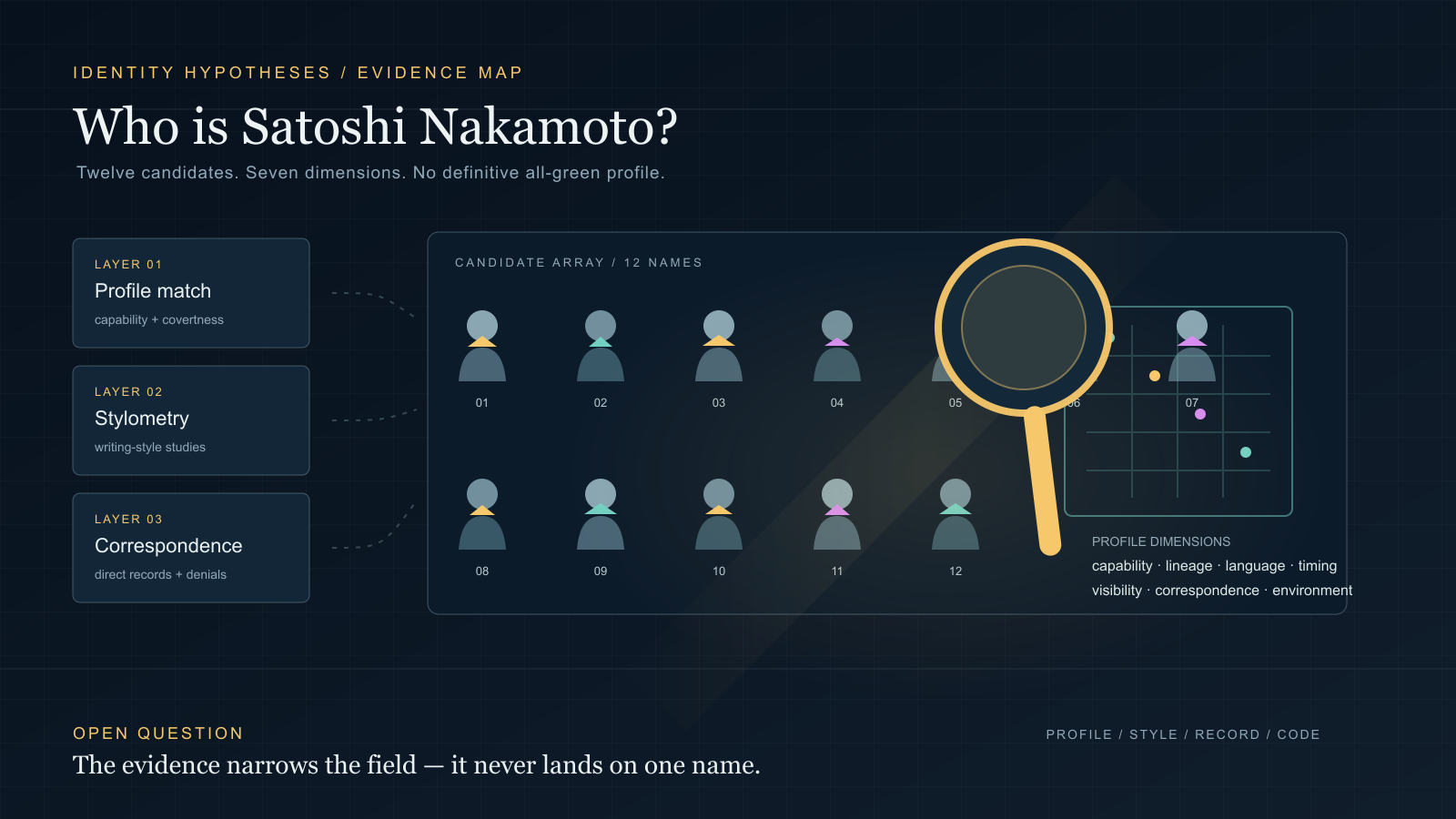
The 11 candidates examined were drawn from earlier journalistic and forum-community speculation. The four publicly named candidates:
| Candidate | Source of inclusion |
|---|---|
| Nick Szabo | Standing speculation list, with the largest study corpus (40+ academic papers from his personal website plus a substantial Unenumerated blog corpus) |
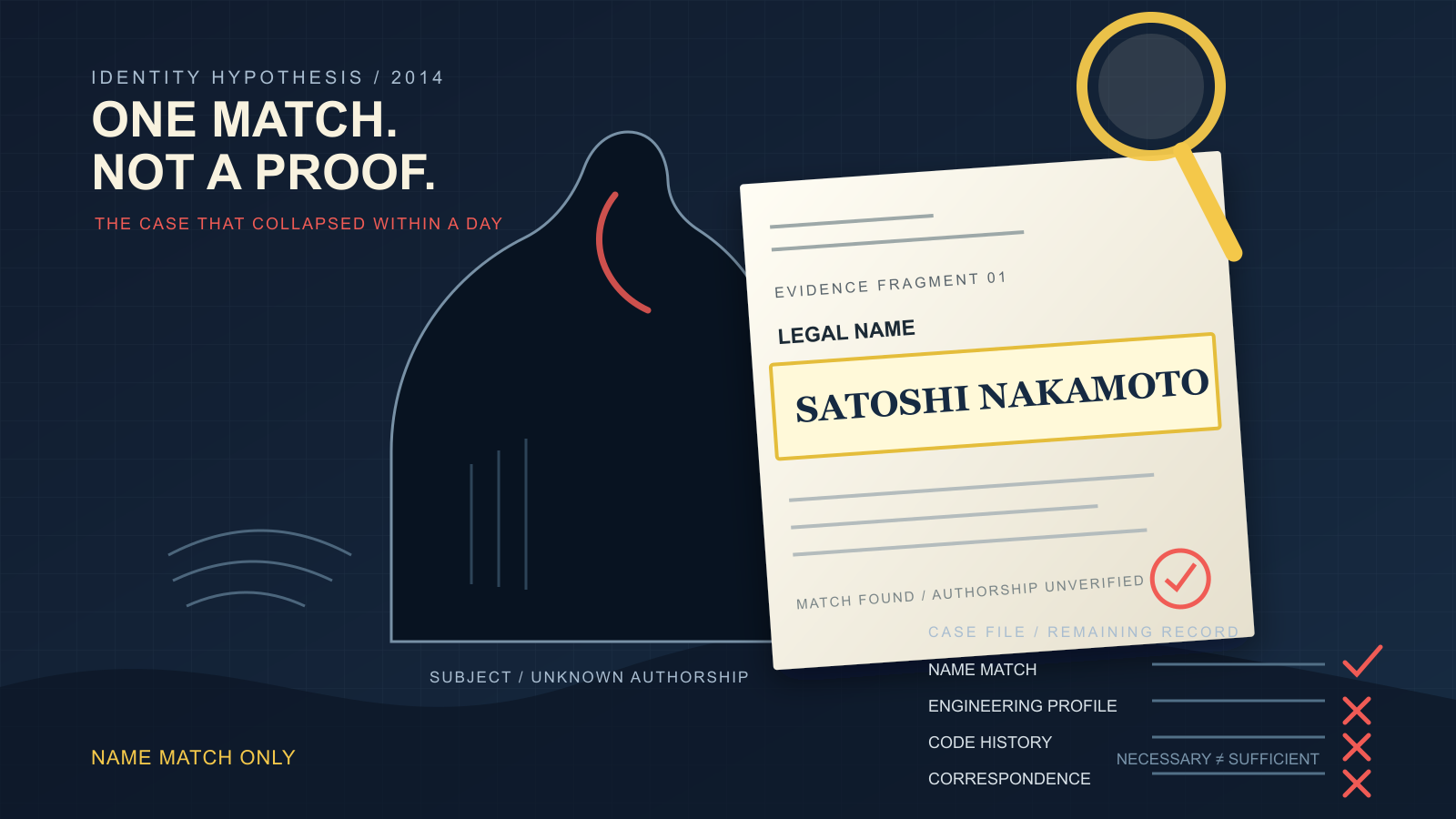
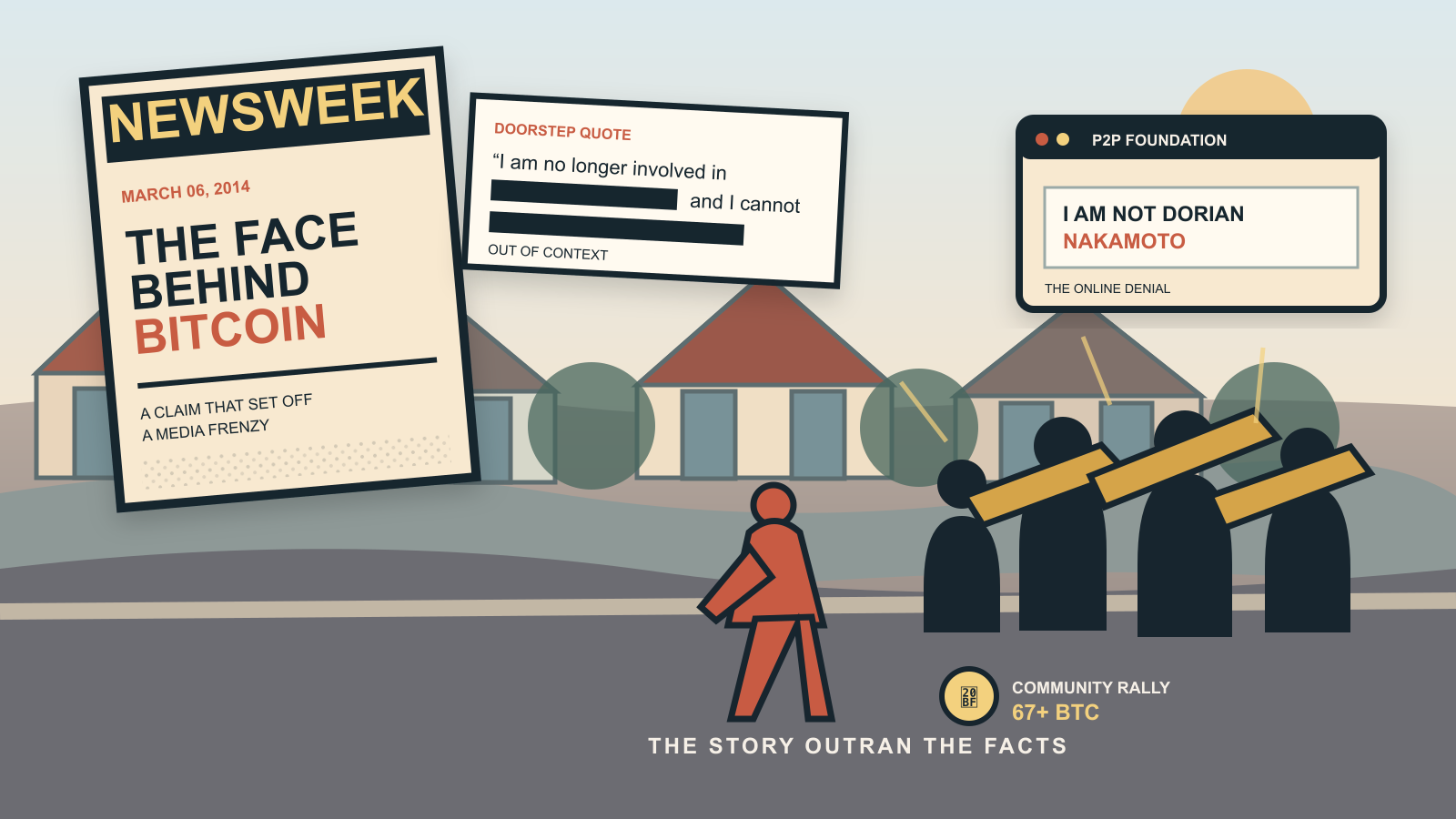
| Dorian S. Nakamoto | Named in the March 2014 Newsweek piece |
| Vili Lehdonvirta | Earlier journalistic / forum-community speculation |
| Michael Clear | Earlier journalistic / forum-community speculation |
| 7 unnamed others | Drawn from the standing list of widely-named Satoshi candidates |
The Aston team considered hundreds of writing samples per candidate, with the largest sample for Szabo as noted above.
Methodology
The Aston study applied forensic linguistic / stylometric analysis — the same family of methods used in document examination cases for litigation, threat-attribution, and historical authorship disputes. Variables examined:
| Variable | Examined for |
|---|---|
| Vocabulary | Distinctive vocabulary use across candidate corpora |
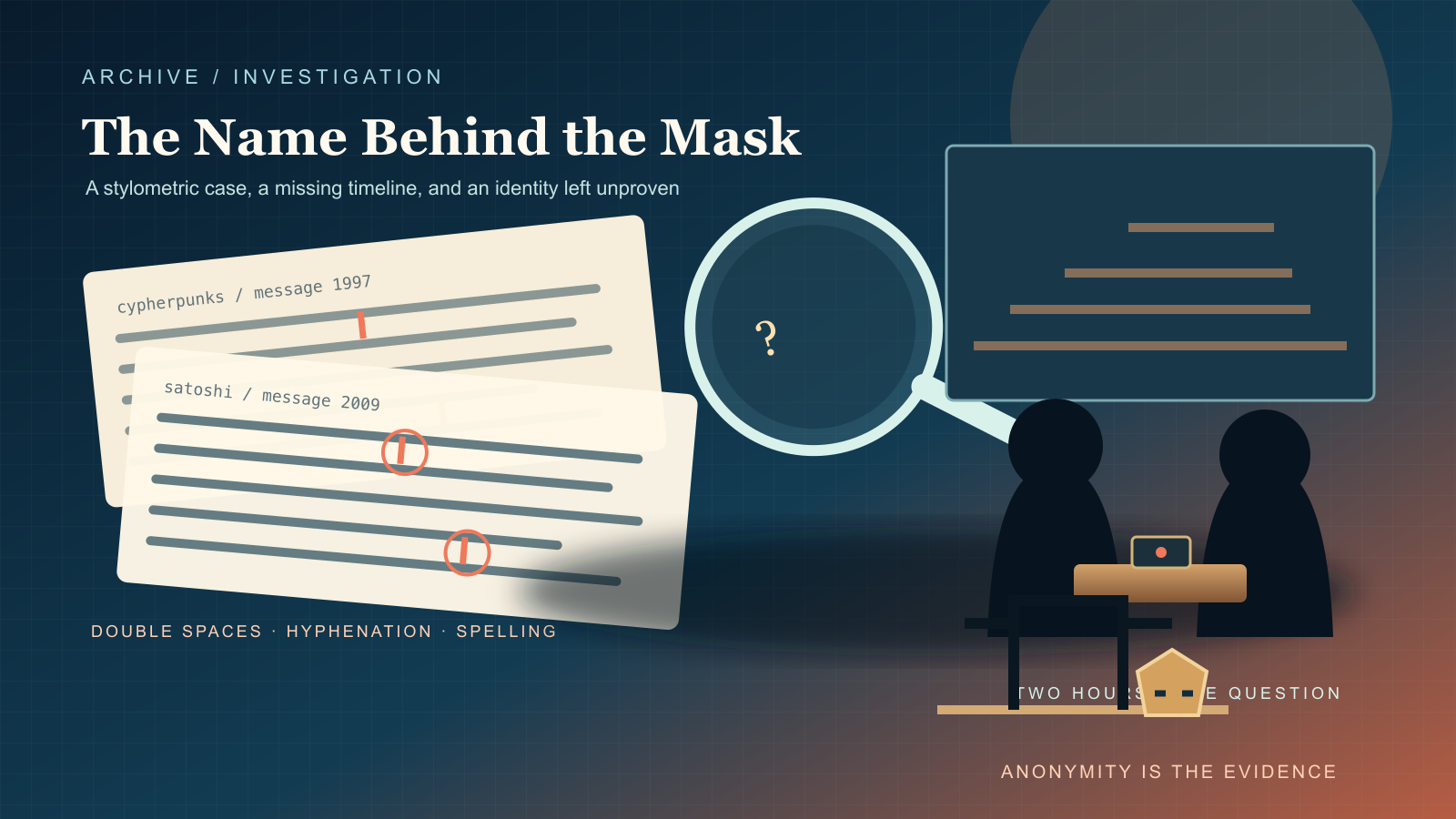
| Punctuation & spelling | British/American spelling mix, double-spacing-after-period pattern visible in Satoshi’s writing |
| Sentence construction | Construction patterns, syntactic preferences |
| Hyphenation | Hyphenation conventions, compound-word formation |
| Discourse markers | Recurring stylistic tells across multiple writing-context types |
The reported conclusion
Dr. Grieve’s reported summary statement at release:
The number of linguistic similarities between Szabo’s writing and the Bitcoin paper is uncanny, none of the other possible authors were anywhere near as good of a match. We are pretty confident that out of the primary suspects Nick Szabo is the main author of the paper, though we can’t rule out the possibility that others contributed.
The hedge in the second sentence is methodologically important: Grieve does not assert sole authorship, and explicitly leaves open the possibility of multi-author contribution while naming Szabo as the principal match.
Methodological caveats noted at release
A spokesperson for Aston University acknowledged at the time of release that:
- The report had not been peer reviewed and was not scheduled for peer review in the near future.
- The study had been undertaken as a final-year forensic-linguistics class project rather than as a faculty-led research output.
Subsequent critical follow-up
The methodological constraints of “Project Bitcoin” — class-project sample size, fixed candidate set drawn from prior speculation, no peer review, no released numerical data — have been the subject of subsequent critical commentary. The most cited critique is David Gerard’s December 2018 piece “No, Nick Szabo wasn’t Satoshi Nakamoto in 2014 either”, which argues that stylometric analyses on candidate sets pre-selected by topical overlap (writers who wrote about digital cash, P2P networks, or cryptography) inherently confound shared subject-matter vocabulary with shared individual style.
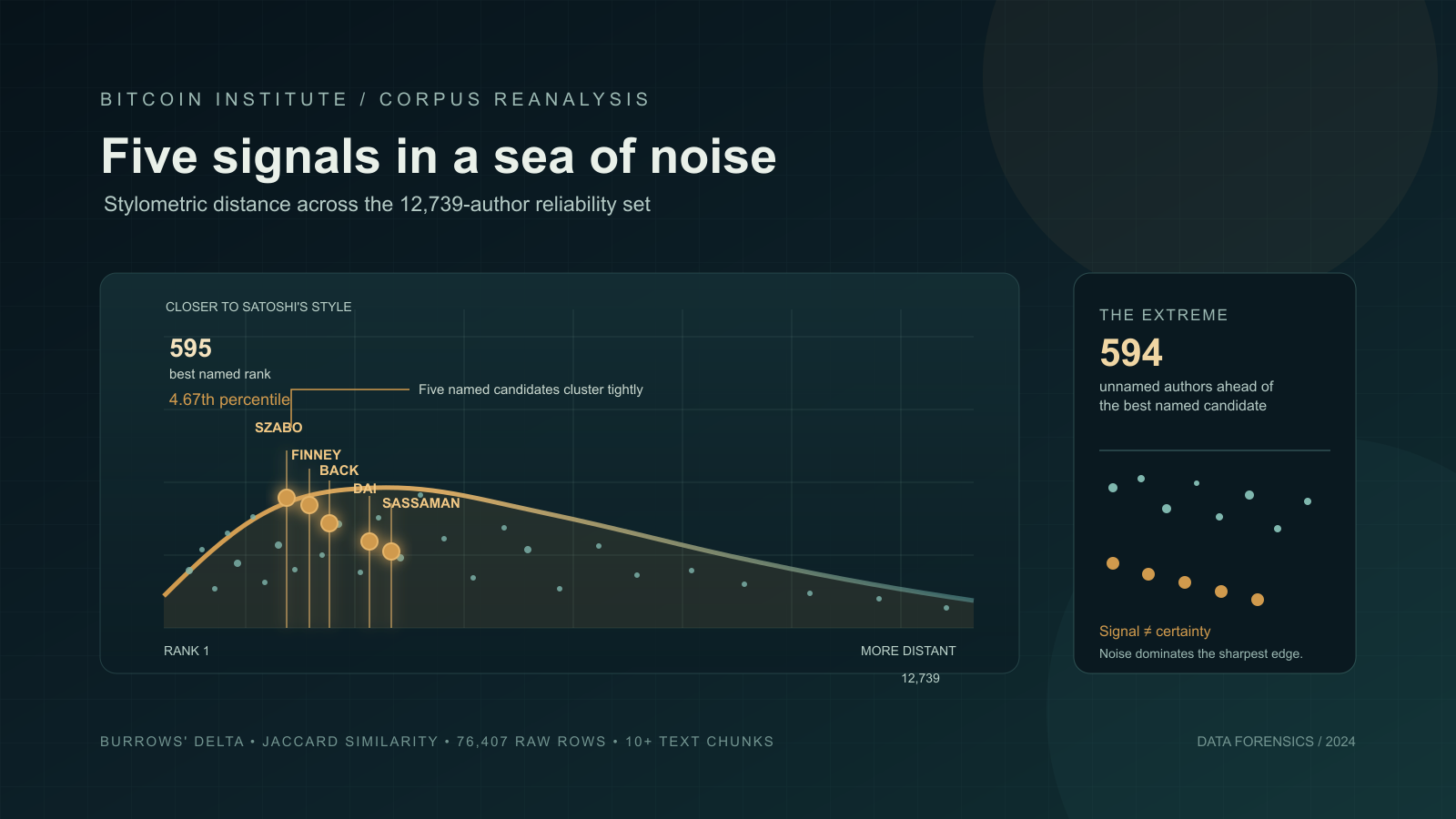
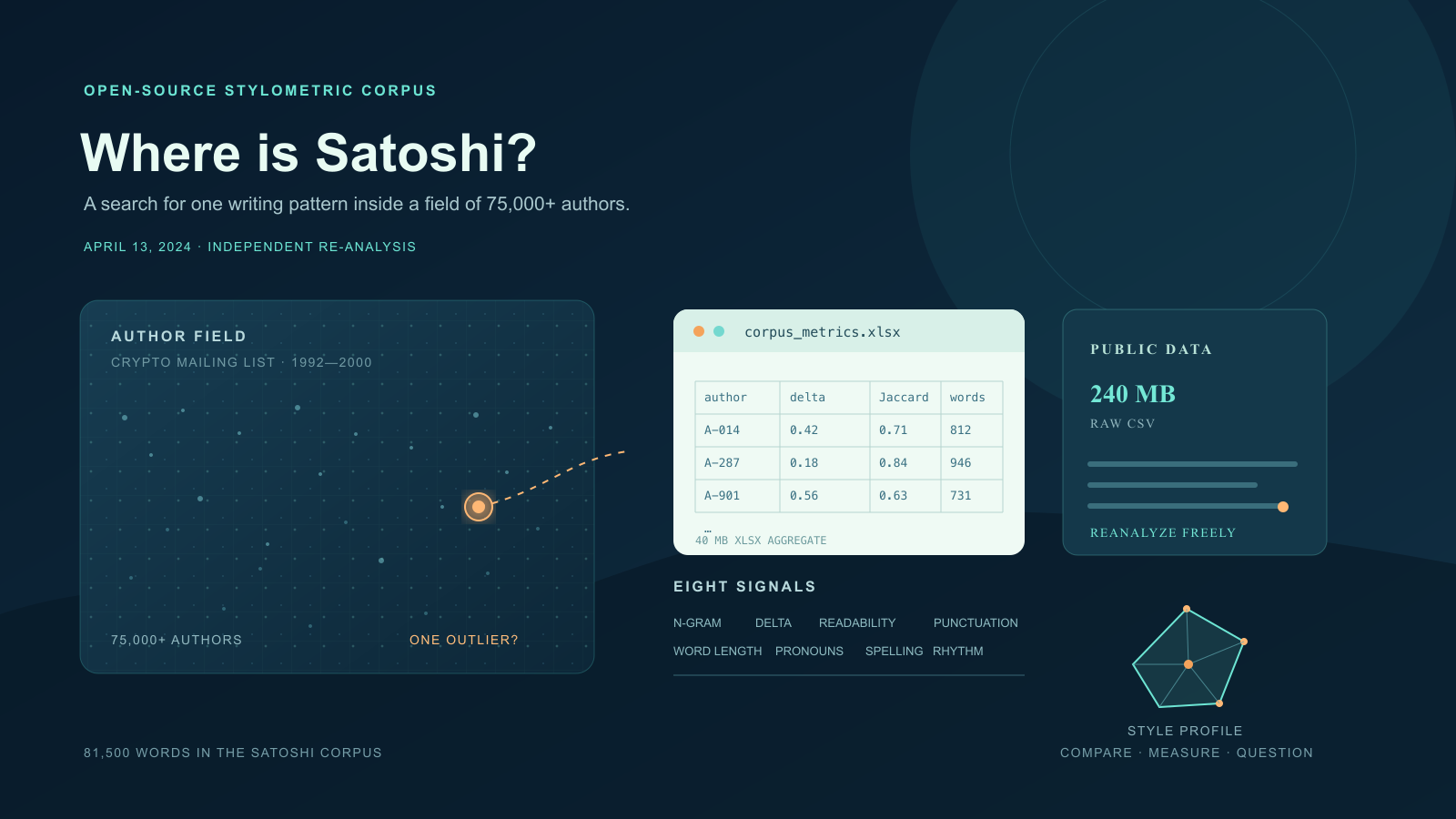
This methodological observation parallels — and predates — the same caveat raised by Florian Cafiero about the 2026 Carreyrou New York Times investigation and the limitations explicitly cataloged by Bas van Dorst’s 2024 ‘Where is Satoshi?’ open-source corpus — namely that stylometric attribution is sensitive to candidate pre-selection, distance metric, and corpus boundaries in ways that affect which name comes out at the top.
Position in the stylometric record on Satoshi authorship
| Study | Date | Candidate scope | Top match | Numerical data public |
|---|---|---|---|---|
| Skye Grey | December 2013 | Szabo (single-hypothesis) | Szabo | No (narrative phrase list) |
| Aston University | April 2014 | 11 candidates | Szabo | No (results in press releases) |
| van Dorst | April 2024 | 75,000+ | Not named | Yes (XLSX/CSV release) |
| Cafiero / Carreyrou NYT | April 2026 | 12 (focus); 620 (broader) | Adam Back (Hal Finney near tie) | No (results summarized in NYT article) |
The Aston study sits historically as the first multi-candidate academic-side examination, post-Skye Grey, and prior to the rigorous-corpus van Dorst release. Its place in the record is foundational rather than dispositive: subsequent stylometric work has expanded the candidate pool and produced different leading candidates depending on methodology.
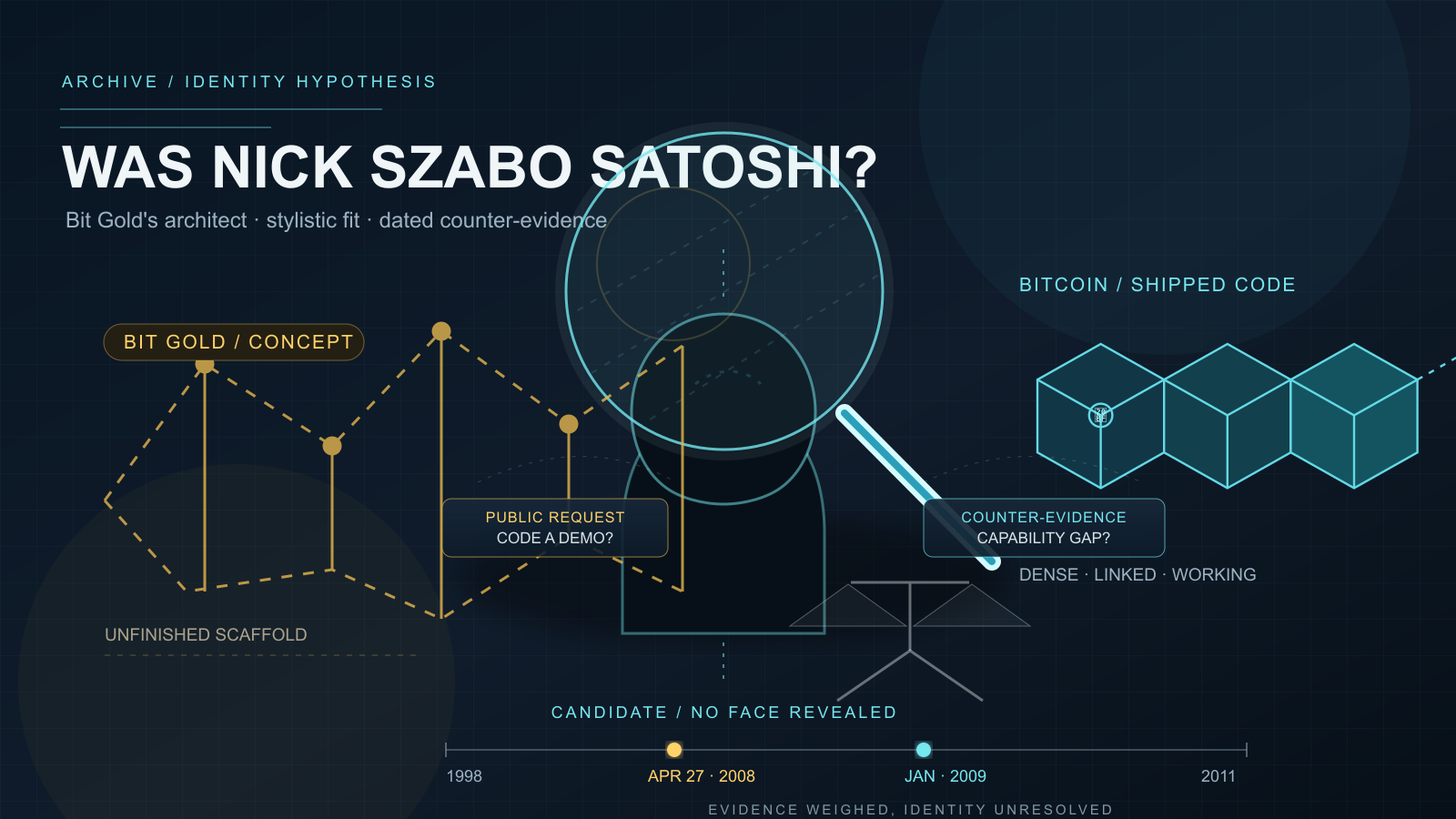
For the analytical treatment of the Nick Szabo = Satoshi hypothesis (this study’s evidence weighed against the April 2008 Unenumerated blog comment asking for Bit Gold implementation help, the May 2011 third-person framing, Szabo’s continued Unenumerated visibility throughout 2007–2008, and his repeated denials), see the Nick Szabo = Satoshi identity hypothesis entry.
The Nick Szabo identity hypothesis leans on this study as the quantitative corroboration that is independent of Skye Grey’s 2013 work and that ranked Szabo highest among the eleven candidates.