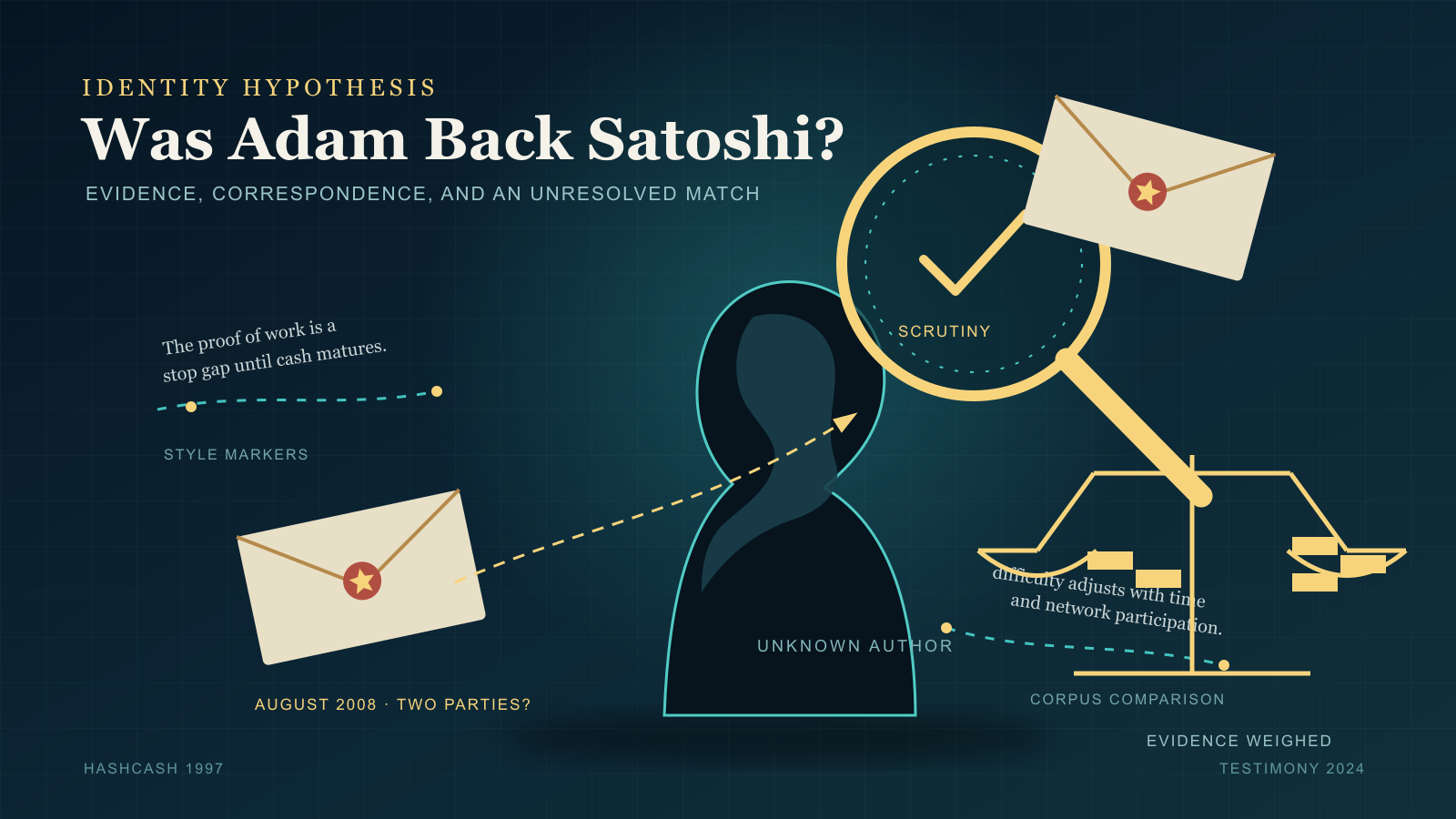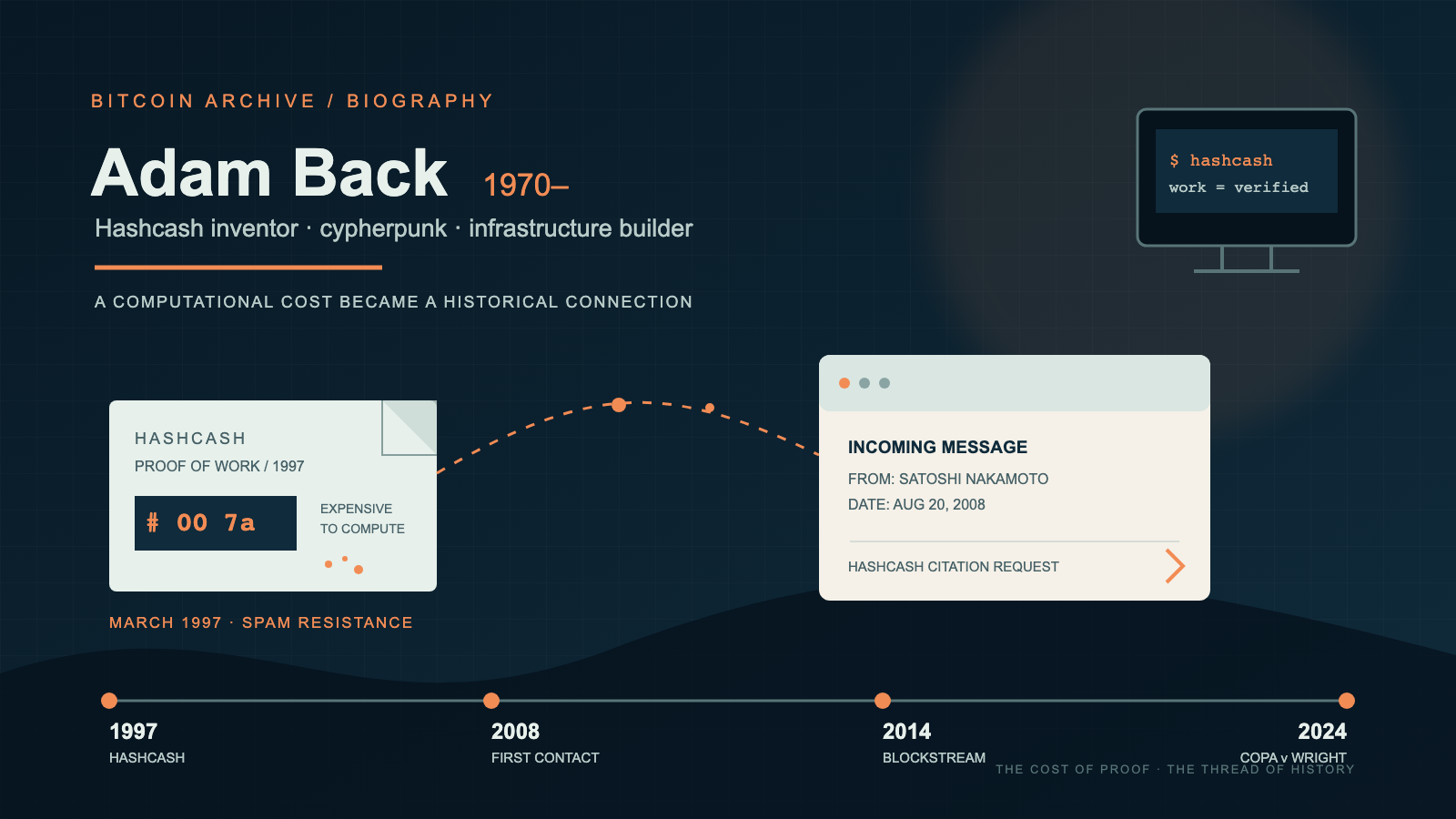
Adam Back — inventor of Hashcash (1997), the proof-of-work system cited in the Bitcoin whitepaper — has reflected on his earliest interaction with Satoshi Nakamoto:
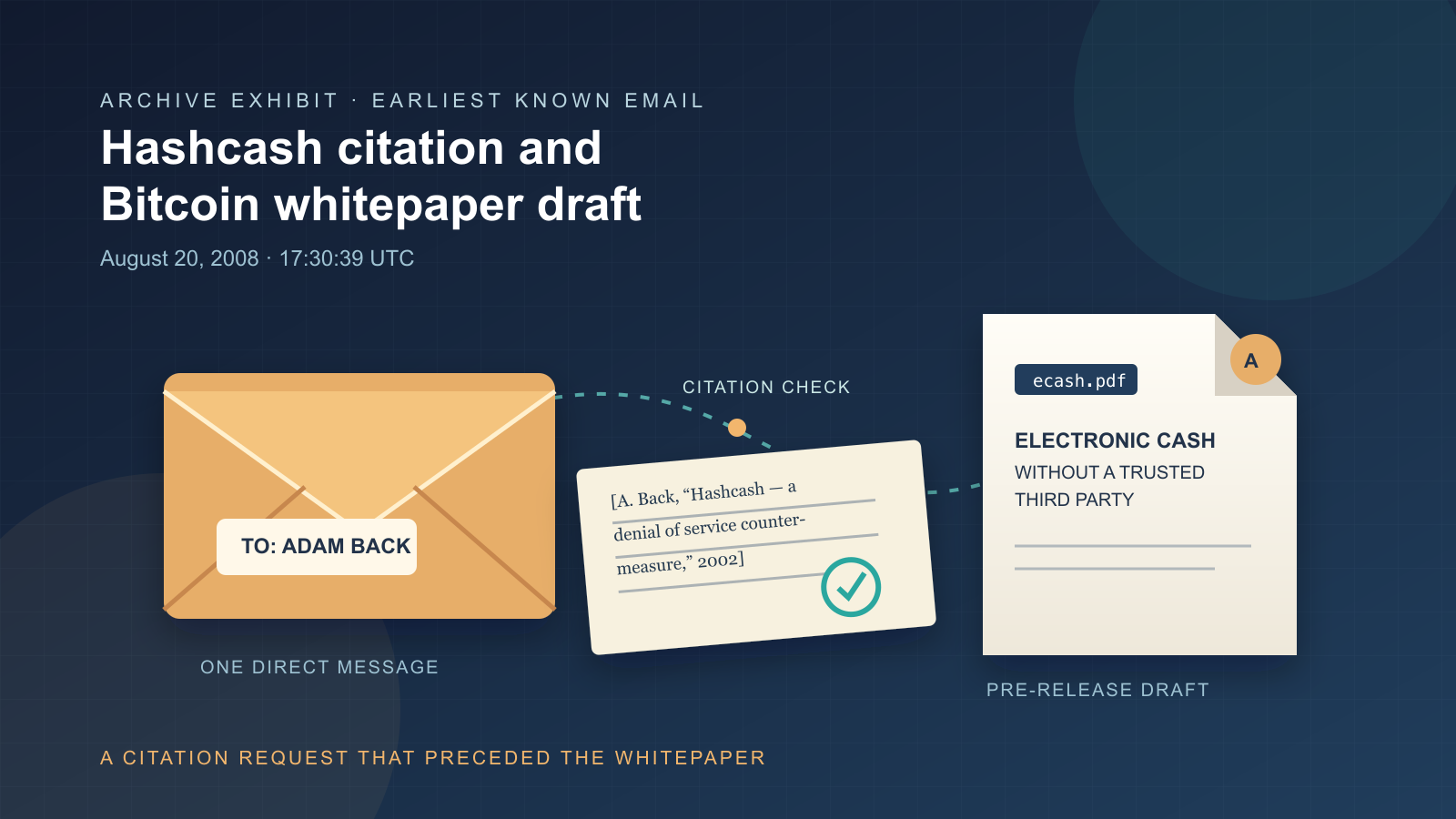
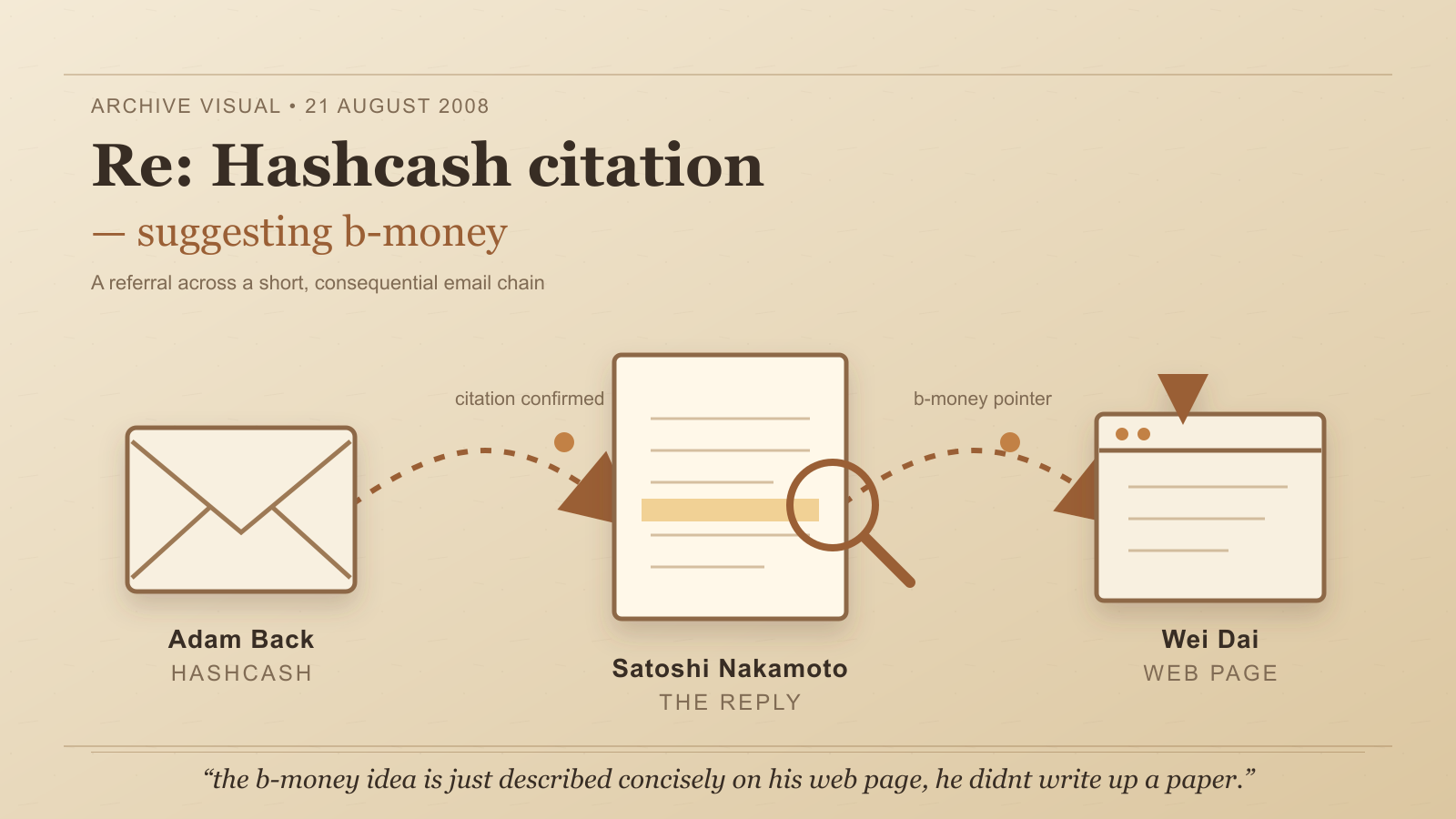
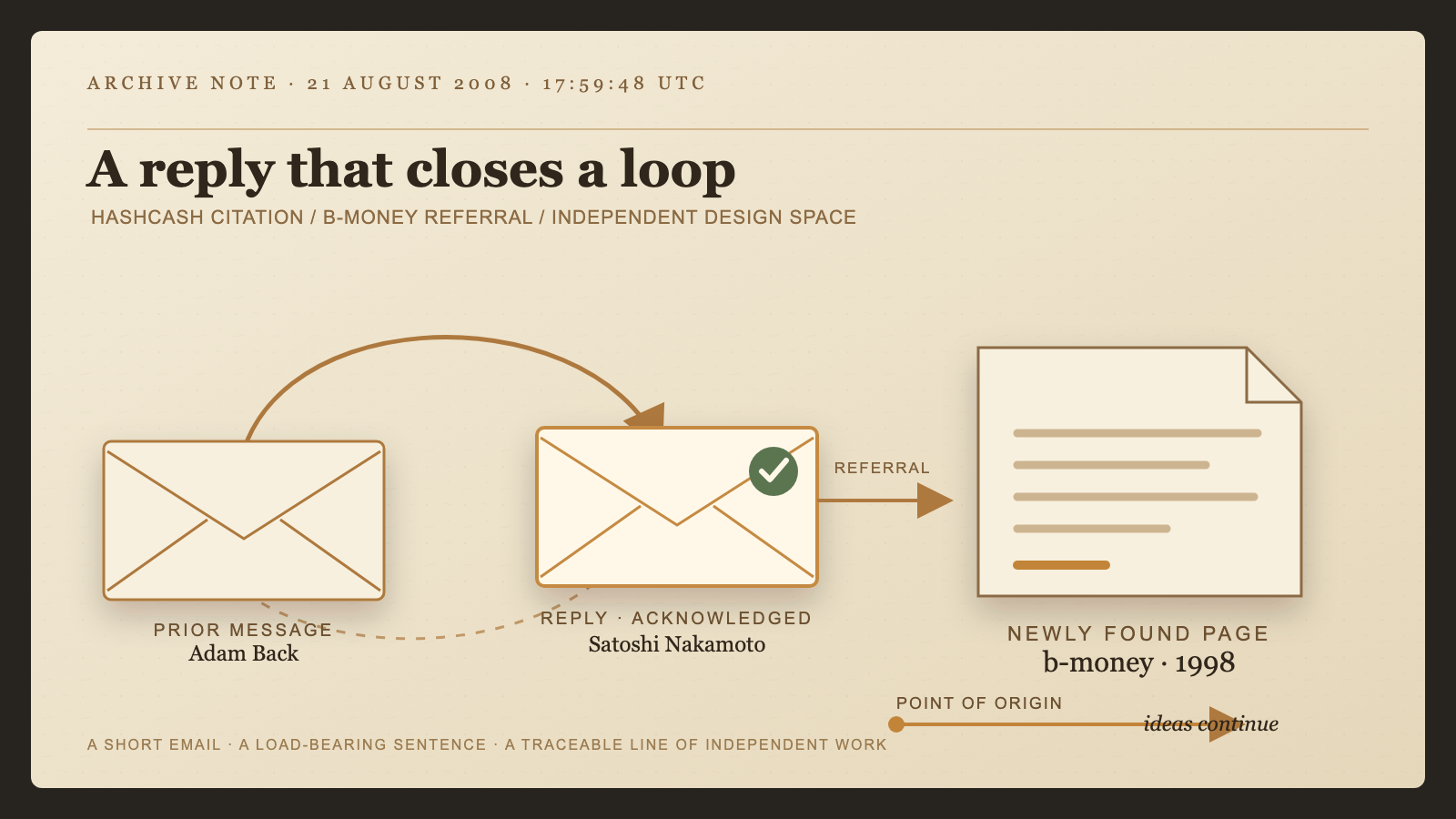
In August 2008, Satoshi contacted Back to verify the citation for his Hashcash paper. Back confirmed the citation and suggested Satoshi look at Wei Dai’s b-money proposal.
Quote from: Satoshi Nakamoto on August 21, 2008, 5:59:48 PM UTC“I suggested looking into b-money, but it seemed he wasn’t aware of it at that point.”
“Thanks, I wasn’t aware of the b-money page, but my ideas start from exactly that point.”
On his biggest regret, Back was candid:
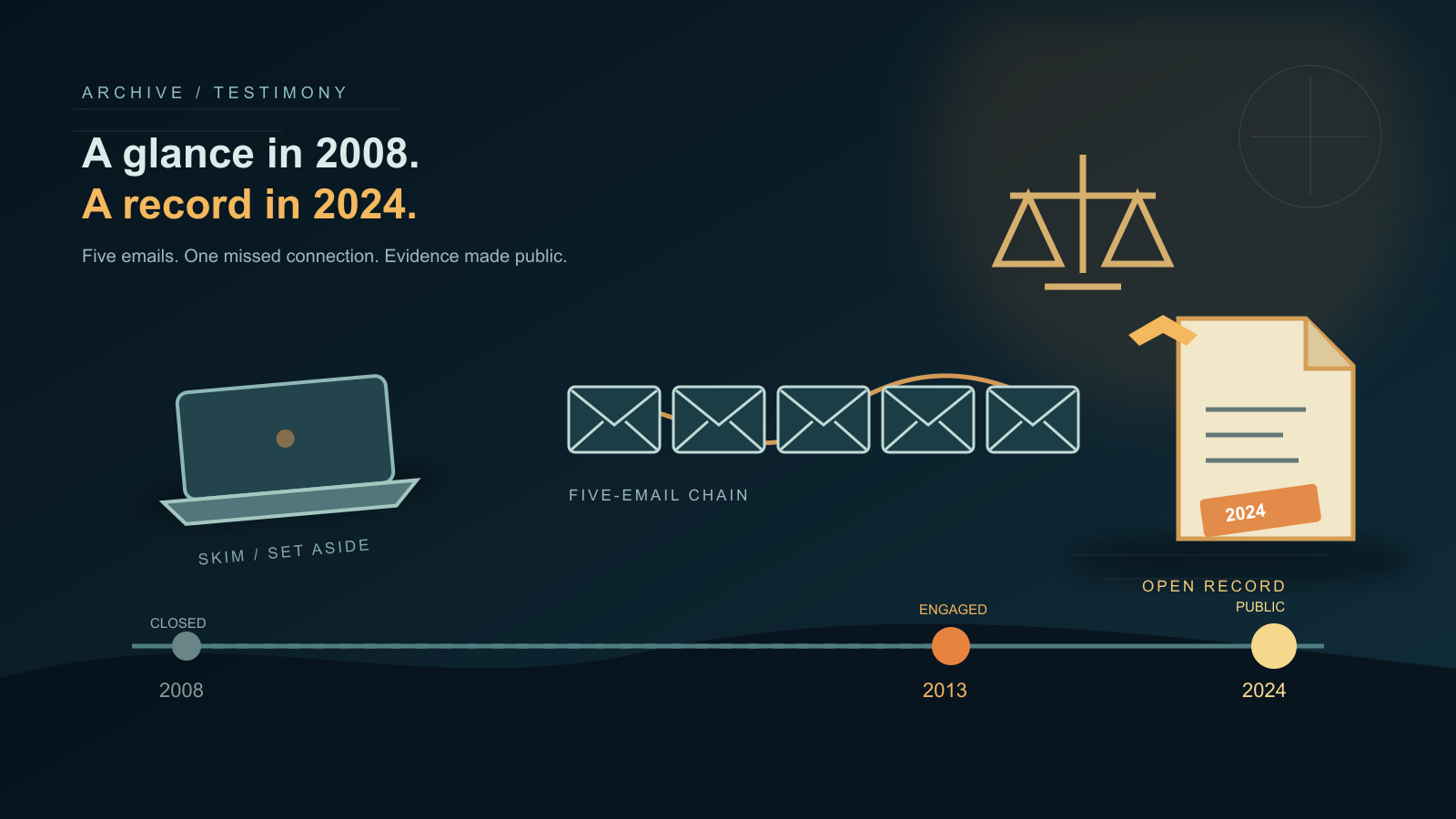
“I initially failed to read the Bitcoin whitepaper carefully. That was probably my biggest mistake.”
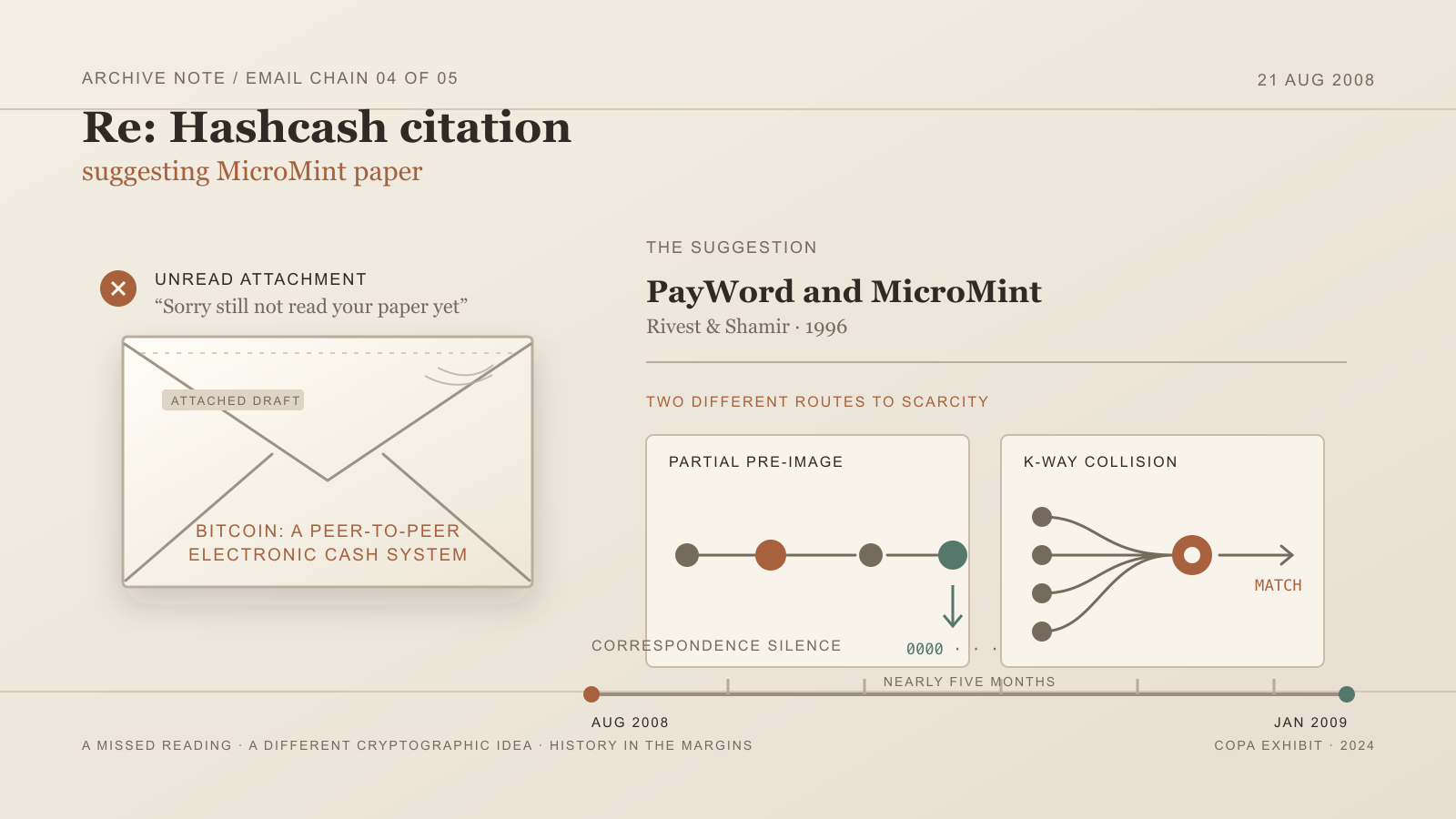
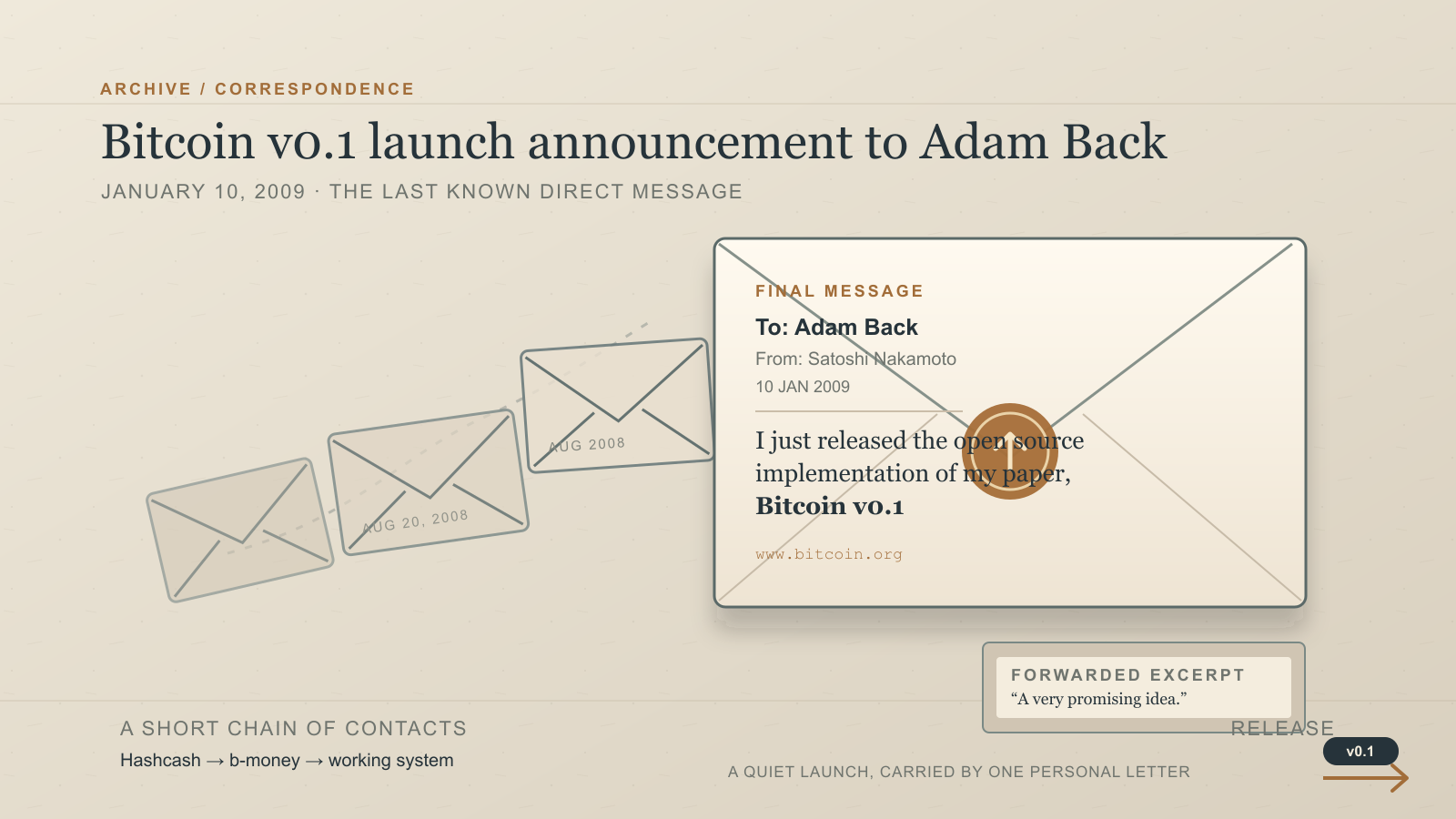
Back’s reply suggested Wei Dai’s b-money without engaging the paper itself — by his own later admission, he had not yet read it carefully. That contemporaneous brush-off is on the record in his own words — “Sorry still not read your paper yet” — in the MicroMint email. He didn’t begin actively using or promoting Bitcoin until around 2013 — the same gap that, on Satoshi’s side, Satoshi’s final email to Back had already closed.
On his early doubts about Bitcoin, Back later told CoinShares:
“I had questions about its sustainability: it was in 2009, there was no exchange, no value. Earlier systems had failed due to centralisation or unverifiable issuance, but Bitcoin’s decentralised model promised a better path.”
“From those experiences, it became clear that decentralisation was essential to succeed where others failed.”
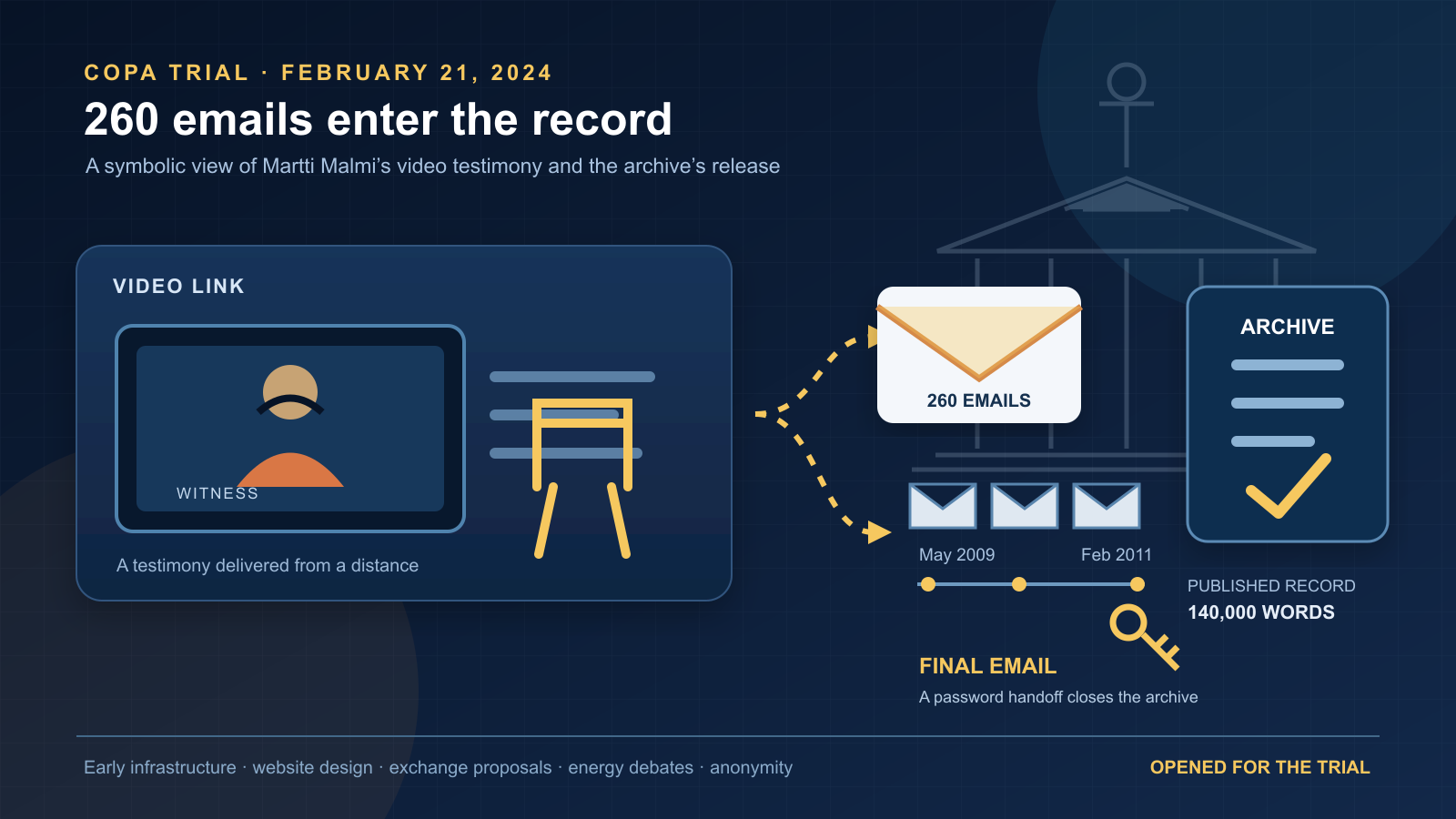
During the COPA v. Craig Wright trial, Back testified in person at the London High Court and submitted the complete five-email chain between himself and Satoshi as evidence. The emails — dating from August 20, 2008 onward — were made public for the first time, the same day Martti Malmi testified via video link and published his own 260-email Satoshi archive.
Back later founded Blockstream in 2014, a prominent Bitcoin infrastructure company. Despite his regret at not engaging earlier, his Hashcash invention remains a fundamental building block of Bitcoin’s proof-of-work consensus mechanism.
The testimony runs through three later records: the Adam Back biography, the Adam Back identity hypothesis, where the sworn rebuttal is the principal counter-evidence, and the 2026 NYT investigation.