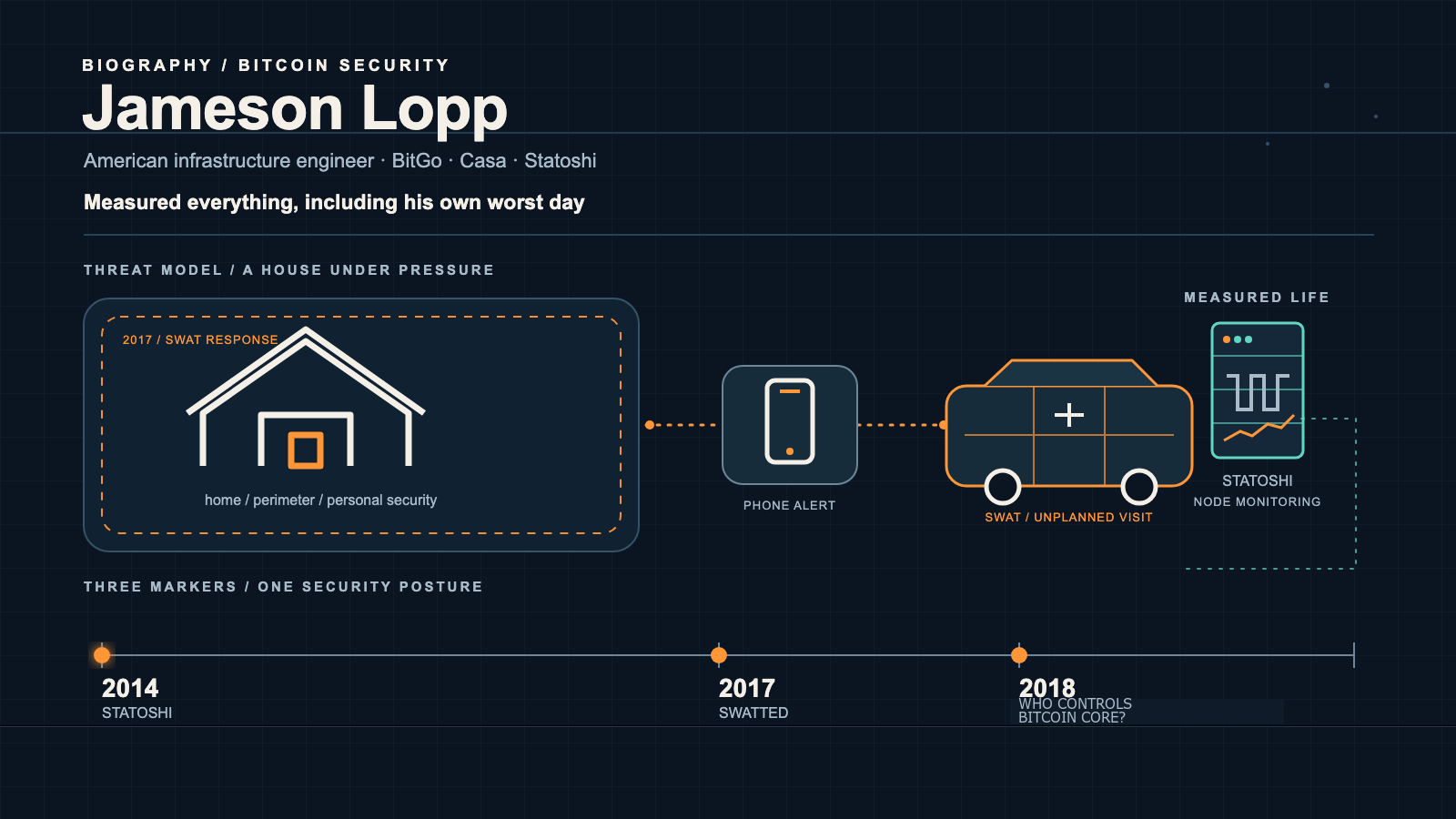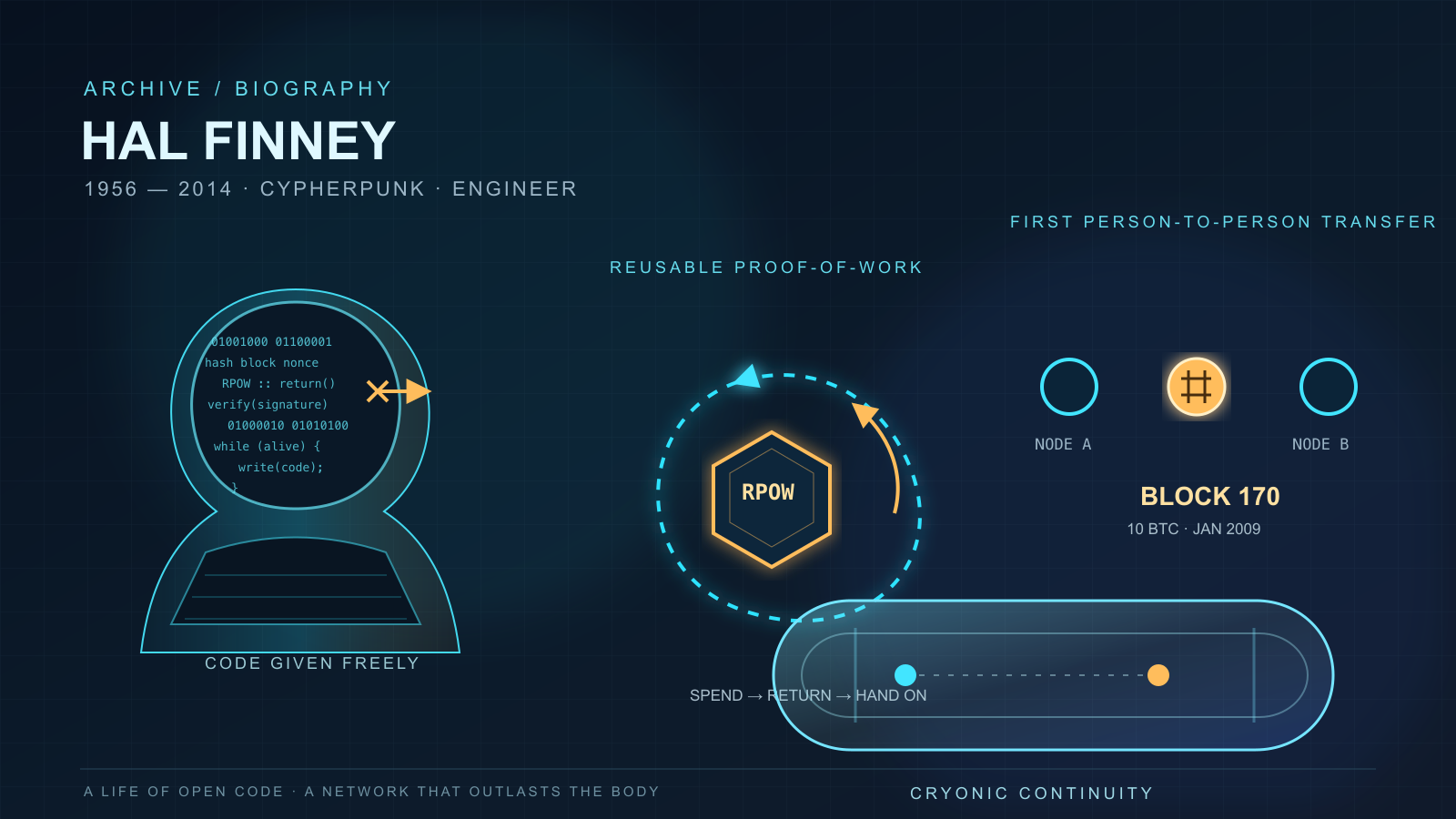
On October 21, 2023, Bitcoin researcher Jameson Lopp published “Hal Finney Was Not Satoshi Nakamoto” on his blog, presenting a detailed multi-pronged argument against the long-running speculation that Hal Finney was the pseudonym behind Bitcoin’s creation. The full hypothesis-side / counter-evidence treatment is in the Hal Finney = Satoshi hypothesis entry; this article documents Lopp’s specific contribution to the counter-evidence side.
The race-day alibi (April 18, 2009)
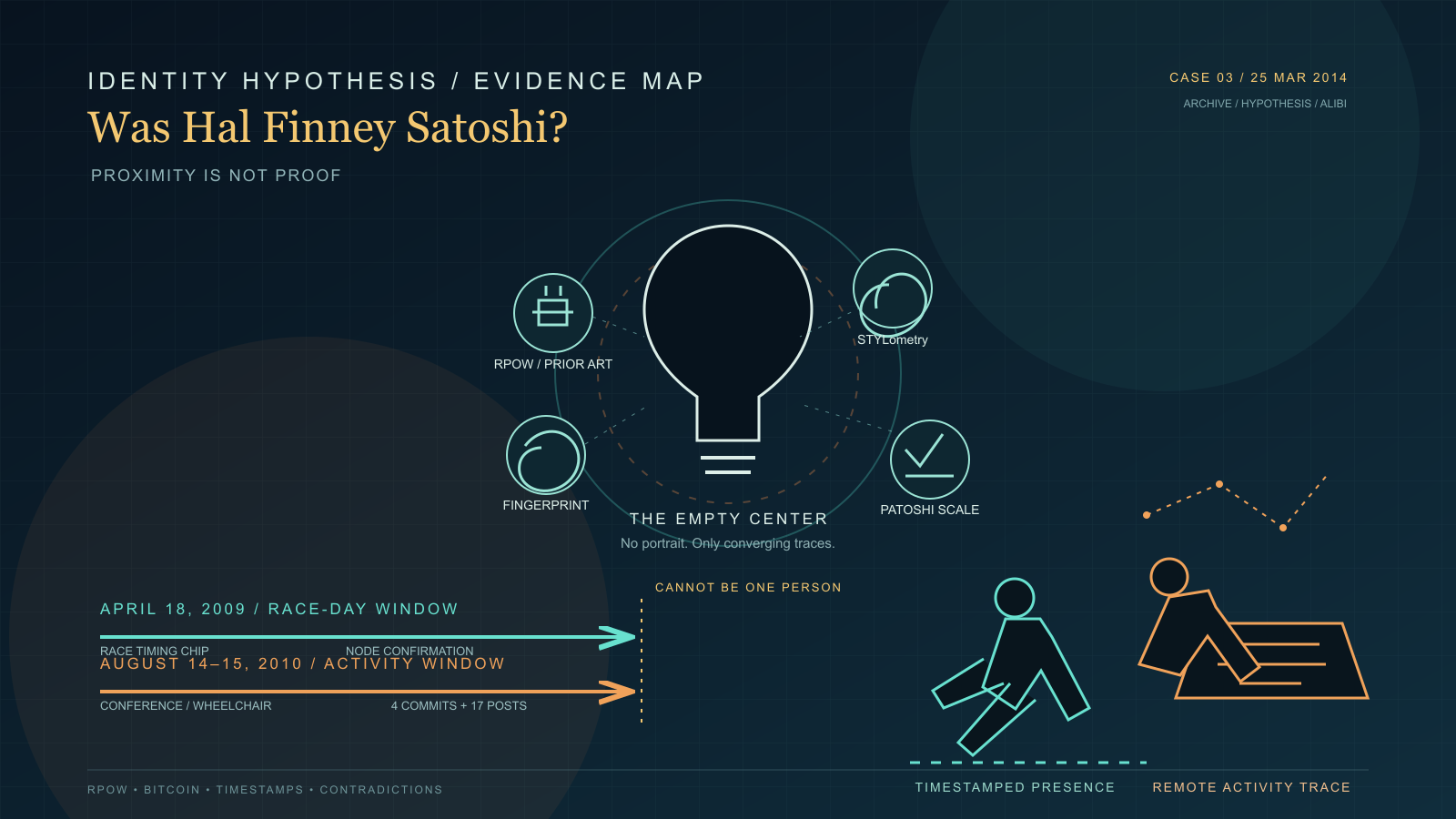
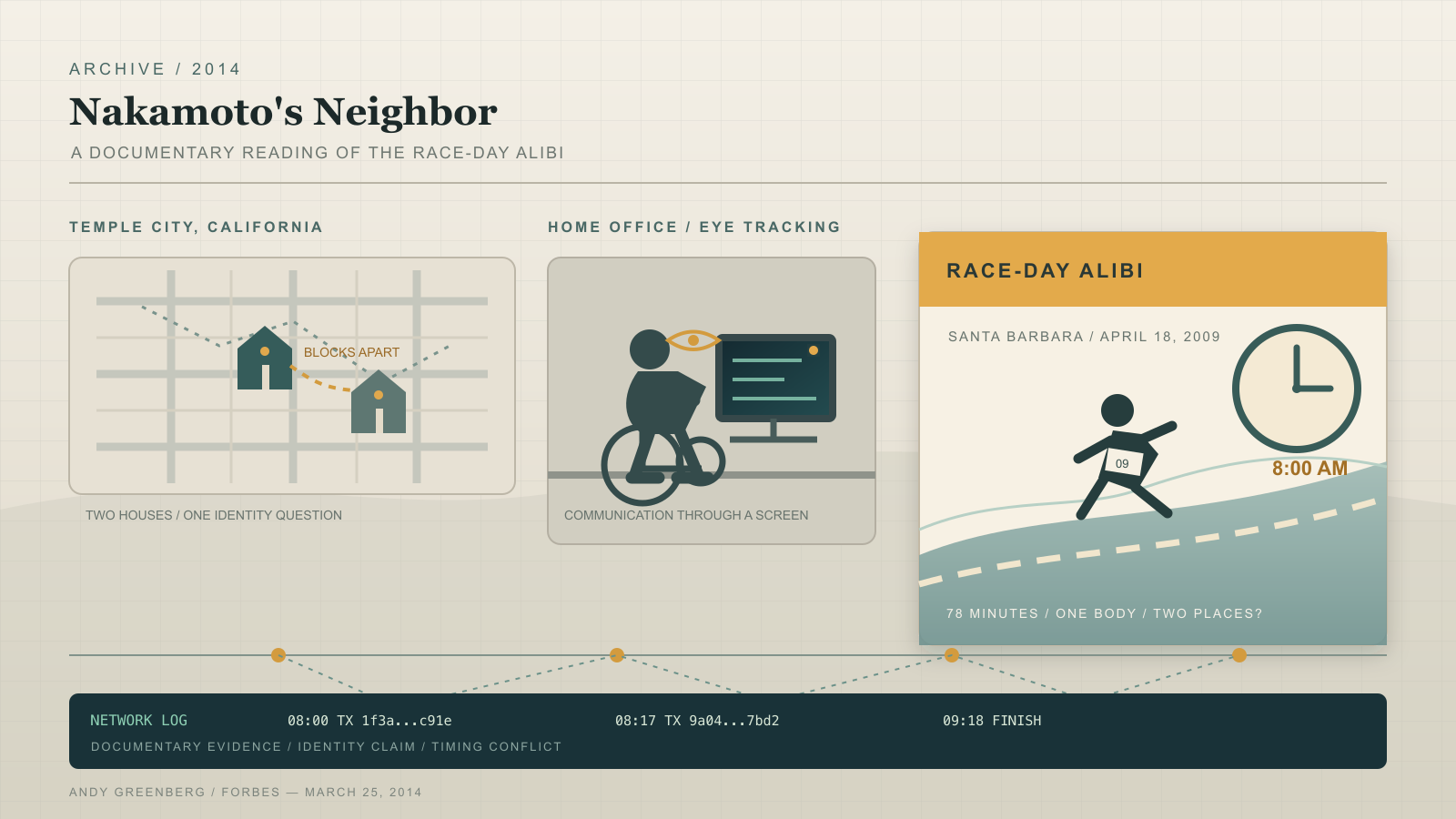
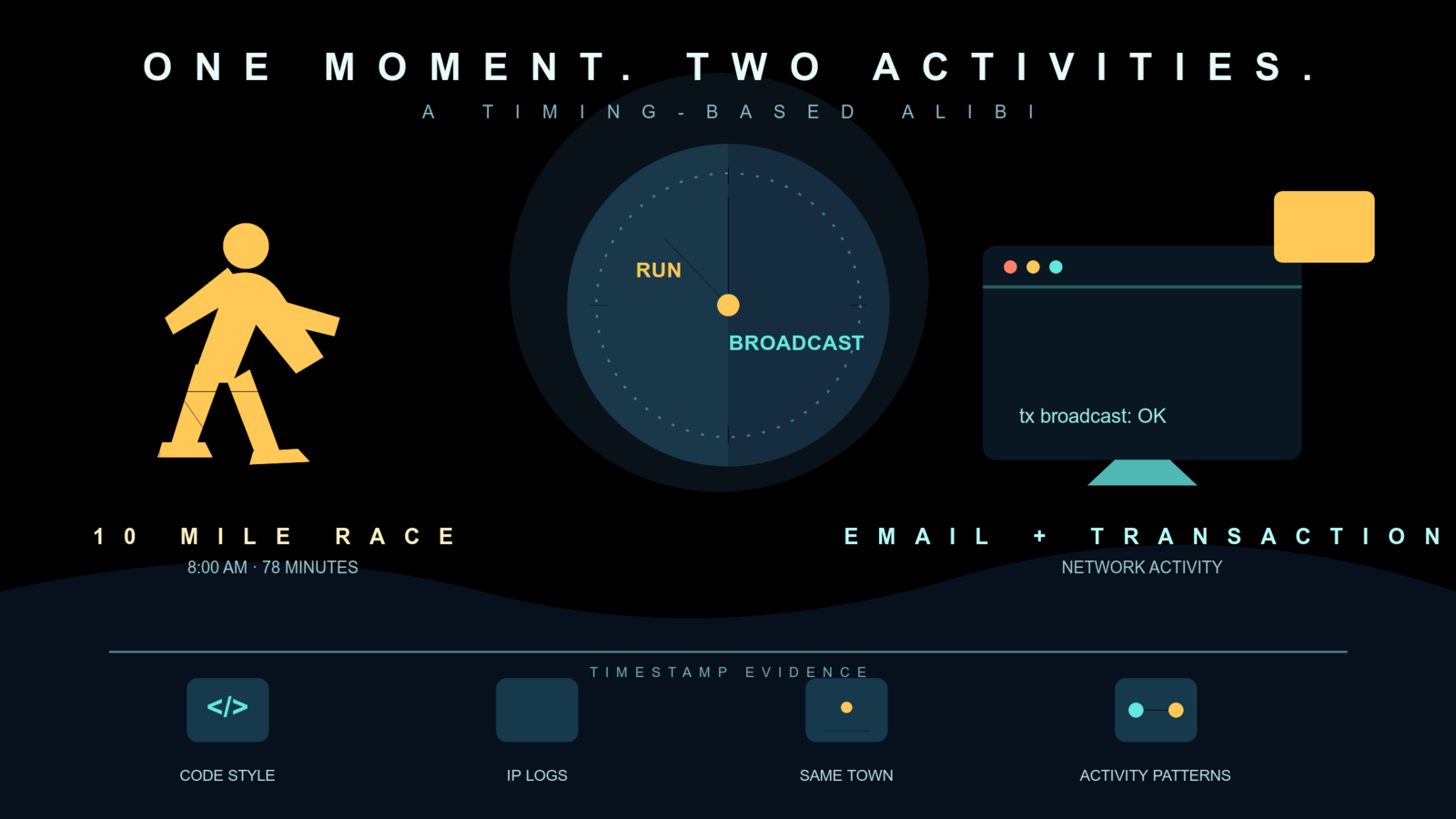
Lopp’s central piece of evidence is a chronological alibi. According to Lopp, on Saturday April 18, 2009 at 8:00 AM Pacific time, Finney — an avid distance runner — began a 10-mile race in Santa Barbara, California. Lopp documents the race with timing-chip data, the race photographer’s images, and an additional photograph taken by Hal’s wife Fran. Lopp reports that Finney finished the race approximately 78 minutes later, around 9:18 AM Pacific.
During this same window, Lopp argues, Satoshi Nakamoto was active on the Bitcoin network — corresponding with Mike Hearn and broadcasting transactions. Lopp identifies a Satoshi-to-Hearn email and a Bitcoin transaction whose timestamps fall inside the race window, concluding that the same individual could not have been doing both at once.
The archive holds the related Satoshi-to-Hearn email from April 18, 2009 in which Satoshi acknowledges sending coins back to Hearn (“I sent back 32.51 and 50.00”).
Other arguments Lopp presents
- IP-address analysis — Lopp examines IP addresses recorded in early Bitcoin debug logs and reports they are inconsistent with Finney’s known infrastructure.
- Satoshi’s reference to Hal in a separate email — Lopp cites a Satoshi-to-Martti Malmi email in which Satoshi refers to “Hal” in a way Lopp reads as third-party reference rather than self-reference.
- Coding-style differences — Lopp compares formatting conventions (tabs versus spaces, indentation, comment style, naming conventions) between code attributable to Finney and to Satoshi, and reports systematic differences.
- Activity-pattern differences — Lopp notes that Satoshi’s active periods do not align with gaps and resumptions in Hal Finney’s separately documented activity.
- Persona inconsistencies — Lopp points to topics that Finney engaged with publicly (CO₂ concerns, prior knowledge of bit gold, etc.) and contrasts them with Satoshi’s recorded persona.
The “Nakamoto’s neighbor” framing
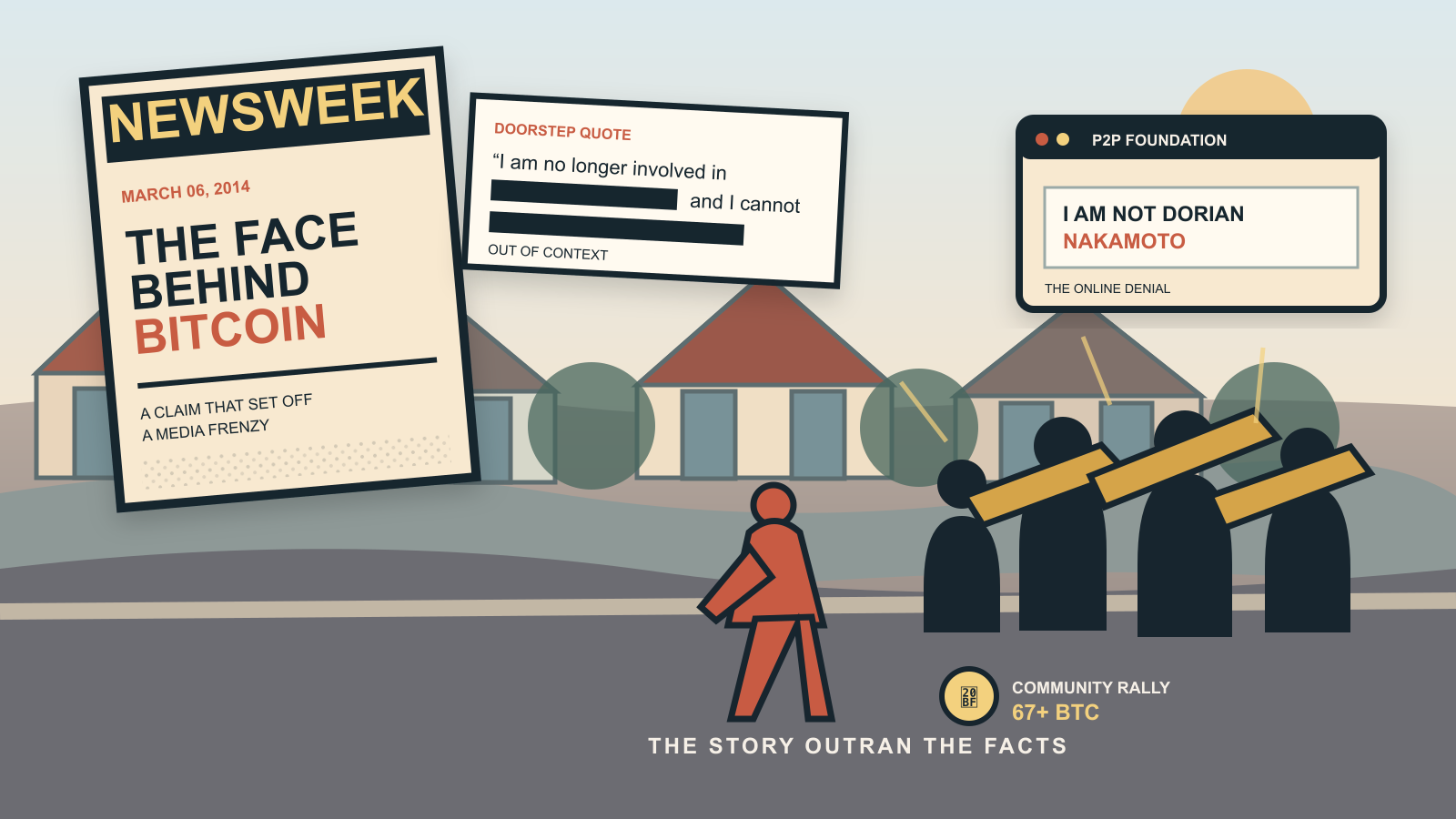
Hal Finney lived for almost a decade in Temple City, California — the same town where Newsweek had, weeks before Greenberg’s 2014 article, identified Dorian Nakamoto as a Satoshi candidate. The geographic coincidence — Finney and Dorian Nakamoto living “blocks apart” — is what gave Greenberg’s original article its title, and it is part of why Finney attracted Satoshi-identity speculation in the first place. Lopp’s analysis treats this coincidence as exactly that — a coincidence — and argues the question must be answered by activity records rather than by geography.
Conclusion
Lopp’s stated position is that the combination of the race-day alibi and the supporting evidence makes it implausible that Finney was Satoshi. The piece does not propose an alternative candidate; it is a focused argument against one specific identity hypothesis.
The race-day alibi documented here has a second use. Finney nearly tied with Back in Cafiero’s 2026 stylometric analysis, so Back’s “closest match” finding is not unique (the Adam Back identity-hypothesis entry sets this out): the same alibi that clears Finney shows that stylometric proximity alone does not identify a writer.