On September 16, 2022, Jameson Lopp published “Was Satoshi a Greedy Miner?” on his blog, directly challenging the narrative that Bitcoin’s creator selfishly hoarded coins during the network’s early days.
Key data points
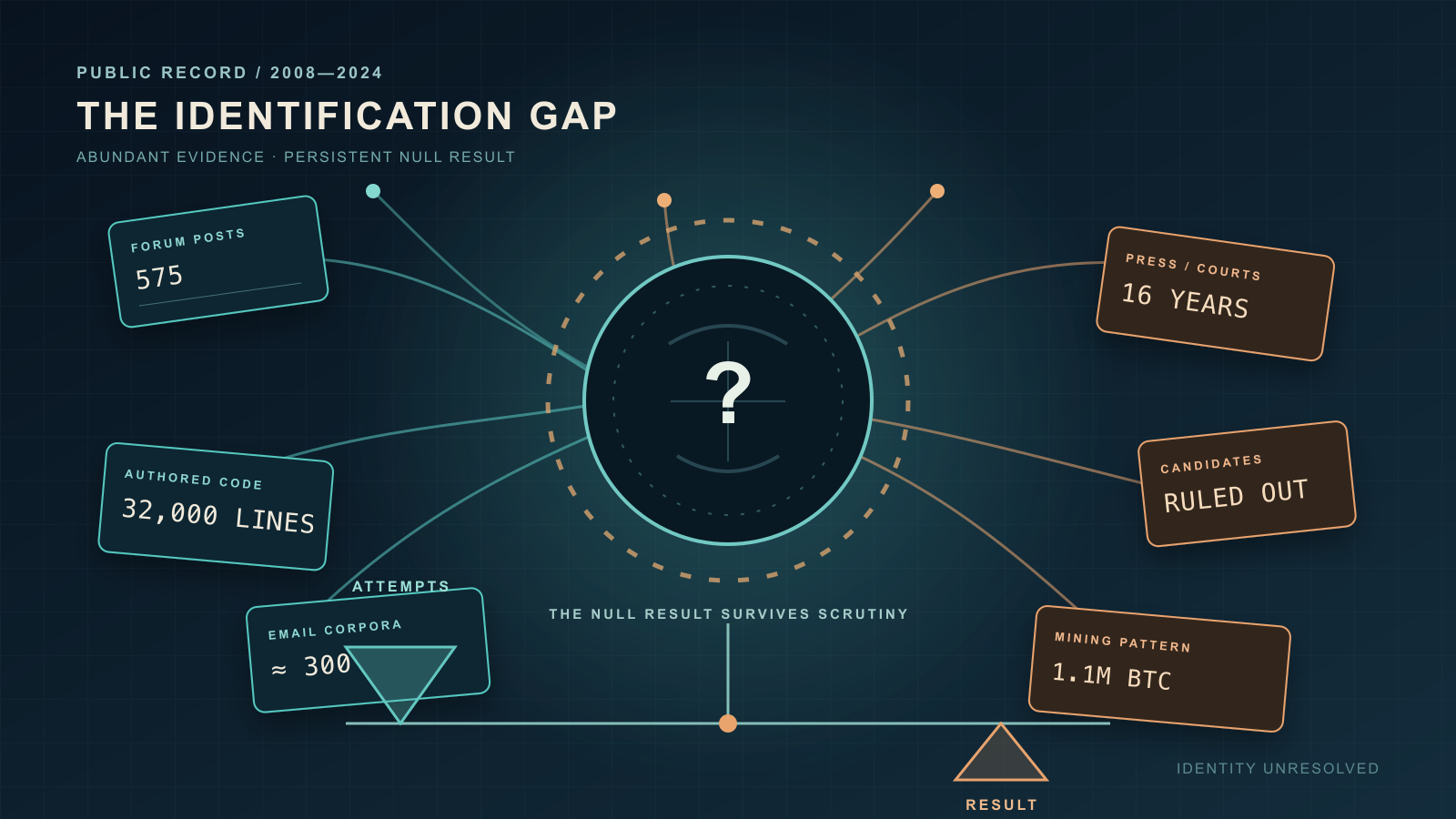
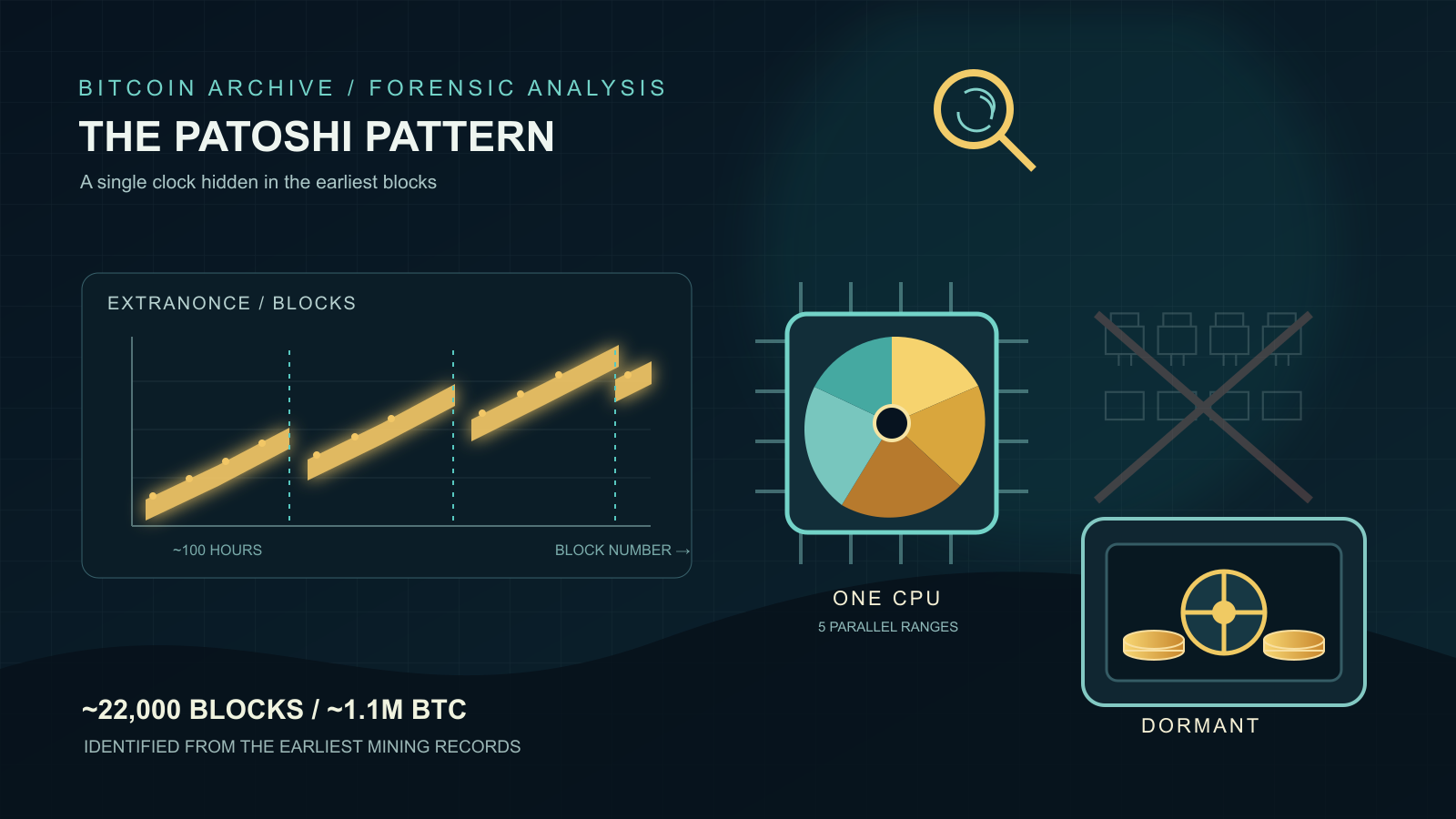
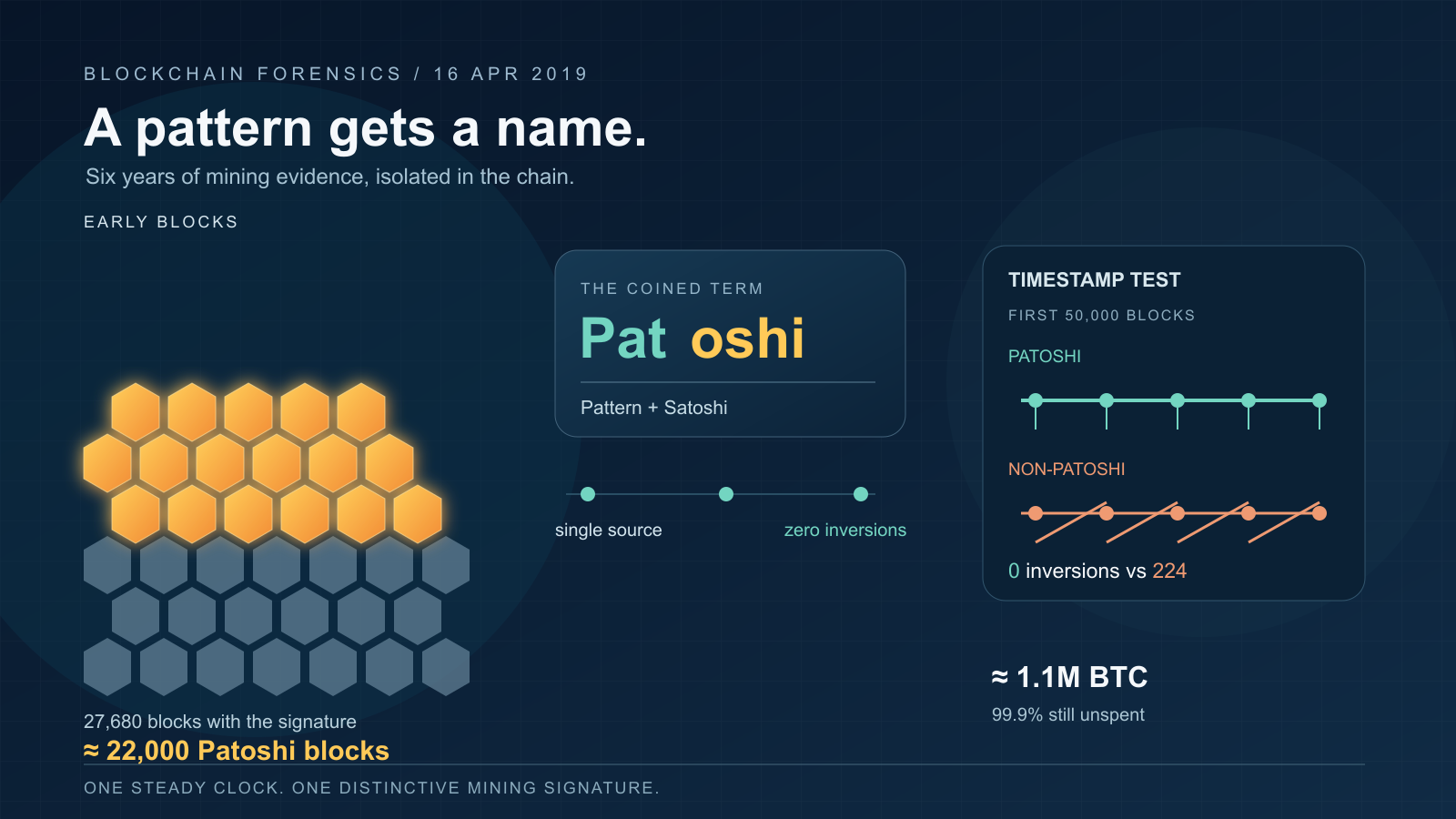
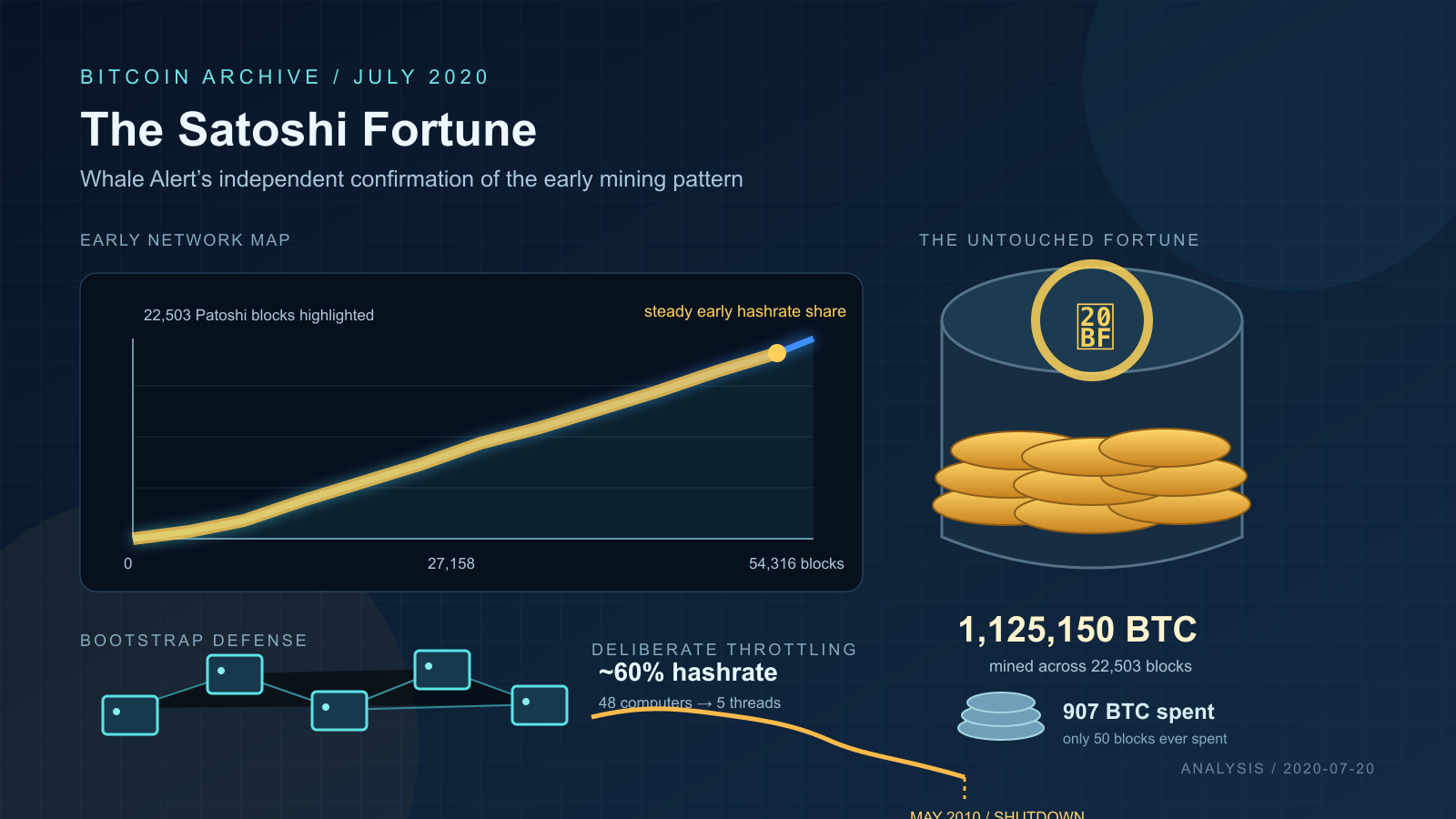
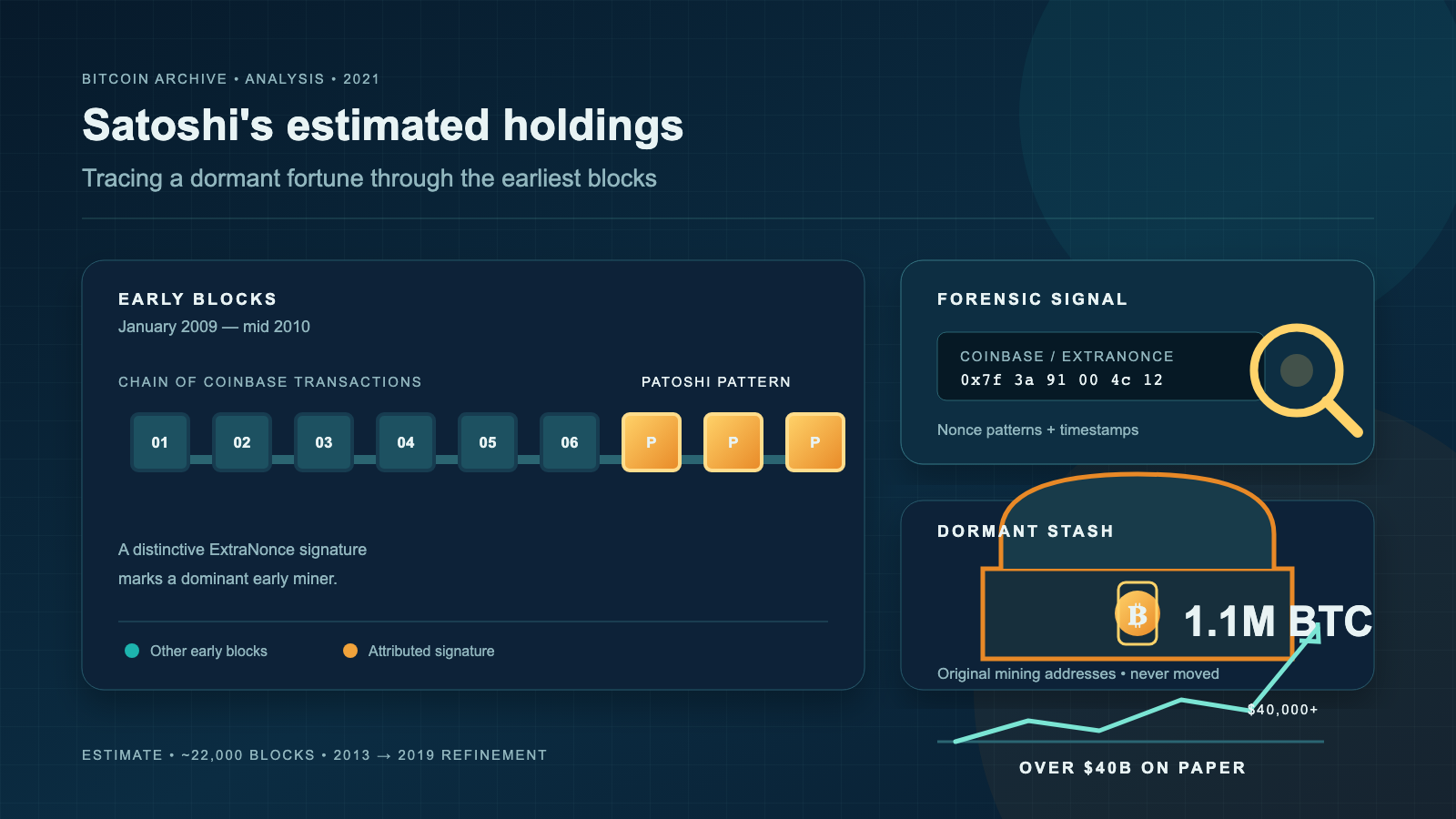
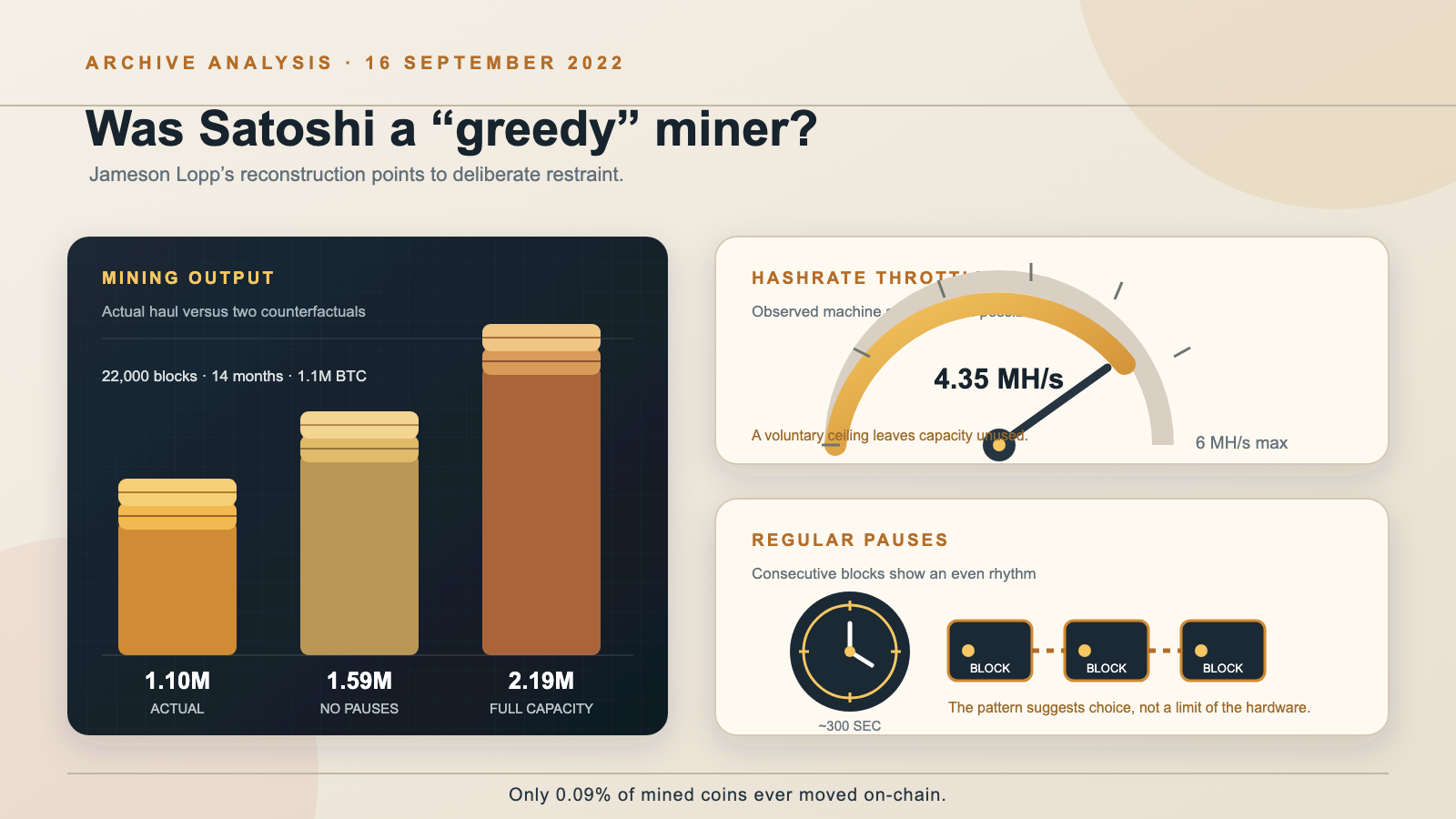
- Satoshi mined approximately 1,100,000 BTC (~5% of total supply) across ~22,000 blocks over 14 months
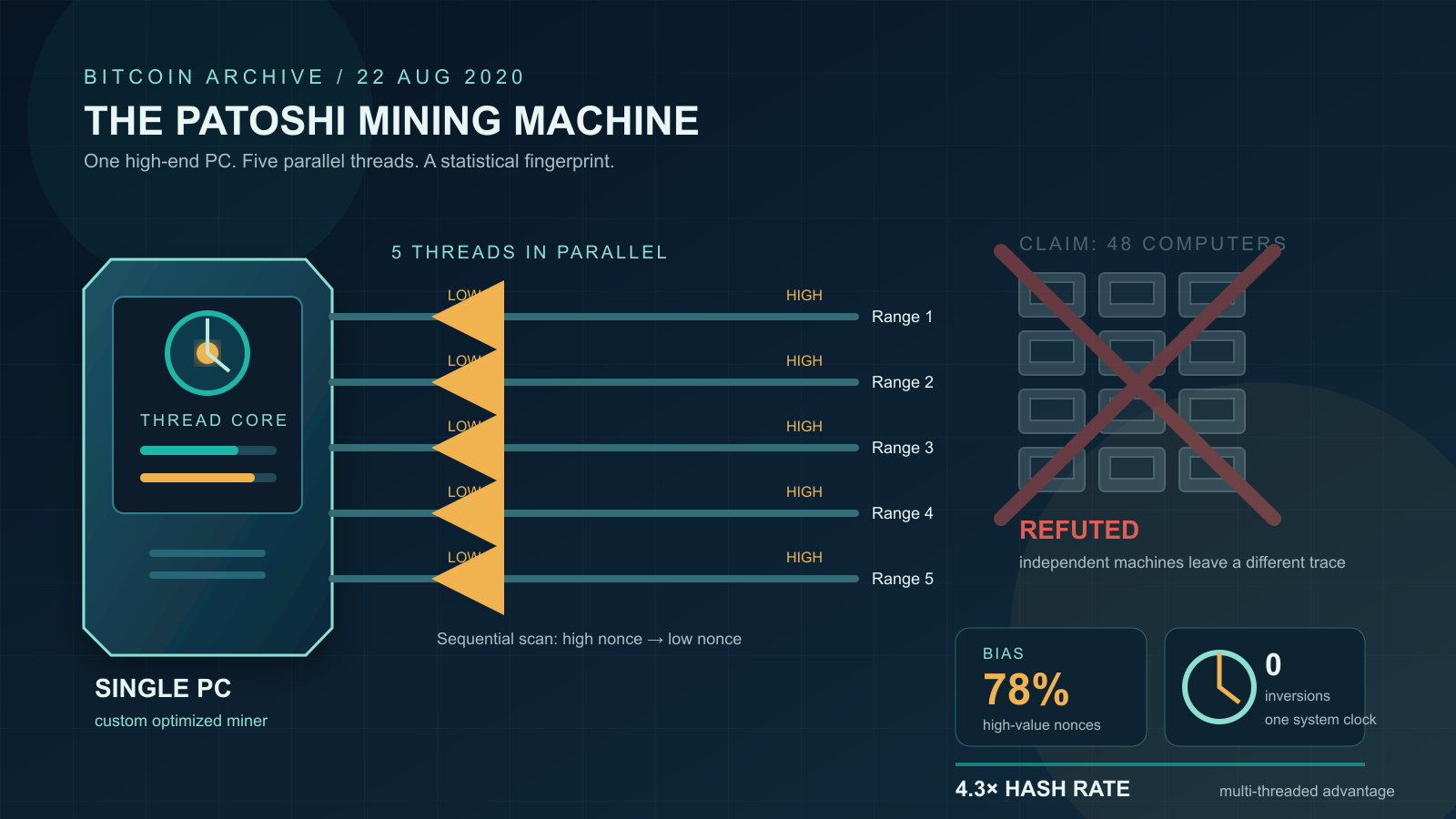
- Maximum hashrate capacity: 6 Mhps — actual observed rate: 4.35 Mhps
- Satoshi controlled >50% of network hashrate but voluntarily decreased mining power in October 2009
- Fewer than 20 of the 22,000+ blocks (0.09%) were ever spent, by the article’s count. Whale Alert’s 2020 analysis had reported 50 of 22,503. Counted on the block list Lopp himself published, the figure is 31 (see the next section)
- Satoshi’s consecutive blocks were almost never less than 5 minutes apart, suggesting intentional pausing between mining rounds
Spent blocks on Lopp’s own list
Lopp’s scripts identify Satoshi’s blocks with a list he published alongside them: the $patoshiBlocks array in findPatoshiBlockTimestampDeltas.php, in his bitcoin-utils repository on GitHub. It names 21,953 blocks, from height 3 to 49,973. The array is the same in the file’s first version (August 25, 2020) and in both updates made just before the article (September 14 and 15, 2022).
The article does not say how it counted spent blocks. A Bitcoin Institute check in September 2026 looked up the coinbase output of every block on that list on the blockchain. The outputs of 31 blocks have been spent: 0.14% of the list, 1,550 BTC. The other 21,922 blocks, holding 1,096,102.49 BTC, have never moved. All 31 were spent before the article was published.
| Year spent | Blocks | BTC |
|---|---|---|
| 2009 | 6 | 300 |
| 2010 | 14 | 700 |
| 2011 | 1 | 50 |
| 2013 | 1 | 50 |
| 2016 | 2 | 100 |
| 2017 | 7 | 350 |
| Total | 31 | 1,550 |
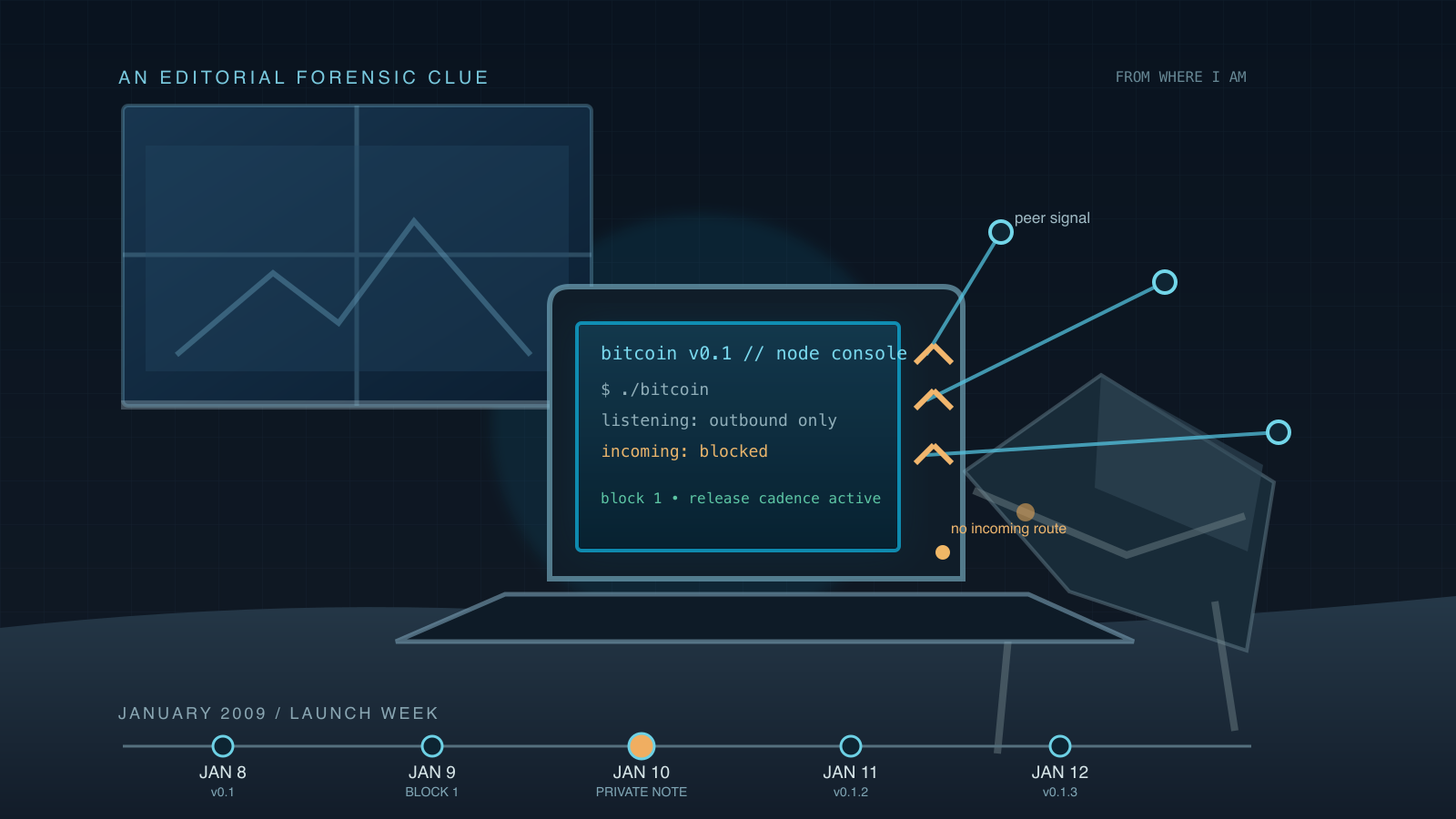
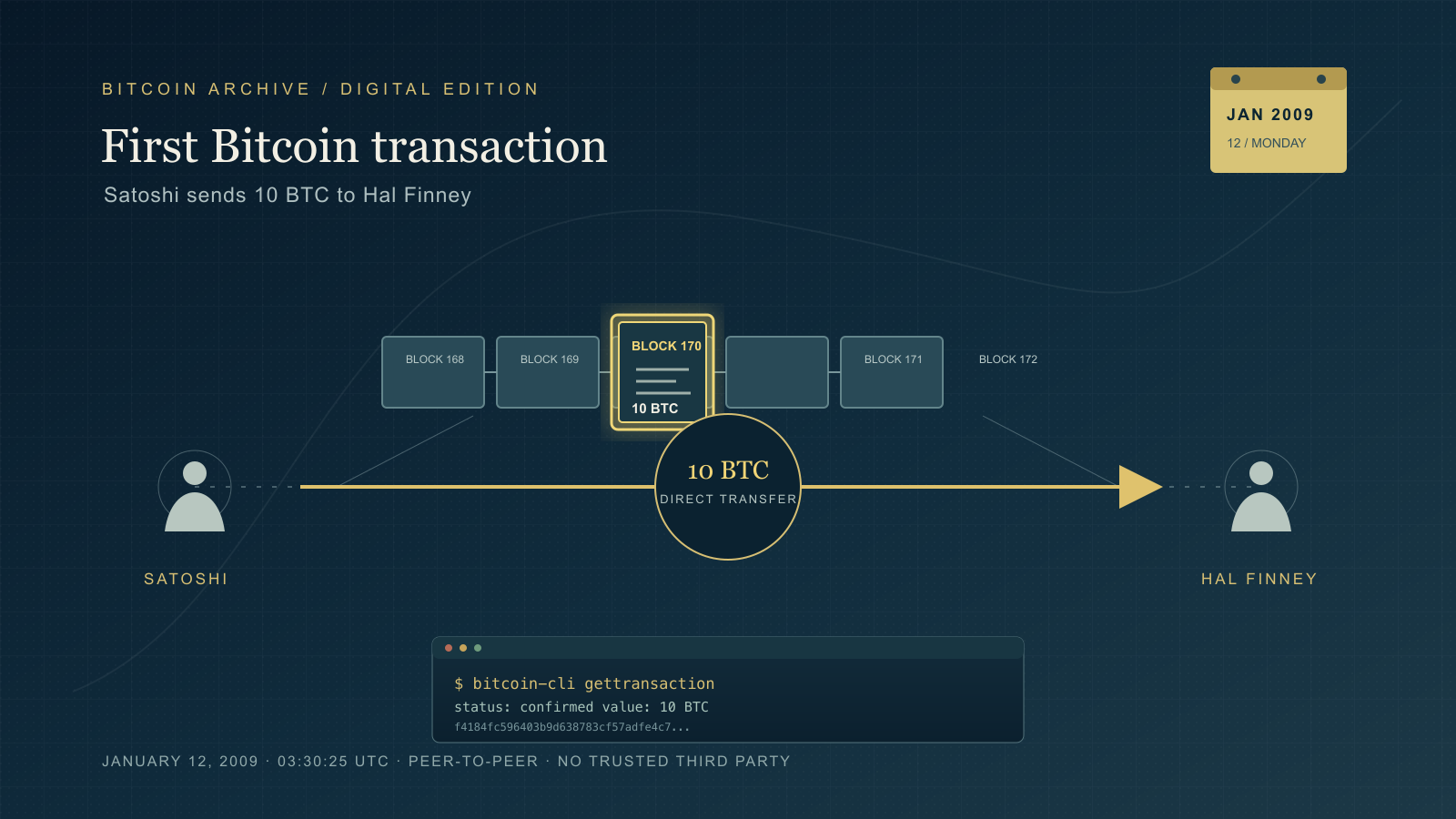
The first is block 9, whose reward paid for the first Bitcoin transaction: 10 BTC from Satoshi to Hal Finney in block 170 on January 12, 2009. Eleven of the fourteen 2010 spends came in two transactions on May 17, 2010. The latest was the reward of block 34,813, spent in block 498,031 on December 7, 2017. The list itself is inferred from mining patterns, so each of these shows that an output moved, not who moved it.
Counterfactual analysis
Lopp models two alternative scenarios:
- Full capacity (no pauses): Mining continuously at observed 4.35 Mhps would have yielded ~31,783 blocks / ~1.59 million BTC — approximately 1.5× the actual amount
- Maximum capacity: Mining at the machine’s full 6 Mhps would have yielded ~43,829 blocks / ~2.19 million BTC — nearly 2× the actual amount
The ~300-second pauses between consecutive blocks and the deliberate use of only 72.5% of available hashrate demonstrate that Satoshi prioritized network bootstrapping and decentralization over personal enrichment.
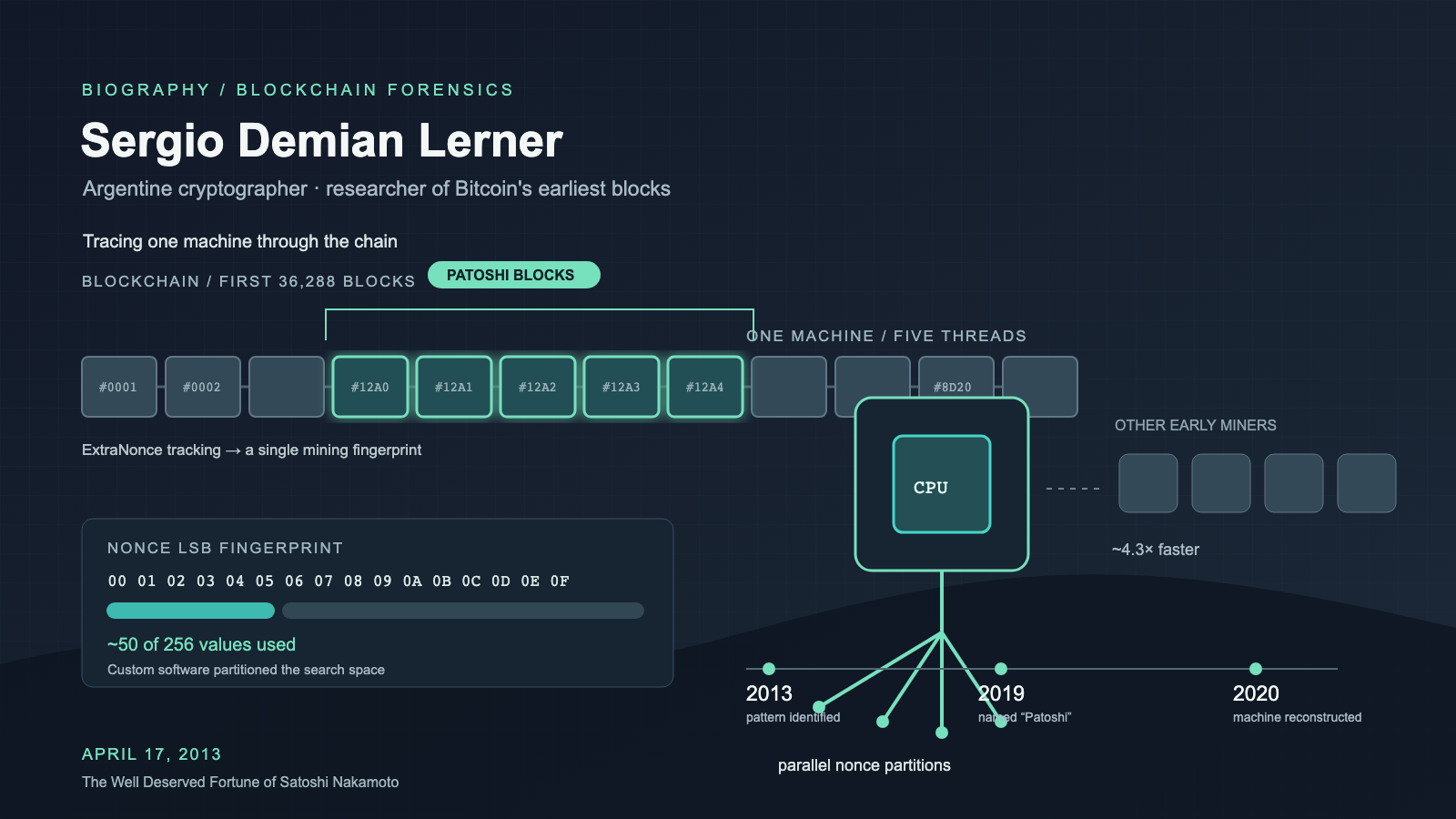
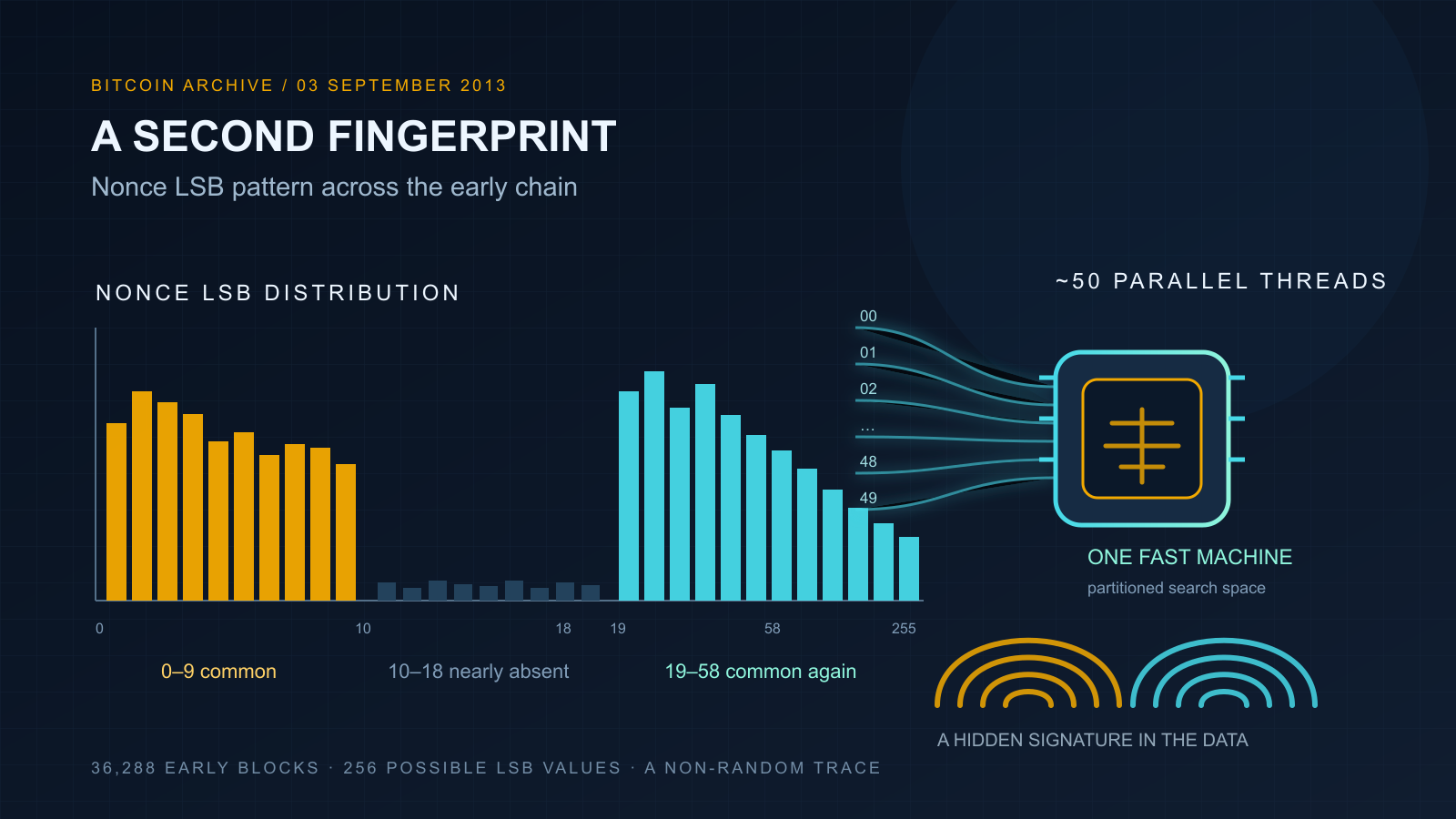
Building on Sergio Demian Lerner’s Patoshi pattern research, Lopp’s analysis provided quantitative evidence that Satoshi’s mining behavior was altruistic rather than extractive. The article concludes: “Anyone who claims that Satoshi was greedy simply hasn’t done the math.”
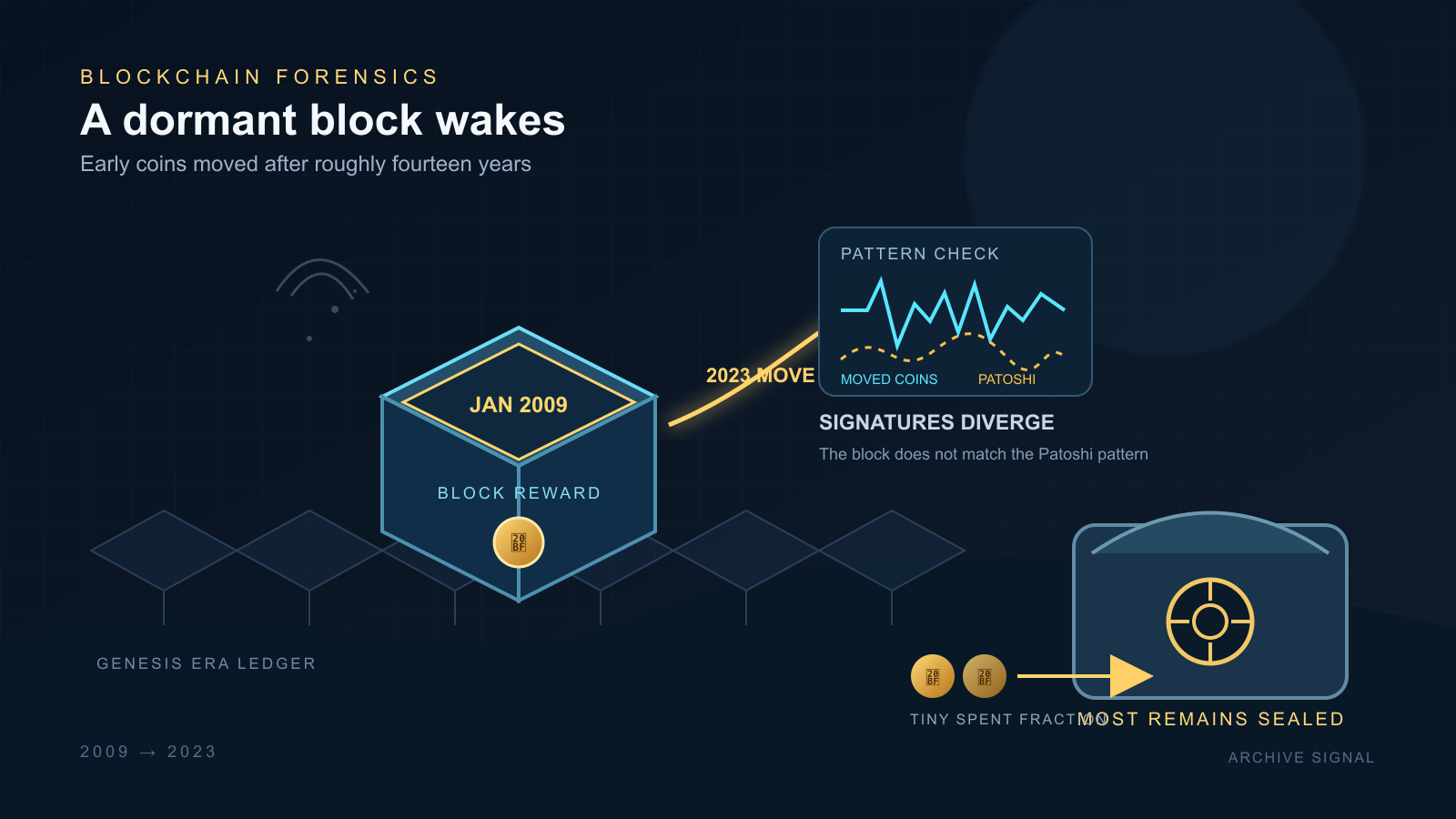
When a block reward from January 2009 moved for the first time in a January 2023 dormant-coin movement, analysts checked it against the Patoshi pattern, and the coins in question turned out not to match it at all.
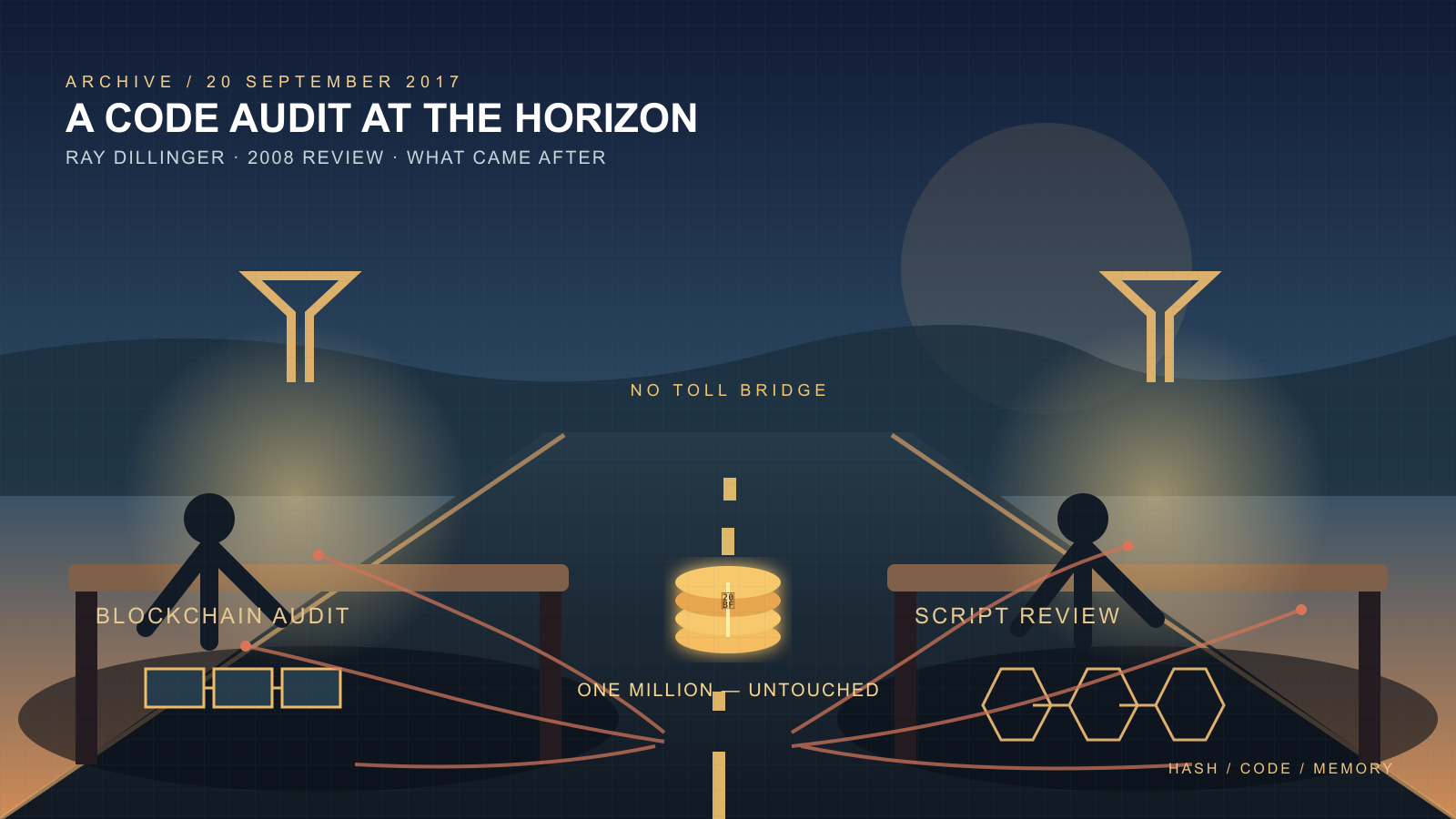
This same portrait of a miner who could have taken far more but chose restraint had already been sketched qualitatively, nearly five years earlier, by Ray Dillinger, one of the reviewers of Bitcoin’s original blockchain code; Lopp’s analysis supplies the numbers behind that earlier impression.
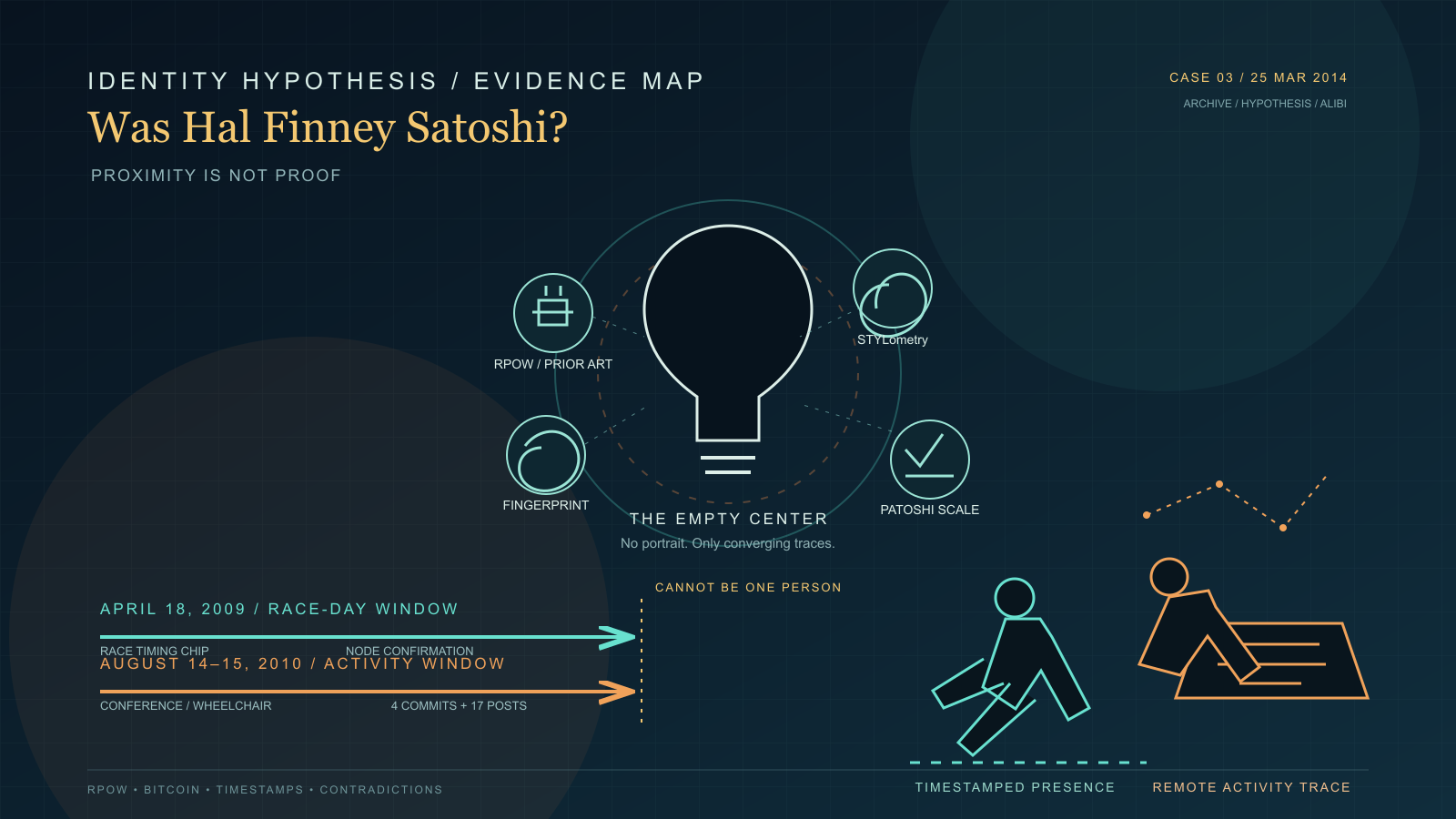
The Hal Finney identity hypothesis (§2.3) sets these Patoshi figures against Finney’s own documented mining.