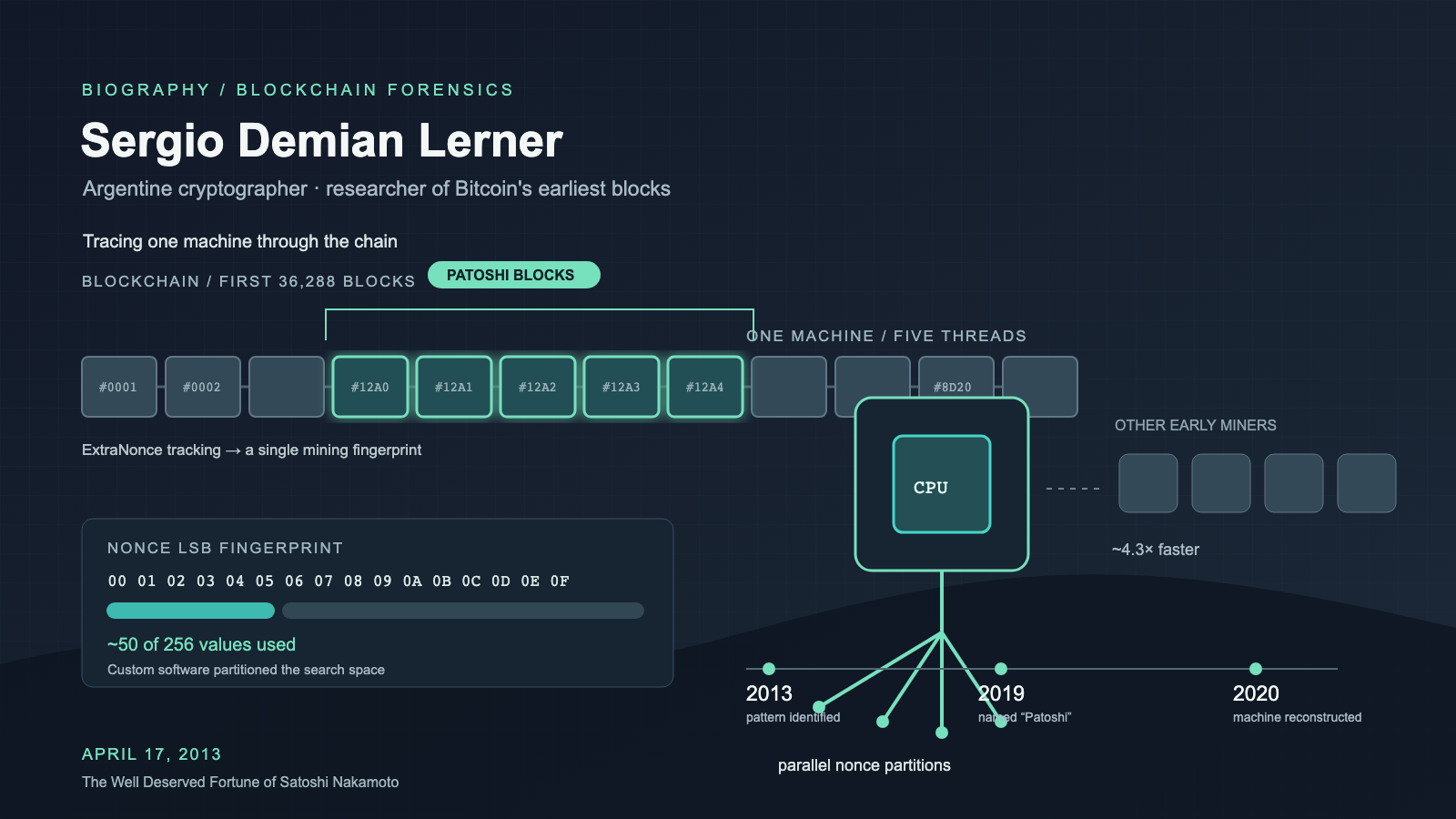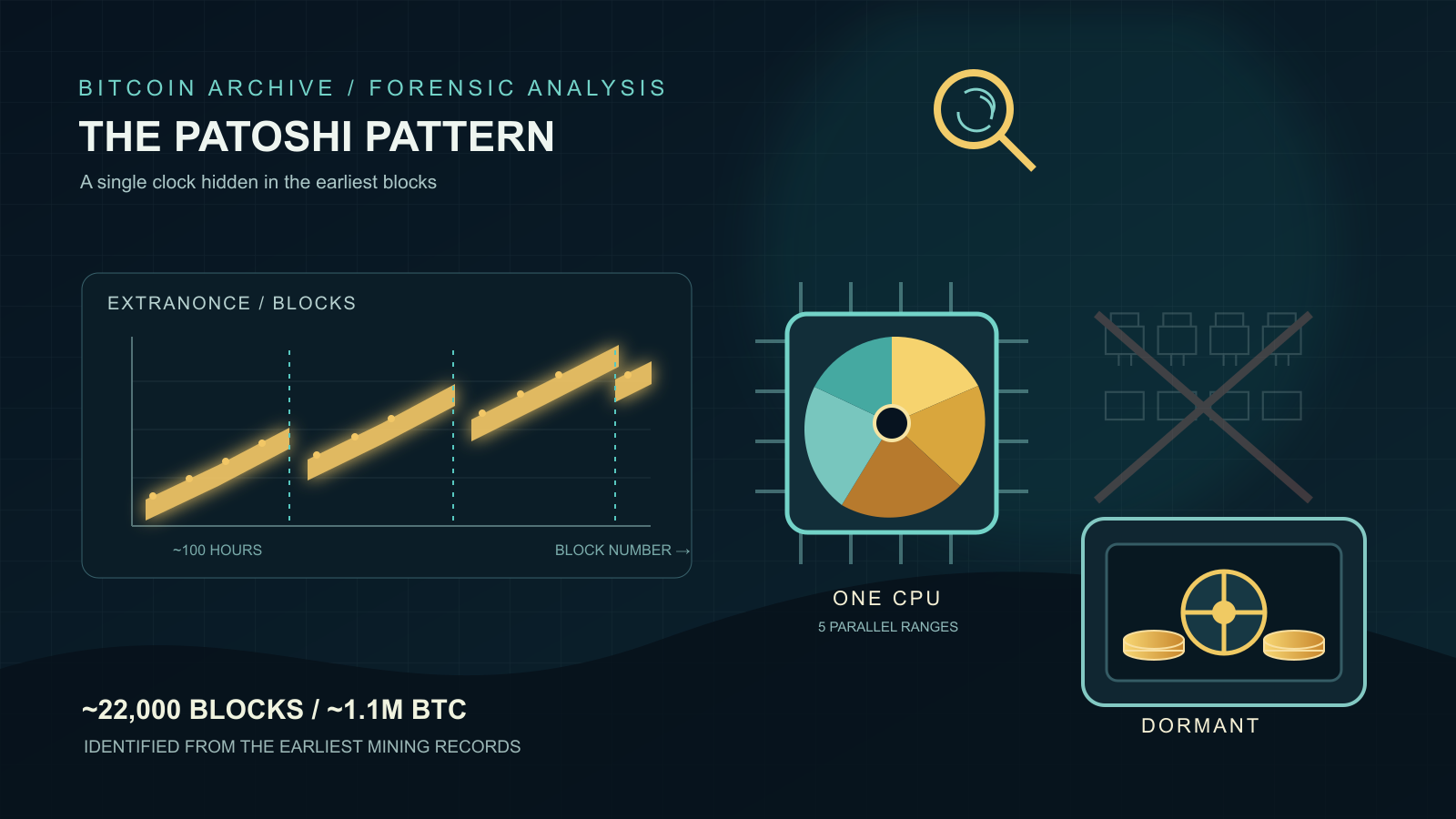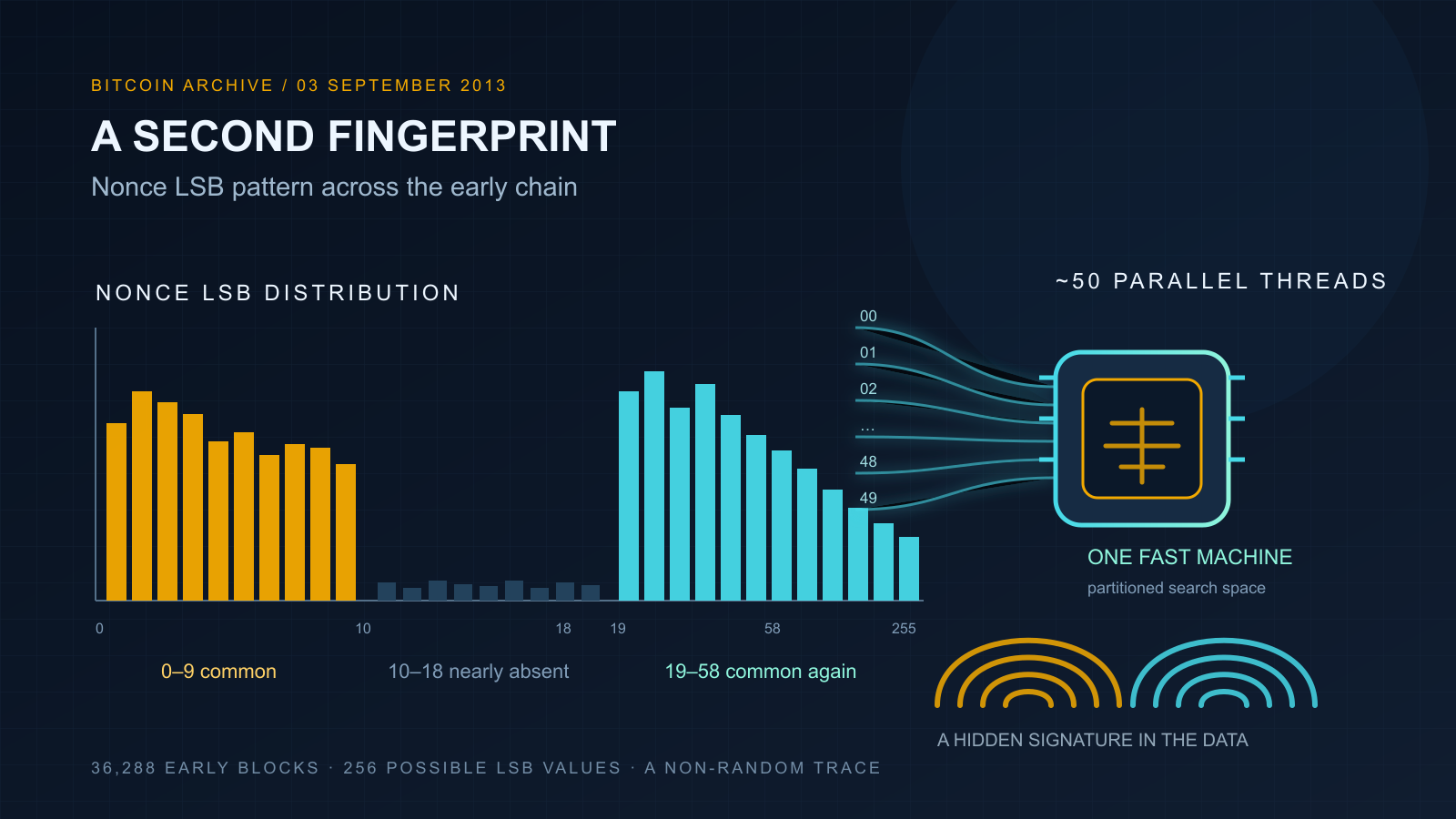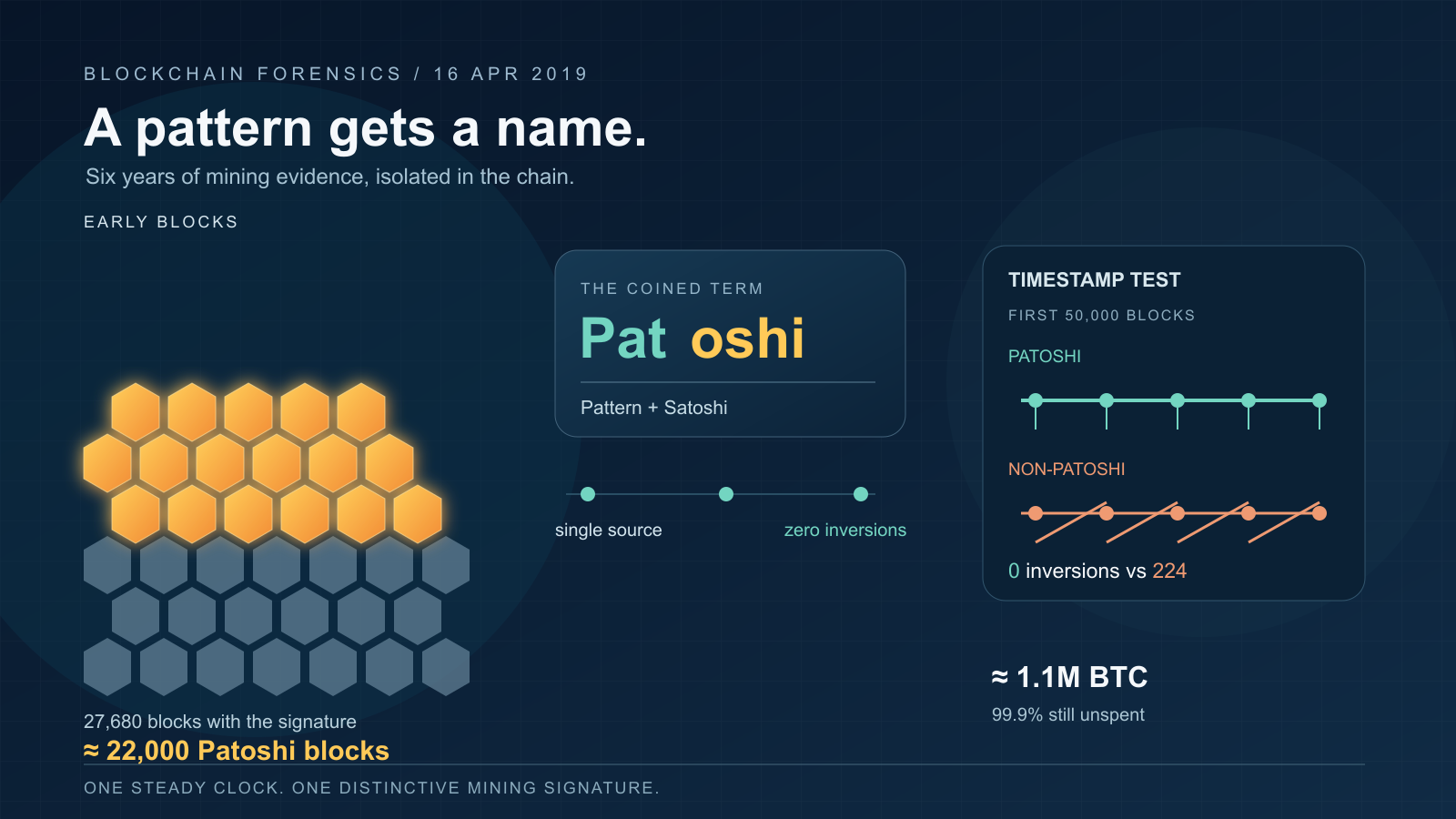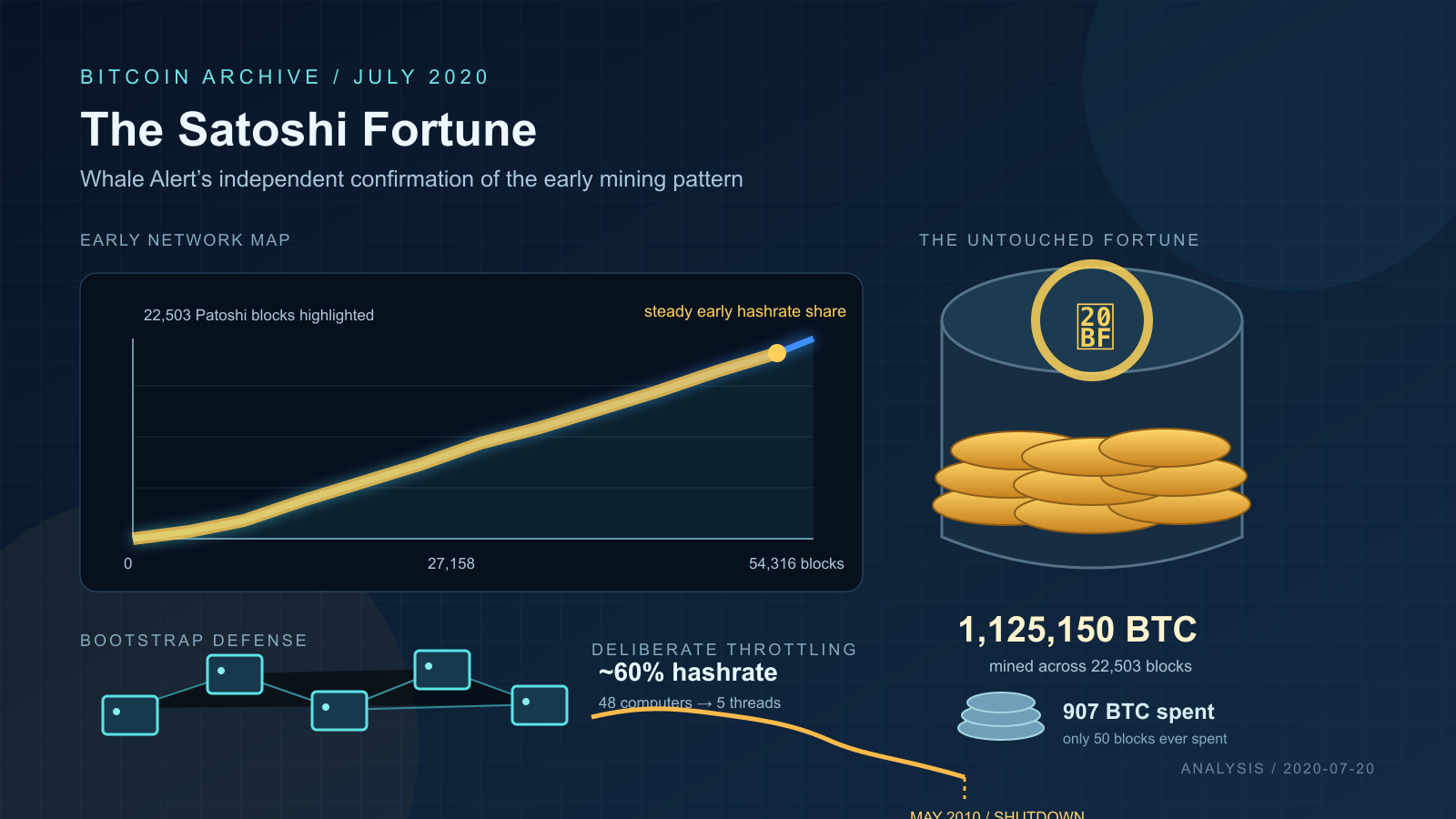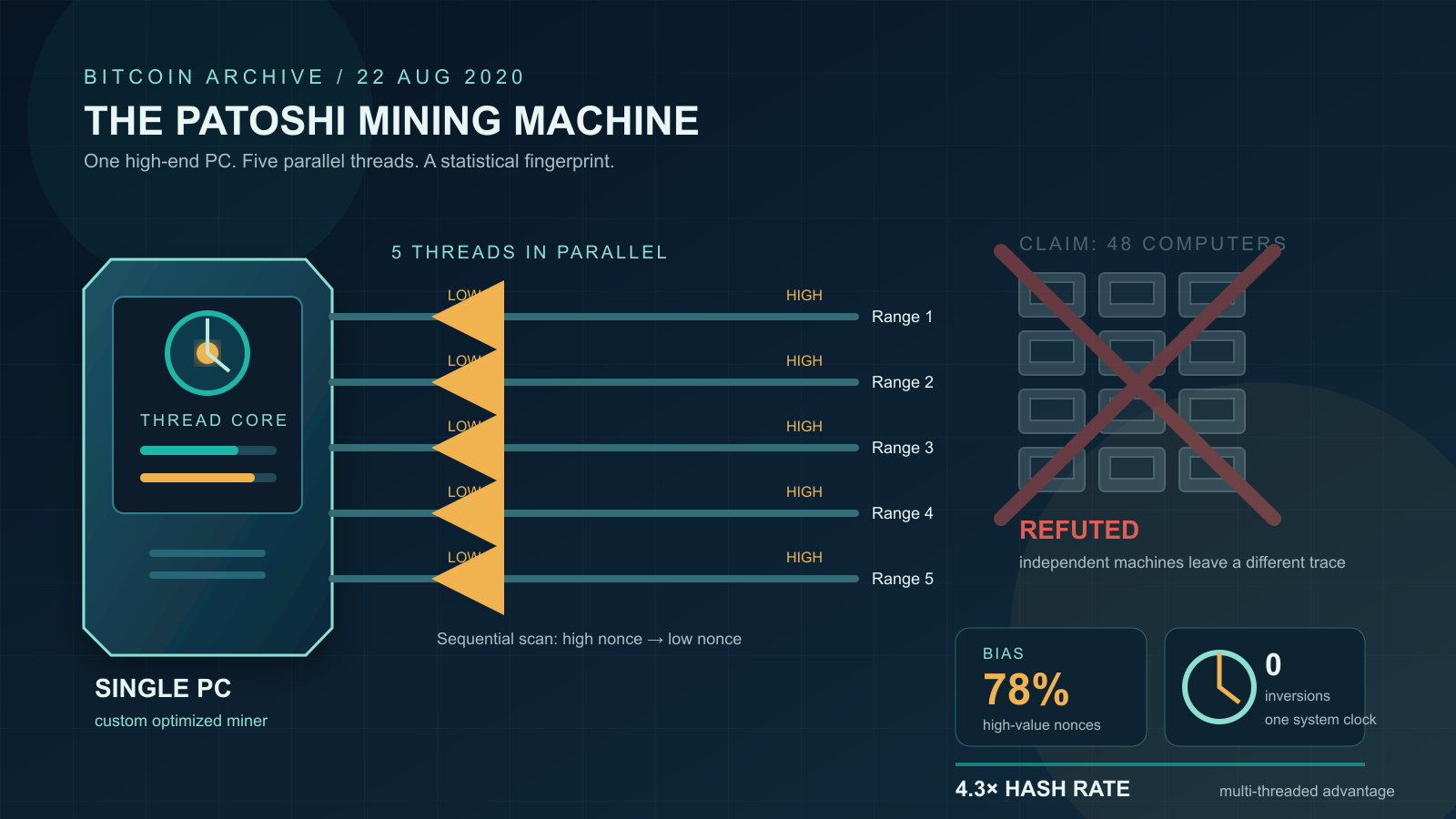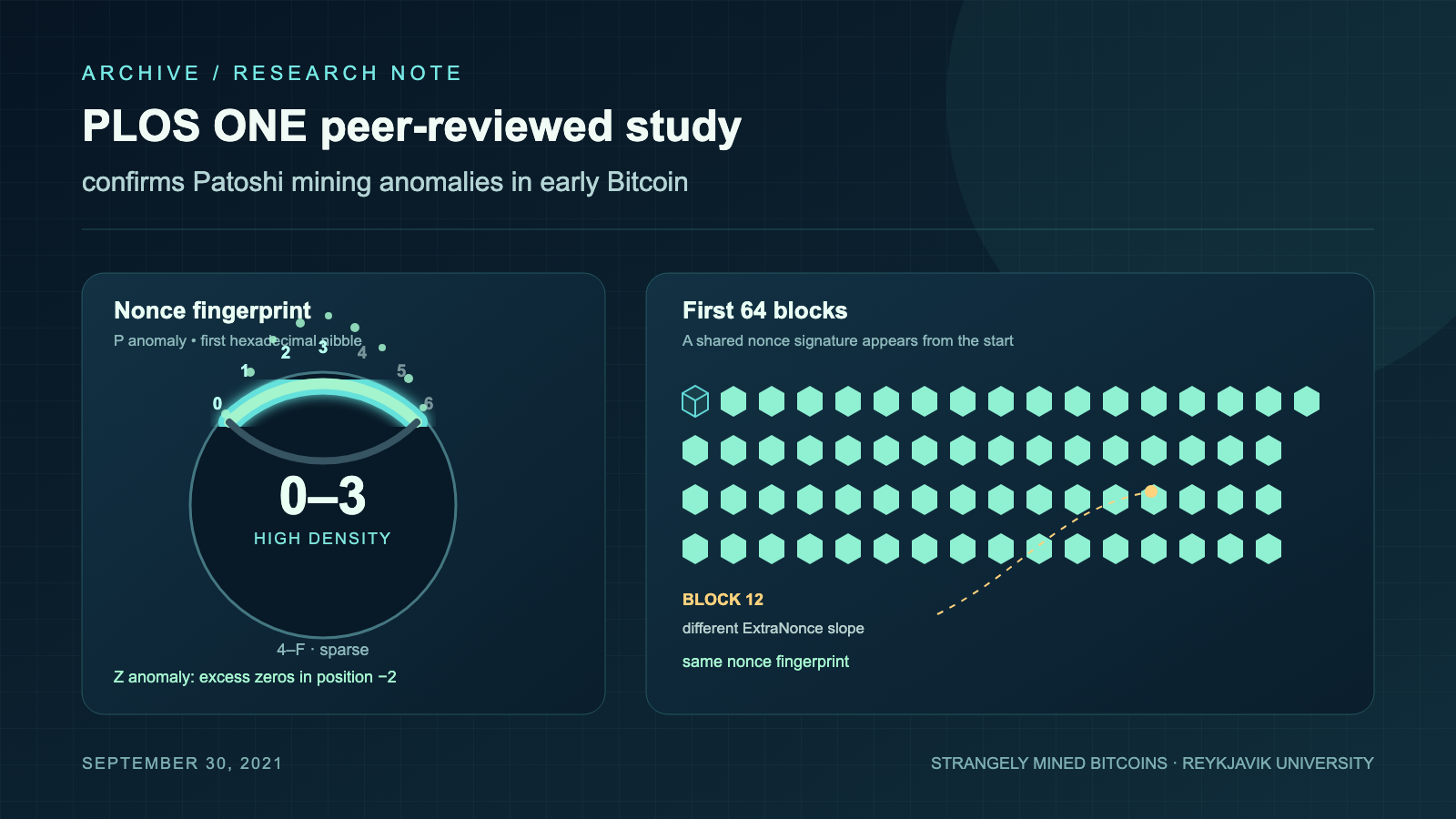
Multiple independent analyses have attempted to quantify the number of bitcoins mined by Satoshi Nakamoto during Bitcoin’s earliest months. The most cited research, originally conducted by Sergio Demian Lerner in 2013 and refined in subsequent years, identified a distinctive mining pattern that has become known as the “Patoshi pattern”.
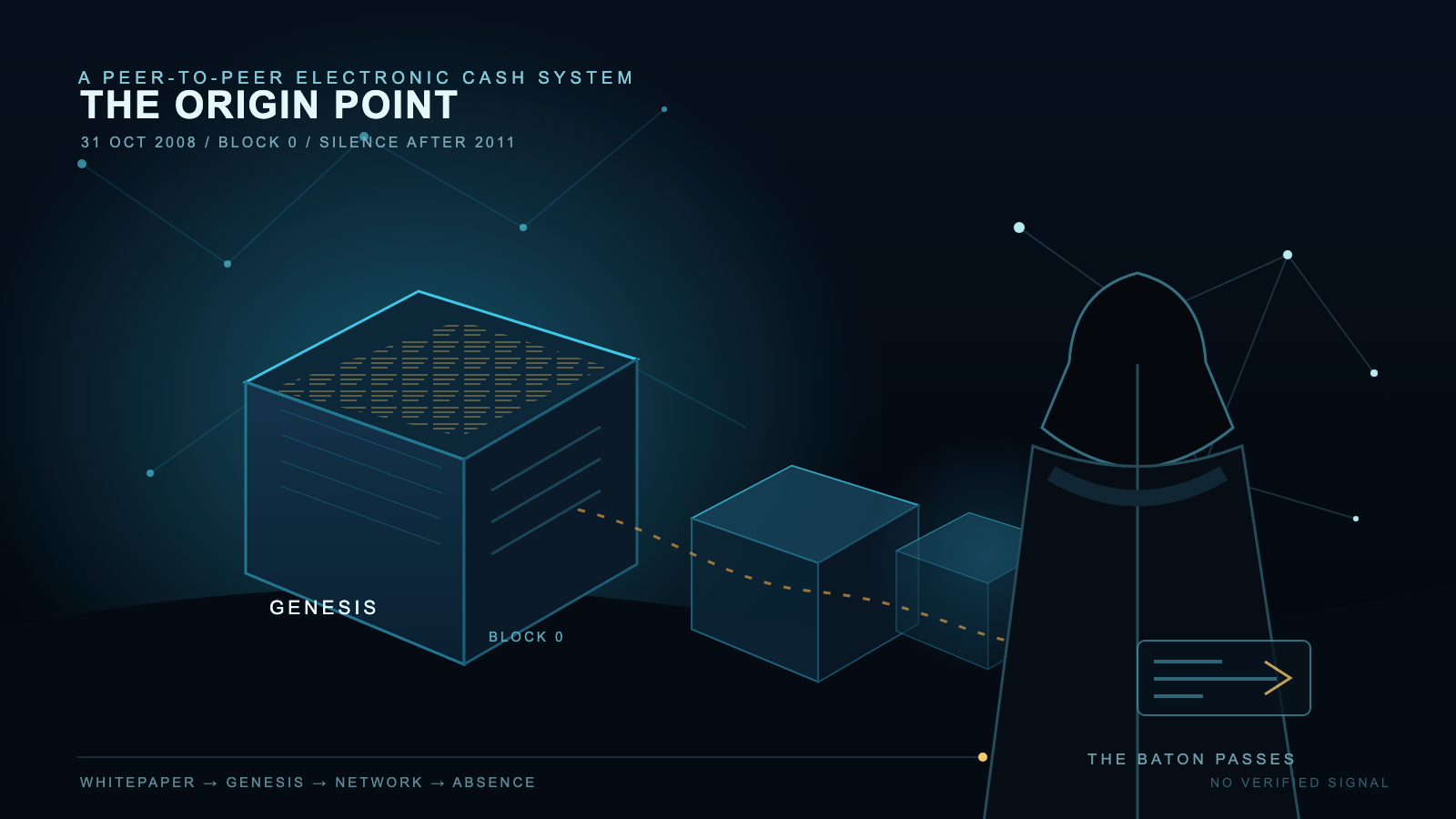
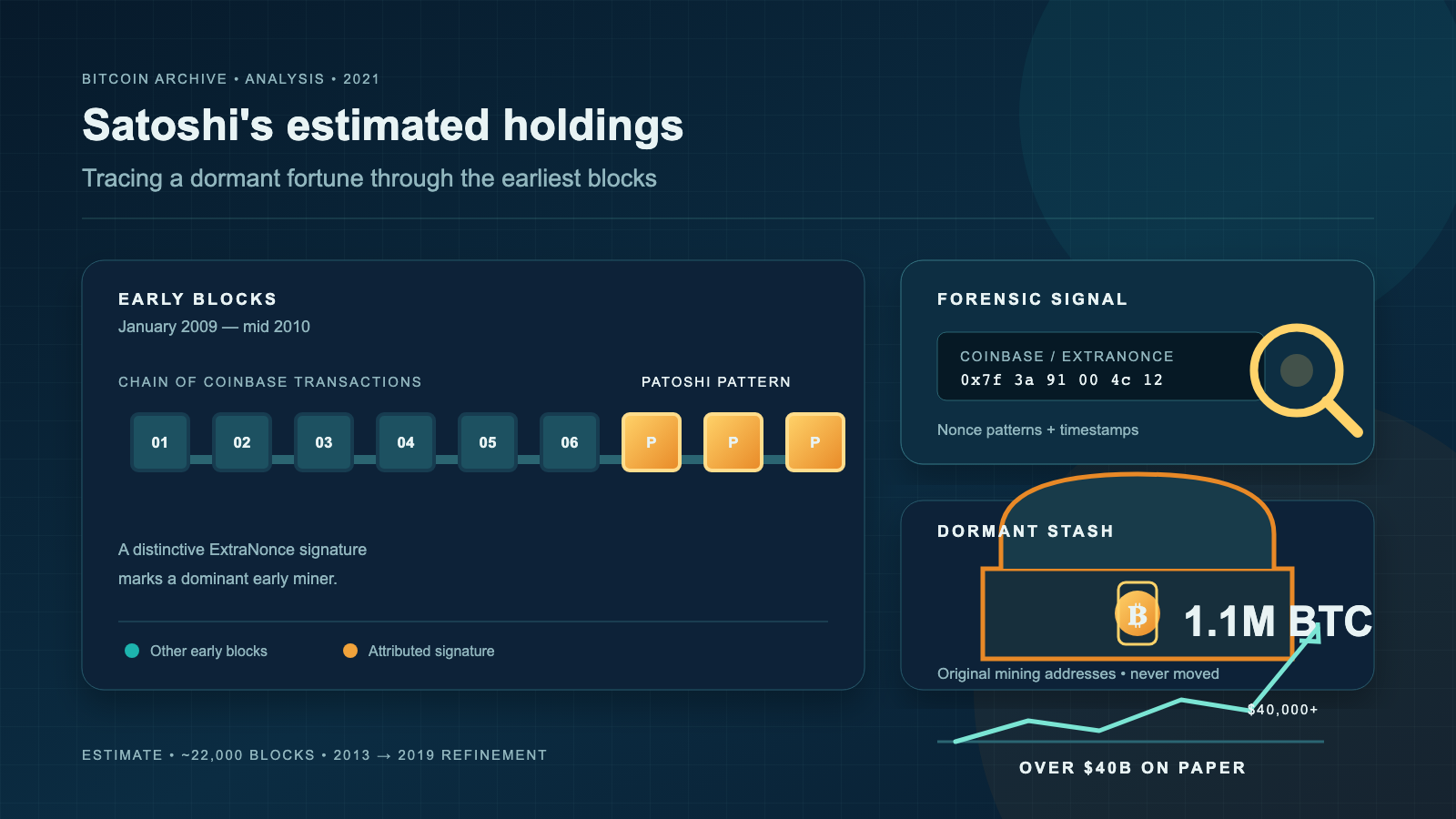
Lerner’s analysis examined the ExtraNonce field in the coinbase transactions of early Bitcoin blocks. He discovered that a single dominant miner — presumed to be Satoshi — was responsible for mining a large proportion of blocks from Bitcoin’s launch in January 2009 through mid-2010. This miner exhibited consistent, identifiable characteristics that distinguished their blocks from those mined by others.
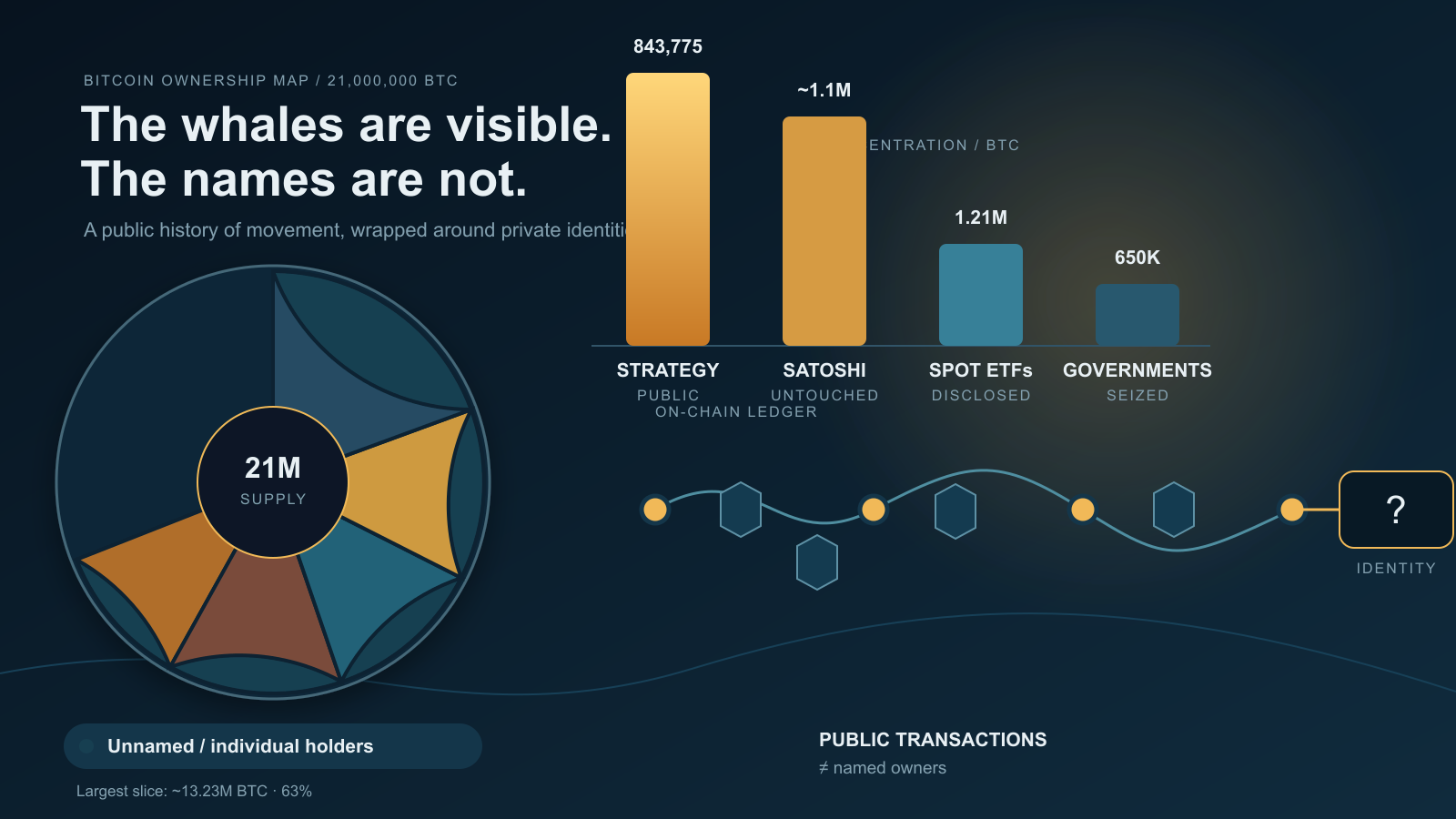
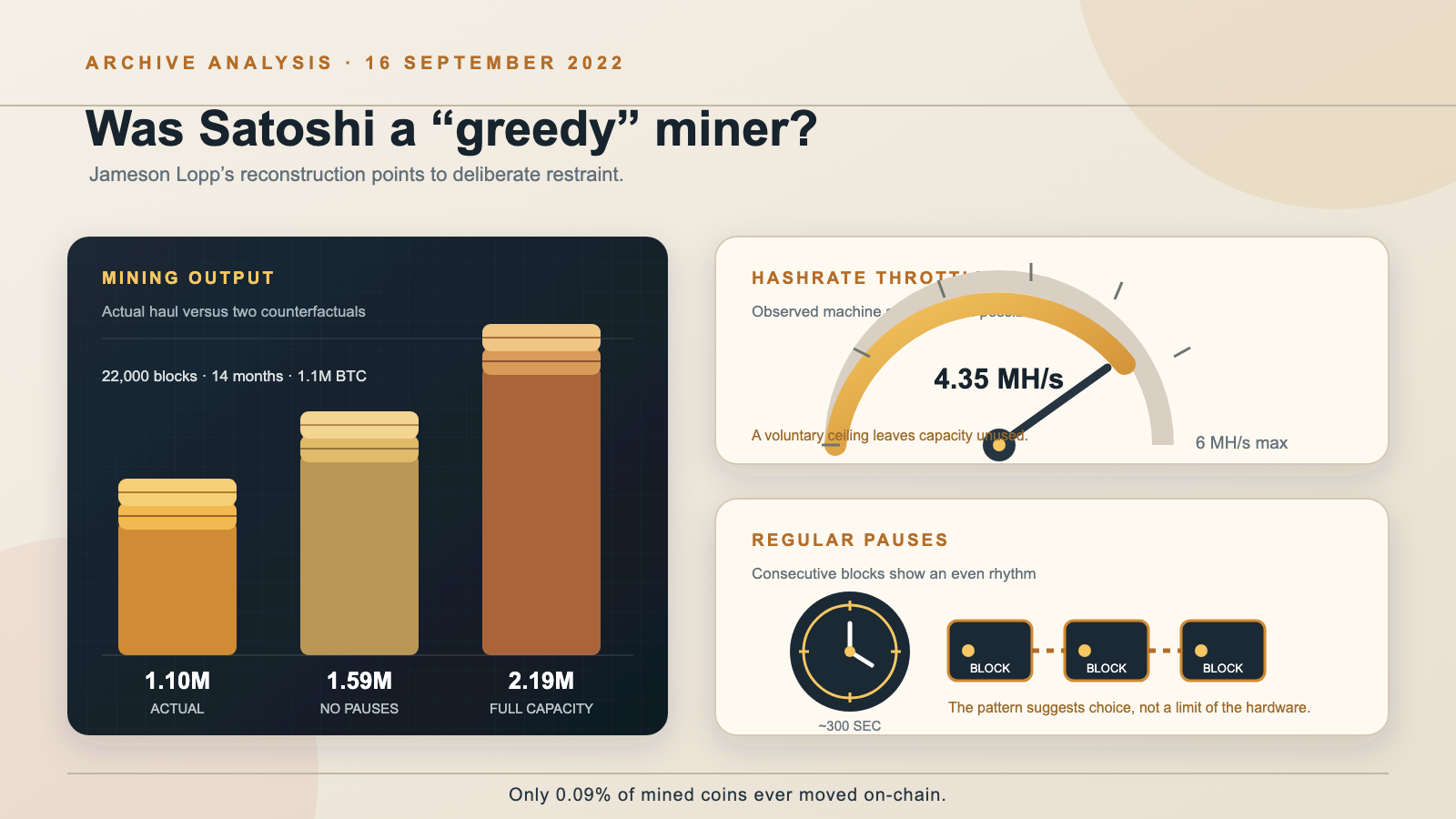
The original 2013 analysis estimated Satoshi’s holdings at approximately 1 million BTC. Lerner’s subsequent 2019 refinement of the methodology, using more sophisticated analysis of nonce patterns and block timestamps, adjusted the estimate to approximately 1.1 million BTC across roughly 22,000 blocks.
BitMEX Research conducted an independent review of Lerner’s methodology in 2018, broadly confirming the pattern but suggesting a somewhat lower estimate, noting that not all blocks attributed to the Patoshi pattern could be conclusively attributed to a single miner.
Whale Alert, a blockchain tracking service, published its own analysis corroborating an estimate of approximately 1.1 million BTC.
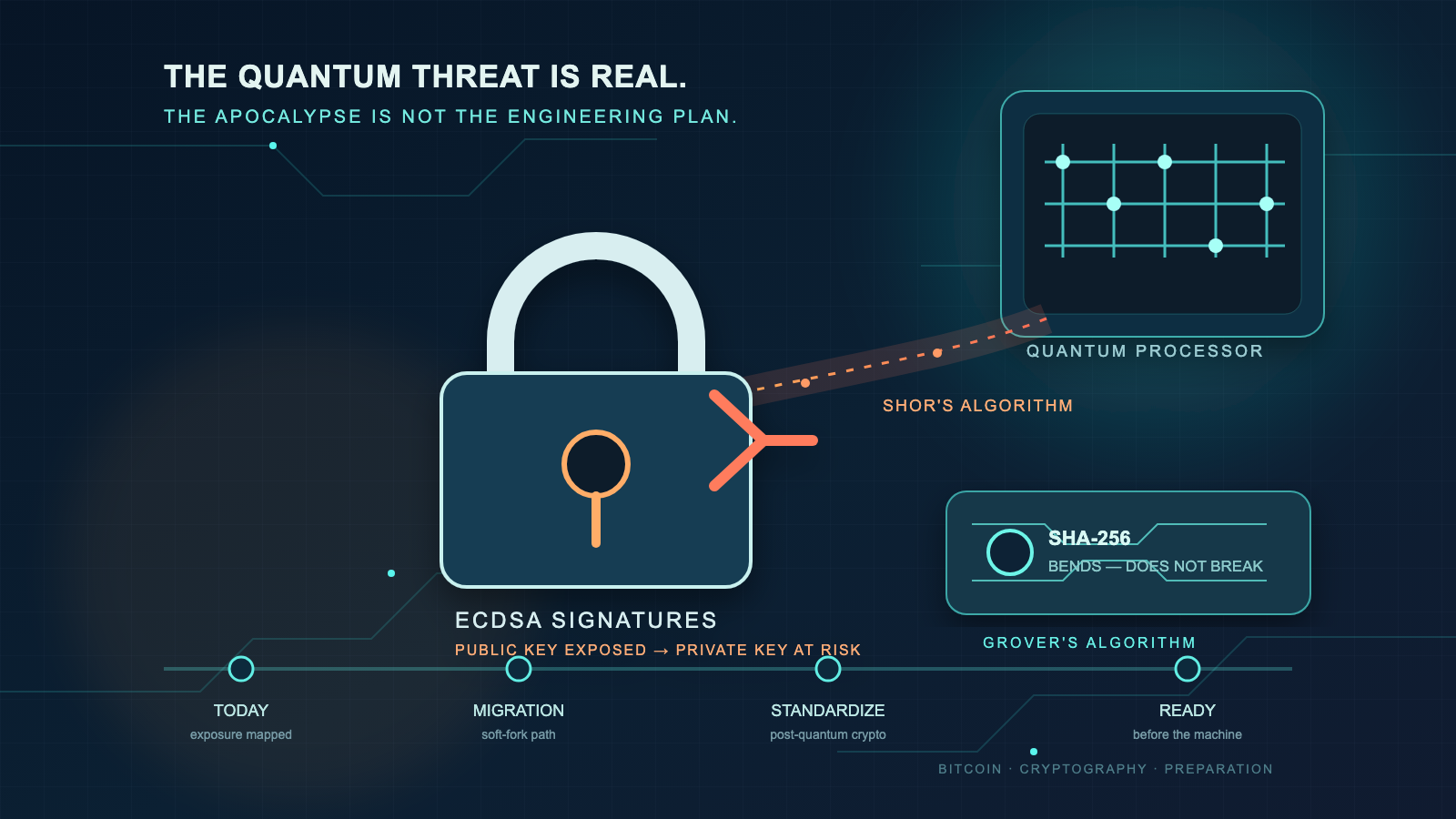
A critical observation across all analyses is that the vast majority of these coins have never been moved from their original mining addresses. Counted on the block list Jameson Lopp published, 31 of 21,953 block rewards, 1,550 BTC, have moved; the other 1,096,102.49 BTC never has. Because they sit in pre-2011 P2PK outputs, this same balance is also the largest concrete pool of coins exposed under Bitcoin’s quantum-computing threat model: the public key was published the moment each output was created, decades before any cryptographically relevant quantum computer could exist.
As of early 2021, with Bitcoin’s price surpassing $40,000 for the first time, Satoshi’s estimated holdings were valued at over $40 billion, making the pseudonymous creator one of the wealthiest individuals in the world — on paper, at least.
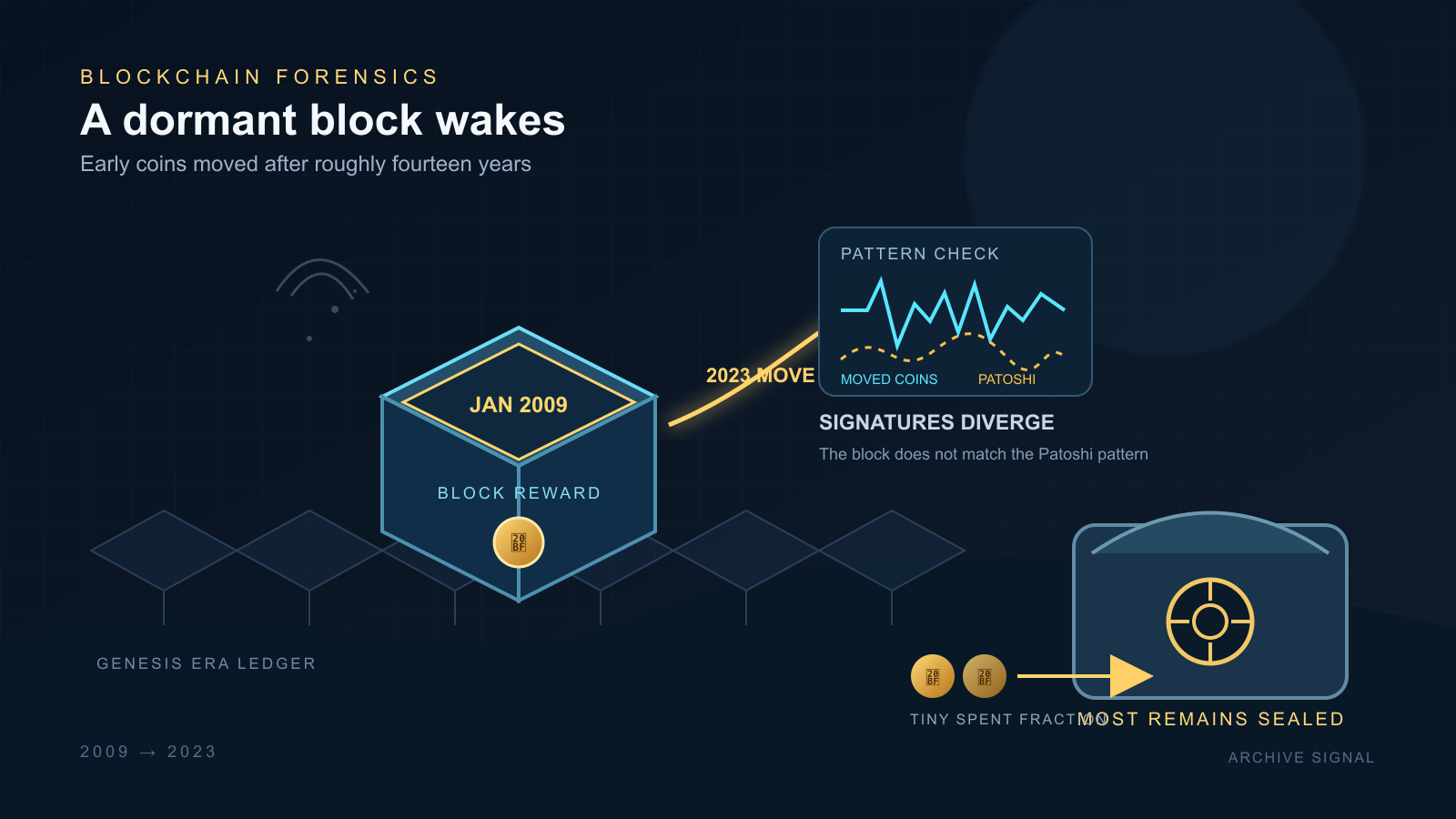
The observation that the vast majority of these coins have never been moved was tested directly in January 2023, when a block mined during Bitcoin’s earliest weeks moved for the first time: the same Patoshi-pattern methodology applied to the moved coins ruled Satoshi out as their miner, leaving the largely untouched record of his own holdings intact.
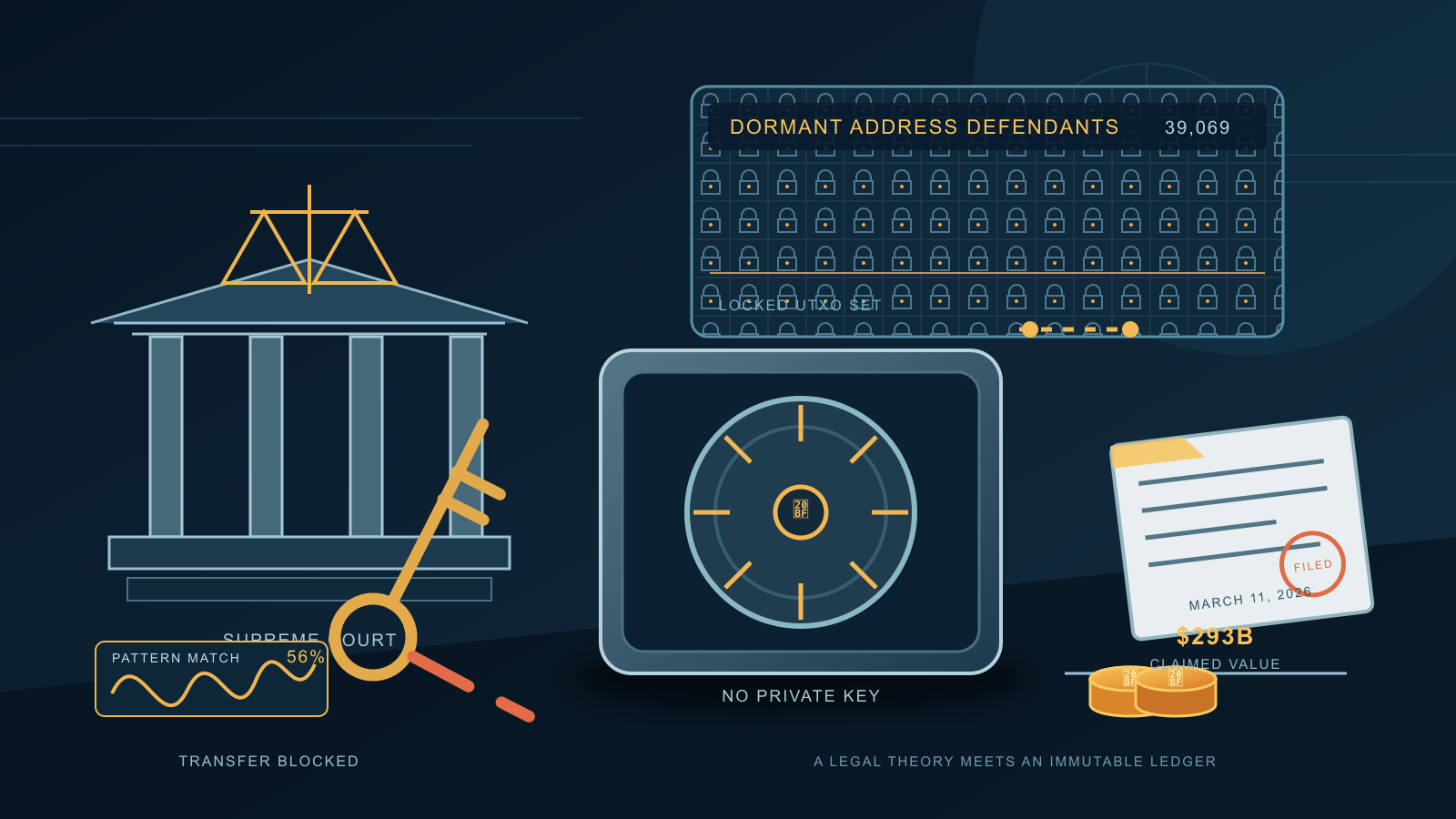
The estimate itself later became the direct target of a legal claim: a 2026 lawsuit sought court-ordered transfer of 39,069 dormant Bitcoin addresses, of which Galaxy Digital’s Patoshi-pattern classification found roughly 1.096 million BTC, in line with the ~1.1 million BTC figure established here.