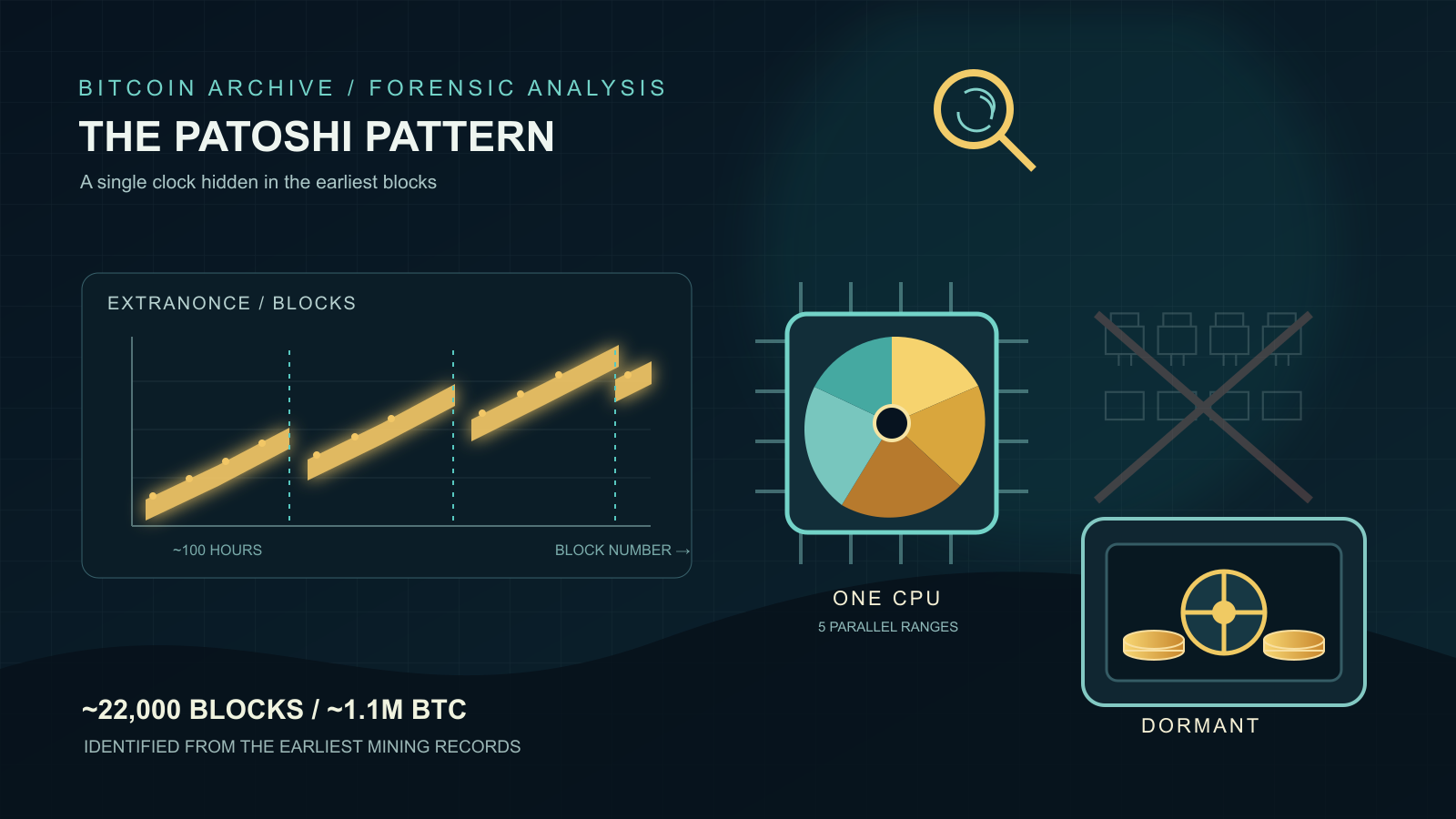
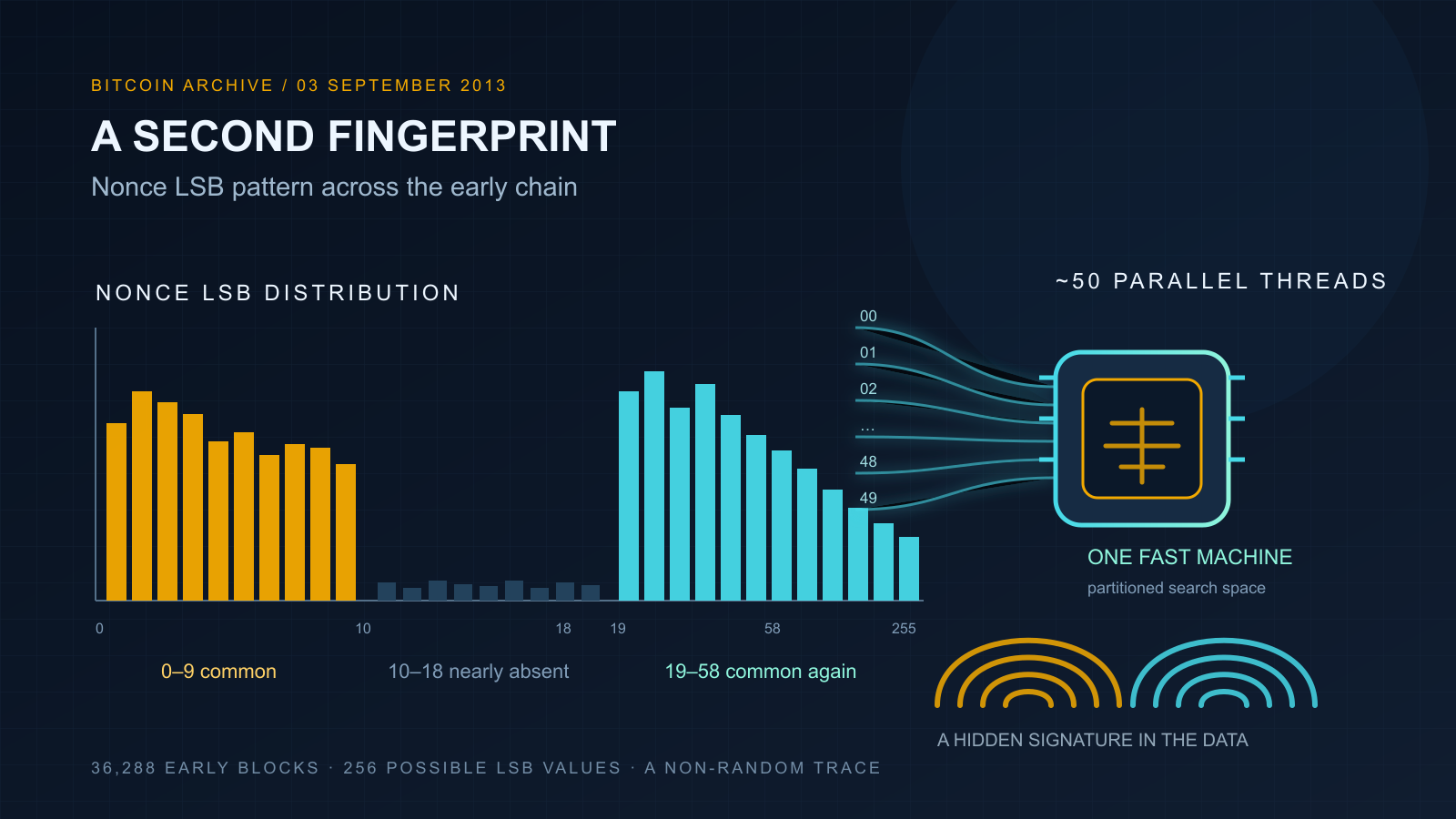
On September 3, 2013, Sergio Demian Lerner published “A New Mystery about Satoshi Hidden in the Bitcoin Block-Chain,” revealing a second, independent fingerprint in Satoshi’s early mining — beyond the ExtraNonce slope analysis he had published four and a half months earlier.
The discovery
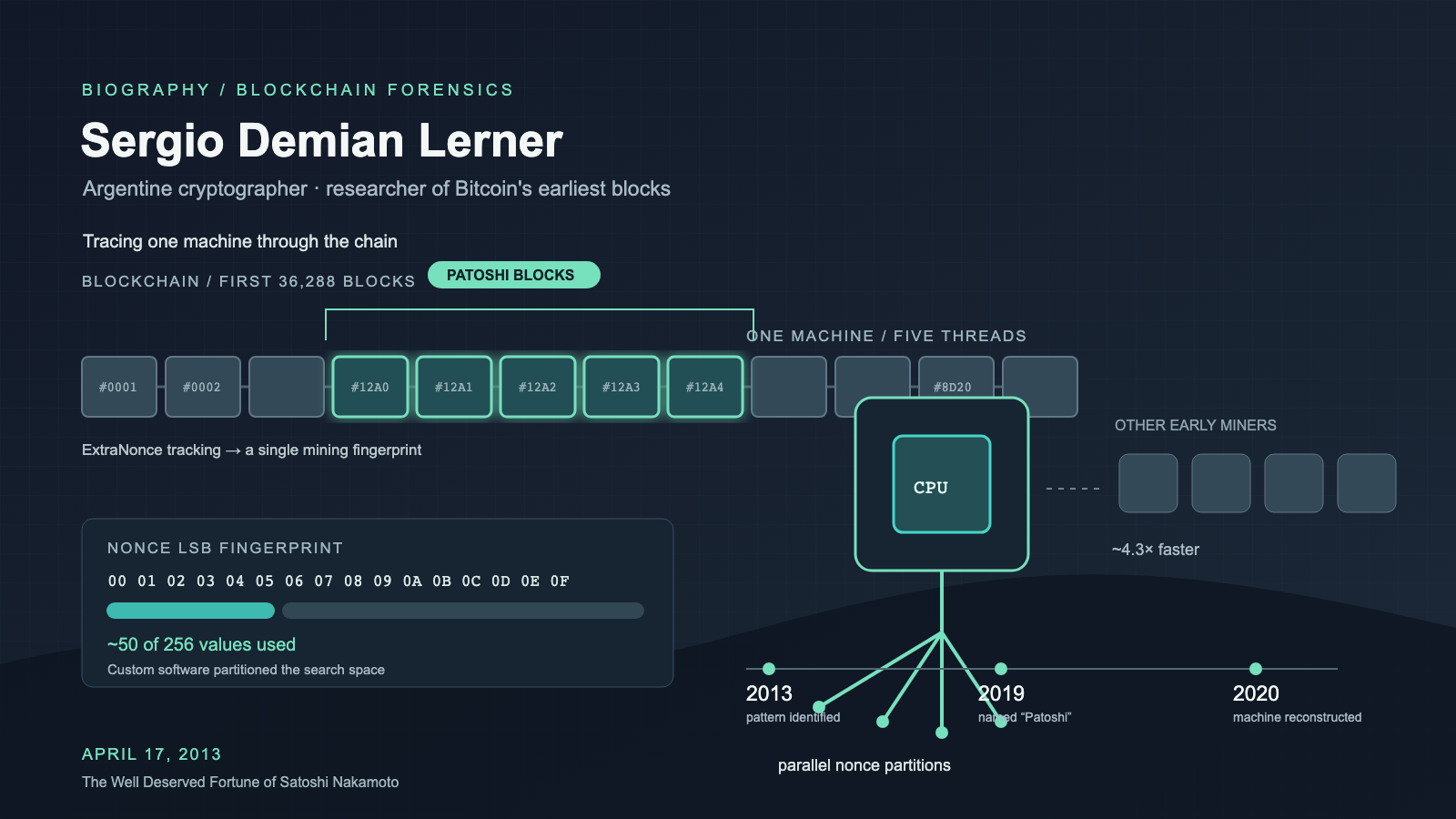
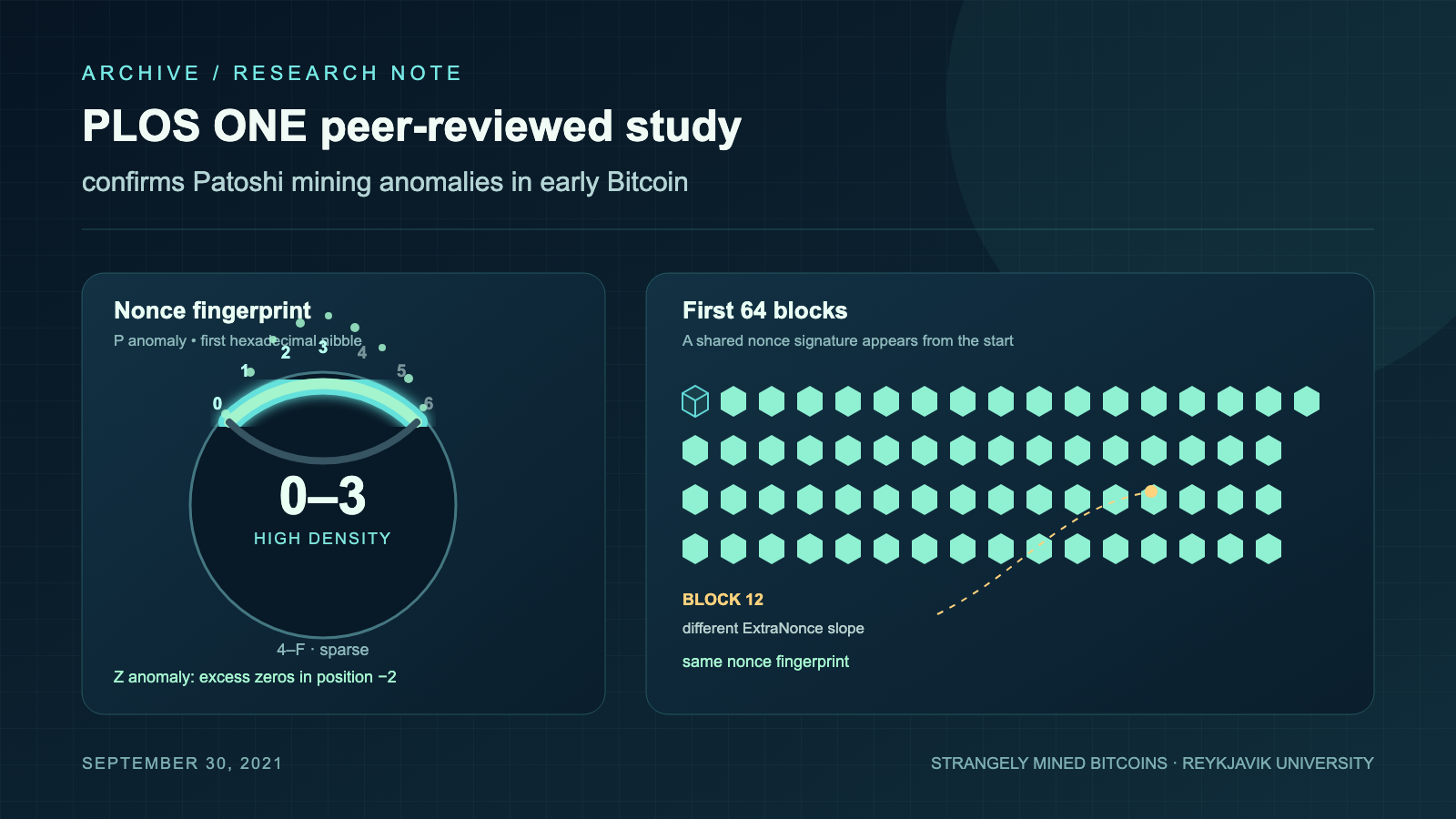
Lerner analyzed the least significant byte (LSB) of nonce values across the first 36,288 blocks. In a standard mining implementation, nonce bytes should be uniformly distributed. Instead, Satoshi’s blocks showed a striking non-random pattern:
- Values 0–9: Elevated frequency (247–324 occurrences each)
- Values 10–18: Near-zero frequency (only 2–6 each) — a critical gap
- Values 19–58: Elevated again (up to 201 occurrences)
- Values 59–255: Sparse distribution
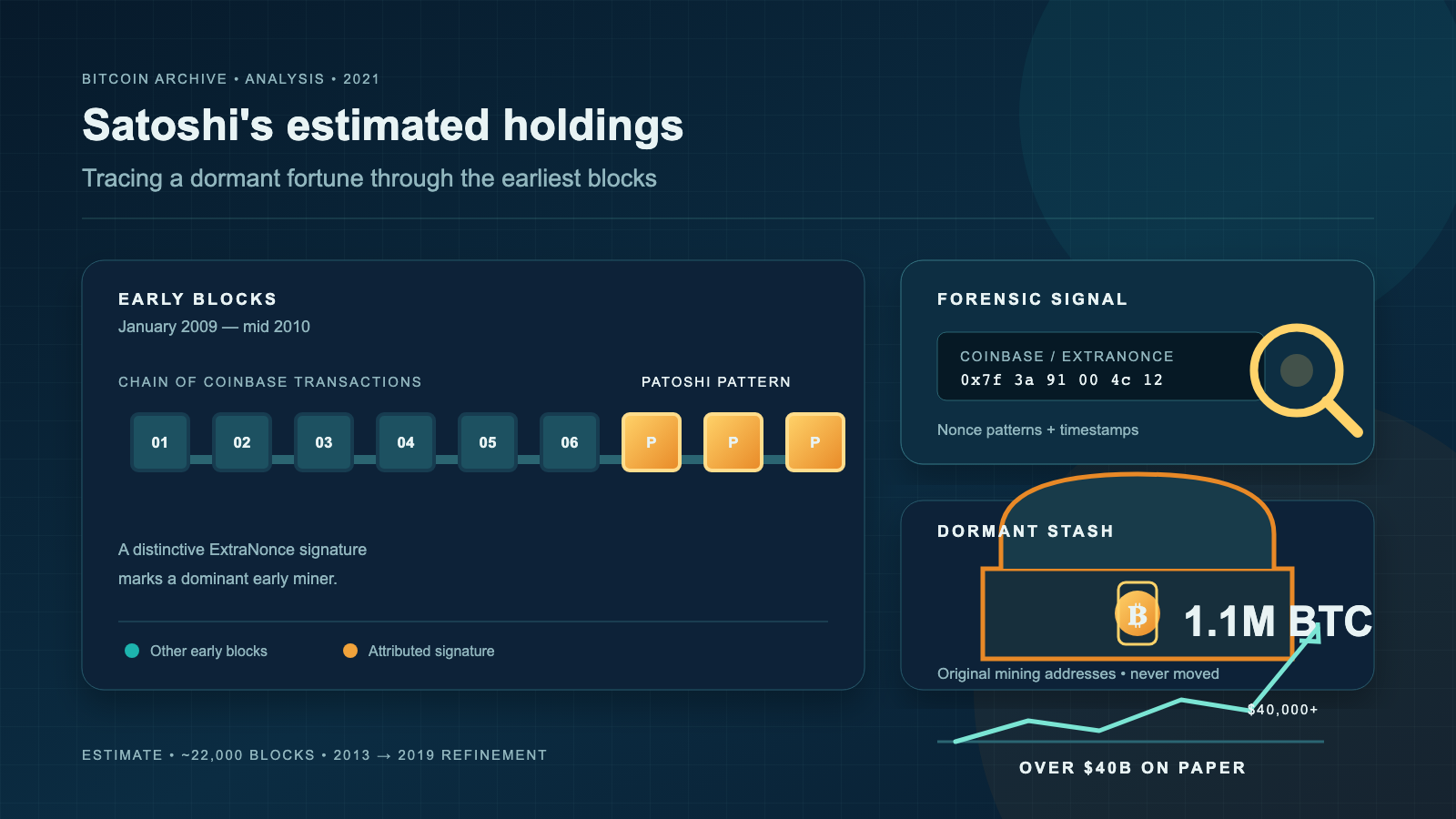
The pattern was exclusive to unspent coinbases (Satoshi’s blocks) and absent from blocks mined by other early participants.
Significance
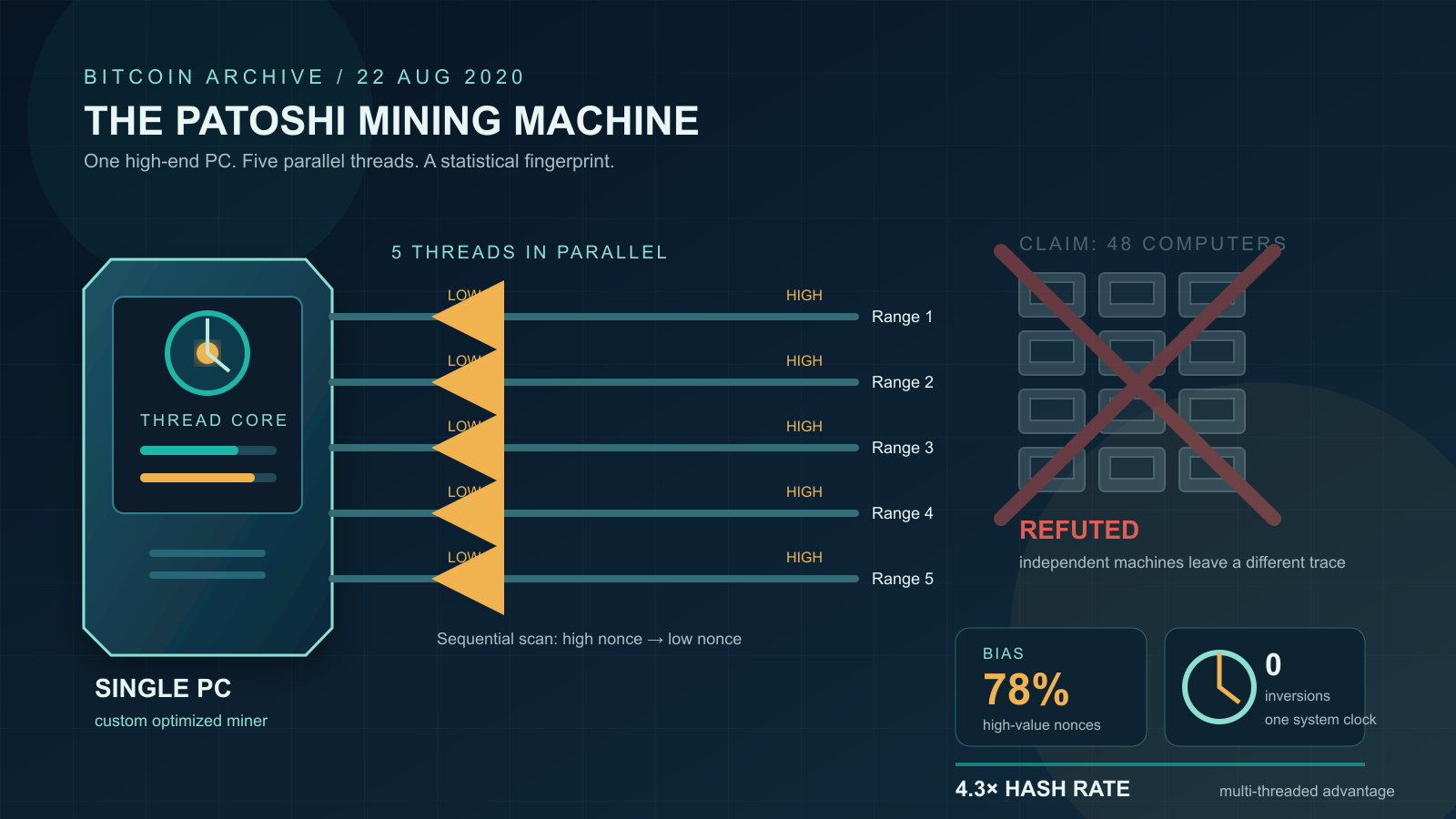
This LSB restriction to approximately 50 out of 256 possible values ([0..9] ∪ [19..58]) was a completely independent line of evidence from the ExtraNonce analysis. It proved the dominant miner used custom software that partitioned the nonce search space — assigning different LSB ranges to different threads or processes to avoid duplicate work.
Initial hypotheses
Lerner proposed four explanations: a parsing error, specialized hardware using gray codes, a SHA-2 vulnerability, or an intentional fingerprint. Community member “Eyal0” quickly proposed an answer that Lerner first judged right: Satoshi had access to dozens of machines, and to avoid checking the same nonce twice he gave each a different ID, stamped in the LSB of the nonce.
Follow-up (September 4, 2013)
In “Satoshi’s Machine,” Lerner confirmed the LSB-ExtraNonce connection and determined that the restricted nonce range made Satoshi’s computer appear approximately 4.3 times faster than it really was — consistent with a single computer running at least four threads, or four computers under one owner, rather than dozens of machines.
Lerner noted:
“We’re living in a LOST movie: each time it looks a mystery is solved, another one appears.”
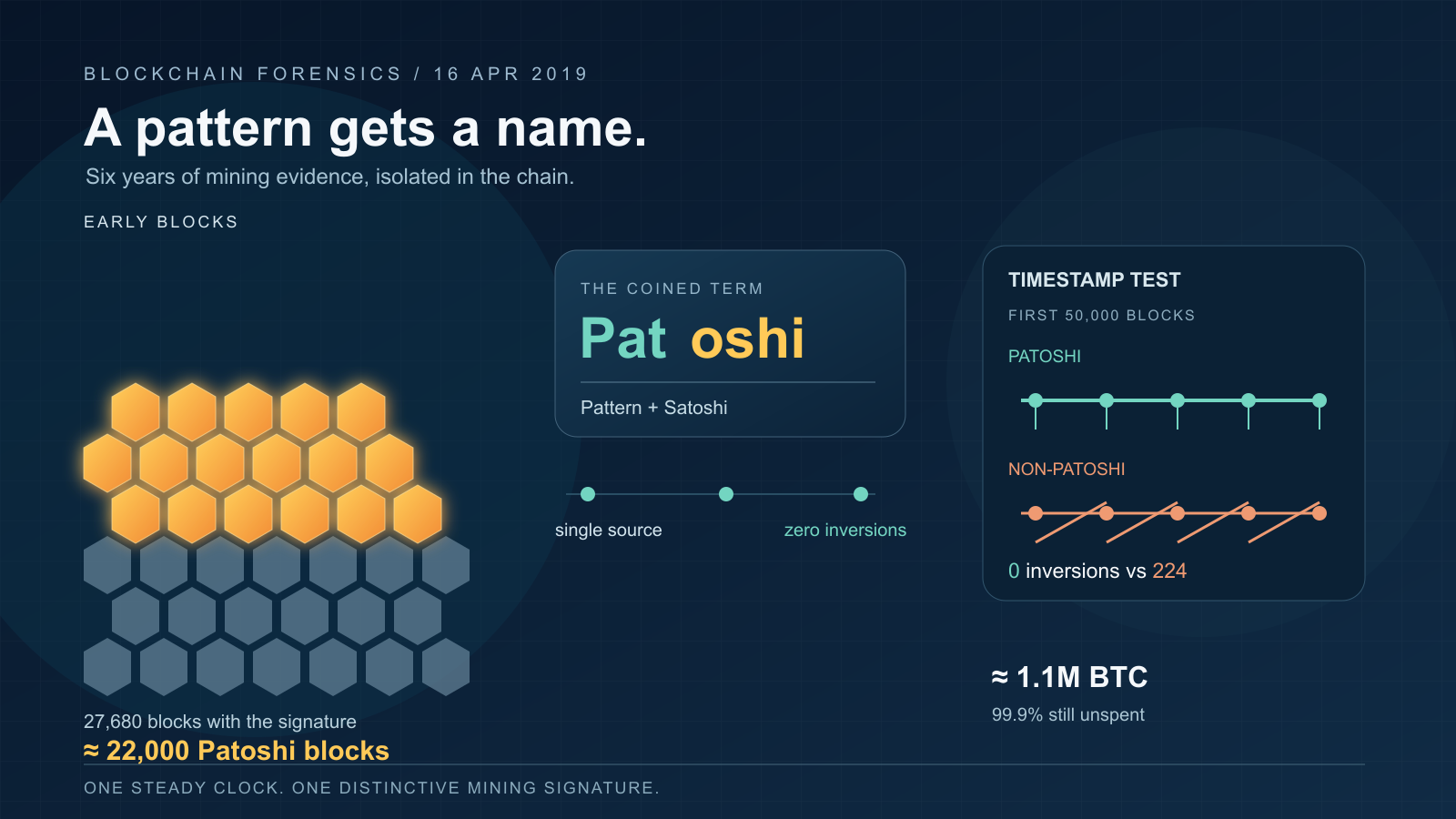
In April 2019 Lerner named the pattern “Patoshi” and calculated how unlikely this LSB restriction is under ordinary mining (the 2019 Patoshi-naming entry).
Lerner returned to the hardware question at length in the 2020 Patoshi mining-machine analysis, whose re-mining simulation confirmed the single-CPU, five-thread configuration that the nonce-partitioning pattern discovered here implies.