
On March 11, 2026, an anonymous plaintiff using the pseudonym “Noah Doe,” joined by two Wyoming LLCs (ABC Company and XYZ Company), filed suit in the Supreme Court of the State of New York under Index No. 153119/2026. An amended complaint of May 1 names 39,069 dormant Bitcoin addresses as defendants and claims ownership of the approximately 3.8 million BTC they hold, about $293.5 billion at the May 25, 2026 price Galaxy Research used.
Counsel of record is Lewis & Lin LLC. The novel legal theory rests on Article 7-B of New York’s Personal Property Law, the state’s lost-property statute traditionally applied to physical objects. The complaint argues that dormant addresses are lost property under that statute: Noah Doe says he found them with a proprietary algorithm, delivered USB drives of the addresses to the NYPD’s 17th Precinct as found property, and gained title one year after each of three “finds,” on December 26, 2025, and March 31 and April 14, 2026. That one-year path depends on an unnamed expert’s valuation of each address at under $10; Galaxy Research puts the gap between that figure and $293.5 billion at “nine orders of magnitude.”
The legal innovation is significant. Article 7-B was written for tangible lost objects, a wallet found on a sidewalk or jewelry left in a cab, and had never been applied to digital assets recorded on a public blockchain. The pleading therefore frames a question of first impression: whether the statutory category of “personal property” extends to UTXO-controlled coins whose controlling private key has been lost, forgotten, or destroyed.
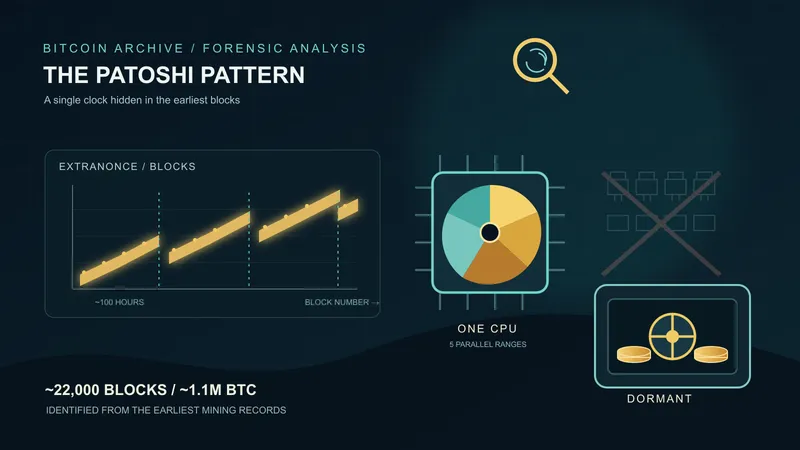
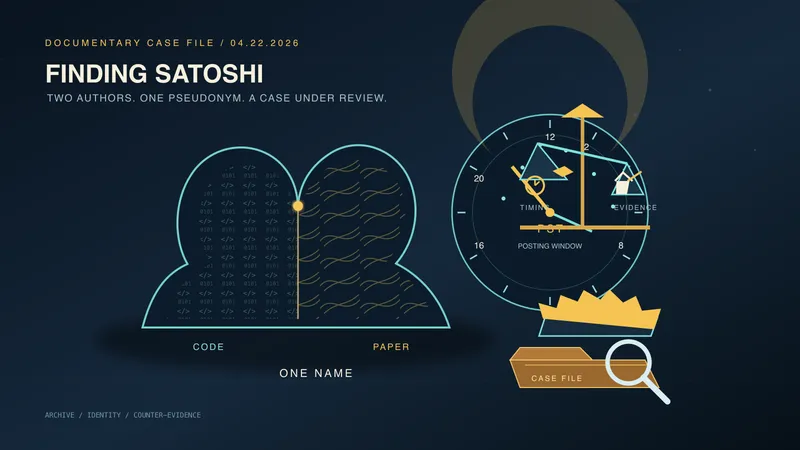
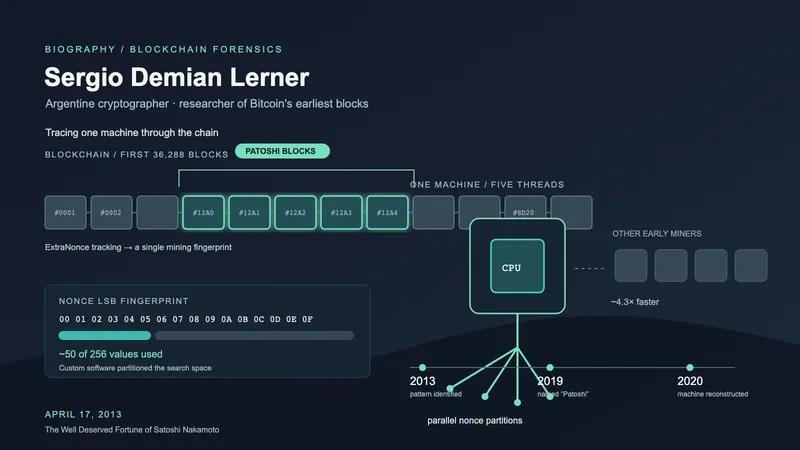
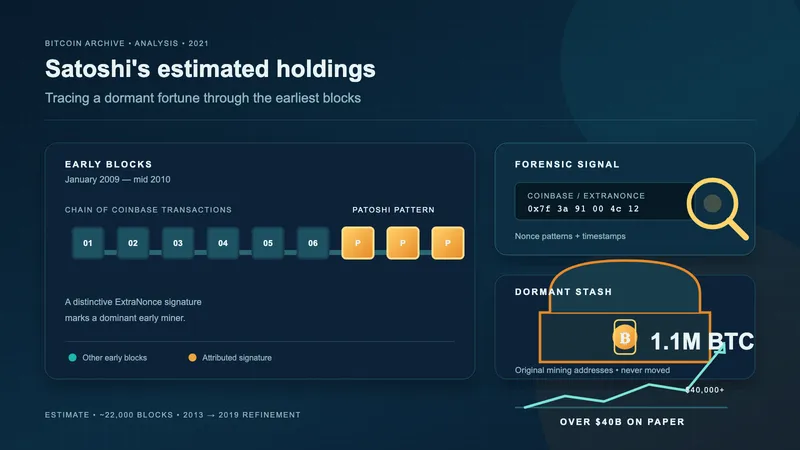
In May 2026, Galaxy Research, led by Alex Thorn, sorted the 39,069 defendant addresses. 21,923 of them (56% of the defendants) carry the Patoshi nonce pattern traced to Sergio Demian Lerner’s 2013 Patoshi analysis — approximately 1.096 million BTC, in alignment with Lerner’s earlier estimate of ~1.1M BTC mined by the single early miner widely understood to be Satoshi Nakamoto himself. These are the same Patoshi-pattern reserves whose absence from the Finney and Sassaman family holdings was raised as counter-evidence against the co-creators theory in the Finding Satoshi documentary.
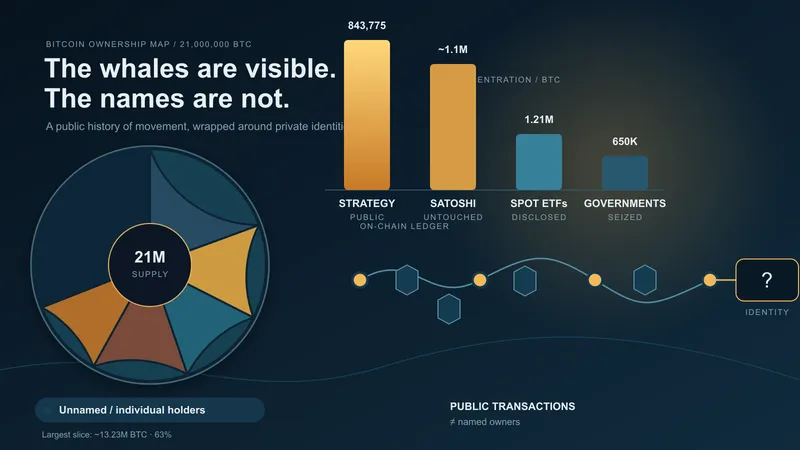
Of the other 17,146, one is the address holding about 79,957 BTC stolen from Mt. Gox in 2011, one is a Counterparty burn address that no one can spend from, and 17,144 are other dormant addresses holding about 2.62 million BTC, most of it last moved between 2009 and 2013. The 3.8 million BTC named in the complaint straddle Satoshi’s own ~1.1 million BTC and the 2.3–3.7 million BTC “lost coins” band that the archive’s ownership map tracks separately — this suit is the first attempt to move either category by court order rather than private key.
Service was made on-chain on May 21–22, 2026: each address received a 546-satoshi payment carrying an OP_RETURN message that pointed to the pleadings. On June 4, Justice Kathy J. King stayed all proceedings on the declaratory-judgment claim, including any default judgment, pending a July 14 hearing on whether to admit an amicus brief opposing the suit. On June 30, the holder of one address, John Doe 33, appeared and moved to dismiss, and in July the Bitcoin Policy Institute also asked the court to throw the suit out. On July 7 the plaintiffs dropped 44 addresses whose coins had moved, leaving 39,025. After the July 14 hearing, orders of July 16 again barred default judgments ahead of a September 8 proceeding; that is where the case stood in the reports of late July 2026. Most defendants, being wallet addresses, cannot answer, and the procedural mechanics of how the plaintiff would establish standing, serve unknown holders, and enforce any judgment are themselves novel questions.
Bitcoin-community reception has been overwhelmingly skeptical: critics argue that the suit amounts to asking a state court to declare a finder’s right over coins whose original owner has not relinquished cryptographic control, and that any judgment ordering transfer would be unenforceable absent the private keys.
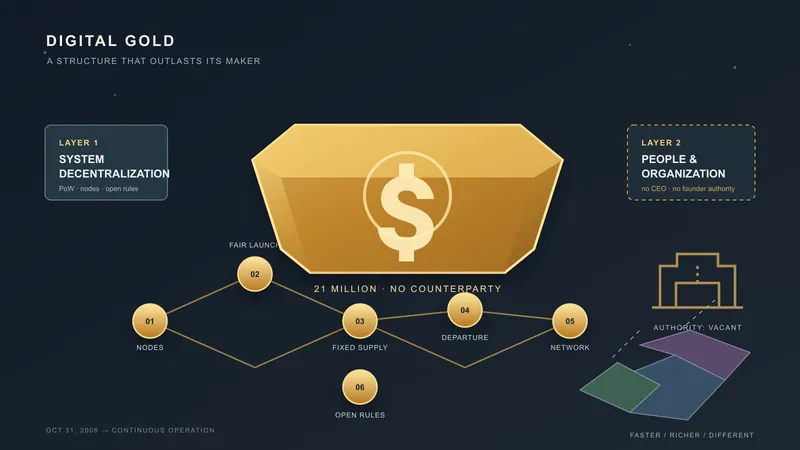
The case nevertheless tests, for the first time in a US court, whether lost-property doctrine can reach into the UTXO set. A finding for the plaintiff — even a partial one — would create precedent affecting all long-dormant Bitcoin, including the Satoshi-era reserves. That untouched fortune has itself been treated as load-bearing evidence for Bitcoin’s “digital gold” case — the archive’s structural-features analysis cites the founder’s departure with nothing taken as one of the features that distinguishes Bitcoin from actively-led chains; this suit is the first legal attempt to move that fortune without Satoshi’s own signature.