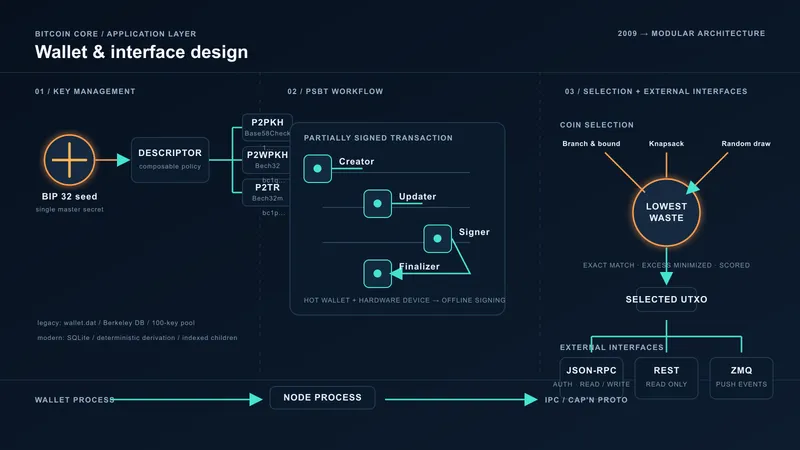

Bitcoin’s protocol has no recovery mechanism. There is no support line, no court order, no master key, and no central authority that can re-issue a UTXO whose private key has been destroyed, lost, or never existed in transferable form. This is not a defect: it is a deliberate design choice that flows directly from the whitepaper’s elimination of trusted third parties. The cost of that choice is that human losses — through carelessness, through hostile environments, or through fraud — are permanent. The wallet design page states the same fact from the architecture side: key management is the wallet’s most critical responsibility precisely because nothing downstream of it can undo a mistake.
The loss cases that recur in public discourse about lost Bitcoin are grouped below by mechanism rather than by date or dollar value. Roundup coverage tends to put mechanistically distinct cases side by side, which hides the structure they actually have.
The three loss mechanisms
The three mechanisms differ in the location of the failure (the user, the physical world, the intermediary) but are identical from the chain’s perspective: the resulting UTXO is undisturbed, the transactional rules around it unchanged, and the coins are functionally outside circulation until some indefinite future date.
1. Forgotten password
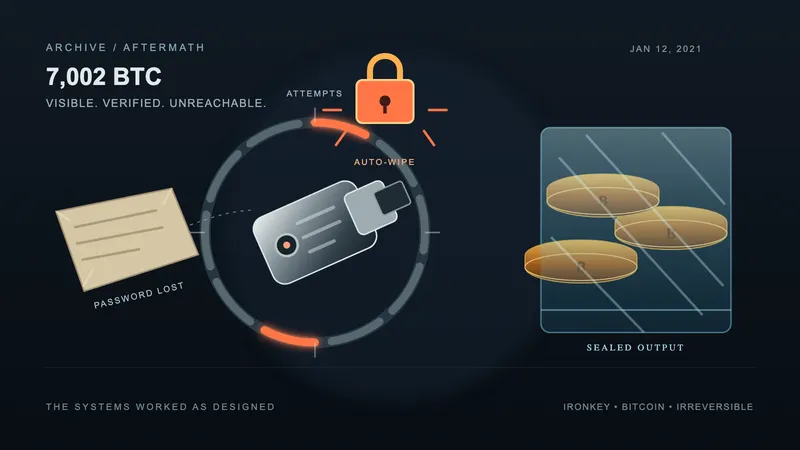
The most consciously self-inflicted loss mode. The user holds the private key but cannot supply the secret needed to decrypt or unlock the device that stores it.
| Case | Year | Amount | Mechanism |
|---|---|---|---|
| Stefan Thomas IronKey lockout | 2011 onward | 7,002 BTC | IronKey USB drive (10-attempt auto-wipe); password written on paper, paper lost; 8 of 10 attempts exhausted as of 2021 NYT report |
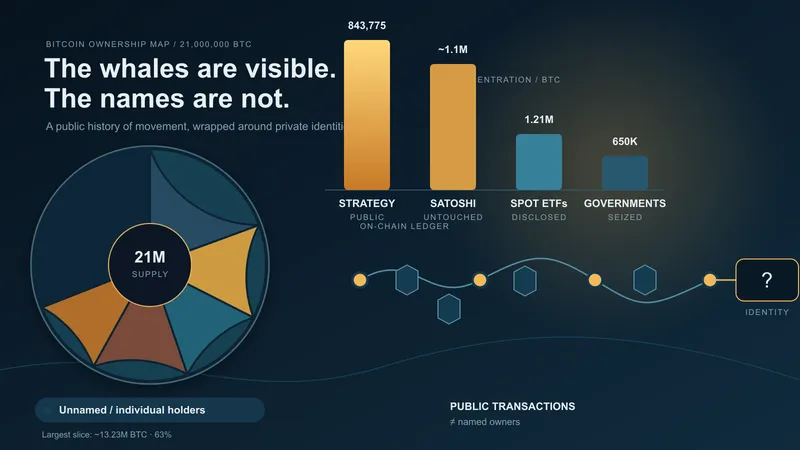
The Thomas case is the canonical exemplar. Common variants — forgotten BIP39 seed phrases, lost paper wallets, encrypted backups without recoverable passphrases — are individually less famous. The most commonly cited Chainalysis estimate of long-term lost supply does not break the total down by cause; the archive’s ownership map sources that aggregate figure at 2.3–3.7 million BTC, roughly 11–18% of the total cap.
2. Physical destruction or disposal
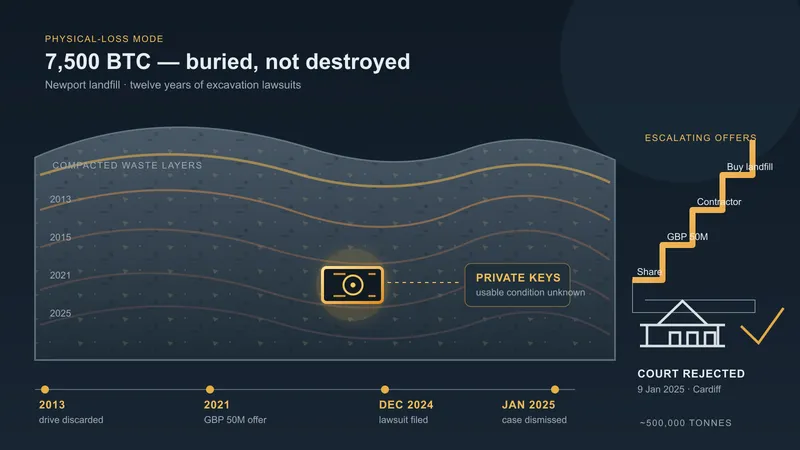
The key was present in physical media and the media was lost, destroyed, or rendered inaccessible by physical circumstance.
| Case | Year | Amount | Mechanism |
|---|---|---|---|
| James Howells Newport landfill | 2013 onward | ~7,500 BTC (8,000 in his 2024 claim) | Hard drive discarded during home cleanup; landfilled under Newport City Council Docksway site; twelve years of refused excavation petitions and a 2025 UK High Court ruling against the claimant |
This category also includes losses to fire, flood, and accidental hardware-wallet destruction. The Howells case is unique in being unusually well-documented because the disposal was unwitting and the location is precisely known.
3. Custody-collapse
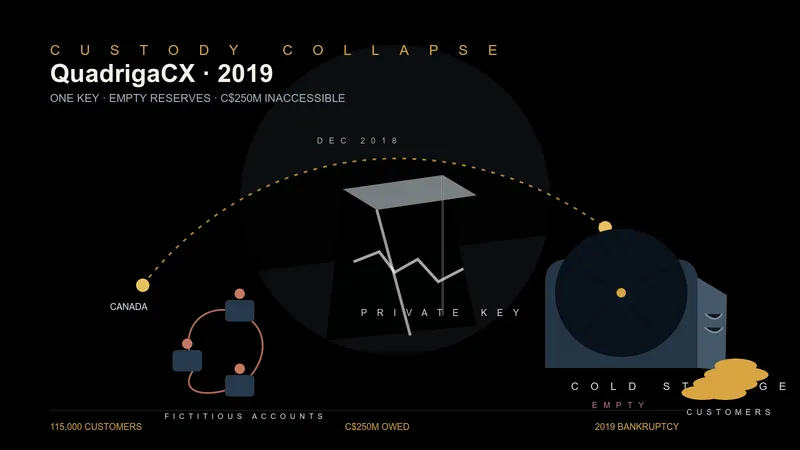
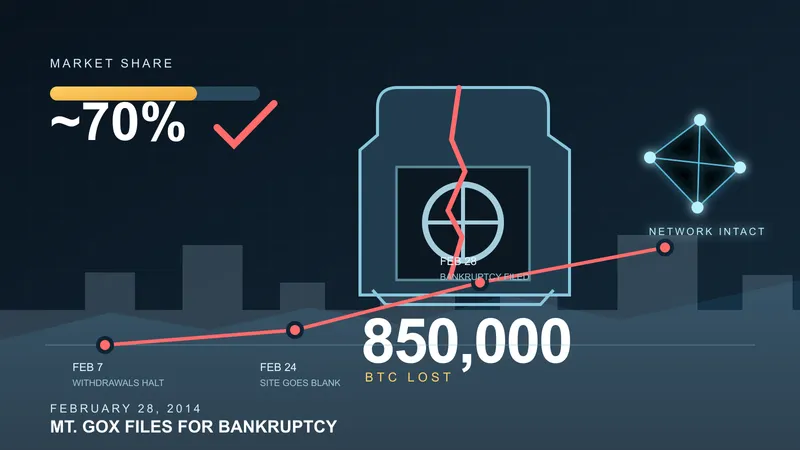
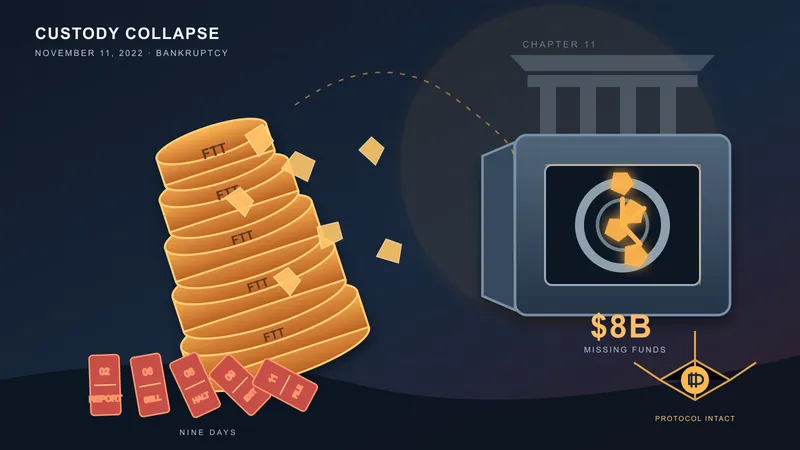
The user did not hold the key directly. They entrusted it to an intermediary (an exchange, a custodial wallet service, a sole-key custodian) and the intermediary lost, destroyed, misappropriated, or otherwise failed to deliver the asset.
| Case | Year | Amount | Failure mode |
|---|---|---|---|
| Mt. Gox bankruptcy | 2014 | ~850,000 BTC (later revised to ~650,000) | Theft from the hot wallet from late 2011 (WizSec, 2015), operational mismanagement; 2024 partial repayment to creditors a decade later |
| QuadrigaCX collapse / Cotten death | 2018–19 | ~C$250M | Sole-custodian CEO died; later determined by OSC to have been operating a long-running fraud; ~13% creditor recovery |
| FTX bankruptcy | 2022 | ~$8B customer funds | Large-scale misappropriation by founder Sam Bankman-Fried; sentenced to 25 years; creditor repayments in rounds from February 2025, in dollars at petition-date values |
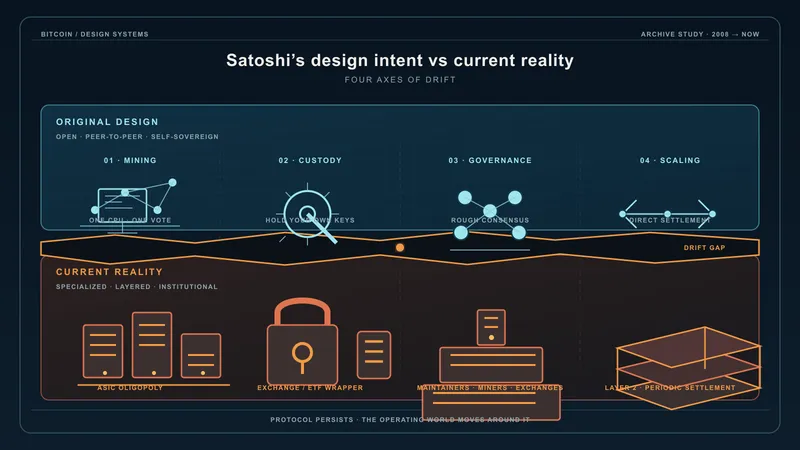
Custody-collapse is the loss mode with the most variety in underlying fault: pure operational failure (Mt. Gox in part), individual fraud disguised as custody (QuadrigaCX, FTX), and external theft against custodian (Mt. Gox in part). Despite the variety in upstream cause, the chain-level outcome is the same — coins moved out of customer control without the customer being able to retrieve them. The Mt. Gox and FTX failures documented above are examined again in Satoshi’s design intent vs Bitcoin’s current reality, against the gap between Satoshi’s each-user-holds-their-own-keys picture and the exchange-IOU reality that let both collapses happen.
Contrast: recovered cases
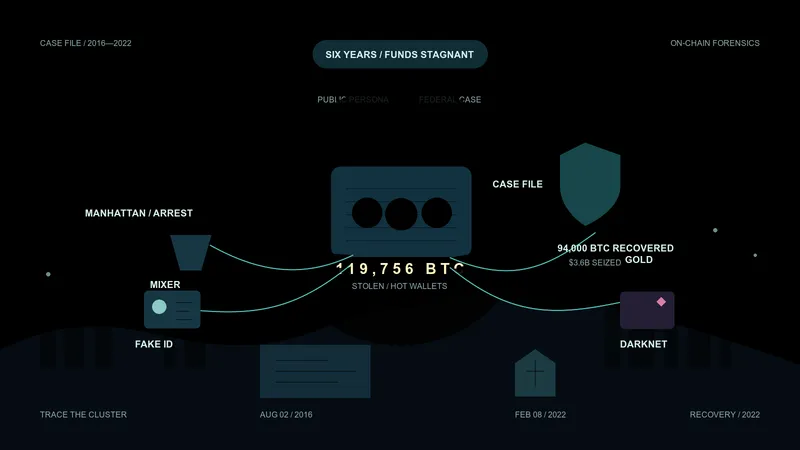
Not every custody-collapse becomes permanent loss. The most prominent counter-example in the iconic-loss canon is the 2016 Bitfinex hack, where 119,756 BTC were stolen and 94,000 were ultimately recovered through the 2022 arrest and prosecution of Lichtenstein and Morgan. The Bitfinex case is structurally informative: the recovery happened not because Bitcoin’s protocol provided one but because on-chain forensics combined with subpoenas to off-chain custodians (other exchanges holding the launderers’ accounts) and a search warrant for the master key list. The protocol’s irreversibility was not bypassed; the attackers’ off-chain operational mistakes were exploited.
The irreversibility lesson
The recurring rhetorical point in Bitcoin design discussions — most explicitly in the Bitcoin wallet design analysis and the Bitcoin security model overview — is that irreversibility is the same property that makes Bitcoin censorship-resistant and the same property that makes lost coins lost. The trade-off was made deliberately. The cases above are not bugs in the system; they are the system functioning exactly as designed, applied to the inevitable subset of human users who lose passwords, throw away hard drives, or entrust their assets to fraudulent intermediaries.
Catalog scope and future entries
The entries linked above are the most-cited iconic cases. The full universe of documented Bitcoin loss is far larger and includes early-era forum loss reports (the August 2010 BitcoinTalk topic-782 thread “Lost large number of bitcoins” is a representative early example) and correspondence-level loss reports such as Liberty Standard’s November 2009 lost-coin sets.
Every case on this page ends the same way on the chain: the coins are still there, and nobody can move them. That is the price of a system with no one to appeal to, and the price is paid in full by the people who lose their keys, so that it never has to be paid by anyone who keeps them.