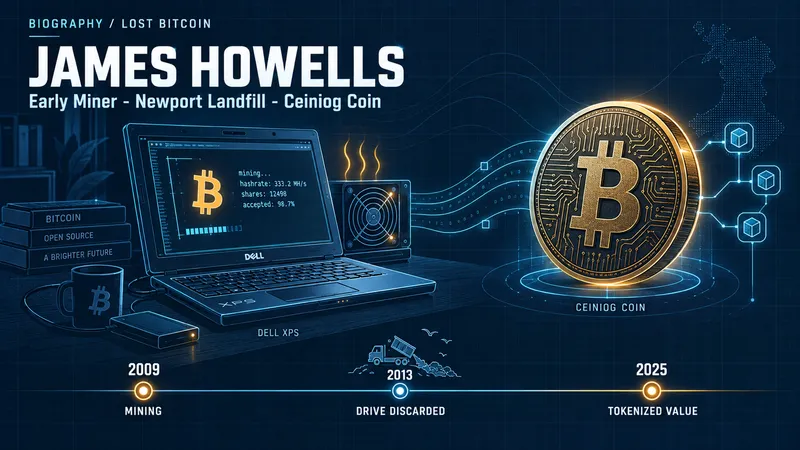

On August 4, 2013, by his own account, James Howells, a Welsh IT worker living in Newport, was clearing out his home office and put the wrong hard drive into a bin bag. He had meant to throw out a blank one. The drive he bagged had come out of a Dell laptop on which he mined bitcoin in early 2009, and it held the wallet file with his private keys. The next morning his partner at the time took the bags to Newport City Council’s Docksway landfill. The Guardian’s first report on the loss, in November 2013, put the coins at 7,500 BTC; his 2024 claim against the council puts them at 8,000.
He did not go looking for the drive until the price surged that autumn. In October and November 2013, his claim says, the coins rose to about £9 million, and on November 25 he met the site’s operations manager to ask about getting the drive back. By then it lay under months of later waste and could not be recovered without an excavation. His requests to dig were refused, and the refusals went on, in various forms, for more than a decade.
Escalation of offers. Over the twelve-year period that followed, Howells repeatedly raised the compensation he was offering Newport City Council in exchange for permission to excavate. Reported offers include a percentage of any recovered coins, £50 million to the council for granting permission (2021), bringing in a specialist excavation contractor at his own cost, and most recently a proposal in 2025 to purchase the entire landfill outright. The council has refused every one. Its reasons, as the 2025 judgment summarises them, include breaching its permit from Natural Resources Wales, the escape of harmful substances, ground movement, the safety of site staff and nearby residents, and being unable to carry out its waste-disposal duties while the site was dug up.
The 2024–2025 lawsuit. In May 2024, Howells filed a formal legal action against Newport City Council seeking the right to excavate or, in the alternative, £495 million in compensation. Bitcoin traded near $67,000 that month, putting the drive’s contents at roughly $500 million at the time of filing; by the time of the January 2025 ruling, with Bitcoin having crossed $100,000 the previous month, press coverage of the case commonly cited a higher figure — roughly £600 million (about $760 million) — reflecting the coin’s appreciation over the case’s pendency rather than its value when the suit was filed.
On January 9, 2025, His Honour Judge Keyser KC, sitting as a judge of the High Court in Cardiff, gave summary judgment for the council and dismissed the claim. He did not decide whether Howells’s account was true; he held that the claim failed even if it was. Under section 14(6)(c) of the Control of Pollution Act 1974, anything delivered to the council’s waste facilities belongs to the council, so the drive became the council’s property when it was deposited at the site. His alternative argument, that the council held the drive on trust for him, was also out of time: he knew the facts behind it by November 2013 but did not sue until May 2024.
Wider continuation. After the ruling the council announced plans to close and cap the site, and in February 2025 Howells said he might try to buy the landfill as it stood. What he did next is recorded in his biography. The case is regularly revisited in UK and international press whenever the BTC price moves significantly, since the nominal value of the drive’s contents tracks the price directly.
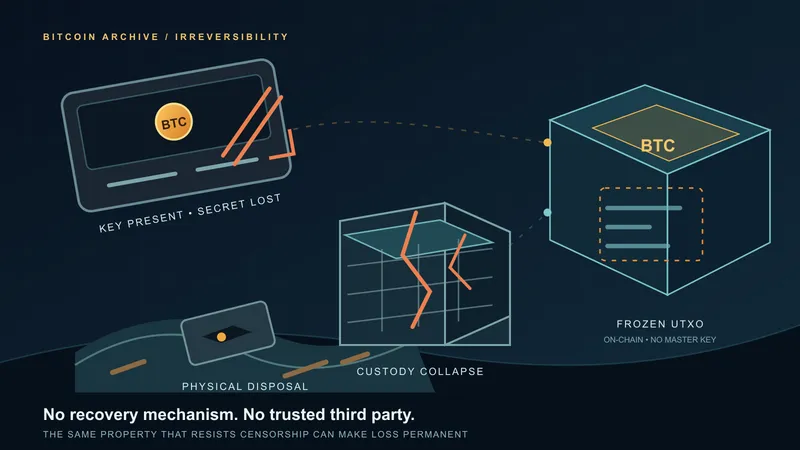
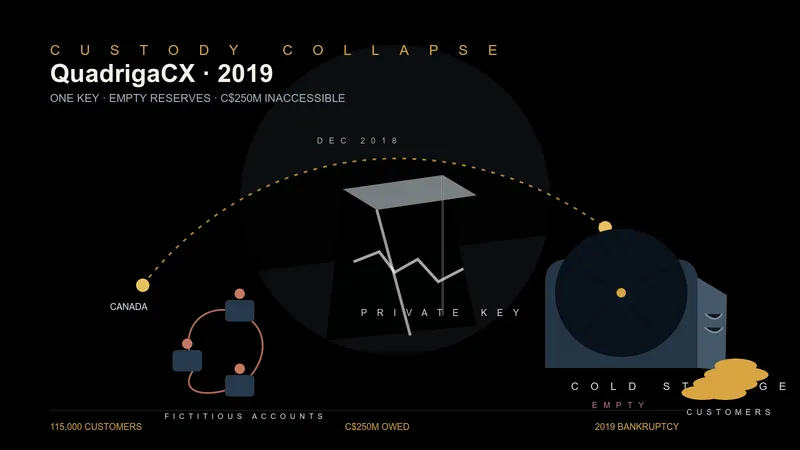
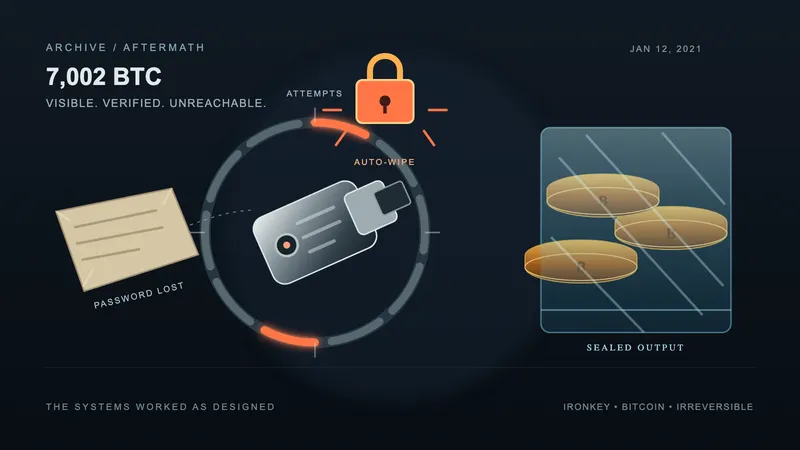
Why the case persists in the lost-Bitcoin canon. The Howells case is the canonical example of physical-loss-mode Bitcoin destruction — distinct from forgotten-password losses like Stefan Thomas’s IronKey lockout and from custody collapse cases like QuadrigaCX’s loss of keys after its CEO’s death. The keys exist (somewhere in a landfill the council put at about 350,000 tonnes of waste in 2025, growing by 50,000 tonnes a year, within an area Howells says he has narrowed to 100,000 tonnes) but are operationally inaccessible. From Bitcoin’s perspective the coins are not destroyed; they are simply unmoveable, indistinguishable from any other long-dormant UTXO. The Bitcoin lost-coins overview sets the Howells case alongside the other documented losses and the underlying irreversibility principle.