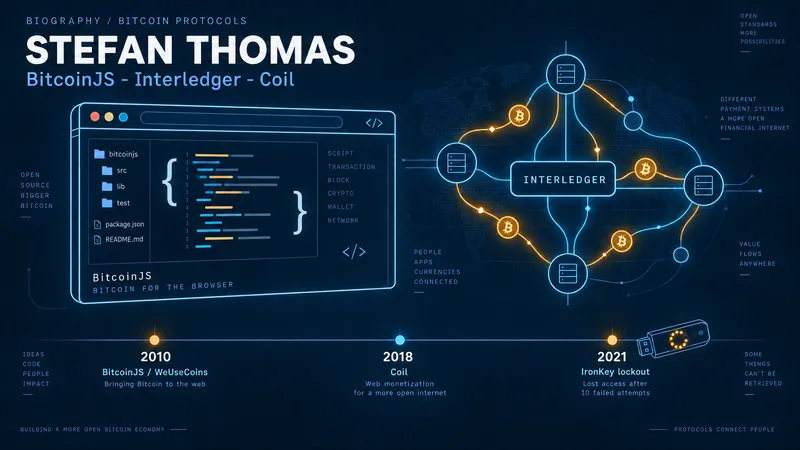

In early 2011, programmer and IRC enthusiast Stefan Thomas was paid roughly 7,002 BTC by an early Bitcoin user for producing the popular animated explainer video What is Bitcoin?. He stored the wallet’s private key on an IronKey encrypted USB drive — a device designed for high-assurance enterprise key storage: after ten consecutive incorrect password attempts, its onboard controller auto-encrypts and erases the protected payload, making the contents cryptographically unrecoverable.
Thomas wrote the IronKey’s master password down on a piece of paper. He lost the paper.
The 2021 New York Times disclosure. In a January 12, 2021 article titled “Lost Passwords Lock Millionaires Out of Their Bitcoin Fortunes,” New York Times reporter Nathaniel Popper documented Thomas’s situation. By that date Thomas had exhausted eight of the ten password attempts. Two attempts remain before the IronKey wipes itself. At publication BTC was trading near $33,000 / coin, putting the locked value above $220 million; later Bitcoin price levels have pushed the nominal value of the locked wallet into the hundreds of millions of dollars and at times above $700 million.
Thomas’s professional standing. Thomas has remained continuously active in the cryptocurrency engineering community throughout the lockout. He was an early Ripple engineer (Chief Technology Officer of Ripple Labs through 2018) and later founded the micropayment / web-monetization startup Coil. The lockout has not impaired his career; it is, by his own framing, a personal artifact rather than a financial crisis.
Public recovery offers. In late 2023 the cybersecurity firm Unciphered announced, through WIRED, a method for breaking IronKey models in the family of Thomas’s device and offered to recover the wallet. According to WIRED’s October 2023 account, Thomas politely declined on a call arranged through a mutual associate: a year earlier he had made a “handshake deal” with two other cracking teams, and he wanted to give them more time before bringing in anyone else. As of mid-2026 no public report confirms a successful recovery; Trakx reported that he had decided to keep the IronKey in a secure location and put the matter behind him for his own peace of mind.
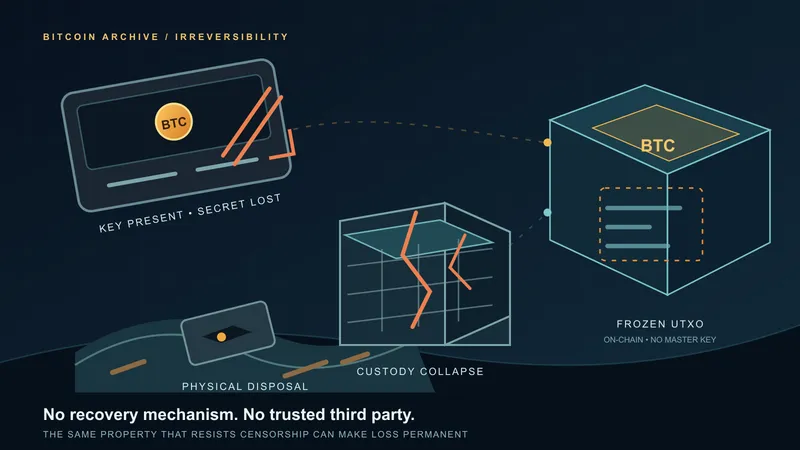
Why the story persists. The Thomas case is a frequently cited illustration of Bitcoin’s irreversibility: there is no recovery agent, no backend reset, no court order that can move a UTXO whose private key has been destroyed. The IronKey itself is doing exactly what enterprise security design promises — refusing to surrender its payload to anyone, including its rightful owner. Bitcoin’s protocol is doing exactly what Satoshi designed — treating an unspent output as immutably bound to its key. The result is that a working, well-engineered system has placed roughly 7,002 BTC permanently beyond reach.
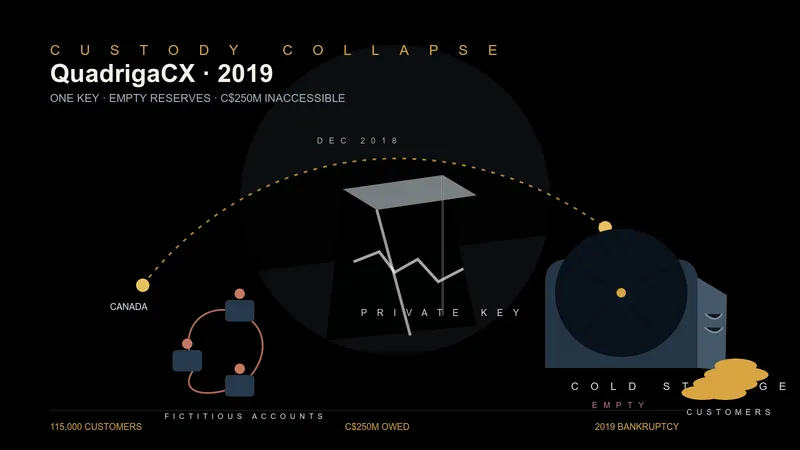
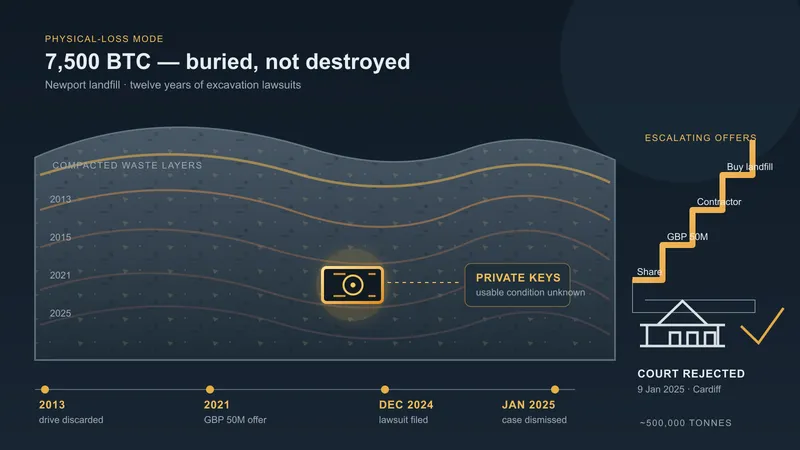
The story is frequently grouped with James Howells’s discarded hard drive and the QuadrigaCX collapse following Gerald Cotten’s death in roundups of “lost Bitcoin” — but the three are mechanistically distinct (forgotten password vs physical disposal vs exchange custody collapse). The Bitcoin lost-coins overview sets them alongside other documented loss events and the underlying irreversibility lesson.