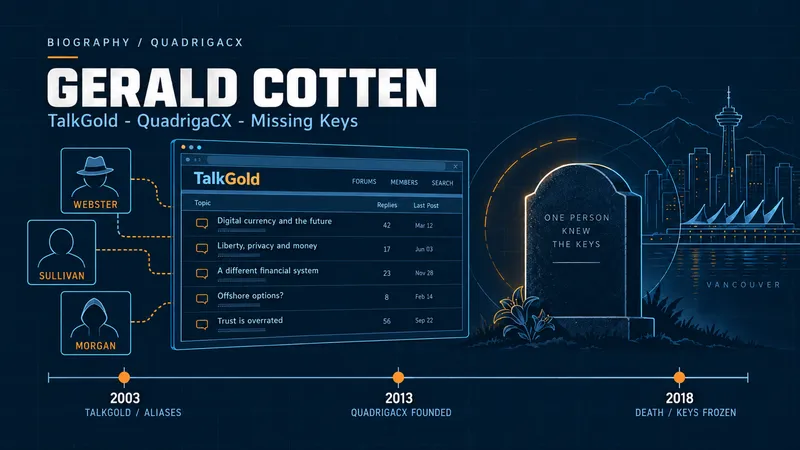

QuadrigaCX, founded in 2013, was at its peak Canada’s largest cryptocurrency exchange. On December 9, 2018, its founder and chief executive Gerald Cotten died at the Fortis Hospital in Jaipur, India, at the age of 30. The cause of death was given as septic shock, peritonitis and intestinal obstruction. He had been traveling with his wife on what the company described as a charitable trip and a honeymoon-anniversary visit.
According to QuadrigaCX’s public statement after his death, Cotten had been the sole custodian of the exchange’s private keys. The company informed customers that without him the keys were unrecoverable, freezing approximately C$250 million (about US$190 million) owed to roughly 115,000 customers in BTC, ETH, other cryptocurrencies, and Canadian-dollar fiat balances.
The collapse and bankruptcy. On February 5, 2019, QuadrigaCX obtained creditor protection from the Nova Scotia Supreme Court. On April 8, 2019 the exchange entered formal bankruptcy proceedings under Canada’s Bankruptcy and Insolvency Act. Ernst & Young was appointed as bankruptcy monitor; their investigators began the cold-storage forensic work that ultimately revealed the operation’s true nature.
The OSC investigation and the fraud conclusion. The Ontario Securities Commission released an investigative report titled Quadriga: Inside The Crypto Exchange. The conclusion was unambiguous:
(Ontario Securities Commission report "Quadriga: Inside The Crypto Exchange," June 11, 2020)What happened at Quadriga was an old-fashioned fraud wrapped in modern technology.
The OSC found that Cotten had operated QuadrigaCX as a long-running fraud. The exchange’s internal balances were maintained by creating fictitious accounts with which Cotten then traded against customers, generating apparent profits that he withdrew from the real BTC/ETH inflows. Customer cryptocurrency was never held in the segregated cold storage the company advertised — most of it had been moved to Cotten-controlled accounts at other exchanges and either traded away or paid out as withdrawals to other customers in a structure functionally identical to a Ponzi scheme. By the time of Cotten’s death the exchange was, the OSC determined, already insolvent and had been so for an extended period.
Conspiracy theories and the exhumation question. The combination of Cotten’s youth, the manner of his death abroad, his recent will (executed twelve days before his death, with his wife as sole beneficiary), and the discovery of the Ponzi structure produced persistent public speculation that Cotten faked his death. On December 13, 2019, the court-appointed law firm representing the exchange’s former users asked the Royal Canadian Mounted Police to exhume the body to confirm his identity and cause of death. No public evidence has emerged contradicting the official death certificate.
The Netflix documentary. On March 30, 2022, Netflix released Trust No One: The Hunt for the Crypto King, a feature-length documentary directed by Luke Sewell focused on the QuadrigaCX collapse and the community of customer-investigators who had pieced together the fraud independently of regulators. The documentary brought the case to a substantially larger general audience than the OSC report had reached on its own.
Recovery to creditors. The bankruptcy trustee distributed an interim dividend of C$0.13 per CAD of proven claim in March 2023 — approximately C$40 million, about 87% of the funds the trustee was then holding, against far larger total proven claims. Most affected customers will not be made whole.
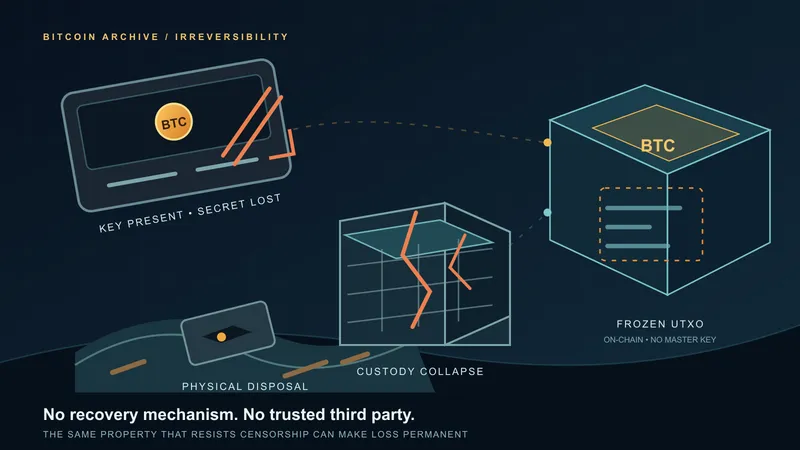
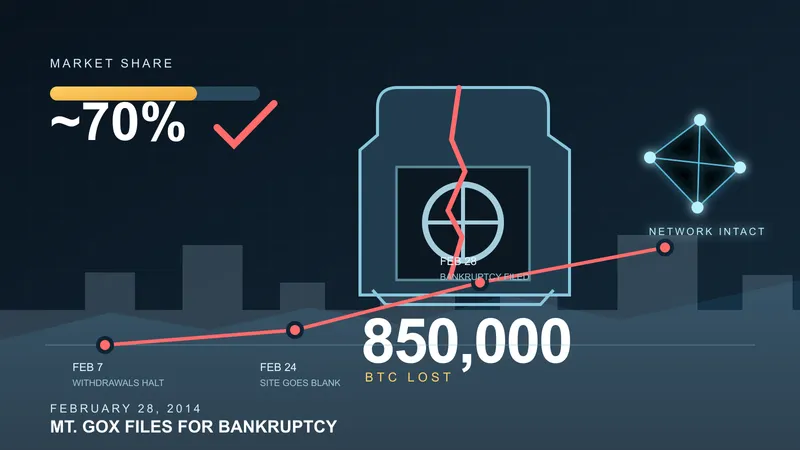
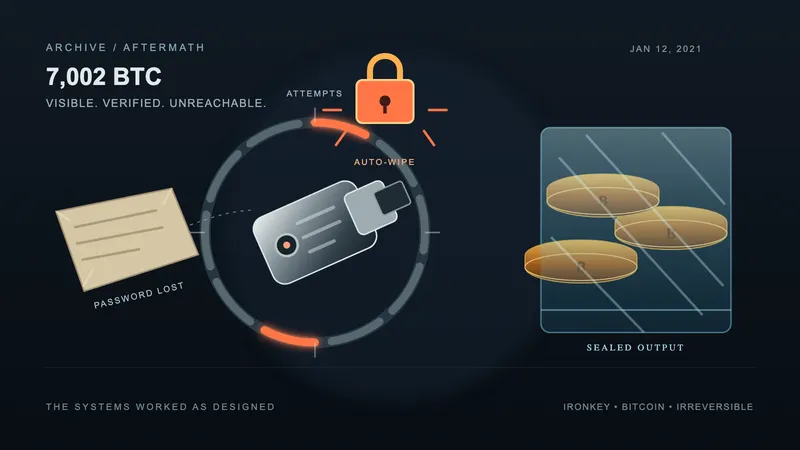
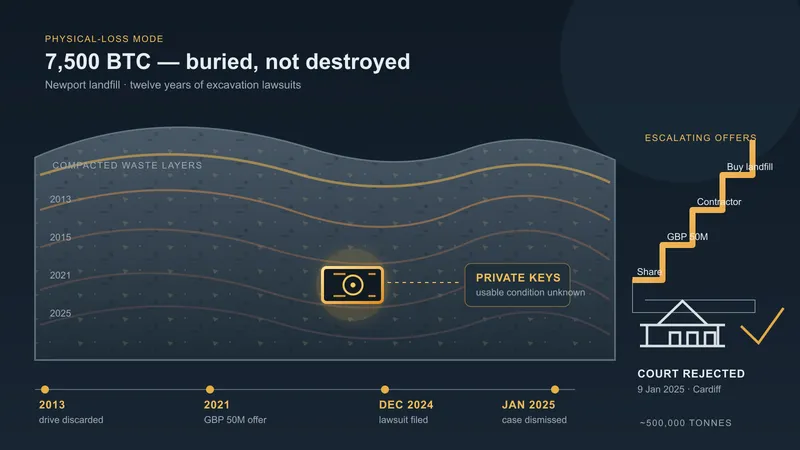
Position in the lost-Bitcoin canon. QuadrigaCX is the canonical example of custody-collapse-mode Bitcoin loss — distinct from forgotten-password losses like Stefan Thomas’s IronKey lockout and from physical-loss cases like James Howells’s Newport landfill drive. The OSC’s finding that the loss was substantially fraud (rather than purely lost keys) also distinguishes it sharply from the Mt. Gox bankruptcy (operational failure and theft from its hot wallet) and from the later FTX collapse (misappropriation at scale). The Bitcoin lost-coins overview sets the case in the broader pattern.