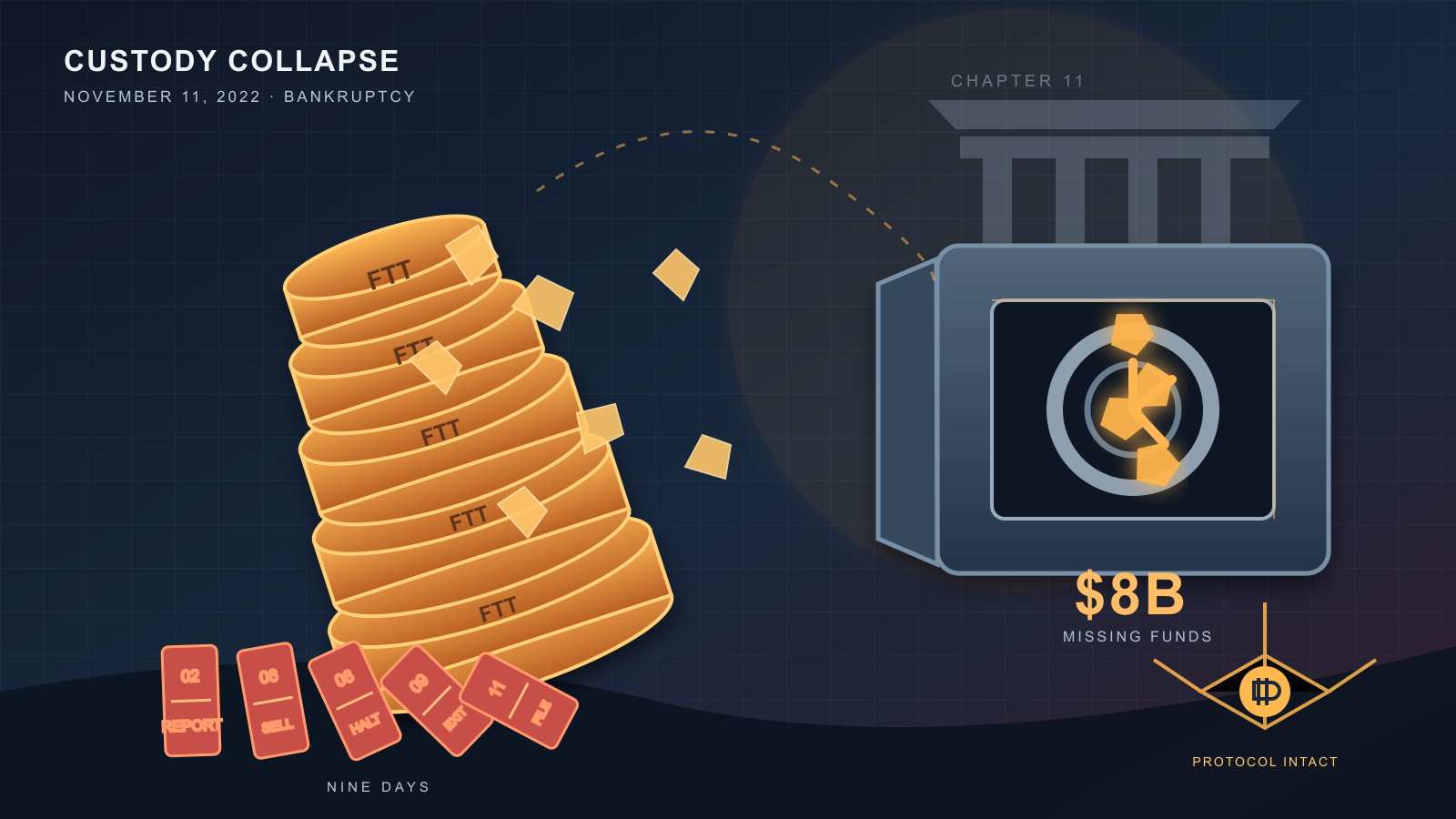
On November 11, 2022, FTX Trading Ltd. — along with Alameda Research and over 130 affiliated entities — filed for Chapter 11 bankruptcy in U.S. Bankruptcy Court. Founder Sam Bankman-Fried (SBF) resigned as CEO.
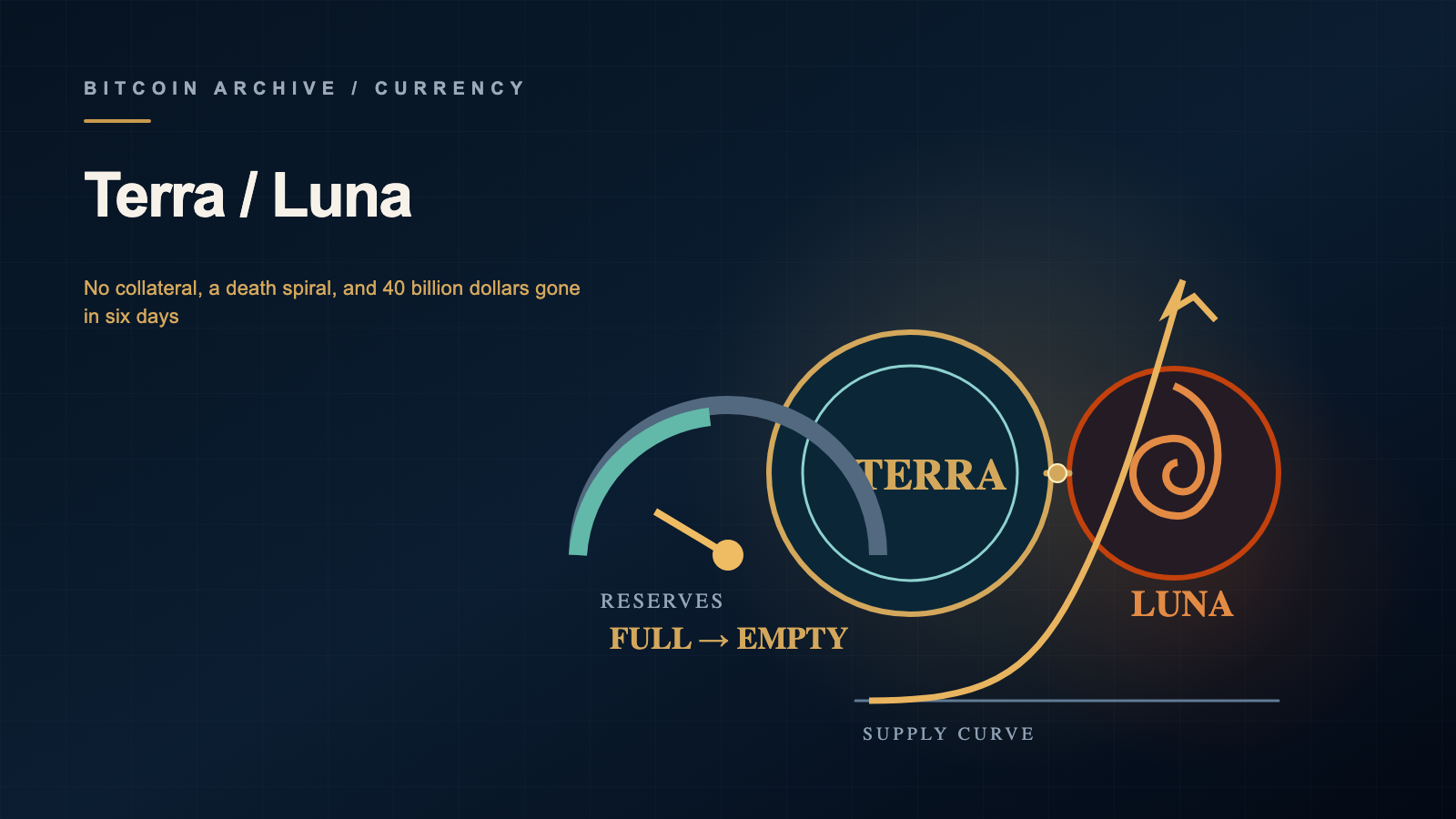
The contagion that ended here started six months earlier. Terra’s algorithmic stablecoin collapsed in May 2022, destroying roughly $40 billion and triggering the leveraged failures — Three Arrows Capital, Voyager Digital, Celsius — that left Alameda’s own balance sheet exposed by the time a CoinDesk report on its FTT holdings started the run below.
Approximately $8 billion in customer funds had been misappropriated. Federal prosecutors called it “one of the biggest financial frauds in American history.” John J. Ray III, appointed as the new CEO to oversee bankruptcy proceedings, described it as the worst case of corporate governance failure he had ever seen — worse than Enron.
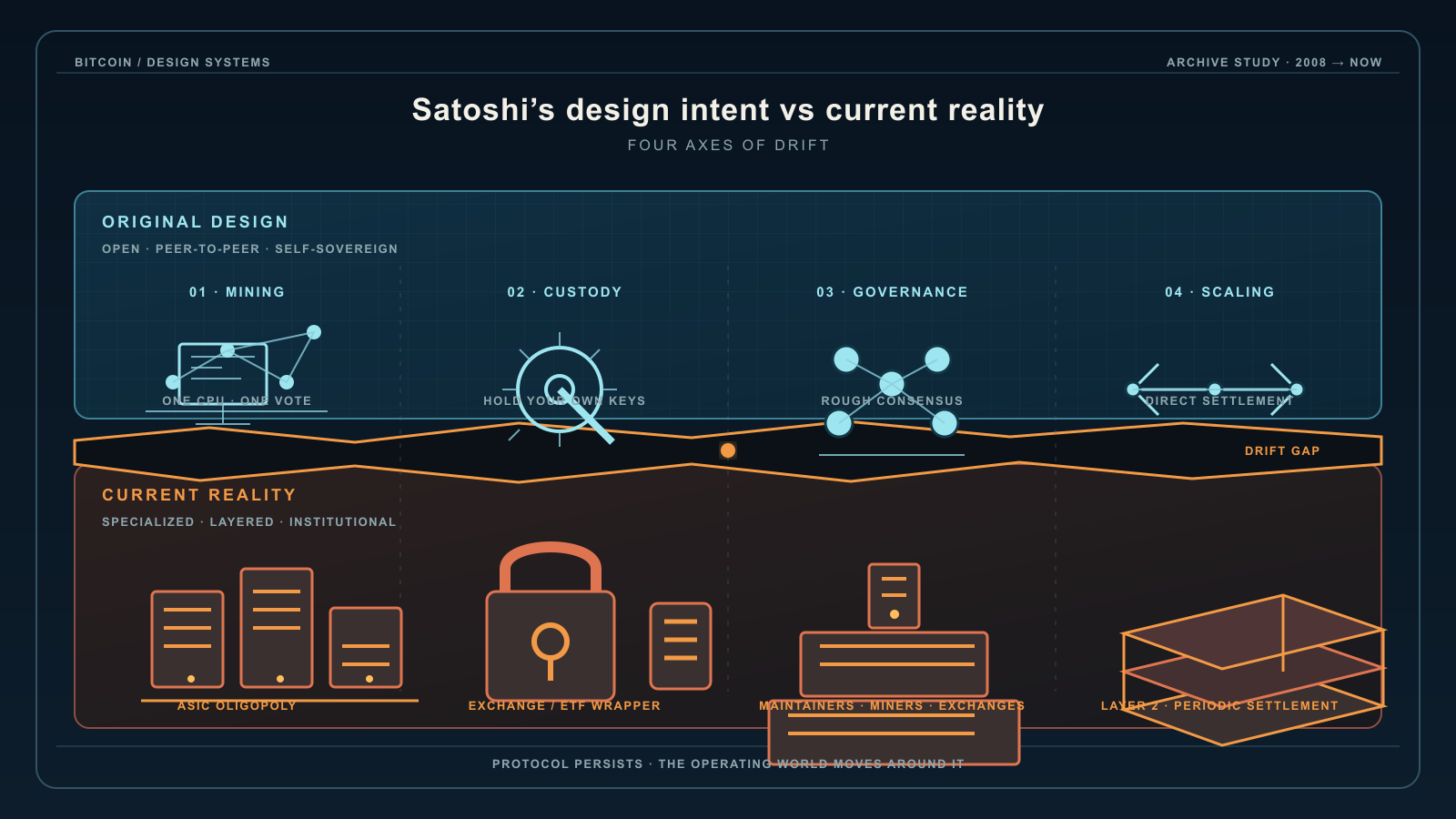
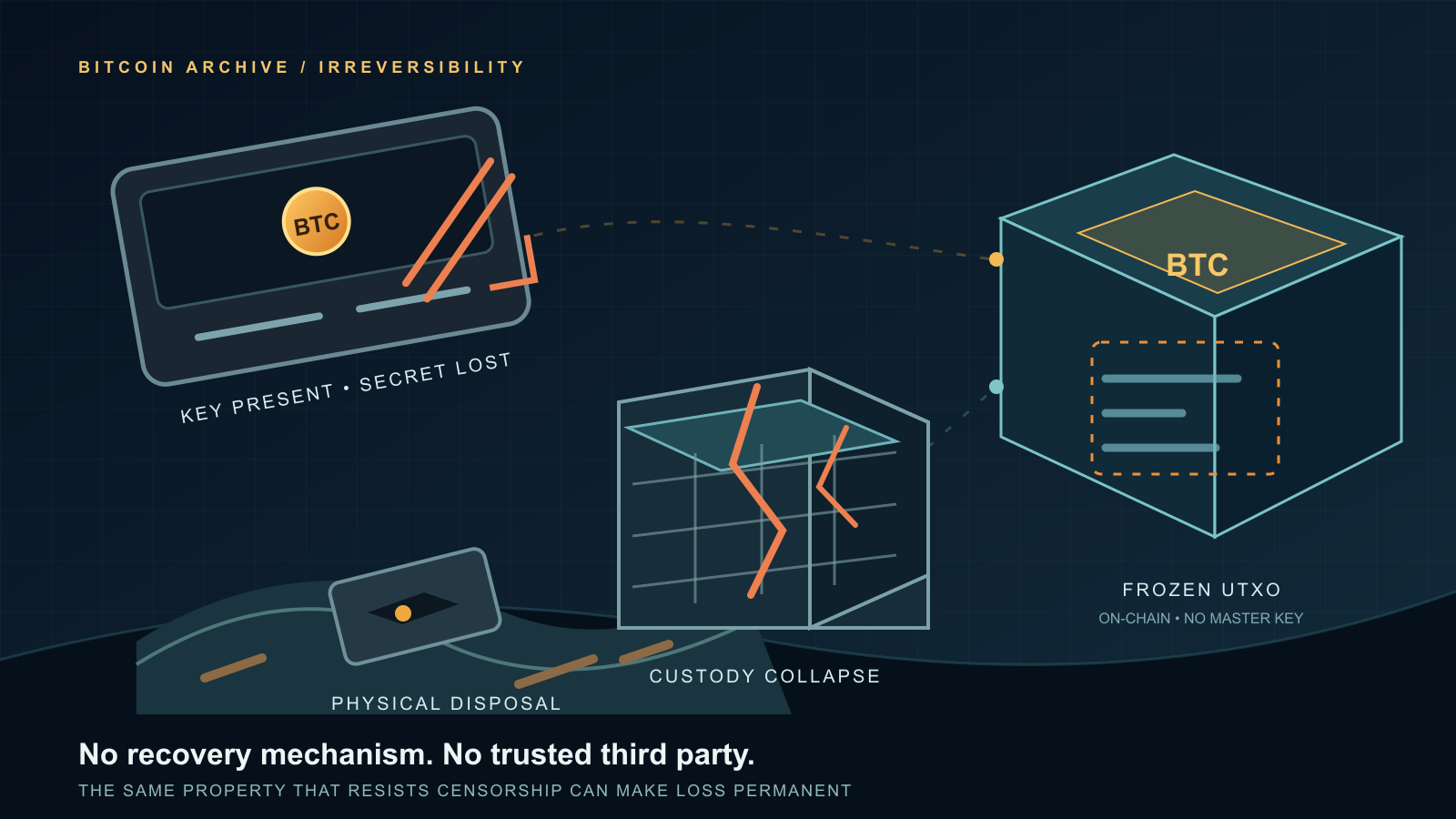
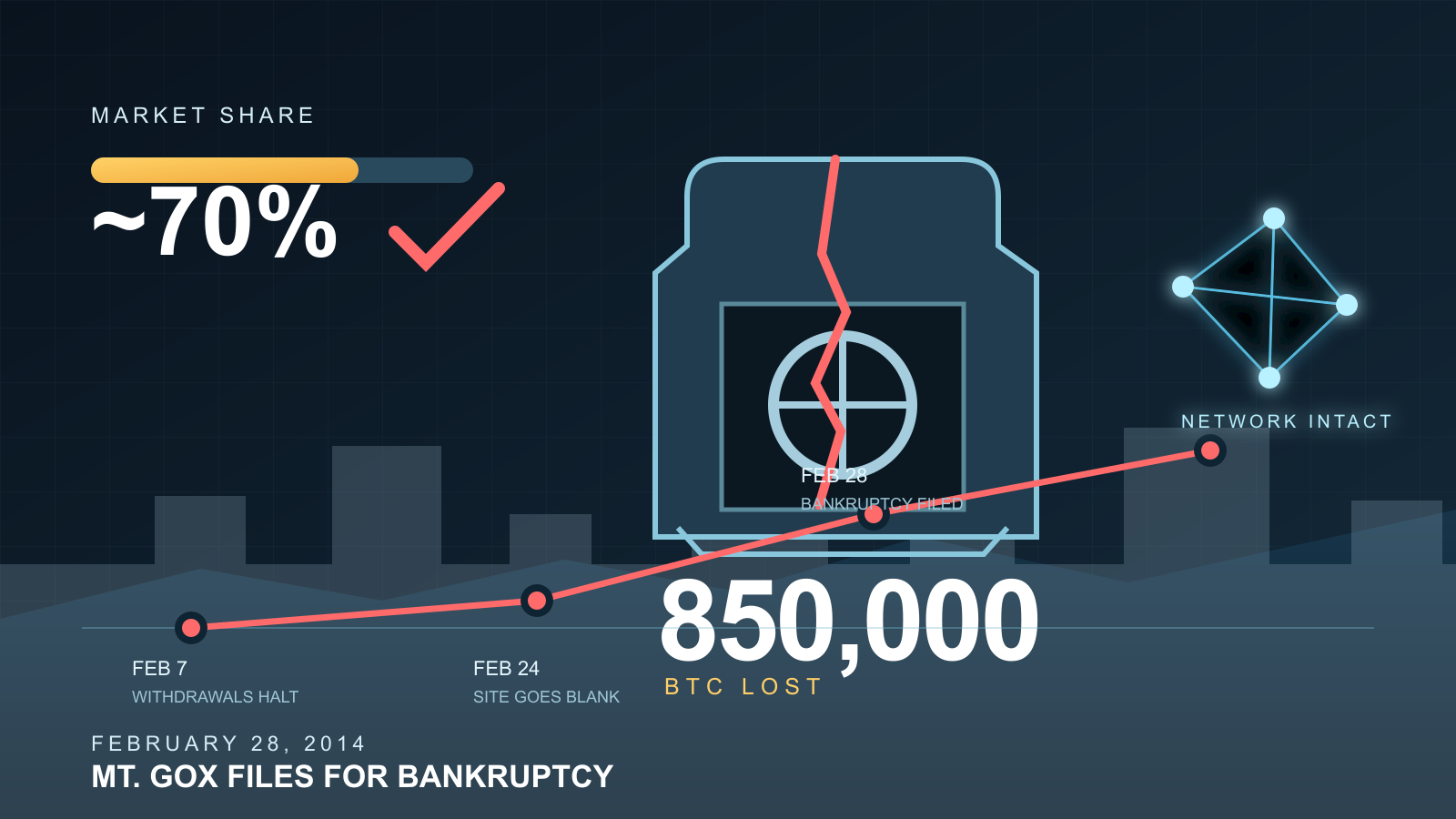
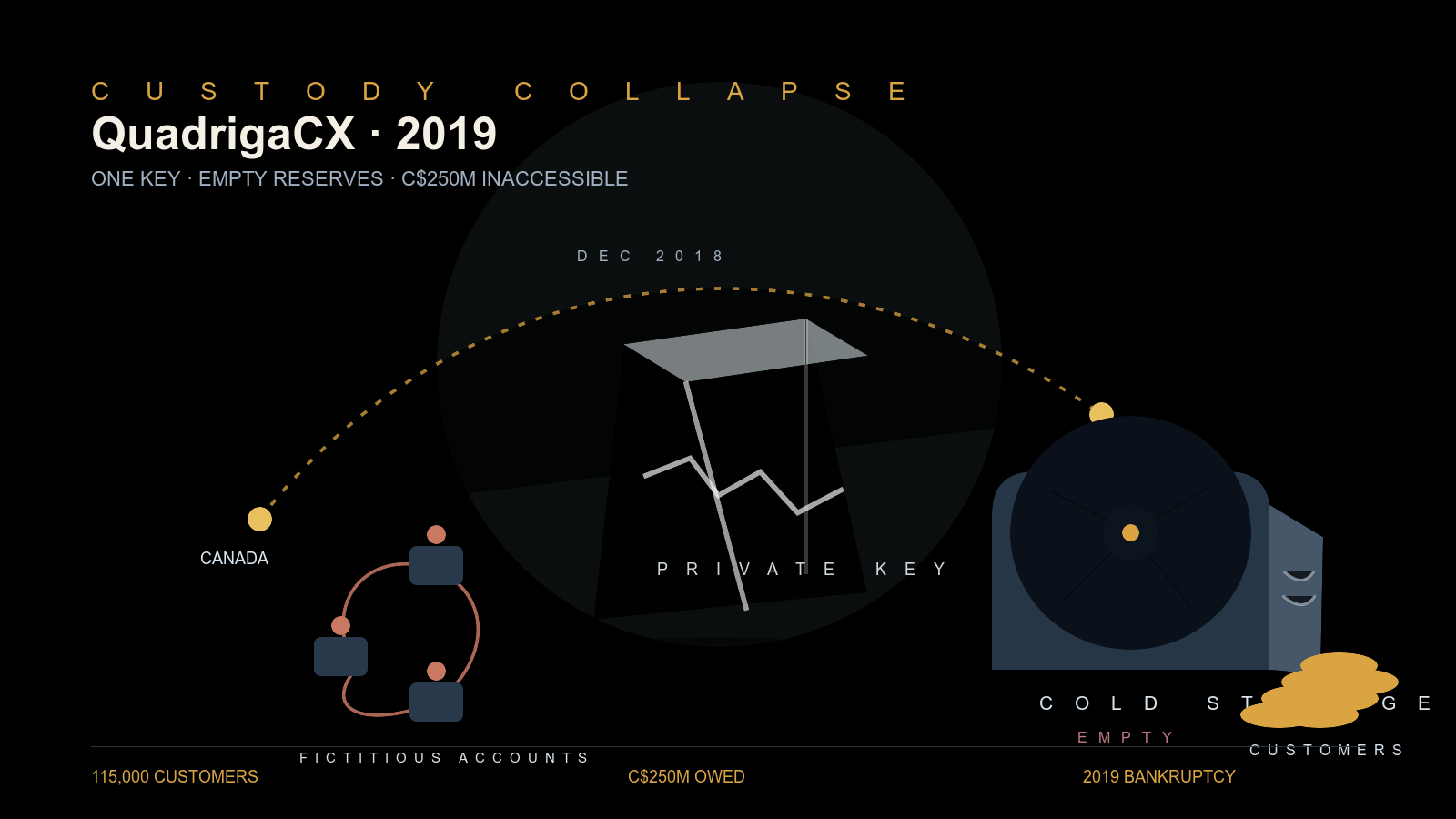
Once again, media declared cryptocurrency dead. Once again, Bitcoin’s protocol was unaffected. FTX was a centralized intermediary — the exact type of trusted third party that Bitcoin was designed to eliminate. The collapse reinforced the principle embedded in Bitcoin’s design: “Don’t trust, verify.” FTX is a custody collapse by misappropriation, on the same side as QuadrigaCX (sole-custodian fraud) and Mt. Gox (operational failure plus theft); the forgotten-password and physical-loss cases (Stefan Thomas, James Howells) sit on the other side. The lost-Bitcoin canon overview sets these cases side by side.
FTX, like the Mt. Gox bankruptcy, exemplifies the bank-failure mode the protocol was designed to prevent: affected users had no protocol-level claim on any coin, only a contractual claim against an insolvent company. The Satoshi-design-vs-current-reality analysis works through this custody axis.