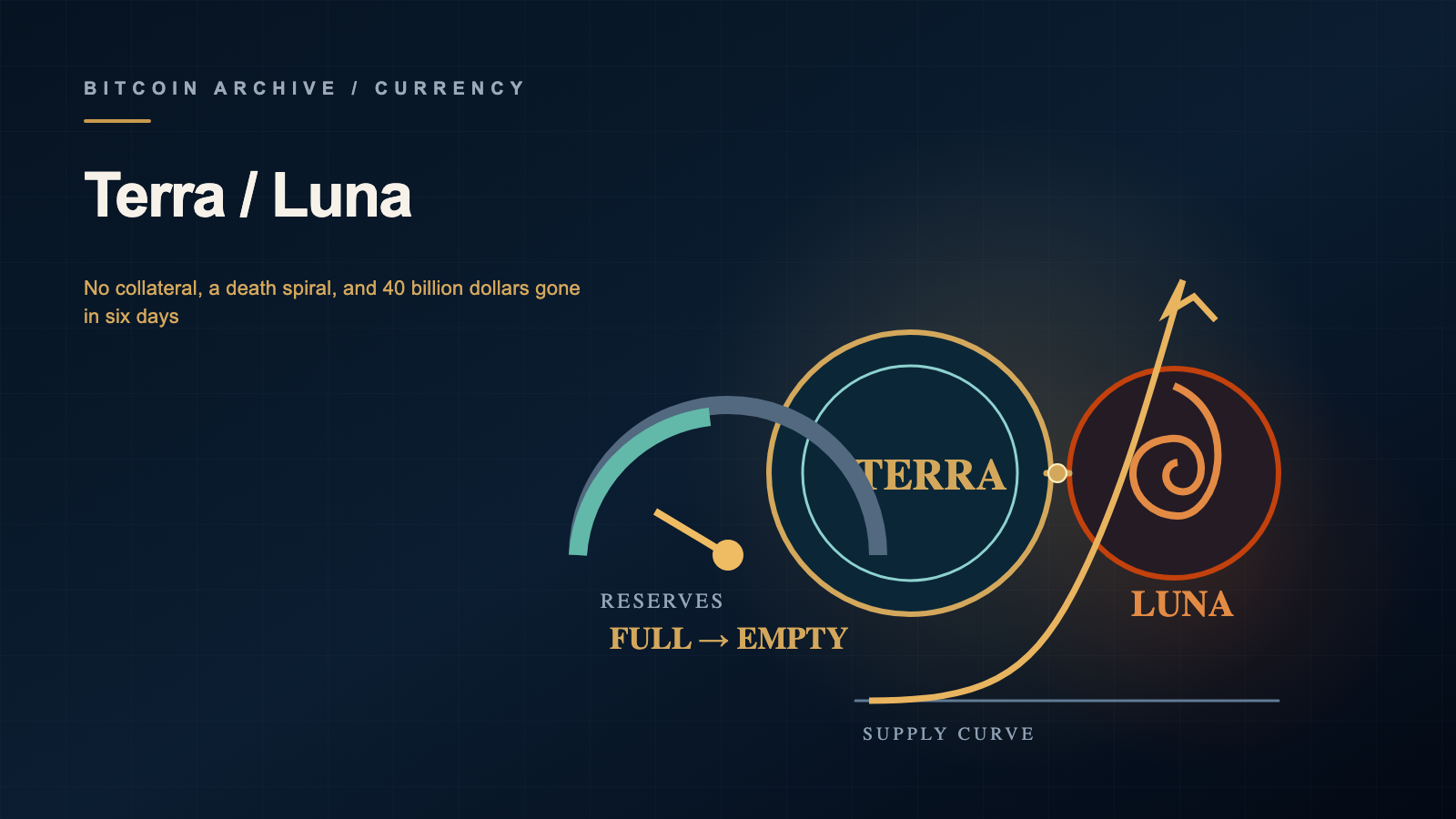
On May 7, 2022, large withdrawals began draining a stablecoin whose protocol held no reserve of its own. Six days later, its peg was in ruins, roughly $40 billion had been destroyed, and the token designed to absorb the shock had printed itself from 343 million units into 6.53 trillion trying to do it.
An algorithm instead of a reserve
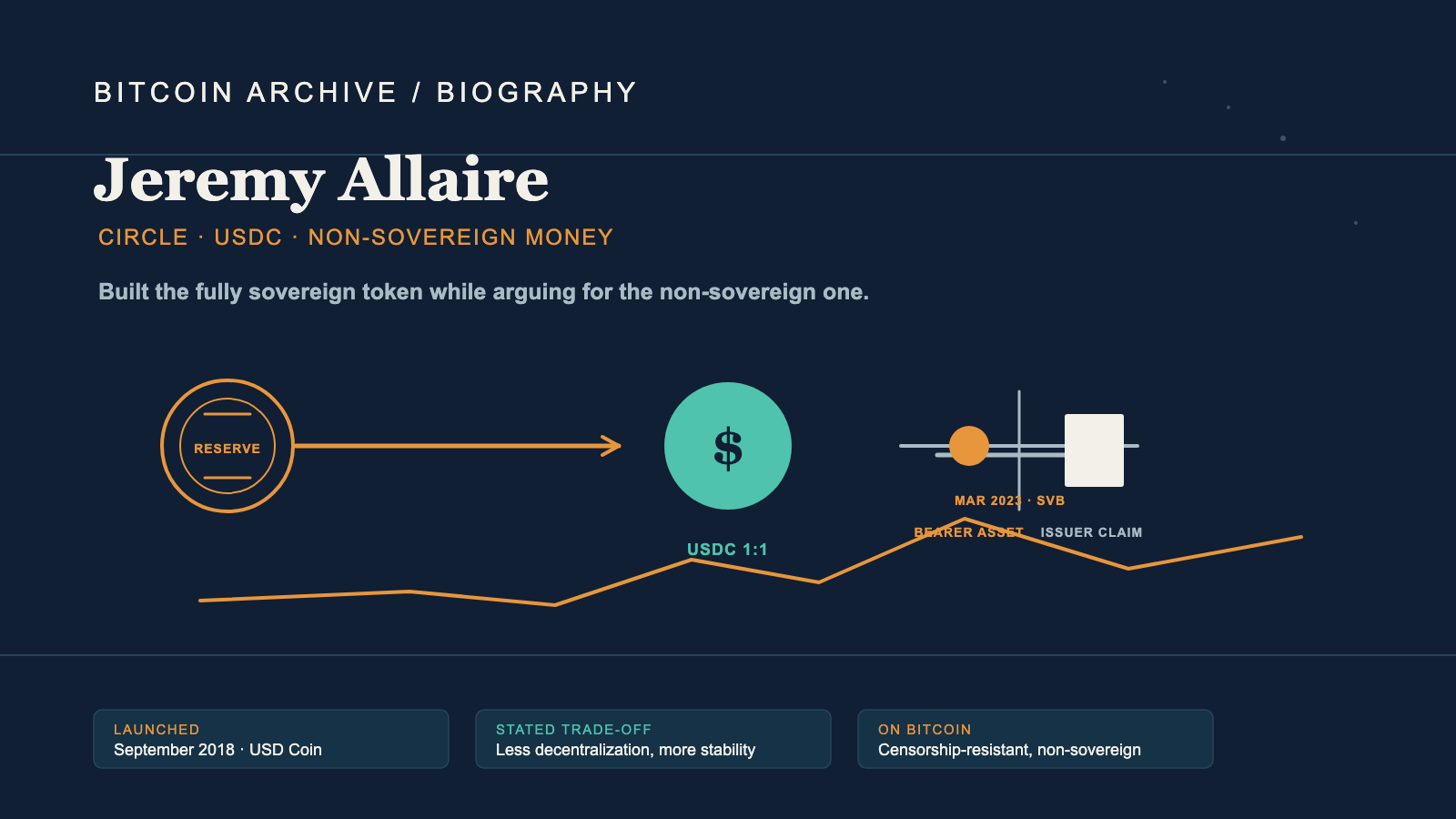
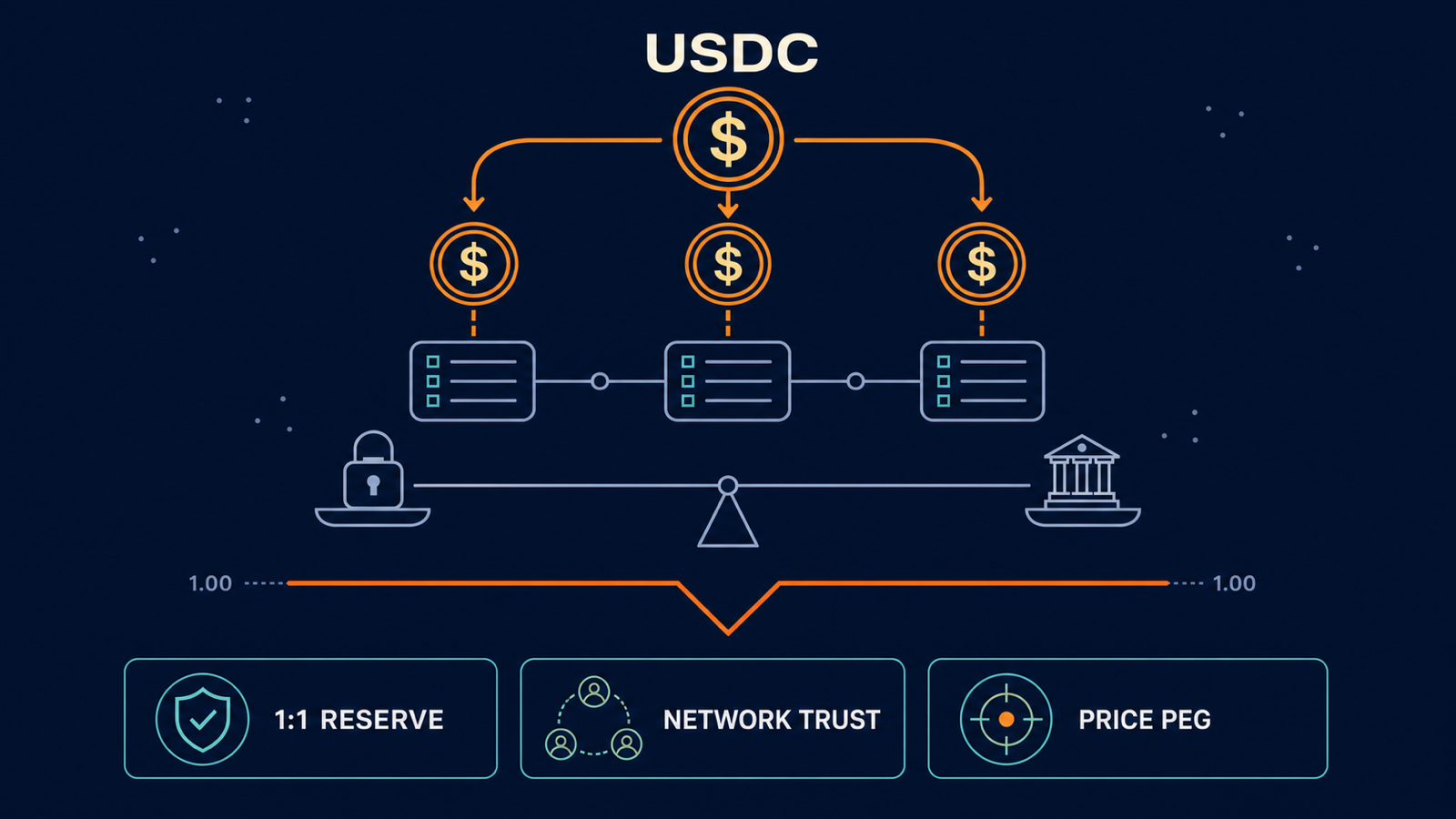
Terraform Labs launched in January 2018, founded by Do Kwon and Daniel Shin, the entrepreneur who had already built Ticket Monster into one of Korea’s largest e-commerce platforms. Every other stablecoin in this archive’s record holds a reserve — a dollar in a bank account, or its equivalent, for every unit issued. Terra’s protocol held nothing — Circle’s Jeremy Allaire built the reserve-backed alternative on purpose, over the same years Terra chose not to. TerraUSD (UST) kept its dollar peg through a second token, Luna, and a mint-and-burn arbitrage: when UST traded above a dollar, the protocol let anyone burn a dollar’s worth of Luna to mint a dollar’s worth of UST and pocket the difference; when UST traded below a dollar, the arbitrage ran the other way, burning UST to mint Luna. Supply and demand were supposed to do the rest.
The design traded a balance sheet for a belief. As long as enough people expected the arbitrage to hold, it held — because the expectation itself was the only thing enforcing the peg.
Anchor’s 19.45%, and where it came from
The protocol needed depositors before it needed believers, and Terraform Labs’ own Anchor Protocol supplied the incentive: a savings product paying UST depositors a fixed 19.45% annual yield, far above anything a bank or a money-market fund offered. The yield did not come from Anchor’s own lending revenue — borrower demand never matched what depositors were owed. A reserve pool Terraform Labs had raised from private investors subsidized the gap directly, a rate propped up by outside capital rather than earned by the market. By spring 2022, Anchor held a majority of all UST in circulation — roughly $16 billion of an $18 billion supply — which meant UST’s entire stability rested on a yield paid out of that reserve pool, to keep enough UST parked in one place that the peg looked stable.
A Bitcoin reserve, bought in eight weeks, spent in one
As UST’s supply grew, Kwon looked for something the market already trusted to back the peg with. On March 14, 2022, he posted the plan:
“$UST with $10B+ in $BTC reserves will open a new monetary era of the Bitcoin standard.”
The Luna Foundation Guard (LFG), the nonprofit built to hold that reserve, spent the following weeks buying — reaching nearly 80,000 BTC, worth roughly $3.5 billion at the time it stopped growing. Kwon brushed off questions about the pace:
“I don’t understand the distinction, We’re already buying Bitcoin.”
| Date | LFG Bitcoin reserve | Event |
|---|---|---|
| Mar 14, 2022 | Plan announced | Kwon posts the $10B target |
| Early May 2022 | ~80,000 BTC | Peak holding, ~$3.5B |
| May 9-16, 2022 | 80,000 → 313 BTC | Sold and lent defending the peg |
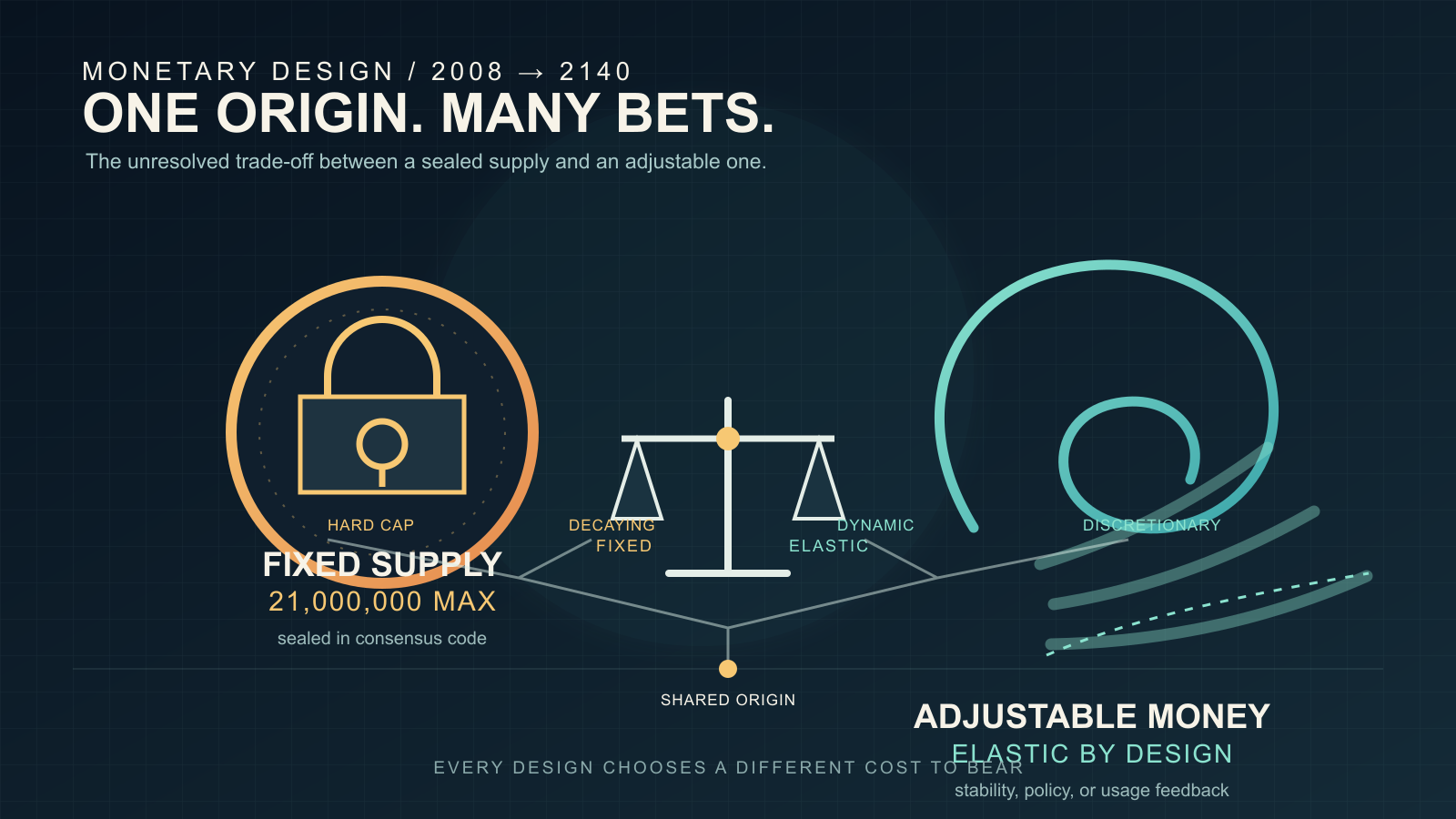
Bitcoin’s own supply has followed a schedule no one has moved in seventeen years, and won’t finish issuing its last coin until around 2140. LFG’s reserve took eight weeks to accumulate and about a week to disappear — spent trying to borrow the credibility of an asset whose scarcity comes from having no one left to spend it on its behalf.
The death spiral
Large withdrawals began draining Anchor on May 7, 2022 — roughly $2.5 billion in UST left within six hours. Kwon’s public response was terse:
“Deploying more capital – steady lads.”
The capital did not hold. UST broke its peg outright on May 9, falling to $0.60; LFG began selling and lending its Bitcoin the same day. By May 10, UST was at $0.30 and Luna had fallen from $62 to $26. The mechanism that was supposed to absorb the shock made it worse instead: anyone could buy UST below a dollar and burn it for a full dollar’s worth of Luna, and the cheaper UST got, the more Luna that same dollar burned into — so the more the peg broke, the faster arbitrageurs minted new Luna.
| Date | UST price | Luna price | Luna supply |
|---|---|---|---|
| May 9, 2022 | $0.60 | ~$30 | 343 million |
| May 10, 2022 | $0.30 | $26 (from $62) | rising |
| May 11, 2022 | $0.22 | falling | rising sharply |
| May 13, 2022 | ~$0.02 | fractions of a cent | 6.53 trillion |
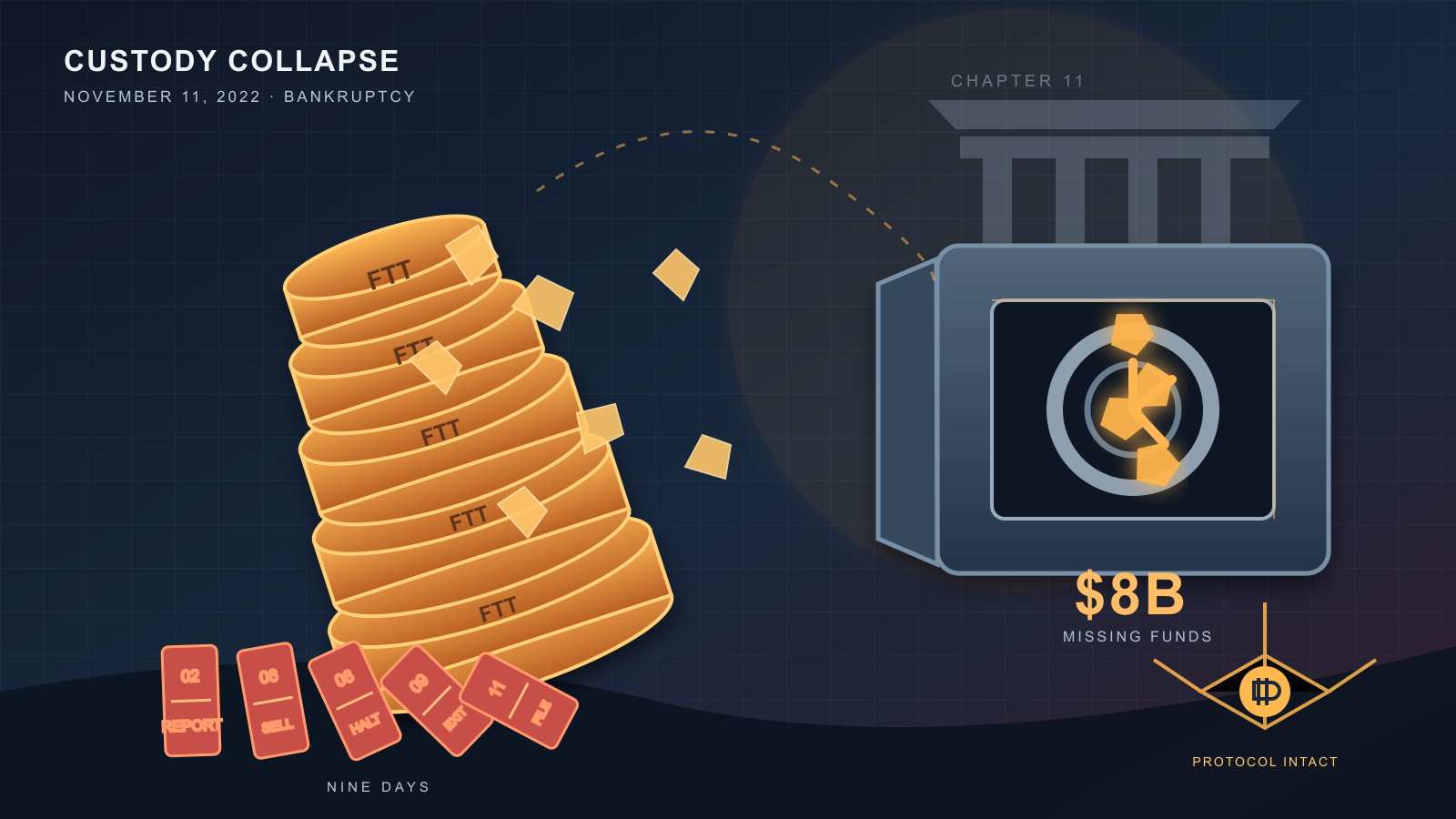
Luna’s all-time high, five weeks earlier on April 5, had been $119.51. By May 13 the chain was halted; on May 28 a new chain, Terra 2.0, launched with a fresh Luna token, and the original chain was renamed Terra Classic. The $40 billion did not vanish in isolation: it triggered the leveraged failures — Three Arrows Capital, Voyager, Celsius — that left Alameda’s own balance sheet exposed six months later, when FTX collapsed at the end of the same contagion chain.
What happened to Kwon
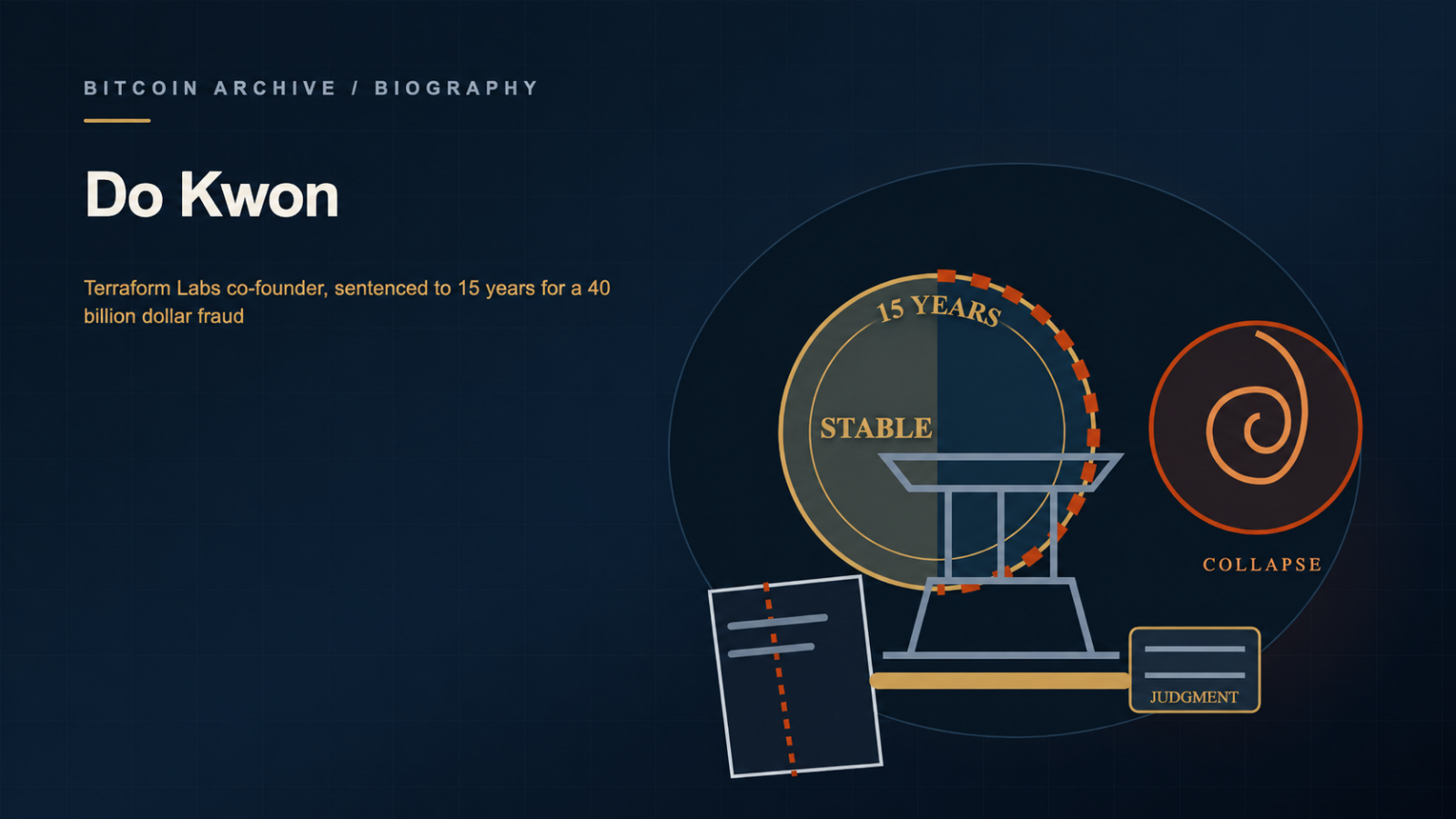
Kwon left South Korea before the collapse and did not return. He was arrested in Montenegro in March 2023 traveling on a forged passport, extradited to the United States in December 2024, and sentenced in December 2025 to 15 years in federal prison after pleading guilty to fraud. His full record is in his biography.
Significance to Bitcoin
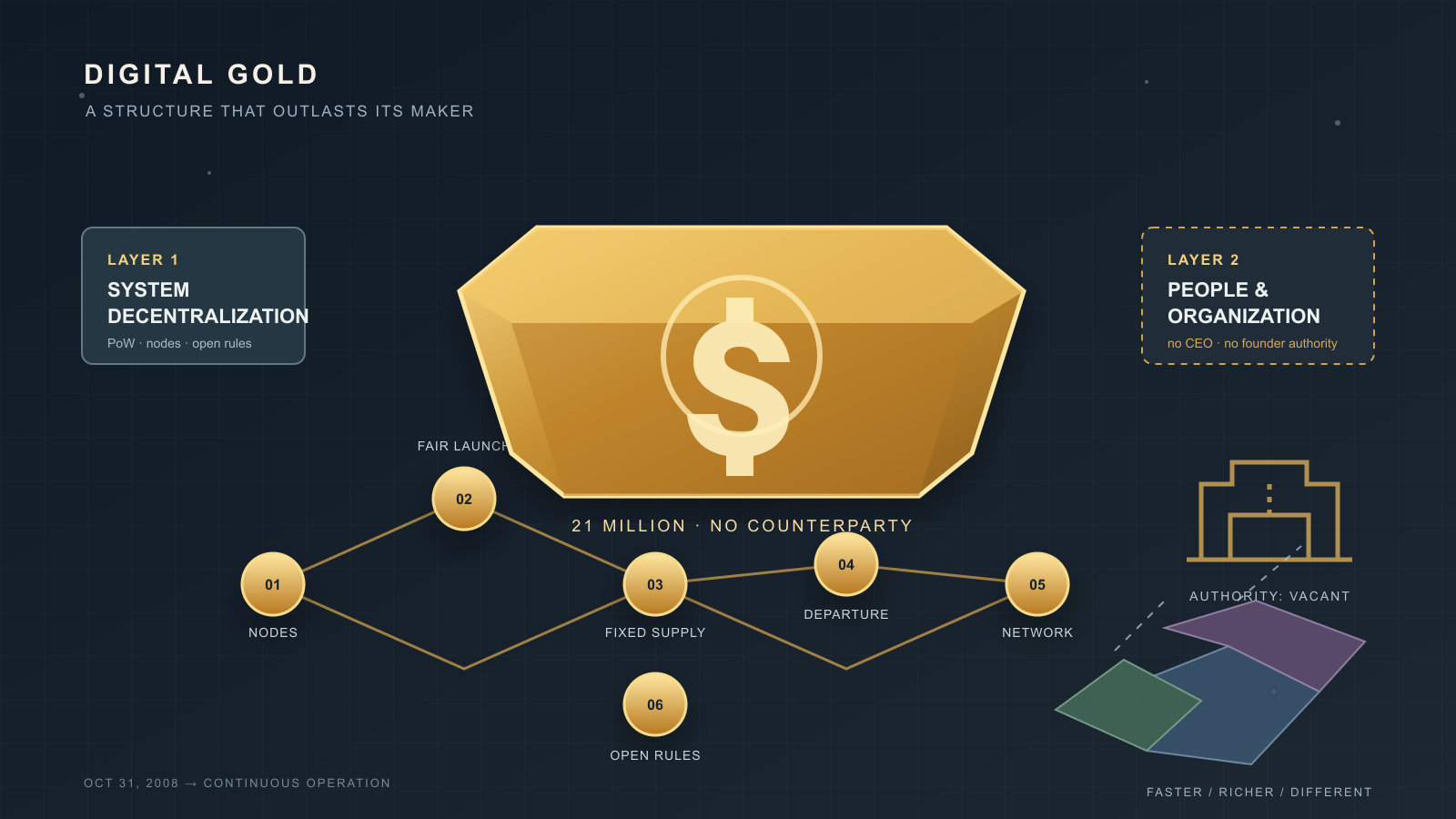
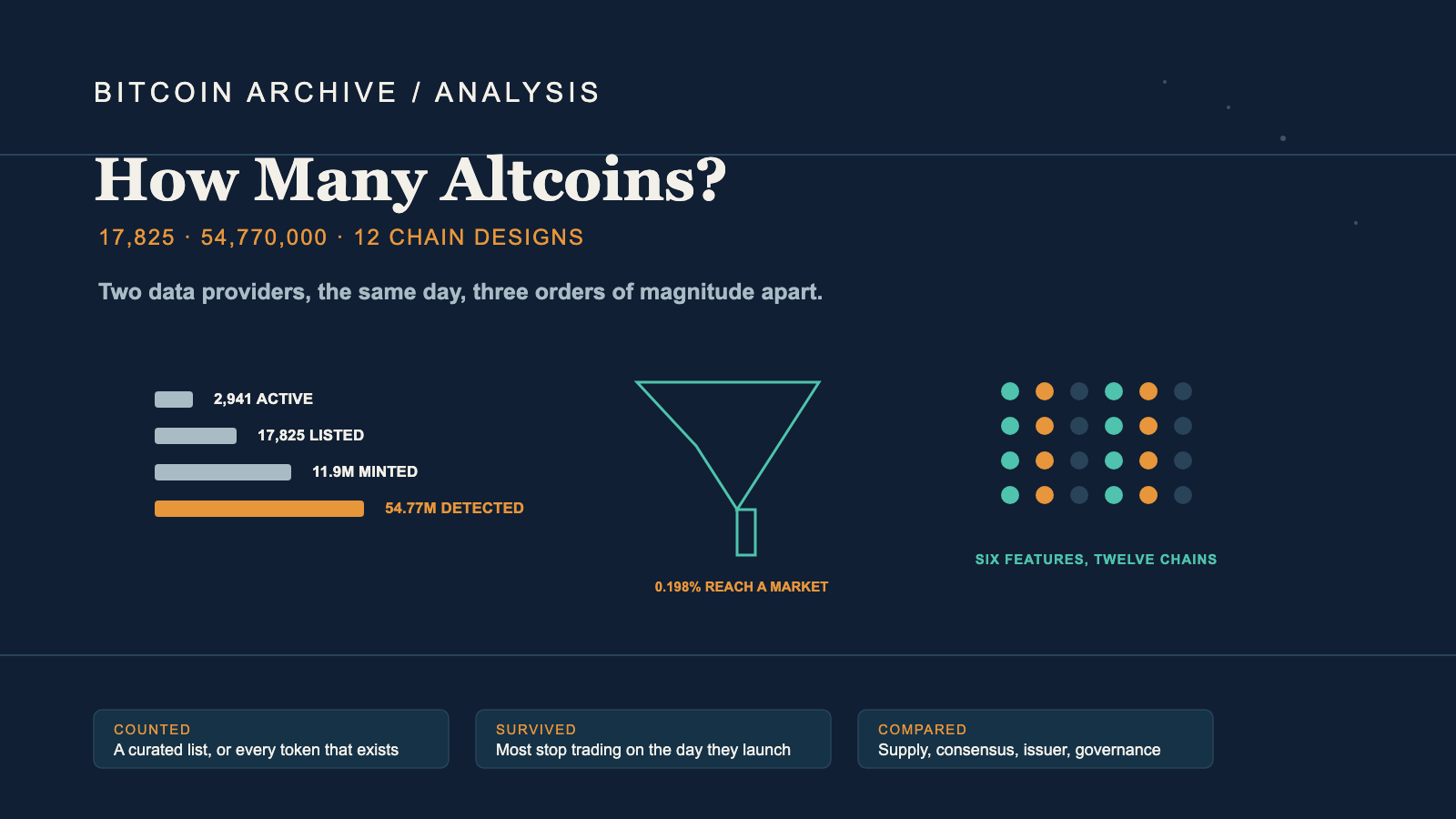
Bitcoin’s claim to being “digital gold” rests on a fixed supply nobody can move and a reserve nobody needs, because the coin itself is the collateral. Terra inverted both: a supply that could be minted without limit whenever the peg needed defending, and a reserve borrowed from an asset it did not create and could not control. When Kwon reached for Bitcoin to lend UST the one property it never had — scarcity nobody could print more of on demand — the reserve bought eight weeks of credibility and disappeared in about a week once the algorithm it was meant to backstop started printing faster than any reserve could keep up. The twelve-chain design comparison already marks fixed supply and no controlling founder as properties that are mutually reinforcing, not independent; Terra’s collapse is what happens when a project has neither, and tries to borrow the first from Bitcoin at the exact moment it discovers it needed the second.