
On October 6, 2022, security researcher SerHack published “The Story Behind the Alternative Genesis Block of Bitcoin,” analyzing a pre-release version of Bitcoin’s genesis block that predated the official launch by nearly four months.
Discovery
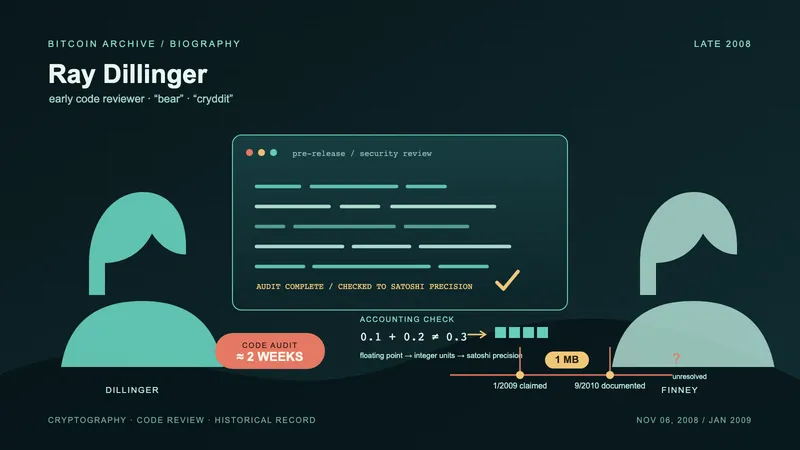
On December 23, 2013, BitcoinTalk user “Cryddit” (Ray Dillinger, aka Bear) posted source code that Satoshi Nakamoto had shared with him privately in November 2008 for a security audit. Dillinger reviewed the blockchain code while Hal Finney reviewed the scripting language. The code contained a genesis block with entirely different parameters from the one that launched on January 3, 2009.
The Pre-Release Genesis Block
| Parameter | Pre-Release (Sept 2008) | Official (Jan 2009) |
|---|---|---|
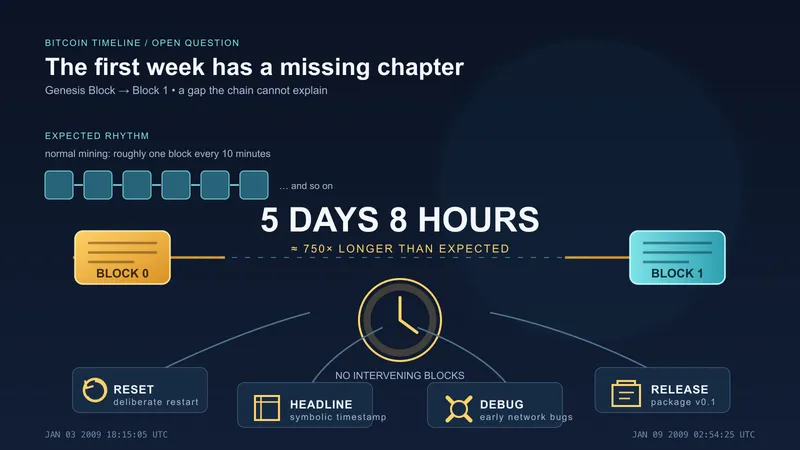
| Timestamp | 1221069728 (Sept 10, 2008 18:02:08 UTC) | 1231006505 (Jan 3, 2009 18:15:05 UTC) |
| Hash | 0x000006b15d1327d67e... | 0x000000000019d6689c... |
| Difficulty (nBits) | 20 (“ridiculously easy”) | 0x1d00ffff (Difficulty 1) |
| Nonce | 141,755 | 2,083,236,893 |
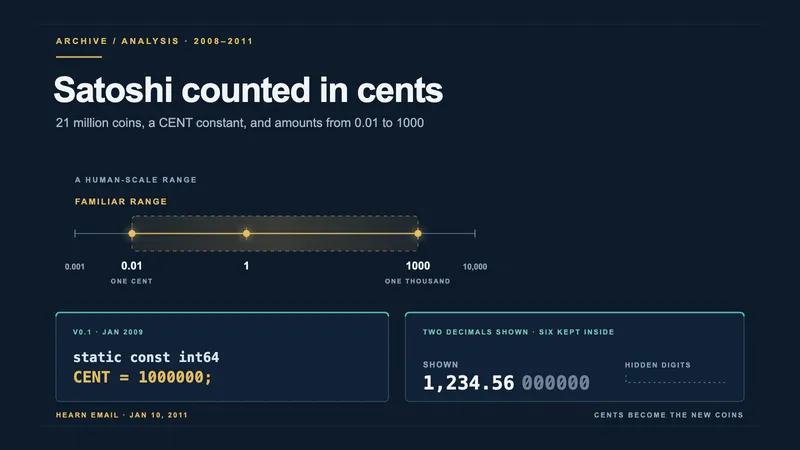
| Genesis coinbase output | 10,000 units (1 CENT, 0.01 coin) | 50 BTC |
| Block reward | 100 coins, halving every 100,000 blocks | 50 BTC, halving every 210,000 blocks |
| Target block spacing | 15 minutes | 10 minutes |
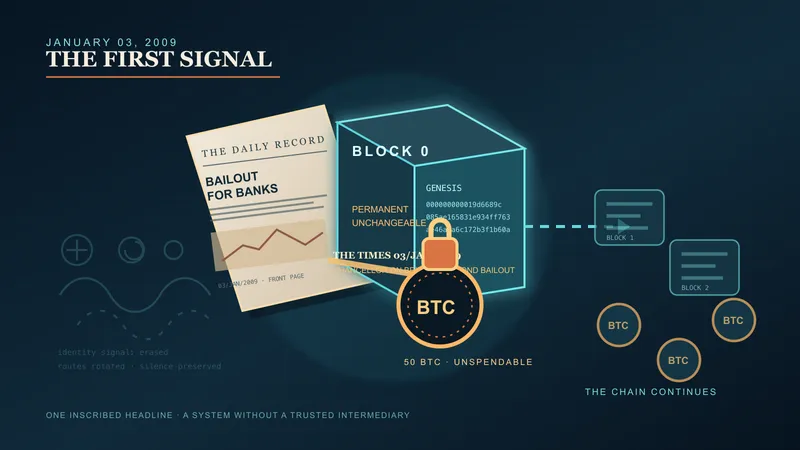
| Coinbase scriptSig | The number 247422313, no headline | The Times headline of January 3, 2009 |
Connection to the Financial Crisis
The pre-release genesis block’s timestamp of September 10, 2008, coincides with the day Lehman Brothers announced approximately $3.9 billion in quarterly losses. Lehman Brothers filed for bankruptcy five days later on September 15, 2008. Nothing in the November 2008 source ties the date to the crisis: its genesis coinbase carries only a number, and the newspaper headline appears first in the block mined on January 3, 2009.
Other Pre-Release Differences
The November 2008 code also contained an early IRC client framework, a peer-to-peer marketplace, and a virtual poker game — features that were removed before the January 2009 public release. Under the pre-release parameters (100 coins per block, halving every 100,000 blocks), the total supply would have approached 20 million coins.