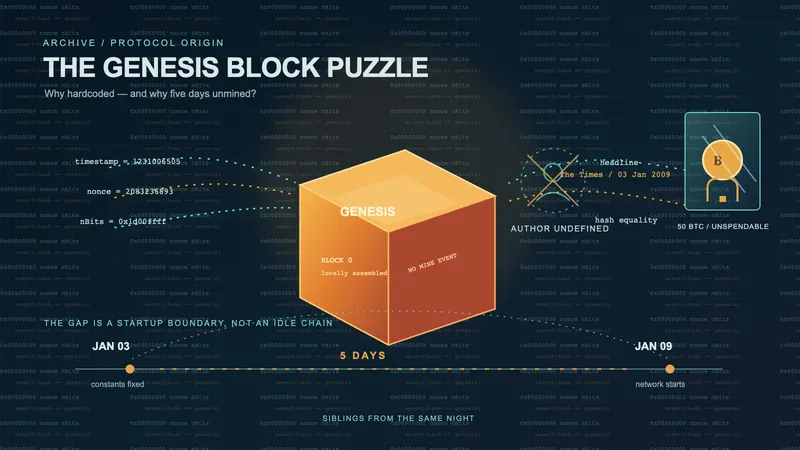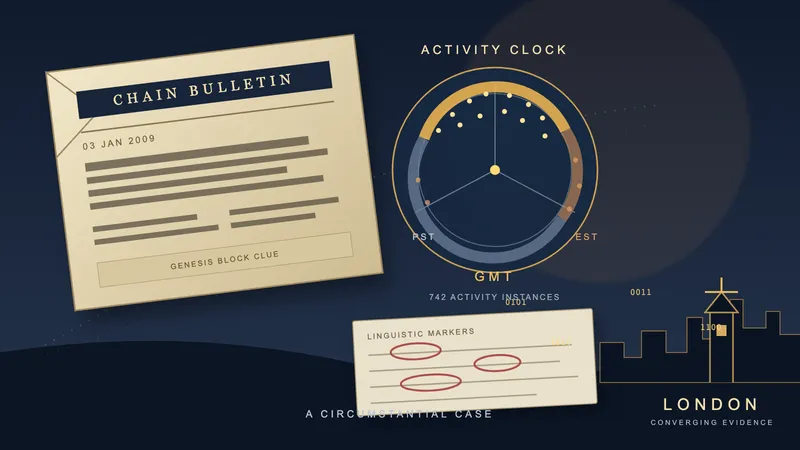

Bitcoin’s first block carries a newspaper headline, not a version string or Satoshi Nakamoto’s name. On January 3, 2009, Satoshi hardcoded that block into the v0.1 source, copying the front-page headline of that day’s Times newspaper into its coinbase transaction:
The Times (front-page headline, January 03, 2009)The Times 03/Jan/2009 Chancellor on brink of second bailout for banks
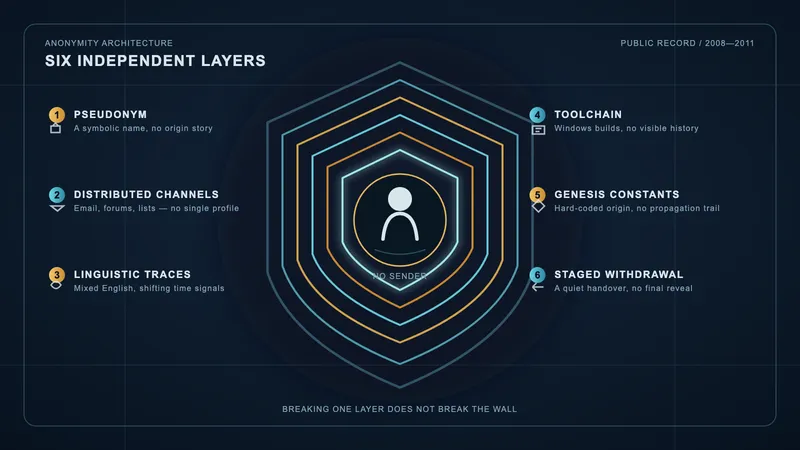
This is the single piece of personal voice Satoshi placed inside Bitcoin’s design. Everywhere else, he kept identifying signal out — three pseudonymous email addresses, a domain registered through an anonymous intermediary, a staged withdrawal (the full layered account is in the anonymity-architecture analysis). At one specific point in the design, he stopped removing signal and instead inserted one. The location he chose for that one insertion was Bitcoin’s first block — the most permanent surface the system has.
The permanence runs along two axes. The block itself can never be removed; every node assembles its own byte-identical copy from constants. The 50 BTC coinbase reward attached to that block cannot be moved; the v0.1 source path that constructs Block 0 from constants never writes its coinbase output to the UTXO set, so the reward exists on the chain but is unspendable by design (the mechanism is detailed in the genesis-block hardcode analysis §5–§6). The message and the unmovable 50 BTC sit together — neither can be edited, retracted, or quietly drained.
The headline Satoshi chose was not a neutral timestamp pick. Chancellor on brink of second bailout for banks named the exact moment a government was about to underwrite, for the second time, a financial system whose failures had needed underwriting in the first place. The Bitcoin whitepaper, published two months earlier, proposed a payment system that would not require a trusted financial intermediary. The genesis coinbase pinned that proposal to a real-world instance of what requiring such an intermediary keeps producing. The pairing is the editorial choice.
By the day of the headline, the crisis was more than a year old. From Friday 14 to Monday 17 September 2007, depositors queued at Northern Rock in what the House of Commons Treasury Committee later called “the first run on the retail deposits of a United Kingdom bank since Victorian times.” On March 13, 2008, Bear Stearns told the Federal Reserve, in Ben Bernanke’s account to Congress, that “it would have to file for Chapter 11 bankruptcy the next day unless alternative sources of funds became available”; on March 16 the Fed’s Board approved the financing arrangement announced by JPMorgan Chase and Bear Stearns. On July 11, 2008, the Office of Thrift Supervision closed IndyMac Bank, which held $32.01 billion in assets and $19.06 billion in deposits. The record does not tie any of this to Bitcoin’s design: asked in 2010 how long he had been working on it, Satoshi answered “Since 2007,” and the headline in Block 0 is the only part of the crisis he put in the code.
The story under the headline, by Francis Elliott and Gary Duncan, reported that Alistair Darling had been forced to consider a second bailout as the lending drought worsened, with evidence mounting that the previous year’s £37 billion part-nationalisation had failed to keep credit flowing. The options it listed included cash injections, cheaper state guarantees, and buying up “toxic assets” to park in a “bad bank”. The same report gave the Bank of England’s count of 27,000 mortgages approved for house purchase in November, the lowest since the Bank began collecting the data in 1999. Sixteen days after the block’s date, on January 19, 2009, Darling announced the package in the House of Commons: a scheme under which the Treasury would insure certain bank assets against losses, and a new £50 billion Bank of England fund to buy assets from banks. He told MPs that “no savers in UK banks have lost money.”
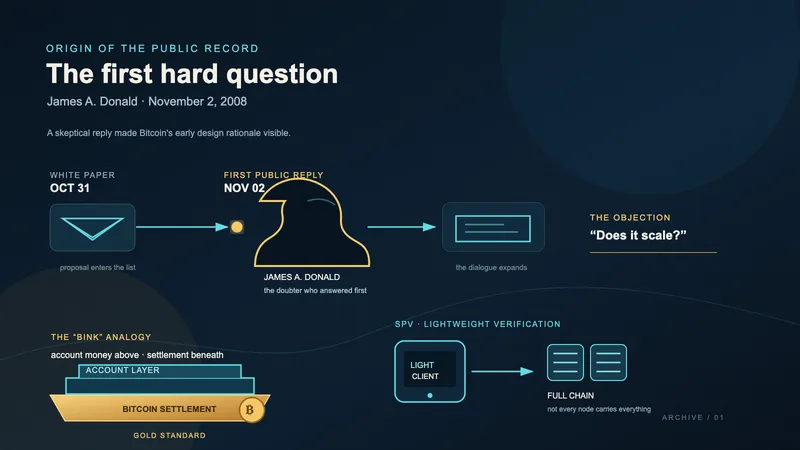
Satoshi rarely let conviction show in writing. One registered moment is his November 6, 2008 cryptography mailing-list reply — “we can win a major battle in the arms race and gain a new territory of freedom for several years” — said once, in passing, and not repeated. He was answering two quoted lines that end, “You will not find a solution to political problems in cryptography”; no earlier message the list’s archive preserves contains them.
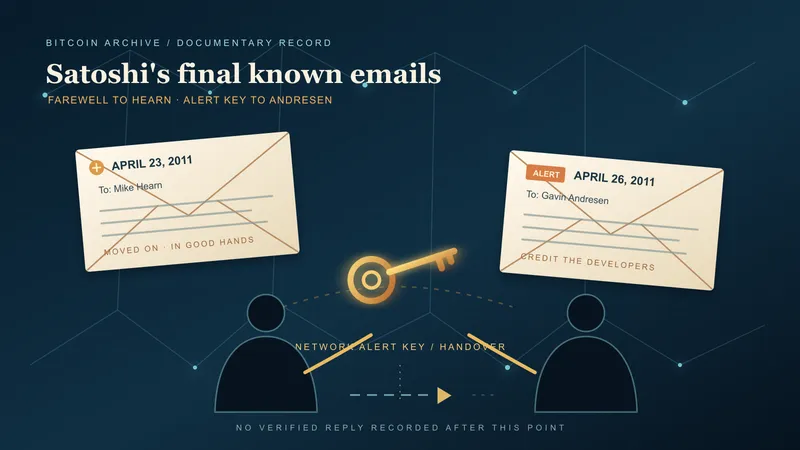
The plainest statement of why he built Bitcoin came three months later, in his P2P Foundation announcement: “The central bank must be trusted not to debase the currency, but the history of fiat currencies is full of breaches of that trust.” His later messages, especially the April 2011 farewells to Mike Hearn and Gavin Andresen, are deliberately flat: “I’ve moved on to other things.” Between those two registers — flat operational prose on one side, vanished personal voice on the other — the Times headline in Block 0 is the one place the conviction was committed to a permanent record rather than spoken in passing. It is the only declaration Satoshi made in a form that cannot be taken back.
The block hash:
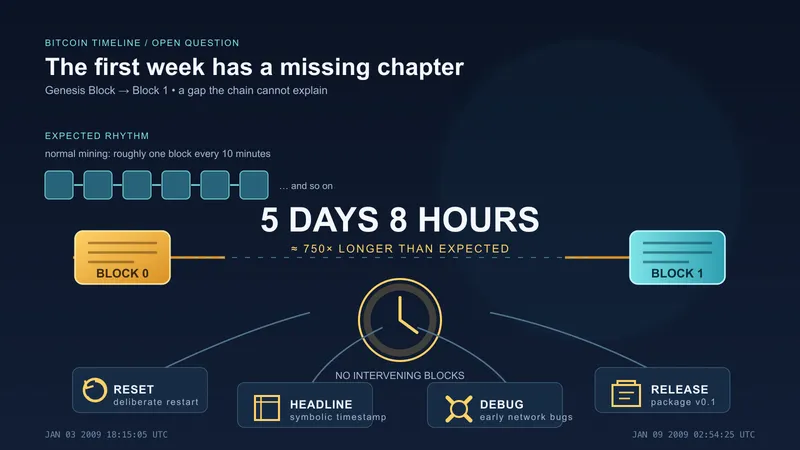
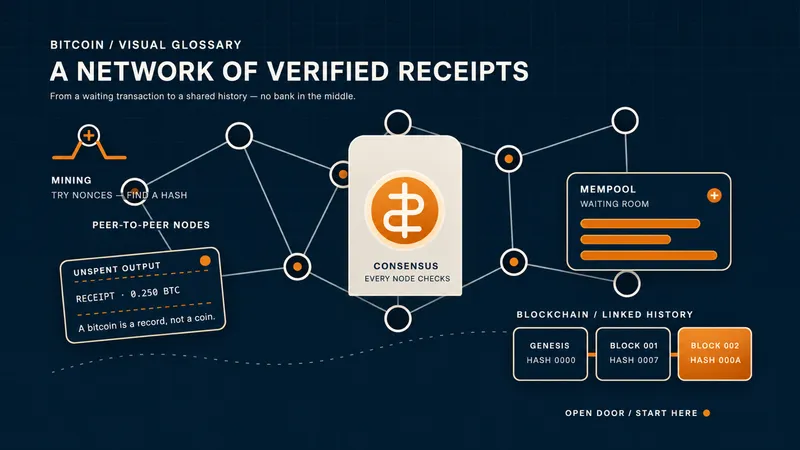
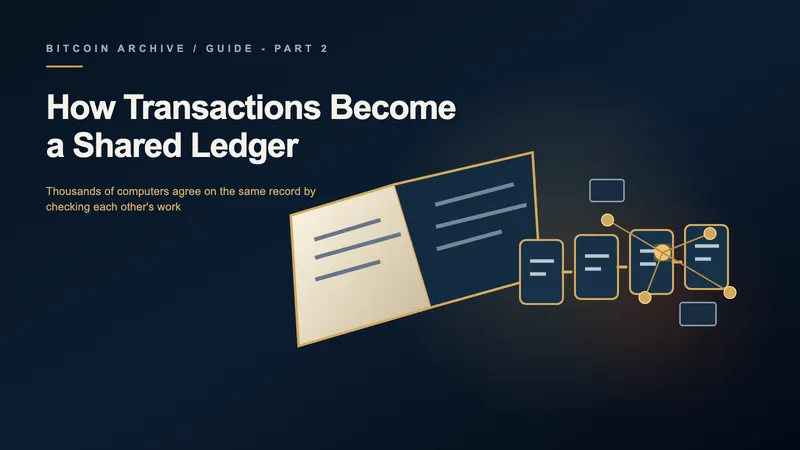
000000000019d6689c085ae165831e934ff763ae46a2a6c172b3f1b60a8ce26fFor the structural reading — why the genesis is hardcoded, why the coinbase is unspendable, why the next block (Block 1) appears five days later despite the 10-minute target — see the genesis-block hardcode analysis, surveyed alongside the 2024 Bitcoin Magazine treatment of the same gap. For a plain-language walkthrough of how blocks like this one chain together at all, see how transactions become a shared ledger.
Block 0 does not tell us what Satoshi felt when he chose the headline. It records something firmer: inside a system that otherwise strips personal authorship from view, one political reference was placed where every node would preserve it and the record could not later be retracted. That is both the force and the limit of this evidence.