
On July 6, 2026, Strategy — the company formerly known as MicroStrategy — held 843,775 BTC. That is roughly 256,000 coins short of the ~1.1 million that Satoshi Nakamoto mined and never moved. For sixteen years, nobody came anywhere near that untouched first place. Now the gap is visible.
In Bitcoin’s own vocabulary, holders at this scale are called whales. The digital-gold analysis located Bitcoin’s claim to that name in two layers of decentralization: no operator inside the system, and no authority among the people around it. The founder’s absence shows up in the ownership landscape too. So what does that landscape look like in 2026 — who actually holds the 21 million?
The map of the 21 million
The whole picture first, in one table — then the same numbers by area.
| Segment | BTC | Share of cap | As of / source |
|---|---|---|---|
| Individuals & unclassified (remainder) | ~13.23M | 63.0% | subtraction from 21,000,000 |
| Lost coins | 2.3M–3.7M | 11.0–17.6% | Chainalysis-derived range |
| Public companies | 1,264,579 | 6.0% | Jul 2026, BitcoinTreasuries |
| Spot ETFs & funds | 1,214,016 | 5.8% | Jul 7, 2026, US spot ETFs combined |
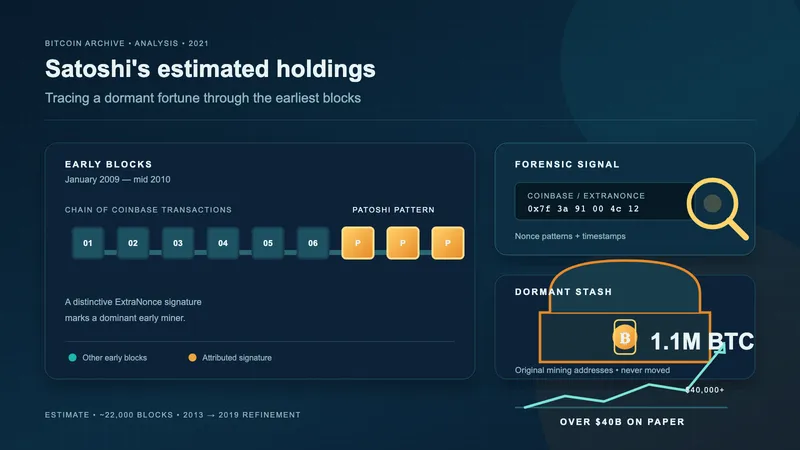
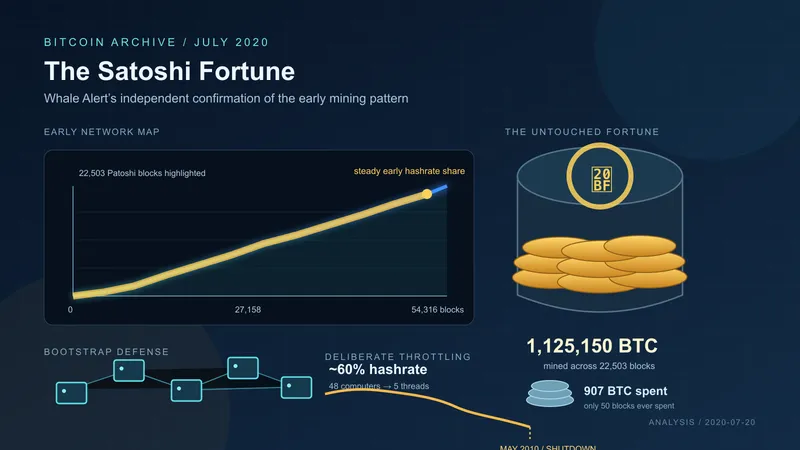
| Satoshi (Patoshi estimate) | ~1.1M | 5.2% | essentially unchanged since 2010 |
| Not yet mined | ~957,000 | 4.6% | mid-2026 |
| Governments | 649,954 | 3.1% | Jul 2026, BitcoinTreasuries |
| Private companies | 281,752 | 1.3% | Jul 2026, BitcoinTreasuries |
The segments cut along ownership — whose coins they are. Coins that exchanges custody for clients answer a different question (who holds the keys) and overlap the rows above, so they get no row of their own. Even the size of that custodial pool is contested: CryptoQuant puts it near 12% of supply, Glassnode near 16%, and the difference is nothing more than two labeling methodologies disagreeing about which addresses belong to exchanges.
The largest cell, “individuals & unclassified,” is what remains after every nameable holding is subtracted. It contains millions of ordinary wallets, large holders no tracker has yet named, and holdings that cannot be named at all (more on those below).
Corporate treasuries — Strategy’s single point of concentration
Of the 1,264,579 BTC on public-company balance sheets, one company holds two-thirds. Second place is an order of magnitude away: as of 2026, Twenty One Capital ranks second at 43,514 BTC, Metaplanet third at roughly 40,000, MARA fourth at nearly 39,000 — and every public company other than Strategy combined holds 420,804 BTC, barely half of Strategy alone.
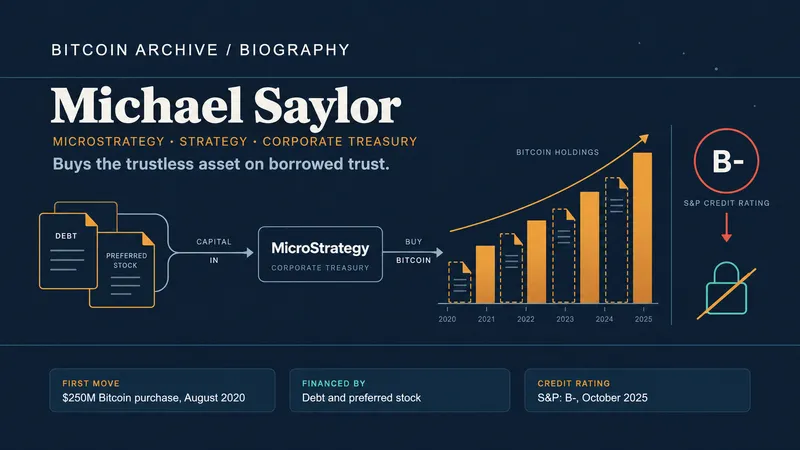
When Strategy — led by co-founder Michael Saylor — disclosed its first purchase in August 2020, a bitcoin corporate treasury was still an experiment.
Each bar traces to the company’s own SEC disclosures. Growth accelerates sharply in 2024, when Strategy roughly doubled four years of accumulation in a single year and kept buying.
Spot ETFs — the buyer that arrived in 2024
US spot ETFs were approved in January 2024. Two and a half years later the ETF pool holds about 1.21 million BTC. The largest single product is BlackRock’s IBIT: 551,918 BTC at the end of 2024, 776,475 at the end of 2025, a spring-2026 peak in the 810,000–820,000 range — and then a record outflow stretch in May and June that left it at 733,947 BTC in early July.
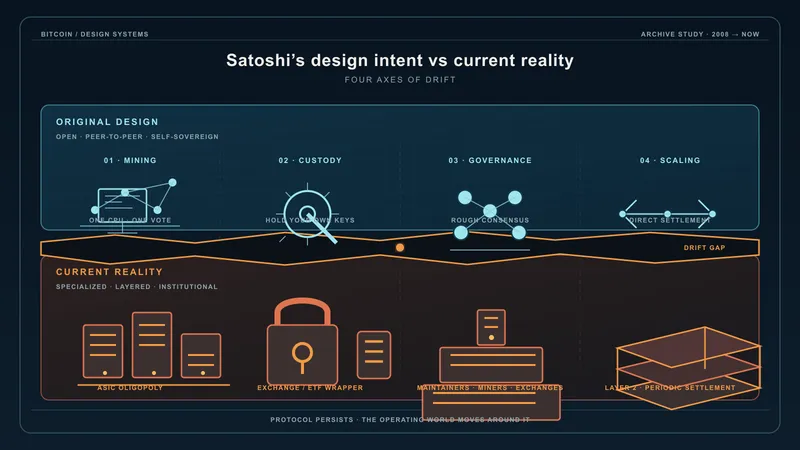
This segment owns differently. IBIT’s coins are not BlackRock’s assets; the trust custodies them for ETF shareholders. A corporate treasury sits on its own balance sheet and grows by management decision; an ETF is a wrapper around investors’ money and breathes with their flows, daily. The nearly 80,000-coin decline since spring 2026 is that breathing, printed directly into the number. It is also the sharpest concrete instance of the custody drift the archive’s design-vs-current-reality analysis traces from “each user holds their own private keys” to fund shares whose owners hold no keys at all.
Nation-states — from seizure to reserve
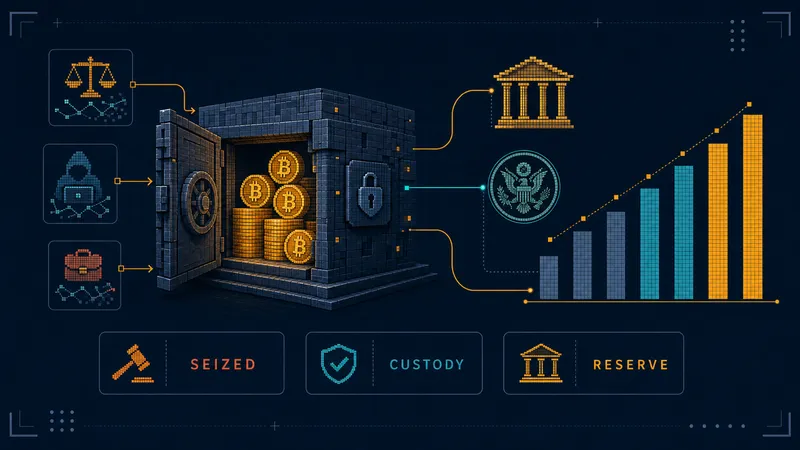
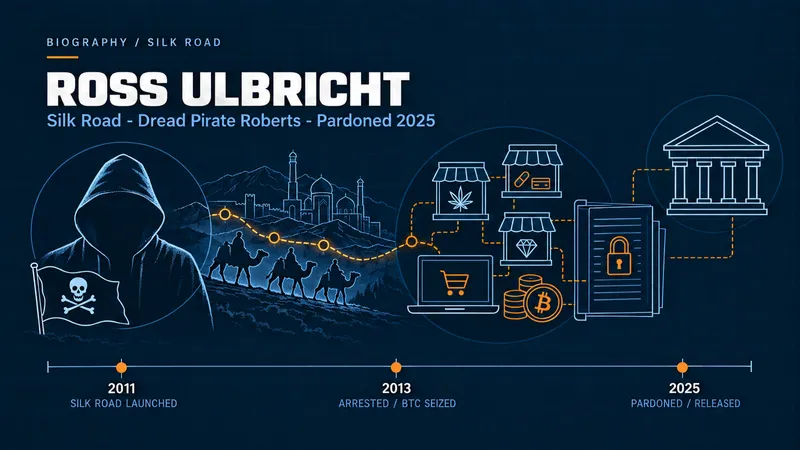
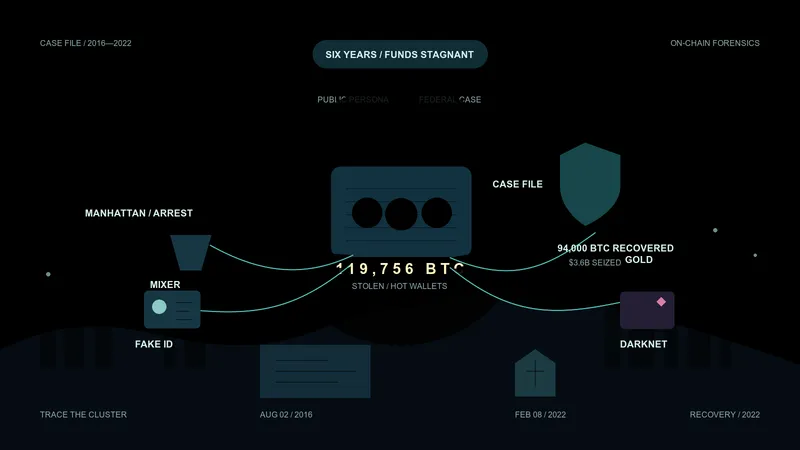
The US government’s balance was never bought; it is a genealogy of seizures. Silk Road-linked coins, 69,370 BTC (civil forfeiture, November 2020). James Zhong’s 50,491 BTC (November 2021). The 2016 Bitfinex hack recovery, 94,636 BTC (February 2022). Auctions and victim restitution had trimmed the pile to about 198,000 BTC by March 2025, when an executive order stopped the selling and converted the balance into a Strategic Bitcoin Reserve. In October 2025 the largest forfeiture action in Justice Department history — 127,271 BTC from the Cambodia-based Prince Group case — pushed the attributed balance to 328,372 BTC as of February 2026.
| Government | BTC | Note |
|---|---|---|
| United States | 328,372 | seizures + Strategic Bitcoin Reserve, as of Feb 2026 |
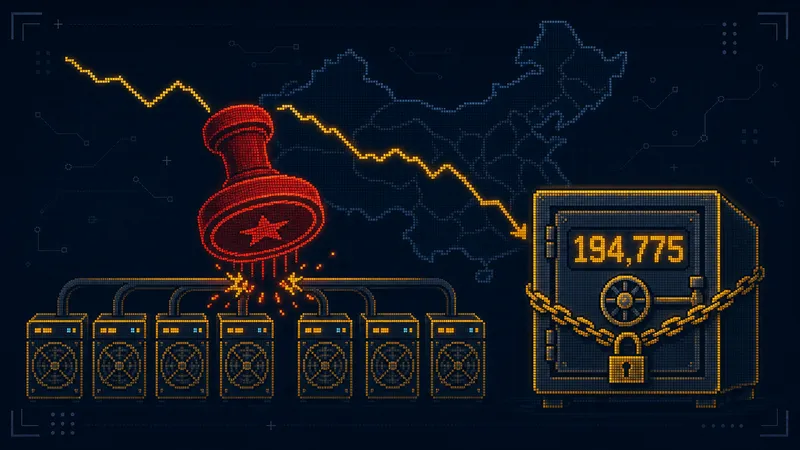
| China | ~194,000 | 2019 PlusToken seizure; custody and liquidation status undisclosed and disputed |
| United Kingdom | 61,245 | fraud-case forfeitures |
| Ukraine | 46,351 | officials’ holdings and donations; underlying figure dates to 2021 |
| El Salvador | 7,706 | accumulated by purchase, as of Jul 8, 2026 |
| Bhutan | ~3,100–5,000 | hydropower mining; most sold off during 2024–2026 |
| Others / timing gap | ~7,000–9,000 | smaller sovereign holders plus per-country as-of drift; the residual against the 649,954 total |
The 649,954 total is the sum of BitcoinTreasuries’ full government list, which includes small sovereign holders beyond the six countries above; the per-country figures also carry different disclosure and attribution dates, so the major rows alone do not add up to the total. The last row carries that remainder explicitly.
Russia does not appear in this table. Its seizure-derived holdings are estimated at 50–200 BTC, and the reserve concept under discussion there extends only to confiscated assets.
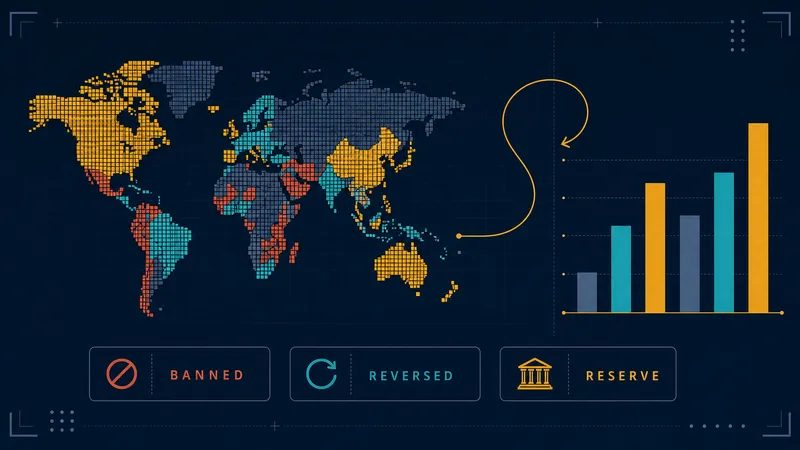
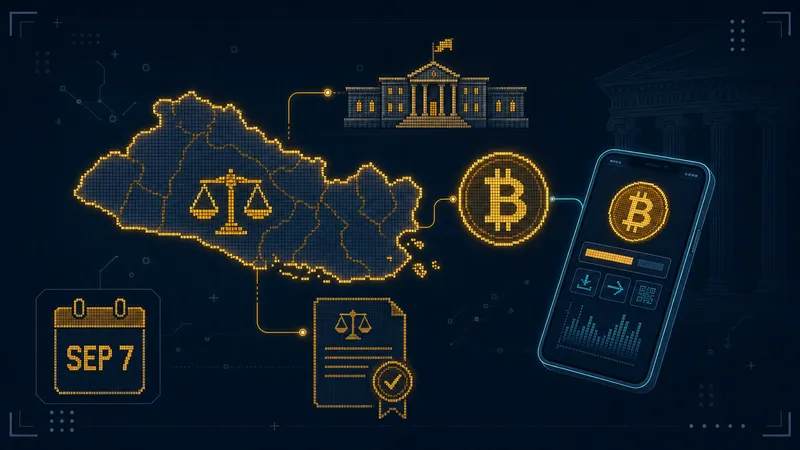
The path each balance took to reach this table — a ban lifted, a legal-tender mandate walked back, a forfeiture folded into a standing reserve — is a separate record from the balance itself; this archive’s survey of nation-state Bitcoin policy traces those reversals across roughly thirty governments, while this map holds only where the coins sit today.
The unattributed side — criminal balances and North Korea
Inside “individuals & unclassified” sit holdings that cannot be named. As of July 2025, Chainalysis estimated on-chain balances held directly by illicit entities at about $15 billion — and about $75 billion once wallets downstream of them are included. No BTC-denominated count has been published, and a dollar-denominated balance swells with the bitcoin price alone.
North Korea (Lazarus Group) is counted in flows, not balances. Chainalysis’s lower-bound estimate puts cumulative theft at $6.75 billion through the end of 2025 — $2.02 billion in 2025 alone, most of it the ~$1.5 billion Bybit incident in February — with more than $600 million added in the first half of 2026. The distinction matters: this is not an amount currently held. Most of what was stolen was denominated in Ether and stablecoins, laundering and cash-out are fast, and no published estimate isolates what remains as a bitcoin balance. A cumulative $6.75 billion cannot be placed on a map of the 21 million as a holding.
The whales — the named and the nameless
“Whale” has a working definition in the analytics industry. Glassnode counts whales as clustered entities holding 1,000 BTC or more, exchange balances excluded, at the top of a scale that starts at shrimp (under 1 BTC) and climbs through crab, octopus, fish, dolphin, and shark to whale (1,000–5,000 BTC) and humpback (over 5,000). By its March 2023 estimate, entities above 1,000 BTC held about 6.64 million coins — roughly a third of circulating supply. The unit is the entity, not the address: one holder controls many addresses, so analytics firms bundle addresses with clustering algorithms before counting anything.
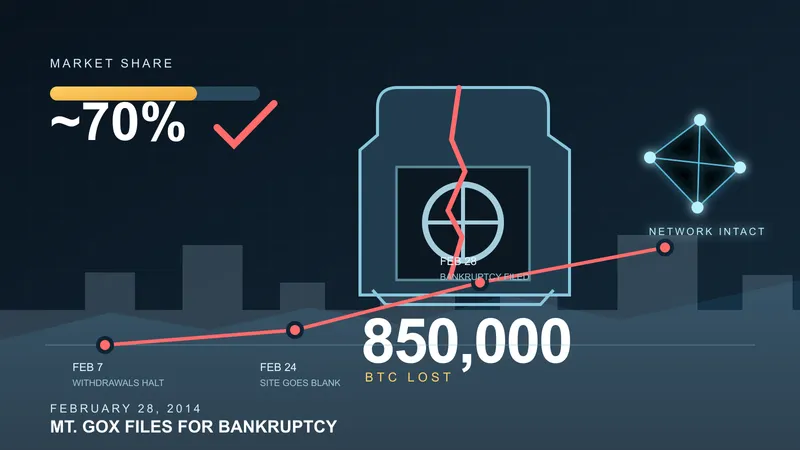
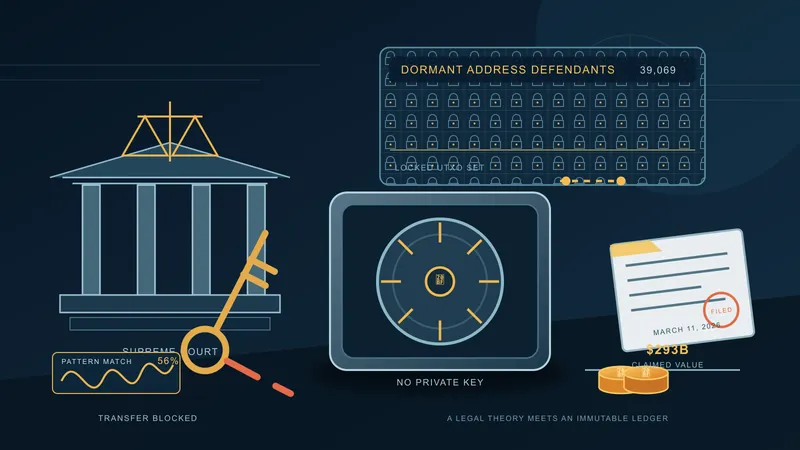
Every named holder in the sections above is a whale by that measure, and nearly every name rests on evidence from outside the chain: Strategy’s number comes from its SEC filings, IBIT’s from the fund’s own reports, government balances from forfeiture records. On-chain evidence alone has produced few names. The two best-established are Satoshi, identified not by any disclosure but by the Patoshi mining pattern in the earliest blocks, and the Mt. Gox rehabilitation trustee, whose roughly 142,000 BTC were mapped in court-supervised proceedings before repayments began in July 2024. That same Patoshi-pattern classification is now the evidentiary backbone of a 2026 New York lost-property lawsuit targeting 39,069 dormant addresses (39,025 after 44 were dropped on July 7, 2026) — 56% of which Galaxy Digital’s analysis ties directly to Satoshi’s own reserve.
The rest of the whale pool has no name attached. When a headline reads “a whale bought” or “a whale sold,” the source is usually Whale Alert, which posts large transfers to social media (for Bitcoin, above $50 million when the sender or receiver is known and $100 million when neither is) and names the sender and receiver only when it recognizes them, which in practice means exchanges. Beyond those labels, everything is inference. Clustering rests chiefly on the assumption that all inputs of one transaction share one owner, a linkage the whitepaper itself conceded in its privacy section. Since no ground-truth record of who owns what exists, the accuracy of the clustering cannot itself be measured. The cautionary example is Mt. Gox: the chain’s largest cluster, more than ten million addresses, was initially mis-merged by that very assumption because the exchange once let users import their own private keys.
July 2025 showed the scale of what remains nameless. A holder inactive since April 2011 moved about 80,000 BTC through Galaxy Digital over two weeks; Arkham’s blockchain data traced every step in real time, and the final tranche alone was reported at $4.8 billion — yet no tracker has put a name on the owner. Fourteen years of silence ended in full public view, pseudonymously.
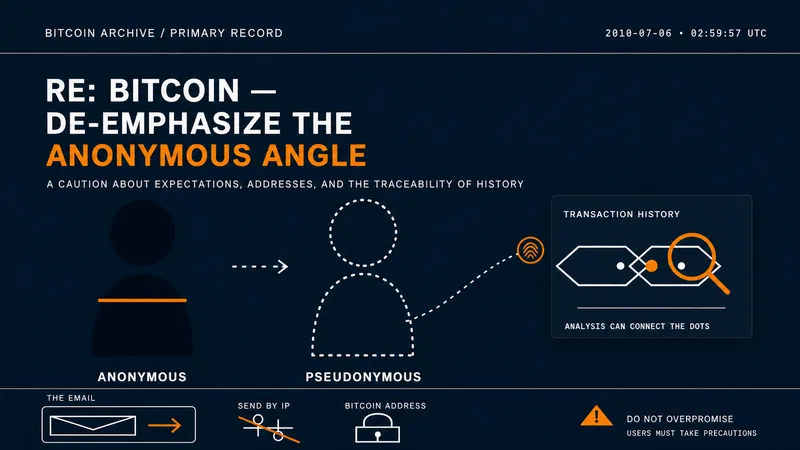
None of this is a defect in the trackers. It is the structure Satoshi warned about:
Satoshi Nakamoto (email to Martti Malmi, July 06, 2010, 10:17:54 PM UTC)It’s possible to be pseudonymous, but you have to be careful.
A post the following day stated the transparent half plainly:
theymos (BitcoinTalk post, July 07, 2010, 4:54:44 PM UTC)The history of a coin is publicly available. Anyone can see the flow of BitCoins from address to address.
The map on this page is drawn inside that structure: the history is public, the identities are not, and analysis can sometimes bridge the gap. A whale gets a name when it identifies itself — a filing, a court docket — or when analysis and circumstance close the gap from outside. Until then it sits in the map’s largest cell: visible in every movement, named in none.
The distance from “no controlling entity”
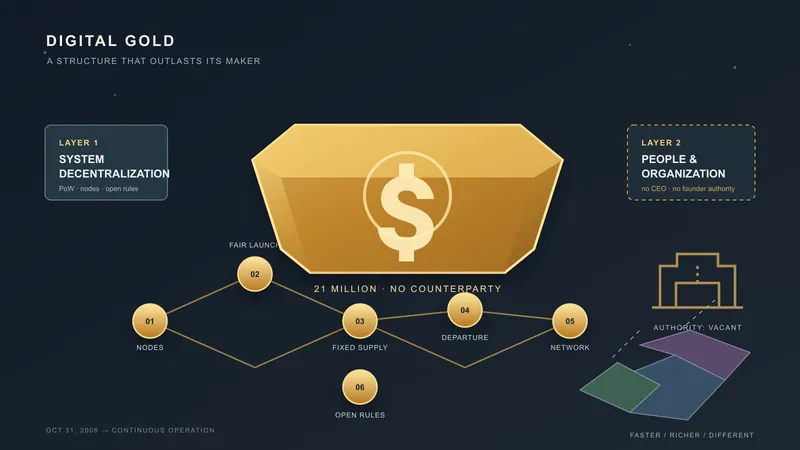
What the digital-gold analysis means by its second layer — decentralization of people and organizations — is that nobody holds authority over the protocol. Concentrated ownership does not directly break that definition. Strategy, IBIT, and the US Treasury cannot change one line of consensus rules, however many hundred thousand coins they hold. A premine allocated to founders at issuance and a stack bought on the open market have entirely different origins.
The ownership landscape still shifts the second layer’s surroundings. ETF flows have become a primary circuit of price formation, and sovereign reserves introduced a political variable — the distance between nation-states and Bitcoin — that the whitepaper never contemplated.
And first place has not changed hands. That ~1.1 million coins have sat still for sixteen years — that the founder’s keys never became a market authority — is itself part of the second layer, as documented in Whale Alert’s independent analysis and the survey of converging estimates. Next to the bar that never moves, only the other bars trade places.
Limits
- The numbers move. Each value carries its as-of date in the body and tables; the ETF pool alone shifted nearly 10% within months in 2026.
- Tracker disagreement varies by segment. Government totals differ by more than 2x between River (305,000 BTC, December 2025) and BitcoinTreasuries (649,954 BTC, July 2026); the latter includes the large US forfeiture of October 2025, and this page uses the newer figure.
- Lost-coin estimates span 1.6M–3.7M BTC. The figure uses the lower bound of the widely-cited 2.3M–3.7M range. The archive’s overview of Bitcoin’s iconic losses groups the best-known individual losses, Stefan Thomas and James Howells among them, by the mechanism that caused them; the estimate itself is not broken down by cause.
- Satoshi’s own count is an estimate with a range of its own, from BitMEX Research’s 600,000–700,000 to Whale Alert’s 1,125,150. This page uses the ~1.1M convergence value, consistent with the rest of this archive.
The map has a shape that no other asset’s would: its largest named holding belongs to someone who has spent almost none of it, its largest cell belongs to people no one can name, and the company closest to the top got there by filing paperwork, not by mining. When Strategy or the next buyer finally passes the founder’s coins, the chart will change and the protocol will not notice. Whoever holds the 21 million, the rules that make them worth holding are held by no one, and that, more than any bar on this page, is the fact I keep coming back to.