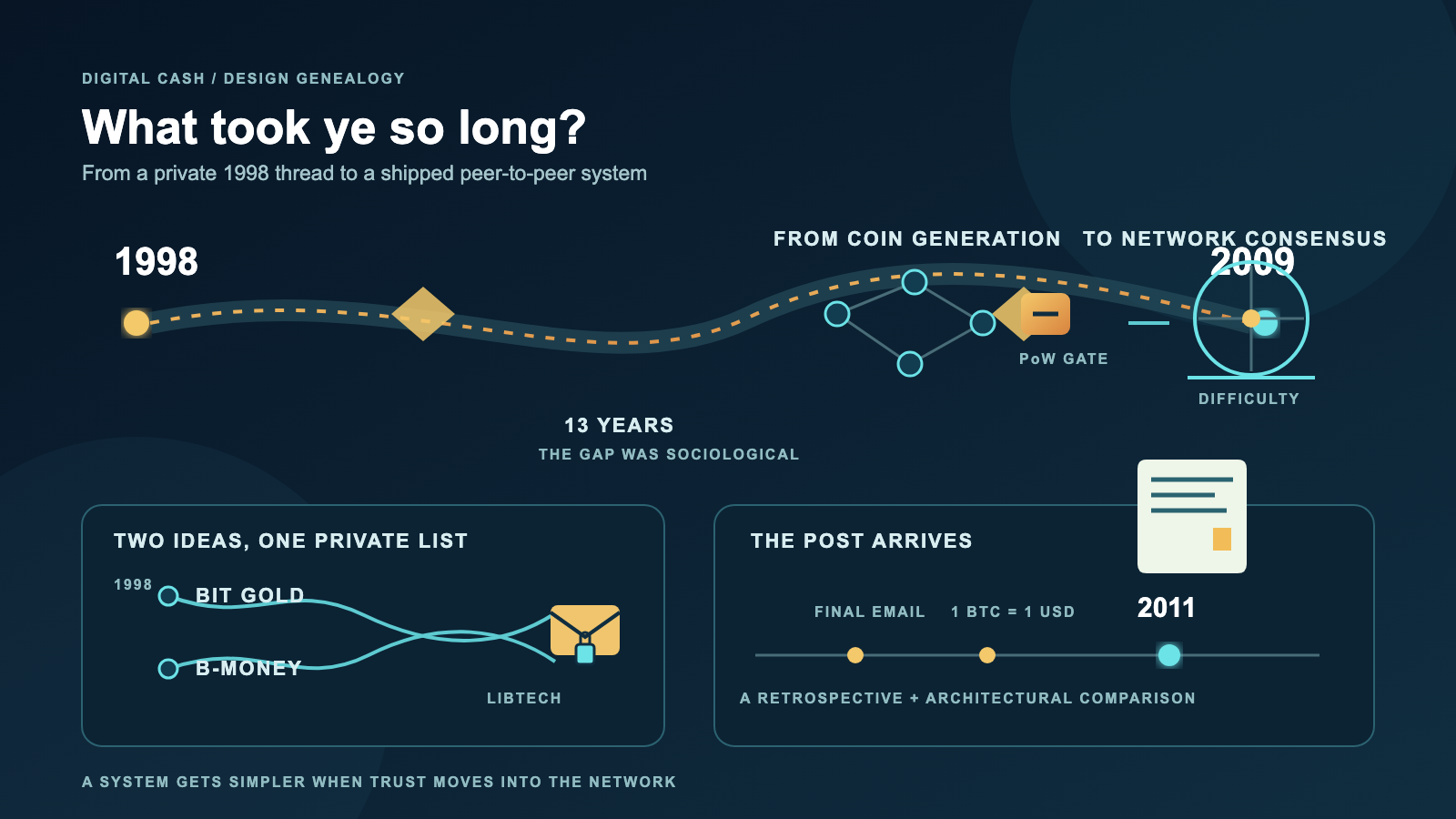
On August 7, 2010, in a BitcoinTalk thread titled “Bitcoin minting is thermodynamically perverse,” Satoshi Nakamoto answered the complaint that mining burns electricity for nothing by explaining what the burning is for. The reply ends on the sentence every later consensus design has had to argue with:
Quote from: Satoshi Nakamoto on August 07, 2010, 5:46:09 PM UTCIf there’s something else each person has a finite amount of that we could count for one-person-one-vote, I can’t think of it. IP addresses… much easier to get lots of them than CPUs.
Two and a half hours later a member called Red, who had opened his previous post by saying he meant it half flippantly and half seriously, described a launch that never happened: Satoshi signs the twenty largest internet providers in the world to a contract, hands each a million coins, and lets their reputations carry the network.
Quote from: Red on August 07, 2010, 8:09:19 PM UTCBitcoin builds on the reputation of the 20 largest ISP’s and is adopted immediately. 20 trusted nodes can reach consensus quickly so there is no reason for the hashing game or new minting rewards.
That is the whole argument, eleven months before anyone proposed counting votes by coins. Trust a list, or trust the work. On July 11, 2011, a BitcoinTalk member called QuantumMechanic proposed the third answer, weighting a vote by the bitcoins a key can prove it holds, and on August 19, 2012, Peercoin ran a chain on it.
Sixteen years after Satoshi’s reply, the numbers look like this. Among the eighteen chains in the top thirty by market capitalization that run a consensus of their own, proof of work holds 71.9% of the combined value and the proof-of-stake family 23.9%; remove Bitcoin and proof of work holds 8.4% against 77.8%. Ethereum’s electricity after the Merge is somewhere between one four-thousandth and one nine-thousandth of what its proof-of-work chain used, depending on which year of the same auditor’s reports you read. Which side wins depends on which number you look at, so I am going to look at each of them, one axis at a time, and say who wins it.
1. What each mechanism asks you to put up
A consensus mechanism decides one thing: who gets to write the next block, and what it costs to fake that right. The three answers in the opening exchange, trust the work, trust a deposit of coins, or trust a list of names, are the three families this page compares. The second answer is proof of stake; the third covers both proof of authority and the federated ledgers, which differ in who writes the list and not in the fact of one.
Proof of work
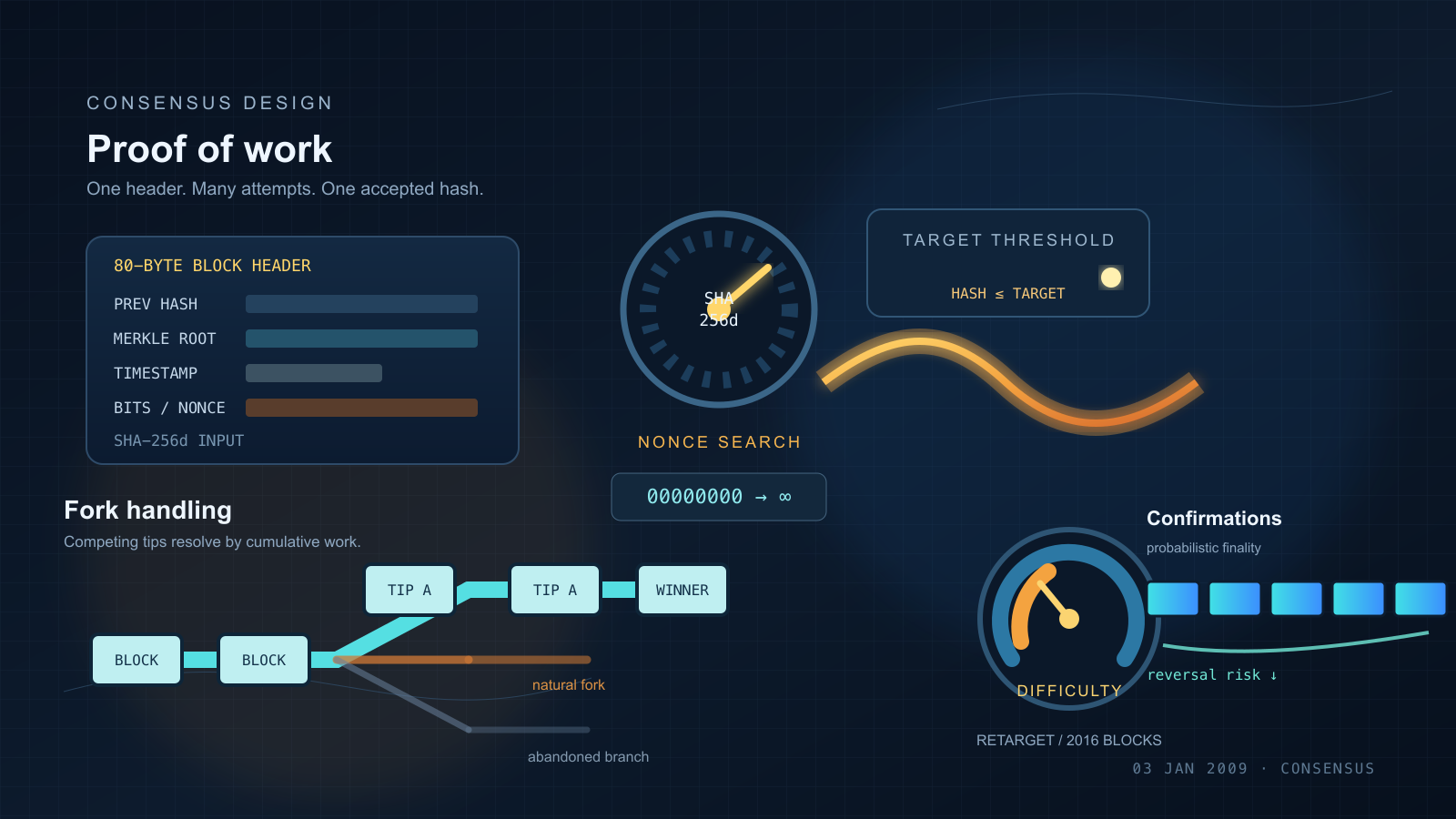
Proof of work hands the block to whoever finds a valid hash first, and the chance of finding it is proportional to the computing power spent; the consensus design page covers the mechanism and the beginner guide covers the lottery in plain words.
The lottery is fair per hash and merciless per wallet. On November 21, 2025, a hobbyist running a single old machine at about 6 terahashes a second, 0.0000007% of a network then averaging 855.7 exahashes, won a full block worth 3.146 BTC plus fees, about $265,000; Con Kolivas, who runs the Solo CK pool it came through, put a miner of that size at one chance in 180 million of solving a block on any given day, and it was the 308th solo block his pool had seen in eleven years, against roughly 580,000 blocks mined in that time. The hash-rate share alone gives gentler odds than Kolivas’s figure, about one in 143 million per block and one in a million per day, and even at that rate the expected wait for one block is on the order of 2,700 years. That it made the news is the measurement: the lottery pays in proportion to capital, and a wallet’s worth of capital is a rounding error.
The other solo wins that get reported are the same lesson from the other side. On June 5, 2025, block 899,826 went to a solo account whose hash rate spiked to 261 petahashes for the attempt, from a weekly average of 6; Kolivas judged it almost certainly rented, and the odds were about one in 3,050 for a reward of $330,386. The brother and sister in Texas, aged 14 and 9, who were reported in September 2021 to be earning more than $30,000 a month from mining earned it by running graphics cards and dedicated machines their father had invested in, at home and in a Dallas data center, on Bitcoin, Ethereum and Ravencoin. None of the three is a poor entrant beating the rich; each is capital, owned, rented or bought by a parent, collecting in proportion to itself.
Proof of stake
Proof of stake hands the block to a validator drawn at random, with odds proportional to the coins it has locked up, and takes those coins away if it signs two conflicting blocks.
Proof of authority and federated lists
A list of names, the design Red sketched, hands the block to whatever a supermajority of a fixed set of validators agrees on, with no lottery and no stake at all. Proof of authority is this with identities the network approved; the XRP Ledger’s version, drawn below, is this with a list each server chooses and two organizations publish. Both are permissioned by construction: the question the other two families answer with hardware or deposits, who is allowed in, is answered here by whoever writes the list.
Side by side
| Mechanism | What you put up | What an attacker must acquire | Running on (September 2026) |
|---|---|---|---|
| Proof of work (PoW) | Hardware and electricity, spent whether or not you win | More hash power than everyone else combined, bought and powered | Bitcoin, Litecoin, Dogecoin, Monero, Zcash, Bitcoin Cash |
| Proof of stake (PoS) | Coins locked as a deposit that can be destroyed | A third of the stake to halt finality, half to steer the chain, a third destroyed to rewrite a finalized block | Ethereum, Cardano, Avalanche, TON, NEAR, Algorand |
| Delegated proof of stake (DPoS) | Coins used as votes for a short list of block producers | Enough votes, or enough of the elected producers | TRON (27 producers), Sui, VeChain since December 2025 |
| Proof of authority (PoA) | An identity the network already agreed to trust | The signing keys of the authorities themselves | BNB Chain’s Proof of Staked Authority (45 validators); Polkadot’s first weeks in 2020; test networks |
| Proof of history (PoH) | Not a mechanism on its own: a cryptographic clock laid under a proof-of-stake vote | Same as the proof of stake it runs beside | Solana, until Alpenglow removes it |
| Federated and BFT agreement | A place on a list of validators that others have chosen to trust | Collusion by 80% of a server’s trusted list (XRP Ledger) | XRP Ledger, Stellar, Canton |
Read the first column again and one thing is the same in every row: the block goes to capital. Proof of work pays in proportion to hash power, which is bought; proof of stake pays in proportion to coins locked, which are bought; delegated proof of stake elects producers by coins voted; BNB Chain’s authorities are its largest stakers; and the XRP Ledger’s default list is co-published by the company that was gifted 80% of the supply at launch. None of these mechanisms counts people. What differs is the kind of capital, whether it depreciates or can be burned, and whether anyone has to approve it, and those are the differences the rest of this page measures.
| Mechanism | Strength the record supports | Weakness the record supports | Who gets the block |
|---|---|---|---|
| Proof of work | Open entry, no one to petition, 17.7 years without a rewrite of history; the only mechanism whose cost is external to the ledger | 138 to 204 TWh a year; blocks concentrate in three pools; a household machine’s odds are one in millions | Whoever spends the most on hardware and electricity |
| Proof of stake | Electricity four to five orders of magnitude lower; finality in minutes; a majority costs more in nominal dollars | Younger and less tested; deposits pool with a few providers (Lido 23% of Ethereum’s stake); a named foundation coordinates rule changes | Whoever locks the most coins |
| Delegated proof of stake | Finality in seconds; a short list is cheap to run | A short list is a short list: 27 producers on TRON, elected by the largest holders | Whoever holds the most votes, and the producers they elect |
| Proof of authority | Fastest and cheapest of all; no lottery to lose | Permissioned by design; the largest chain using the word (BNB Chain) seats its 45 validators by stake; VeChain abandoned it in 2025 | Whoever is on the list, and whoever writes it |
| Federated and BFT | Settlement in seconds without mining or staking | Trust is placed in a list two organizations publish; the ledger’s supply was allocated by the same people who wrote the list | Whoever the list names |
2. Where each one came from
The line does not run from one design to the next as a series of improvements. Proof of stake was proposed as a replacement for proof of work before proof of work had run for three years, and proof of authority was named as a private-chain tool that public networks later borrowed for their first weeks.
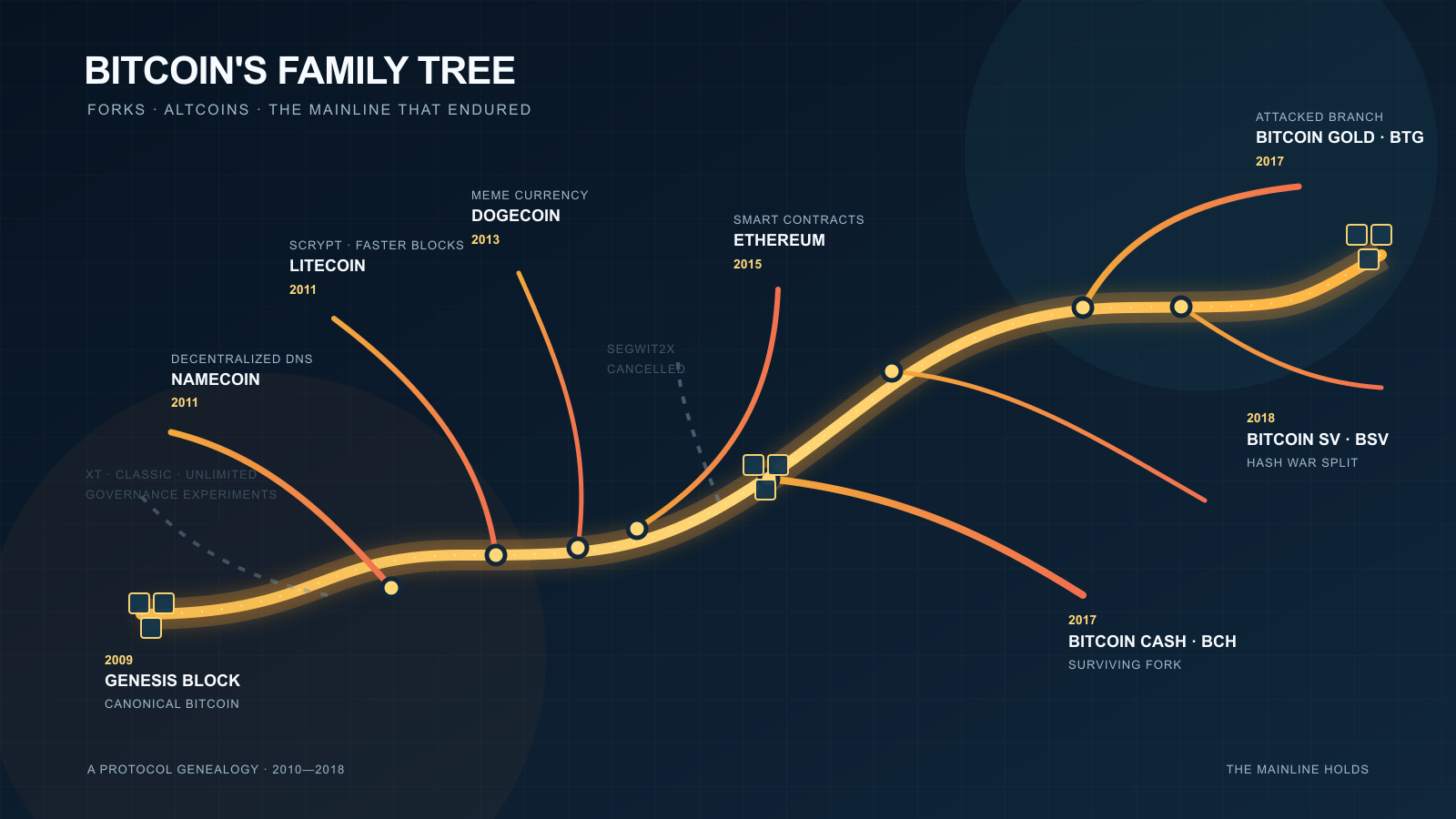
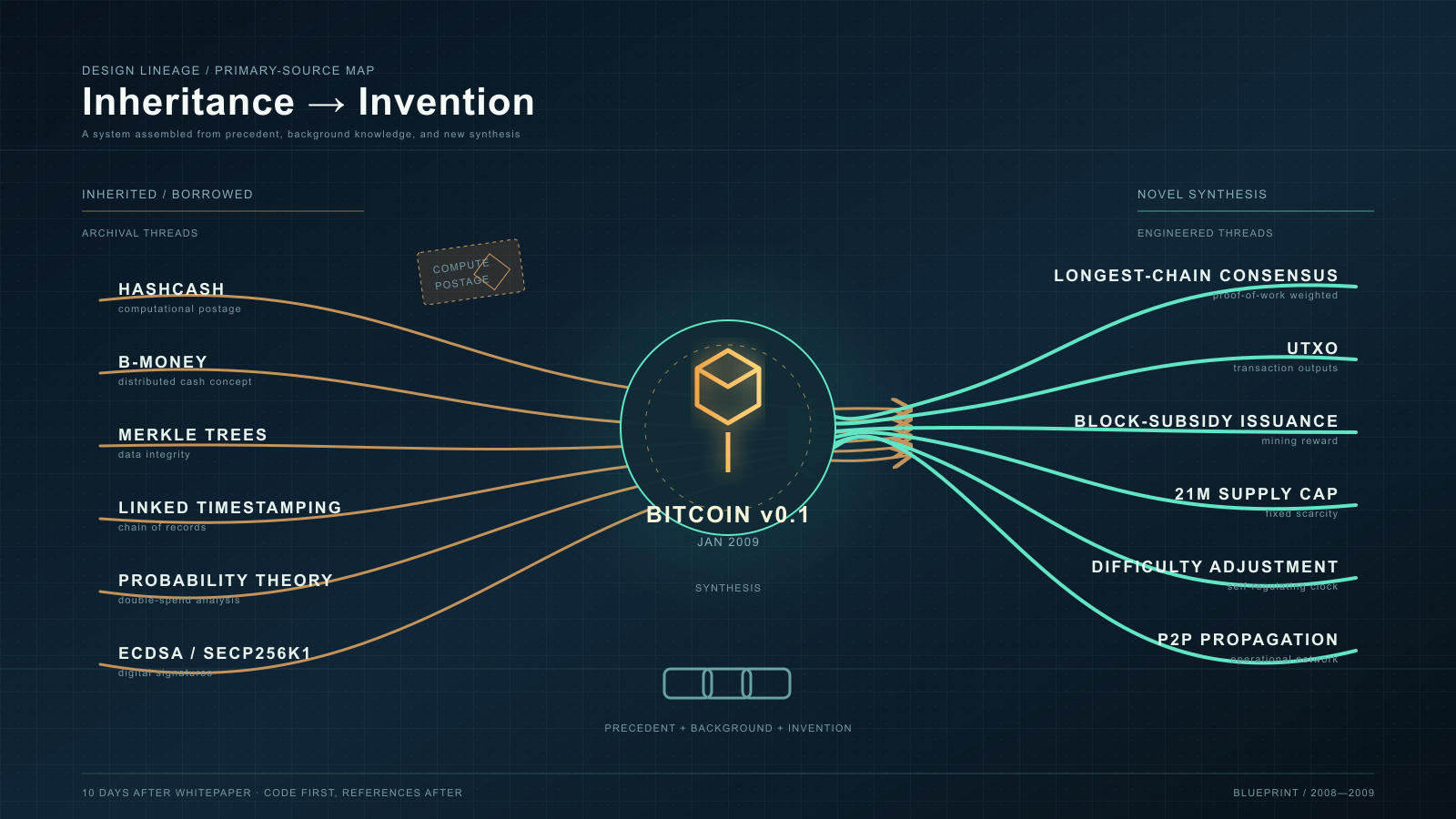
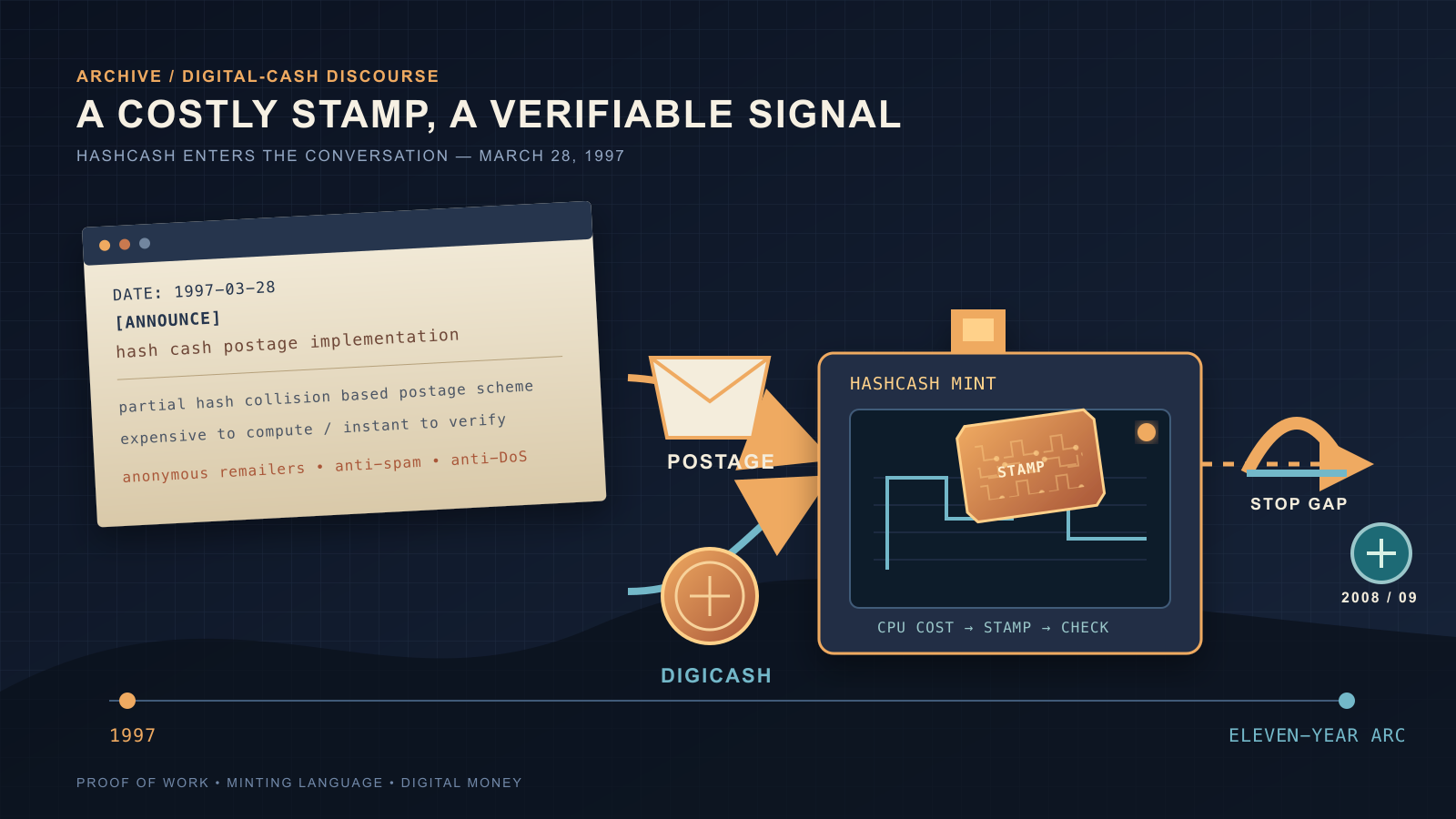
Two things about the ancestry are easy to get backwards. The first is that Bitcoin reused only the puzzle from Hashcash; the longest-chain rule that turns the puzzle into a vote has no citation because nobody had published it, as the design-lineage analysis sets out. Nick Szabo, whose bit gold had used proof of work to mint tokens, wrote in 2011 that the improvement he saw in Bitcoin was requiring the work in order to be a node at all, so that no one could take over the network by running the most copies of the software; his 2011 retrospective is the precursor designer’s own account of that change.
The second is that nobody in this timeline can be called the first without a qualifier. Peercoin calls itself the first proof-of-stake currency, Nxt called itself the first pure one, Cardano calls Ouroboros the first provably secure one, and the idea itself was on a public forum a year before any of them ran.
3. Axis by axis
Each axis below names a winner, and “winner” means one thing only: the mechanism with the better measured value on that axis, on the date given. Nothing here ranks the designs, and nothing here reads a market price as a judgment on a design; the altcoin comparison draws the same line.
| Axis | Winner | The number (date) |
|---|---|---|
| Market capitalization | Proof of work, by Bitcoin alone | 71.9% of the eighteen top-thirty chains with their own consensus; 8.4% without Bitcoin (September 19, 2026) |
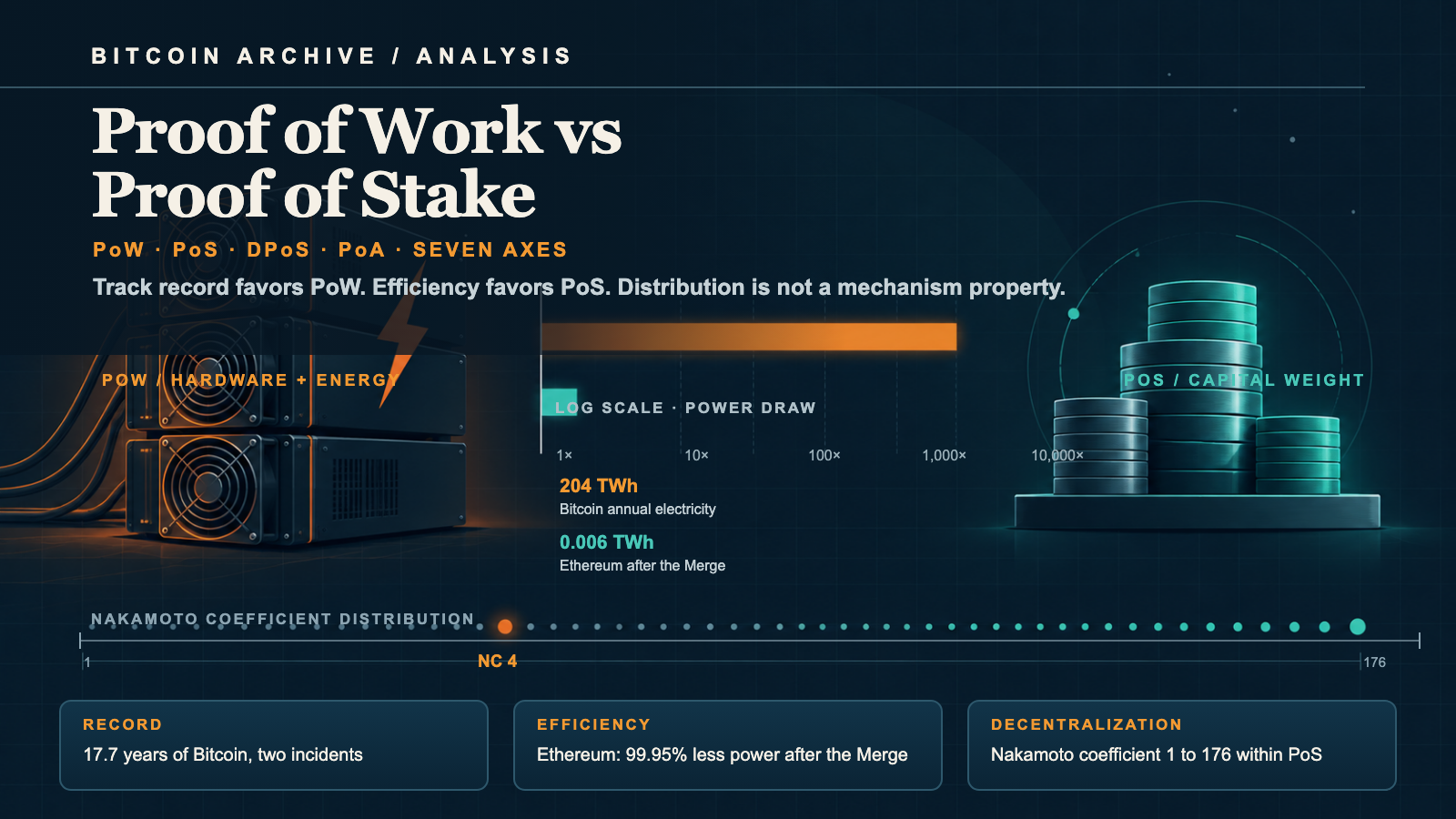
| Track record | Proof of work | Bitcoin 17.7 years with two incidents; proof-of-stake Ethereum 4.0 years (September 19, 2026) |
| Electricity | Proof of stake | Ethereum after the Merge 0.0058 TWh a year against Bitcoin’s 138 to 204 TWh (CCRI 2023; CBECI July 2026; Digiconomist September 2026) |
| Capital to take a majority | Proof of stake, on nominal size | About $56 billion of staked ETH against $6.7 to $13.1 billion of mining hardware (September 19, 2026) |
| Decentralization | Not decided by the mechanism | Nakamoto coefficient from 1 to 176 inside the proof-of-stake family; Bitcoin 4, inside that range (Chainspect, September 19, 2026) |
| Speed to finality | Proof of stake family | Solana 12.8 seconds, Ethereum about 15 minutes, Bitcoin about 60 minutes by the six-confirmation convention |
| Choice of new chains | Proof of stake | 26 of 30 layer-one chains launched since 2015 on one aggregator’s list (Chainspect, September 19, 2026) |
Market capitalization: where the capital sits
CoinGecko keeps exactly two consensus categories, and on September 20, 2026 they held about $1.68 trillion for proof of work and about $0.57 trillion for proof of stake. Bitcoin is 96% of the first figure. Take the top thirty assets, drop the twelve that run no consensus of their own (six stablecoins, two exchange tokens, four tokens issued on someone else’s chain), and the eighteen that remain split 71.9% proof of work, 23.9% proof-of-stake family, 4.2% neither. Take Bitcoin out of that set and the same arithmetic gives proof of work 8.4% and the proof-of-stake family 77.8%. So the axis has two winners depending on whether the one chain that dominates it is in the sample, and that is the reason it cannot be read as a verdict on the design.
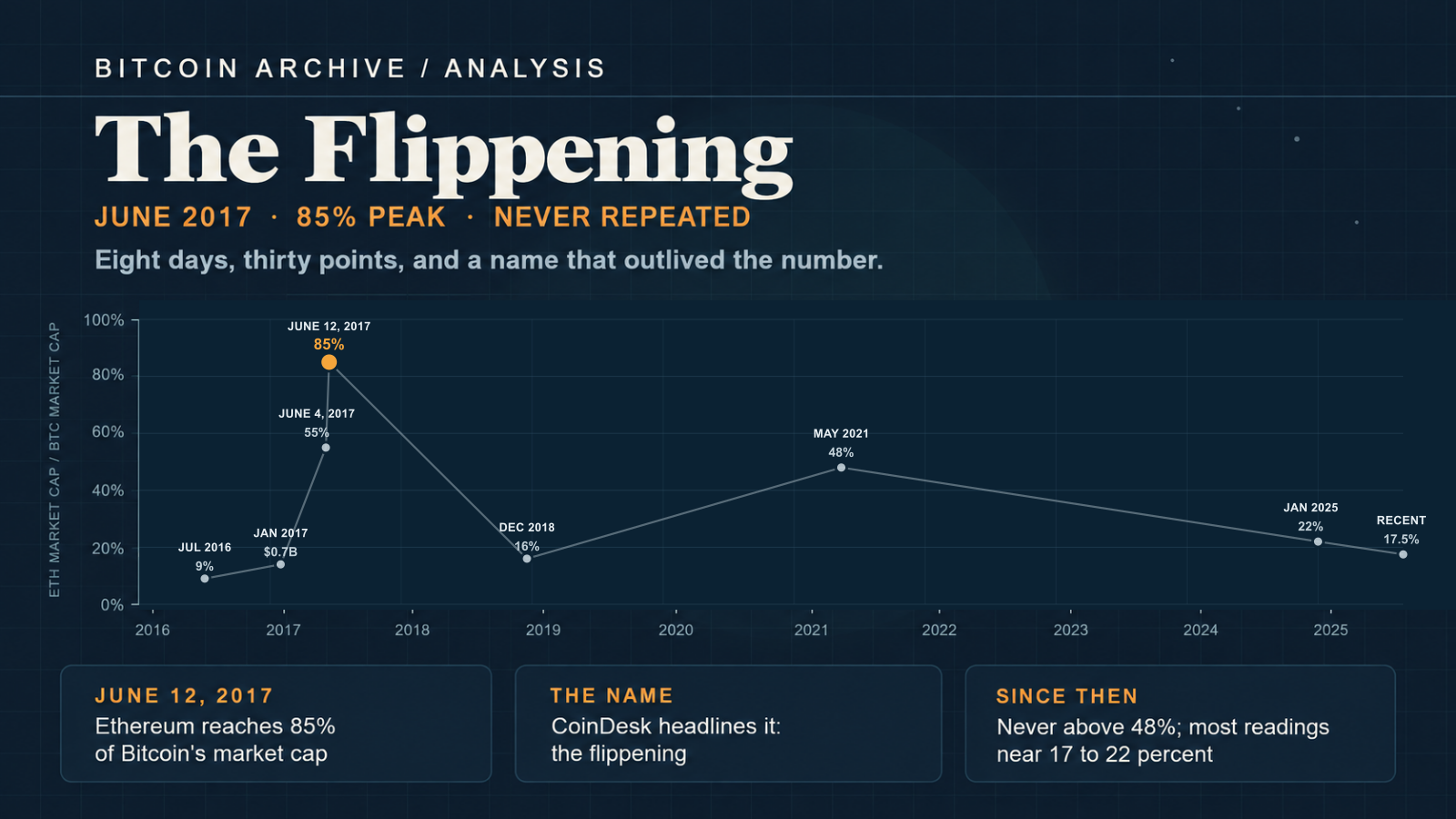
The flippening, the one week in June 2017 when Ethereum reached 85% of Bitcoin’s capitalization, happened while both chains ran proof of work; the Merge five years later moved Ethereum’s share of Bitcoin from 51.6% the day before to 46.3% the day after, and the analysis that later measured its underperformance did not list the switch among the causes.
Track record: years running, incidents logged
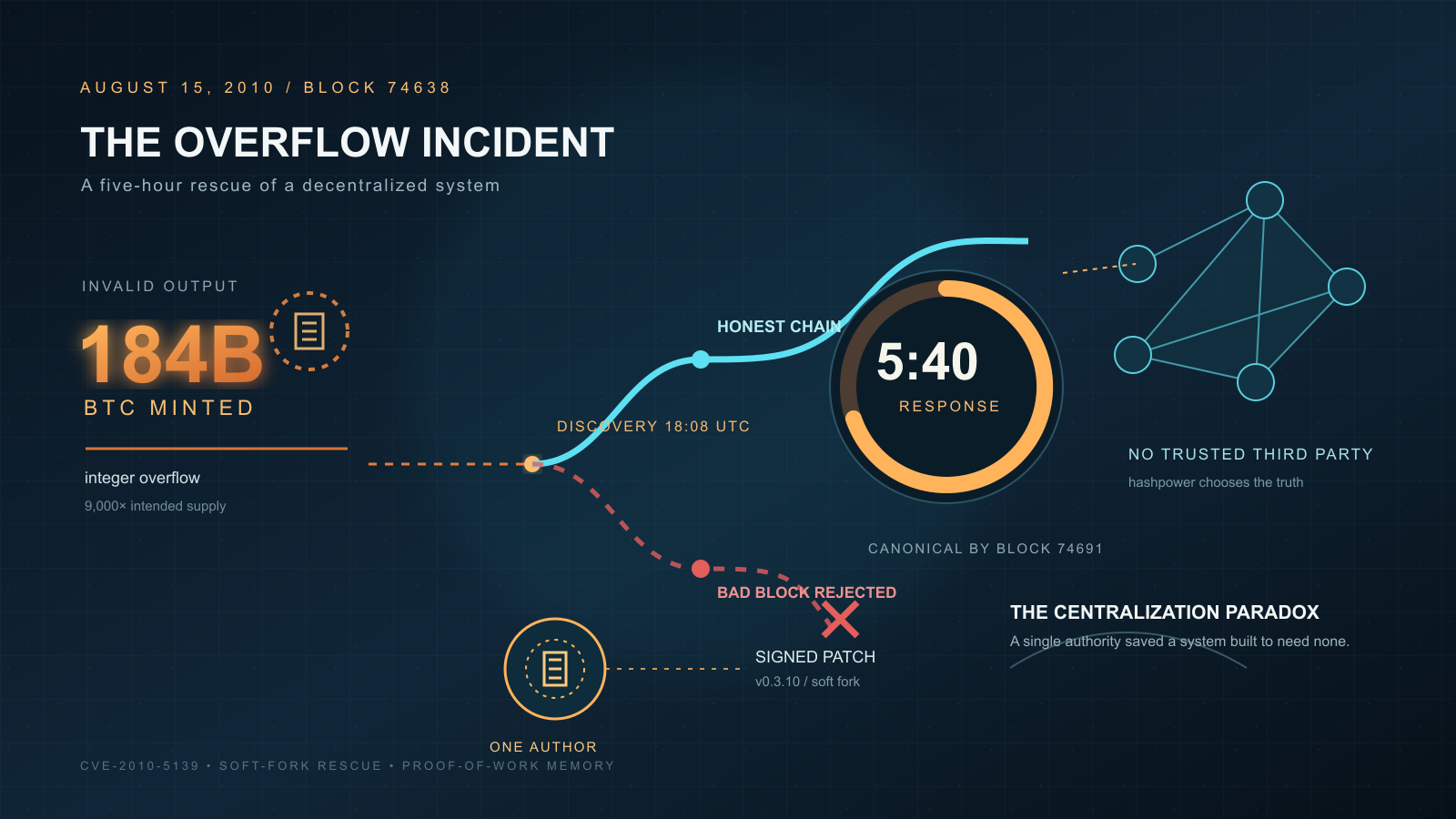
Bitcoin’s genesis block is dated January 3, 2009, which makes the chain 17.7 years old on September 19, 2026. Its record holds two consensus incidents: the value overflow of August 15, 2010, when a block minted 184 billion coins and a patched client that rejected it was out less than six hours after the block was spotted, and the March 2013 fork between versions 0.7 and 0.8 that BIP 50 records, resolved when two large pools downgraded.
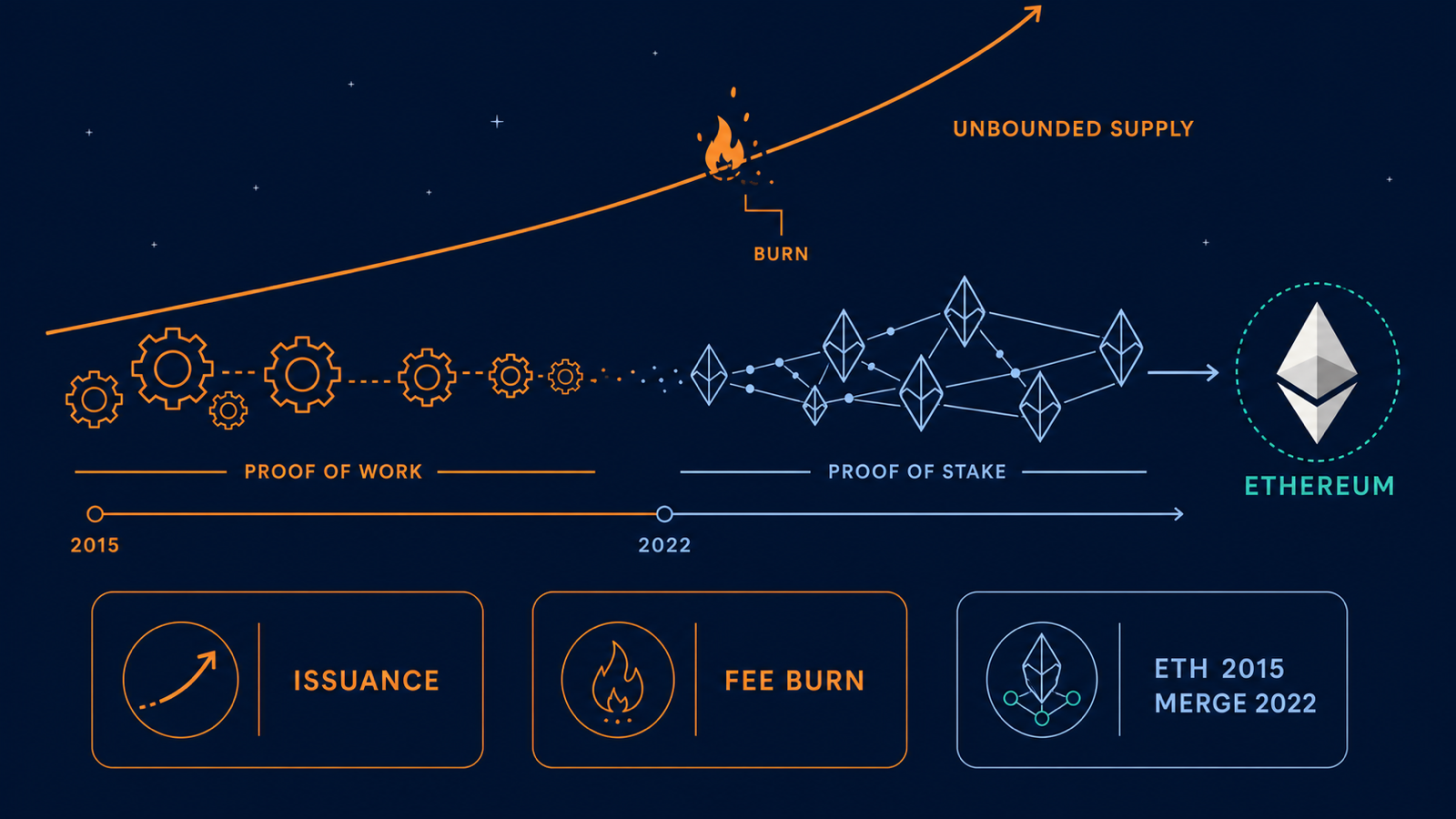
Ethereum’s execution layer has run since July 30, 2015, which is 11.1 years, but its proof-of-stake consensus has run since the Merge, which is 4.0 years. In that time finality stalled twice on May 11 and 12, 2023, for about 25 minutes and then about an hour, while blocks kept being produced; on December 4, 2025, a Prysm client bug after the Fusaka upgrade dropped vote participation to 74.7%, about nine points above the two-thirds needed to finalize.
Solana, the highest-throughput proof-of-stake chain in the top ten, halted seven times between December 2020 and February 2024, the longest for about nineteen hours; on August 12, 2026, a routing error at one hosting provider took 28.83% of its stake offline for 33 minutes, against a 33.34% threshold that would have stopped finality.
ethereum.org’s own developer documentation, updated August 31, 2026, states the axis in one sentence: proof of stake is younger and less battle-tested than proof of work. Winner: proof of work, on the two numbers that cannot be bought, years and incidents.
Electricity: four to five orders of magnitude
The cleanest measurement on this page is also the least contested. CCRI, the auditor ethereum.org cites, put proof-of-work Ethereum at 22.9 TWh a year in August 2022 and proof-of-stake Ethereum at 2,601 MWh in its first report, a reduction of 99.988%; its 2023 benchmark, with more than twice the nodes, raised the proof-of-stake figure to 5,750 MWh, still 3,982 times less than the proof-of-work chain.
Bitcoin sits between 138.2 TWh (the Cambridge index’s best guess as of July 29, 2026, quoted second-hand because the live index now requires an access request) and 204.44 TWh (Digiconomist, September 20, 2026); the two methods differ, one building up from hardware and the other working back from revenue, and neither is under 100 TWh. Solana, Cardano and Algorand all sit below 5 GWh, and TRON’s 27 elected producers below 0.2 GWh. Winner: proof of stake, by four to five orders of magnitude, whichever pair of sources you choose.
Capital to take a majority: two kinds of money
The two mechanisms are attacked with different kinds of capital, and the comparison only works if the difference is stated first. Taking a majority of Bitcoin’s hash power means buying and powering machines. At the unit price ARK Invest and Glassnode used in June 2026, about $3,749 for a machine doing 270 terahashes a second, matching the network’s 946 exahashes a second on September 19, 2026 costs about $13.1 billion in hardware alone, and buying only 51% of the existing rate, which would not be a majority of the total once added, about $6.7 billion. Campbell Harvey of Duke, in an October 2025 paper, put a one-week attack at about $6 billion including $4.6 billion of hardware and data centers to house it; critics of that estimate replied that the machines could not be sourced or sited unnoticed, and the estimate itself moves with hardware prices and the hash rate.
Taking a majority of Ethereum means owning half of 43.2 million staked ETH, 21.6 million coins worth about $56.5 billion at September 19, 2026 prices; a third, enough to stop finality, is about $37.6 billion. ethereum.org’s attack-and-defense page adds the parts the price does not capture: reversing a finalized block requires more than a third of all stake to be destroyed, the deposit queue means doubling the staked total takes about 200 days, and the social layer is expected to adopt an honest minority fork against a majority attacker.
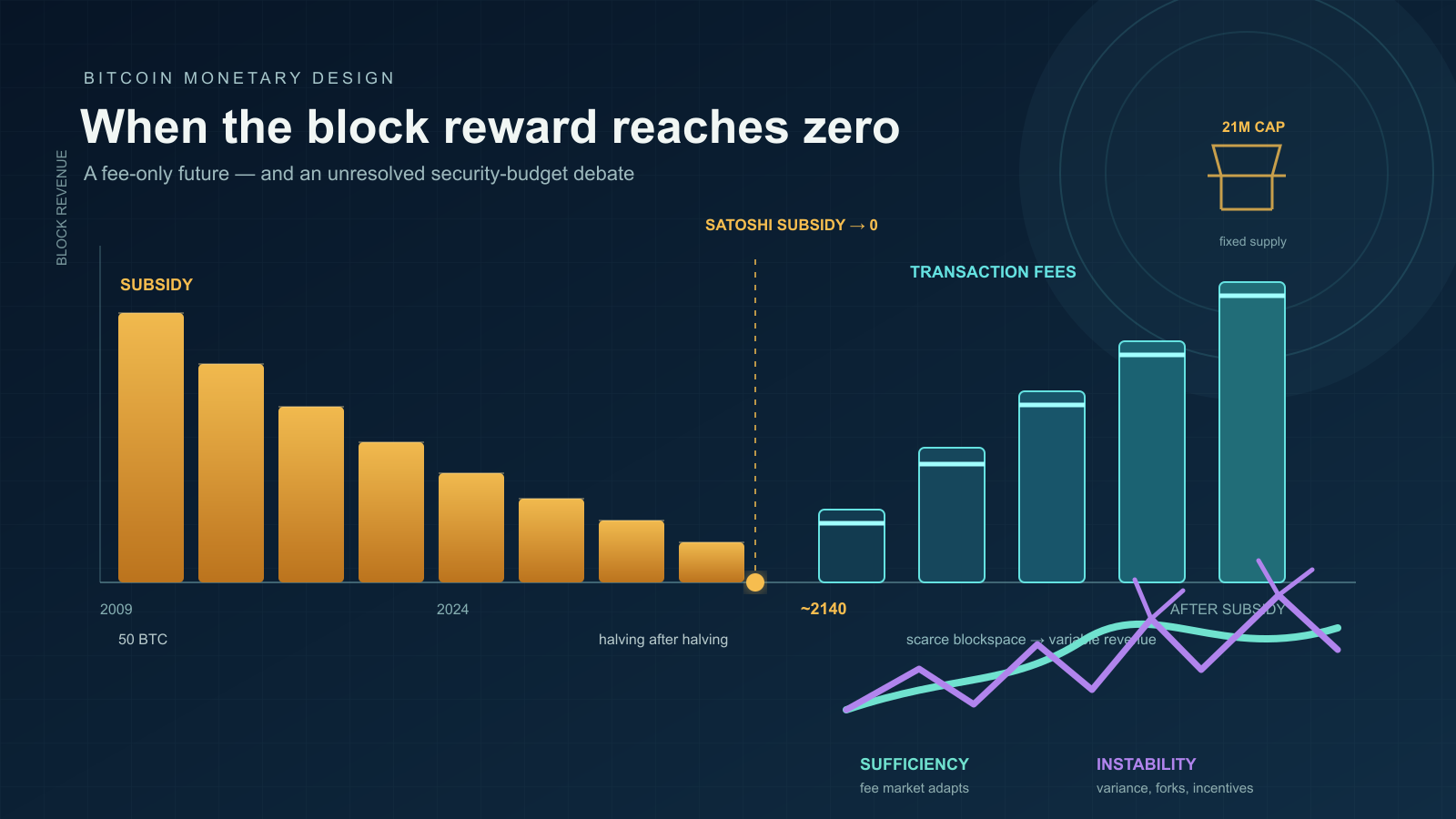
The security model page sets out Bitcoin’s side, and the fee-only analysis sets out what the subsidy that funds the hash rate does after 2140. Winner on nominal size: proof of stake, because $56.5 billion is larger than $13.1 billion; the two numbers count different things, hardware that keeps its value against coins that would be burned.
Decentralization: the mechanism does not set it
The Nakamoto coefficient counts the fewest entities whose combined stake or hash power reaches a source’s threshold. On Chainspect’s ranking of September 19, 2026, the proof-of-stake family runs from Polkadot at 176 and TON at 88 down to BNB Chain at 7 and Ethereum at 1, and Bitcoin’s 4 sits inside that range. ARK and Glassnode, using July 2026 data and their own thresholds, give Bitcoin 3, Ethereum 3 and Solana 19; the two sources disagree on Ethereum by a factor of three because one counts every operator in a staking pool and the other counts the pool.
Underneath both, Bitcoin’s three largest pools produced 58.6% to 63.8% of blocks over every window from a day to a year, and Lido held 23.04% of Ethereum’s stake in July 2026. The cost of taking part is a different measurement again: running a Bitcoin full node took $289 of hardware in July 2026, an Ethereum node $730, and a Solana validator $21,478.
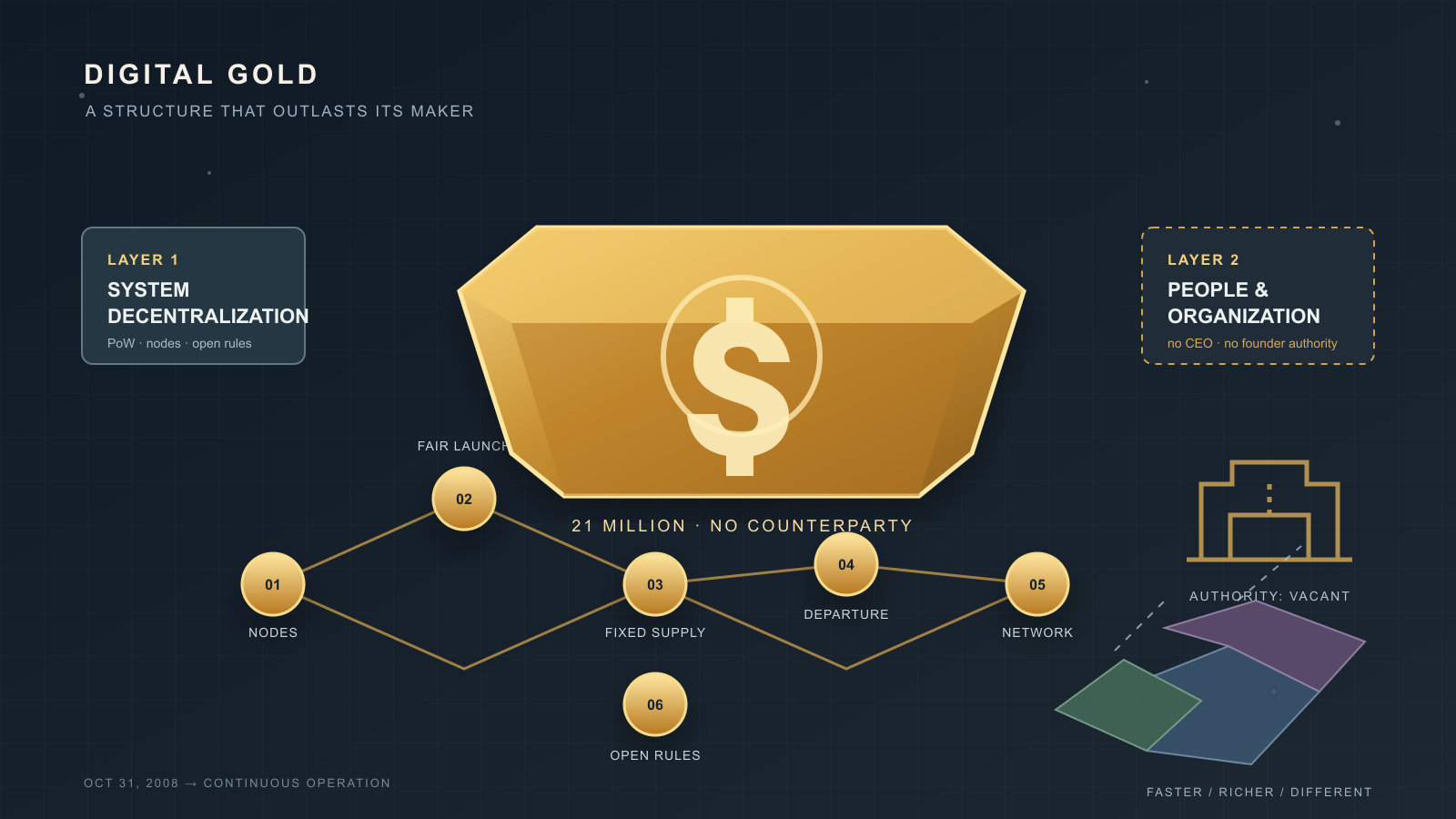
None of this lines up by mechanism. The digital-gold analysis separates a chain’s technical decentralization from the people and organizations who can change its rules, and it is the second layer, not the consensus algorithm, that the twelve-chain comparison found separates the group. Put plainly: concentration is not a proof-of-work problem that proof of stake solved. It is what happens when a block goes to capital, and it happens in the same shape on both sides, three pools on one and one staking provider on the other; in the permissioned designs it is not a side effect at all but the design, since the list is short by construction and someone named writes it. Winner: none. The mechanism does not decide this axis.
Speed: seconds against an hour
| Chain (mechanism) | Block interval | Finality | Source |
|---|---|---|---|
| Bitcoin (PoW) | about 10 minutes | probabilistic; six confirmations, about 60 minutes, by convention | Bitcoin wiki; measured 8.9 to 9.7 minutes on September 19, 2026 |
| Ethereum (PoS) | 12 seconds | two epochs, about 12.8 to 15 minutes | ethereum.org |
| Solana (PoS with PoH) | about 0.27 seconds measured, 0.4 by design | 12.8 seconds | Solana Foundation; public RPC on September 19, 2026 |
| BNB Chain (PoSA) | 0.45 seconds | about 1.1 seconds | BNB Chain docs |
| TRON (DPoS) | 3 seconds | 57 seconds | Chainspect |
| Cardano (PoS) | about 20 seconds | about 2 minutes | Chainspect |
Bitcoin’s finality is not a number but a probability that rises with every block, which is why the sixty minutes is a convention rather than a rule; the consensus design page works through the arithmetic. Every proof-of-stake chain in the table reaches a finalized block in under fifteen minutes, and the ones with a fixed validator set do it in seconds. Winner: the proof-of-stake family, and inside it the chains that gave up an open validator set for a short list.
Choice of new chains: what the founders since 2015 picked
There is no census of every chain launched since 2015 and which mechanism it chose, so this axis rests on one aggregator’s listing. Of the thirty layer-one chains and sidechains on Chainspect’s dashboard with a launch date of 2015 or later, twenty-six run some form of proof of stake, two run proof of work (Bitcoin SV and eCash, both forks of Bitcoin’s code), one runs Stellar’s federated agreement and one a proof of useful work. The listing accepts applications and does not carry Monero, Litecoin, Kaspa or Zcash, so the sample leans toward chains that sought a listing. Winner: proof of stake, on the only tally available, with the sample named.
4. The runners-up
| Mechanism | Origin | Where it runs, and how it has done |
|---|---|---|
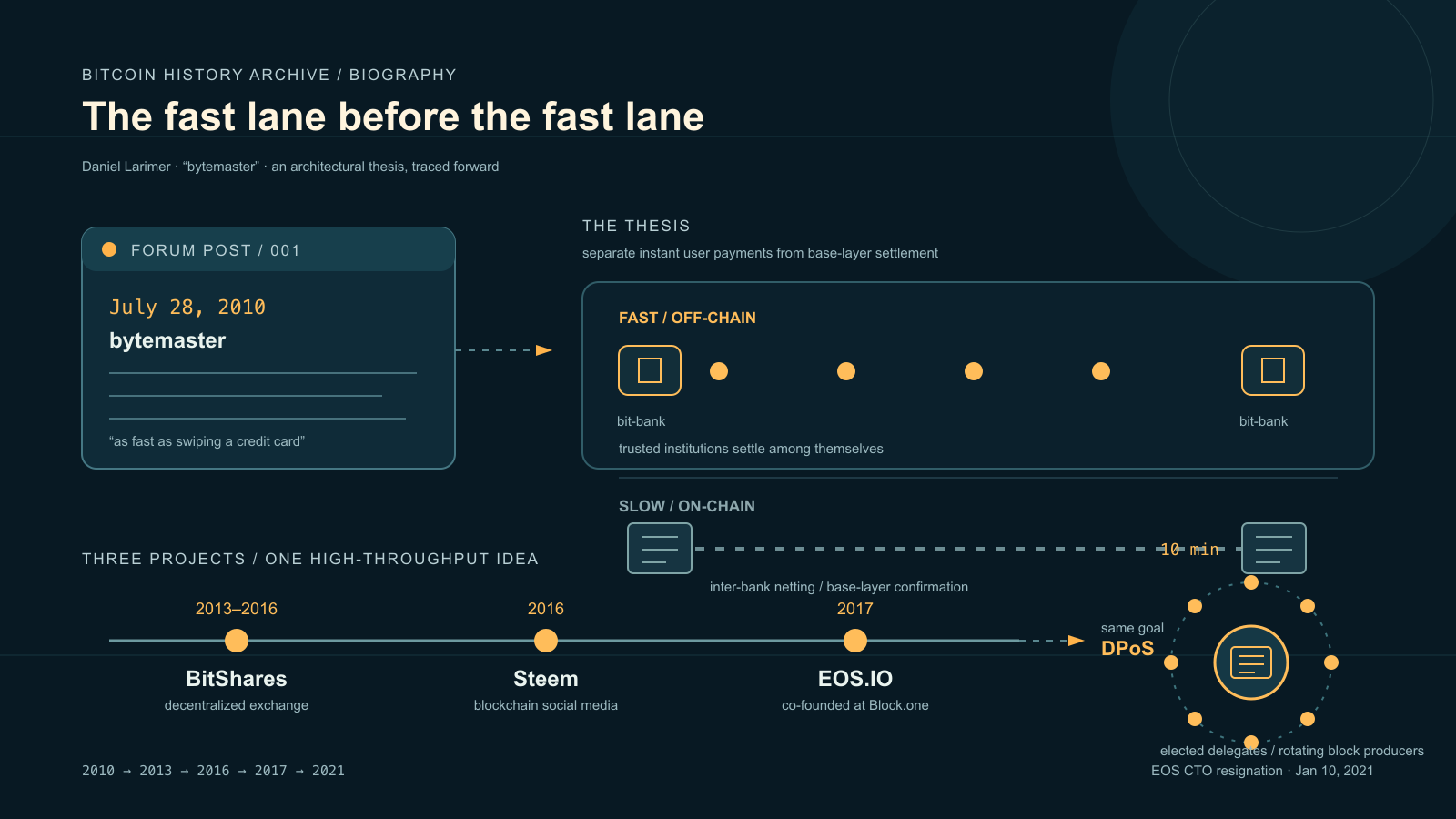
| DPoS | Daniel Larimer’s April 3, 2014 paper, written for BitShares after his 2010 argument that on-chain settlement was too slow for retail payments | TRON: 27 super representatives elected by vote, 3-second blocks, Nakamoto coefficient 14. Sui and, since December 2025, VeChain also use the label. The trade is stated in the design: a short elected list in exchange for speed |
| PoA | Gavin Wood’s poa.md of November 17, 2015, for private chains that use signing keys instead of Ethash; Kovan (March 2017) and Rinkeby (April 2017) ran it as public test networks | BNB Chain’s 45-validator Proof of Staked Authority is the largest chain with the word in its mechanism. Polkadot ran as proof of authority under a single Sudo key from May 26 to June 18, 2020, then moved to nominated proof of stake. VeChain, the largest chain that had run pure proof of authority, left it in December 2025. Red’s twenty trusted ISPs of 2010 have the same shape, on my reading, though the name came five years later |
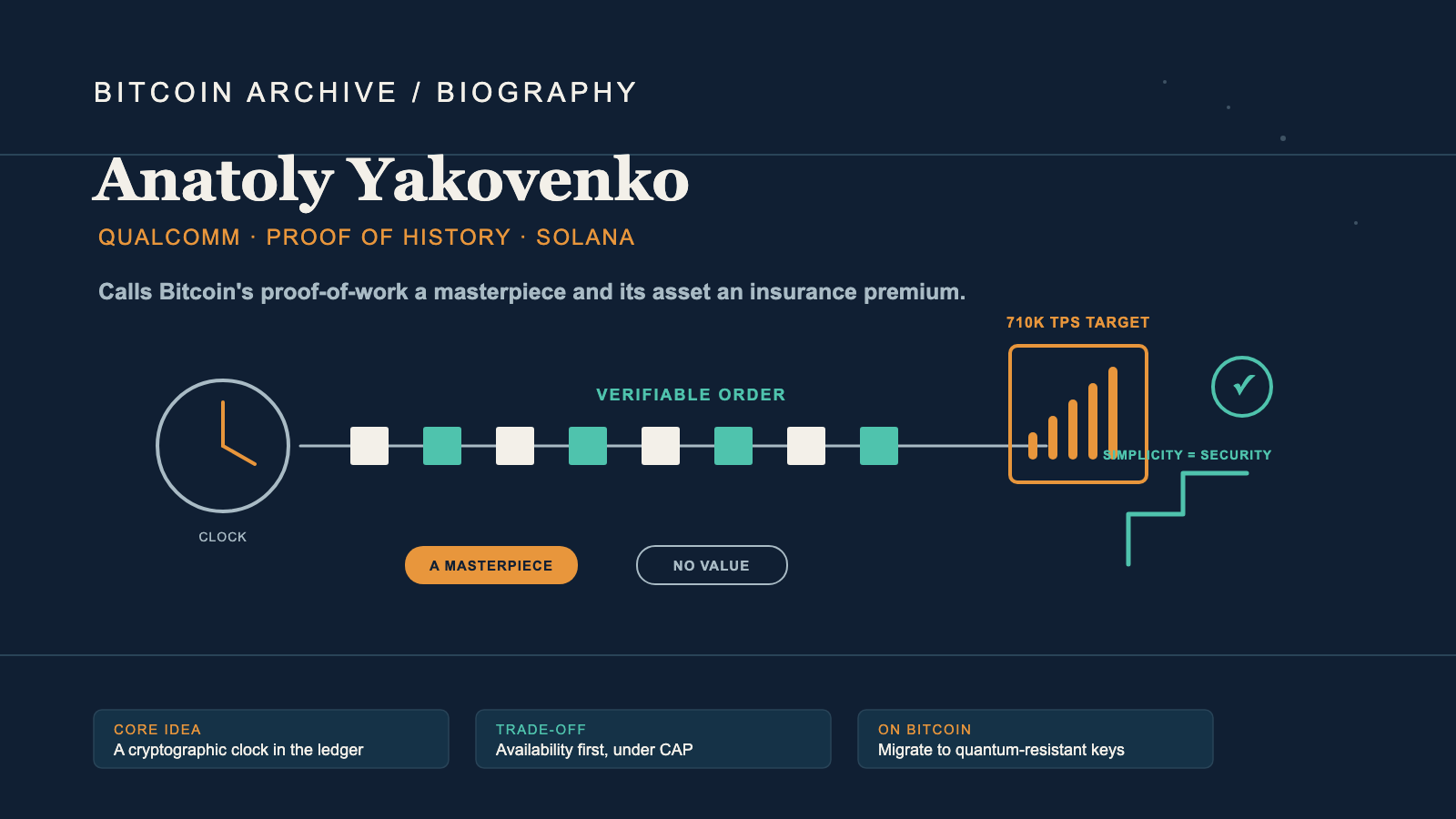
| PoH | Anatoly Yakovenko’s Solana whitepaper: a hash chain that proves time passed between events | Never a mechanism on its own; Solana’s whitepaper pairs it with proof of stake, and the Alpenglow upgrade planned for late 2026 removes it from block production. The Solana overview has the clock and the validator hardware bill |
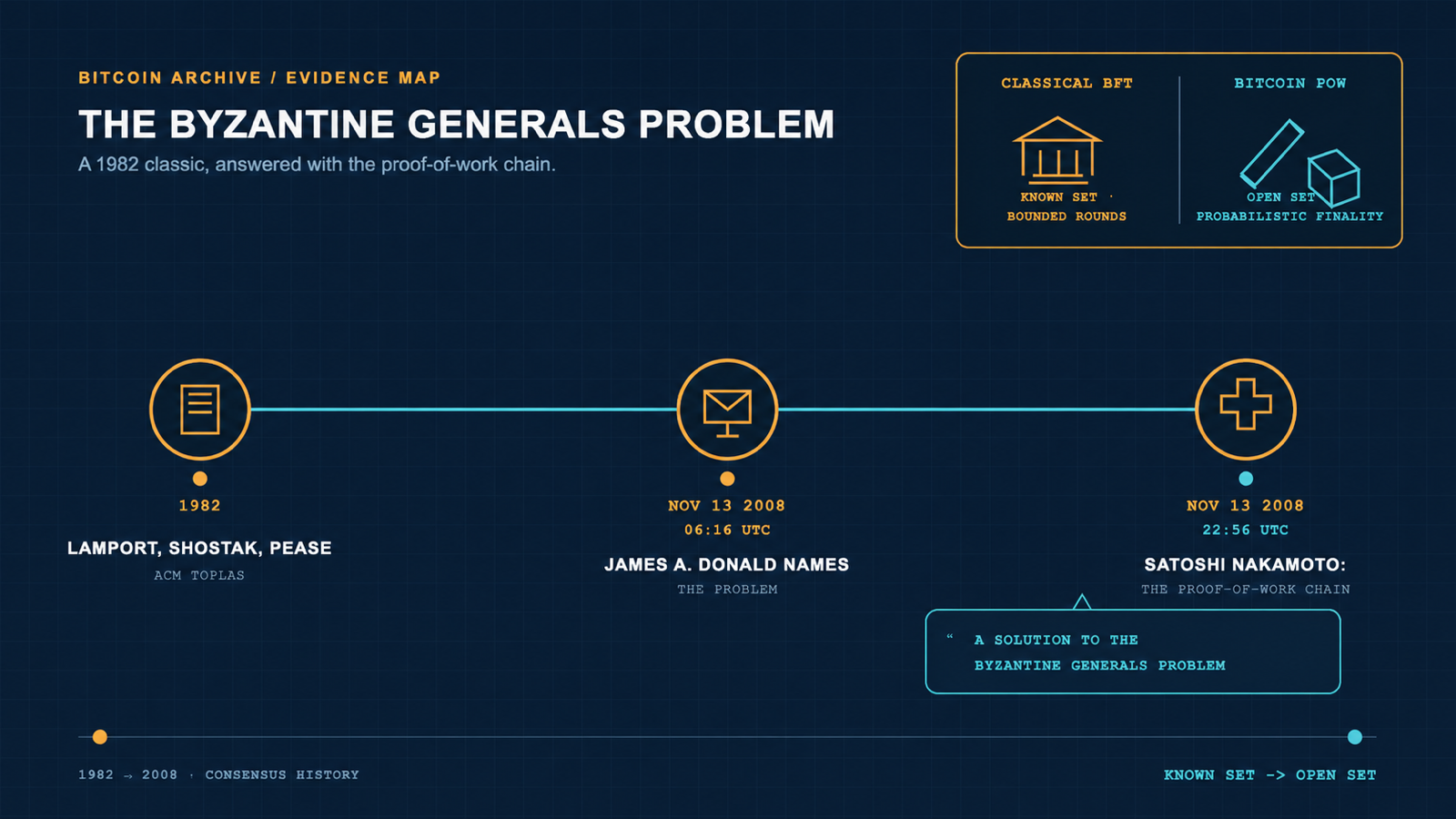
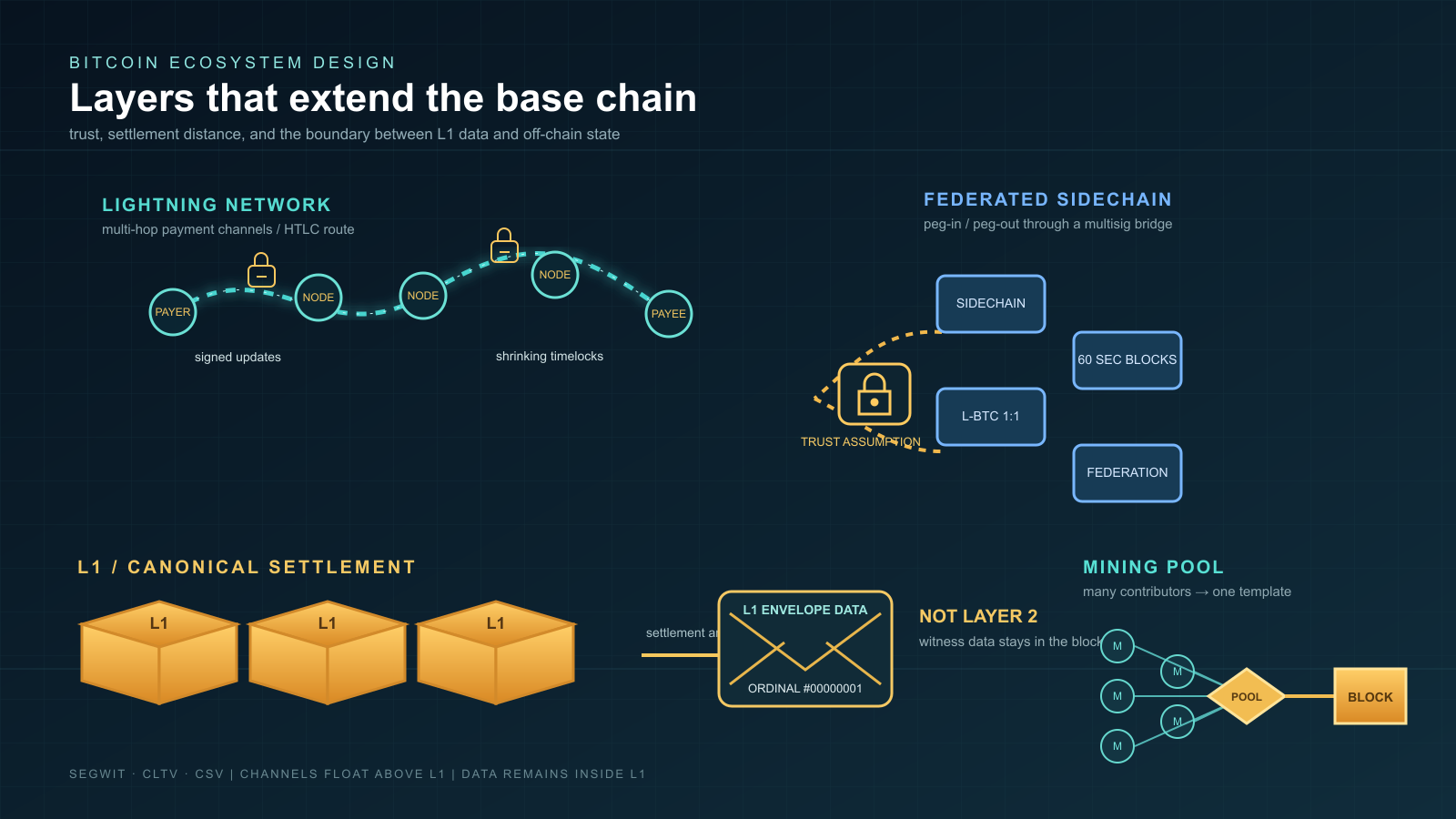
| Federated and BFT | Ripple’s 2014 consensus paper; Stellar’s 2015 protocol; the 1982 Byzantine generals result behind all of them | XRP Ledger settles every three to five seconds on 80% agreement among a validator list two organizations publish; Stellar and Canton reach agreement among nodes each participant chose to trust. Liquid, the Bitcoin sidechain, uses a federation of the same kind. The Byzantine generals analysis is where Satoshi described proof of work as the open-set answer to the problem these designs solve with a closed set |
| Space and capacity | The 2013 proofs-of-space paper; Burstcoin in August 2014; Chia’s mainnet on March 19, 2021 | Chia calls its proof of space and time the only Nakamoto consensus since proof of work; that is the project’s own claim |
| Burn, importance, elapsed time | Iain Stewart’s 2012 forum post; NEM’s 2015 technical reference; Intel’s Sawtooth in 2016 | No chain in the top thousand runs any of them as its consensus; Sawtooth’s proof of elapsed time is archived |
5. The argument, in the words of the people who made it
Satoshi wrote down why he chose proof of work on May 3, 2009, in a letter to Martti Malmi answering a critic who wanted a system that did not burn every available cycle:
Quote from: Satoshi Nakamoto on May 03, 2009, 10:32:26 PM UTCUnfortunately, proof of work is the only solution I’ve found to make p2p e-cash work without a trusted third party. Even if I wasn’t using it secondarily as a way to allocate the initial distribution of currency, PoW is fundamental to coordinating the network and preventing double-spending.
Fifteen months later, two days after the one-person-one-vote reply, he added where he thought the electricity would end up:
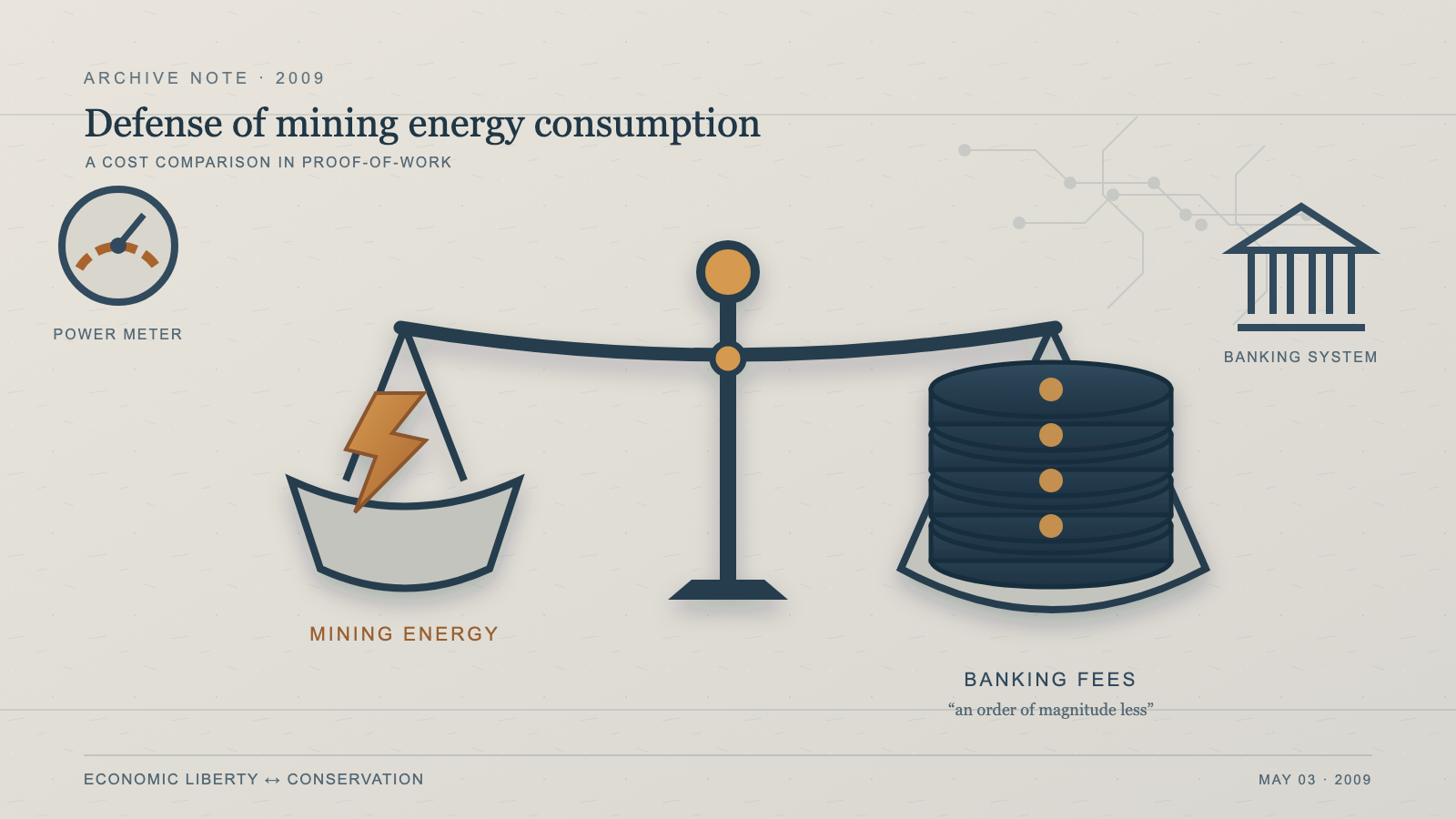
Quote from: Satoshi Nakamoto on August 09, 2010, 9:28:39 PM UTCBitcoin generation should end up where it’s cheapest. Maybe that will be in cold climates where there’s electric heat, where it would be essentially free.
Satoshi never saw the proposal. The term was first argued on the forum on July 11, 2011, eleven weeks after his last known email, which is why none of his 778 archived writings mentions it. The two objections that have followed it since were raised the same day: Gregory Maxwell asked why a check performed by everyone should be replaced by one performed by people who happen to hold a lot of bitcoin, and Meni Rosenfeld noted that it was still unknown whether the scheme could resist concentration of power.
Vitalik Buterin spent 2014 working through the harder objection, that voting costs nothing in proof of stake, and named the problem in his November 25, 2014 essay:
Proof of work has a nice property that makes it much simpler to design effective algorithms for it: participation in the economic set requires the consumption of a resource external to the system.
His answer, set out in the same essay, was to accept that a node coming online after a long absence must be told which chain is real from outside the protocol, a condition he called weak subjectivity, and to punish equivocation by destroying deposits. By December 29, 2016, he had compressed the design into a sentence:
The “one-sentence philosophy” of proof of stake is thus not “security comes from burning energy”, but rather “security comes from putting up economic value-at-loss”.
The reply from the proof-of-work side came from Andrew Poelstra, whose March 22, 2015 paper argued that a deposit inside the system cannot secure the system, because the moment the coins move the deterrent is gone:
One popular alternative, proof-of-stake, is frequently proposed as a mechanism for a cheap distributed consensus. As argued by the author in 2014, this is simply not workable, but nonetheless the idea continues to arise in various forms.
Ten years on, the objection Buterin himself presses is about concentration rather than cost. His October 20, 2024 roadmap essay names economies of scale in staking as one of the biggest risks to the Ethereum base layer, and warns that a single liquid staking token could take over the bulk of the stake; ethereum.org’s own comparison page, updated April 13, 2026, calls the concentration of staked ETH under a few providers a problem that needs to be corrected as soon as possible. Rosenfeld’s question from 2011 has not closed.
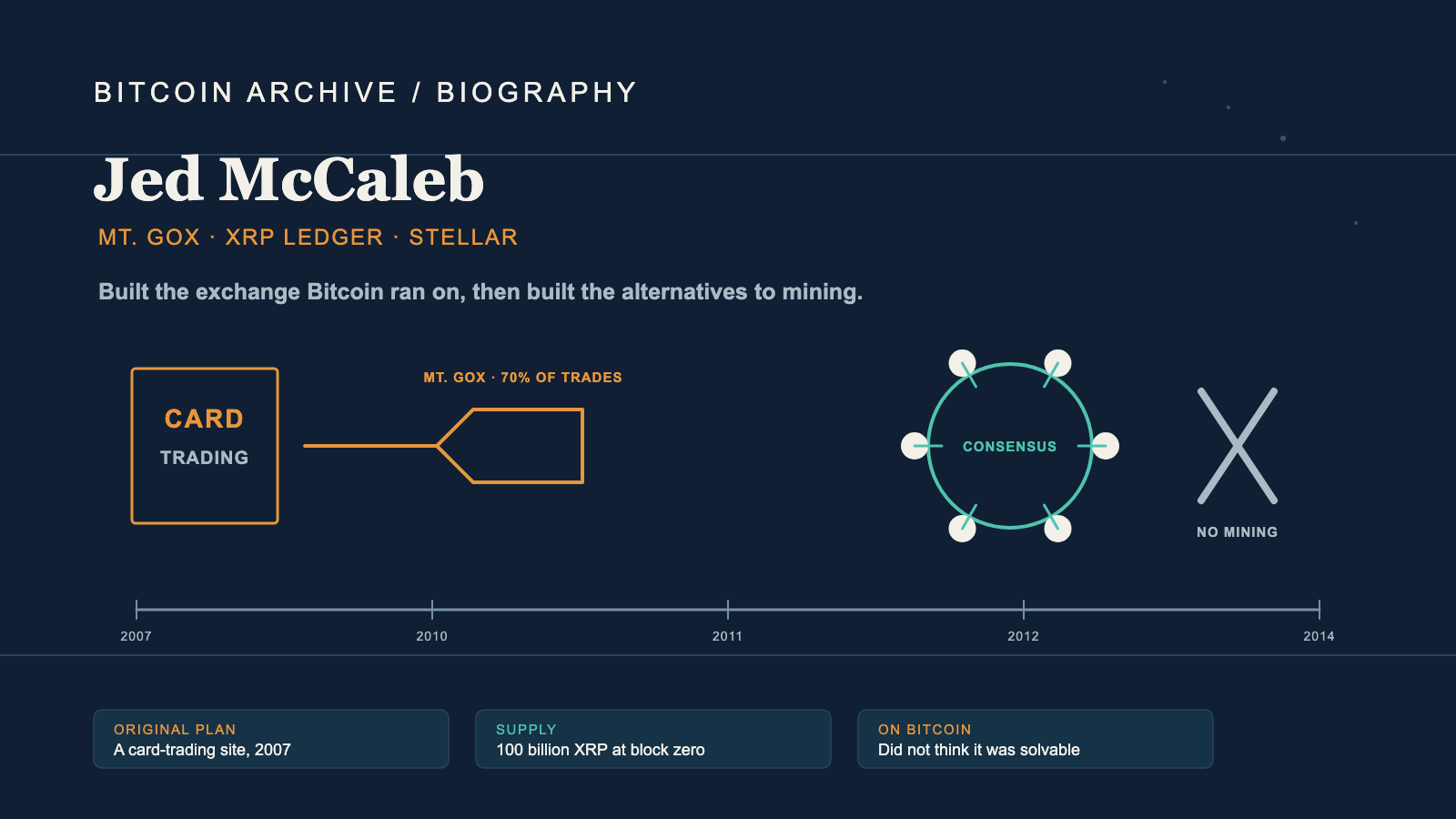
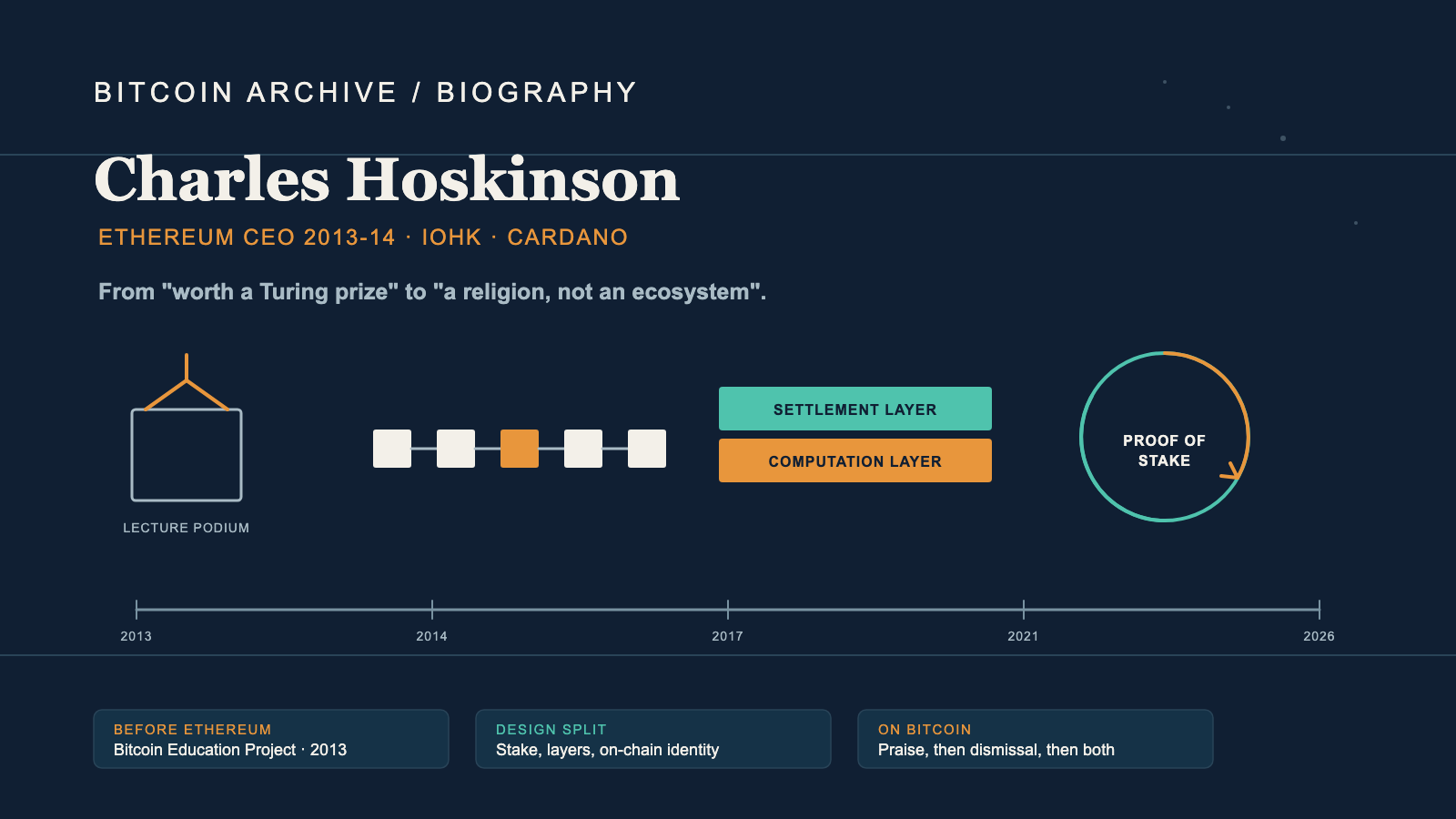
The founders who built the proof-of-stake chains in the table above have said what they think of the mechanism they left behind, and they do not divide into camps. Charles Hoskinson told Bitcoin Magazine in November 2018 that fewer than 10% of the actors control Bitcoin’s hash rate, asked how that could be called decentralized, and in the same breath called Satoshi’s work worth a Turing prize. Anatoly Yakovenko, on the All-In podcast on September 18, 2025, agreed that proof of work is a masterpiece in terms of elegance and simplicity, and said the reason Bitcoin has not been hacked is that it is so simple. Chris Larsen wrote on April 21, 2021 that proof of work is a brilliantly designed technology that is becoming outdated, and put his own money behind the view a year later. Jed McCaleb, who built two ledgers without mining, said Bitcoin’s decentralization is a really awesome model but very hard to replicate.
David Schwartz, Ripple’s former chief technology officer, went the other way on March 23, 2026, after one pool mined seven consecutive blocks: proof of work, he wrote, is a centralizing force that Bitcoin has to keep fighting against. Every one of these is a founder of a competing design conceding the design’s cost while rejecting one of its properties.
Governments have taken a side on exactly one axis, electricity, and stopped short of a ban. On November 5, 2021, the heads of Sweden’s financial supervisor and environmental agency asked the European Union to consider prohibiting proof-of-work mining, citing the 99.95% reduction that alternatives promised. On March 14, 2022, the European Parliament’s economic committee rejected an amendment that would have set environmental standards for consensus mechanisms, by 30 votes to 23 with six abstentions, and the MiCA regulation adopted in 2023 requires service providers to disclose the climate impact of each asset’s mechanism rather than restricting any. Fifteen days after the committee vote, Greenpeace USA launched a campaign to persuade Bitcoin to change its code, with Larsen’s climate foundation as its first funder.
On September 8, 2022, a week before the Merge, the White House Office of Science and Technology Policy reported that switching to proof of stake could cut crypto-asset electricity use to less than 1% of its level, and recommended that if voluntary measures failed the administration should consider limiting high-intensity mechanisms.
The United States regulator then turned the same distinction against proof of stake: in February 2023 the SEC charged Kraken over its staking service and collected $30 million, in June 2023 it added Coinbase’s staking program to its complaint, and in May 2025 the agency’s staff stated that protocol staking as such does not involve the offer of securities. The mechanism that saved the electricity is the one whose reward the regulator treated, for two years, as somebody else’s promise of profit.
6. The verdict
Bundle the seven axes and they fall into two groups. The record, meaning years of operation, incidents survived and where the capital sits today, belongs to proof of work, and every number in that group has Bitcoin’s seventeen years inside it. The efficiency of the design, meaning electricity, the nominal cost of a majority, seconds to finality and what new chains have chosen since 2015, belongs to proof of stake, and every number in that group was measured on a chain that is younger than the one it beats.
Neither group contains decentralization, because the same source puts the proof-of-stake family at 1 and at 176 with Bitcoin in between, and a mechanism that produces both ends of the scale is not what sets it.
Every mechanism on this page hands the block to whoever committed the most capital; the permissioned ones add a gatekeeper on top. Nothing here makes a small holder’s vote count more, and no design in the record claims to.
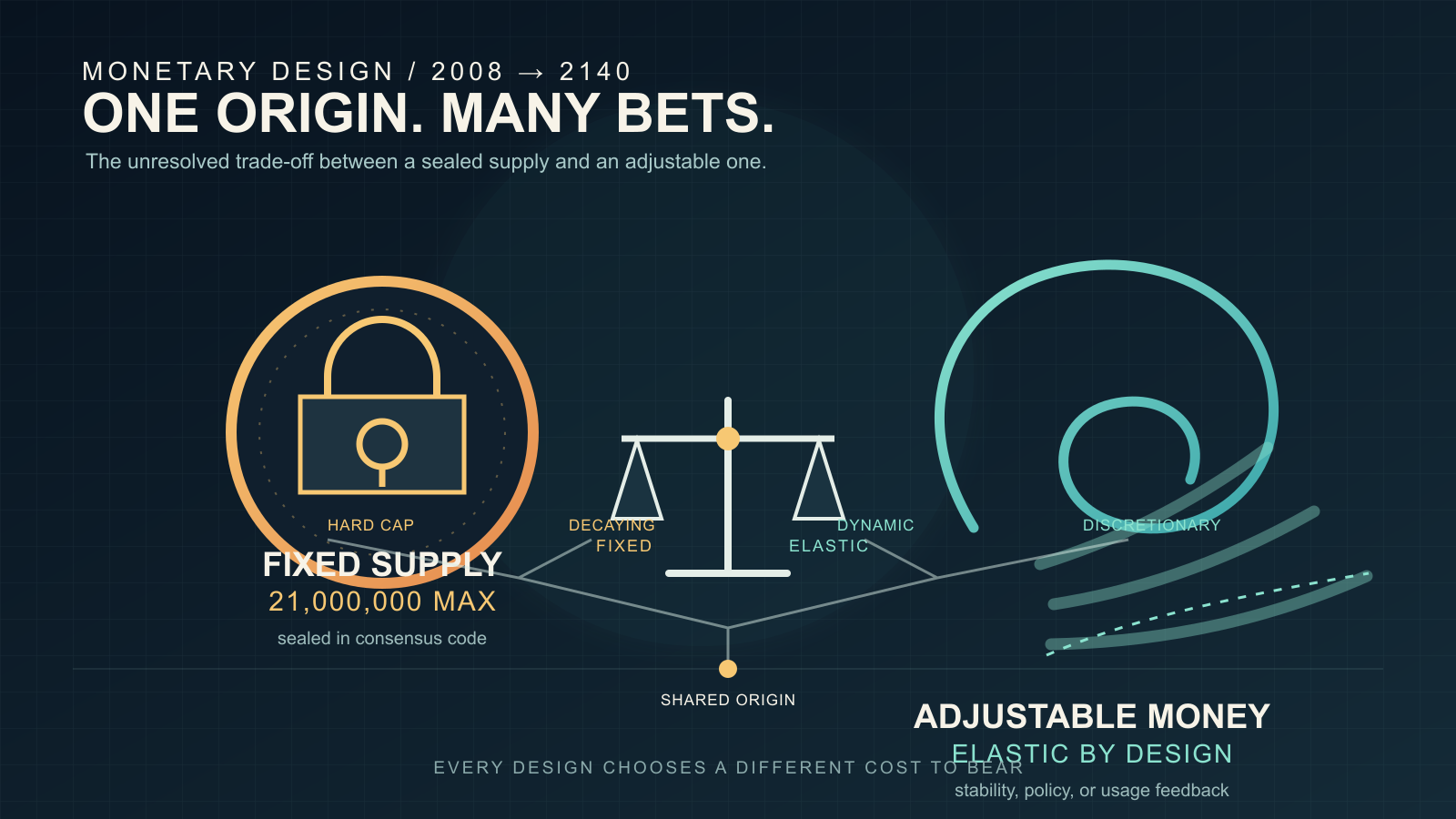
What sets it is the thing the altcoin comparison found in the last column of its table: who can change the rules. Ethereum’s issuance and its staking penalties are parameters that a named foundation coordinates changing; Polkadot’s holders voted a supply cap into existence in 2025; TRON’s producers are elected by whoever holds the most coins. Bitcoin’s difficulty adjustment and its cap have no one left to petition, and that absence, not the hashing, is what its seventeen years have been accumulating.
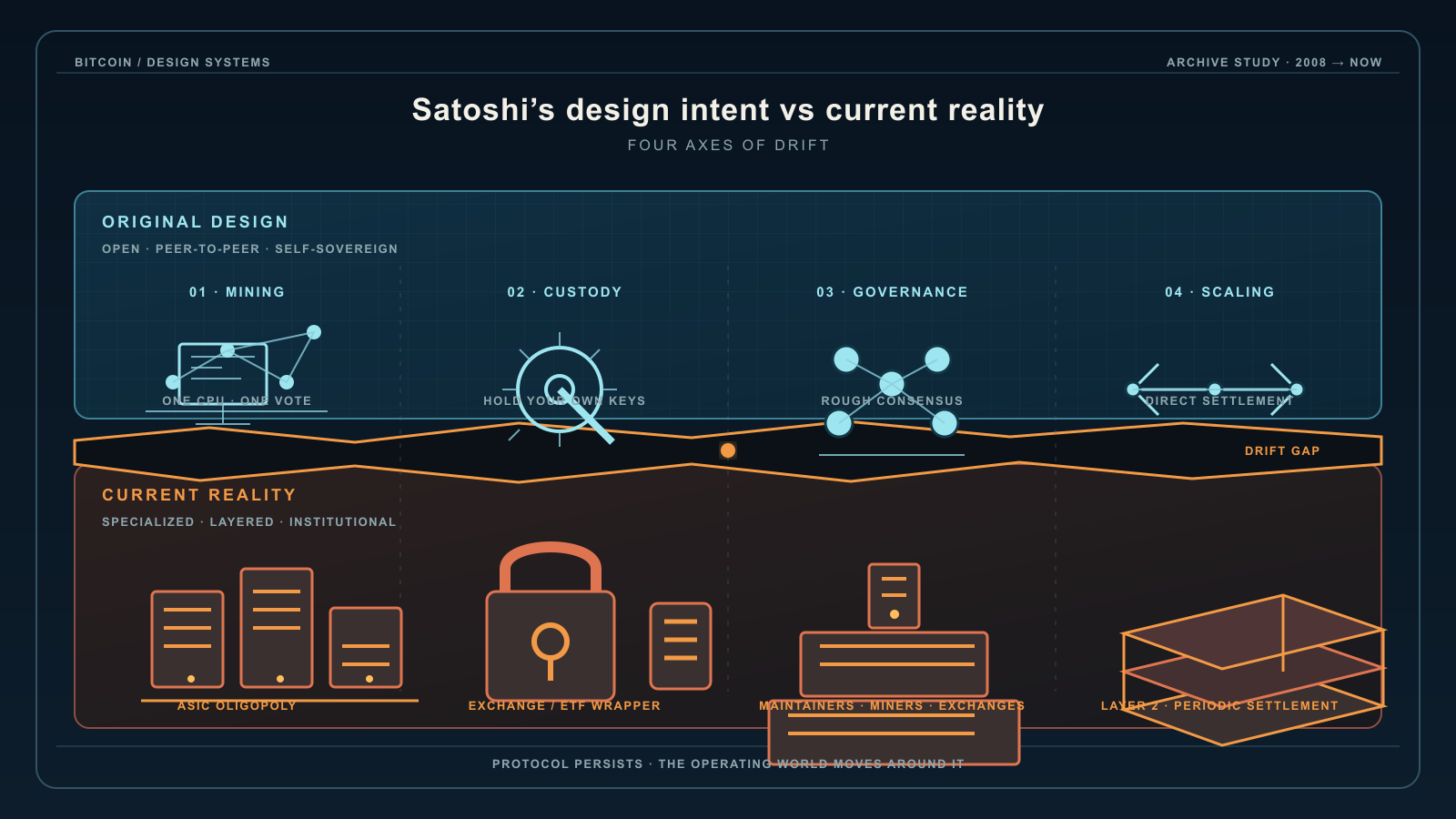
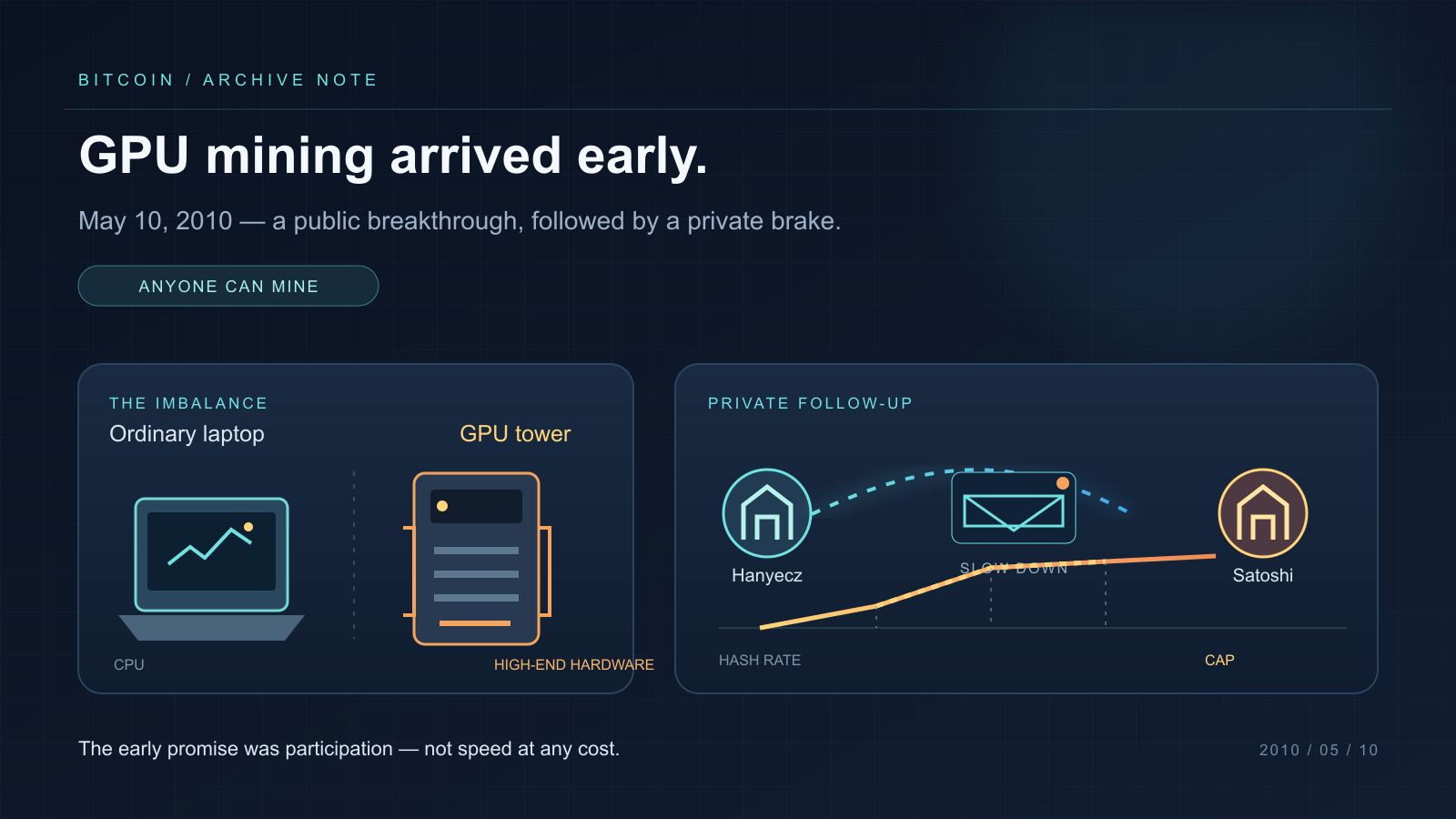
Is there a mechanism in which someone without money wins? Not in this record, and Satoshi said as much before anyone else tried. The whitepaper’s “one-CPU-one-vote” was the closest anyone came, because in January 2009 a CPU was something nearly everyone already owned; by May 2010 he was asking Laszlo Hanyecz to hold back his GPU miner, writing, in Hanyecz’s recollection, that it was inevitable that compute clusters would eventually take all the generated coins and that he did not want to hasten that day; by 2013 the ASICs had done it.
The designs that try to count people instead of capital, proof of personhood among them, all need someone to certify that a person is a person, which is a list again. NEM’s proof of importance weights an account by its activity, and requires 10,000 XEM vested before it counts at all. Proof of space counts disks, which are bought.
What a person without capital gets from the best of these designs is the right to verify, which every open chain grants for the price of a computer, and the right to hold, which the fixed supply protects. Neither is the right to write the next block. Nobody who built one of these mechanisms has claimed otherwise in the record, and the honest reading of Satoshi’s August 2010 sentence is that he knew it: there was nothing else finite to count.
So here is where I land. If I am asked which mechanism is the better piece of engineering for the work it does, the electricity number ends the argument and proof of stake wins it. If I am asked which one I would put the thing I cannot afford to lose on, I weigh the record more heavily than the efficiency, because the efficiency was measured on chains where someone can still change the rule and the record was written on one where no one can. Proof of work wins the group that cannot be bought, proof of stake wins the group that can be engineered, and the axis everyone argues about belongs to neither.
I went into the numbers expecting the mechanism to explain the whole picture, and it explains half of it. It explains why Ethereum’s electricity fell four orders of magnitude on a single day in September 2022, and it explains why a chain with 27 elected producers finalizes in under a minute. It does not explain why one proof-of-stake chain needs 176 entities to stop it and another needs 1. What decides that is who can change the rules. Satoshi’s sentence from August 2010 says only what could be counted as a vote, not what should be, and sixteen years later the argument is still about what to count while the answer sits somewhere else.