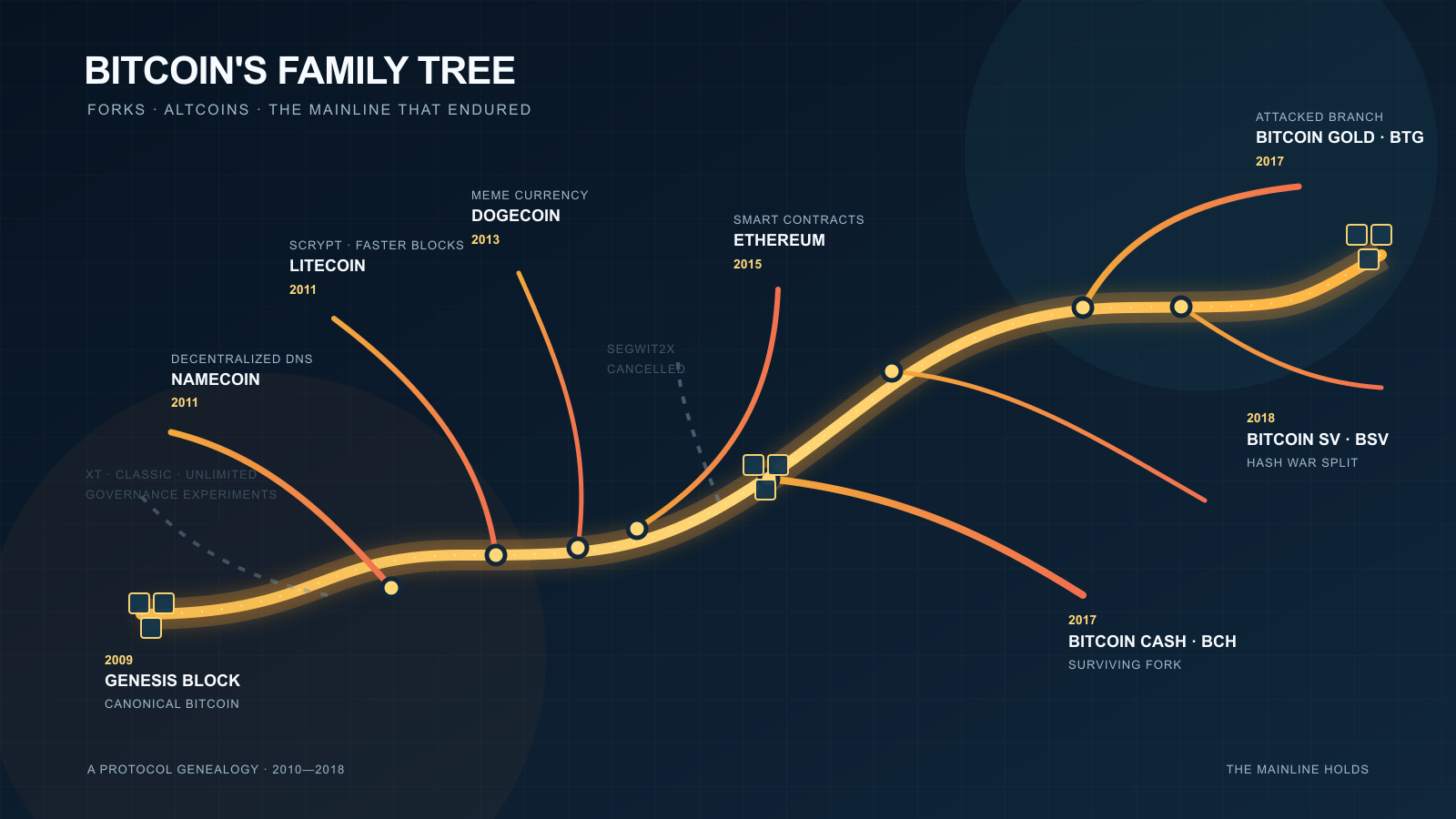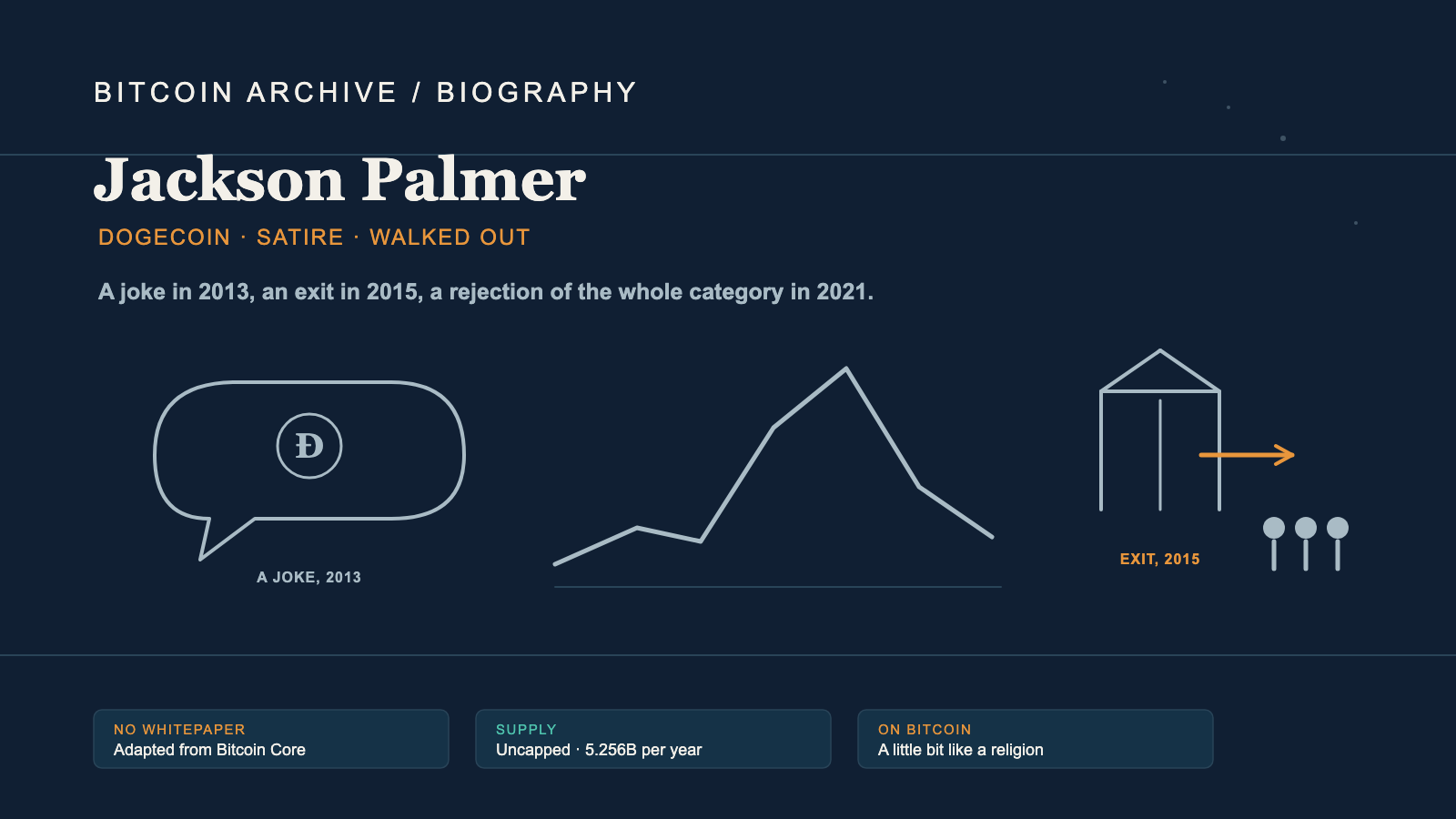
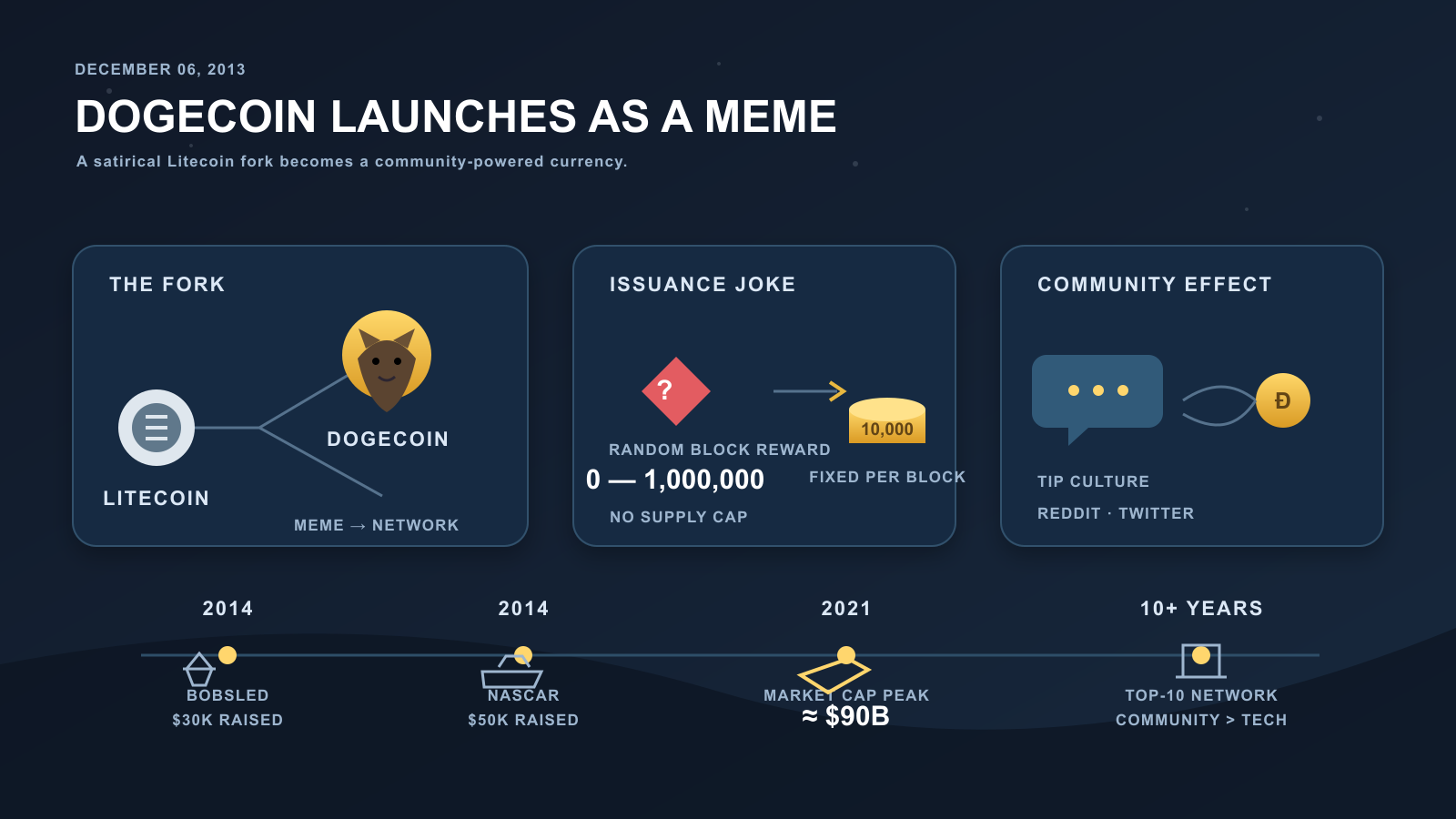
On December 6, 2013, Billy Markus (a software engineer at IBM) and Jackson Palmer (a marketing employee at Adobe Sydney) launched Dogecoin (DOGE), a cryptocurrency built around the “Doge” Shiba Inu internet meme. The initial framing was explicitly satirical: Palmer, observing the proliferation of cryptocurrencies in 2013, registered dogecoin.com as a joke about cryptocurrency speculation. Markus saw the joke, contacted Palmer, and turned it into a working chain by forking Litecoin.
Dogecoin’s launch parameters:
- Codebase: Fork of Litecoin (which had forked Bitcoin)
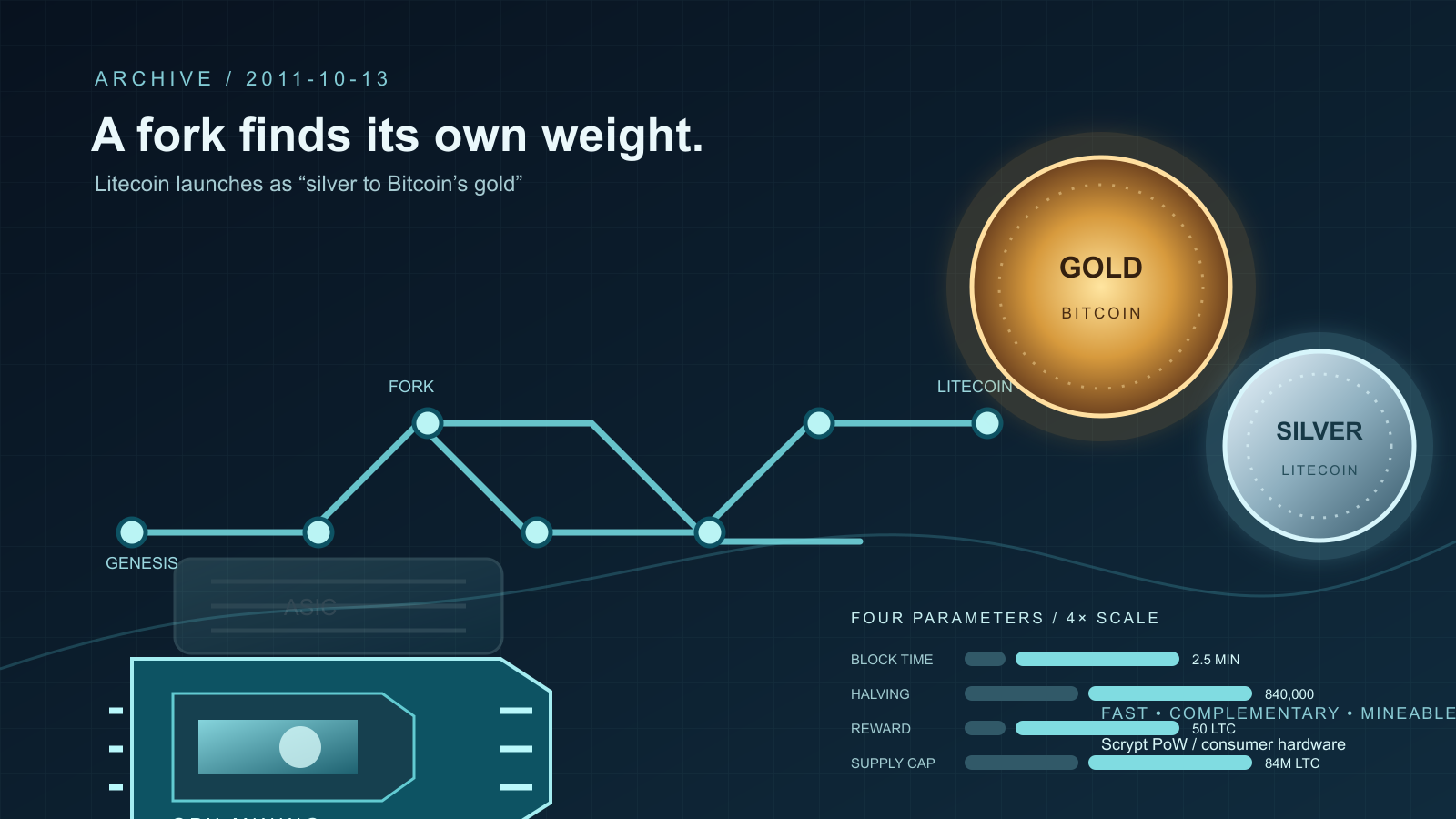
- Proof-of-work: Scrypt (inherited from Litecoin); merge-mineable with Litecoin from 2014
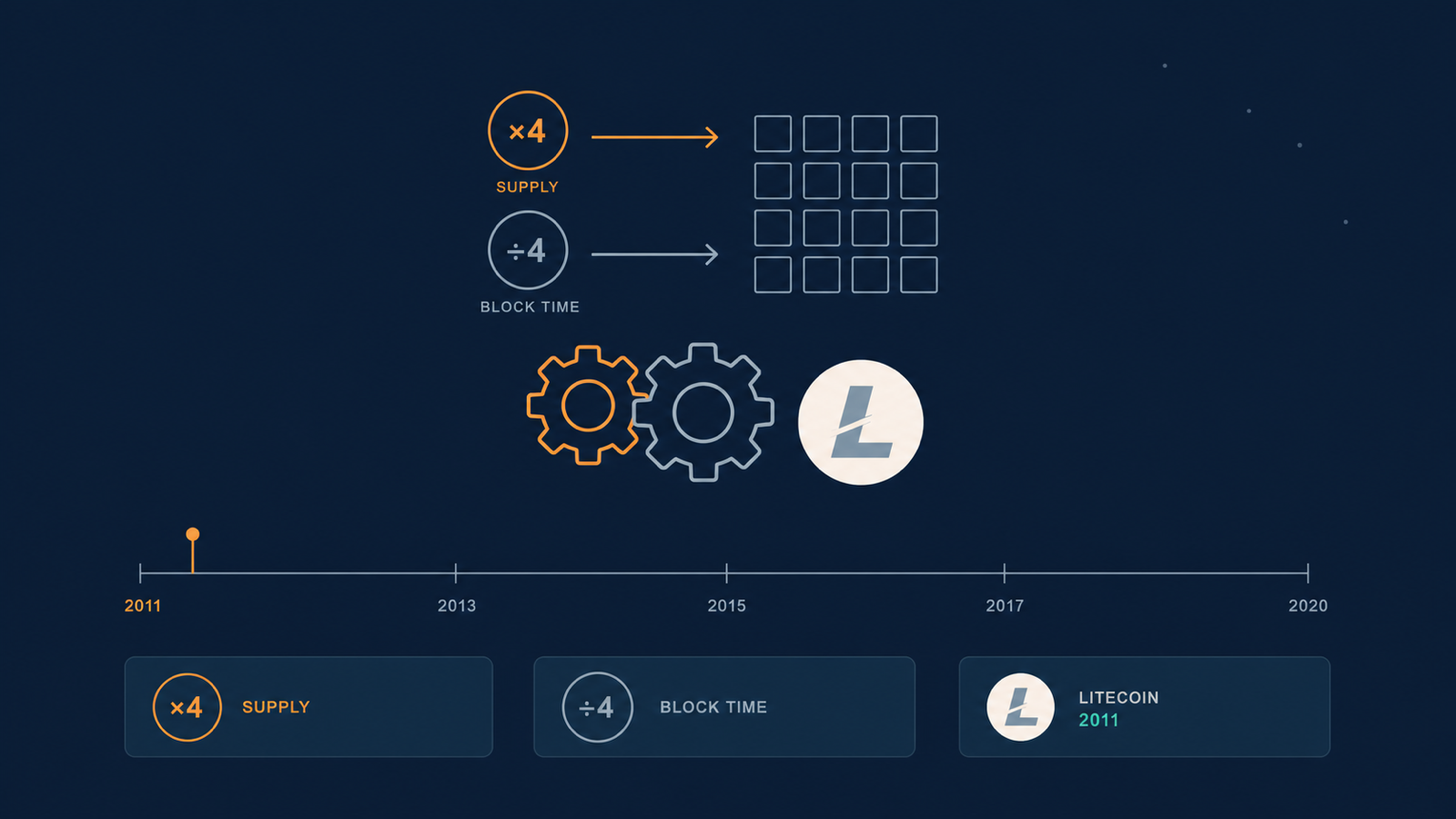
- Block time: 1 minute (1/2.5 of Litecoin’s, 1/10 of Bitcoin’s)
- Initial supply schedule: Random block reward (between 0 and 1,000,000 DOGE per block) for the first ~100,000 blocks, intended as a comedic touch; switched to a fixed 10,000 DOGE per block after February 2014
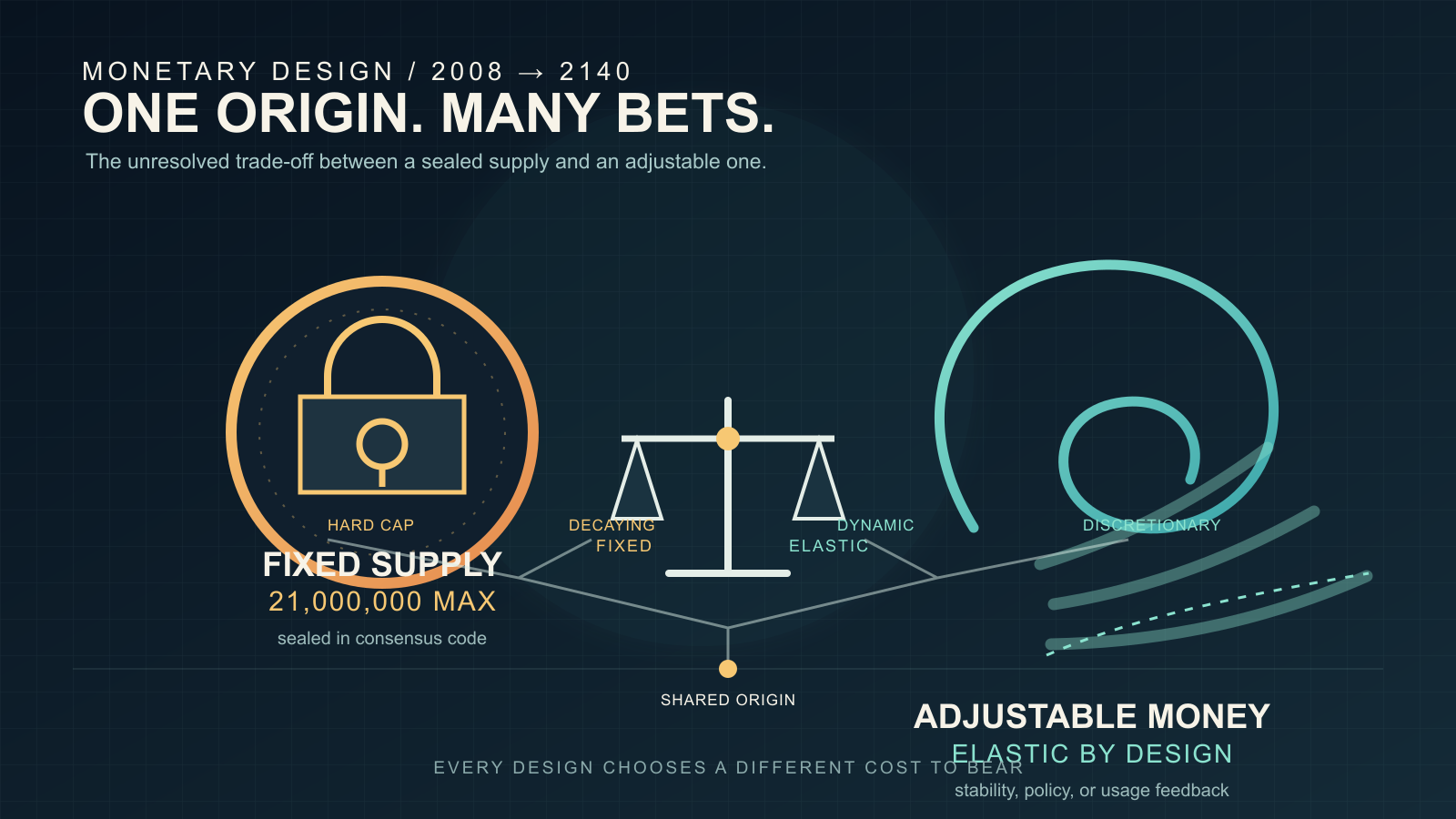
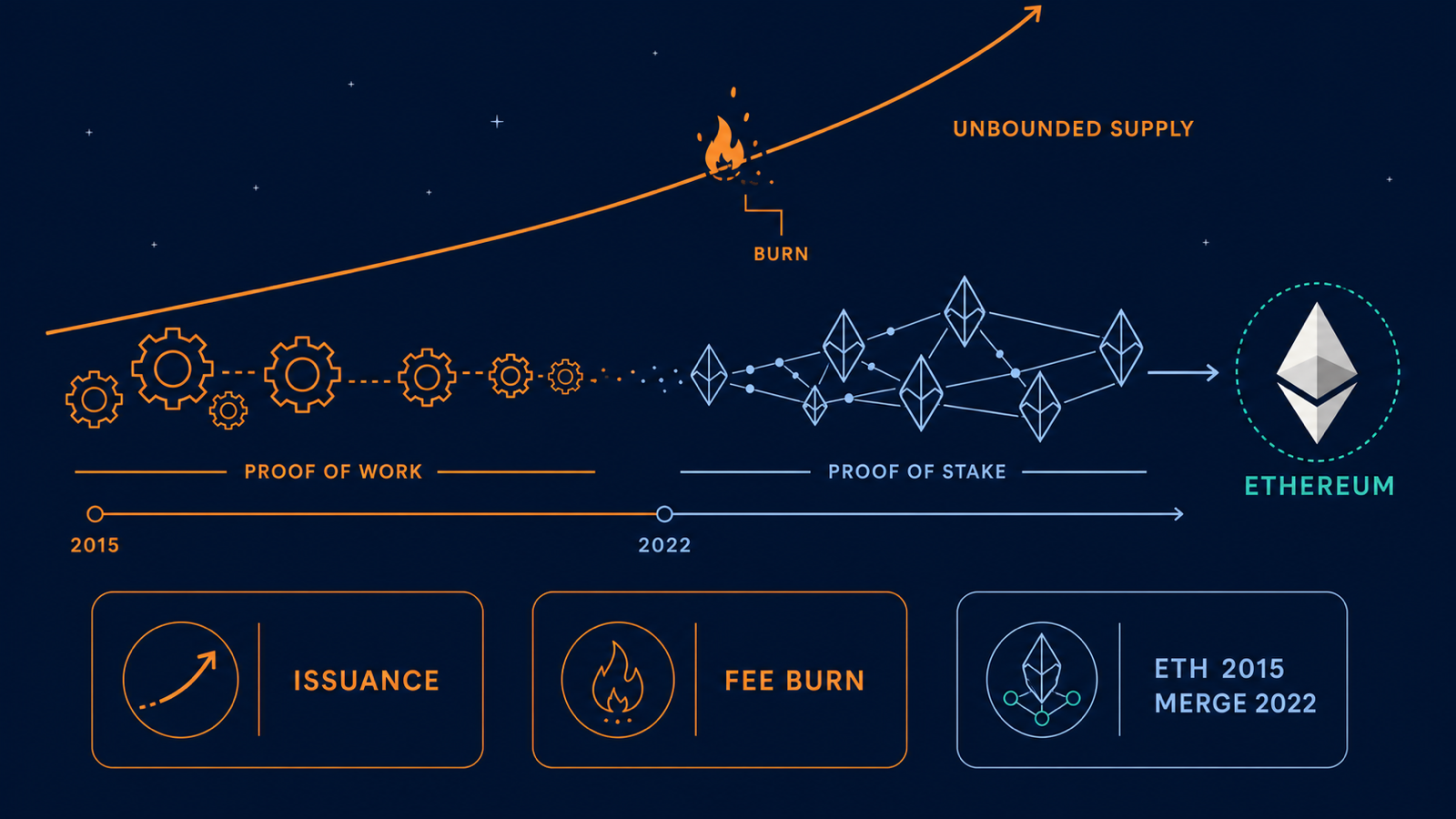
- Supply cap: None — initially 100 billion DOGE was treated as a soft cap, but Markus subsequently confirmed Dogecoin would continue producing 5.256 billion new DOGE per year indefinitely, making it explicitly inflationary
The unbounded supply was a deliberate design difference from Bitcoin and Litecoin. Markus argued that an inflationary chain would behave better as a tipping currency for online use — the framing that produced the early Dogecoin community on Reddit (r/dogecoin) and Twitter, where small DOGE tips for posts and comments became a culturally distinctive use of cryptocurrency. The fixed-supply vs. adjustable-money analysis develops the same rationale at length: a currency whose supply keeps expanding removes the incentive to hoard it, which is exactly the “spend it, don’t save it” behavior a tipping currency needs.
Notable moments in Dogecoin’s history:
- 2014: Dogecoin community raises ~$30,000 in DOGE to sponsor the Jamaican bobsled team’s trip to the Sochi Winter Olympics, and another ~$50,000 to send NASCAR driver Josh Wise to a race with a Dogecoin-themed car.
- 2015: Dogecoin’s co-creator, Jackson Palmer, leaves the project, citing the toxic culture of cryptocurrency speculation.
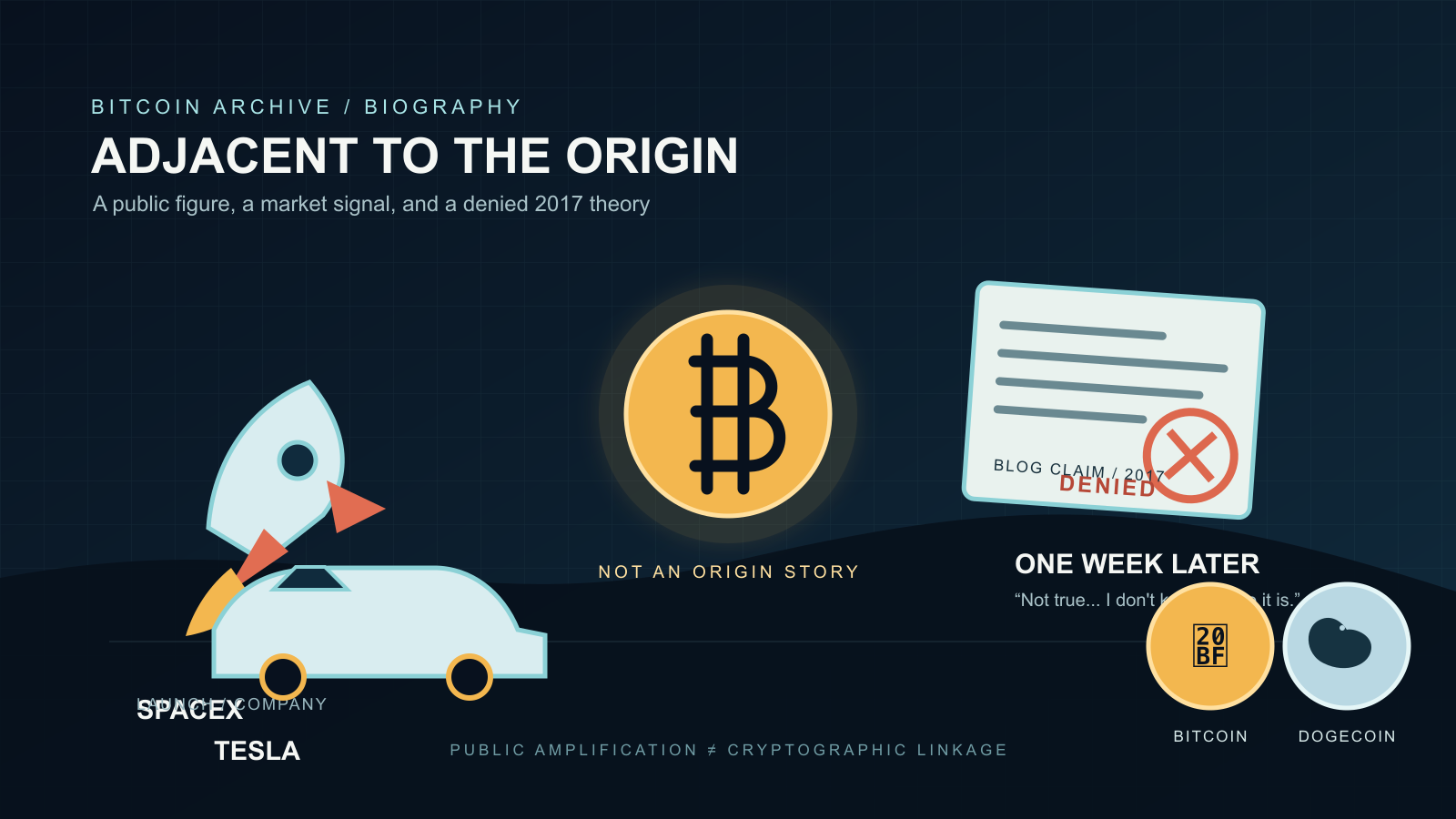
- 2021: Elon Musk’s repeated tweets and Saturday Night Live appearance (“The Dogefather”) drive DOGE to a peak market capitalization of approximately $90 billion in May 2021. Tesla begins accepting DOGE for merchandise the same year.
- 2021 (August): Markus, who had stepped back from active development after 2015, joins the reformed Dogecoin Foundation’s advisory board as its “community and memes” adviser, alongside Ethereum’s Vitalik Buterin and Elon Musk representative Jared Birchall.
Dogecoin’s lasting significance is sociological rather than technical. It is the proof case that a cryptocurrency’s network effect can be carried by community and meme rather than technical differentiation — the chain technologically lags Bitcoin and Litecoin, but its retention of an active community and recognizable brand has kept it in the top-10 cryptocurrencies by market capitalization for over a decade. The full sequence of Bitcoin-derived chains is recorded in the Bitcoin family-tree analysis.