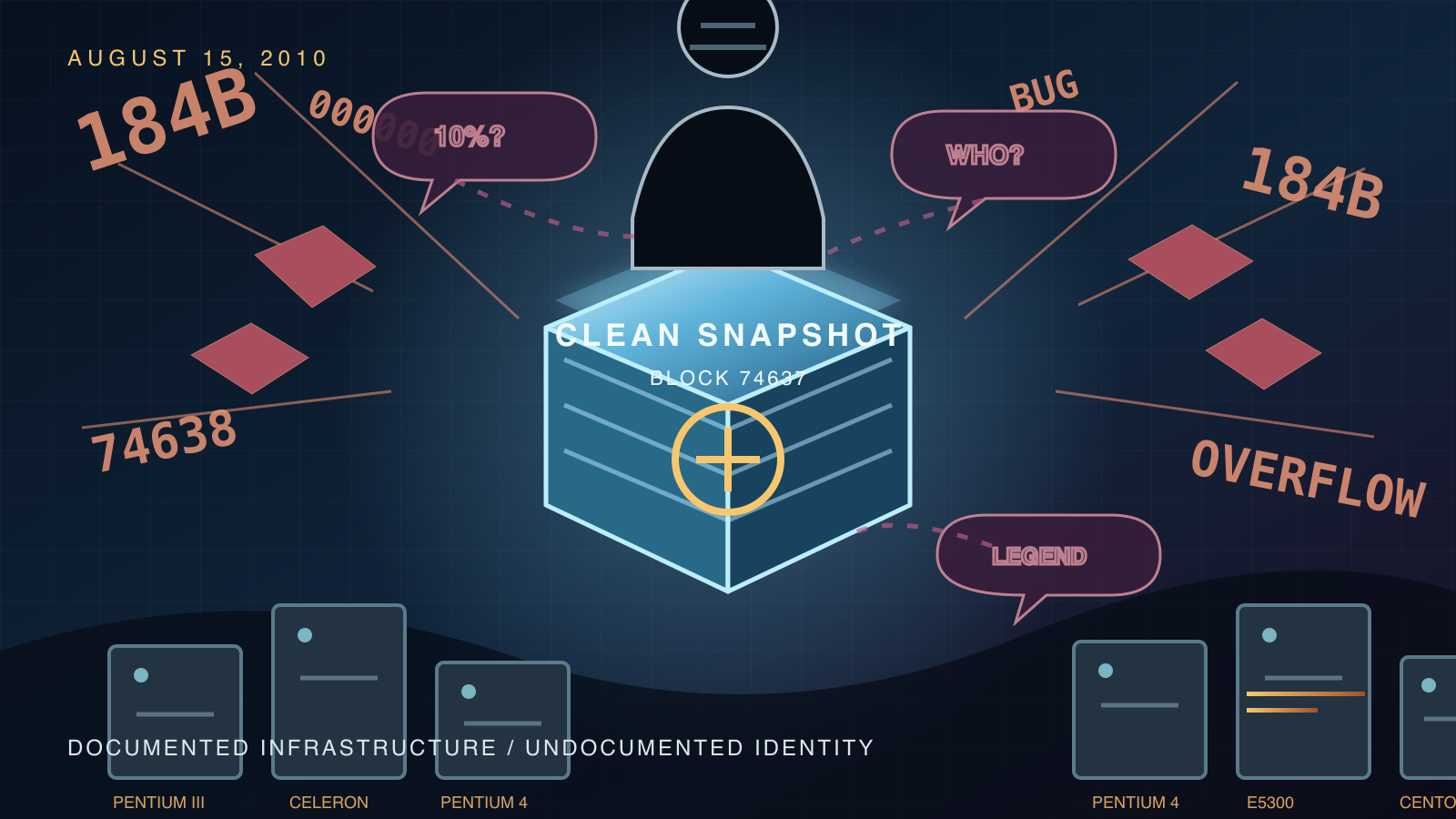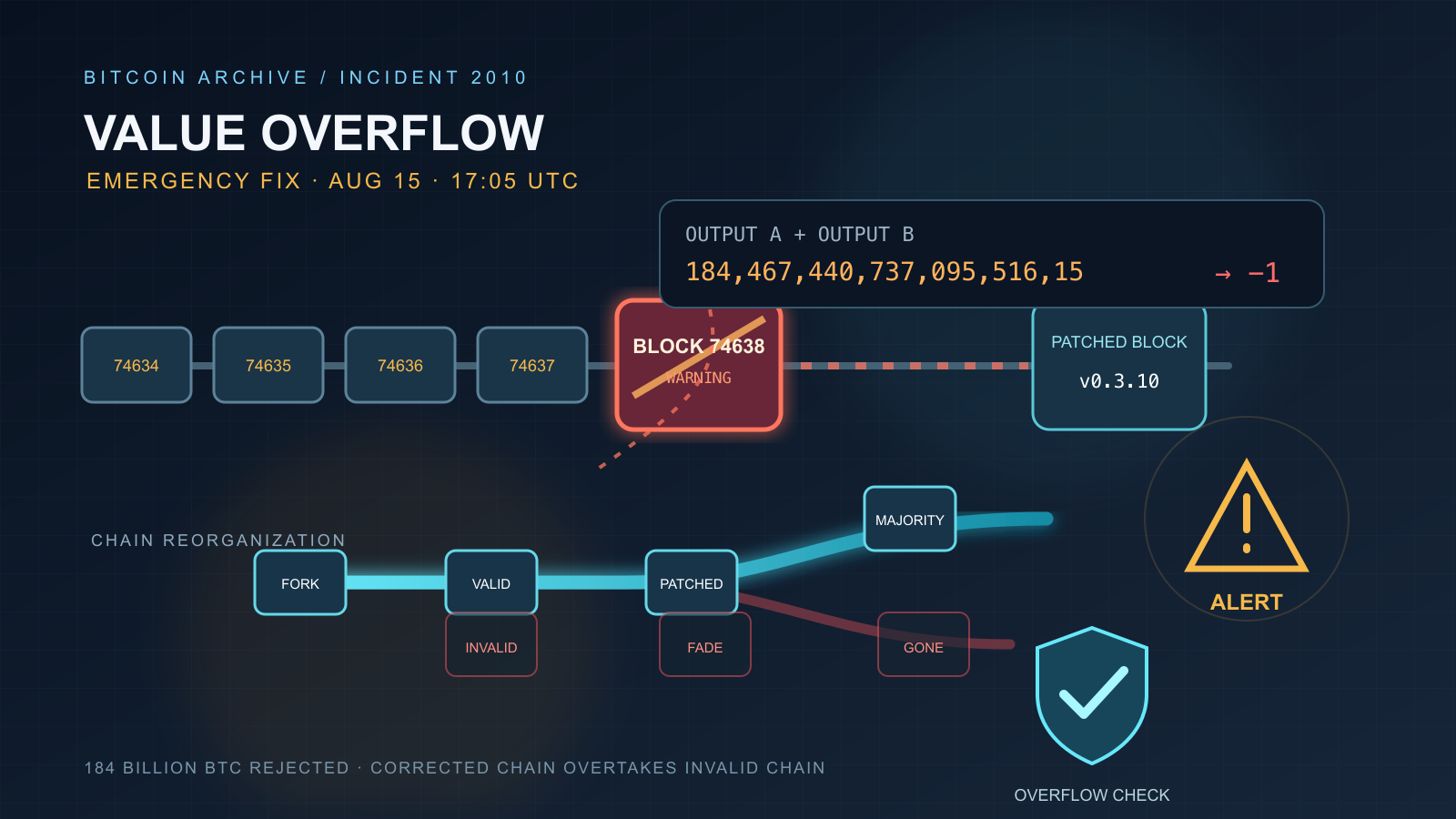
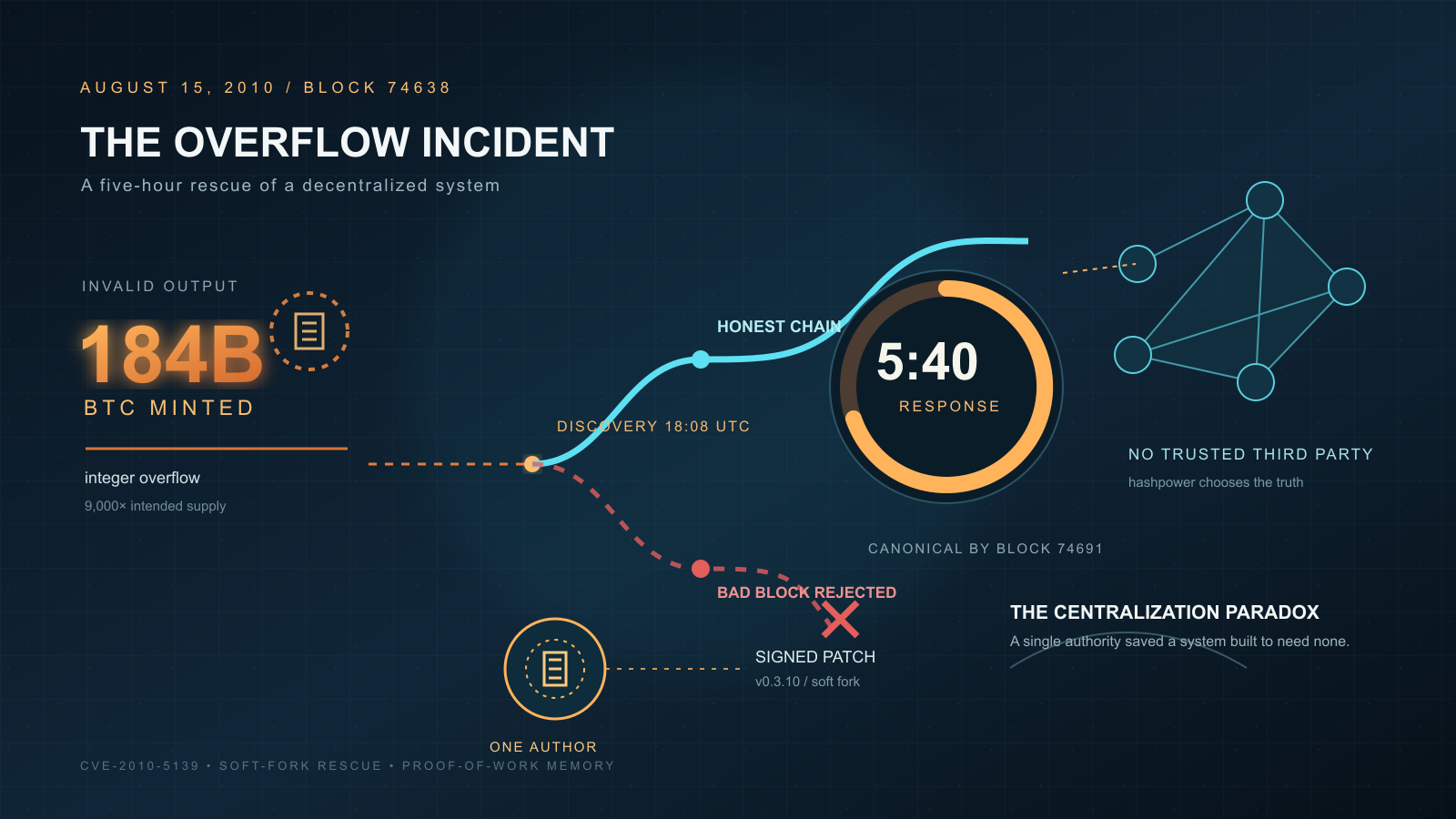
184 billion BTC was minted in a single block. Even now, the number looks unreal. But the stranger part begins after the bug was found: old-rule nodes accepted the block, patched nodes rejected it, and Bitcoin briefly carried two competing histories. The aftermath entry for the value-overflow incident records the discovery, the patch, and the chain reorganization. Here, the trail continues into the rescue itself—what it took to erase an impossible transaction while the network disagreed about which history was valid.
1. How the soft-fork rescue actually worked
The fix was a soft fork, not a hard fork. That distinction matters because it explains why 53 blocks of valid mining were enough to retire 184 billion BTC from canonical history without coordinating every node operator.
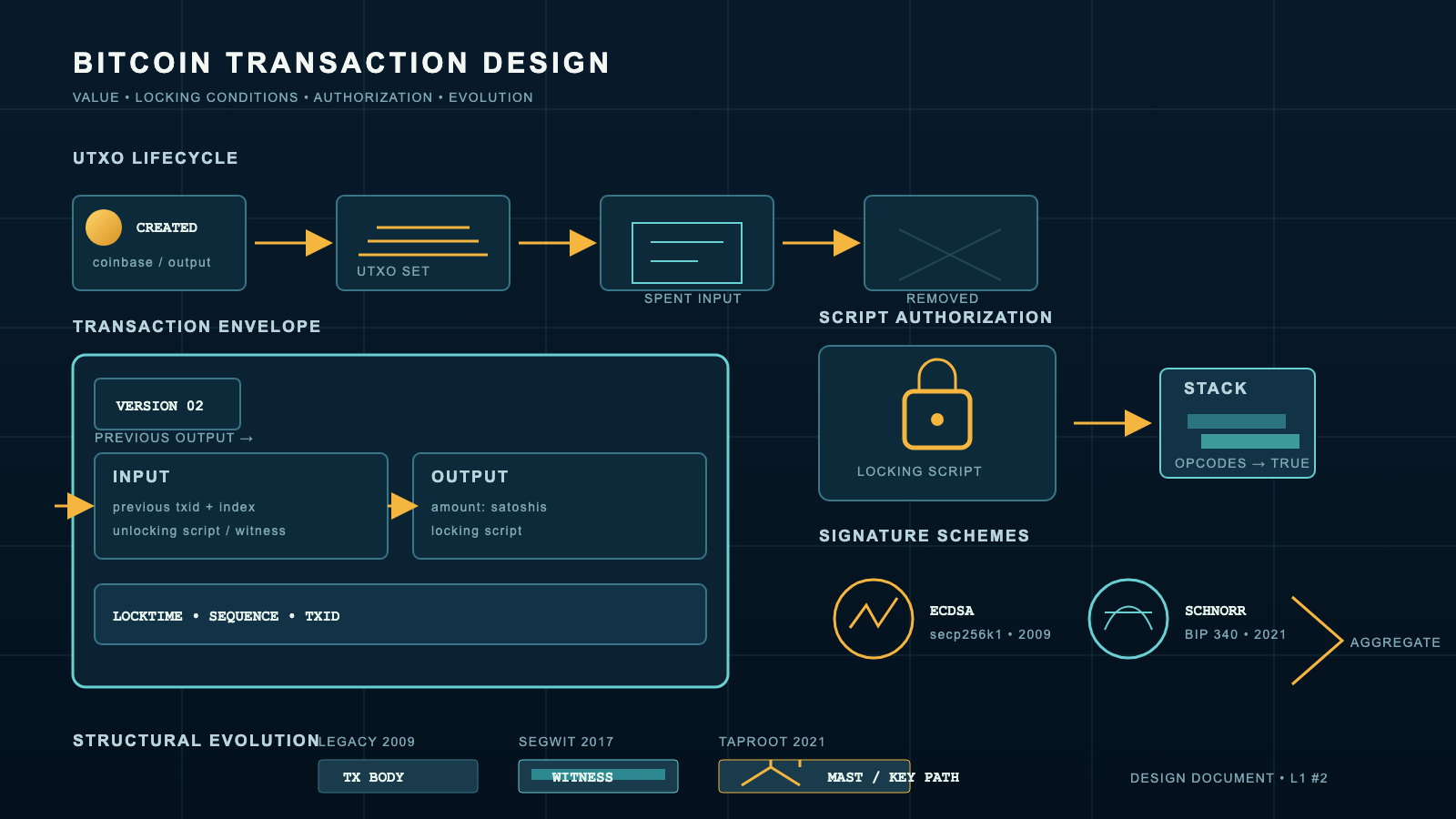
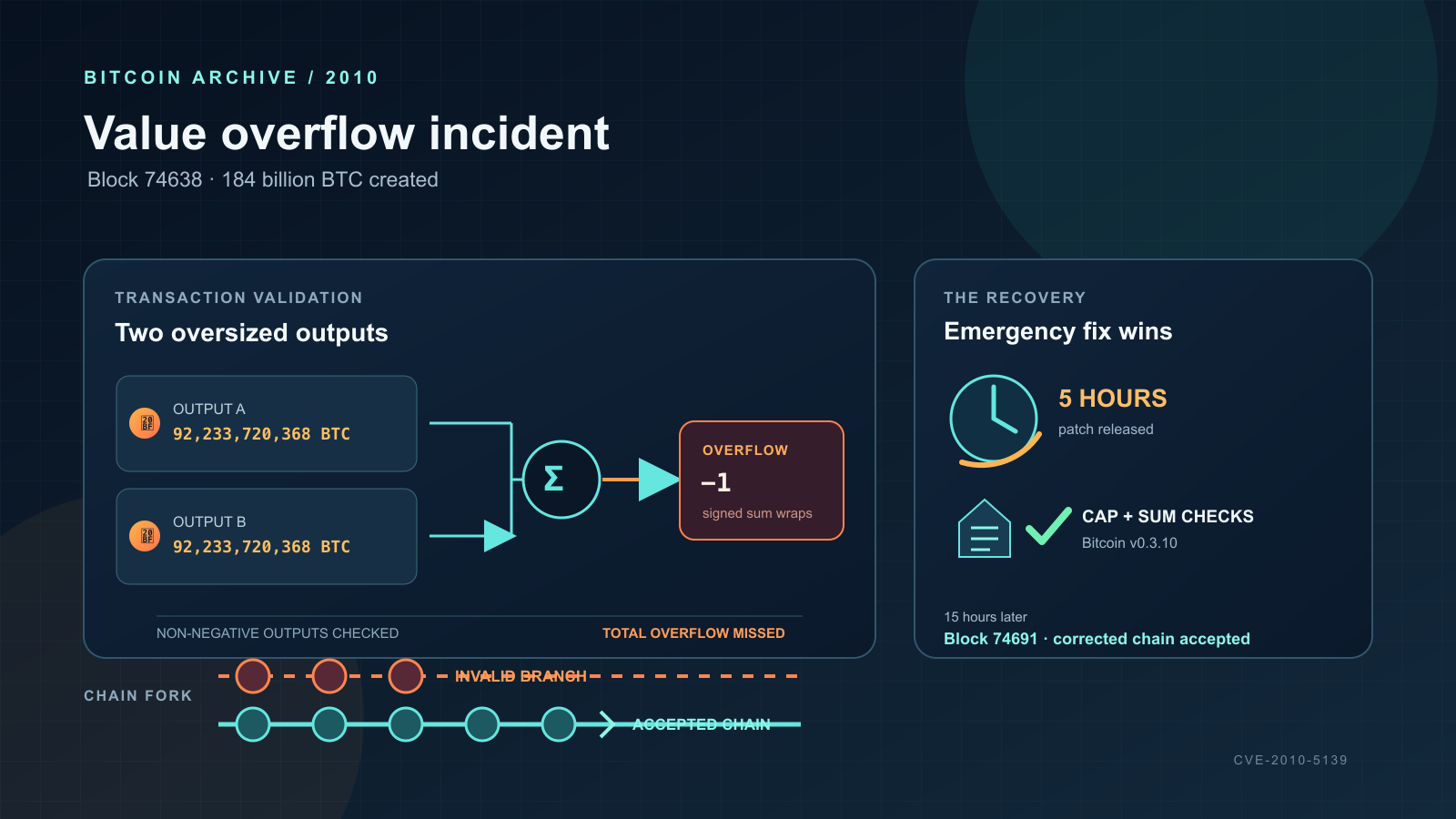
Under the original consensus rules, block 74638 was valid. Each output value was non-negative; the integer-overflow check on the sum of outputs was missing. A node running Bitcoin v0.3.9 saw the block, validated it under the rules it knew, and accepted it — the concrete case behind an abstraction the security-model page states in its trust-model table: a consensus bug in the software is indistinguishable from a valid chain. That output-value field — 8 bytes per output, documented in the transaction design page — carried no protocol-level ceiling before this incident forced one in.
Bitcoin v0.3.10 added two new checks to CheckTransaction():
- Each output ≤ MAX_MONEY (21,000,000 BTC).
- Sum of outputs ≤ MAX_MONEY.
Under these new rules, block 74638 became invalid. A patched node rejected the block on validation and treated the longest valid chain — the one branching at the parent of block 74638 (height 74637) and growing without the bad block — as canonical.
The structural property of a soft fork is that the new rules are a strict subset of the old rules. Every block valid under v0.3.10 is also valid under v0.3.9, but not vice versa. Patched and un-patched nodes do not split into permanently incompatible networks — they just disagree, temporarily, about the tip of the chain. As long as enough hashpower migrates to the new rules, the patched chain accumulates work, eventually overtakes the un-patched chain on cumulative work, and un-patched nodes follow the longer chain by their existing fork-choice rule. Reorganization happens automatically; no per-node intervention is required.
This is why the rescue was possible without re-coordinating the network from scratch. The rule change was additive in the restrictive sense — adding rejections, not adding acceptances. Nodes that didn’t upgrade still tracked the chain whose work led; once the patched chain’s work led, even un-patched nodes ended up on the canonical chain.
The cost paid in exchange: a roughly 15-hour window (from block 74638 at 17:05 UTC Aug 15 to block 74691 at 08:20 UTC Aug 16) during which the canonical chain was contested. During that window, transactions confirmed on either chain were not safe to treat as final. Satoshi’s bitcoin-list alert — “DO NOT TRUST ANY TRANSACTIONS THAT HAPPENED AFTER 15.08.2010 17:05 UTC (block 74638) until the issue is resolved” — was a 15-hour halt on counterparty trust, not a halt on network operation.
Roughly nine hours into that window, Satoshi posted a live count of the migration itself: “We’ve already generated 14 blocks since 74638. The builds of 0.3.10 were uploaded about 2 and 3 hours ago. Of the nodes I’m connected to, more than half are already 0.3.10. I would say we probably already have more power than the bad chain.” — a first-person confirmation, hours before block 74691 made it official, that the hashpower migration this mechanism depended on was already ahead.
The mechanism worked. The mechanism’s cost was disclosed plainly. Both belong in the structural account.
Timeline of the incident (UTC)
2. The 5-hour response window and why it was unrepeatable
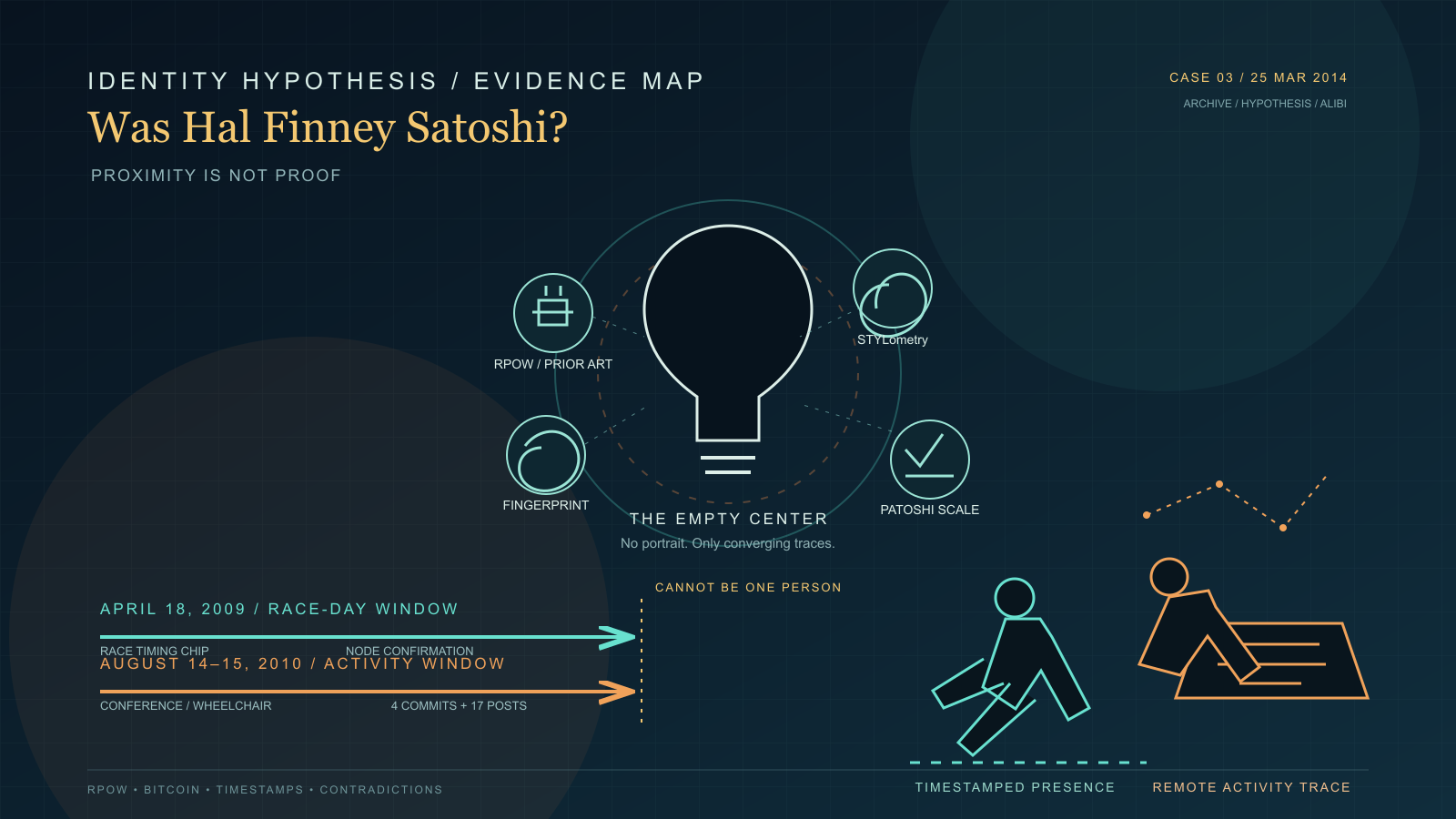
Garzik’s first-warning post on BitcoinTalk topic-822 was timestamped 18:08 UTC. Satoshi’s bitcoin-0.3.10 release announcement on topic-827 was timestamped 23:48 UTC. That is a 5h 40m turnaround from public discovery to a built, signed, downloadable, soft-forking release — across SourceForge binaries for Windows, Linux, and macOS. This same August 14–15 stretch of Satoshi’s code check-ins and forum posts overlaps with Hal Finney’s own ALS-limited Singularity Summit attendance during the same two days — see the Hal Finney identity hypothesis for the alibi comparison.
This window was possible in 2010 for a particular reason that is no longer reproducible: the production code path was effectively a single author plus two trusted reviewers.
The actors of the response, in the public record:
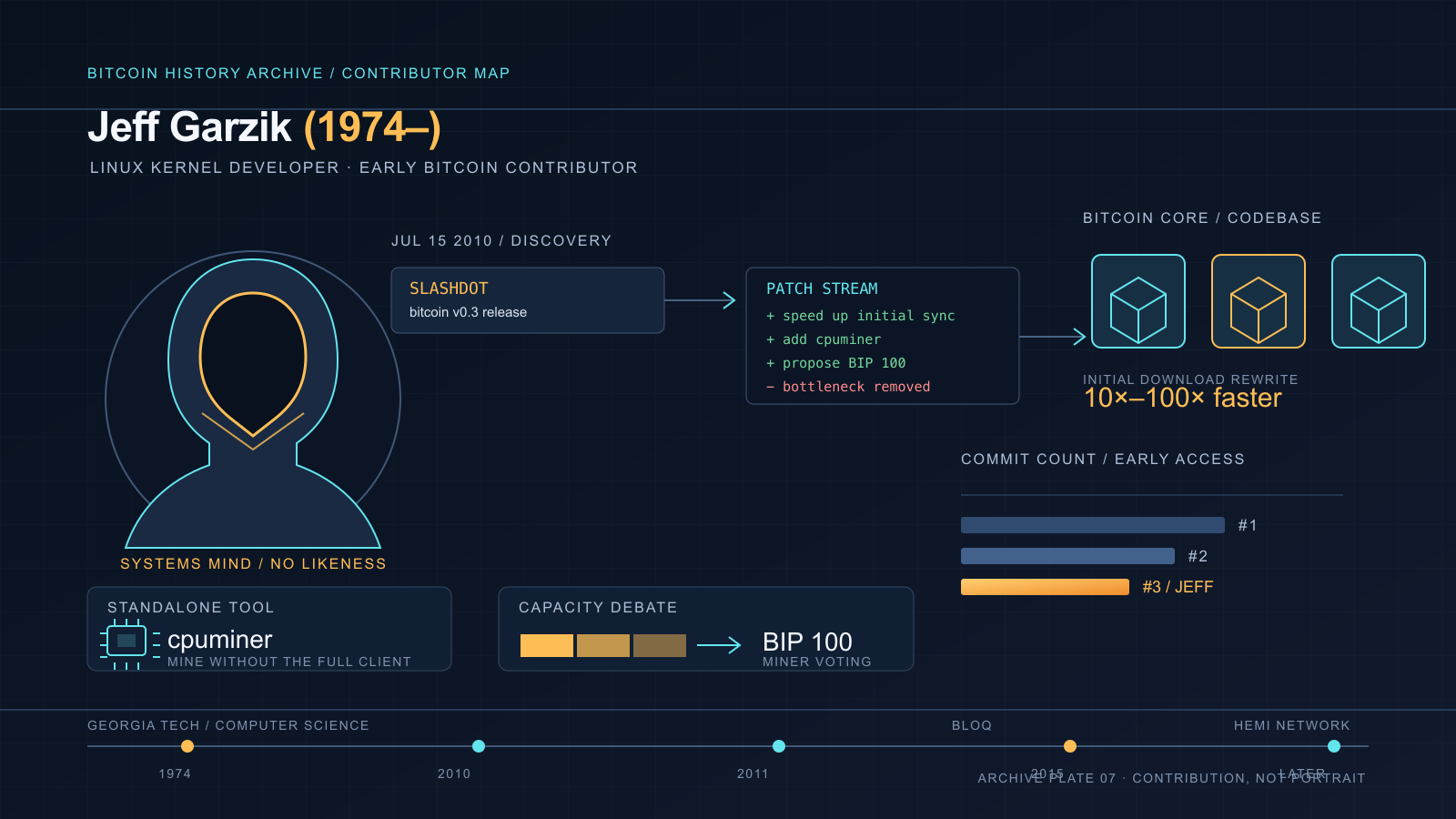
- Jeff Garzik: technical observer; identified the anomaly via raw block dump.
- Satoshi Nakamoto: code author; wrote the patch, tested it, signed and built the binaries, deployed to SourceForge, posted the announcement.
- Gavin Andresen: parallel patch tester; built and tested an independent emergency patch in topic-823 using knightmb’s pre-existing blockchain snapshot as the clean starting point.
That is the entire production-path participant set for the 5-hour rescue. Three names, one decision-maker, no governance process, no review queue, no merge gating, no test-suite gate other than what the developer ran at home. The release path from “Satoshi has a fix on his disk” to “binaries are downloadable on SourceForge” had no intervening institutions.
By 2018, when the analogous-class bug (CVE-2018-17144, an inflation bug allowing duplicate input spending) was discovered in Bitcoin Core, the response infrastructure looked different: a coordinated multi-developer disclosure, a quiet-fix release labeled as a regular maintenance bump, a delayed public disclosure, and an explicit post-mortem. The 2018 fix took longer in clock time and engaged more people because it had to. The system that produced 2018’s response was strictly more robust than the system that produced 2010’s response — but the 2010 response window was only achievable in the institutional vacuum that 2010 still had.
The structural point is not that the 2010 response was better. It is that the 2010 response was a one-actor release path, and that path was exactly what made 5 hours feasible. The same vulnerability discovered in any subsequent year would not have a 5-hour public-release-to-recovery window, because no subsequent year has had a single author with single-handed deploy authority over a globally consensus-relevant codebase.
3. Bug, attack, proof-of-concept: which categories apply, which don’t
A common compression flattens the incident into “the attacker stole 184 billion BTC” or “the bug was triggered by a malicious actor.” Both compressions miss distinctions that matter for what the historical record actually establishes.
Bug exists. CheckTransaction()’s missing overflow check on the sum of outputs is a vulnerability. CVE-2010-5139 names it. This is independent of whether anyone exploits it.
Attack happened (in security-vocabulary sense). Producing the overflow-triggering transaction required deliberate, technically-informed work — values close to INT64_MAX/2 do not appear in normal wallet flows; the standard wallet UI validates against MAX_MONEY before even constructing the transaction; producing block 74638’s transaction required hand-built raw transaction bytes whose output values were specifically chosen to overflow when summed in int64 arithmetic. The author had to bypass the standard wallet validation, sign manually, and broadcast. In security usage, deliberately exercising a vulnerability is “an attack” regardless of intent — the term carries no claim about malice.
Malice unproven and probably unprovable. Whether the actor intended theft, demonstration, or stress-testing cannot be established from the chain or the transaction shape. Three possibilities are equally consistent with the public record:
-
Theft attempt. The 184 billion BTC, had the bad chain become canonical, would have transferred wealth catastrophically. Whoever held the private keys for the two output addresses would have controlled an amount nine thousand times the total intended supply. The fact that no actor has come forward to claim the keys implies either (a) the actor never intended to spend them and was demonstrating, (b) the actor intended to spend but realized the soft-fork was inevitable and stayed silent, or (c) the actor lost or destroyed the keys.
-
Public proof-of-concept. Producing a maximum-impact demonstrable exploit on the live network — knowing it would be detected and reorganized away within a day — would force the bug fix and document that the bug existed. The cost to the actor (some mining cost; some risk of identification) was small relative to the demonstrated impact.
-
Stress test or accident in adversarial framing. A developer probing the code path under non-standard conditions might have triggered the bug exploring the limits of what the existing checks accepted. The trigger would still require manually-crafted transaction output values; it cannot be a typo.
The structural fact is that the bug, the attack, and the question of malice live at three independent levels — the source code, the action, and the intent — and the evidence available addresses each level differently. The chain shows a bug exists and was attacked. The chain does not show what the attacker intended.
4. Forensic structure of the transaction
The two output values in the spend transaction of block 74638 were both 92,233,720,368.54277039 BTC. This is not a wallet artifact. It is INT64_MAX divided by 10⁸ (the satoshi-to-BTC conversion factor), minus a small offset to keep the sum just over INT64_MAX while remaining within int64 representability per output. The choice was deliberate and reveals knowledge of the validation code’s representation.
Constraints the actor satisfied:
- Each individual output ≤ INT64_MAX in satoshi (otherwise the per-output validation rejects, even before summing).
- Sum of outputs > INT64_MAX in satoshi, producing two’s-complement overflow to negative.
- The post-overflow sum is small enough that the input check (
output ≤ input, but with both compared as signed int64) passes — a 0.5 BTC input was sufficient because the negative overflow value compared less than the positive input value.
The two outputs being identical (both 92.2 billion BTC) is a structural choice, not a coincidence. Two equal large values, summing just past INT64_MAX, is the simplest construction that satisfies the constraints. Different output values would also work but require either more arithmetic on the actor’s side or a wider value range than necessary. Identical values are the minimum-information choice.
Whether the miner of block 74638 colluded with the transaction’s author is a separate matter from the transaction’s construction. The block is a normal proof-of-work block that happens to contain the bad transaction. Under the un-patched validation rules, every honest miner running v0.3.9 would also have included the transaction if it appeared in their mempool — the block is “honest” in the sense that the miner’s validation code returned valid. There is no evidence in the chain that the miner of block 74638 colluded with the transaction author. Inclusion in a block does not imply collusion when the inclusion follows the rules the miner’s software was running.
5. The centralization paradox
Bitcoin’s design proposition — peer-to-peer electronic cash, no trusted third party — was the reason the system existed in the first place. The 5-hour rescue worked because of three things that the design proposition does not contain:
- A single author whose code authority no other actor could match.
- A network of nodes whose operators ran a binary signed by that author.
- A trust gradient under which “Satoshi released a patch, upgrade now” was sufficient instruction, propagated through bitcoin-list and BitcoinTalk, to mobilize the network within hours.
In a strict reading of the design proposition, none of these should be necessary. The protocol should be self-correcting; nodes should validate independently; no actor should have privileged release authority. In the actual rescue, all three were not just present but load-bearing.
This is the paradox: the system was rescued by a centralization that the system was designed not to require. And the rescue could not have succeeded by other means in the available time. There was no alternative path with the same speed.
The paradox does not invalidate Bitcoin’s design proposition. It marks where the proposition’s runtime guarantees and its incident-response guarantees diverge. The protocol can be decentralized in steady state and still depend on centralized authority for emergency rule changes — because emergency rule changes are coordination events that decentralized validation cannot organize from inside.
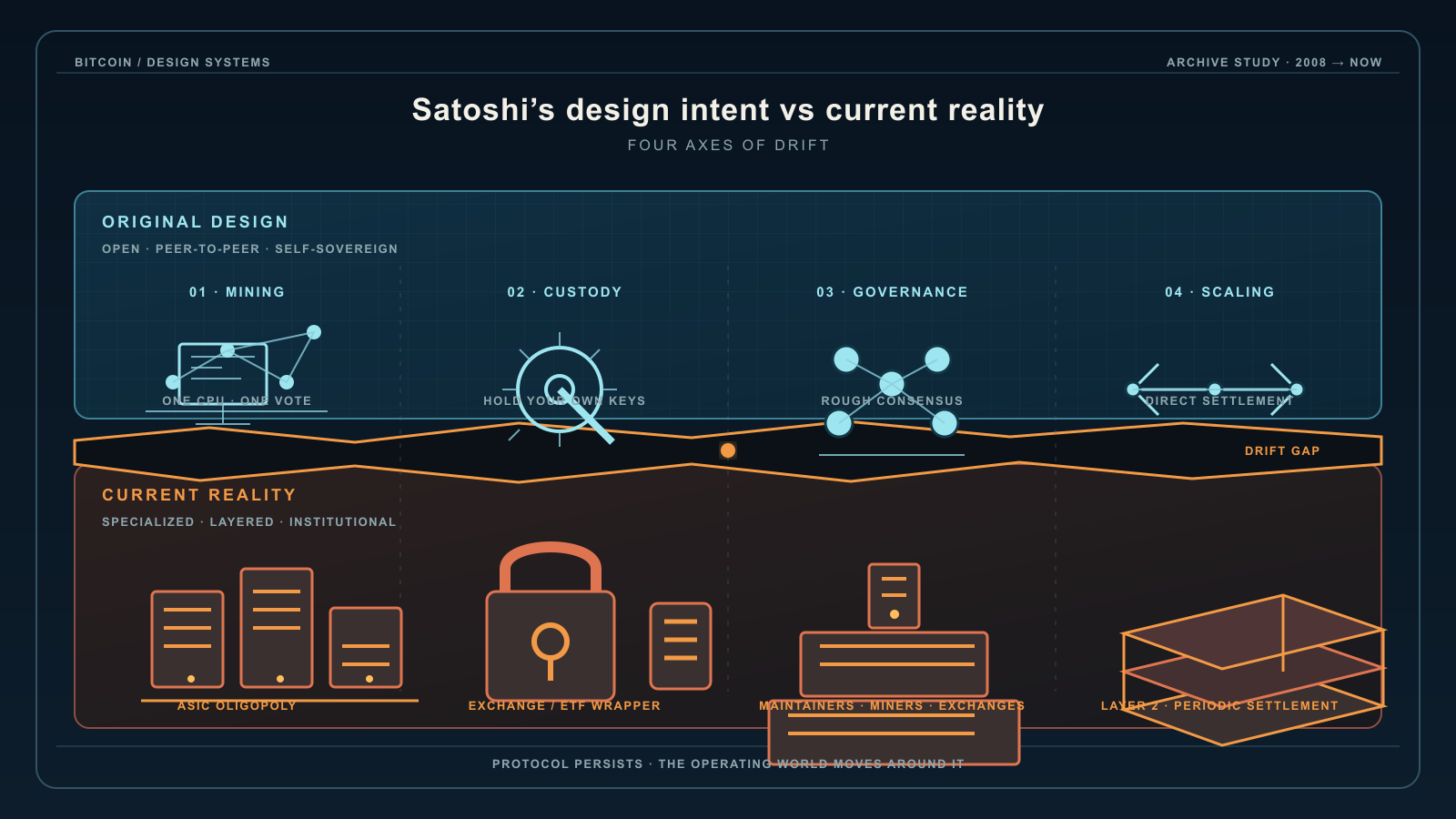
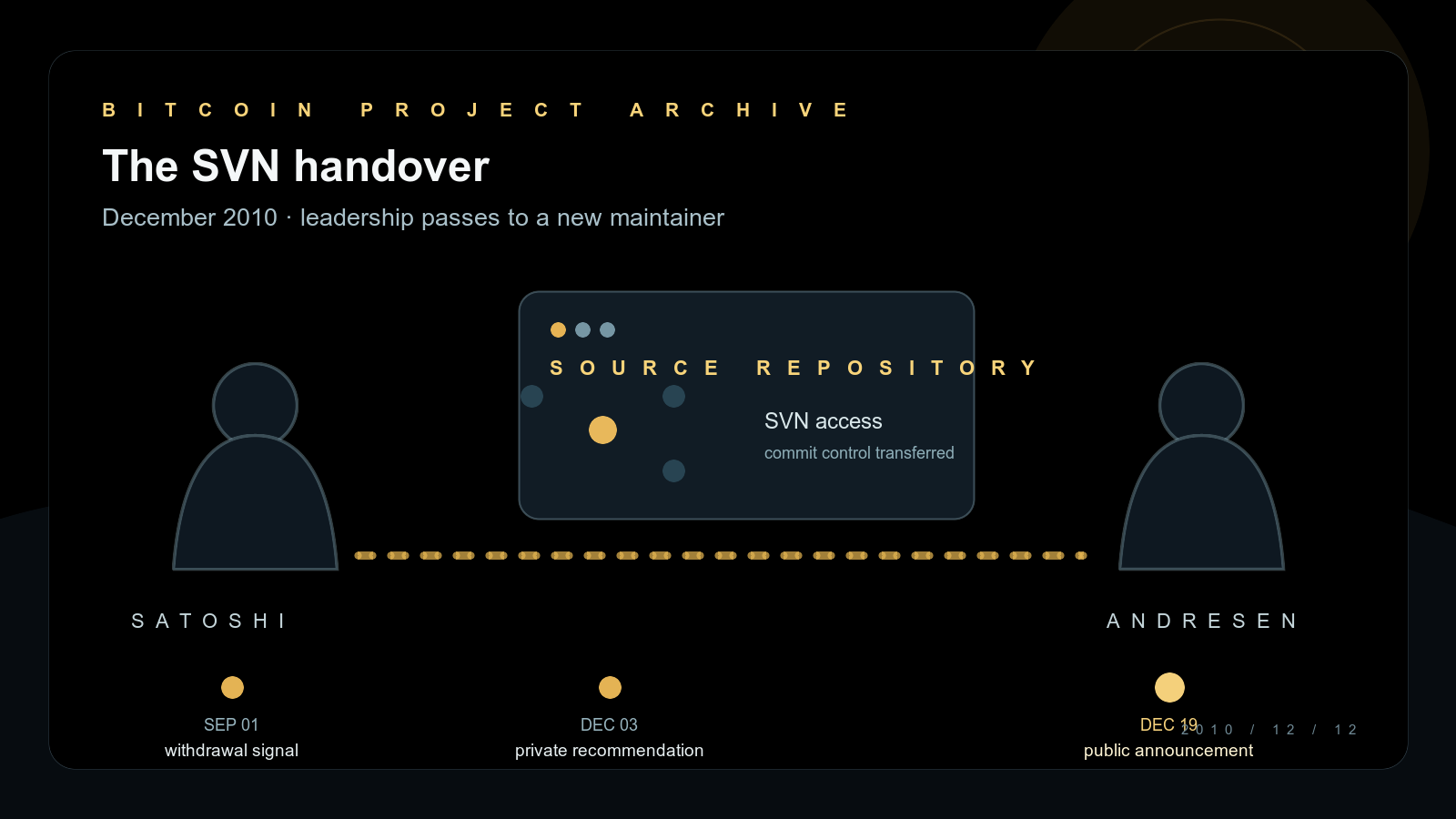
What the incident establishes is the asymmetry: a decentralized network can absorb an attack on its rules through a coordinated patch, but the coordination layer that produces the patch is not itself decentralized. The handover Bitcoin faced over the next few years (Satoshi → Gavin → multiple maintainers → present-day distributed maintainership) is a direct response to this asymmetry — the same drift the design-vs-current-reality analysis traces in its own governance section, from this single-handed rescue to today’s layered structure of Core maintainers, pools, and exchanges. The 2018 inflation-bug response (multi-actor disclosure, no single deploy authority) is what the post-Satoshi version of this rescue has to look like.
This entry does not argue the paradox is solved. It argues that the August 2010 incident is the first place the paradox was visible at the level of the live network, and that subsequent Bitcoin governance is best read as a long-running response to it.
6. Position in Bitcoin’s history
Two CVEs in Bitcoin’s first decade reach the level of “the system could have stopped existing if this had not been caught quickly”:
| Year | CVE | Class | Time-to-patch | Time-to-canonical-recovery |
|---|---|---|---|---|
| 2010 | CVE-2010-5139 | Integer overflow on output sum, 184 billion BTC printable | 5h 40m | ~15 hours |
| 2018 | CVE-2018-17144 | Duplicate input check missing, allowing inflation via double-spend in same transaction | Disclosed-and-fixed in coordinated release; not exploited on mainnet | N/A (never used in attack) |
The pair is structurally informative because the 2018 bug was not exploited. Its severity was assessed in private during the responsible disclosure window, and a fix shipped before any exploitation. By the time the public record acknowledged the bug’s existence, there was no recovery to perform.
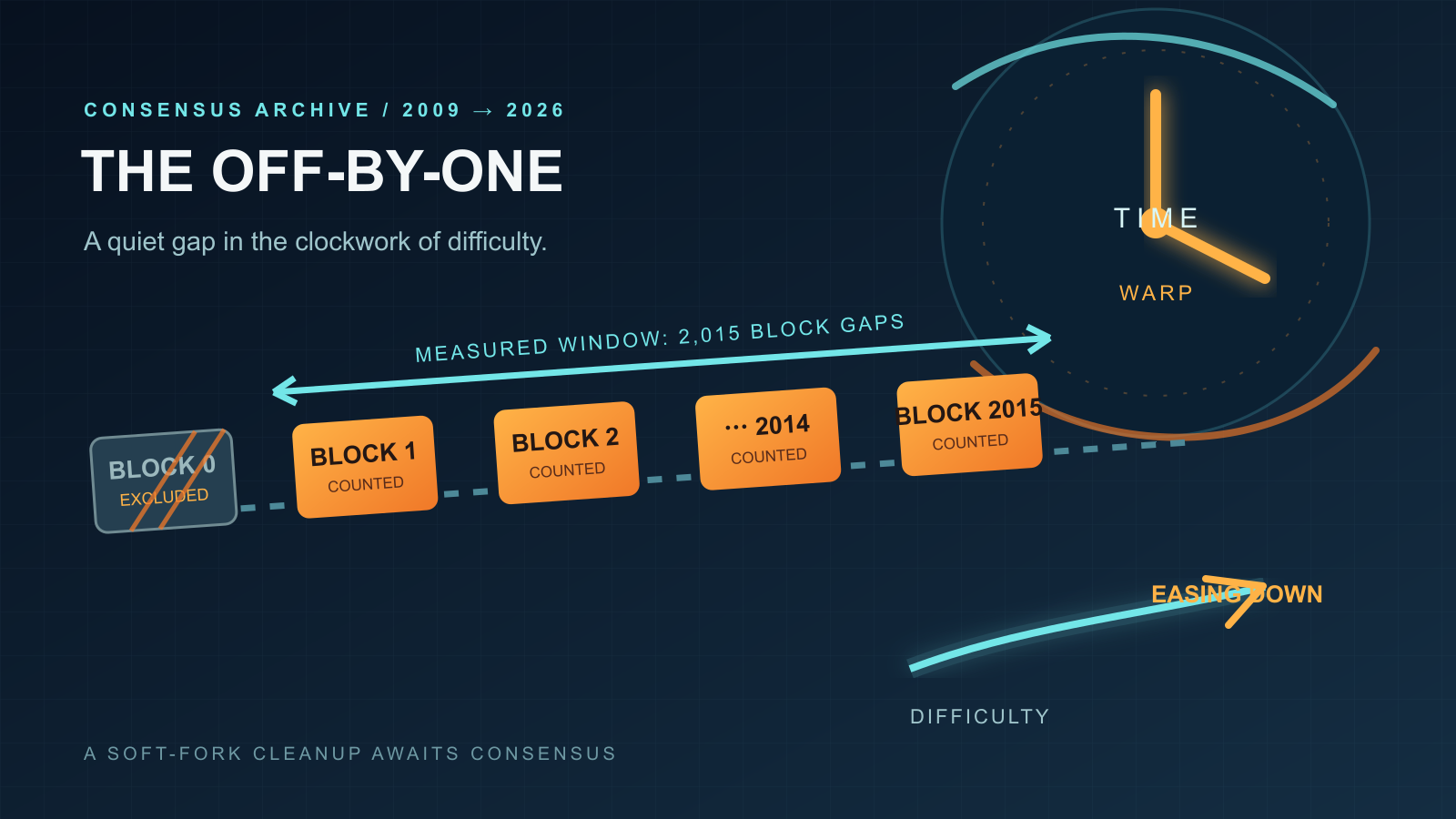
The 2010 incident is the only first-decade Bitcoin event in the “exploited and recovered” cell. It is the only public test of whether Bitcoin could survive a critical bug being weaponized on the live chain. A third Satoshi-era consensus bug — the difficulty-adjustment time-warp off-by-one — sits in a different cell again: known, unpatched, and never exploited, precisely because exploitation would require a sustained majority visible well before any damage materialized. The answer was: yes, by way of a soft-fork patched within hours, deployed by a single author, accepted by the network within a roughly 15-hour reorganization window. The answer is recorded, but the conditions that made the answer possible — the single-author deploy path — are no longer present.
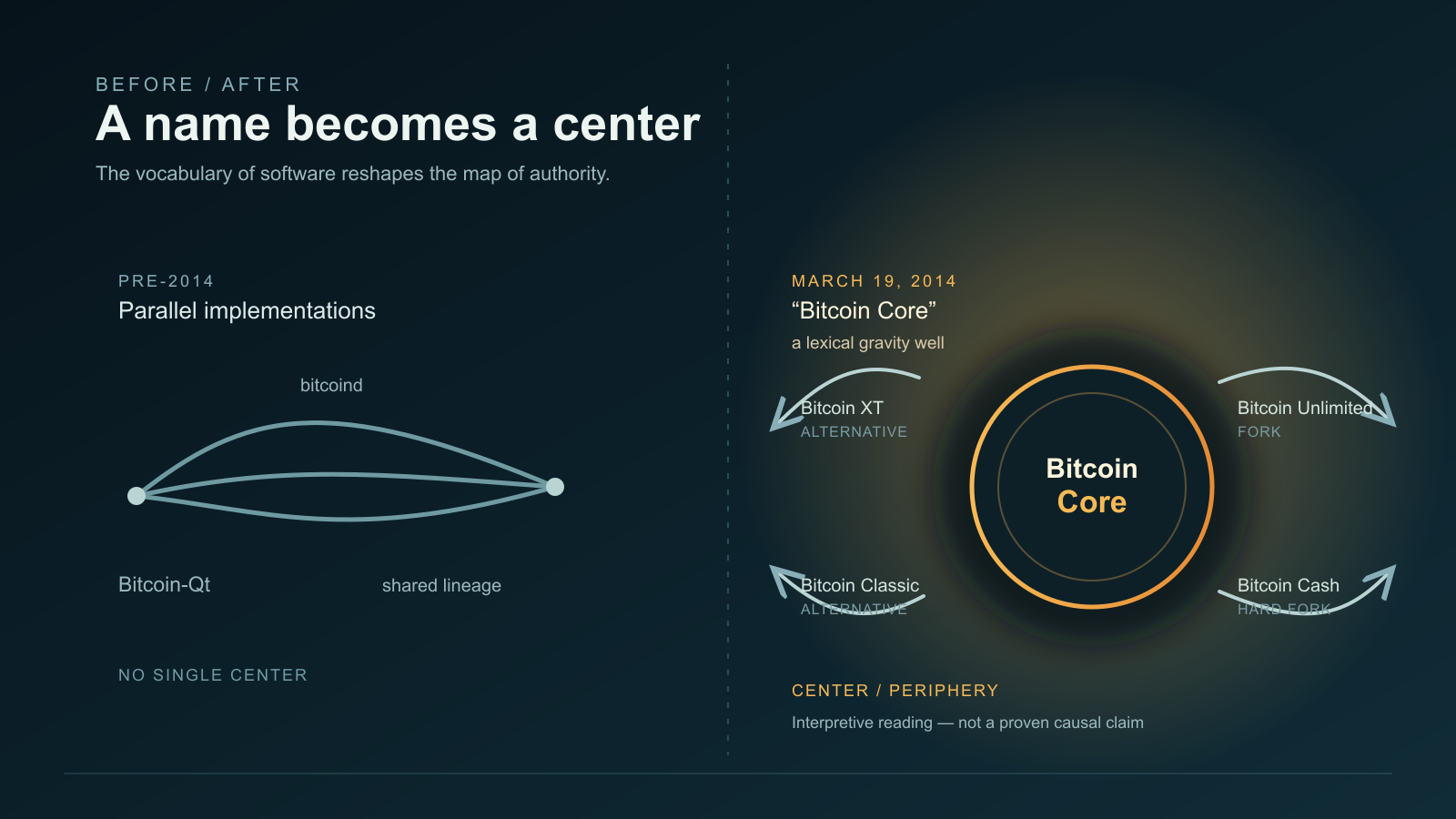
This puts the 2010 incident in a peculiar position in the historical record. It is the only proof-of-concept the network has of its own recovery capability under a known attack class, and the conditions under which that proof was generated are not reproducible. Subsequent decade-boundary events — the block-size war, the 2014 ‘Bitcoin Core’ rebrand, the Mt. Gox bankruptcy — were governance and ecosystem stresses, not consensus-bug stresses. They tested different aspects of the system. The 2010 event remains the only chain-level critical-bug stress in the public record where the recovery completed.
7. What this entry does not establish
- Attacker identity. The two output addresses on block 74638 are recorded on the chain; the corresponding private keys have not been used since. No public claim of authorship has been made. Identity attribution is not in the public record.
- Attacker intent. Whether the attack was theft, demonstration, or test cannot be determined from the transaction or the chain. Section 3 above describes what categories of intent are consistent with the evidence; none are established by the evidence.
- Miner cooperation. Block 74638 was mined by an actor whose identity is not in the chain. Whether the miner colluded with the transaction author cannot be determined from the chain — the un-patched validation rules accepted the transaction, so honest inclusion is indistinguishable from coordinated inclusion.
- knightmb’s specific role. The blockchain-snapshot contribution is recorded structurally in the knightmb snapshot and legend entry.
The rescue is the part of this story that is easiest to celebrate and easiest to misread. It proves that the network could recover from a live consensus failure; it also records that the recovery depended on a release authority the system was designed not to need. I would not reduce the incident to either “Bitcoin survived” or “Bitcoin was centralized.” Both facts are in the record, and the uncomfortable value of this event is that they arrived together.