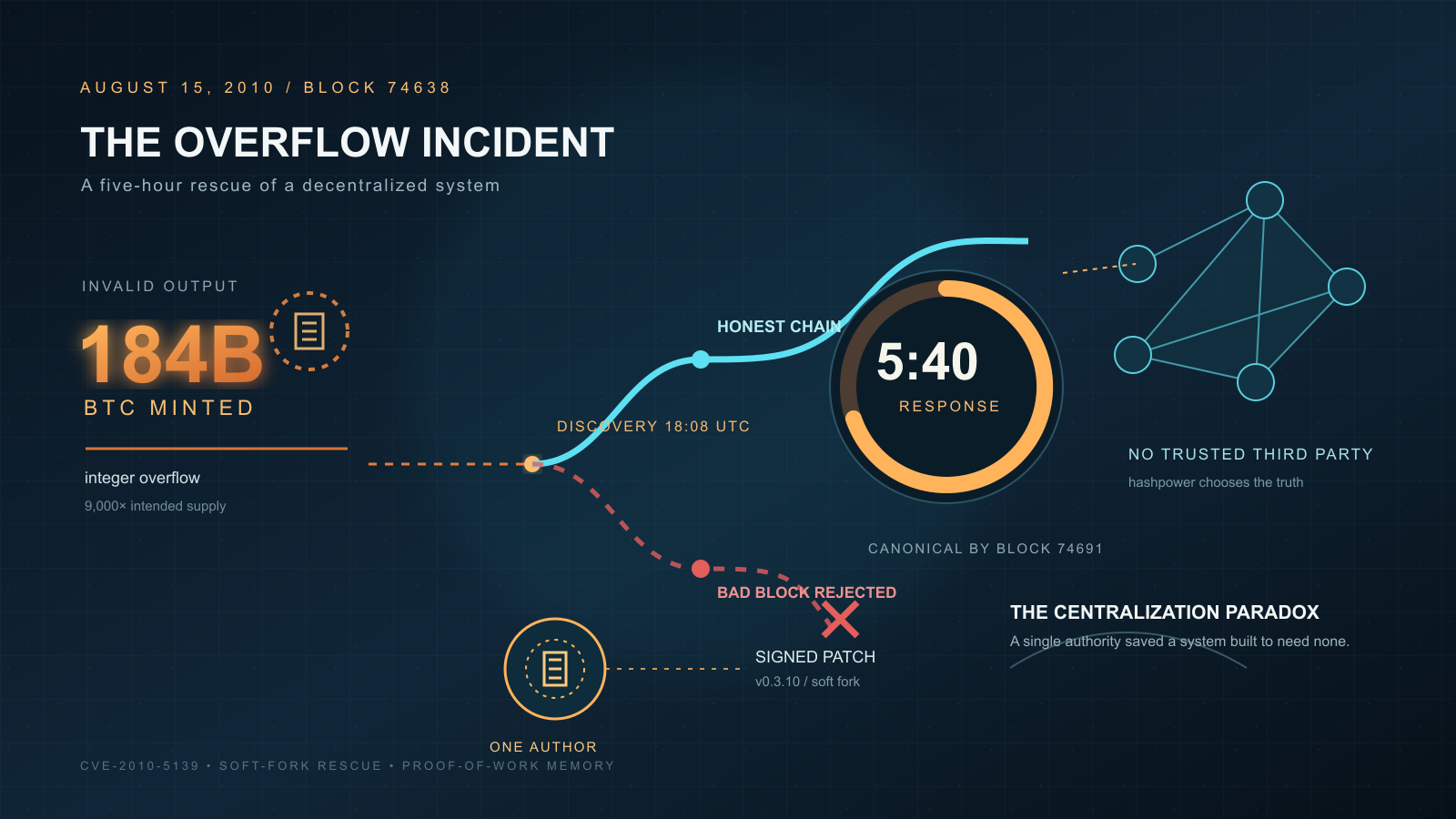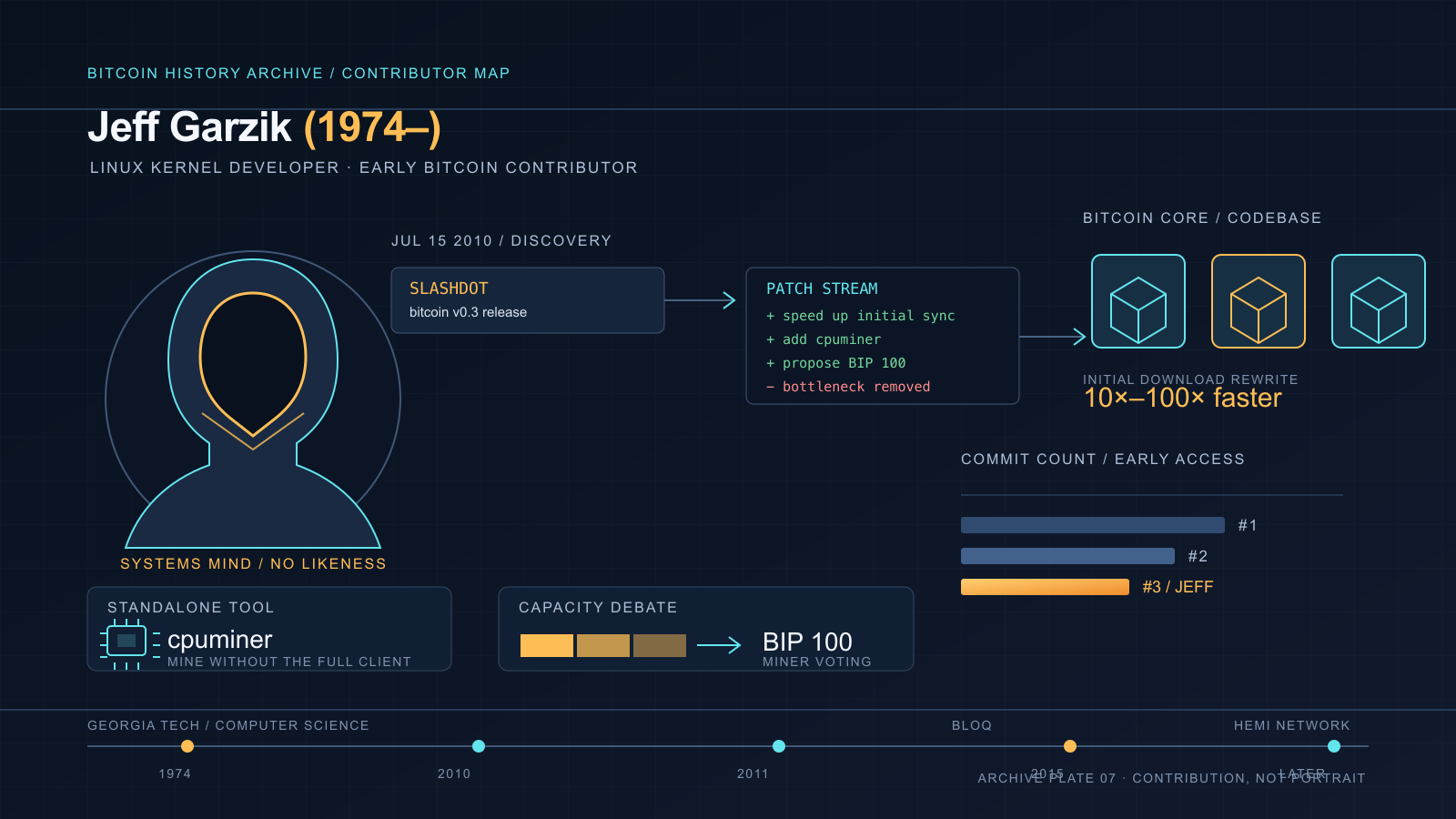
On August 15, 2010, at approximately 18:08 UTC, Bitcoin developer Jeff Garzik noticed an anomaly in Block 74638 and opened a new BitcoinTalk topic, “Strange block 74638”, pasting the raw block data:
Quote from: Jeff Garzik on August 15, 2010, 6:08:49 PM UTC“Strange block 74638 — 92233720368.54277039 BTC? Is that UINT64_MAX, I wonder?”
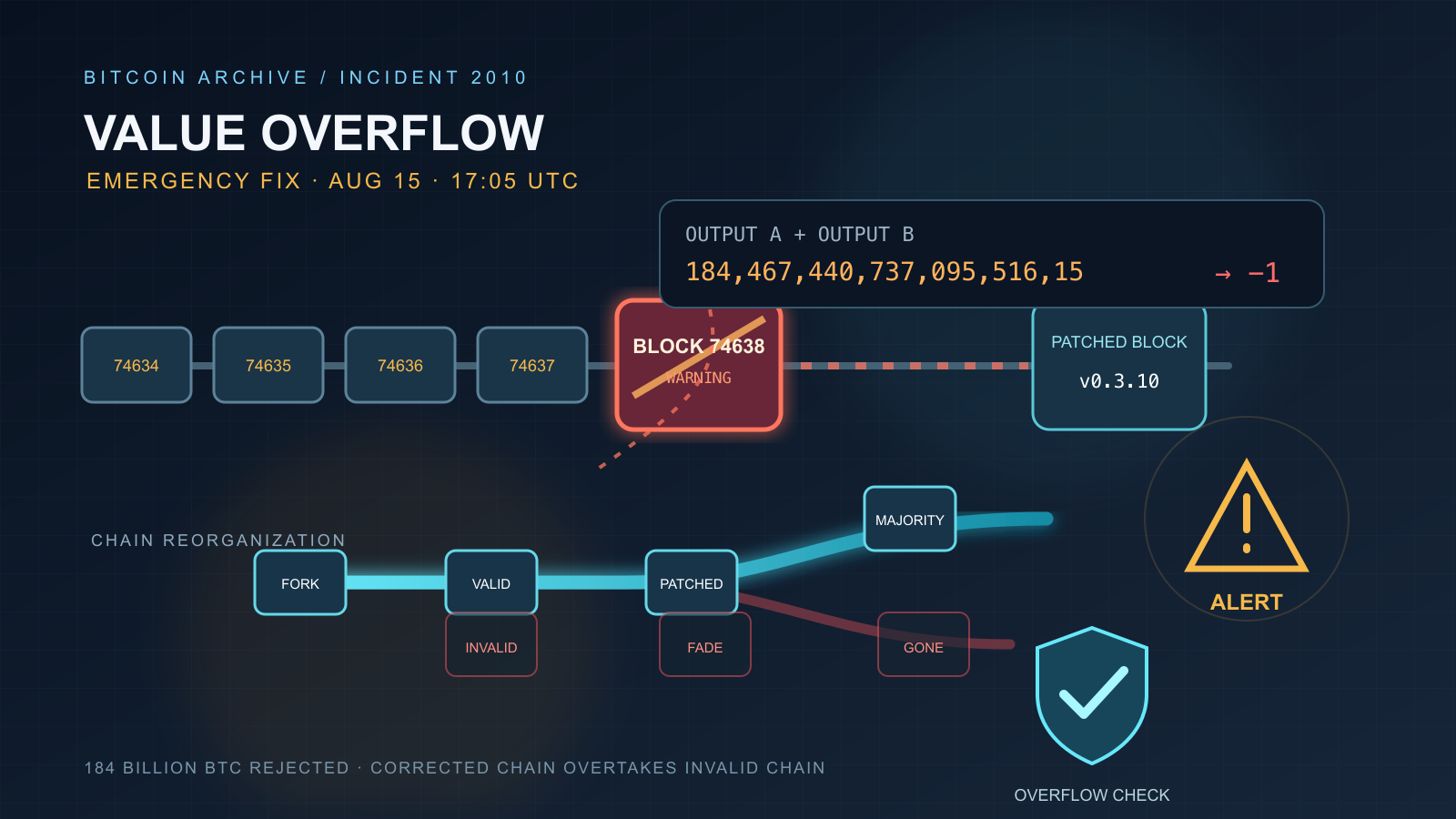
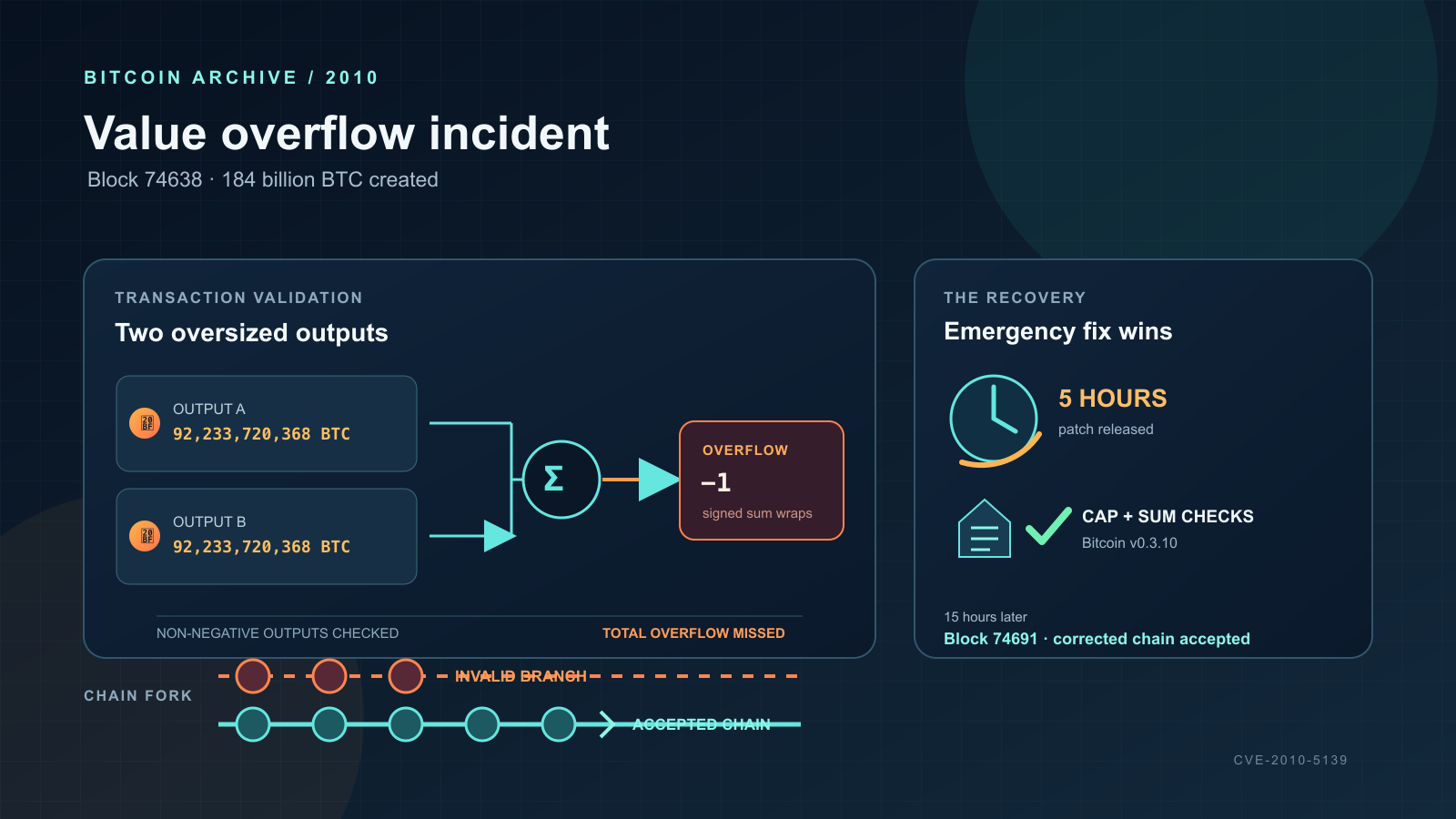
A single transaction in Block 74638 spent a 0.5 BTC input and created two outputs of 92,233,720,368.54277039 BTC each. The block’s miner claimed 0.51 BTC in fees on top of the 50 BTC reward, 0.01 BTC more than that input. Altogether the block created 184,467,440,737.09554078 BTC out of nothing — approximately 9,000 times Bitcoin’s total intended supply of 21 million BTC. The Bitcoin Wiki gives 184,467,440,737.09551616 BTC, which is exactly 2⁶⁴ satoshis and 2,462 satoshis short of the block’s own arithmetic.
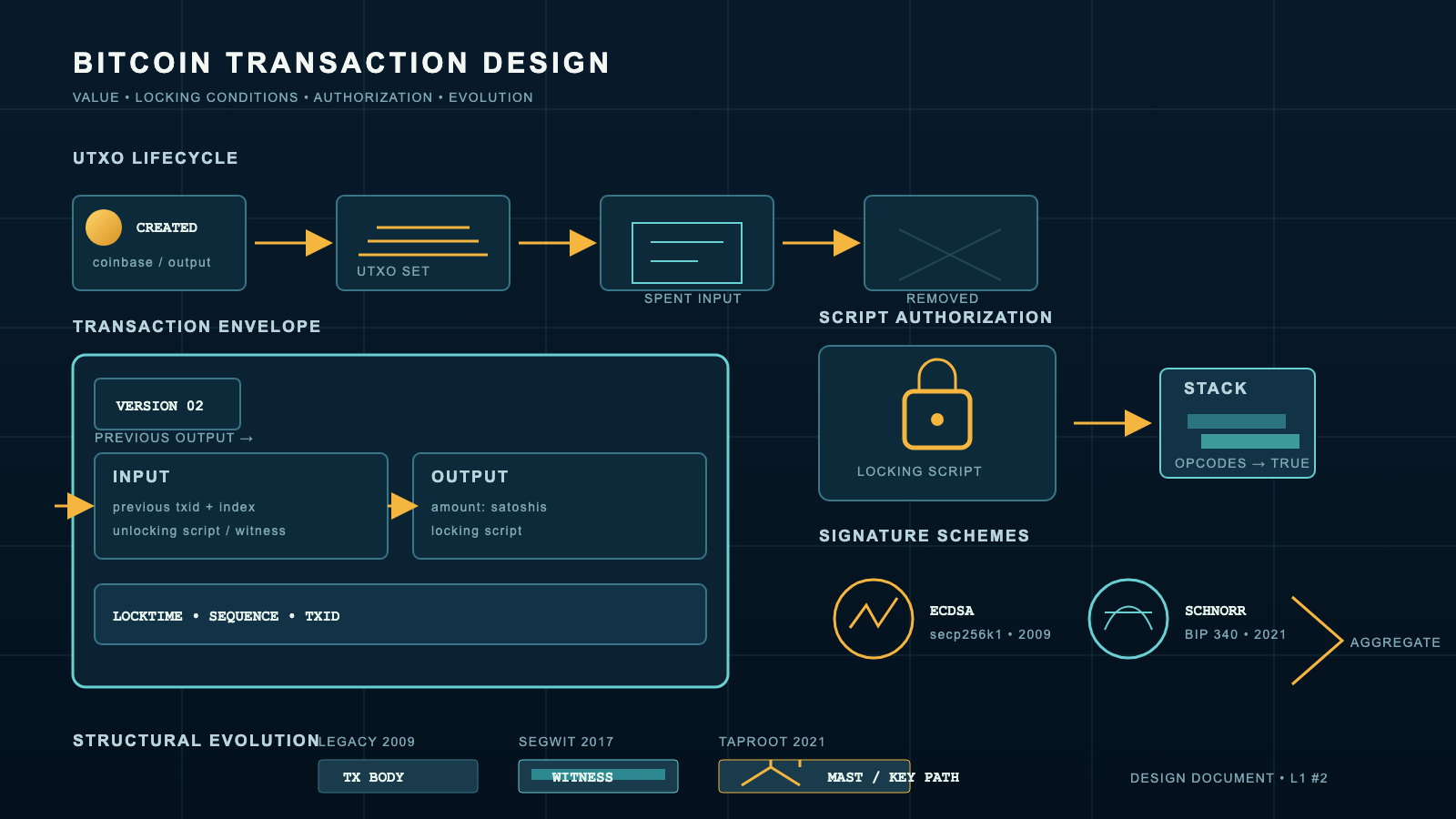
The bug: The transaction validation code checked that individual outputs were non-negative, but did not check for integer overflow when summing outputs. Two outputs near the maximum value of a 64-bit signed integer (INT64_MAX ≈ 9.2 × 10¹⁸) would overflow to a negative value when added together, passing the validation check: 0.5 BTC input ≥ -0.00997538 BTC output (after overflow). The field this exploited — each output’s 8-byte satoshi value, documented in the transaction design page — carried no protocol-level bound until this incident forced one in.
The response: Five hours and forty minutes after the discovery, Satoshi published Bitcoin version 0.3.10 containing a soft fork that added two new checks to CheckTransaction():
- Each individual output must not exceed MAX_MONEY (21,000,000 BTC)
- The sum of all outputs must not exceed MAX_MONEY
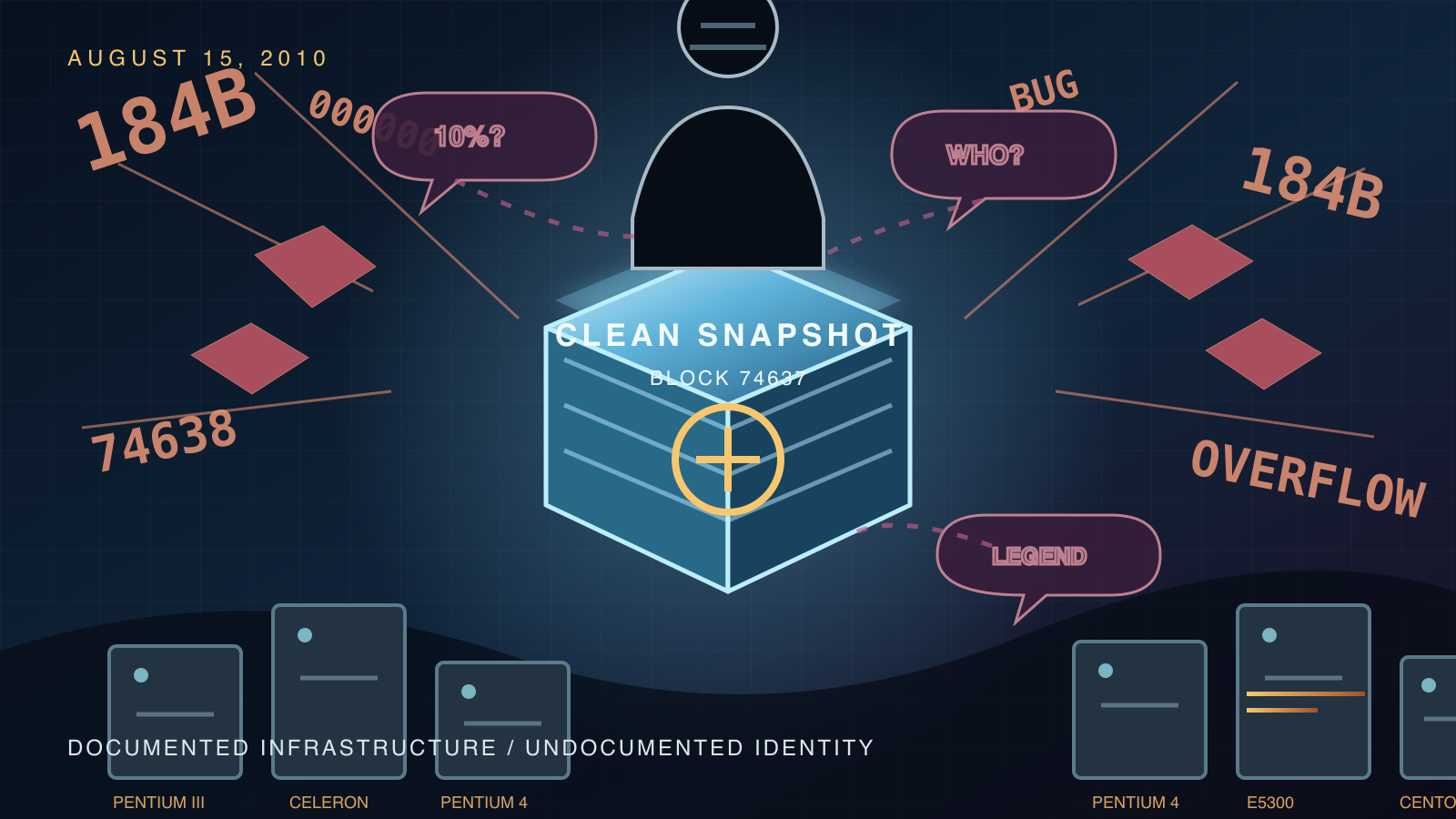
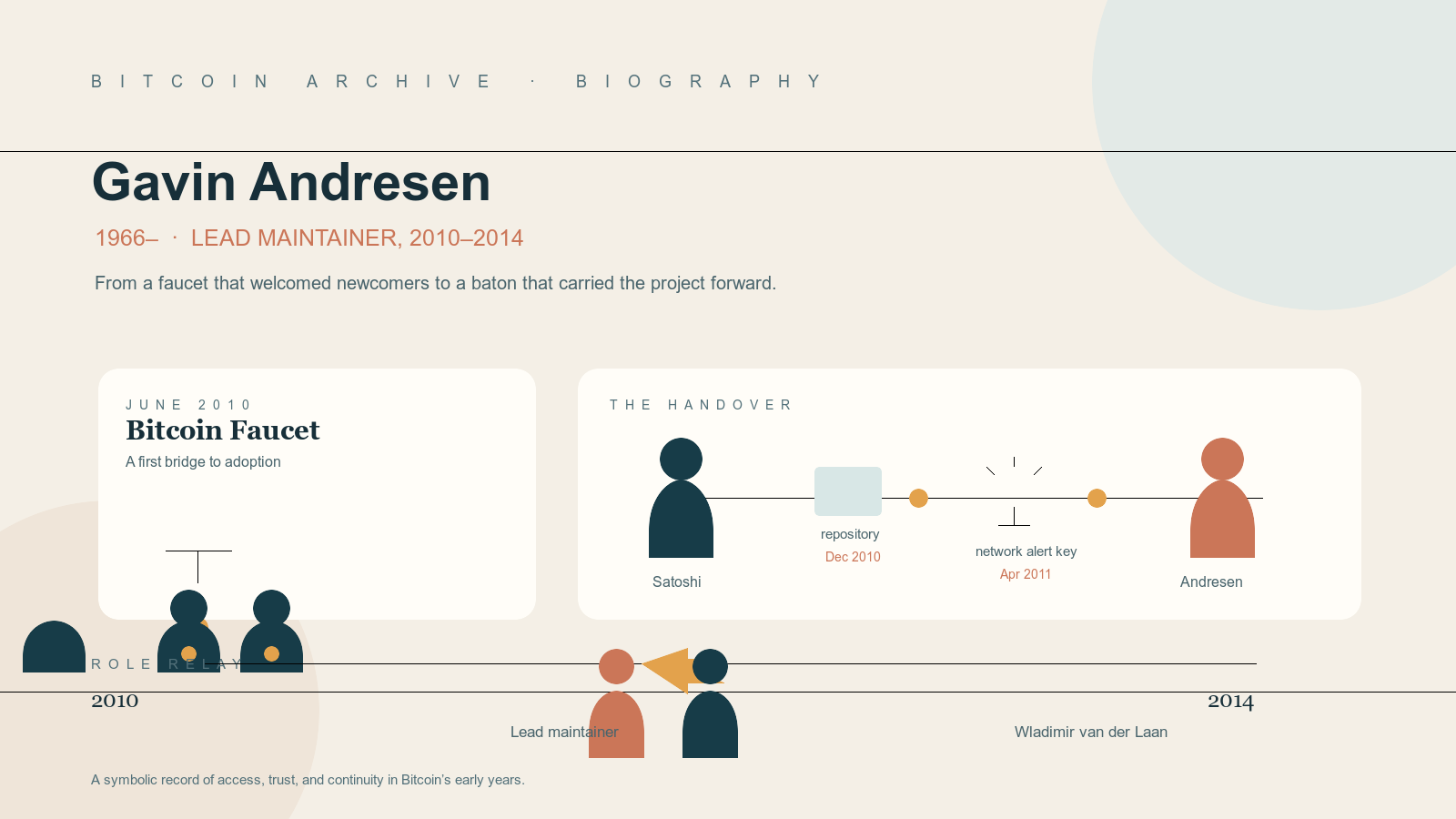
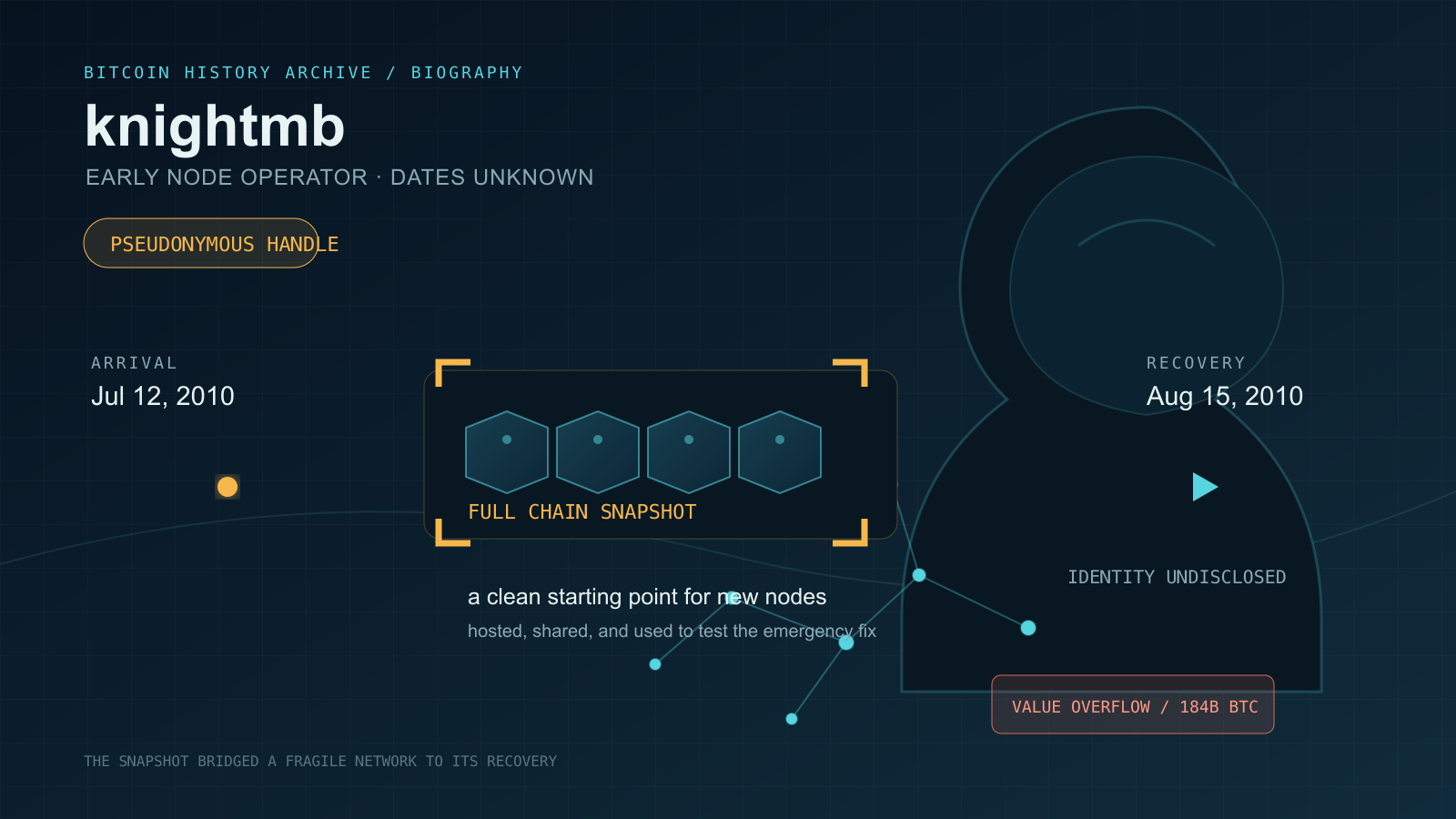
Gavin Andresen tested an independent emergency patch in parallel using a clean blockchain snapshot previously published by the forum participant knightmb, which served as the recovery starting point.
Satoshi released v0.3.10 with the overflow patch the same day and announced it on BitcoinTalk under the subject Version 0.3.10 - block 74638 overflow PATCH!, pointing readers at the discussion thread for the bug itself (topic 823).
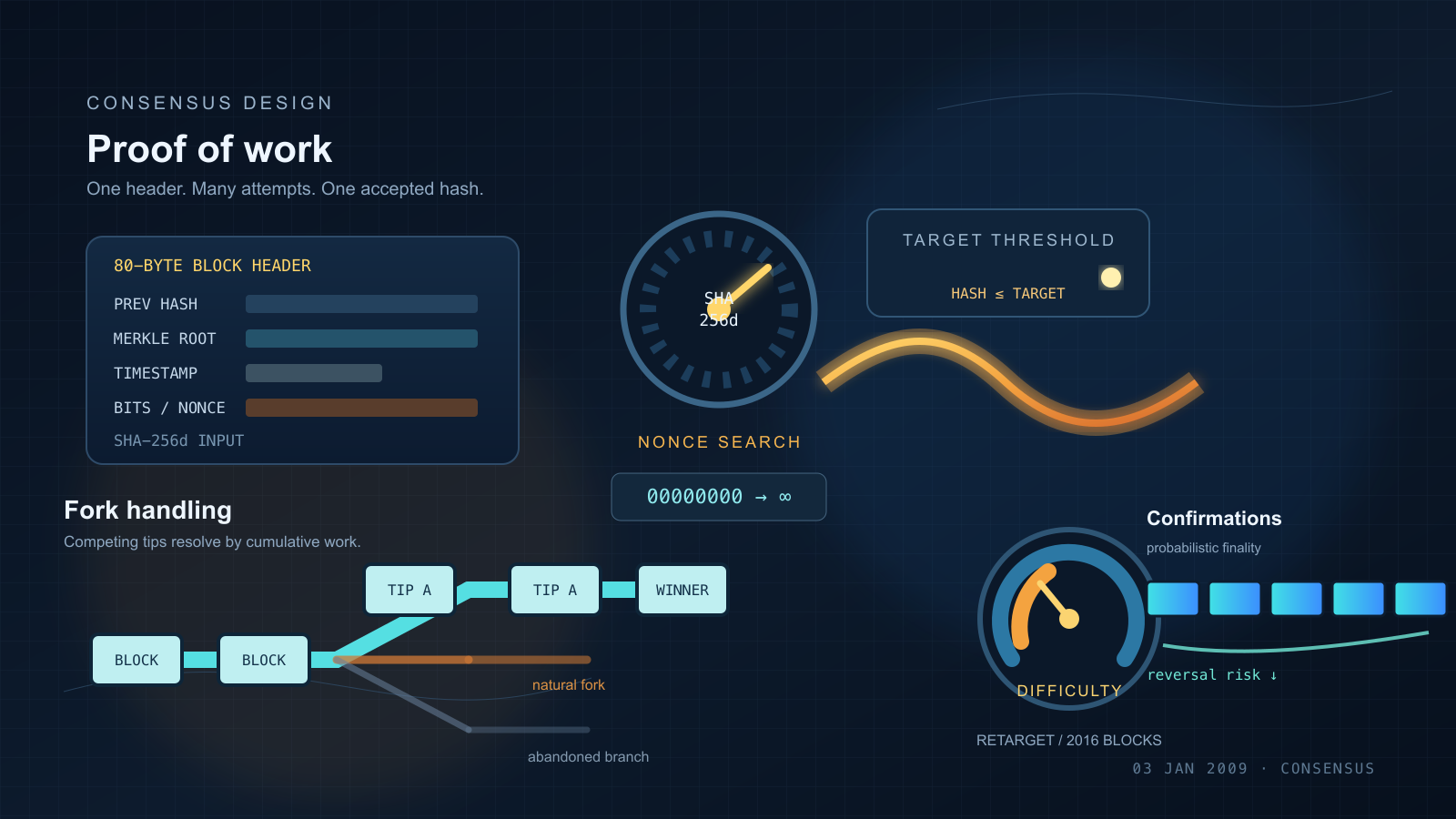
The resolution: The corrected chain overtook the invalid chain at Block 74691, approximately 15 hours after the bad block. The 184 billion BTC were effectively erased from the blockchain’s accepted history. The general mechanism this episode exercised — an emergency soft fork whose corrected chain nodes adopt once it becomes the most-work chain — is documented in detail in the consensus design entry.
Incident or exploit? A natural question: did this happen by accident, or was it a deliberate exploit? Analysis of the v0.3 source and the transaction structure gives a firm answer on one point and leaves another open.
Accidental occurrence is ruled out by the transaction’s structure. Triggering the overflow requires two outputs whose sum exceeds INT64_MAX (approximately 9.2 × 10¹⁸ satoshis), each near 92.2 billion BTC. Such values cannot arise from ordinary wallet activity — in 2010, no individual held or could plausibly access anywhere near 92 billion BTC; realistic balances peaked in the low thousands. Standard Bitcoin wallet interfaces validated output amounts against available balance and against MAX_MONEY. The specific value 92,233,720,368.54277039 BTC is not a plausible typo or rounding error; it is the largest representable int64 divided by 10⁸, and must be specifically targeted to land near overflow. Producing the Block 74638 transaction required constructing raw transaction bytes by hand or with a custom tool, setting output values to overflow int64 summation, and signing and broadcasting — each step a deliberate, technically informed action.
The actor and motivation are not determinable from the public record. The blockchain records the transaction and the two receiving addresses, but the creator’s identity is not recoverable on-chain. Whether the action was malicious, a proof of concept, or a stress test cannot be inferred from the code or transaction data alone. The miner of Block 74638 may or may not have been aware — under the buggy validation logic, any honestly operating node would have accepted the transaction as valid; inclusion does not require complicity.
Bug and exploit, both distinct and both applicable. The overflow flaw in CheckTransaction() is a bug (CVE-2010-5139). The construction and broadcast of a transaction that triggered it is a deliberate exploit, confirmed by the structural requirements of producing such a transaction. Whether the exploit was malicious is not determinable from the public record alone. In security terminology, a deliberate action that triggers a vulnerability is an “attack” regardless of the actor’s stated intent — the term does not, on its own, imply malice. The event is therefore both a bug (the underlying flaw) and an attack (the exploitation).
The incident exposed a fundamental paradox: a decentralized system had been saved by centralized decision-making. In the emergency, the community adopted the patched client without independent verification, trusting Satoshi’s judgment. The contradiction between the system’s decentralized design and its dependence on a single authority for crisis response became visible for the first time.
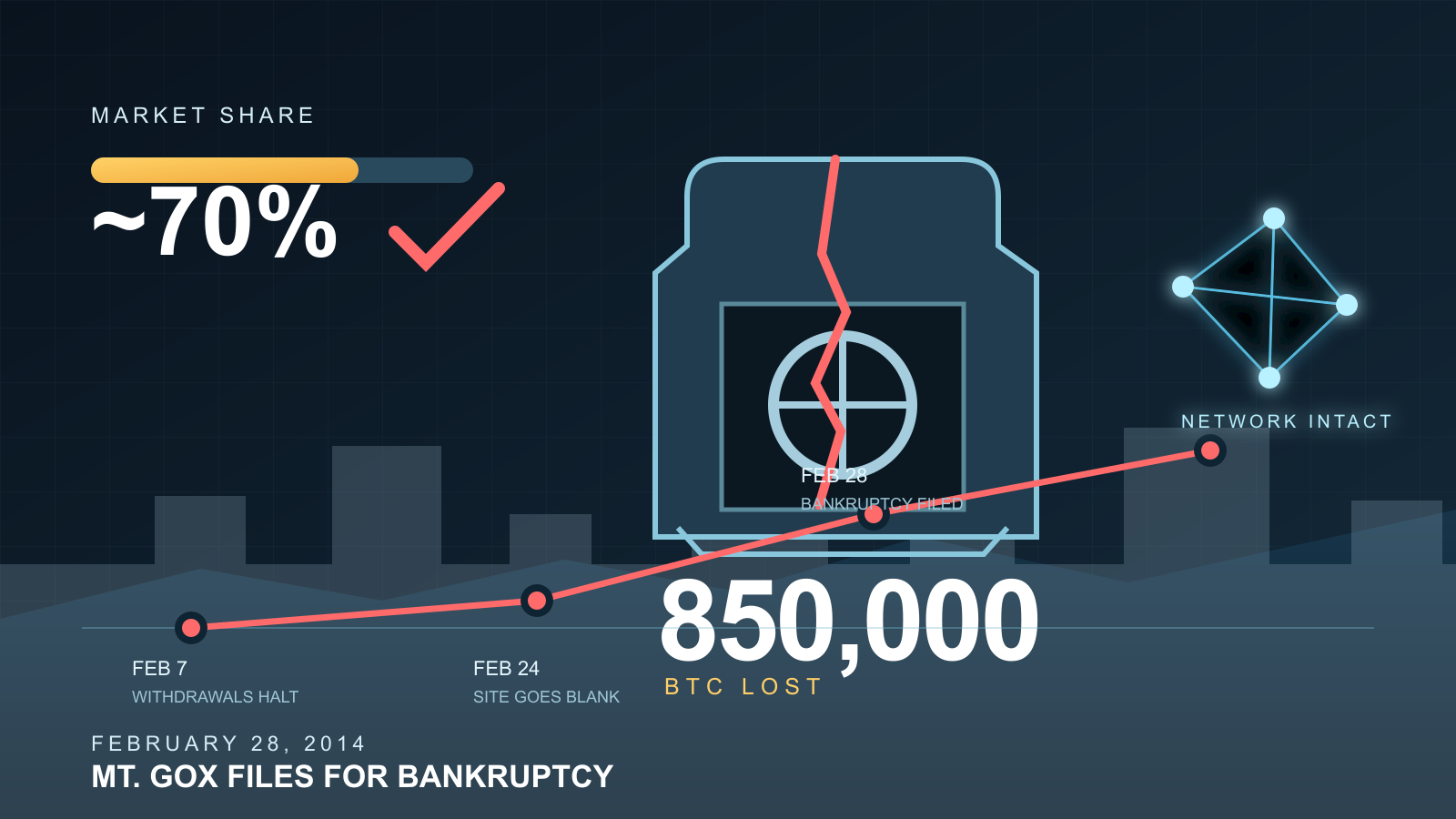
This incident is the central reference for several adjacent records: the structural paradox analysis reads the same five-hour response as the canonical case of decentralized-vs-centralized tension; the knightmb snapshot-and-legend analysis covers the contributor whose pre-incident blockchain snapshot the recovery patch depended on; the Slashdot Bitcoin article (July 2010) and the knightmb biography provide the immediate pre-incident context; and the Mt. Gox bankruptcy entry treats this incident as the early counter-example of “the protocol survived” used in custodial-collapse discussions.