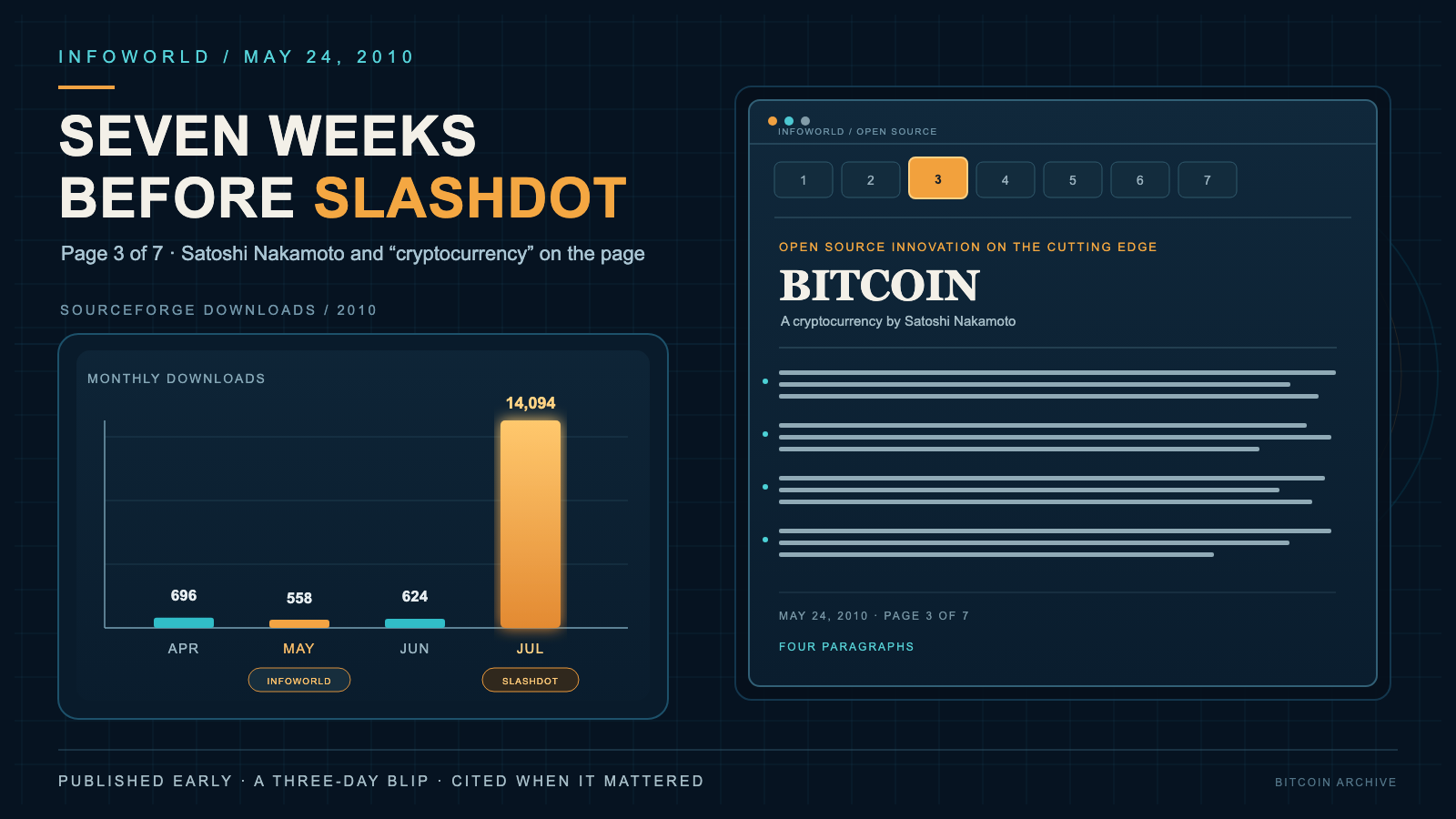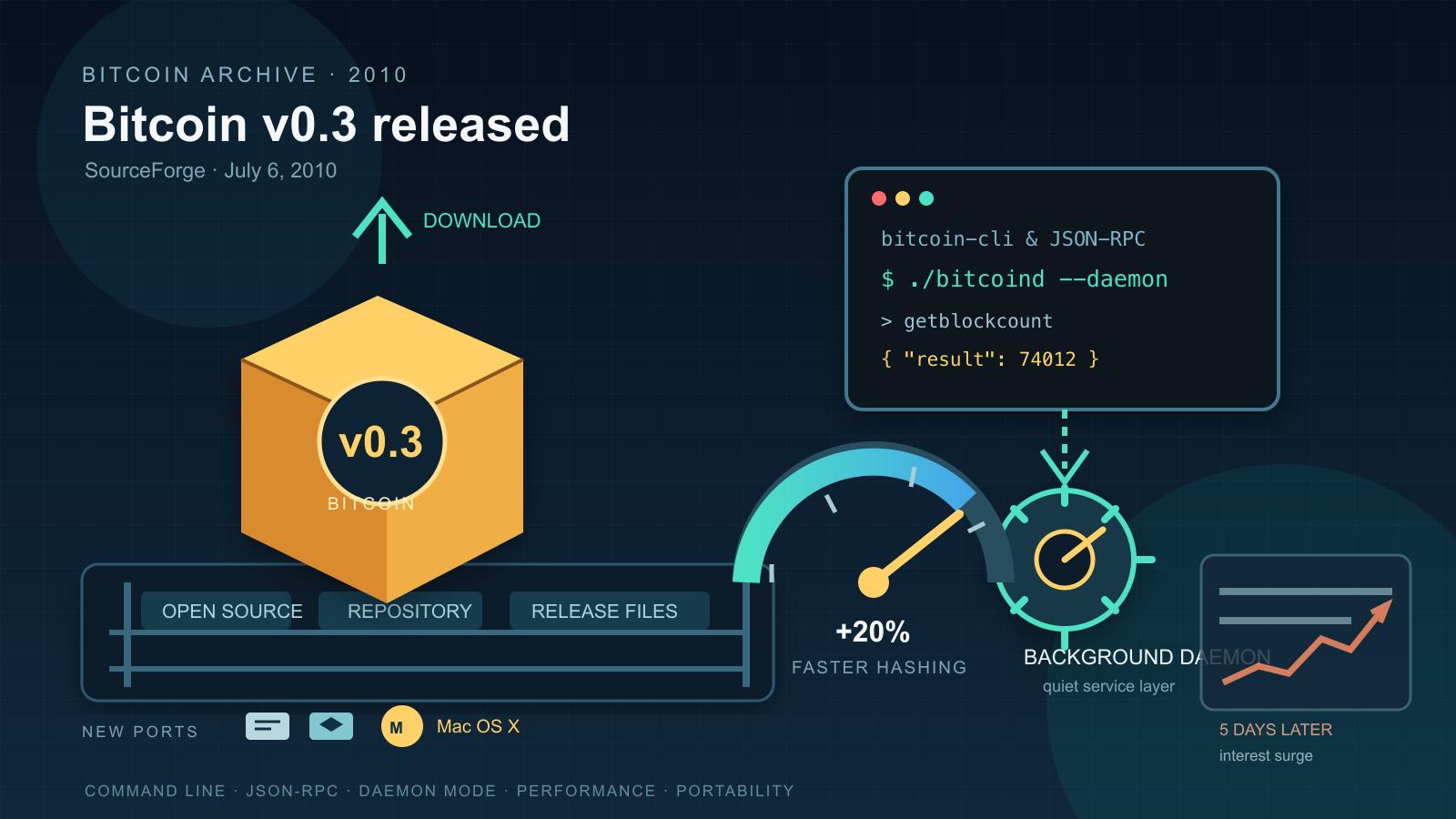

On July 11, 2010, Slashdot published an article titled “Bitcoin Releases Version 0.3,” covering the v0.3 release five days earlier. It was not the first time a major technology outlet had written about Bitcoin: InfoWorld had given it four paragraphs in a May 24 roundup of open-source projects, and when Satoshi pointed Wikipedia editors to press coverage nine days after the Slashdot post, he named “the infoworld and slashdot ones” together. What Slashdot did that InfoWorld had not was send a crowd.
The “Slashdot effect” was immediate and dramatic. SourceForge counted 624 downloads of the Bitcoin software in all of June 2010, then 755 on July 11 alone and 4,253 on July 12. July ended at 14,094, more than twenty times June; no earlier month had passed 700. The exchange price rose roughly tenfold over the following five days, according to the Bitcoin Wiki’s history page, and new users flooded the network. Among them was Jeff Garzik, who later recalled discovering Bitcoin through this very post — “the Great Slashdotting” — and went on to become one of its top three code contributors.
The sudden influx of users tested the network’s capacity, exposing scalability limitations that had previously been theoretical. Satoshi and other developers worked to optimize the software, addressing bandwidth constraints, memory management, and transaction processing bottlenecks.
The Slashdot article also attracted unwanted attention. Along with curious technologists came speculators, critics, and — as events would soon prove — attackers.
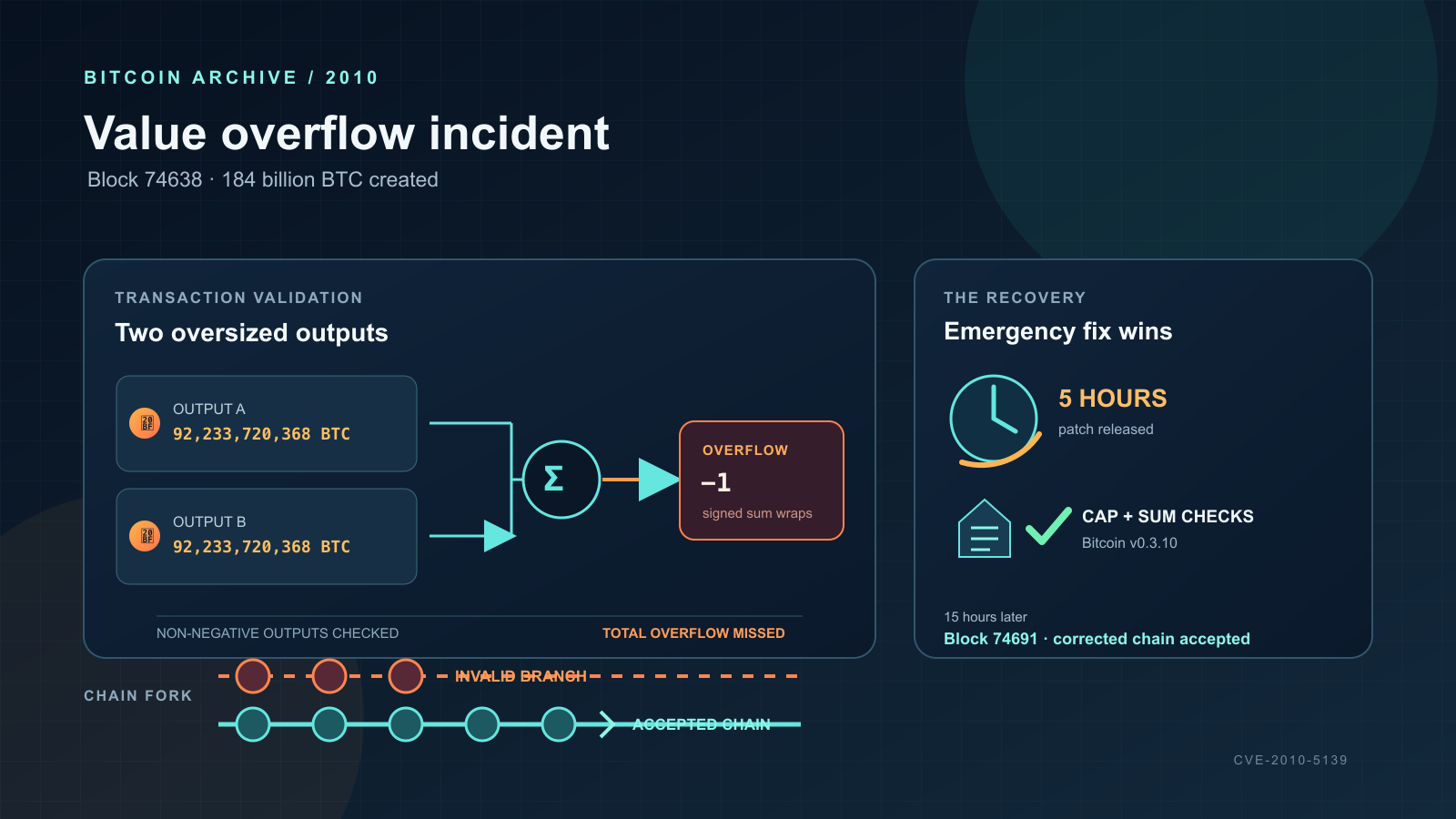
One month later, the network would face its most serious crisis: the value overflow incident of August 15, 2010.