
The whitepaper gives Bitcoin two images that seem to pull apart. Its title promises electronic cash; §6 compares new coins with gold mined into circulation. The tension becomes useful only when we ask whether those lines describe the same axis. The answer emerges in the first recorded purchase that put the design to work, and in the scarcity and scaling pressures that later pushed Bitcoin toward digital gold.
| Axis | Satoshi’s design | Where in the paper |
|---|---|---|
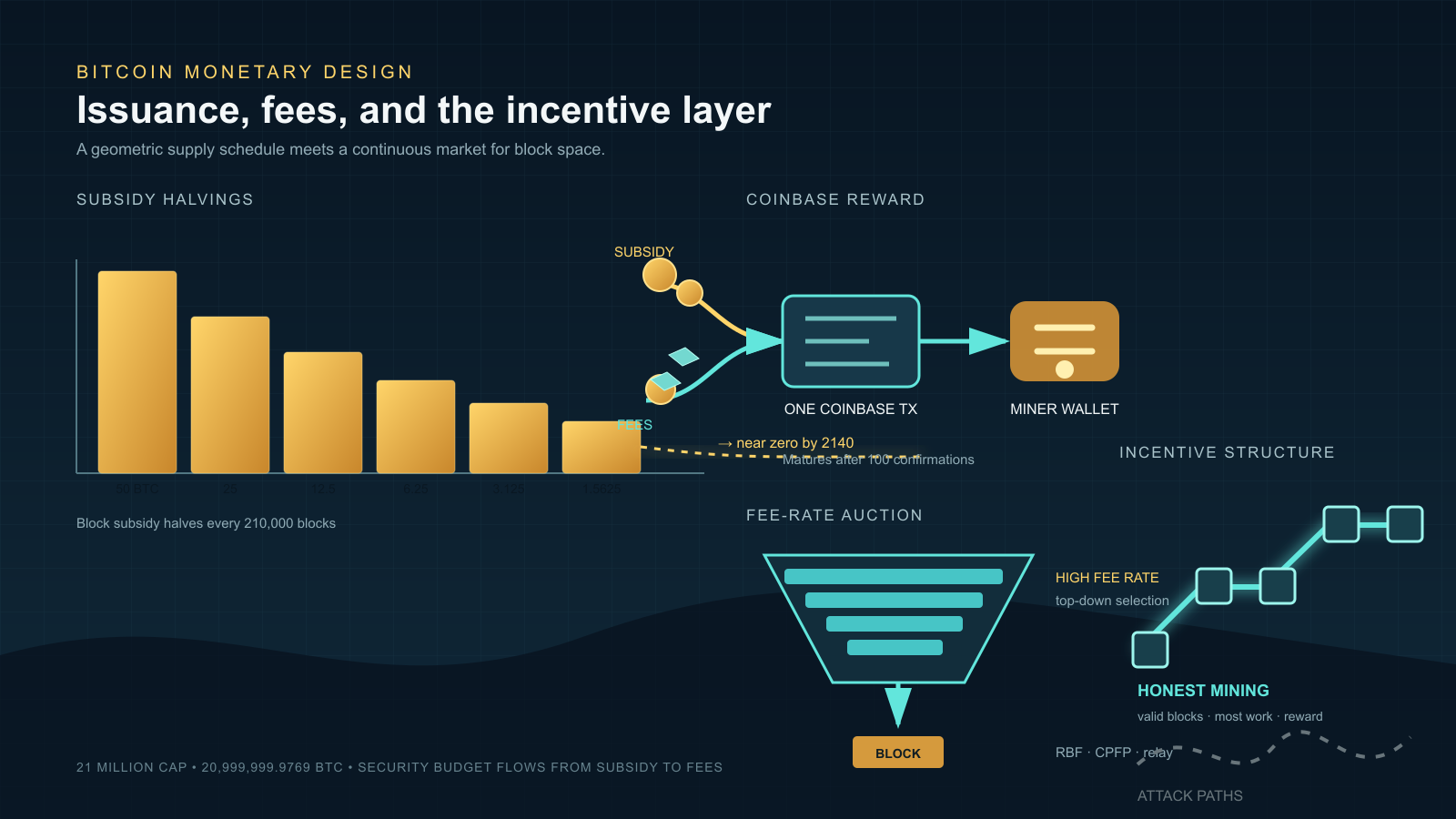
| Issuance (how it is made) | mined out, runs to a cap, can’t be inflated | Section 6 |
| Use (how it is spent) | two parties pay each other directly | title, Section 1 |
And yet today Bitcoin is called “digital gold,” rarely spent, mostly held. This is not a betrayal of the design. The hardness inside the design — the scarcity — wore away the cash use inside the design, from within. Here is how.
Why it has value at all — Satoshi’s answer
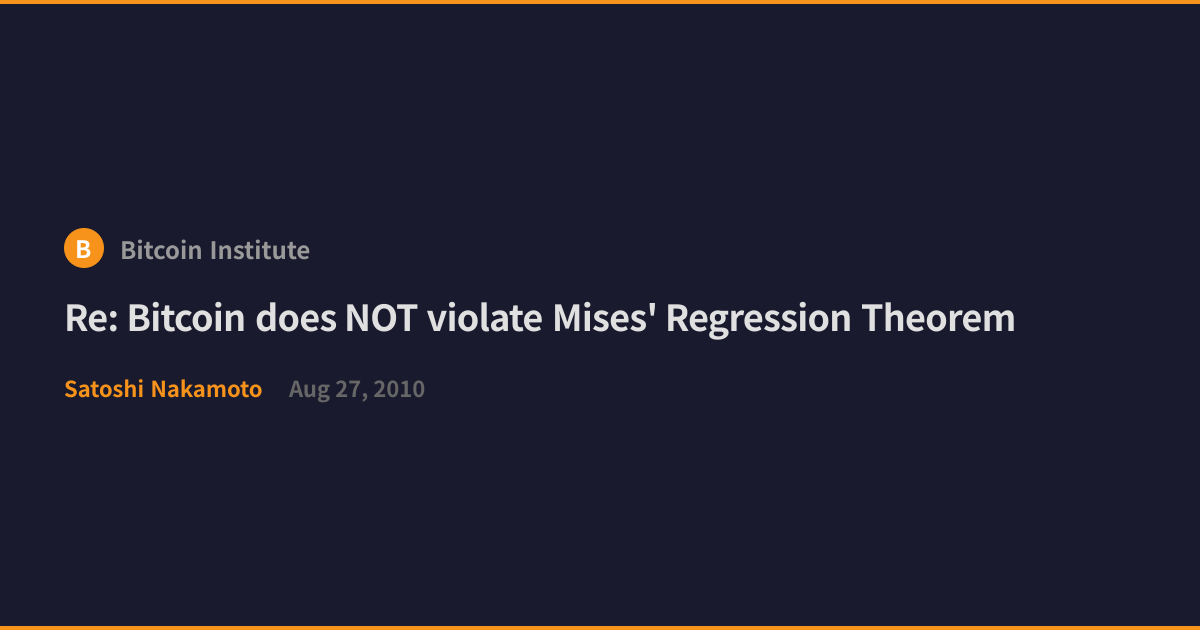
The clearest statement of why a thing like Bitcoin could have value is not in the whitepaper. It is a BitcoinTalk post from August 27, 2010. The Mises regression theorem holds that a money’s value traces back to some use the good had before it was money — for gold, ornament and industry. Bitcoin had no such prior use, so by the theorem it could never have become money. And yet it did. That apparent paradox — Bitcoin seeming to defy the theorem — is what the thread argued over, and Satoshi answered it with a thought experiment:
Quote from: Satoshi Nakamoto on August 27, 2010, 5:32:07 PM UTC“As a thought experiment, imagine there was a base metal as scarce as gold but … not useful for any practical or ornamental purpose … and one special, magical property: can be transported over a communications channel.”
Both faces of the design are here. What makes it gold-like is scarcity — as impossible to mine out as gold, and the reason a value would hold once it existed. What makes it cash-like is transmission — you can send it across distance. Satoshi never settled on a single reason the metal would come to have value in the first place — foreseen usefulness for exchange, collectors, “any random reason.” Scarcity is what he named for keeping that value from being debased, not for creating it. Hard like gold, moving like cash. Two things in one.
It worked as cash, exactly as built
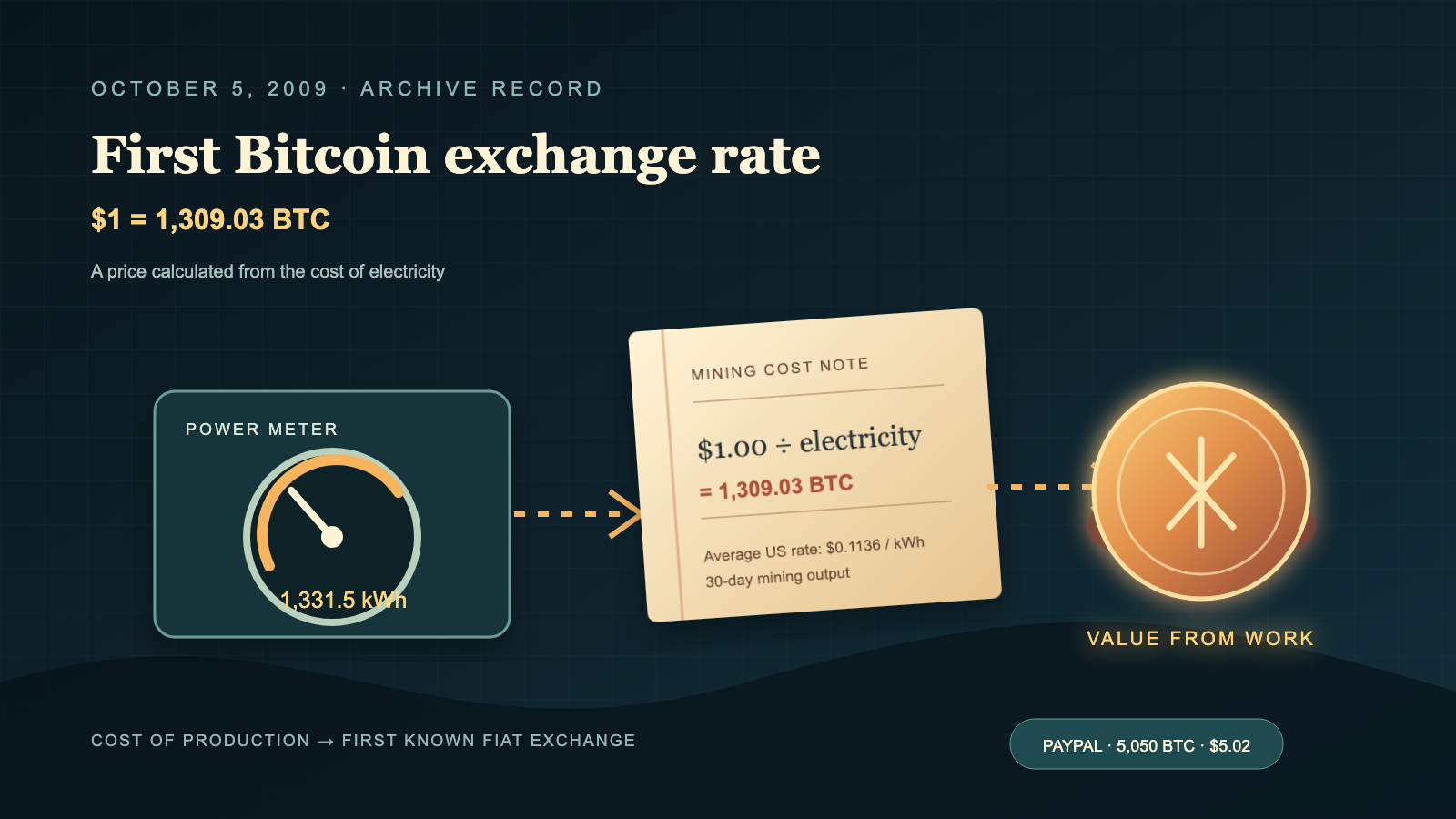
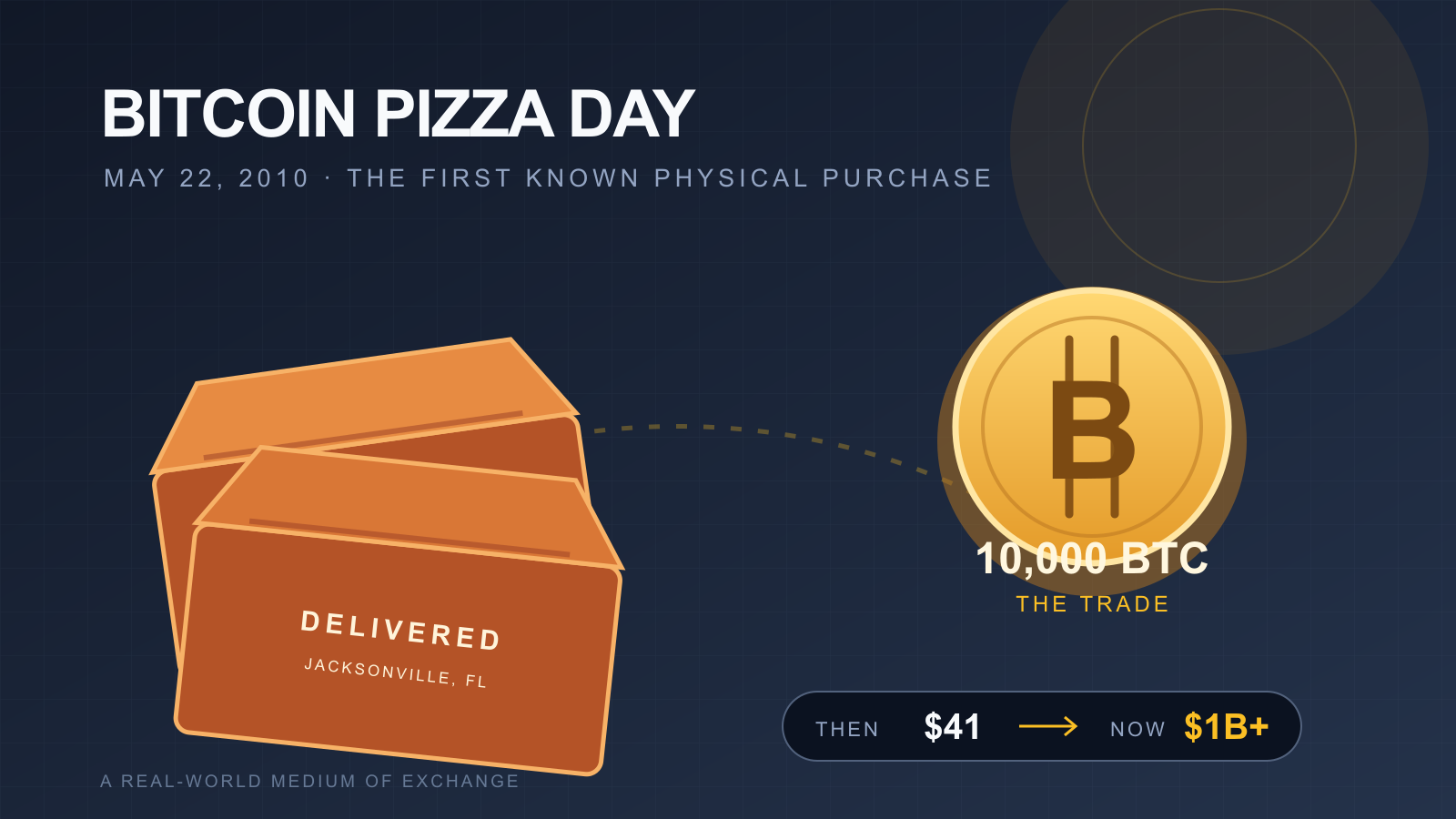
That use was not a fantasy. On May 22, 2010, Laszlo Hanyecz paid 10,000 BTC for two Papa John’s pizzas — about $41 then, the first recorded purchase of a real good with Bitcoin. This is not proof that “the cash dream was real.” It is simply the use Satoshi designed, working as designed. The way it was dug out was gold; the way it was spent was cash. Exactly as written.
Then it tilted toward gold
But the same transaction is now the one people cite as “if only you’d held.” Ten thousand coins became hundreds of millions of dollars. And here is the seed the design planted in itself: no one pays for today’s pizza with something worth more tomorrow. The scarcity that makes Bitcoin gold is the same scarcity that removes the reason to spend it. An asset that climbs is held, not used.
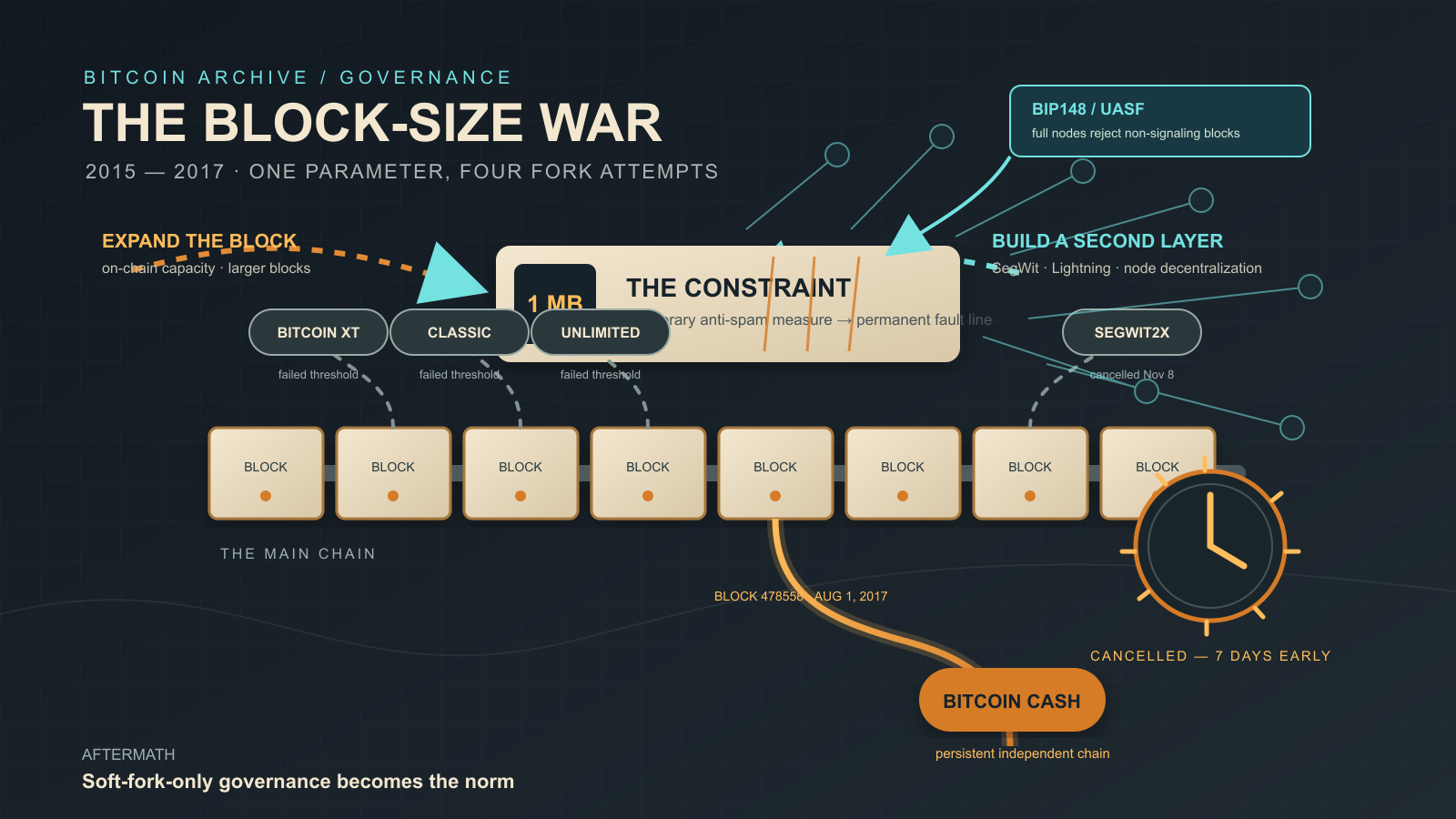
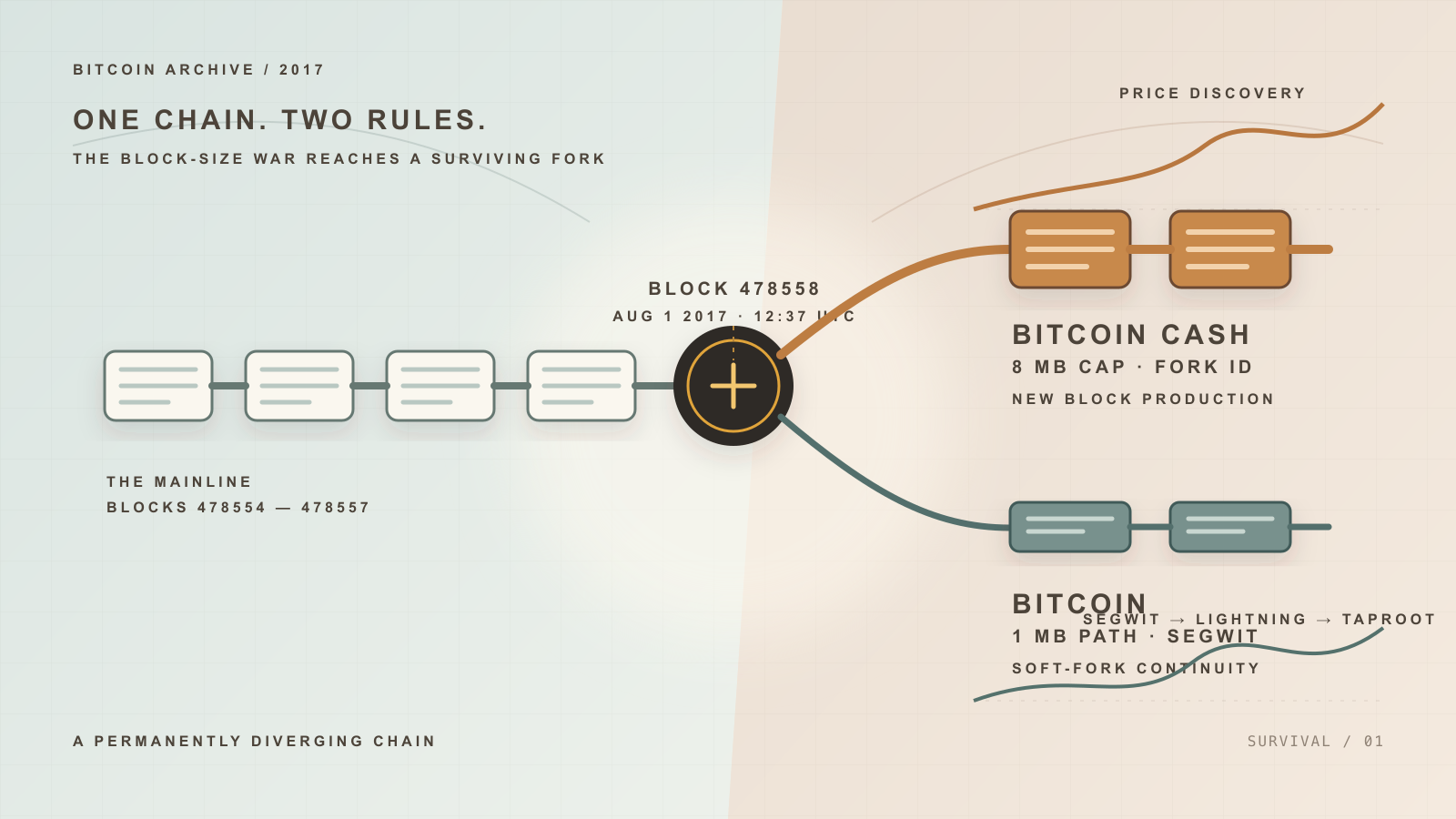
Scaling constraints pushed the same way. The 1 MB limit Satoshi added in September 2010 as anti-spam capped what the base layer could carry and became the issue of the 2015–2017 block-size war. It resolved by separation: in August 2017 the large-block faction forked off as Bitcoin Cash, choosing to keep everyday payments on chain, while the main chain went to SegWit and the Lightning Network — base layer as a settlement floor, daily payments stacked above it or priced out by fees. Scarcity says “hold”; congestion says “don’t spend here.” The use slid from cash to holding.
A precursor saw the mechanism
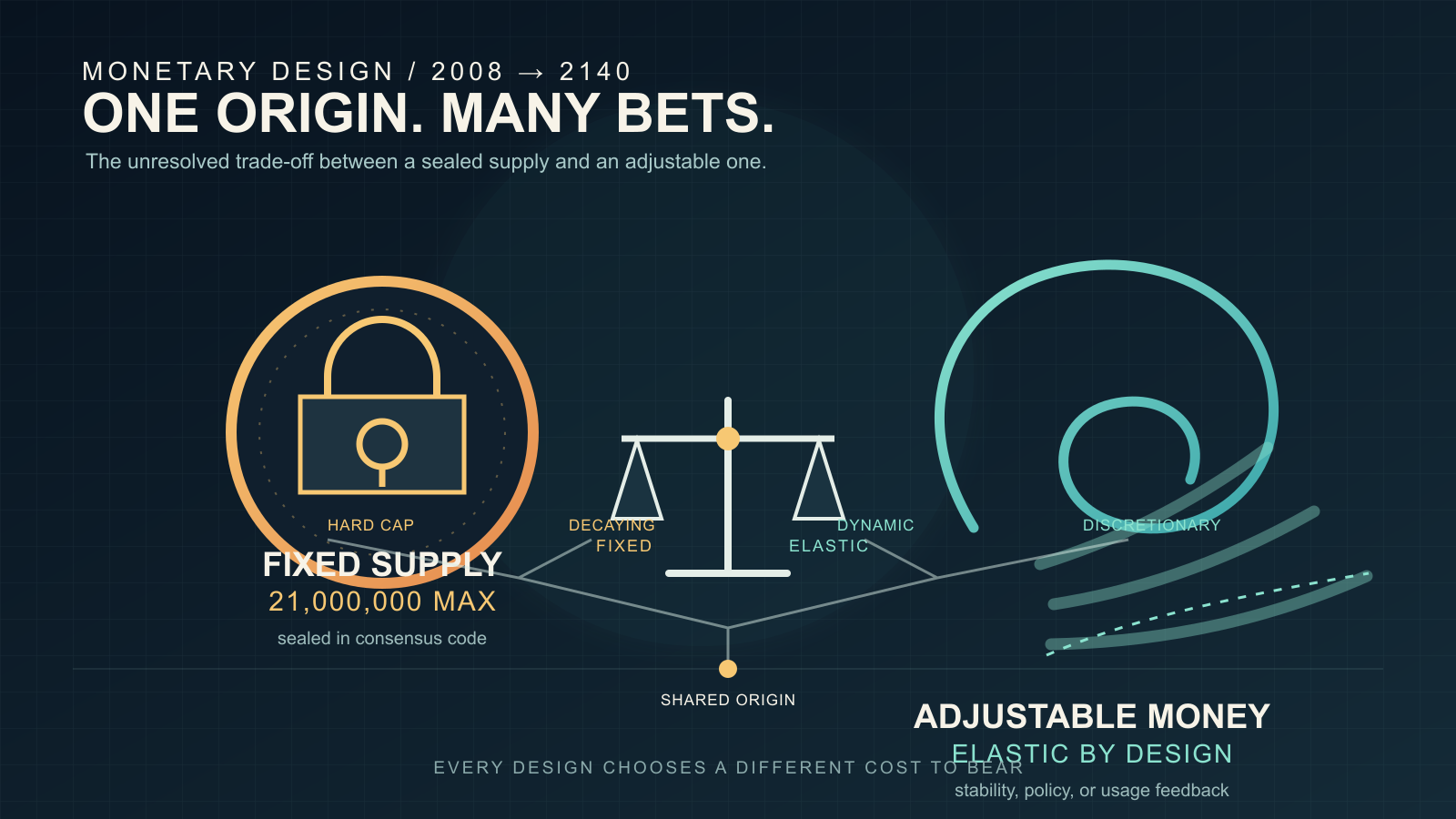
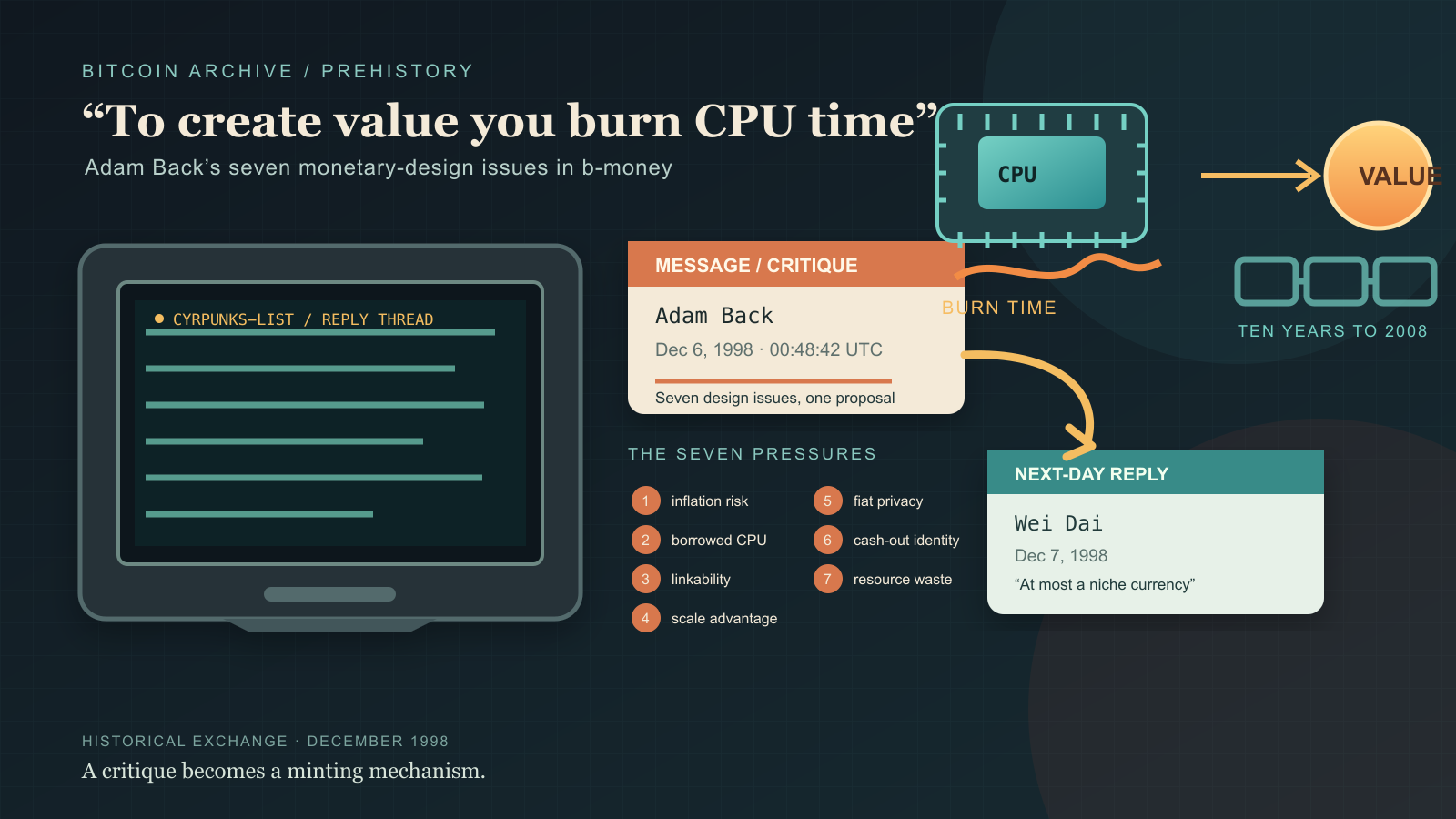
This is not hindsight. Wei Dai, cited as reference [1] in the whitepaper, said the same thing in 2013: the fixed supply causes high price volatility that imposes a heavy cost on users — so it makes a poor everyday currency. The author of the elastic-supply b-money (1998) named Bitcoin’s very hardness as the thing that makes it unfit for cash. The property that makes it digital gold and the property that makes it bad cash are the same property.
Two faces of one coin
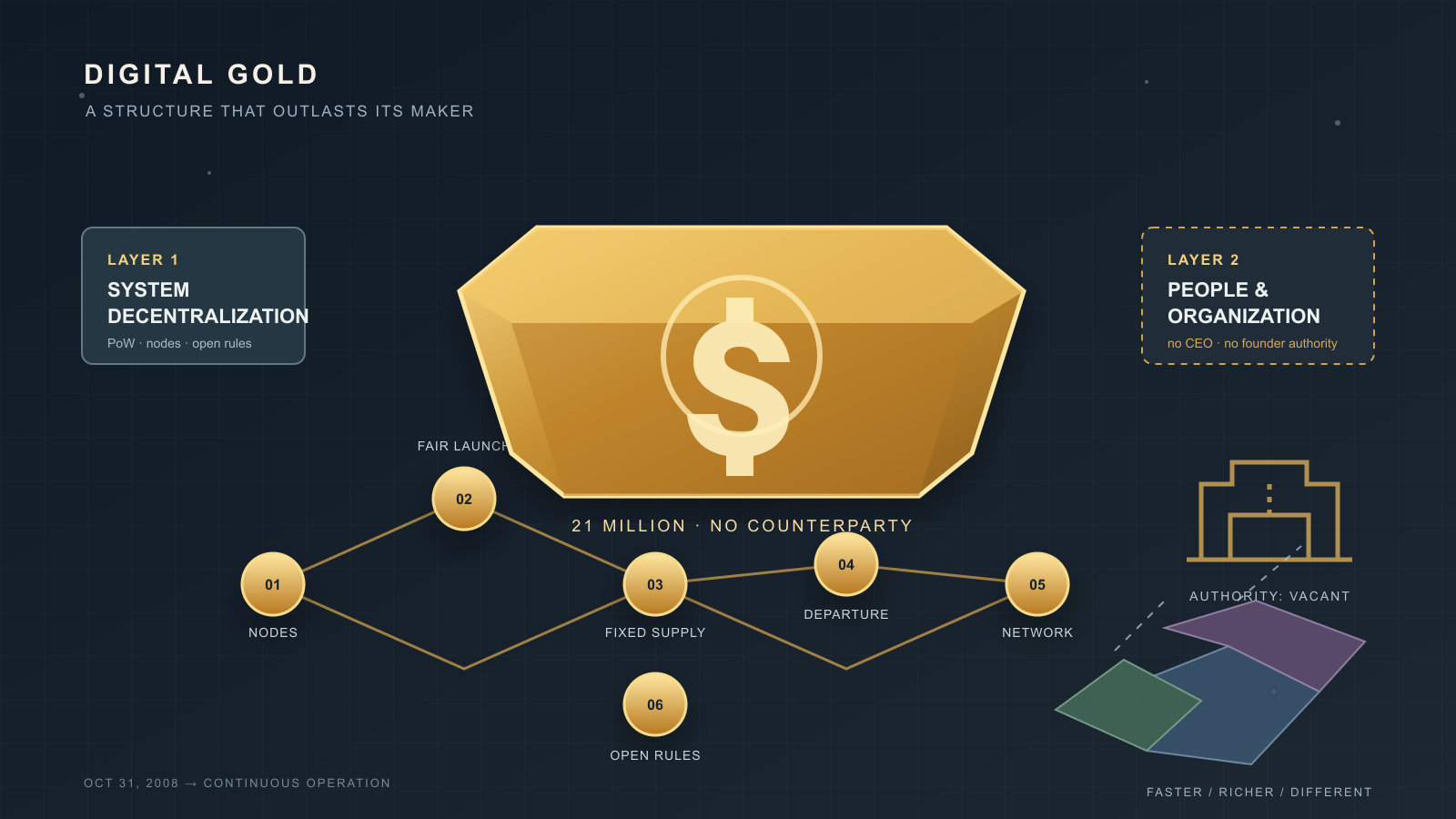
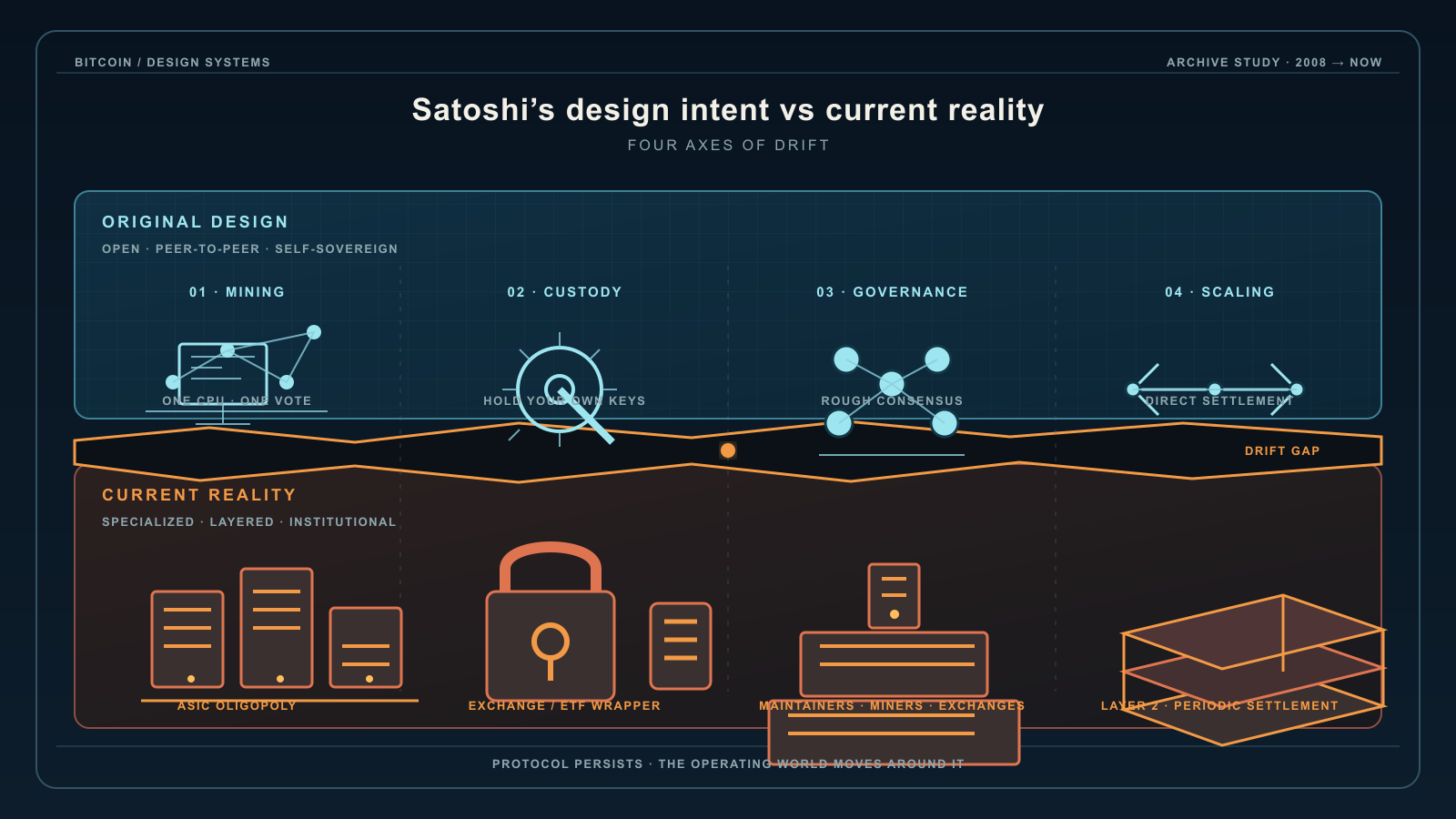
The digital-gold structural-features reading argues that the gold status comes from design — fixed supply and the rest. The design-vs-current-reality reading records the use sliding from cash to a settlement layer. The primary record ties them together: the scarcity that made Bitcoin digital gold is the same scarcity that wore down its cash use. Satoshi did not set out to “make gold.” He made it hard — and the hardness had a gold face on one side and an unspent-cash face on the other. “Digital gold” is not the intent; it is that face winning, later.
So does it still dream of electronic cash?
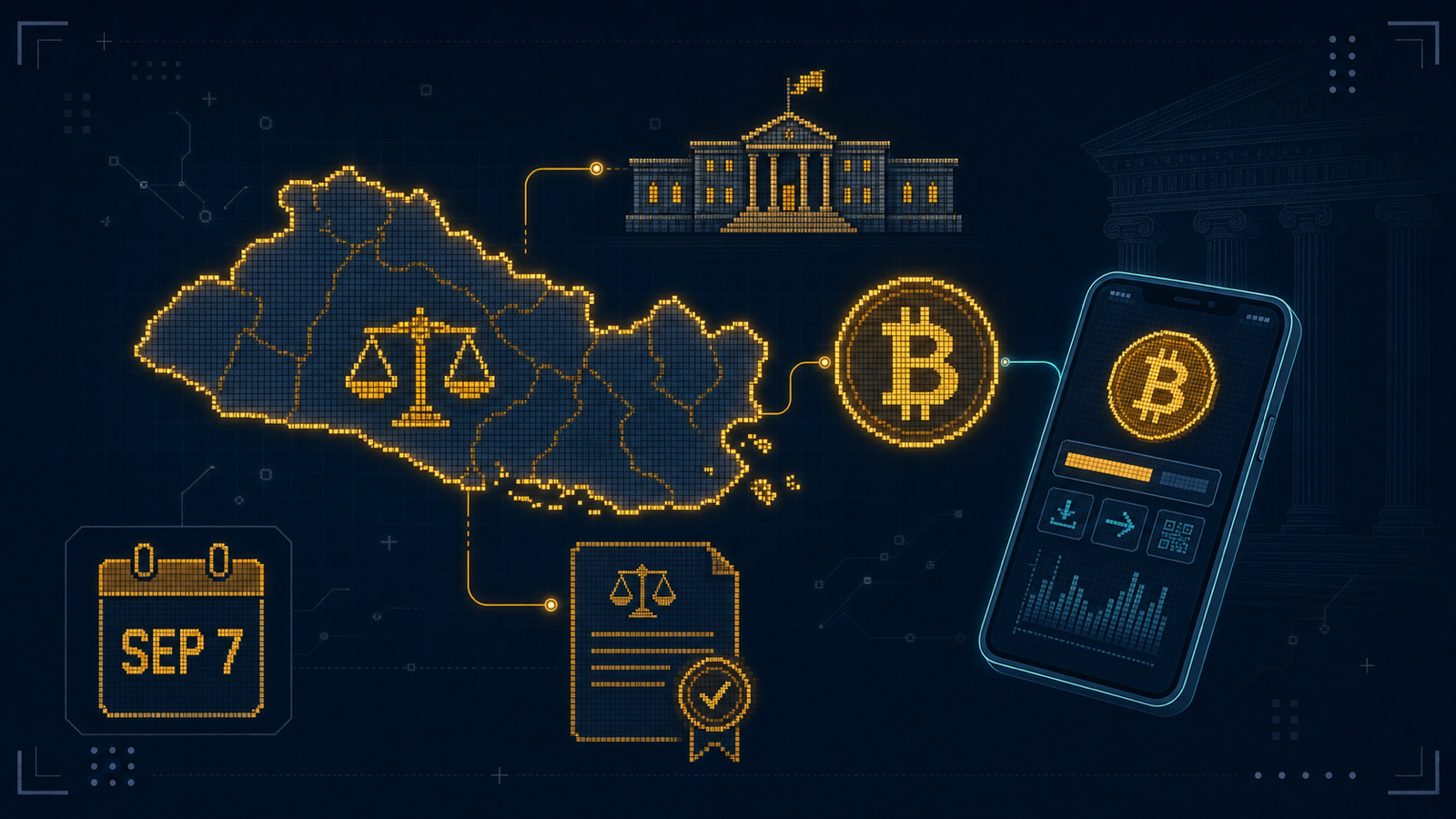
So this question stands in the present tense, not the past. Now that it is held as gold, does Bitcoin still reach for the use it was designed for — electronic cash? The Lightning Network, El Salvador’s legal-tender experiment, the on-chain-cash efforts — the hand is still out. The cash face of the design did not vanish; it is only covered by the gold one. That gold face is now being confirmed from an unrelated direction: five independent AI systems asked to pick one cryptocurrency all converged on Bitcoin, for the held-not-spent reasons this entry traces back to the fixed-supply property.
Limits of this reading
- This is an editorial reading of design from a sparse record, not a claim about Satoshi’s private intentions.
- The section 6 gold is an analogy for issuance — new coins enter like mined gold — not a claim that Bitcoin is gold to be held.
- “Scarcity wears down cash use” is the classic argument that a deflationary asset is hoarded rather than spent.
- The Lightning Network, El Salvador, and other on-chain-cash efforts are live; a future in which everyday spending returns would not falsify this reading, but it would change its tense.
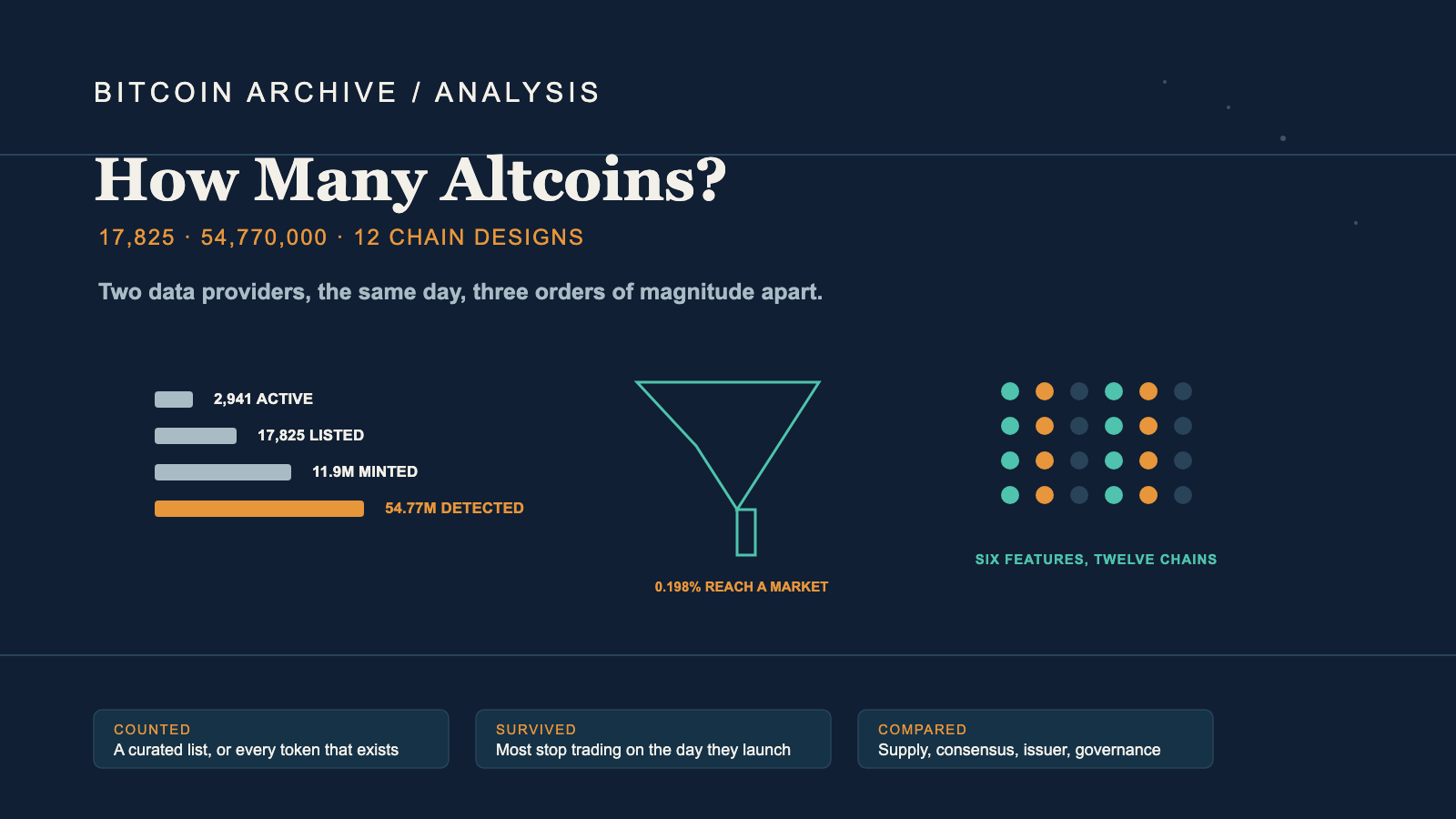
The digital-gold structural-features analysis and the design-vs-current-reality analysis leave one question between them, and the primary record answers it: the property that made it gold and the property that wore down its cash use were one and the same all along. The twelve-chain design comparison puts that same question to eleven other chains’ own issuance designs.
It was not built to be hoarded. It was built hard, and the hardness made it hoardable. And still it dreams of being spent.