Bitcoin’s first known purchase of a physical good began with a forum offer that sounded ordinary: two pizzas, some left over for the next day, and a payment in coins. On May 18, 2010, Laszlo Hanyecz posted it on the BitcoinTalk forum:
Quote from: Laszlo Hanyecz on May 18, 2010, 12:35:20 AM UTC“I’ll pay 10,000 bitcoins for a couple of pizzas… like maybe 2 large ones so I have some left over for the next day. I like having left over pizza to nibble on later.”
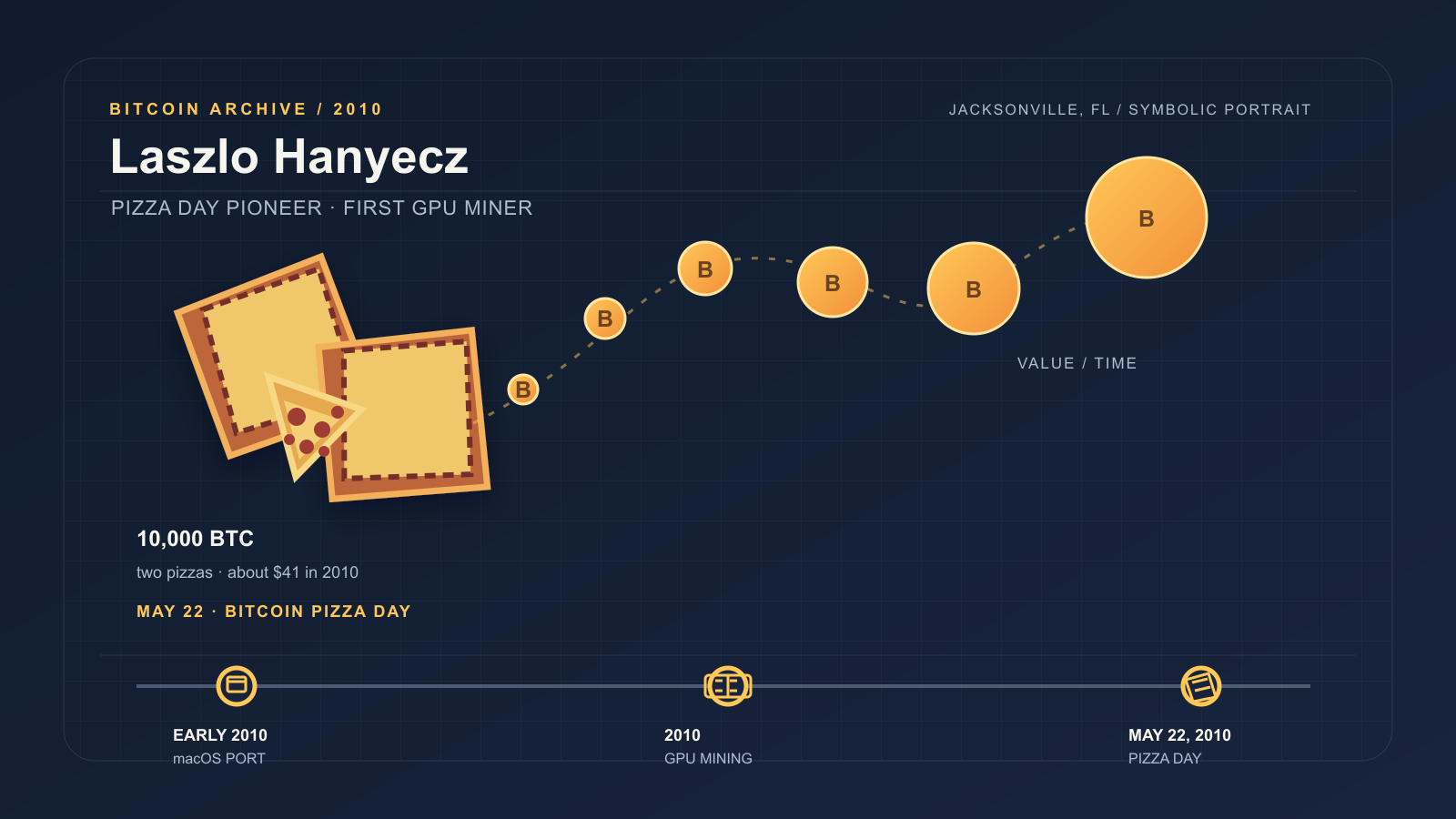
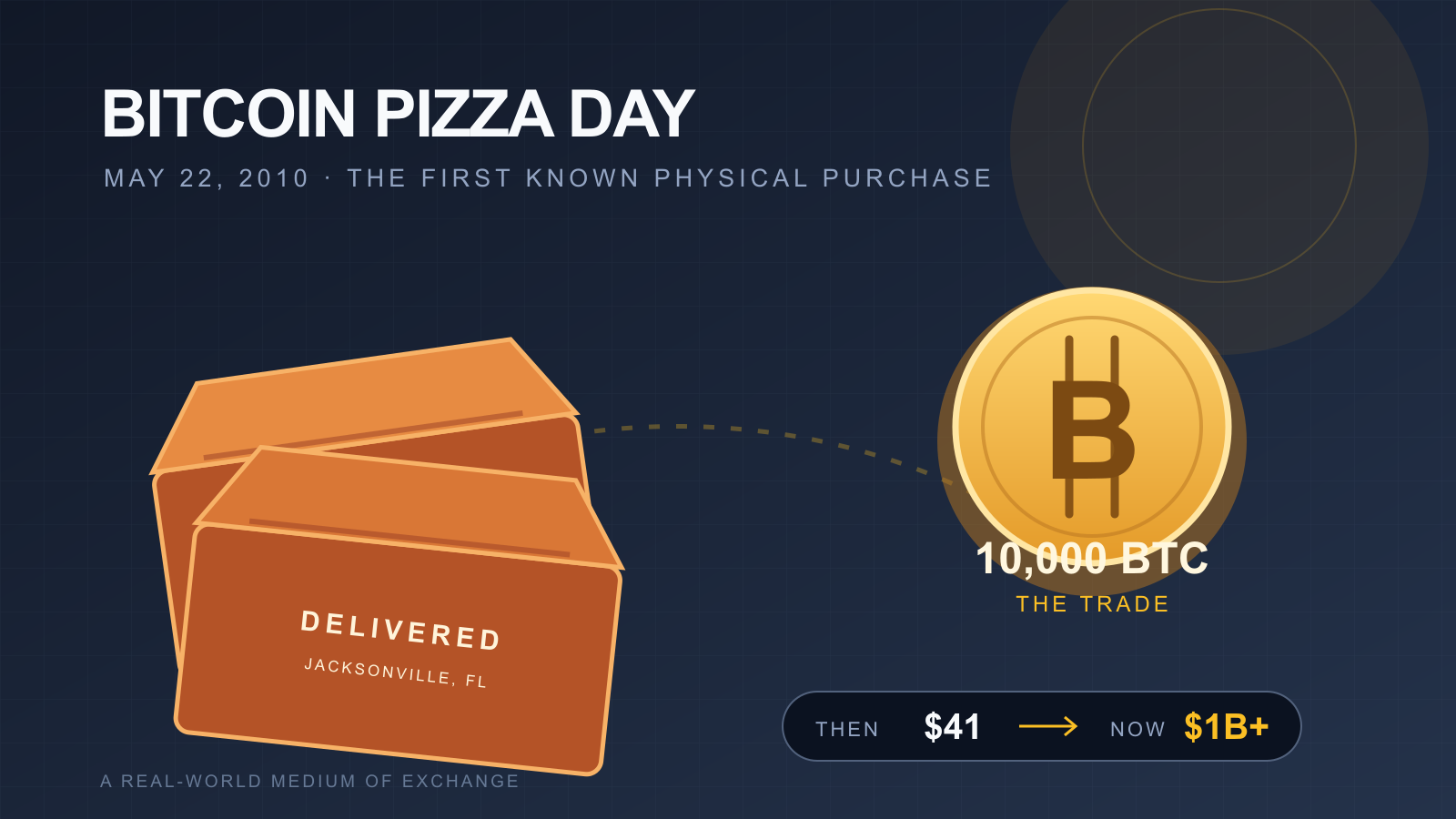
On May 22, 2010, 19-year-old Jeremy Sturdivant (forum handle “jercos”) accepted the offer. He ordered two large pizzas from Papa John’s, had them delivered to Hanyecz’s home in Jacksonville, Florida, and received 10,000 BTC in return. Hanyecz confirmed:
Quote from: Laszlo Hanyecz on May 22, 2010, 7:17:26 PM UTC“I just want to report that I successfully traded 10,000 bitcoins for pizza.”
At the time, 10,000 BTC was worth approximately $41.
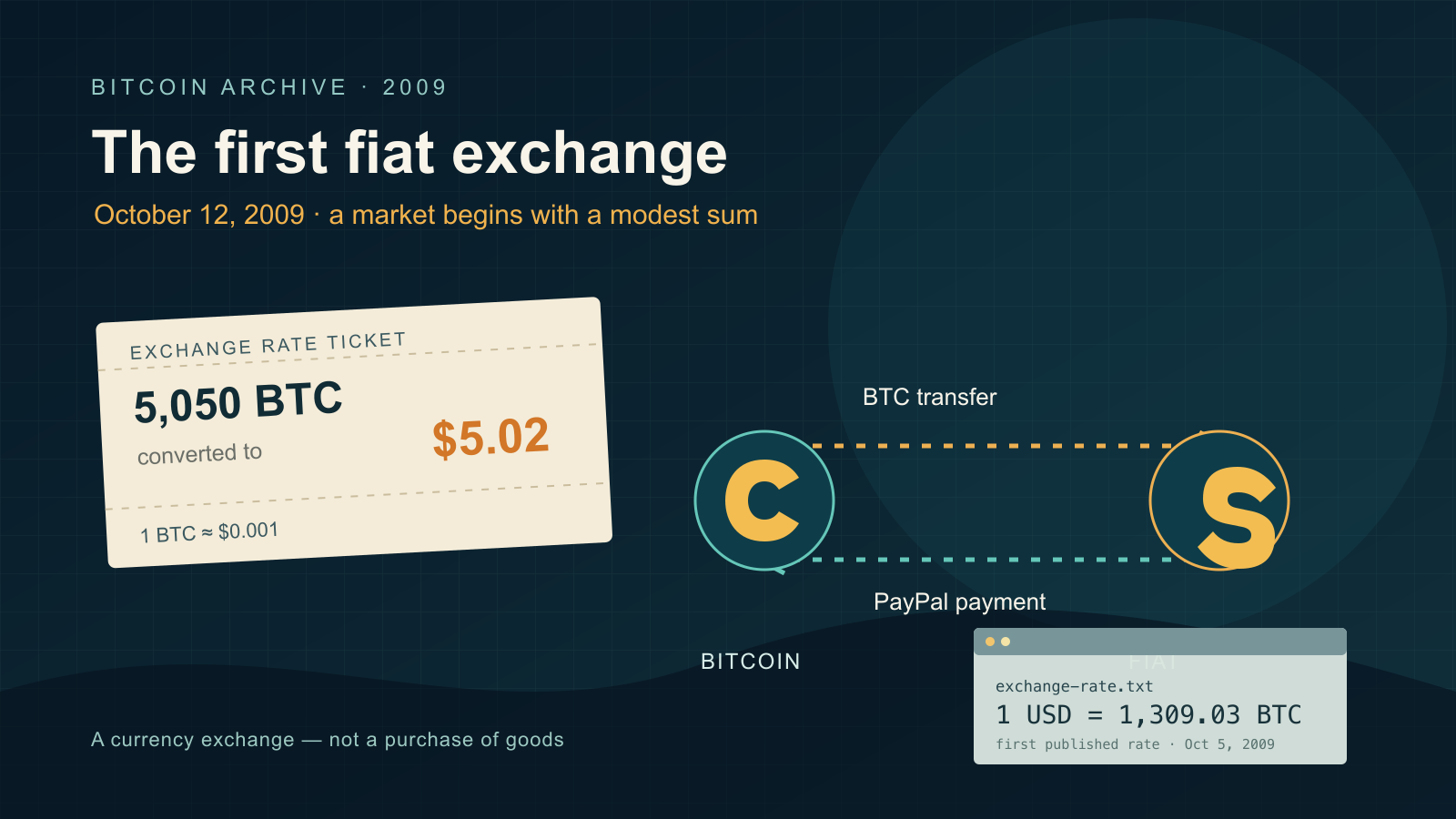
Previous Bitcoin transactions had been digital-only — exchange rate calculations and peer-to-peer transfers, such as Martti Malmi’s October 2009 sale of 5,050 BTC for $5.02, the first known Bitcoin-to-fiat exchange. The pizza transaction proved that Bitcoin could function as a real-world medium of exchange.
Hanyecz, a pioneer of GPU mining, continued ordering pizzas with Bitcoin throughout the summer, spending approximately 79,000 BTC in total.
Asked years later by Cointelegraph whether he regretted the trade now that 10,000 BTC was worth tens of millions of dollars, Hanyecz answered:
“You know, I don’t regret it. I think that it’s great that I got to be part of the early history of Bitcoin in that way, and people know about the pizza and it’s an interesting story because everybody can kind of relate to that…”
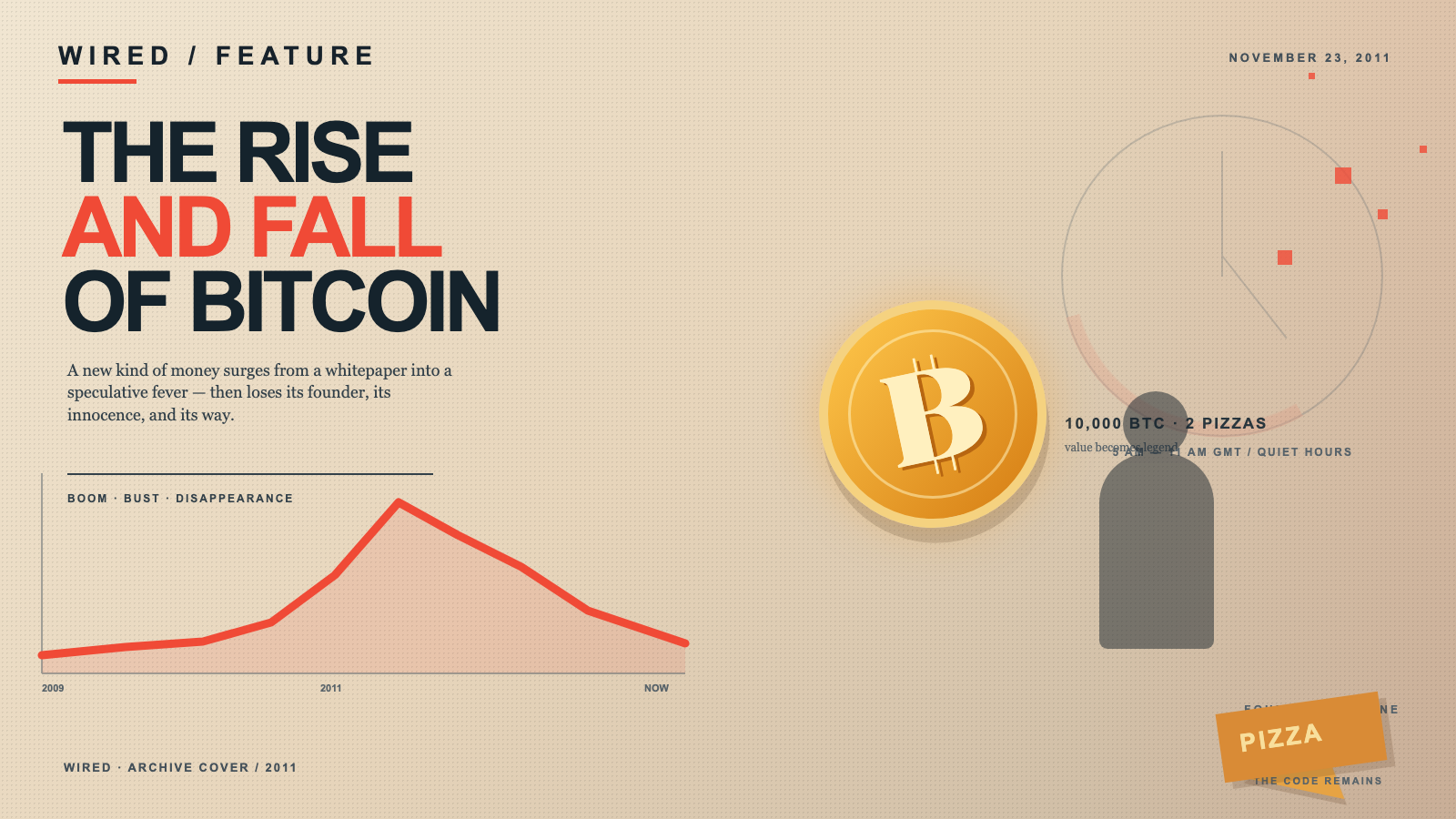
May 22 is now celebrated annually as “Bitcoin Pizza Day” by the Bitcoin community worldwide. Wired’s 2011 feature “The Rise and Fall of Bitcoin” cited the trade, alongside Gavin Andresen’s giveaways through the Bitcoin Faucet, as one of the earliest signs that the currency could move in the real world.
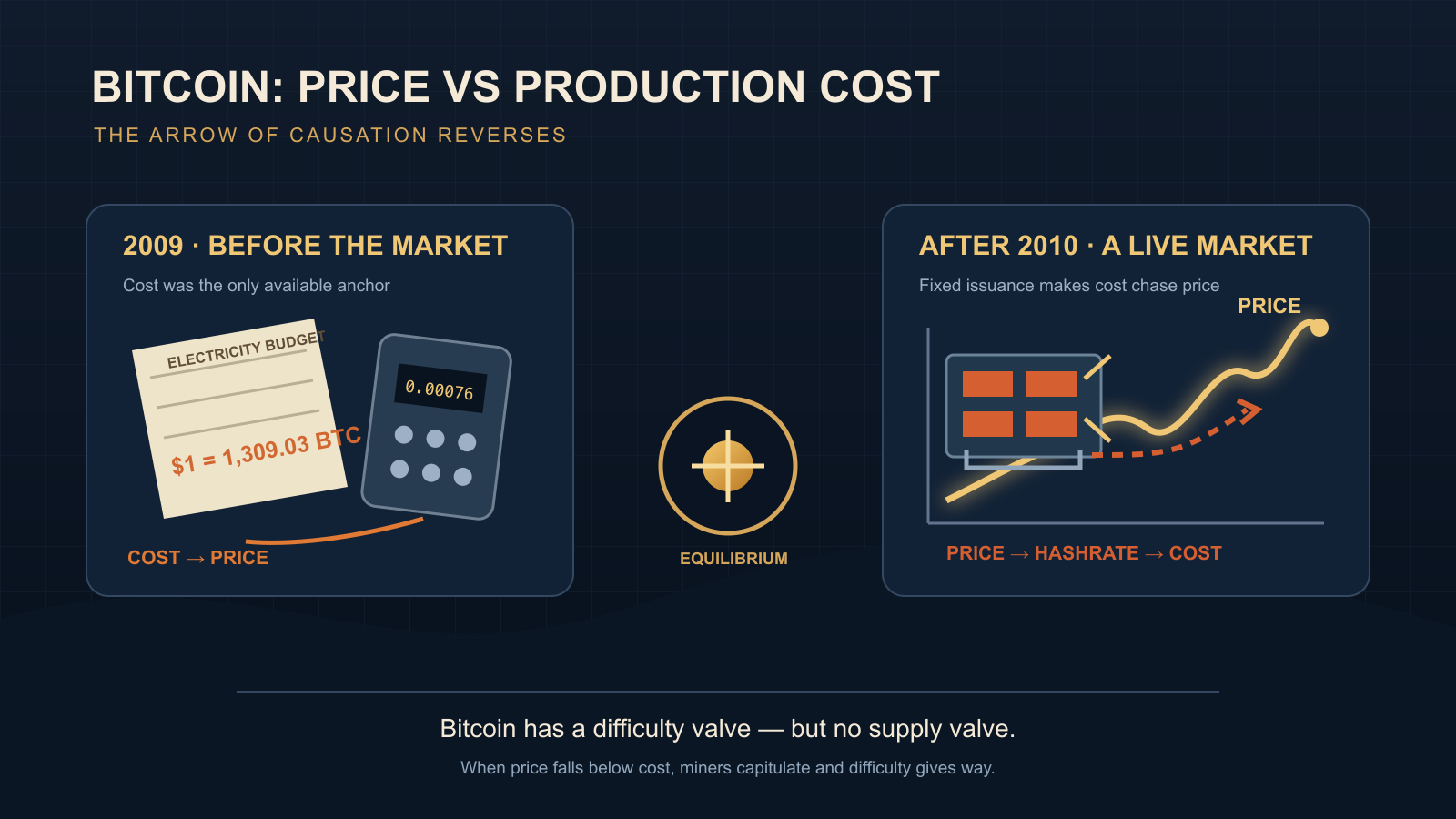
At 2025 prices exceeding $100,000 per BTC, those 10,000 bitcoins would be worth over $1 billion — often called the most expensive pizzas in history. The archive’s own reading of Bitcoin’s cash-versus-gold tension treats this same trade as the moment the design worked exactly as built, and the seed of why it stopped being spent: no one pays for today’s pizza with something worth more tomorrow.
The Laszlo Hanyecz biography follows Hanyecz from the macOS port and GPU mining through the May 22 trade to his later years.
The historical weight of the trade does not come from the later dollar conversion. It comes from the delivery: protocol value left the screen, bought food, and entered an ordinary household transaction. The price comparison became the loudest part of the story, but the record itself is about Bitcoin crossing into the physical world.