
In November 2011, journalist Benjamin Wallace published “The Rise and Fall of Bitcoin” in Wired magazine (issue 19.12) — one of the earliest major feature articles on Bitcoin in mainstream media. The article traced Bitcoin’s entire arc to date: from Satoshi Nakamoto’s whitepaper, through the mining boom and price explosion, to the hacks, scams, and disillusionment that followed.
On the early praise Bitcoin drew, the article gathered notable voices:
(Wired article, November 23, 2011)Wei Dai, inventor of b-money, calls it “very significant”; Nick Szabo, who created bit gold, hails bitcoin as “a great contribution to the world”; and Hal Finney, the eminent cryptographer behind RPOW, says it’s “potentially world-changing.”
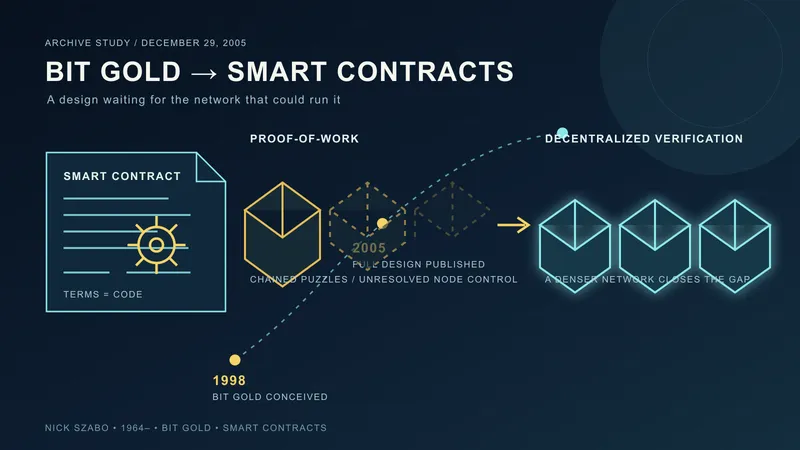
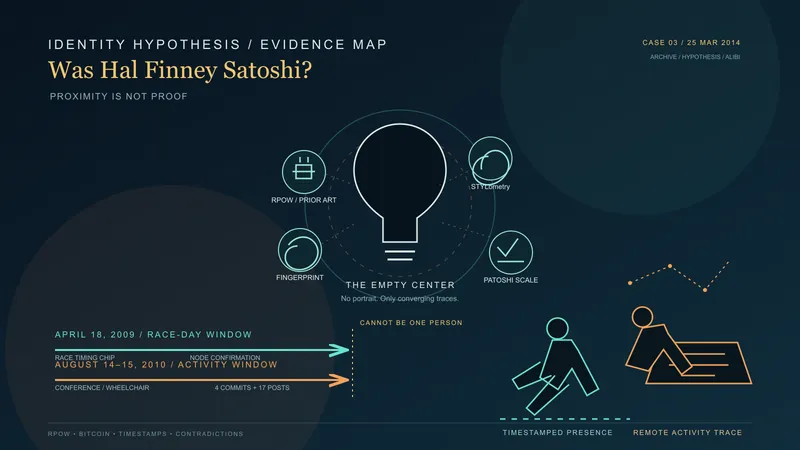
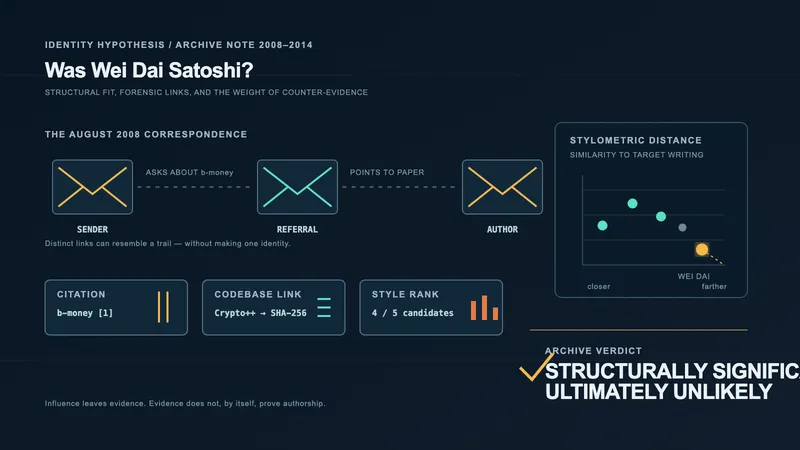
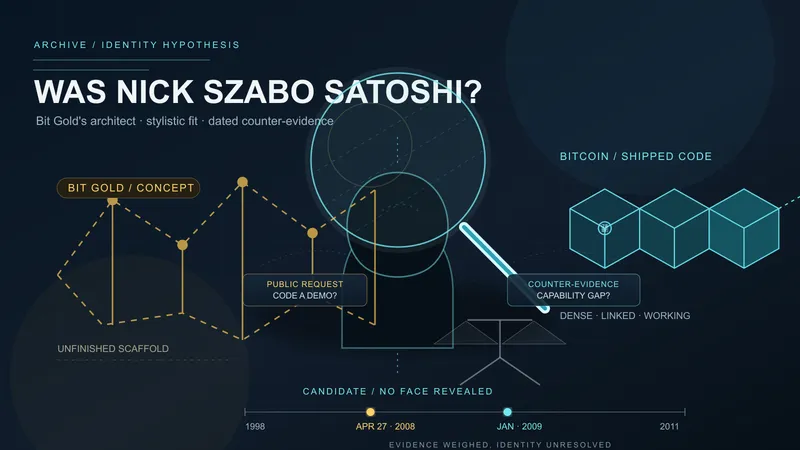
Wallace quoted these three men as admirers sizing up the invention from outside, but the same article had already pulled them inside it. Further on, it reports that some bitcoiners believed Satoshi “must be one of the older crypto-currency advocates—Finney or Szabo or Dai,” that Szabo himself suggested Finney or Dai, and it records a denial from each of the three. This archive now holds a dedicated Wei Dai identity hypothesis, Szabo identity hypothesis and Hal Finney identity hypothesis, each built in part on how close their earlier work came to Bitcoin, the same closeness that made their praise here sound so informed in the first place.
The record of how Bitcoin was built gives that closeness less weight. What Satoshi knew before the code was done shows that he learned of b-money from Adam Back only when his code was nearly finished, that bit gold appears in his record only after the whitepaper, and RPOW only after the launch. In 2011 the same three men already stood on both sides of that line, admirers early in the article and suspects later in it.
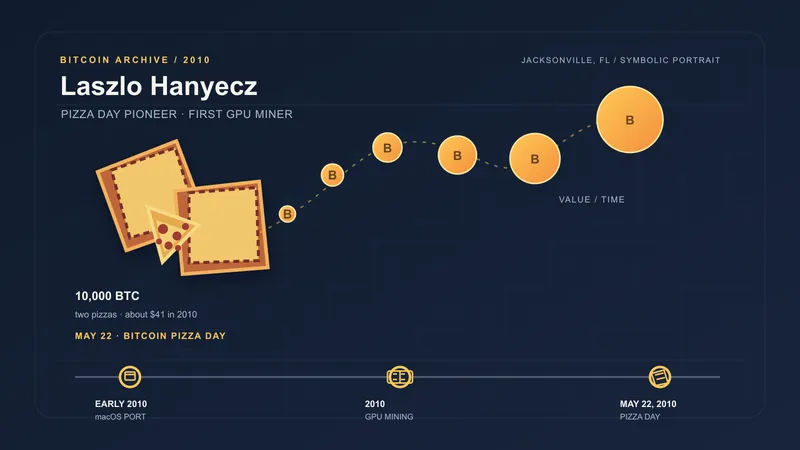
The article described how Gavin Andresen bought 10,000 bitcoins for $50 and created the Bitcoin Faucet, giving them away. Laszlo Hanyecz conducted what bitcoiners think of as the first real-world Bitcoin transaction, paying 10,000 BTC for two pizzas.
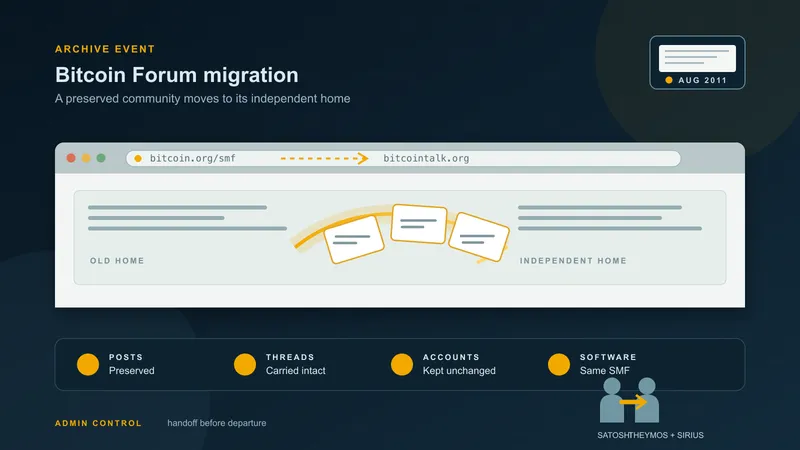
The bitcointalk.org migration entry records 575 posts by Satoshi, from November 2009 to December 2010.
On Satoshi’s identity, the article floated theories:
(Wired article, November 23, 2011)It seemed doubtful that Nakamoto was even Japanese. His English had the flawless, idiomatic ring of a native speaker.
Perhaps, it was suggested, Nakamoto wasn’t one man but a mysterious group with an inscrutable purpose—a team at Google, maybe, or the National Security Agency.
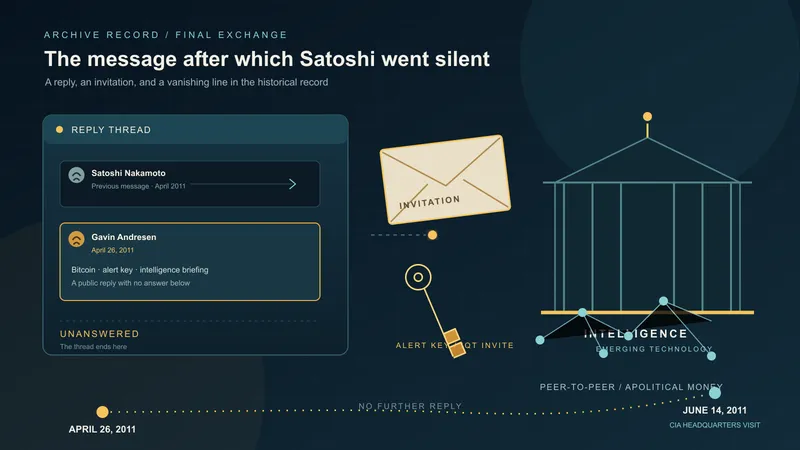
This was speculation, not reporting, and the organization/government-agency theory in this archive’s identity overview treats it that way: the strongest documented thread pulling in that direction isn’t a Google or NSA rumor at all, but Andresen’s own disclosure, in his last known exchange with Satoshi, of an invitation from In-Q-Tel, the CIA-backed investment firm, to present Bitcoin. A 2011 magazine guessing at a shadowy team got the shape of the suspicion right and the source of it wrong.
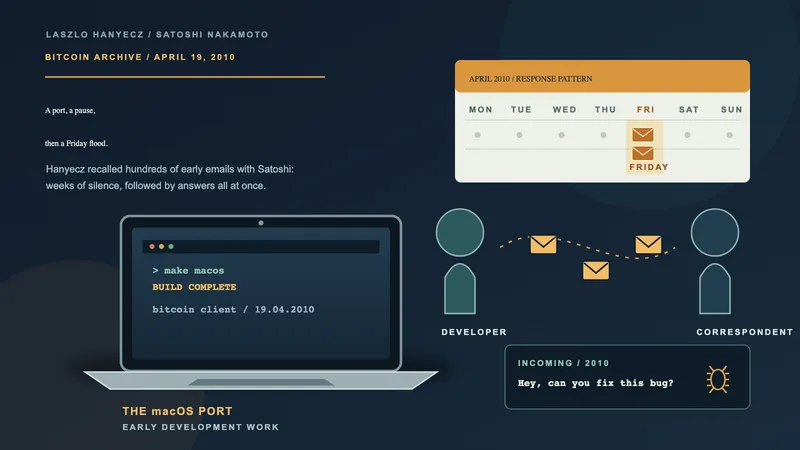
Laszlo Hanyecz (Wired article, November 23, 2011)I exchanged some emails with whoever Satoshi supposedly is. I always got the impression it almost wasn’t a real person. I’d get replies maybe every two weeks, as if someone would check it once in a while. Bitcoin seems awfully well designed for one person to crank out.
Hanyecz’s hunch — that the work looked like more than one person’s — is the same instinct behind the Finney-Sassaman co-creators theory that the 2026 documentary Finding Satoshi built fifteen years later around a specific pairing: Hal Finney on implementation, Len Sassaman drafting the whitepaper. The counter-evidence there is concrete in a way Hanyecz’s 2011 feeling couldn’t be — Finney’s own race-day alibi, Adam Back’s point that Sassaman neither wrote C++ nor owned a Windows machine — but the shape of the doubt is identical: someone who traded emails with “Satoshi” came away feeling the design was too much for one person to have turned out. The correspondence itself — Satoshi going silent for weeks and then answering everything at once — is recounted in more detail in Hanyecz’s own recollection of the exchange, which centers on the time of his macOS port.
On Satoshi’s Wikileaks plea, the article quoted his rebuff:
Satoshi Nakamoto (BitcoinTalk post, December 05, 2010, 9:08:08 AM UTC)No, don’t ‘bring it on.’ The project needs to grow gradually so the software can be strengthened along the way. I make this appeal to Wikileaks not to try to use bitcoin. Bitcoin is a small beta community in its infancy. You would not stand to get more than pocket change, and the heat you would bring would likely destroy us at this stage.
On Satoshi’s disappearance, he wrote:
Benjamin Wallace (Wired article, November 23, 2011)Then, as unexpectedly as he had appeared, Nakamoto vanished.
Wallace described how Andresen was one of the last people Satoshi communicated with. Andresen told fellow coders:
Gavin Andresen (Email to fellow Bitcoin developers, April 26, 2011)Satoshi did suggest this morning that I (we) should try to de-emphasize the whole ‘mysterious founder’ thing when talking publicly about bitcoin.
Wallace quoted this as a passing bit of PR advice, but it was drawn from Satoshi’s actual final known email, not a routine check-in — the same message, sent the morning of April 26, 2011, that handed over the network alert key. Andresen’s reply that same day disclosed something Wallace’s account leaves out entirely: an invitation to present Bitcoin to US intelligence agencies, tied to an In-Q-Tel-linked approach. Satoshi never answered it. Read against that sequence, “de-emphasize the mysterious founder thing” is a strange note to end on: it went out in the same breath as the keys themselves, and it is among the last things Satoshi is known to have said before a message about government interest went unanswered.
Benjamin Wallace (Wired article, November 23, 2011)Then Nakamoto stopped replying even to Andresen’s emails. Bitcoiners wondered plaintively why he had left them. But by then his creation had taken on a life of its own.
This archive’s self-statements and non-technical silence entries make the same point from the inside: Satoshi never explained his leaving, because he had never explained much of anything about himself to begin with. Wallace’s “bitcoiners wondered plaintively why” was a discovery in 2011. From the archive’s vantage, it was already the pattern.
The article also collected denials. Finney, who had blogged about his ALS diagnosis, sent his denial:
Hal Finney (Email to the Wired reporter, 2011)Under my current circumstances, facing limited life expectancy, I would have little to lose by shedding anonymity. But it was not I.
On Satoshi’s coding style and likely age, the article gathered guesses.
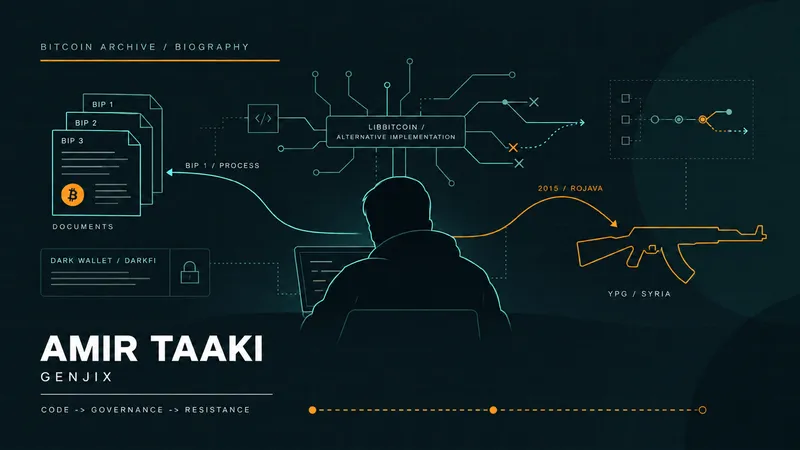
Benjamin Wallace (Wired article, November 23, 2011)Dan Kaminsky (Wired article, November 23, 2011)Nakamoto’s style of notation “was popular in the late ’80s and early ’90s,” Taaki notes. “Maybe he’s around 50, plus or minus 10 years.”
I suspect Satoshi is a small team at a financial institution. I just get that feeling. He’s a quant who may have worked with some of his friends.
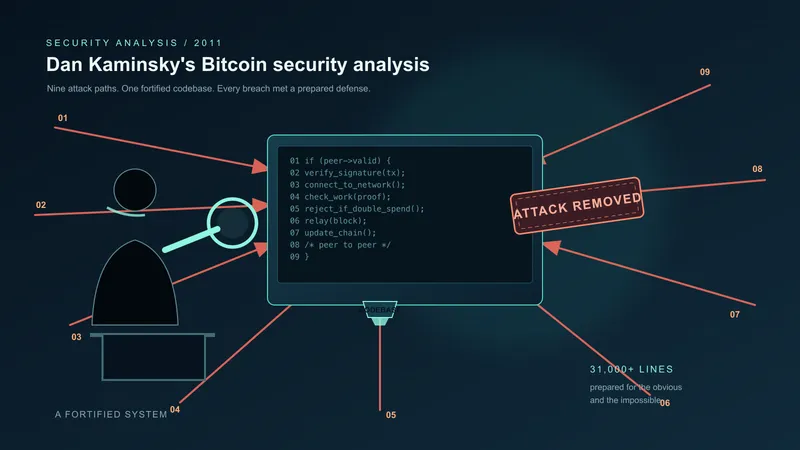
Kaminsky was refining a guess he’d already made once. Six weeks earlier, in a New Yorker profile of his failed attempt to find vulnerabilities in Bitcoin’s code, he had put the same instinct more starkly: “Either there’s a team of people who worked on this, or this guy is a genius.” Wired caught him a notch more specific — a small team, a financial institution, a quant.
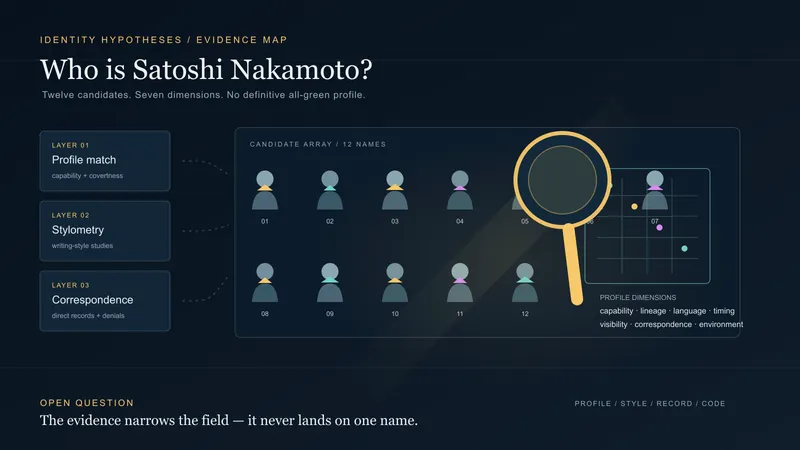
Both guesses were hunches, offered in 2011 with nothing to check them against. The identity-hypotheses overview built fifteen years later does check them: Kaminsky’s “small team” reading points toward the organization theory just discussed above, while Taaki’s coding-style guess anticipates the archive’s own code-style analysis — evidence that took years of comparative work to assemble properly, guessed at here in a sentence.
On the deeper question beneath it all, he turned reflective:
Benjamin Wallace (Wired article, November 23, 2011)And yet, unmistakably, beneath the paranoia and infighting lurked something more vulnerable, an almost theodical disappointment. What bitcoiners really seemed to be asking was, why had Nakamoto created this world only to abandon it?
That question never got a better answer than the one Wallace already sensed here in 2011 — it just got a more structural one. This archive’s anonymity architecture reads the same withdrawal as one layer of a six-layer wall that held from the first post to the handover, not a late change of heart, and its identification-asymmetry analysis argues the gap between the effort spent looking and the material trail actually left is itself the finding. Wallace was asking why a person would do this; those two entries are asking why the record makes it so hard to stop asking. A decade later, this archive’s survey of what people have said about Satoshi finds two statues built to the same shrug — a blank bronze face in Budapest, a figure that vanishes head-on in Lugano — and Wallace’s own later verdict, that no precedent exists for someone who built something world-changing and declined the credit. Three tellings, a decade and a half apart, circling one absence none of them close.
On trust and security failures, Jeff Garzik was blunt:
Jeff Garzik (Wired article, November 23, 2011)People have the mistaken impression that virtual currency means you can trust a random person over the Internet.
The correction is aimed at users, but it describes the whitepaper’s own design goal precisely: Bitcoin was built so that no one has to trust a random person over the internet, because proof of work substitutes for that trust. Garzik wasn’t debunking a myth about Bitcoin so much as restating, in one blunt sentence, the problem Satoshi wrote the paper to solve.
On the end of the mining gold rush:
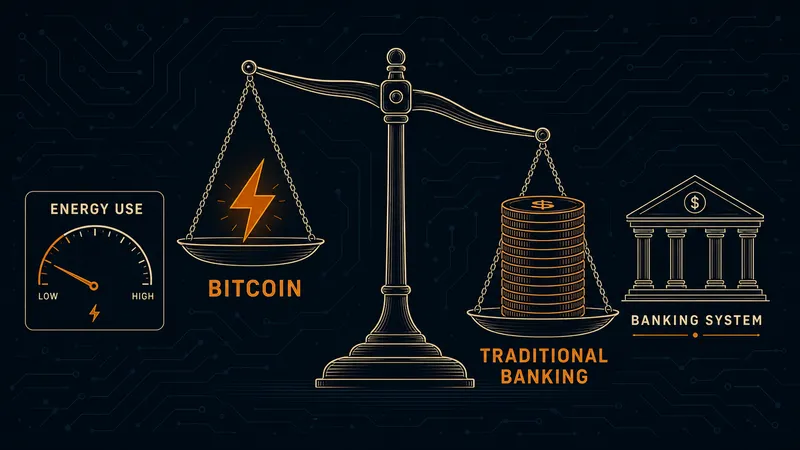
Jeff Garzik (Wired article, November 23, 2011)People are getting sick of the high electric bills, the heat, and the loud fans.
For the hobbyist rigs the article had just described, the complaint was an ending. The dynamic behind it wasn’t new: the Bitcoin project’s own FAQ had already described how competition for coin creation would push the price of electricity needed to generate a coin toward the coin’s value — a line already on the record on BitcoinTalk by February 2010, as this archive’s analysis of Bitcoin’s price-versus-production-cost economics traces. Twenty-one months later, that same competitive pressure was what miners were running into: the electric bill was what Garzik’s contacts were now sick of paying. But 2011 was also the year Jihan Wu discovered Bitcoin — he would go on to co-found Bitmain, the company that industrialized exactly the electric bills, heat, and fan noise Garzik was tired of, at a scale no one griping about a hot GPU rig in 2011 had reason to expect. The gold rush wasn’t ending. It was about to stop being a hobby.
On Stefan Thomas’s timestamp analysis, the article noted:
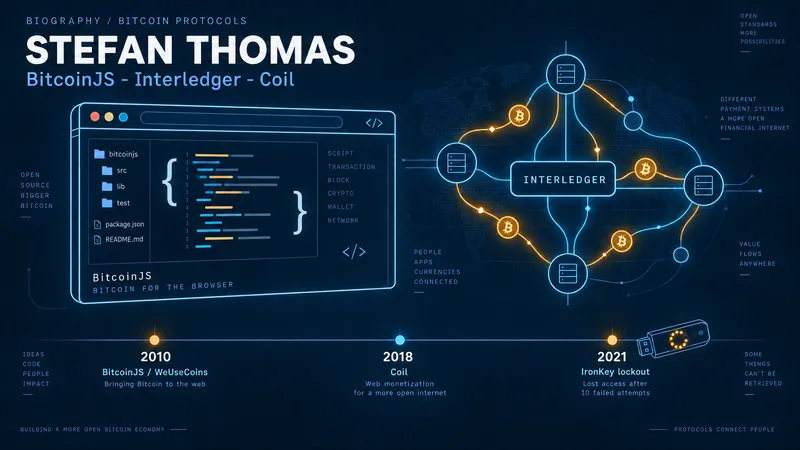
Benjamin Wallace (Wired article, November 23, 2011)Stefan Thomas, a Swiss coder and active community member, graphed the time stamps for each of Nakamoto’s 500-plus bitcoin forum posts; the resulting chart showed a steep decline to almost no posts between the hours of 5 am and 11 am Greenwich Mean Time. Because this pattern held true even on Saturdays and Sundays, it suggested that the lull was occurring when Nakamoto was asleep, rather than at work. (The hours of 5 am to 11 am GMT are midnight to 6 am Eastern Standard Time.) Other clues suggested that Nakamoto was British: A newspaper headline he had encoded in the genesis block came from the UK-published Times of London, and both his forum posts and his comments in the bitcoin source code used such Brit spellings as optimise and colour.
Chain Bulletin would revisit this same GMT-based approach nearly a decade later, drawing on a far larger dataset of 742 timestamped forum posts, commits, and emails to reach a similar conclusion — see Chain Bulletin’s 2020 London hypothesis analysis. What strikes me about Thomas’s chart is less the result than the timing: a member of the community ran this analysis on 500 posts within a year of Satoshi’s silence, using a method a later, better-funded study would still be using on 742 records nine years on. The gap between hobbyist and study was a decade; the method never changed.
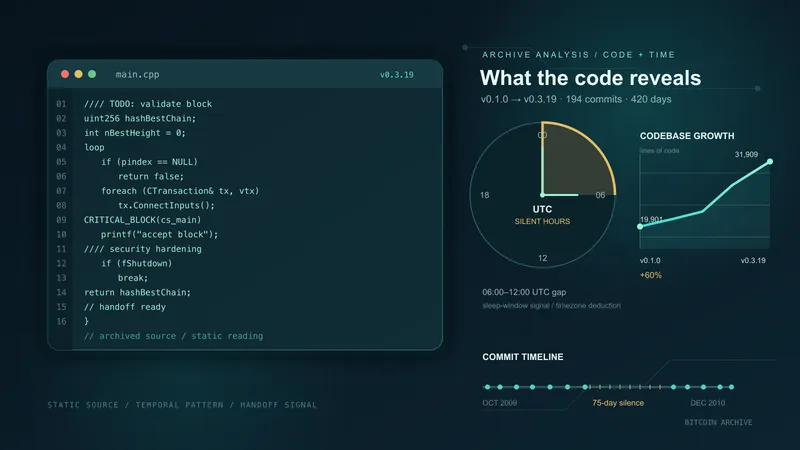
The GMT reading itself, though, is not the last word. This archive’s own code analysis, working from a different dataset — 164 SVN commits rather than forum posts — finds a gap consistent with EST or CST instead, five to six hours west of London; the nationality-question entry lays both readings side by side and does not adjudicate between them. Two timestamp studies, two zones. Thomas’s chart got the shape of the silence right on the first try — a real gap in the record, robust enough to survive nine more years of better data. It just isn’t the only shape that same silence has been read into.
In its closing lines, the article argued that identity had stopped mattering to the most committed users — closing on Garzik’s own words:
Jeff Garzik (Wired article, November 23, 2011)But Garzik, the developer, says that the most dedicated bitcoiners have stopped trying to hunt down Nakamoto. “We really don’t care,” he says. It’s not the individuals behind the code who matter, but the code itself. And while people have stolen and cheated and abandoned the bitcoiners, the code has remained true.
Thirteen years did not change Garzik’s mind. In a 2024 video series reflecting on his time as one of Bitcoin’s earliest core developers, he described Satoshi as someone who “would never let slip any personal information whatsoever… It was always 100% all about Bitcoin.” Same judgment, same person, said twice a career apart.