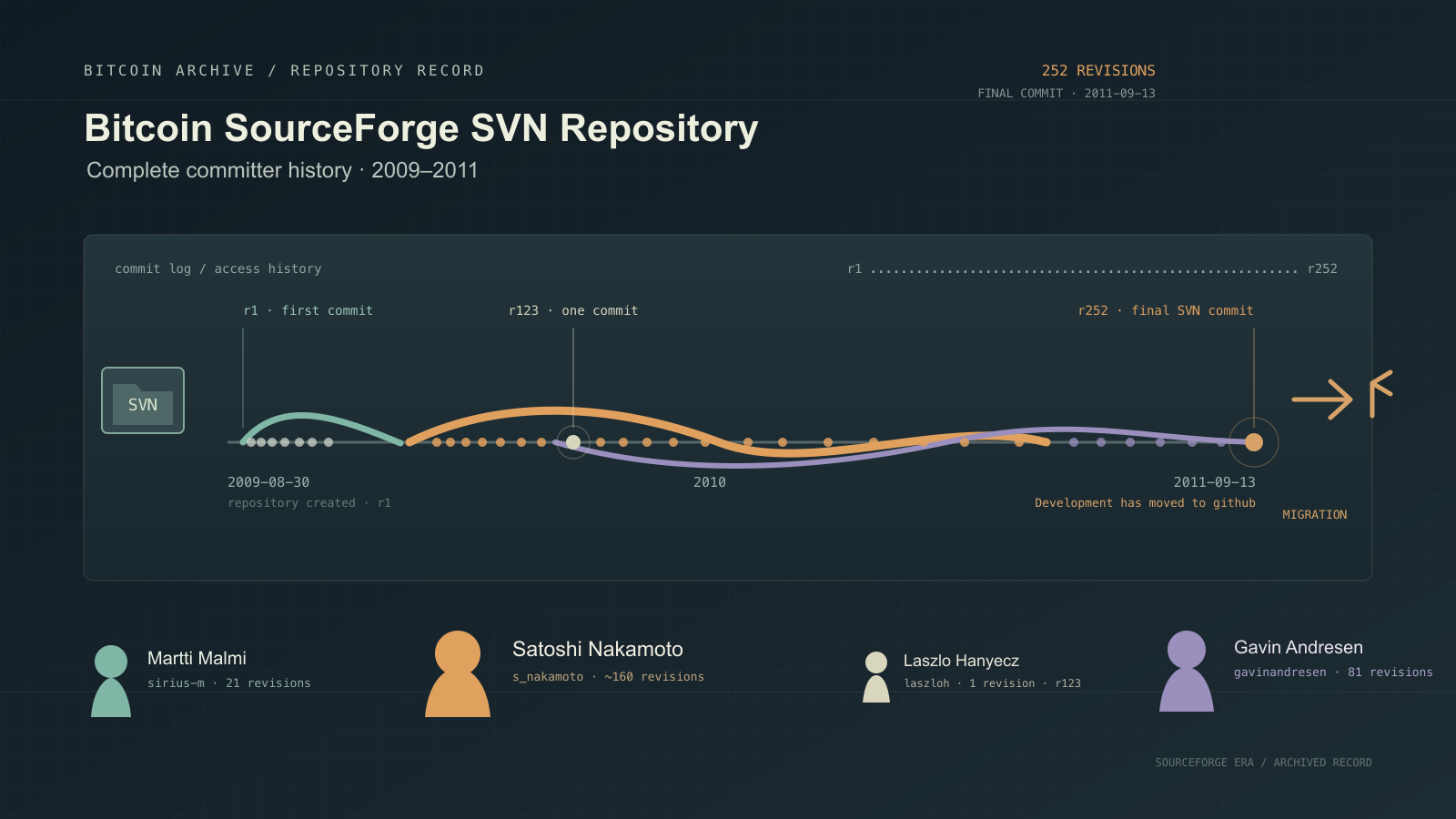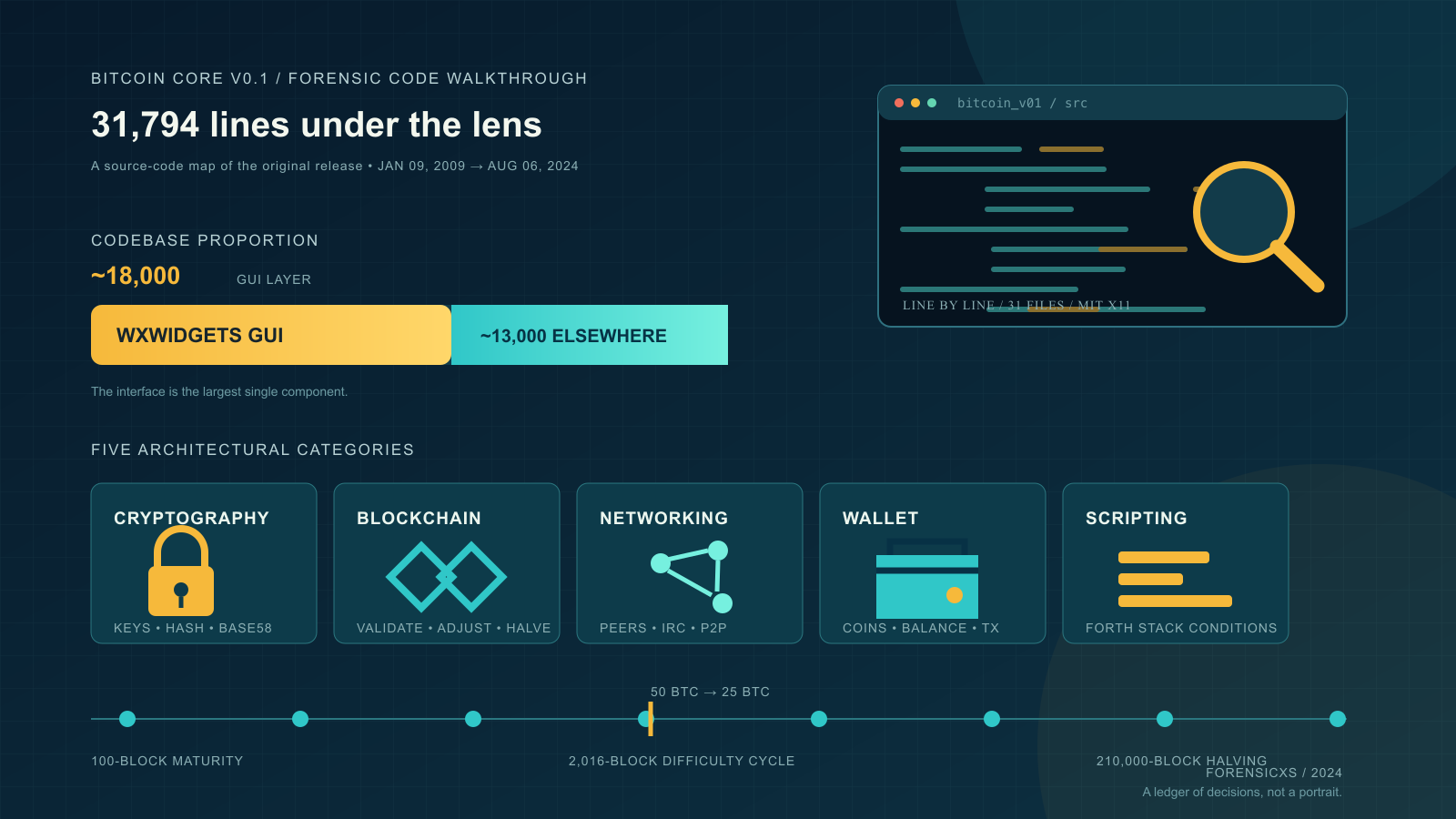
198 commits, two years, one identifiable coding style. This analysis examines Satoshi Nakamoto’s Bitcoin source code from v0.1.0 (January 2009) through v0.3.19 (December 2010) — 164 SVN commits by s_nakamoto (with preserved timestamps) plus 34 git commits — and reads the static source plus the temporal pattern as one coherent body of evidence. The period between v0.1.0 (January 2009) and Satoshi’s own first SVN commit (October 2009) has no preserved commit history for him specifically — the SVN repository itself was created two months earlier, on August 30, 2009, by Martti Malmi, who ported the codebase to Linux before Satoshi’s own commits resume in the repository.
1. Data sources
- Source code: Original Bitcoin v0.1.0 source and tagged releases through v0.3.19
- Commit history: 160 unique SVN commits by
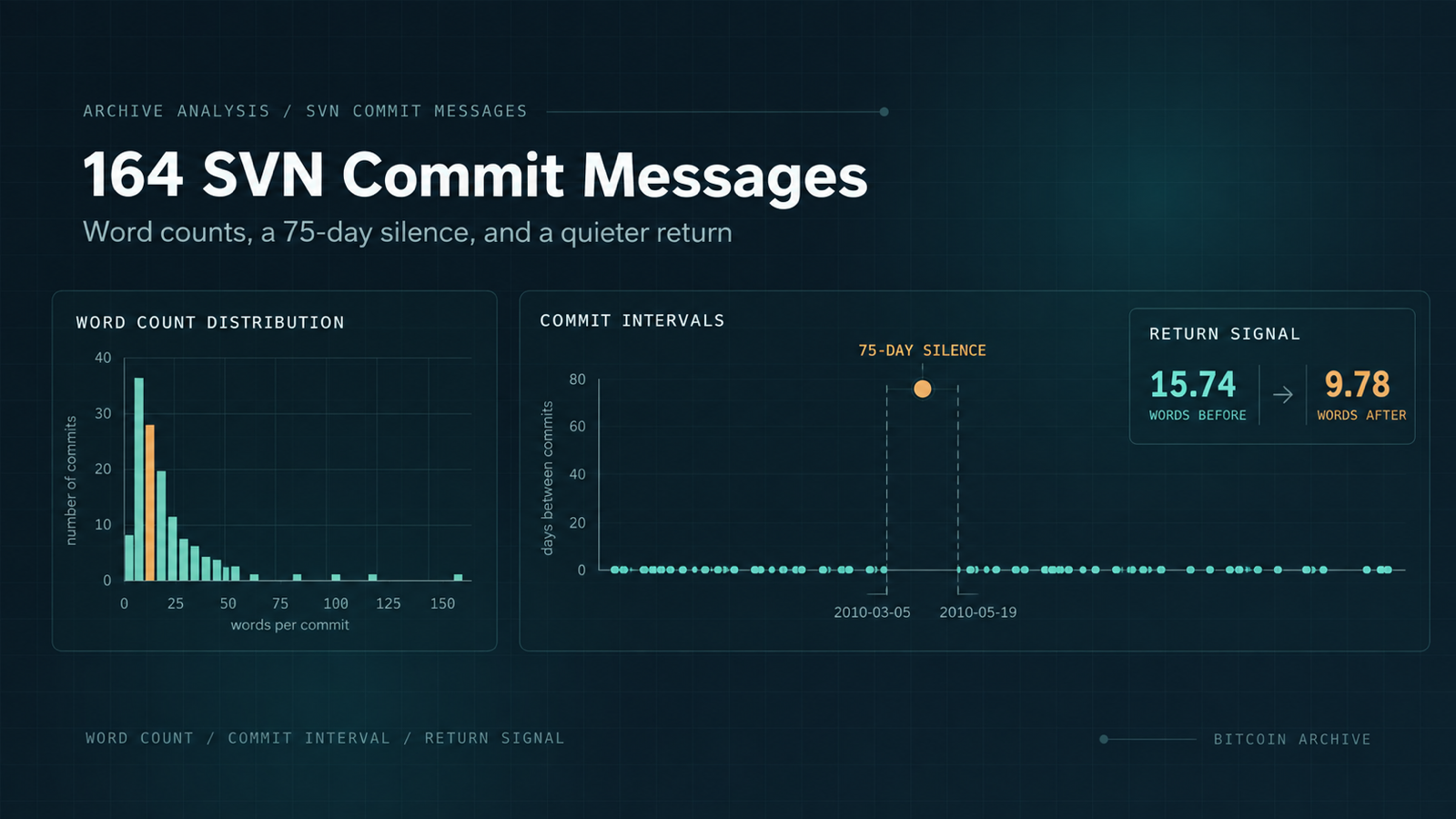
s_nakamoto(primary — preserves original timestamps) + 34 git commits bySatoshi Nakamoto <satoshin@gmx.com>. A later reconciliation against the SVN repository committers record settled the SVN-only figure at 164 (five commits — r29, r30, r31, r50, r98 — absent from the git mirror this “160” figure was drawn from, individually confirmed against SourceForge’s own log) — see the SVN commit-statistics entry for the full accounting and the word-count, interval, and diff-size analysis that count enables.
2. Key findings
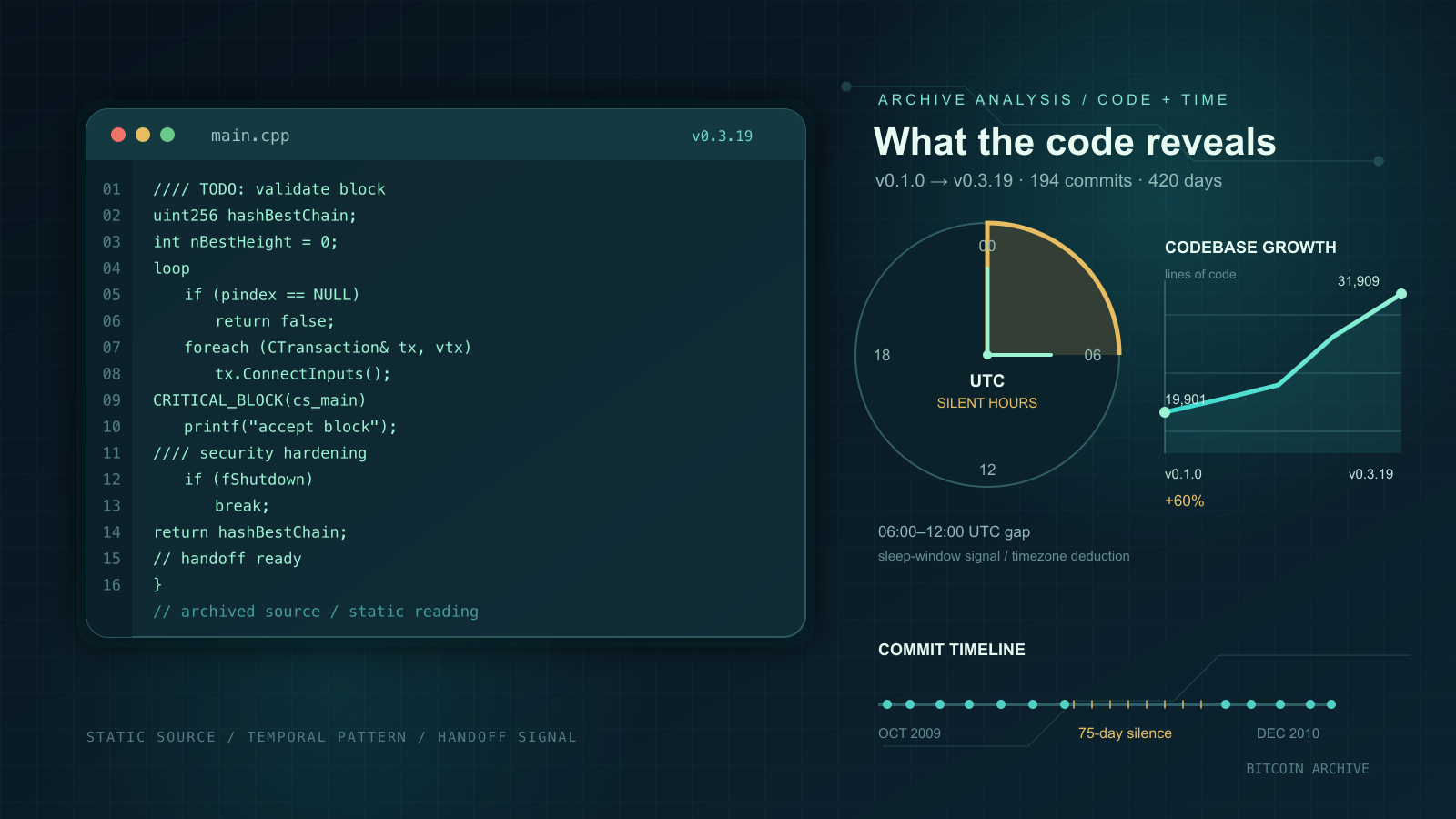
- Timezone: The near-total absence of commits between 06:00–12:00 UTC strongly suggests residence in EST (UTC-5) or CST (UTC-6) — a zone that does not overlap with Chain Bulletin’s GMT reading of Satoshi’s forum and mailing-list timestamps; both readings, and what they do and do not settle, are read together in the nationality question analysis
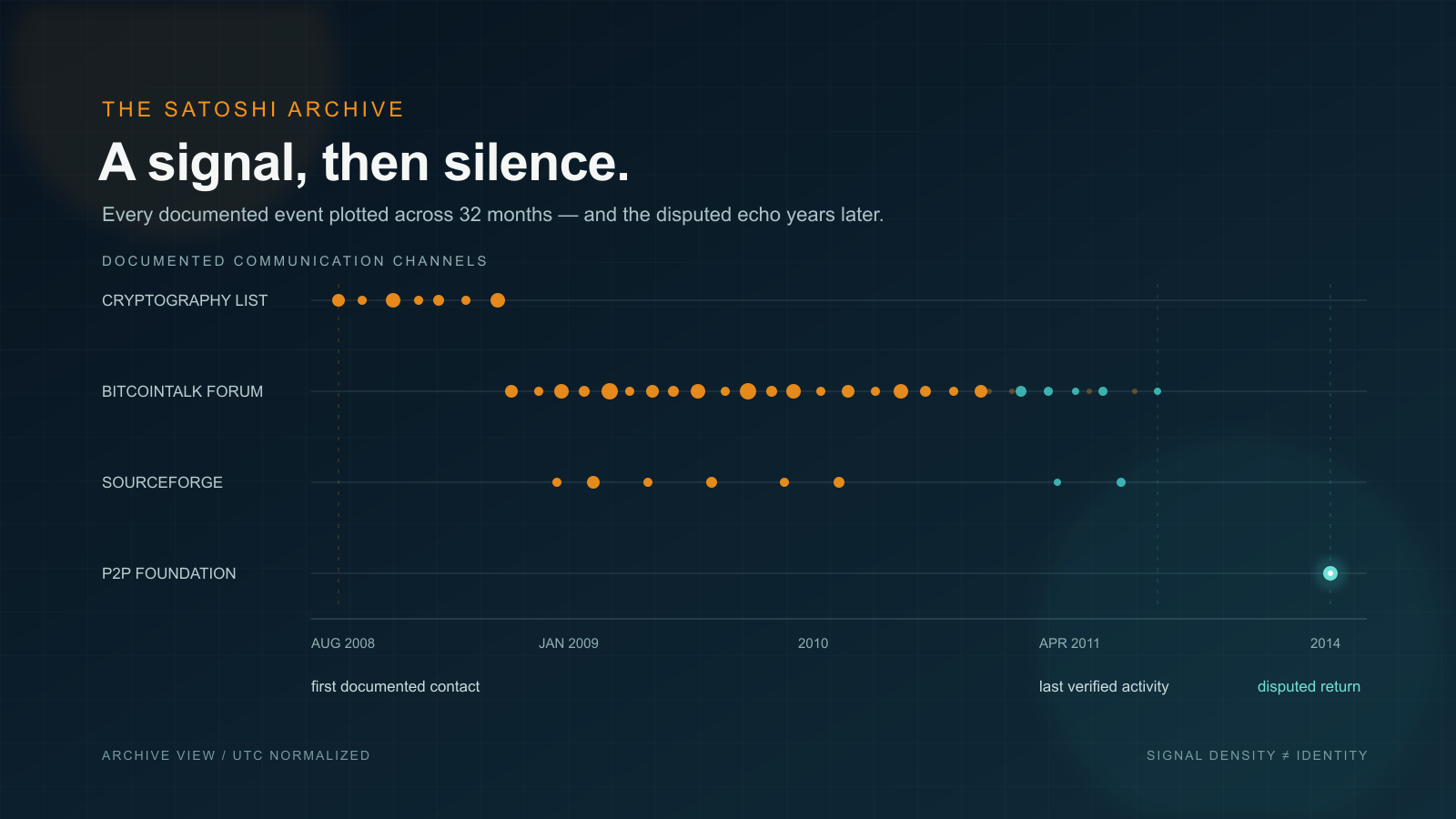
- Commit activity period (SVN): 420 days (October 2009 – December 2010), with commits on 109 unique days
- Coding style: Consistent use of Hungarian notation variants, quad-slash (
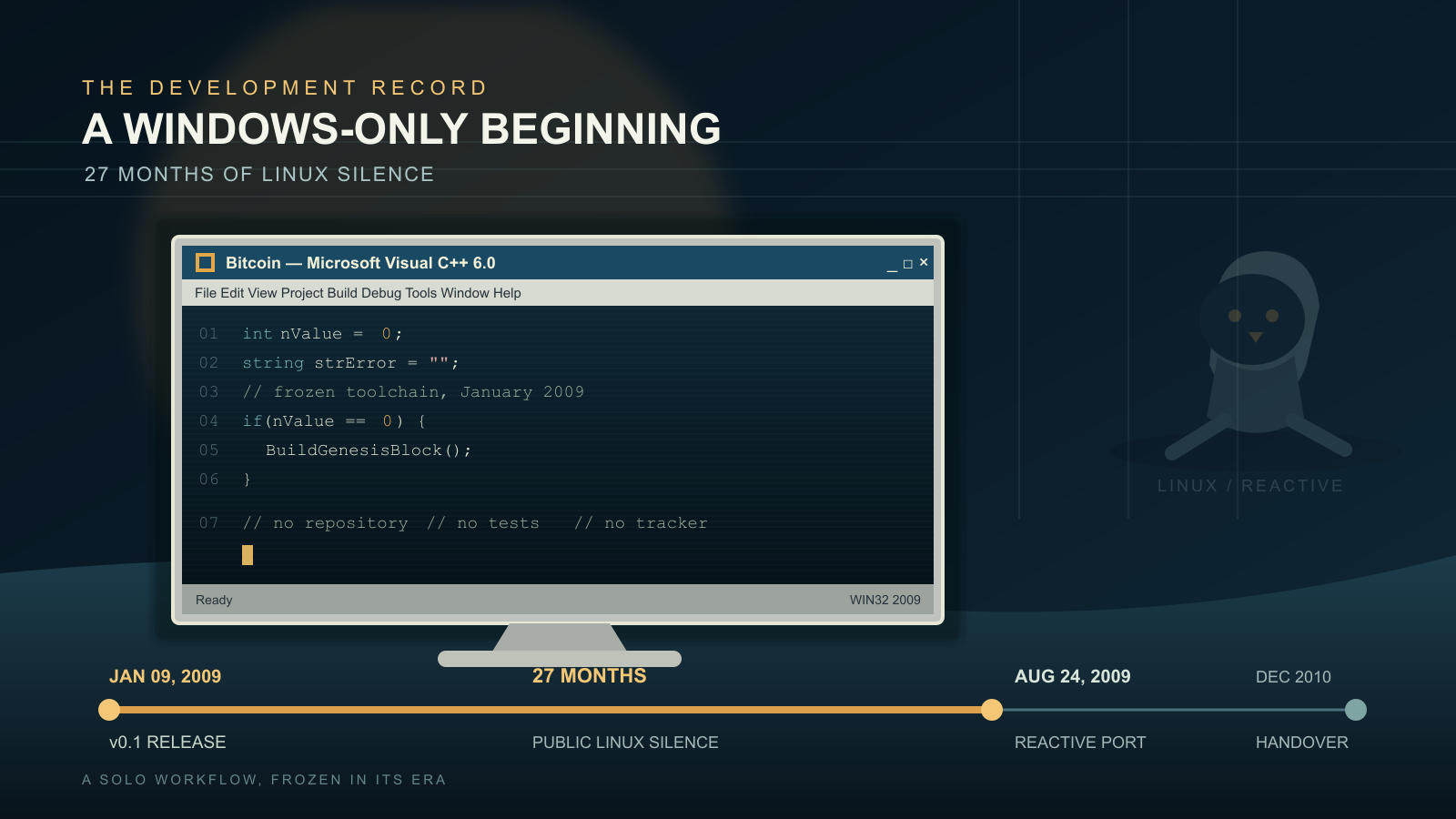
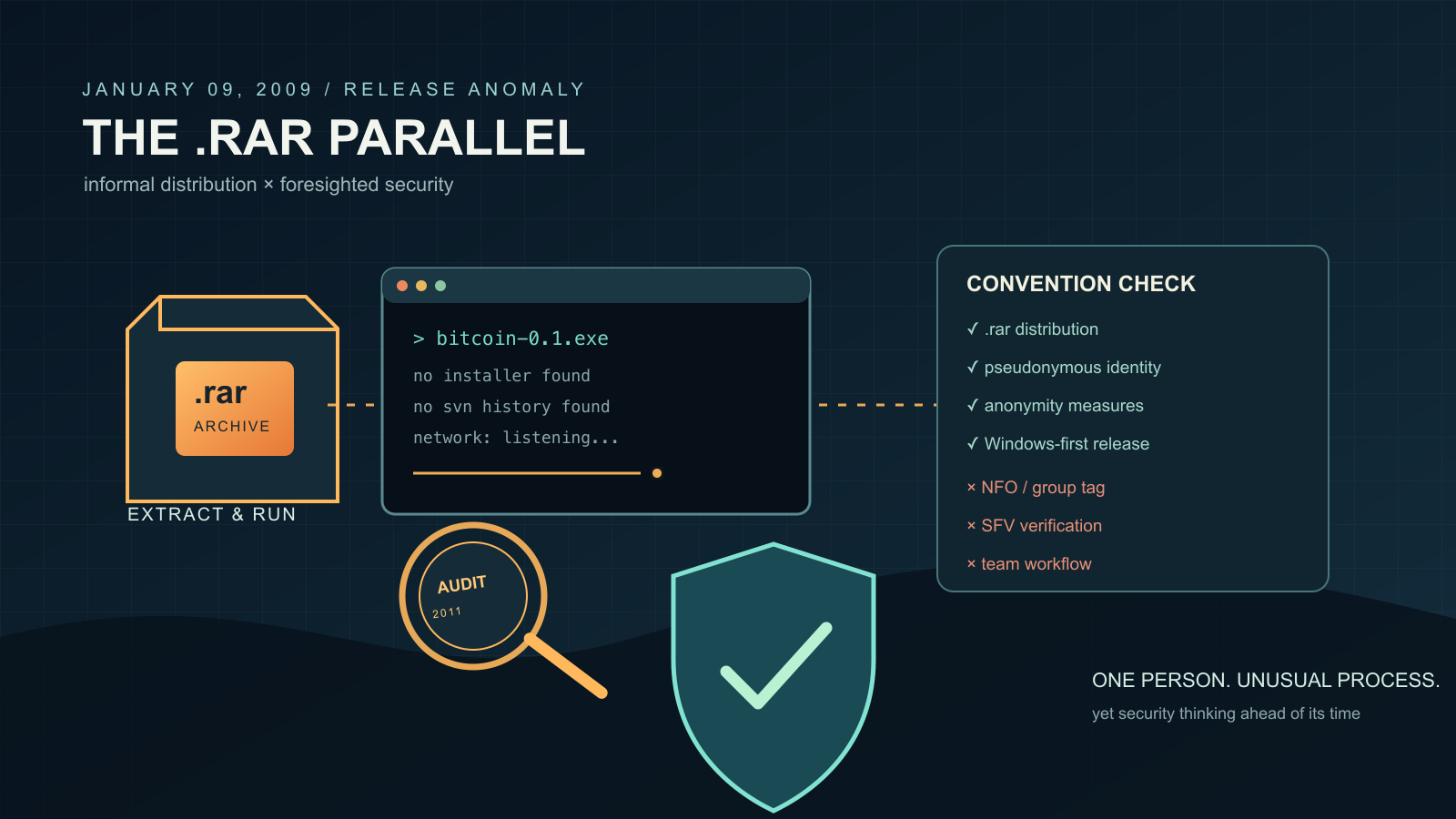
////) TODO markers, custom macros (loop,foreach,CRITICAL_BLOCK), and Windows-first development patterns (the chronological development-environment record is in Satoshi’s Windows-only development environment; the distribution and tooling-absence reading is in the Bitcoin v0.1 distribution and tooling-anomalies analysis) - Code growth: 19,901 → 31,909 lines (+60%) over 23 months
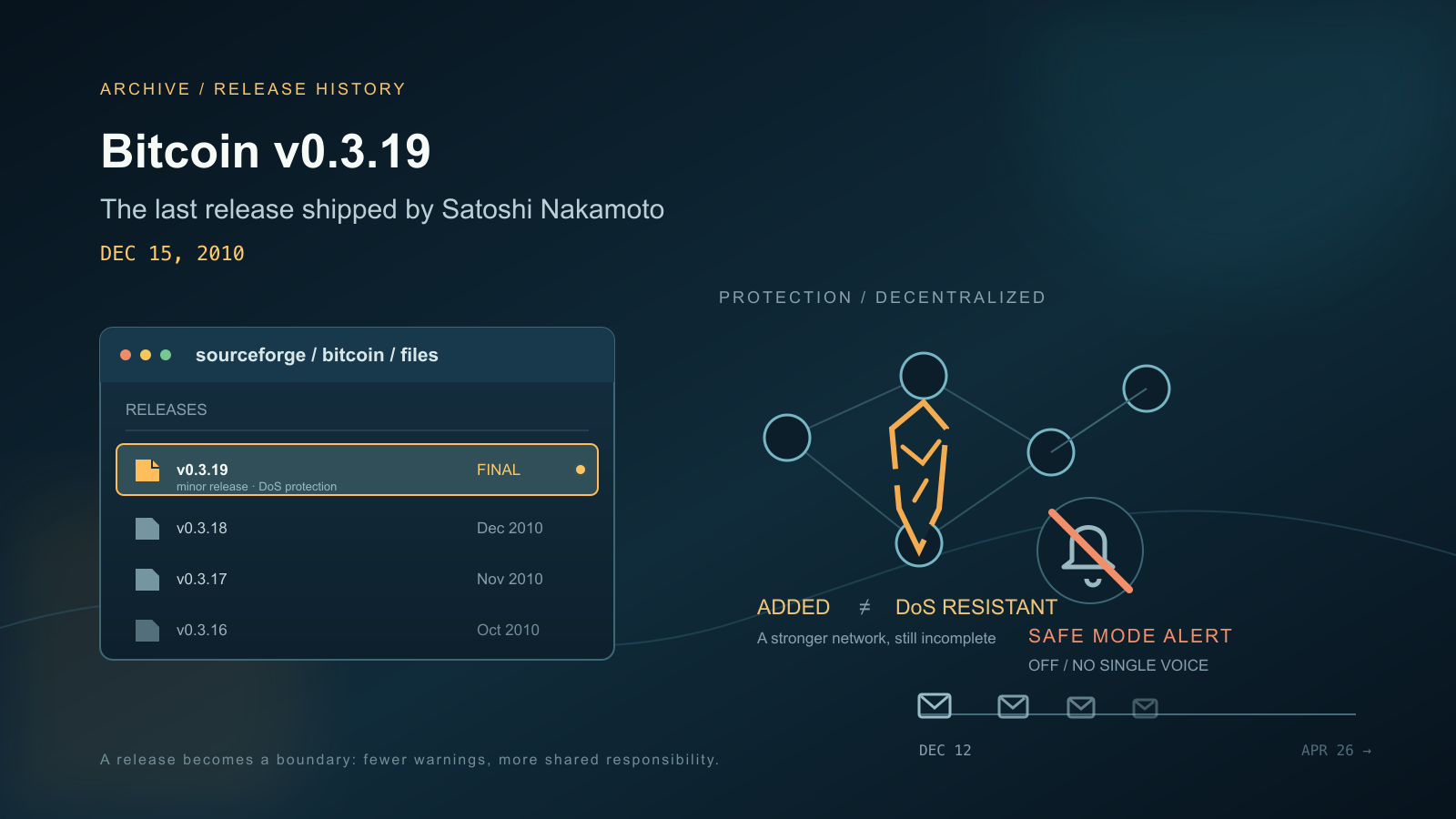
- Final activity: Security hardening, DoS mitigation, removal of centralized safe mode — work characteristic of someone preparing to hand off a project, the same pairing of changes shipped together in the v0.3.19 SourceForge release, Satoshi’s final release
3. The 75-day gap (March–May 2010)
The monthly commit chart below shows a conspicuous gap from early March to mid-May 2010 during which no SVN commits were made by s_nakamoto. Satoshi himself acknowledged and explained this absence in a May 16, 2010 email: after Martti Malmi checked in on him (“How are you doing? Haven’t seen you around in a while.”), Satoshi replied: “I’ve also been busy with other things for the last month and a half. I just now downloaded my e-mail since the beginning of April. I mostly have things sorted and should be back to Bitcoin shortly.”
This is the only first-person account of the gap in the public record. Satoshi does not specify what the “other things” were.
4. Where these findings connect
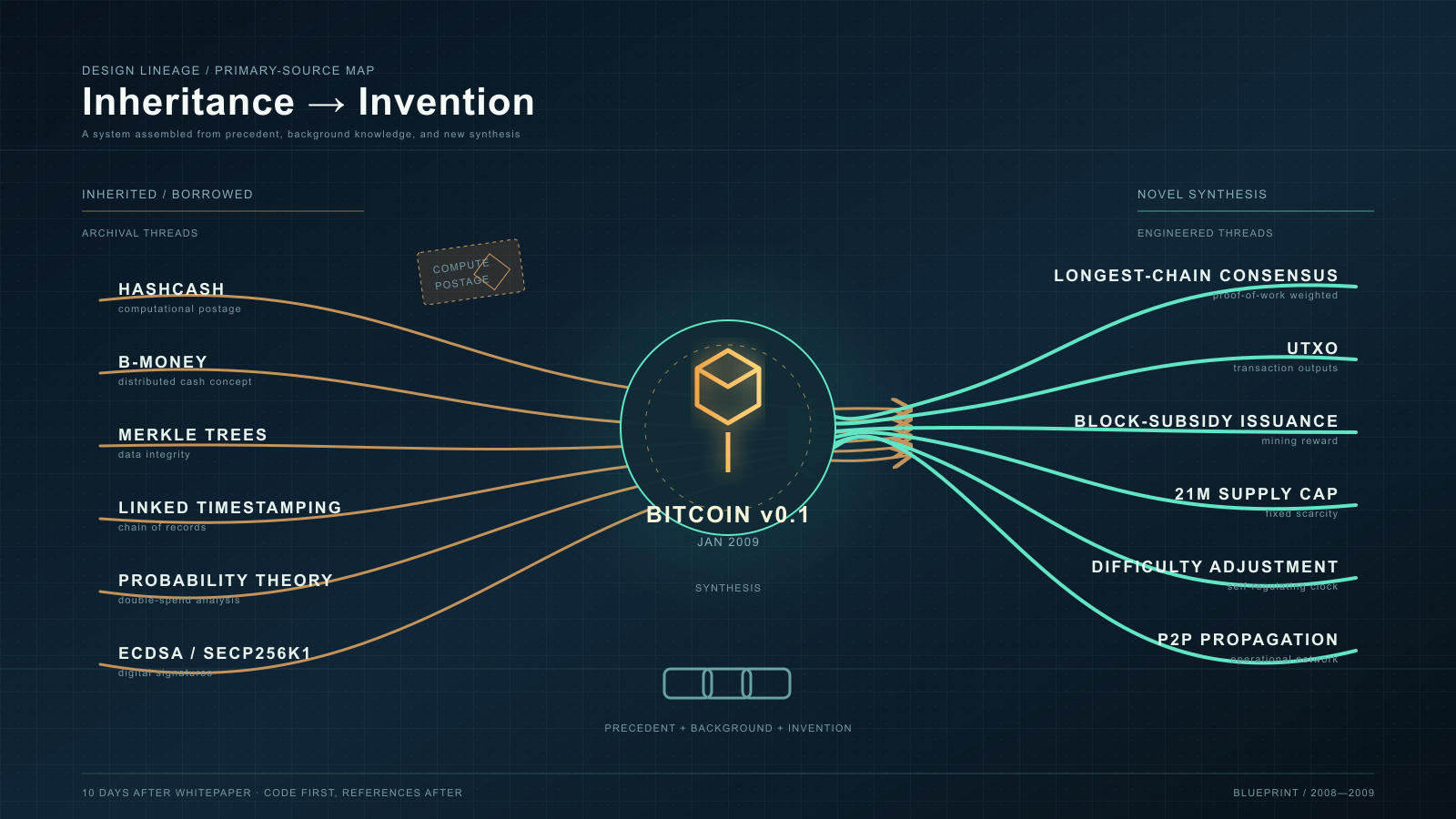
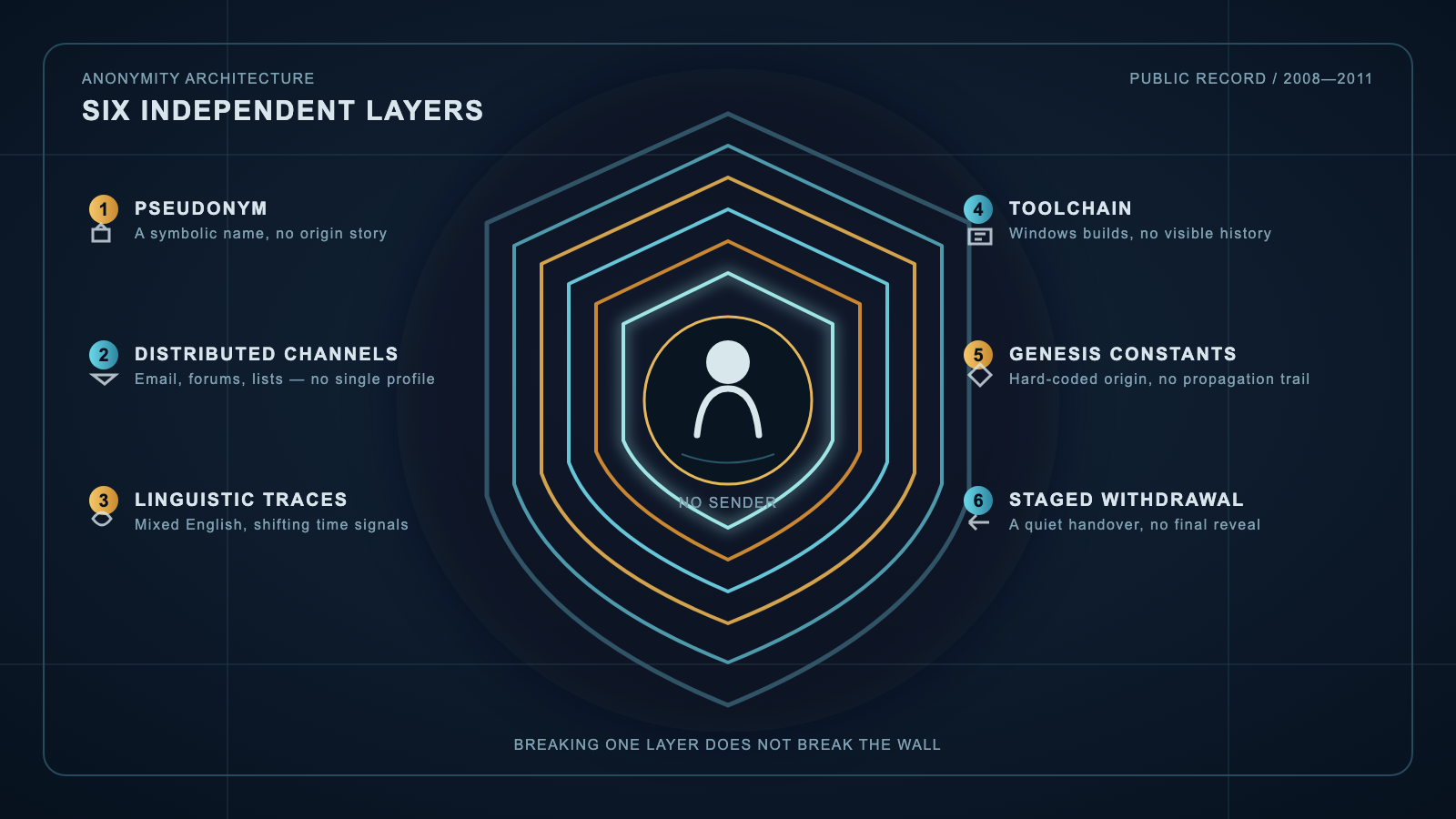
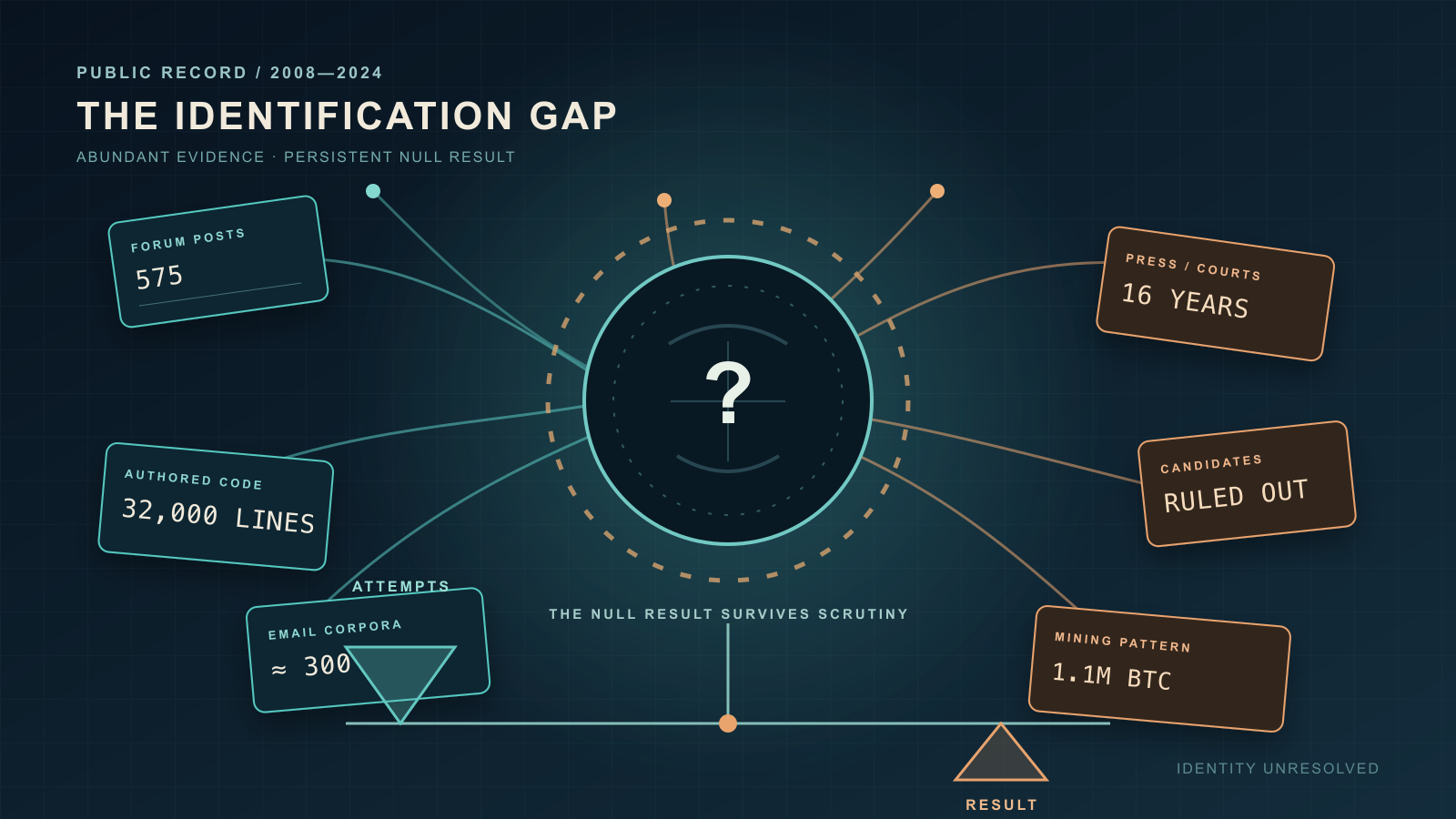
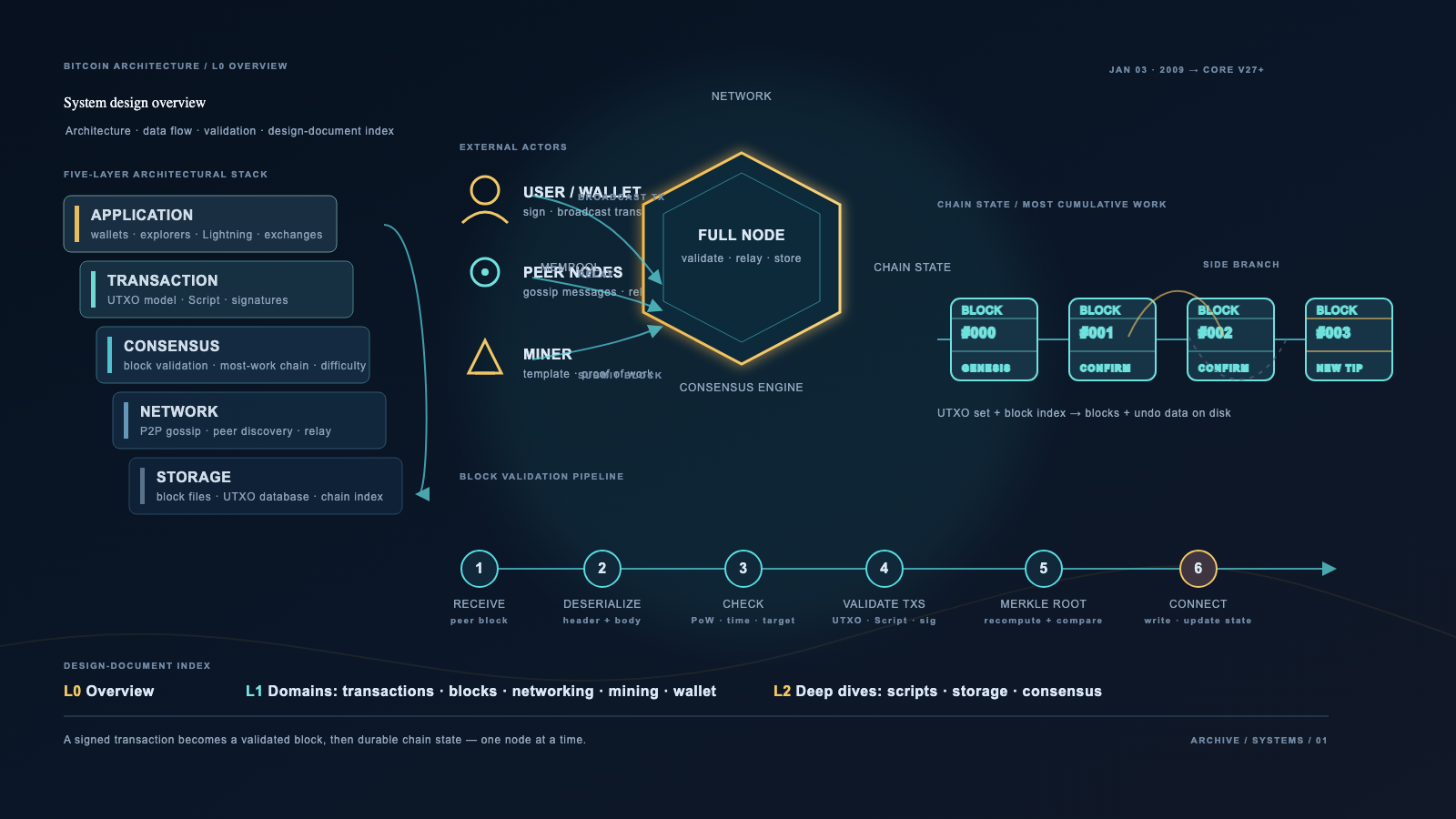
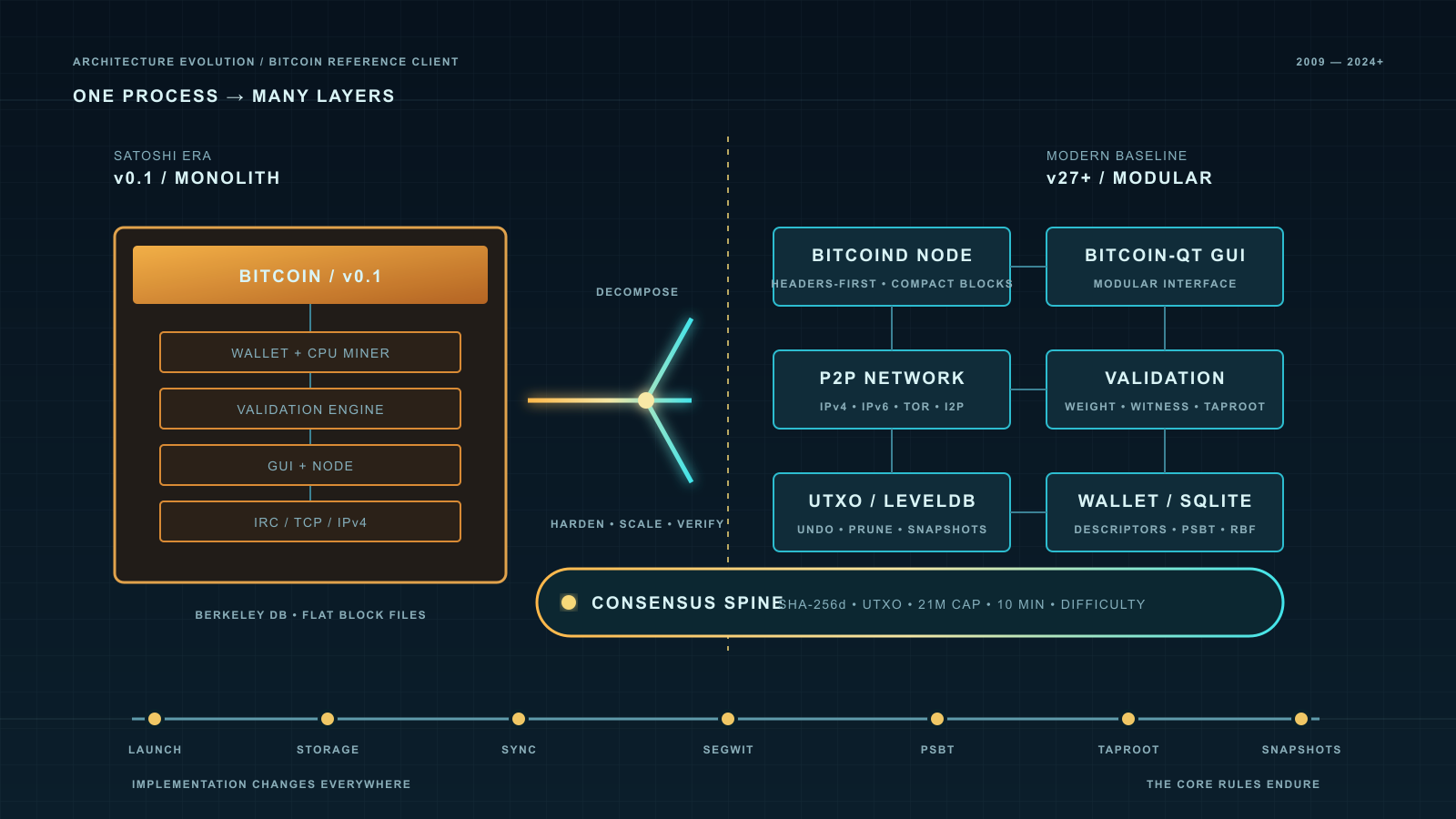
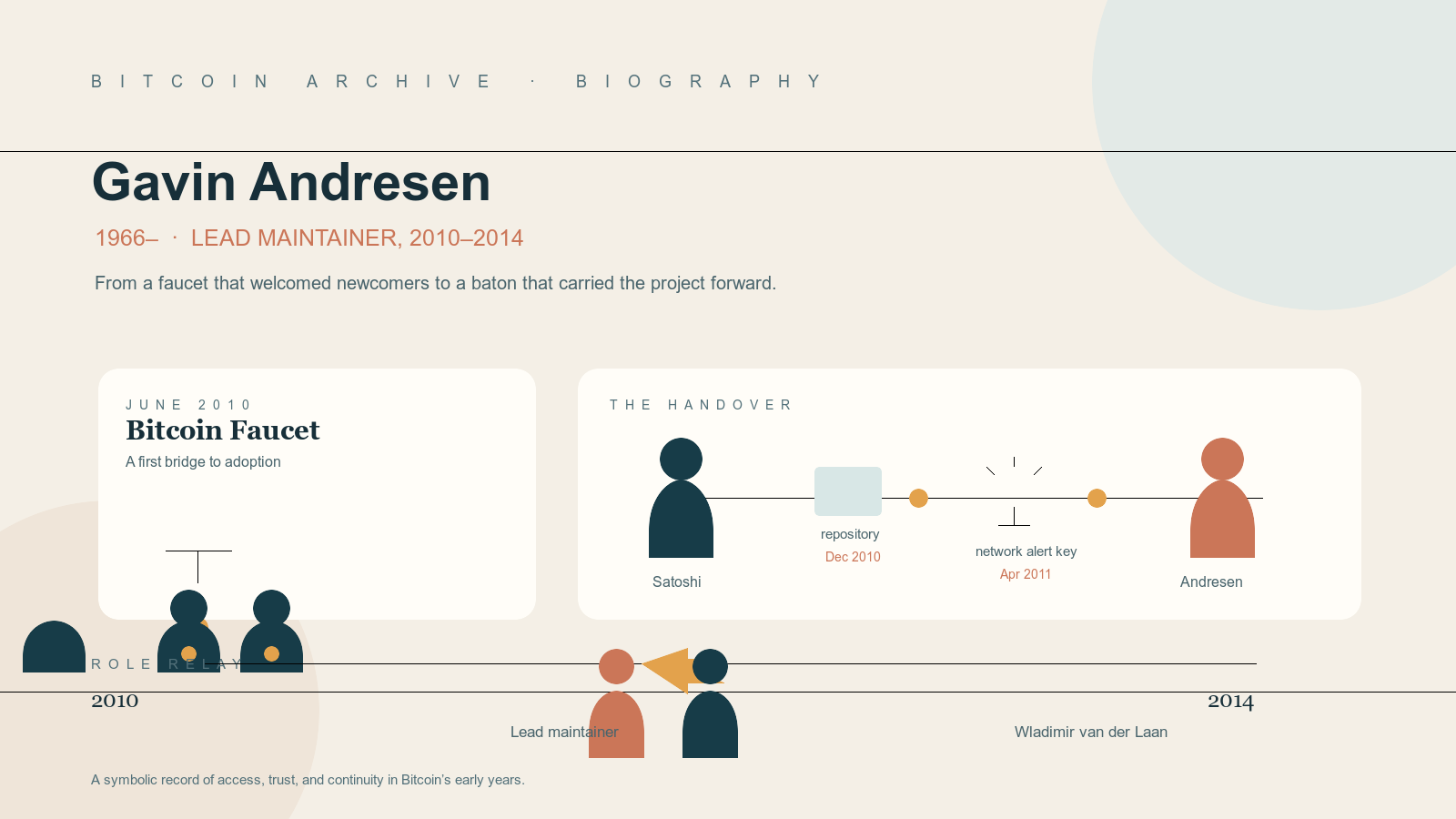
The code-level findings here feed several adjacent analyses: the Satoshi biography and the Bitcoin SVN repository committers record for participant tracking; the Satoshi activity timeline for date-by-date public activity; the bitcoin-design-lineage for the precursor-vs-novel synthesis breakdown; the Satoshi anonymity architecture for what the code says (and does not say) about its author; the identification-asymmetry analysis for why these code-level traces under-determine identity; the v0.1 serialization-boundary analysis for the byte-level hash and transport map; and the Bitcoin architecture-evolution design entry for how the v0.1 architectural decisions reshape across later versions.
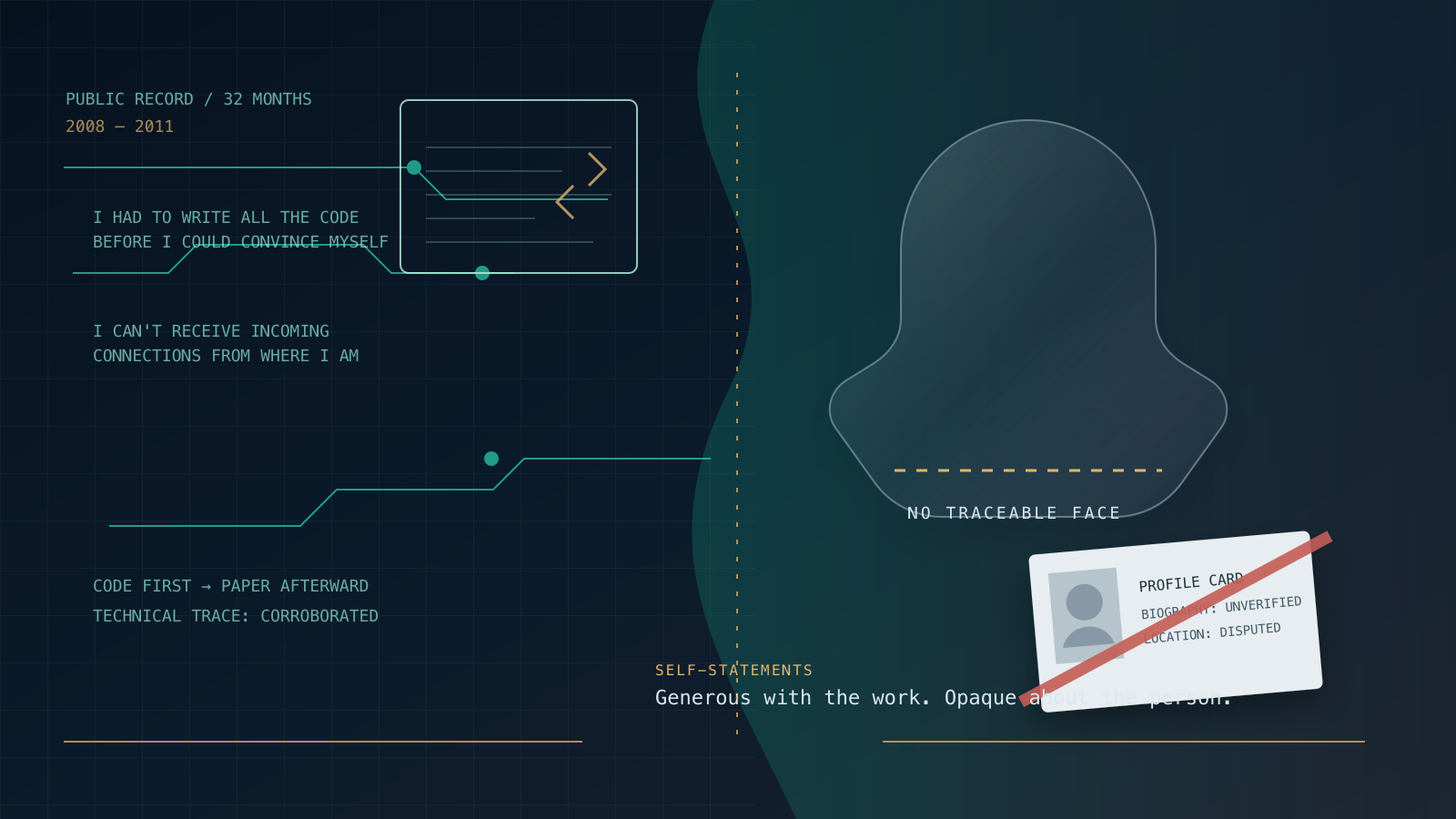
Two years of commits leave a portrait with no face in it. The one gap in the record that Satoshi explained himself, he explained in a single line: busy with other things. Everything else the source tells me about its author, it tells by habit.