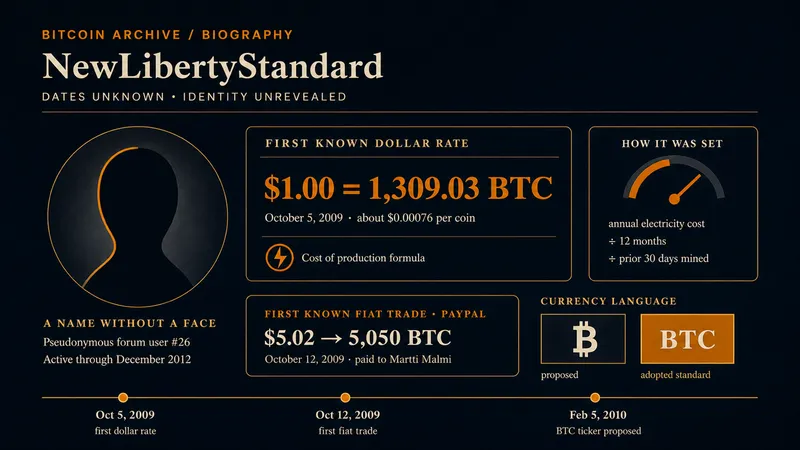

On October 5, 2009, NewLibertyStandard published the first-ever exchange rate for Bitcoin.
$1 = 1,309.03 BTC ($0.000764 per BTC)
At 2025 prices exceeding $100,000 per BTC, the 1,309.03 BTC that one dollar bought would be worth over $130 million.
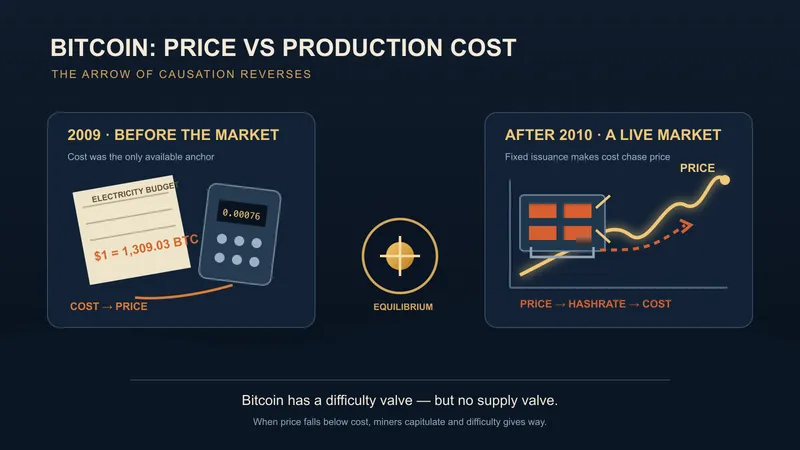
The methodology: divide $1.00 by the average amount of electricity required to run a computer at high CPU usage for a year (1,331.5 kWh), multiplied by the average residential cost of electricity in the United States for the previous year ($0.1136), divided by 12 months, divided by the number of bitcoins NewLibertyStandard’s own computer had generated over the past 30 days.
In other words, Bitcoin’s first price was a cost-of-production figure — the electricity to mine a coin — not a market price set by buyers and sellers. Six weeks earlier, answering Martti Malmi’s exchange proposal, Satoshi had suggested backing a rate with the cash on hand, not with cost. He took to the cost estimate when it came: eleven days after it was published, he wrote to Malmi, “I like his approach to estimating the value based on electricity.” How the relationship fared once real markets existed — and how the causality reversed, exactly as Satoshi predicted in February 2010 — is traced in the price-vs-production-cost analysis.
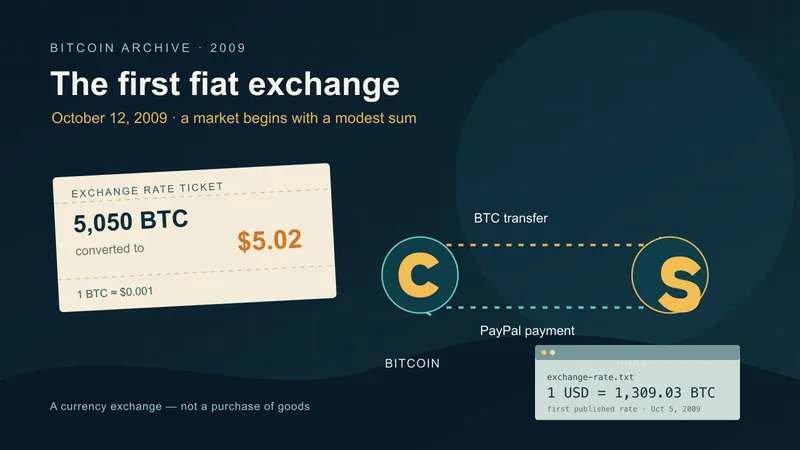
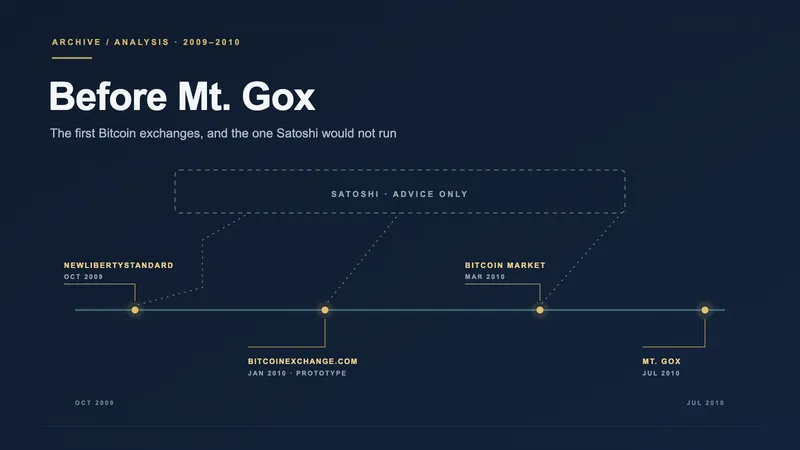
Shortly after, on October 12, 2009, Martti Malmi sold 5,050 BTC to NewLibertyStandard for $5.02 via PayPal — the first known exchange of Bitcoin for fiat currency. Three more exchanges would open over the next nine months, the last of them Mt. Gox; the exchanges before Mt. Gox follows all four.
At 2025 prices exceeding $100,000 per BTC, those 5,050 bitcoins would be worth over $500 million.