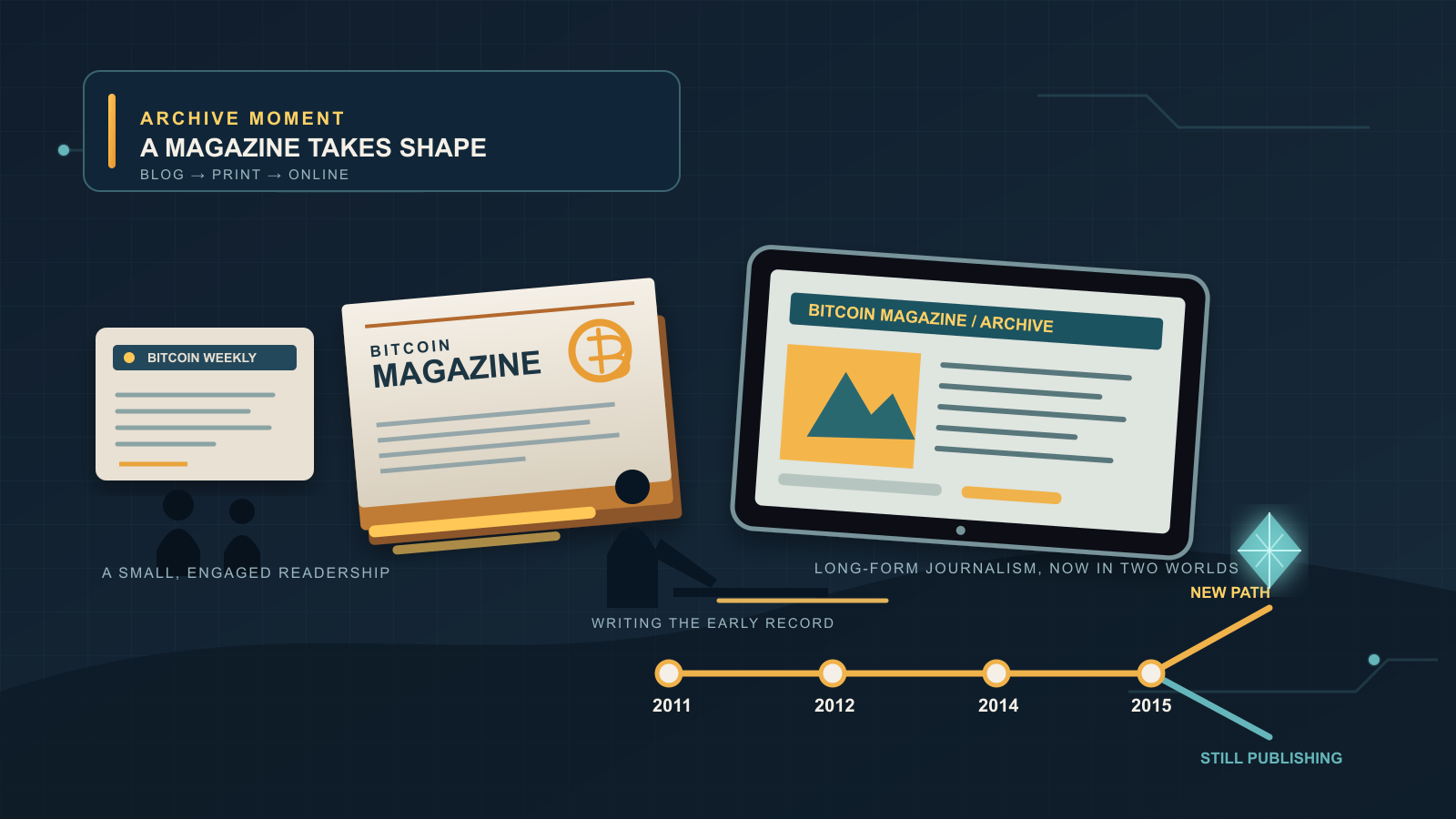
Bitcoin Magazine was co-founded in 2012 by Mihai Alisie and Vitalik Buterin, with the first print issue published in May 2012. It is the earliest dedicated print publication focused on Bitcoin, and one of the longest-running Bitcoin-specific journalism outlets in the field.
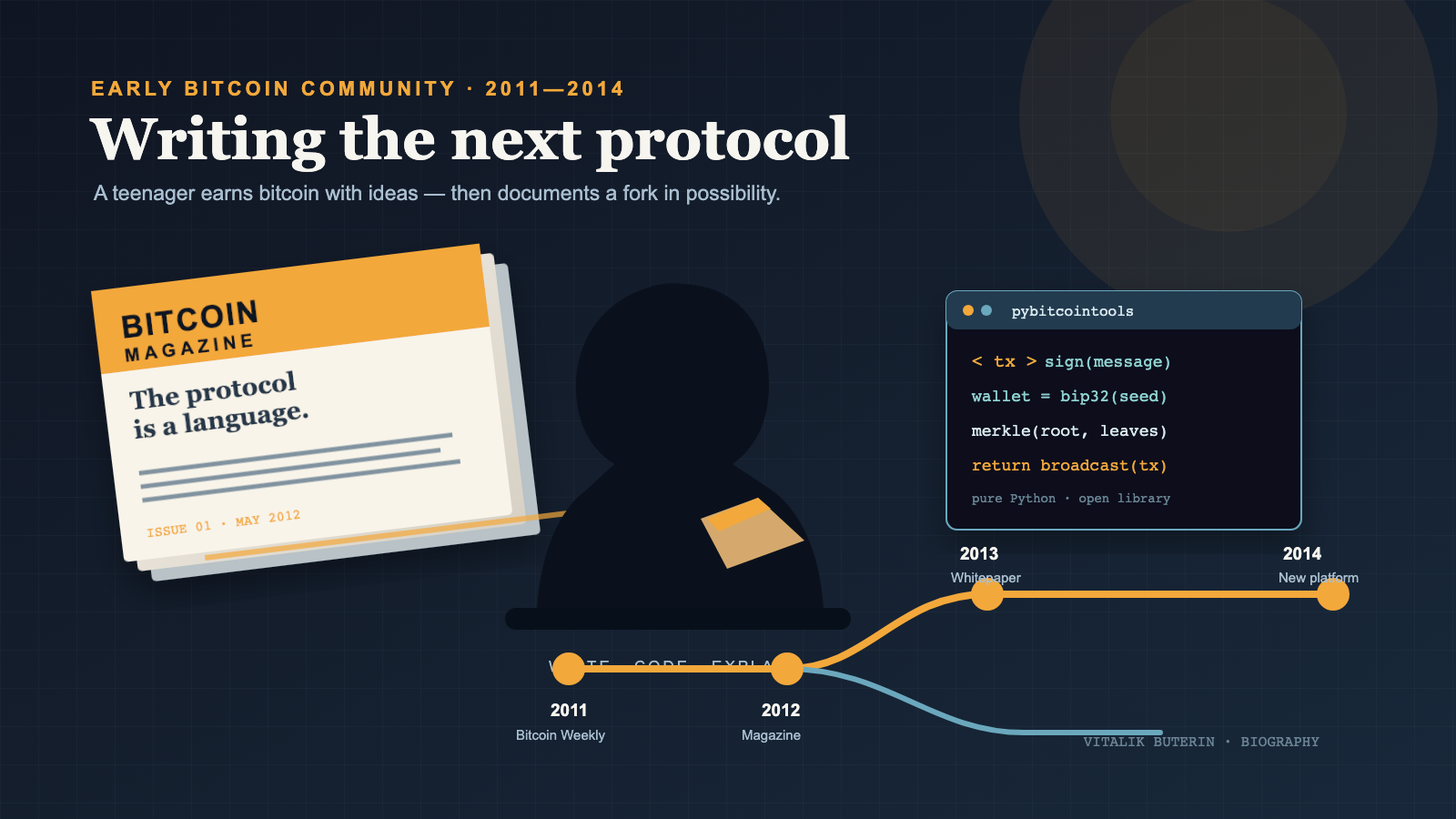
The publication’s lineage runs through Alisie’s earlier Bitcoin Weekly blog, where Buterin had been contributing articles since 2011 in exchange for ~5 BTC per piece (~USD 3.50 each at the time). Bitcoin Weekly’s small but engaged readership convinced Alisie that there was demand for sustained long-form Bitcoin journalism, and the conversion from blog to magazine — with both online and print formats — followed.
In its 2012–2014 era, Bitcoin Magazine published article-length analyses of Bitcoin protocol mechanics, mining-economics studies, profiles of altcoin projects, commentary on emerging governance disputes (block-size, mining centralization, exchange security after the Mt. Gox collapse), and developer interviews. Buterin’s own author archive from this period holds dozens of individual articles — one of the larger single-author bodies of early Bitcoin journalism.
After Buterin departed in 2014 to lead the Ethereum project, Bitcoin Magazine continued under different editorial direction. The publication was acquired by BTC Inc. in 2015 (with Aaron van Wirdum, Pete Rizzo, and others taking over editorial roles in subsequent years) and remains in operation as of 2026.
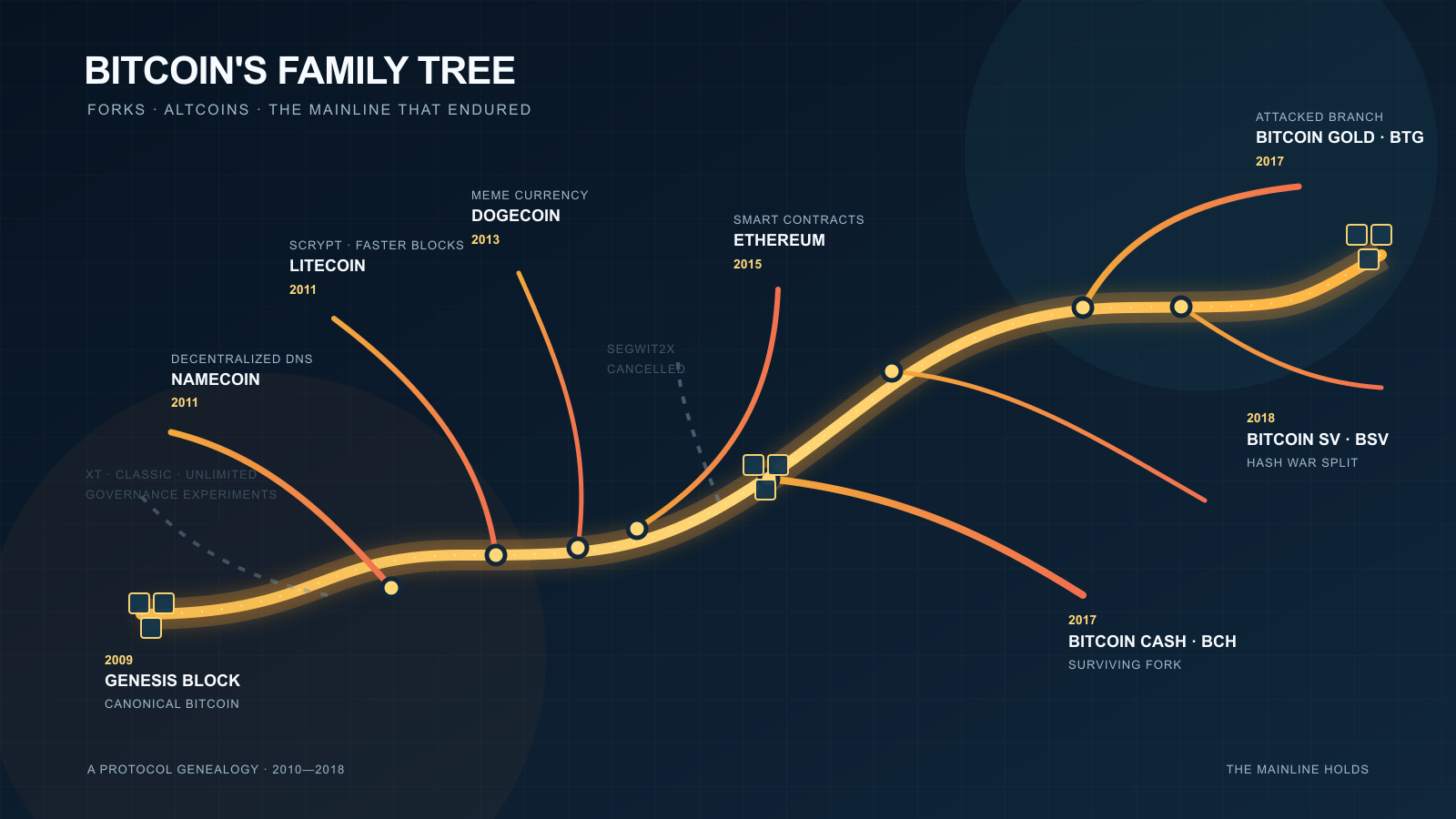
The 2012–2014 article archive is a substantial primary-source body for the period between Bitcoin’s launch era and the block-size war. It is also the venue where Buterin did his most active writing during his Bitcoin years — the body of work that preceded and substantively informed the Ethereum whitepaper (late 2013; see the Buterin participant page for the source text) and the fork-and-altcoin genealogy lineage that follows from it.
The exact day of the May 2012 print issue is not consistently documented across secondary sources, and the online launch likely preceded it by a few months — no single date is treated as canonical in the public record.