On March 25, 2014, Forbes senior writer Andy Greenberg published “Nakamoto’s Neighbor: My Hunt For Bitcoin’s Creator Led To A Paralyzed Crypto Genius” — the first long-form mainstream-press feature naming Hal Finney as a Satoshi-identity candidate and, in the same article, presenting the principal counter-evidence against that identification.
Geographic proximity to Dorian Nakamoto
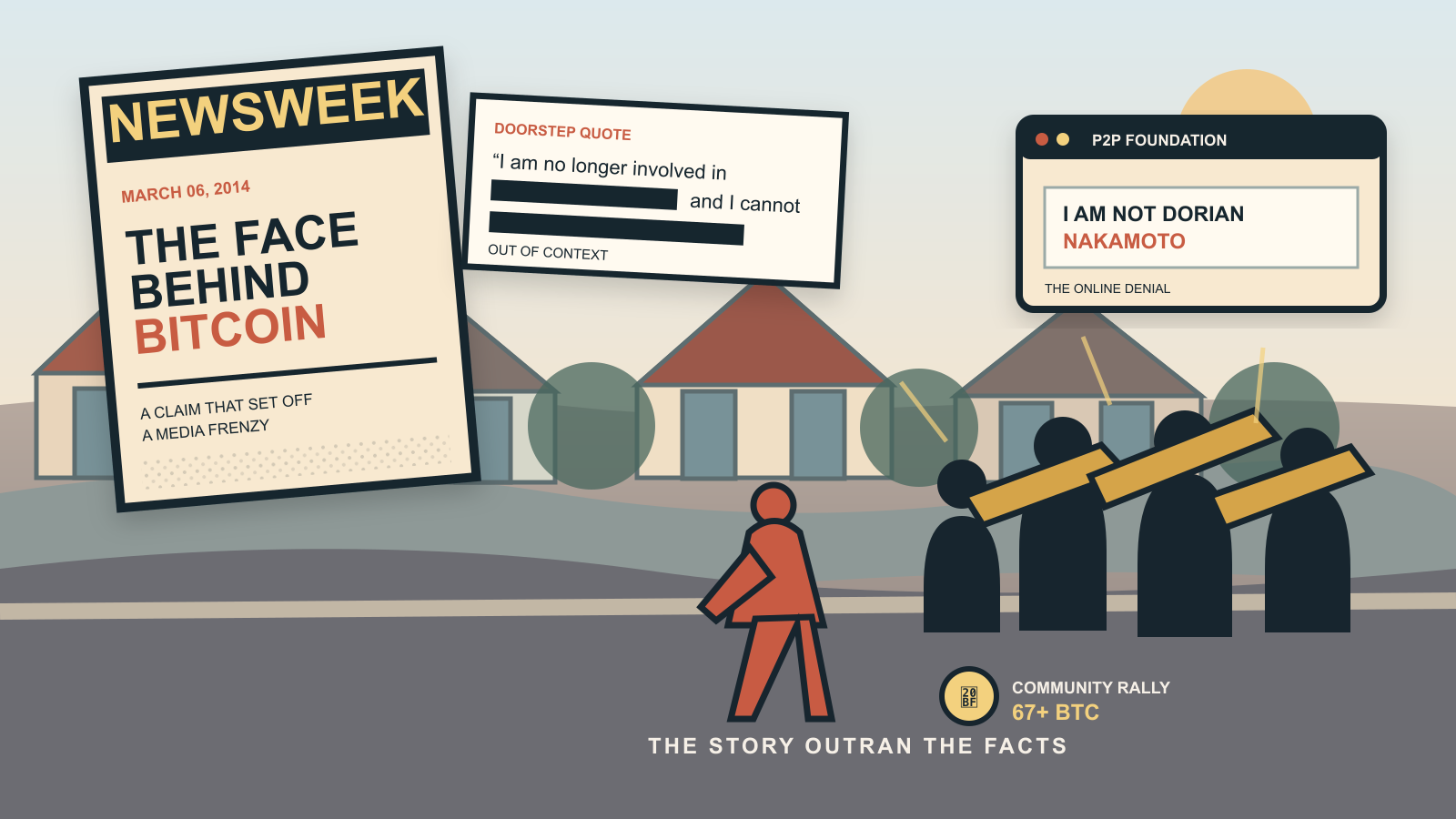
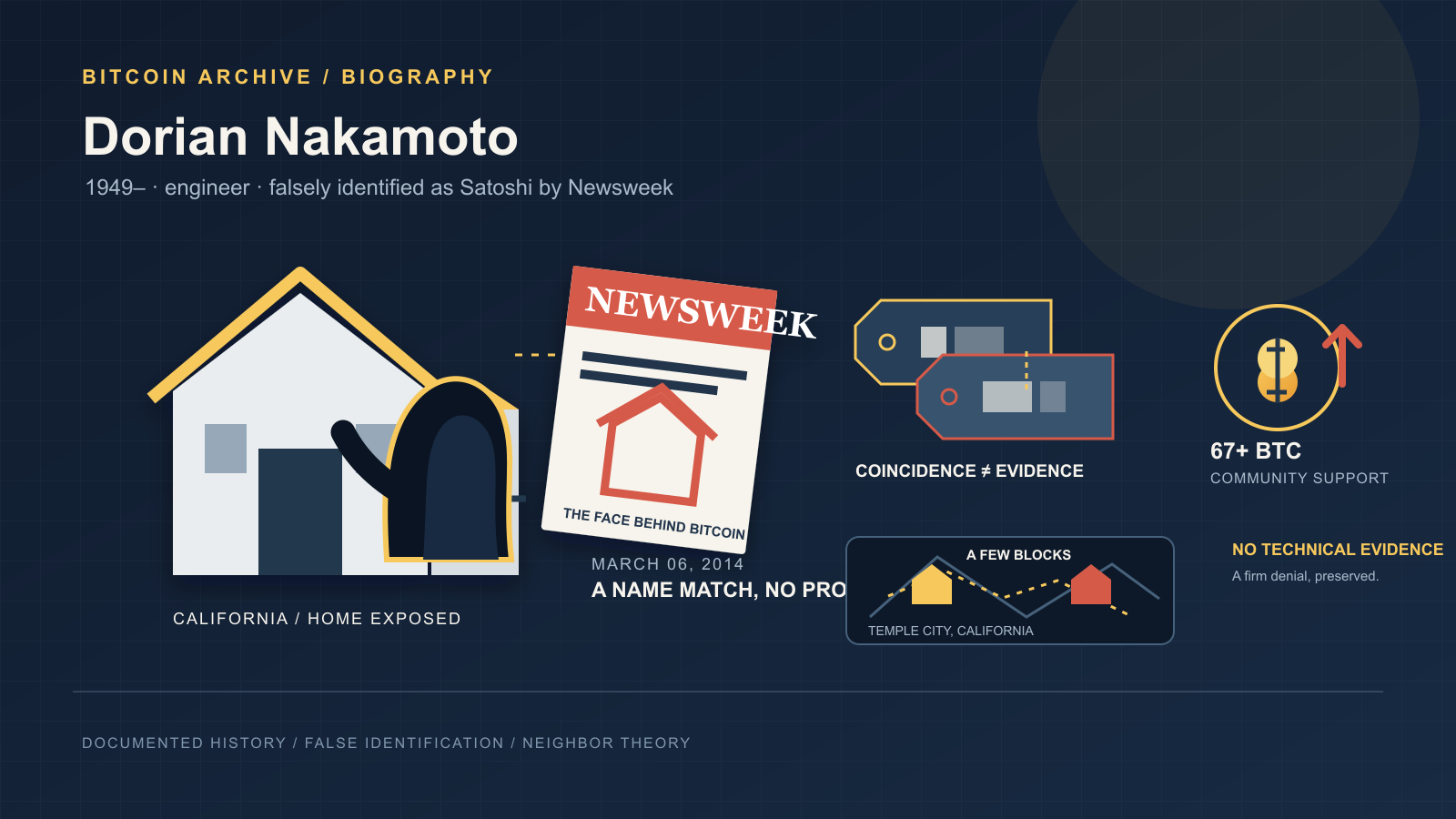
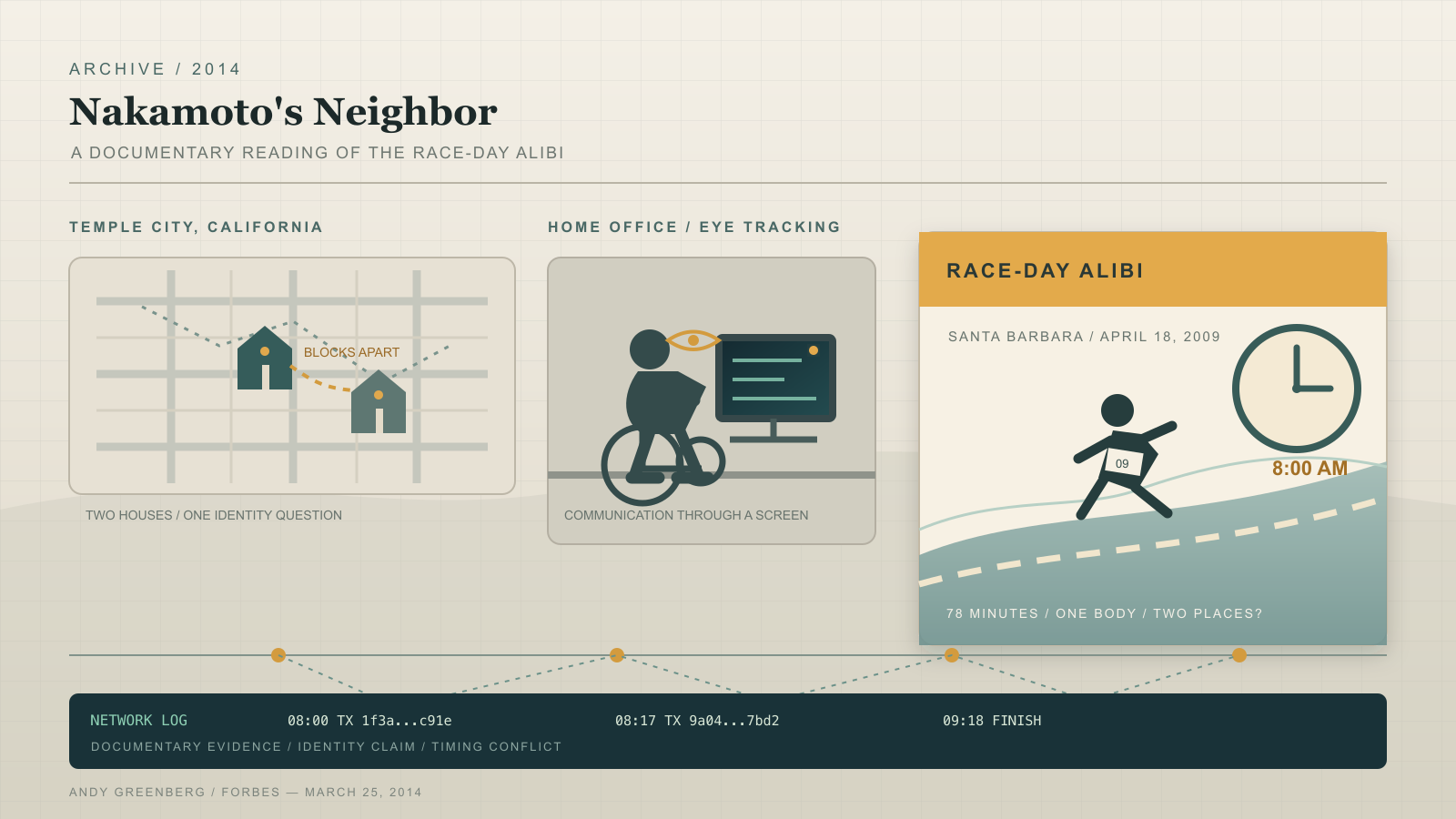
The article’s title and central narrative hook are both drawn from a geographic coincidence: Hal Finney lived for almost a decade in Temple City, California, the same town in which Newsweek had identified Dorian Prentice Satoshi Nakamoto as a Satoshi candidate three weeks earlier (March 6, 2014). Finney and Dorian Nakamoto had lived “blocks apart.” Greenberg’s framing — that Bitcoin’s creator might have constructed a pseudonym from a real person’s name living a few blocks away — gave the piece its title and its motivating question.
The home visit
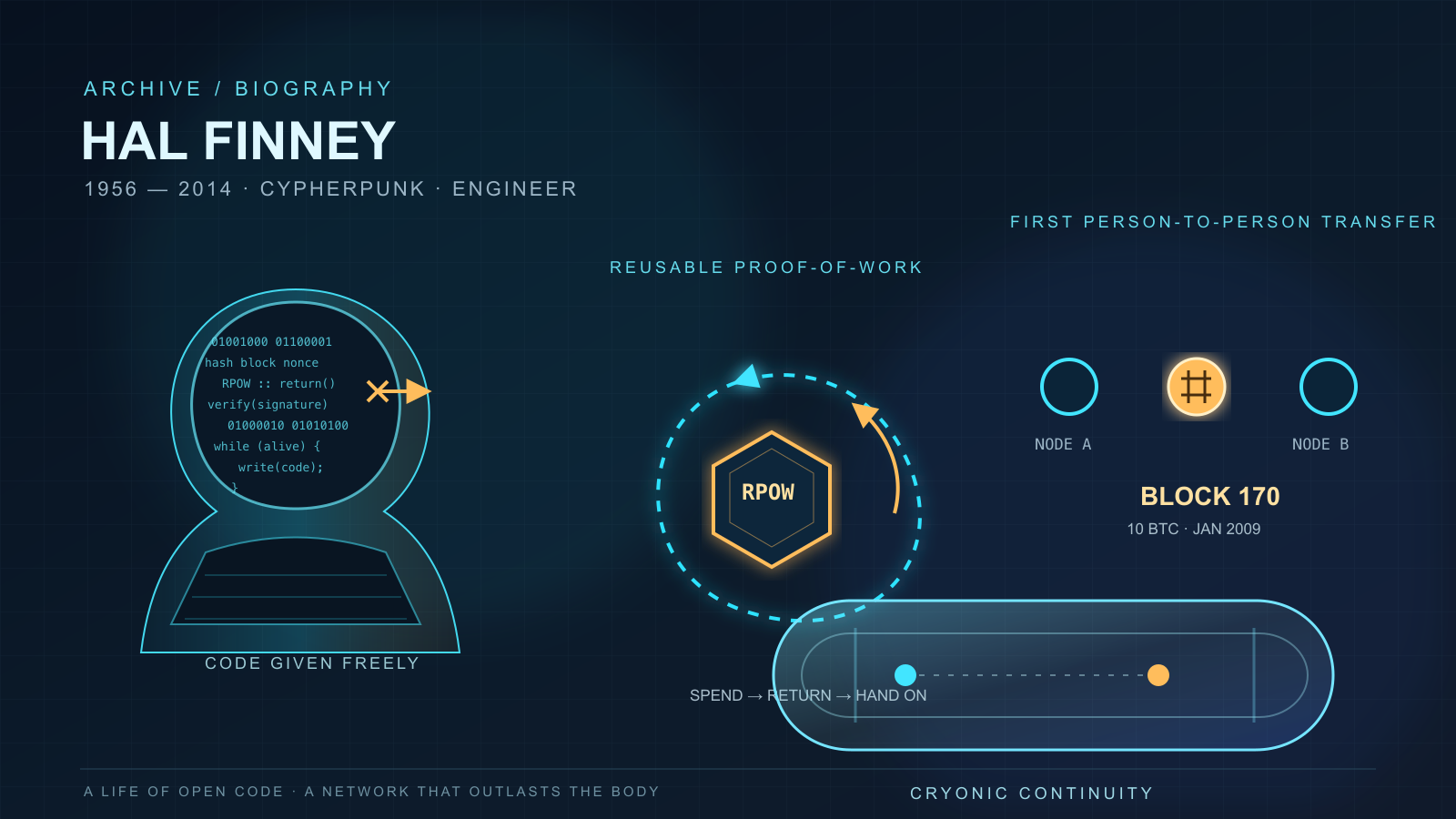
Greenberg traveled to Temple City and met Hal and Fran Finney at their home. Hal was by 2014 essentially paralyzed by ALS and communicated through eye-tracking software. Fran spoke for him in much of the conversation. Greenberg’s portrait — a brilliant cryptographer working on Bitcoin code with eye-trackers from a wheelchair, “blocks apart” from a man who shared the Satoshi name by accident of birth — is the most extensive long-form journalism portrait of Hal Finney in the public record.
The race-day photographs
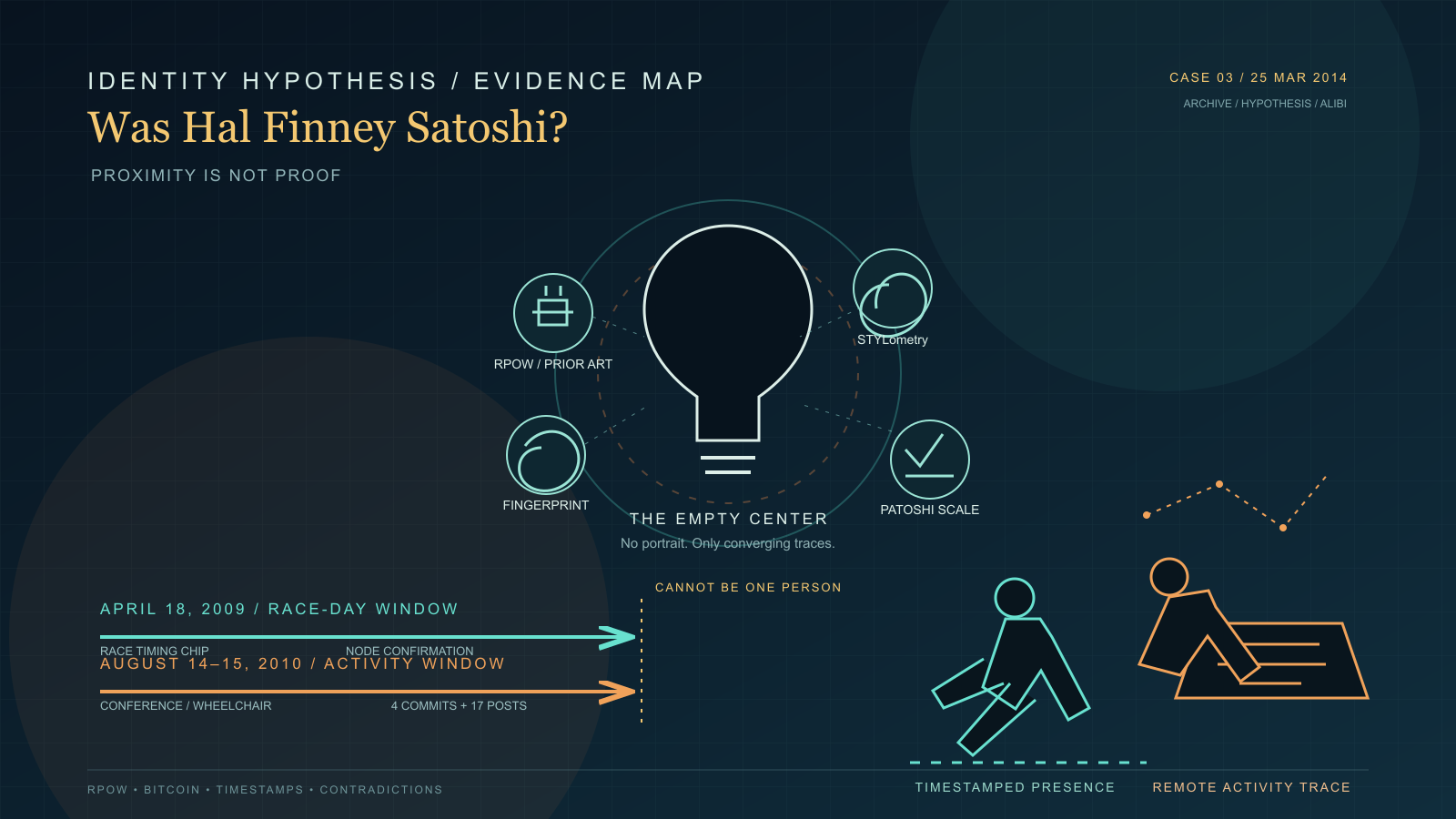
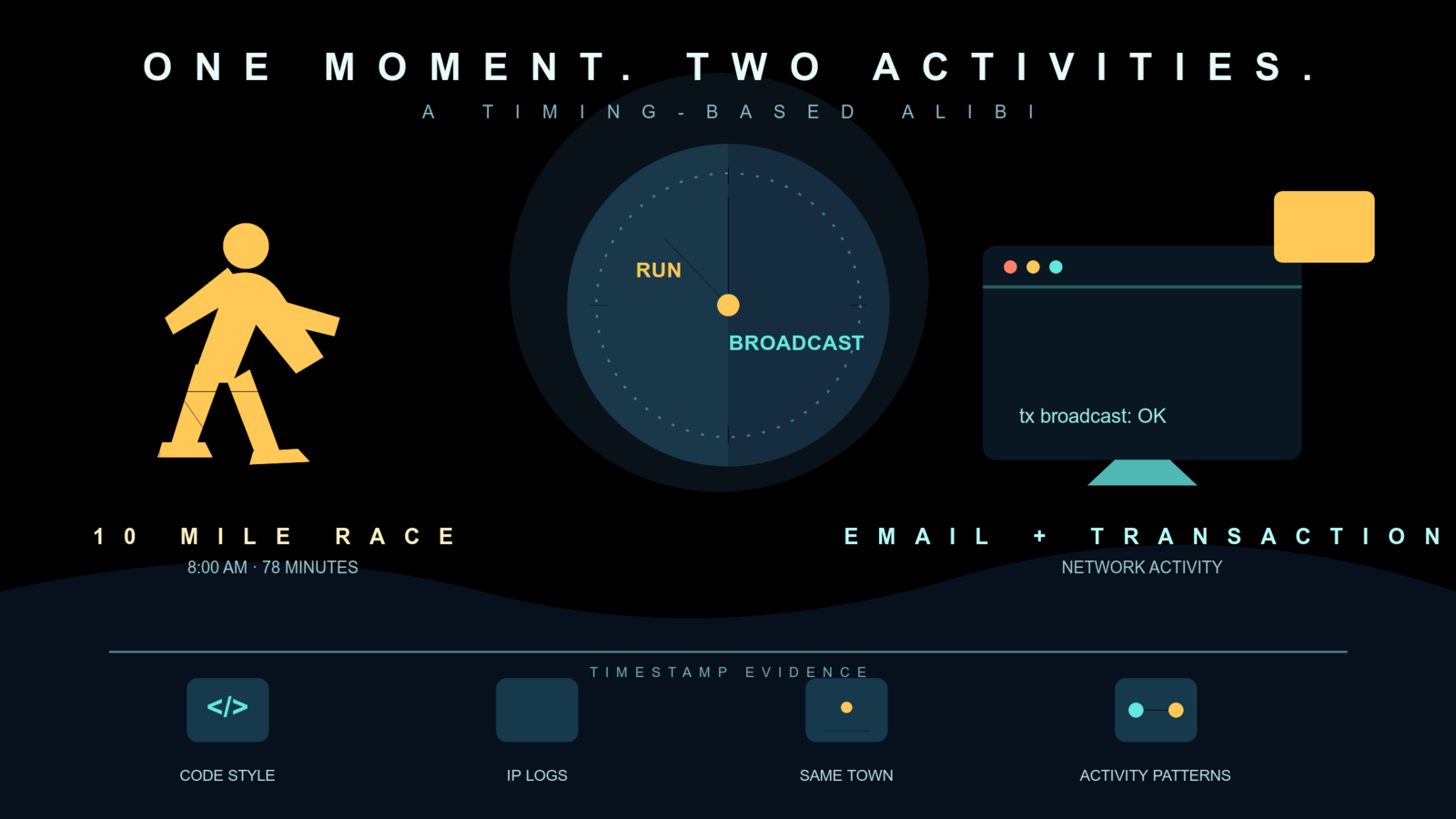
The decisive turn in the article is Fran’s evidence against the hypothesis. Fran showed Greenberg photographs of Hal running a 10-mile race in Santa Barbara on Saturday April 18, 2009 — during the same window in which Satoshi Nakamoto was active on the Bitcoin network, corresponding with Mike Hearn and broadcasting transactions. Hal began the race at 8:00 AM Pacific time and finished approximately 78 minutes later. The same individual could not have been both running the race and operating the Satoshi handle on the network in the same window.
The Forbes article was the first publication of these photographs and the first public formulation of what would later be called the “race-day alibi” against the Hal-Finney = Satoshi hypothesis. Jameson Lopp’s 2023 analysis revisits the same evidence with explicit timestamp tables, IP-address comparison, and coding-style comparison, formalizing Greenberg’s reporting into a structured argument.
Significance for the Hal Finney hypothesis
Greenberg’s piece is the foundational mainstream-press articulation of the Hal Finney = Satoshi hypothesis — and, simultaneously, the first major-press argument against it. The article is structured as the journalist’s own investigation arriving at an answer the journalist did not begin with: geographic proximity drew Greenberg to the candidate, and the contemporaneously documented race-day record turned the journey into a refutation. This dual structure — naming the candidate and presenting the central counter-evidence in the same publication — is part of why the Hal Finney candidacy persists in public discourse in a different shape than other Satoshi-identity claims: the canonical reference text introduces the case and the principal alibi together.
The identification-asymmetry analysis leans on this feature: the “race-day alibi” that rules Hal Finney out as Satoshi rests on Greenberg’s photographic record of that day.