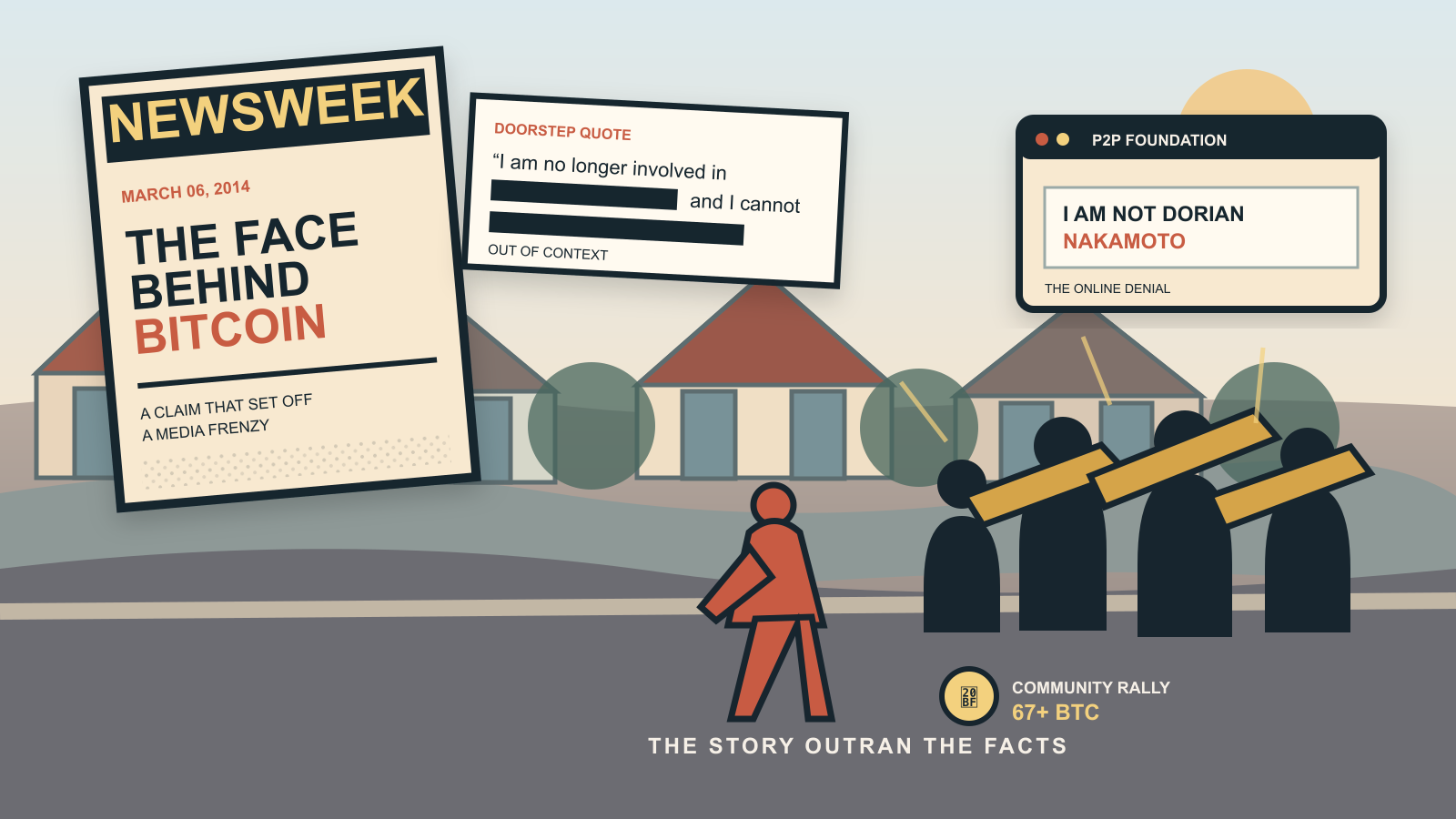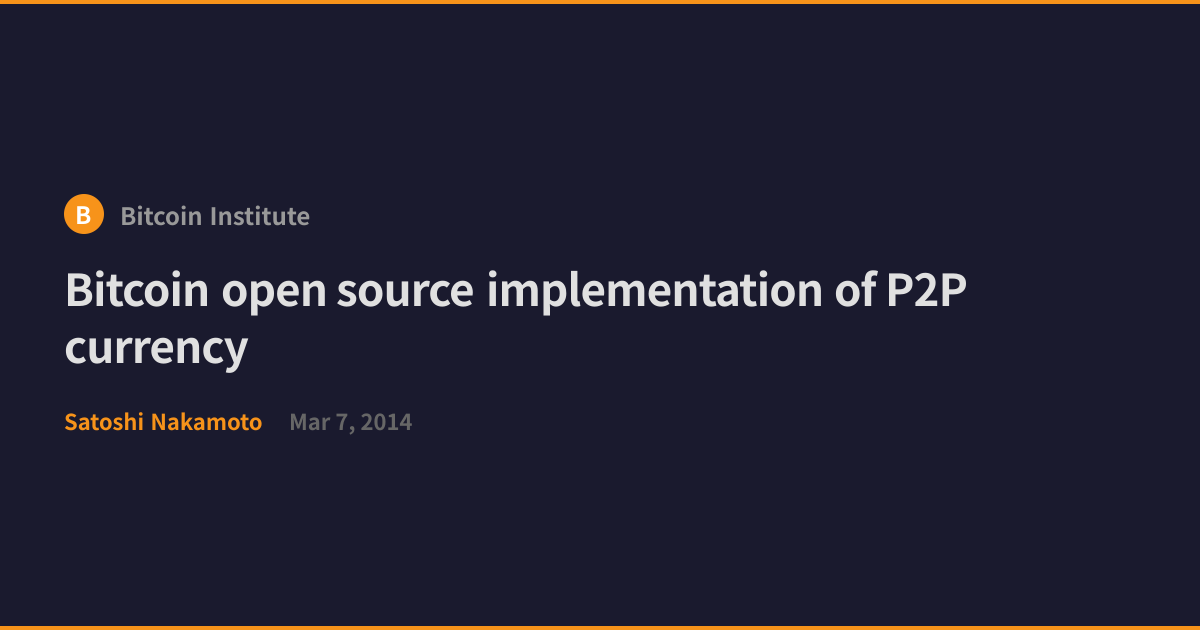
On March 7, 2014 (UTC), the day after Newsweek named Dorian Nakamoto as Bitcoin’s creator, Satoshi Nakamoto’s long-dormant P2P Foundation account posted a single-sentence reply on the original “Bitcoin open source implementation of P2P-currency” thread:
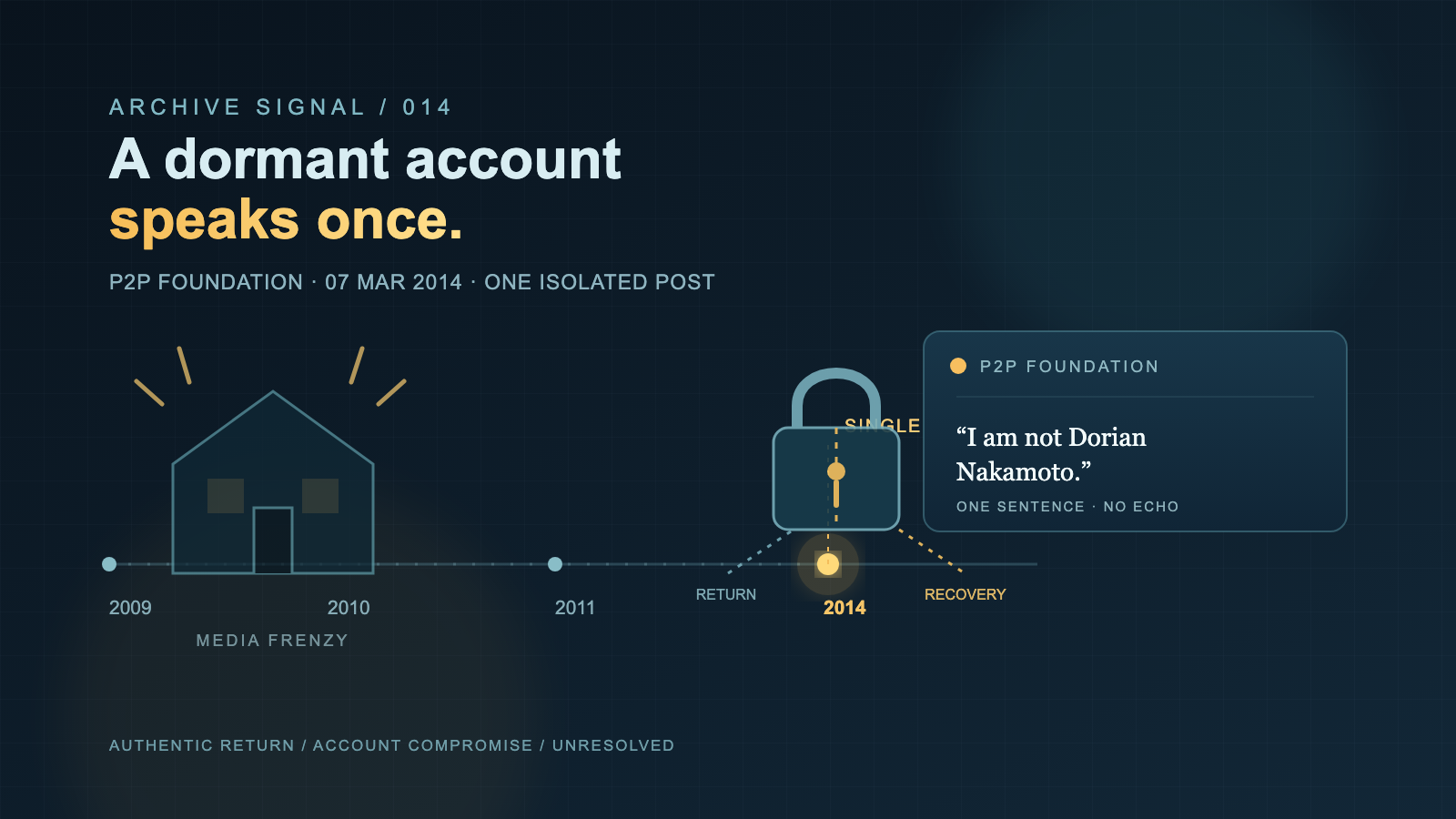
Quote from: Satoshi Nakamoto on March 07, 2014, 1:17:00 AM UTCI am not Dorian Nakamoto.
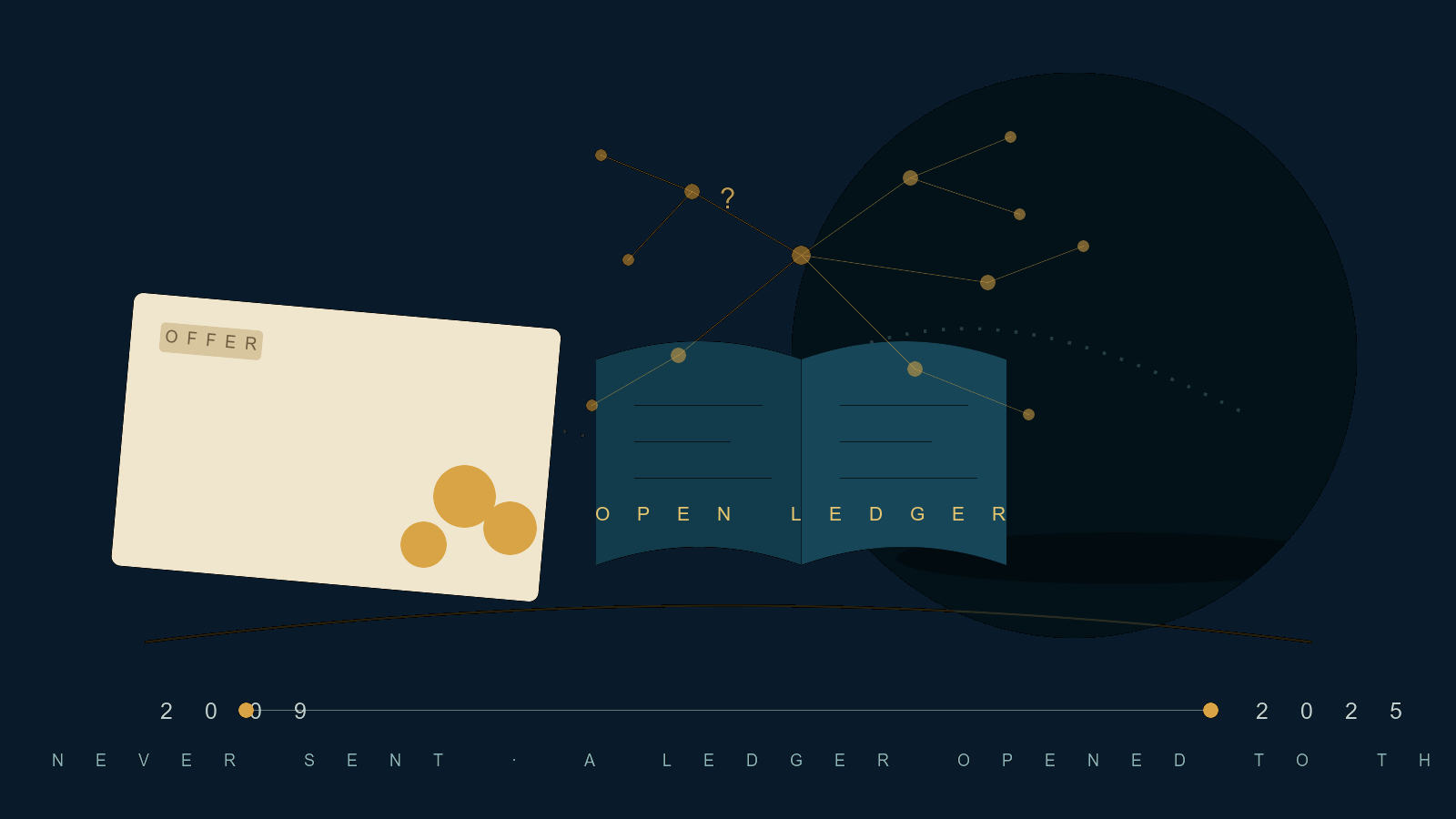
The post is structurally remarkable. The same P2P Foundation account had been silent for five years — the previous post from it was the February 11, 2009 announcement of Bitcoin v0.1. No other content was published from the account between 2009 and 2014, and none has been published since the 2014 denial.
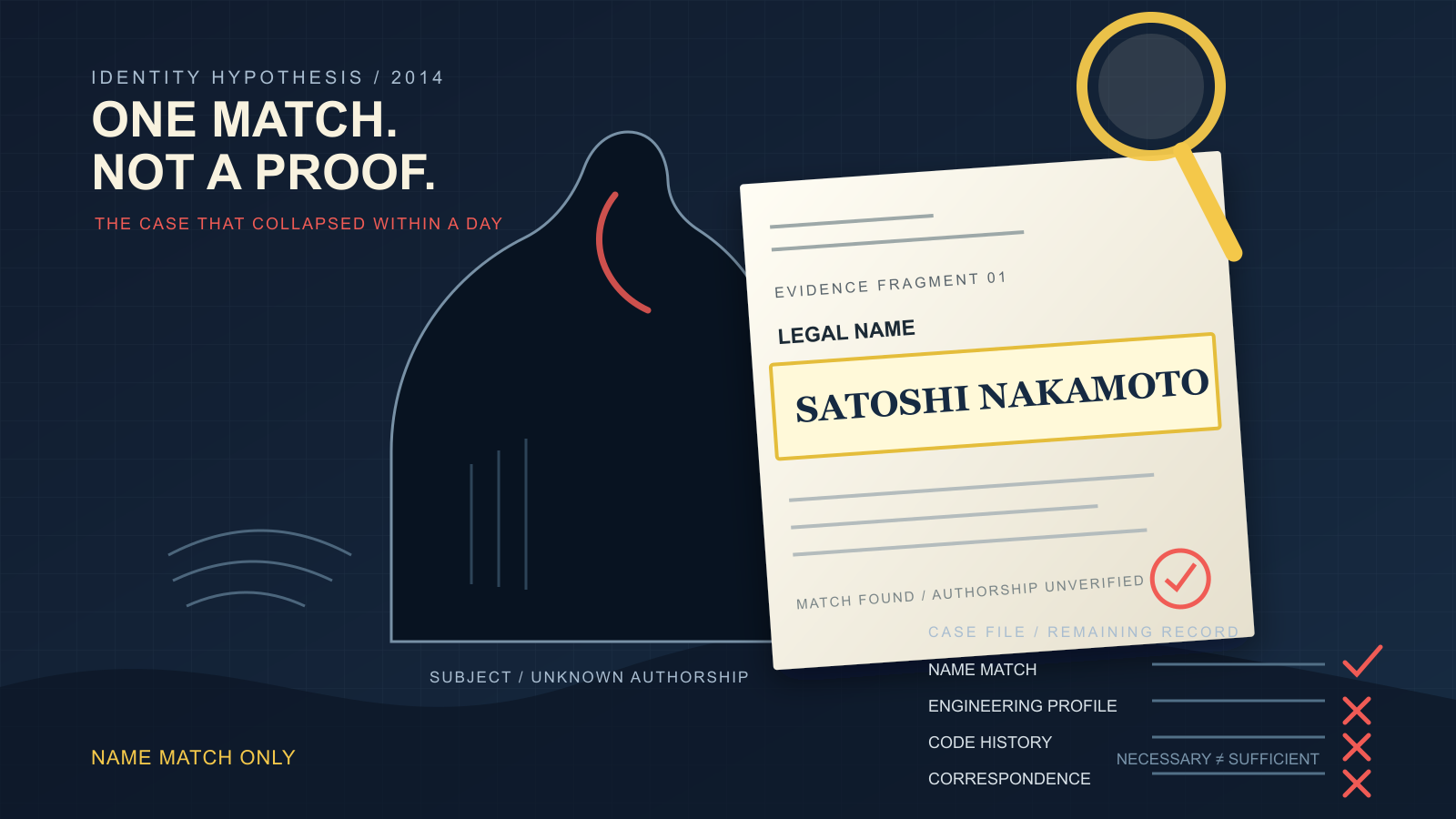
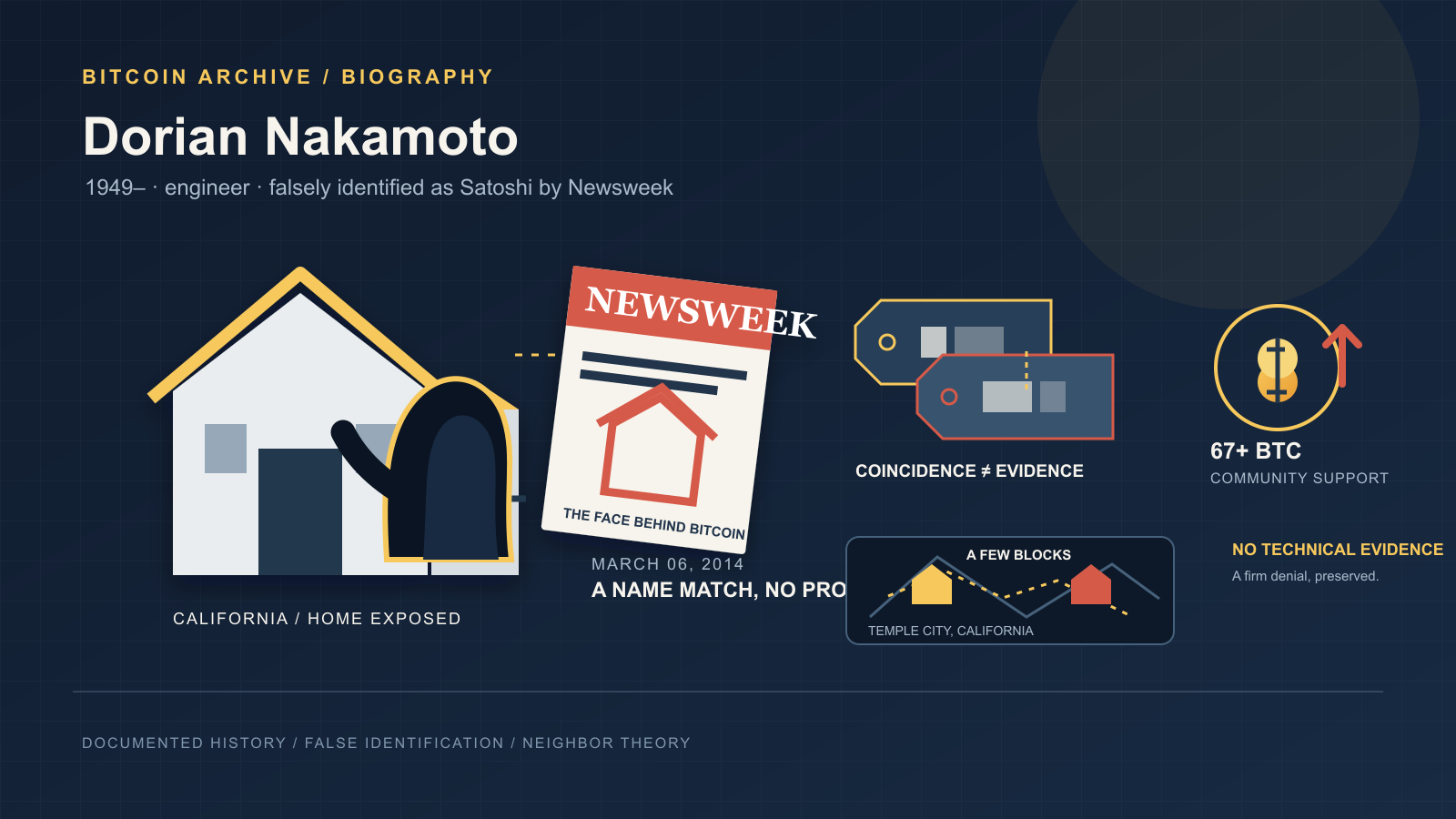
Timing and immediacy. The Newsweek cover story carried a March 14 issue date but was released online on March 6, 2014. The denial post was timestamped 2014-03-07T01:17:00Z, the day after the article hit the web. The denial coincided with the peak of the media frenzy at Dorian Nakamoto’s Temple City home, in which reporters and photographers pursued the 64-year-old retiree for comment.
Authenticity dispute. The single-sentence form, the timing, and the long silence before it have produced sustained debate over whether the post represents a genuine return by the original author or an unauthorized access by a third party with control of the email-recovery path. The arguments fall into three positions, which have circulated continuously in the community since 2014:
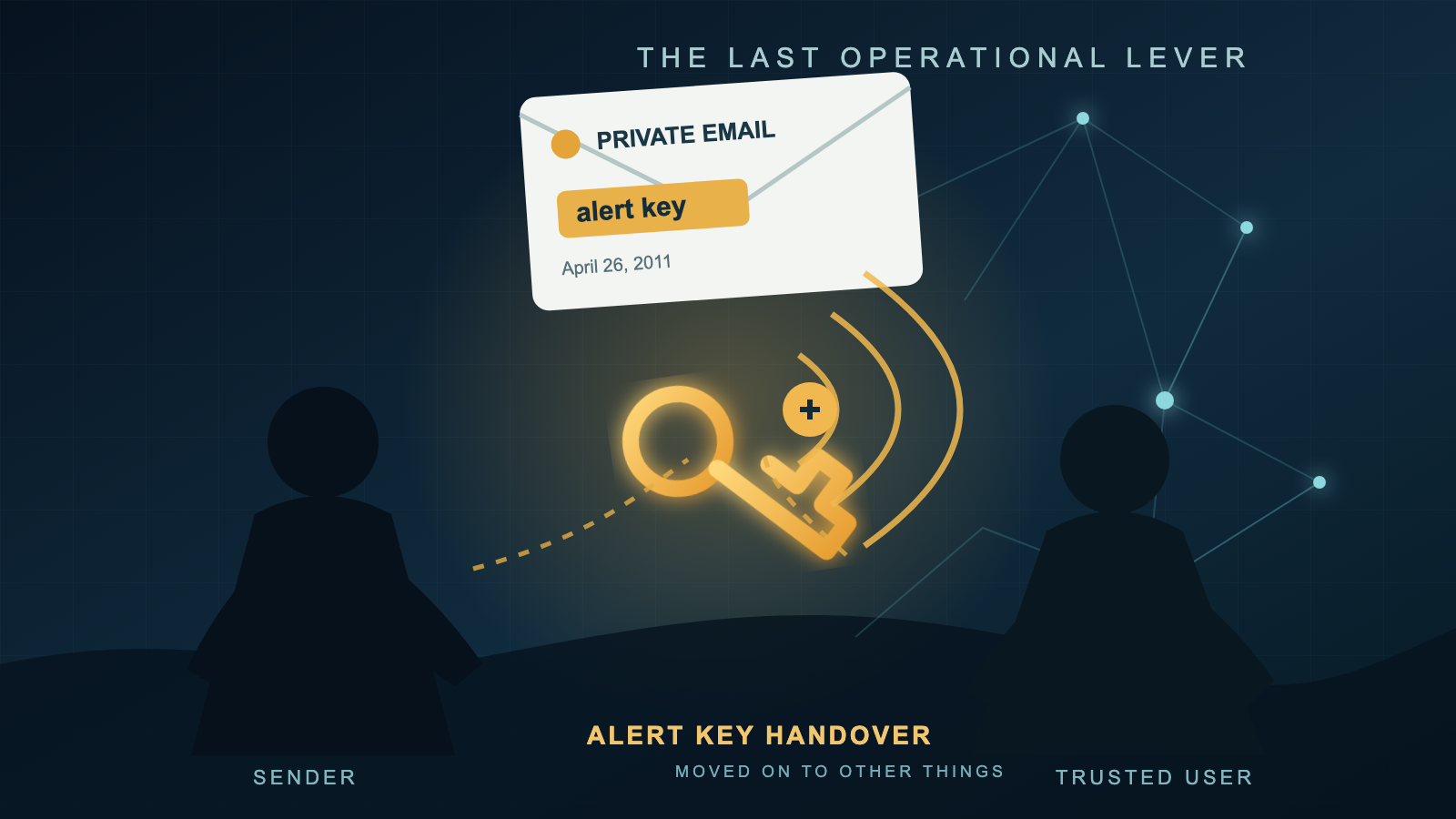
- Genuine return. The author broke silence specifically to refute the Newsweek identification, judging that the harm to Dorian Nakamoto justified a one-time exception to the long-standing withdrawal pattern set by the April 26, 2011 final email to Gavin Andresen.
- Account compromise. A third party with control of the account (via the P2P Foundation’s Ning-based email recovery, which lacked two-factor authentication) posted the denial. Under this reading, the message could still be substantively correct — Dorian Nakamoto’s denial was credible on its own — without telling us anything about the original author’s location, state, or intent.
- Indeterminate. The community cannot distinguish between the two on the basis of the single-sentence content, and no cryptographic signature was attached.
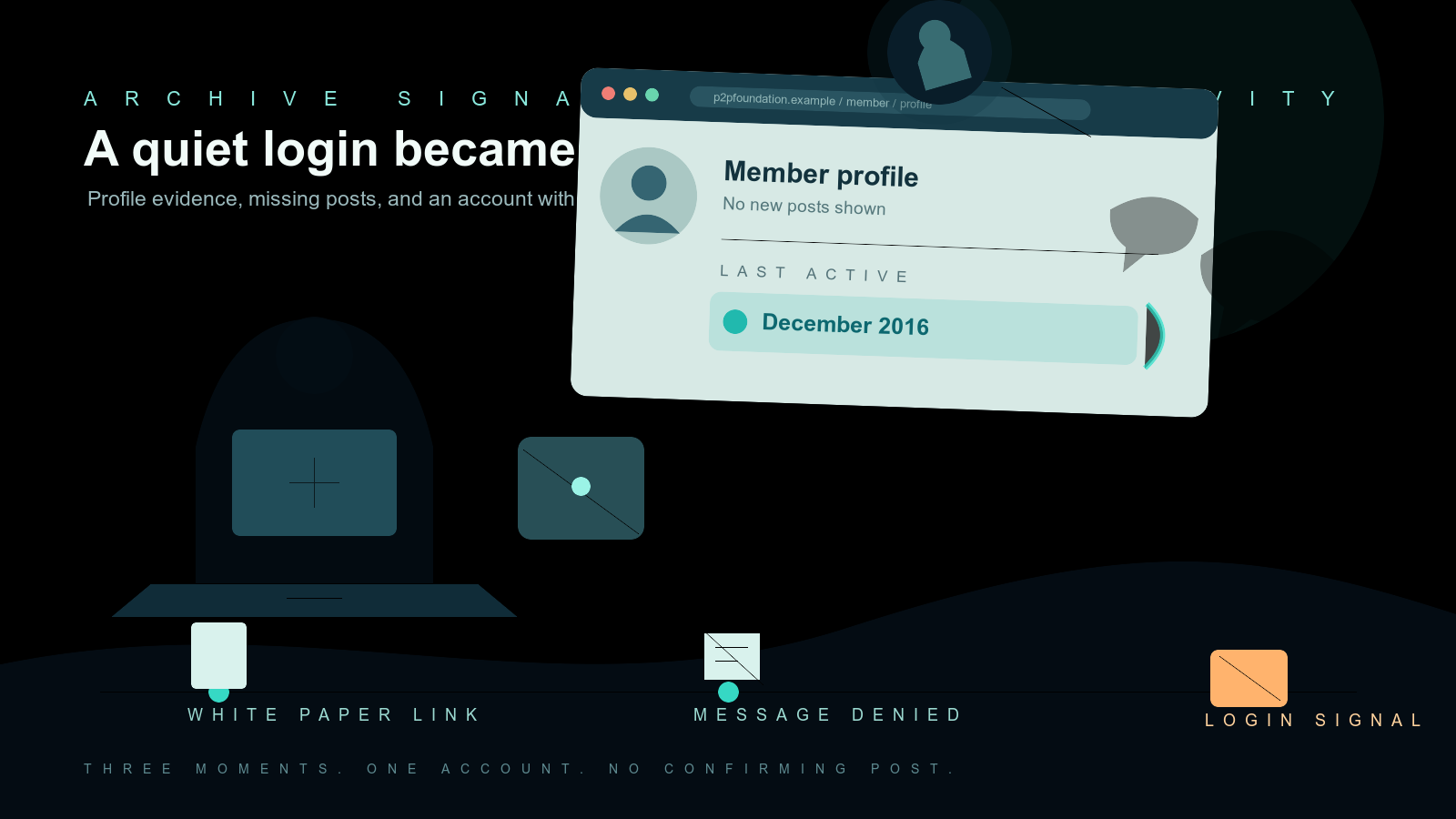
The 2016 login. In December 2016, the P2P Foundation profile showed renewed login activity without any new public post. This reinforced the account-compromise reading for some observers: an account that an unknown party retained access to two years after the 2014 denial had a non-trivial probability of having been accessed by that same party in 2014 as well. For others, the 2016 login was consistent with the genuine author periodically returning to check the account without engaging.
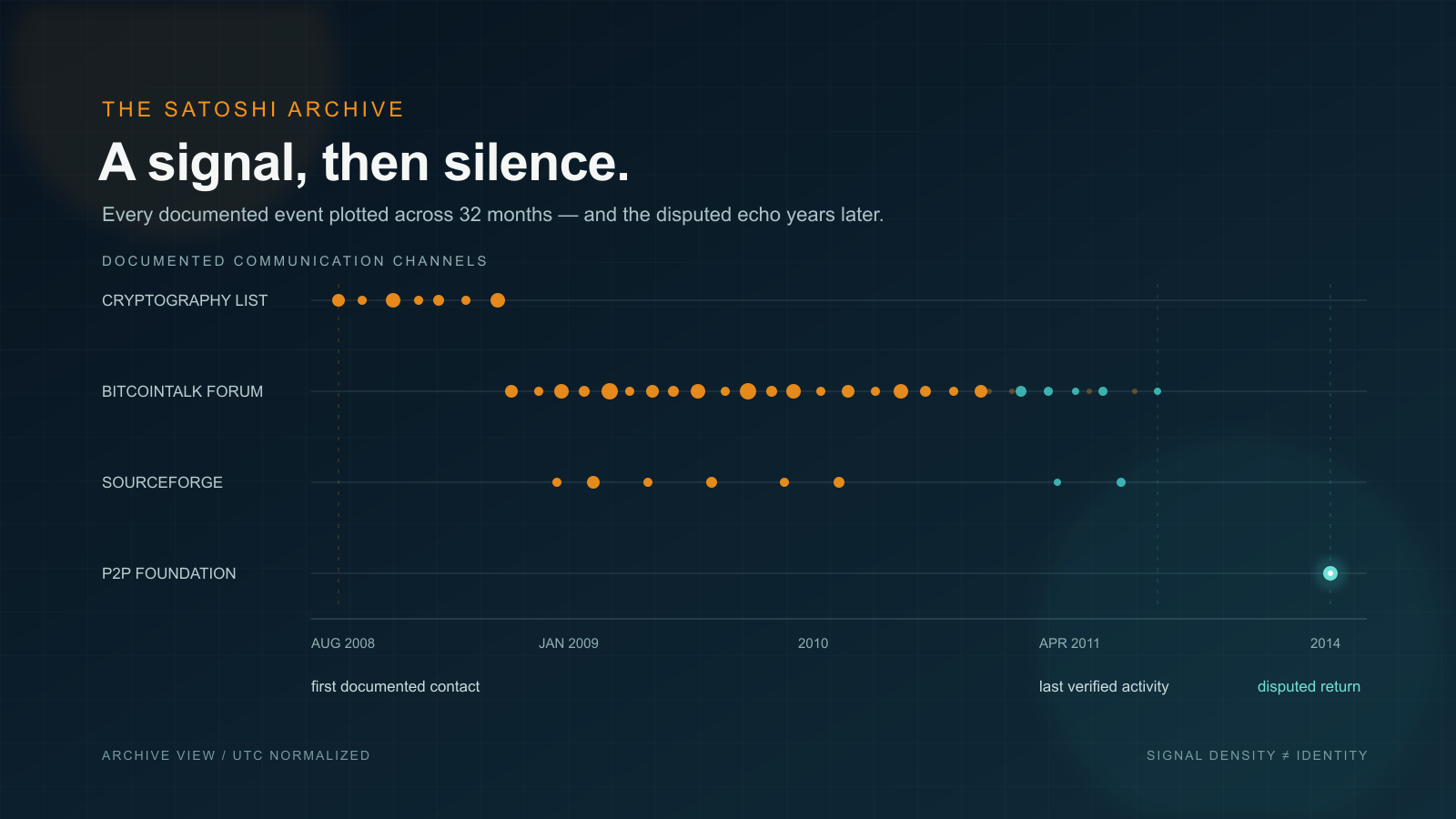
No corroborating channel. Unlike the 2009-2011 active period, when activity flowed across multiple channels in parallel — the Bitcointalk forum, the Cryptography mailing list, the SourceForge releases, and private email — the 2014 denial appeared on exactly one channel and was not echoed elsewhere. The Bitcointalk satoshi account remained silent. No accompanying email was sent to known early correspondents who could have authenticated the message via shared private context. No PGP signature was attached. This isolation is what keeps the authenticity question live: the original active-period author left dense corroborating trails, and the 2014 denial left none.
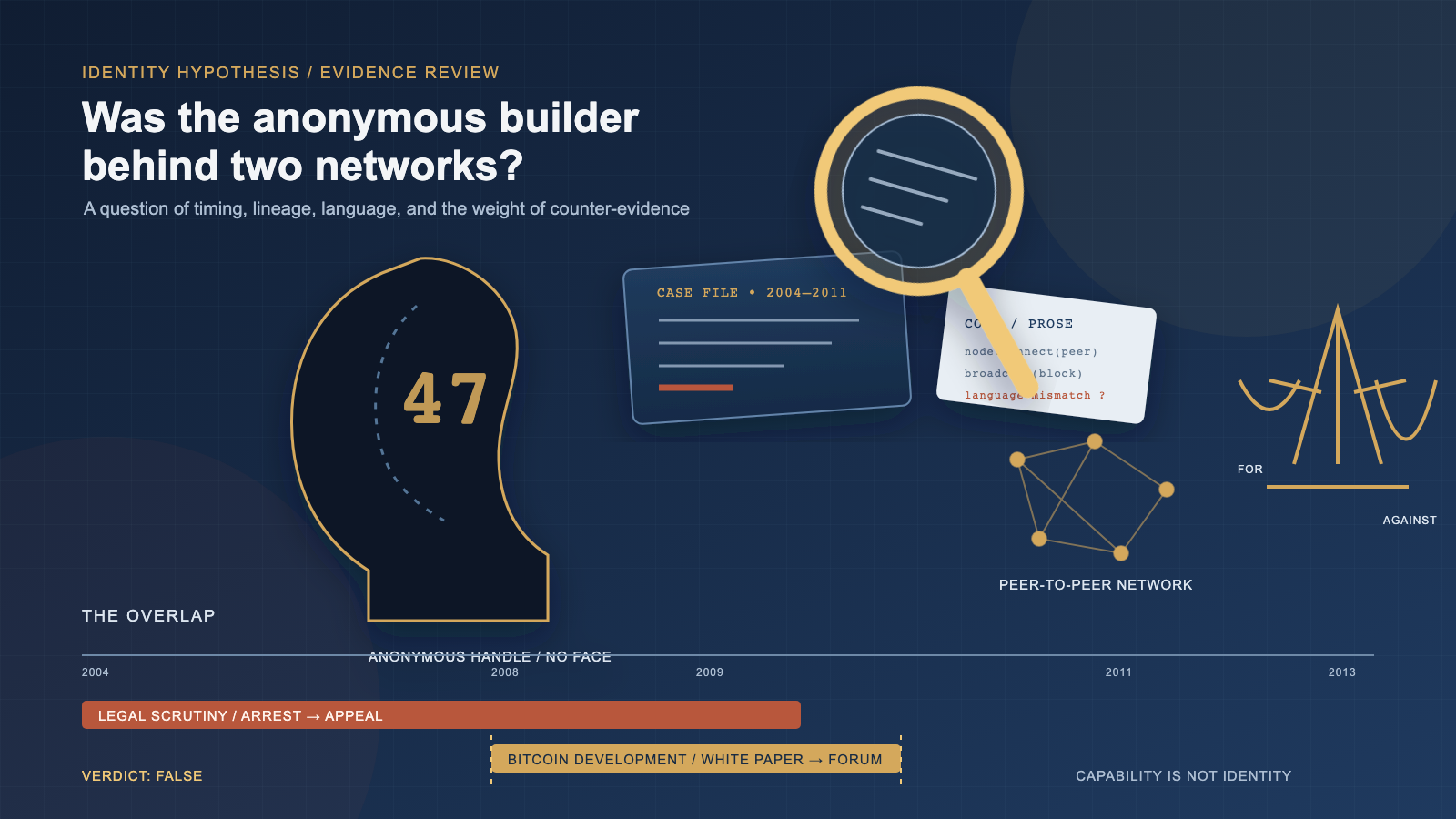
Position in the identification timeline. The post is the only event in the post-2011 Satoshi corpus that carries a literal Satoshi-account byline — an authored line of text, not merely renewed account access; the 2016 login added no post of its own and so does not carry a byline in the same sense. For analysts of the identification asymmetry — the structural reasons why claiming “X is Satoshi” requires materially stronger evidence than claiming “X is not” — the 2014 denial is interesting precisely because it is the only on-account assertion of non-identity, and the Dorian Nakamoto identity hypothesis analysis weighs it directly as counter-evidence against that candidacy. If genuine, it constitutes the strongest single piece of evidence ruling out the Newsweek identification; if compromised, it is evidence about the account’s security model rather than about Satoshi’s intent. Bitcoin Institute treats both readings as live until a cryptographic confirmation resolves the question one way or the other.
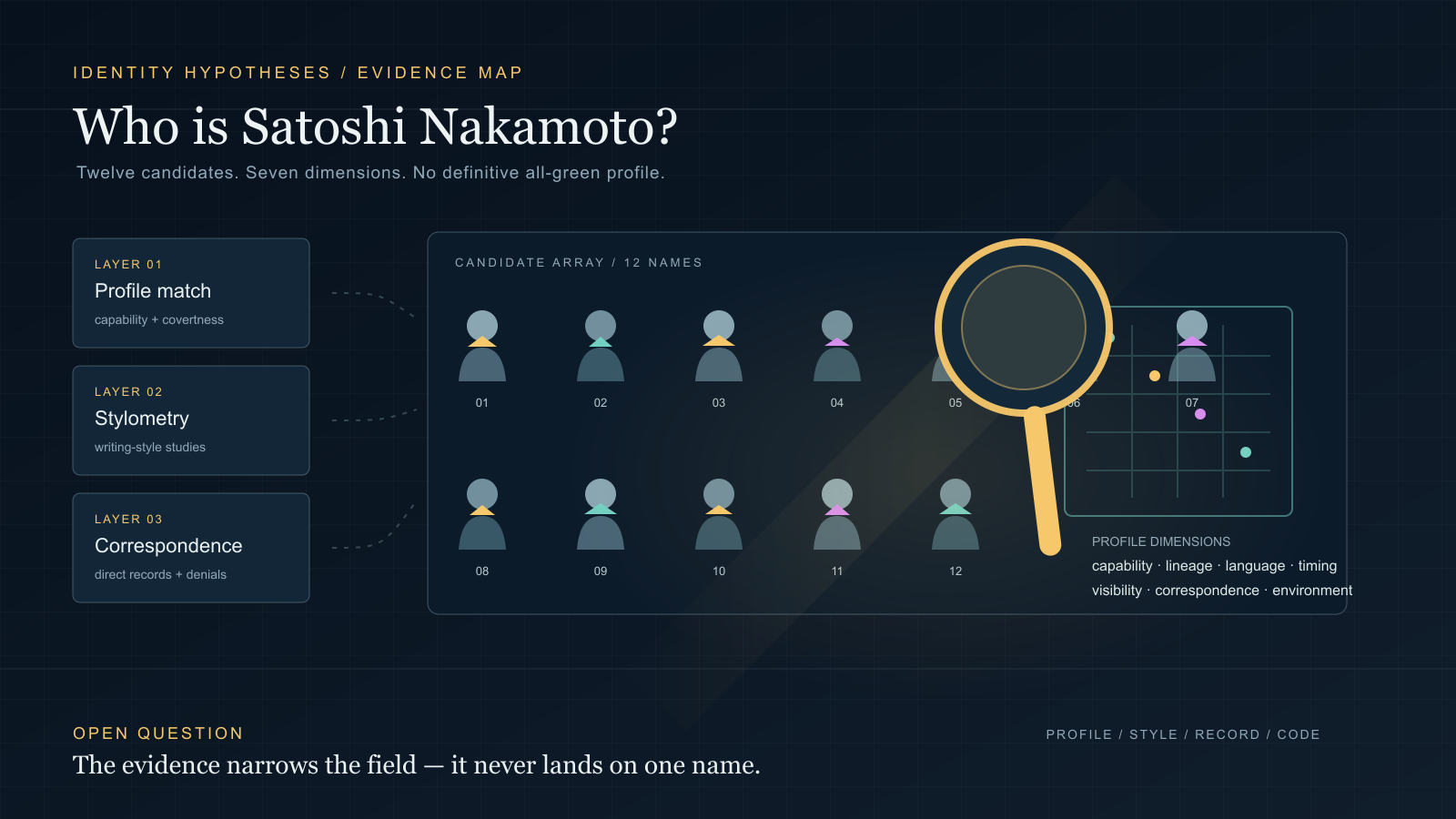
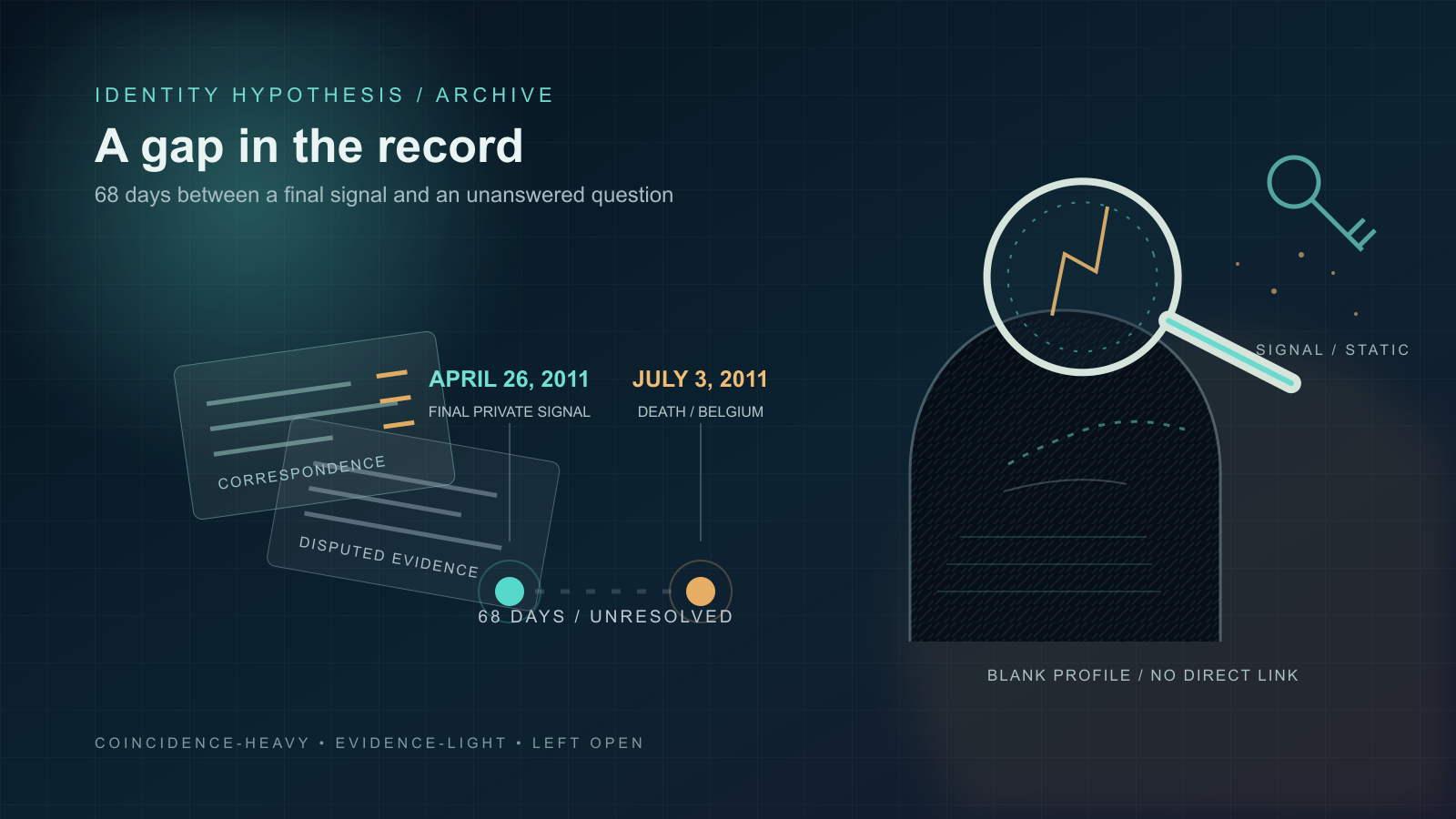
On the full Satoshi activity timeline, this 2014 denial is the lone dot sitting three years after the April 2011 farewells — the single post-withdrawal event carrying a Satoshi-account byline. If genuine, its 2014 date also bears on the wider candidate landscape: the Satoshi-identity hypotheses overview reads this timing as evidence against candidates whose disqualifying life event fell before it, ruling against Len Sassaman (died 2011) and Isamu Kaneko (died 2013) without reaching Hal Finney, who died in August 2014, after the post.