
I’ve discovered some attacks against the original PipeNet design. The new protocol, PipeNet 1.1, should fix the weaknesses. PipeNet 1.1 uses layered sequence numbers and MACs. This prevents a collusion between a receiver and a subset of switches from tracing the caller by modifying or swapping packets and then watching for garbage.
A description of PipeNet 1.1 is available at
http://www.eskimo.com/~weidai.Also available there is a description of b-money, a new protocol for monetary exchange and contract enforcement for pseudonyms.
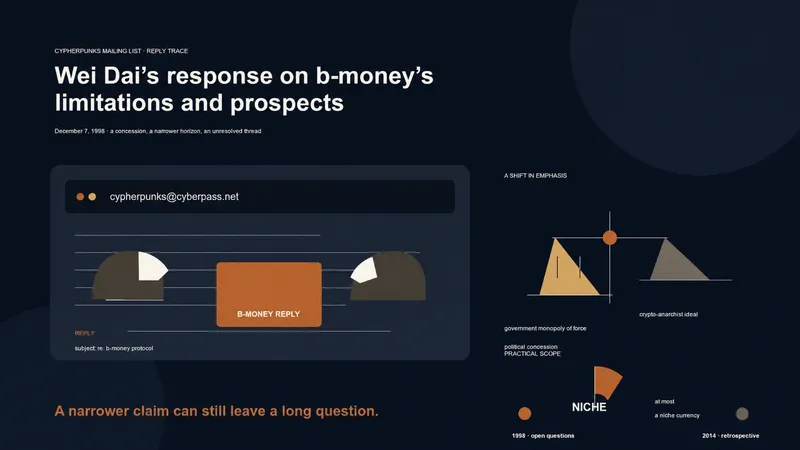
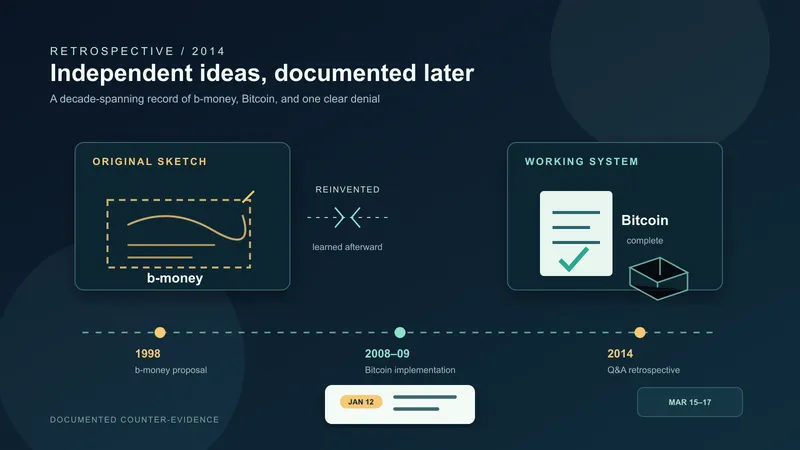
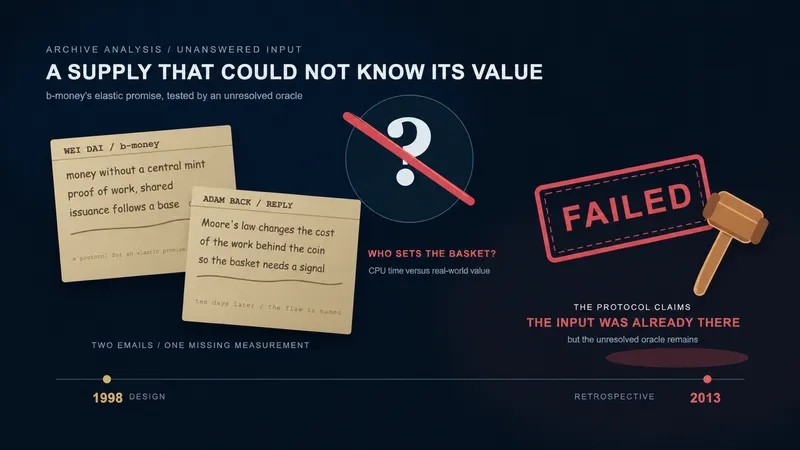
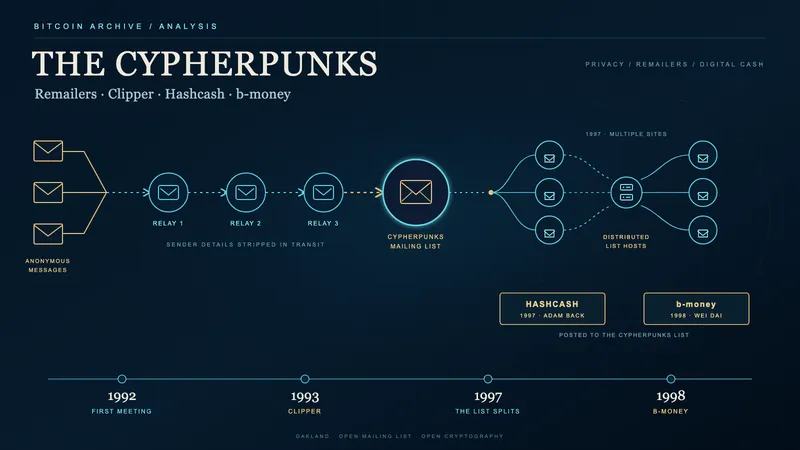
The b-money proposal — which would later become one of the most cited precursors to Bitcoin — was introduced in a single sentence at the end of a post primarily about PipeNet, an anonymous routing protocol. Wei Dai’s main interest at the time was clearly PipeNet, not digital currency.
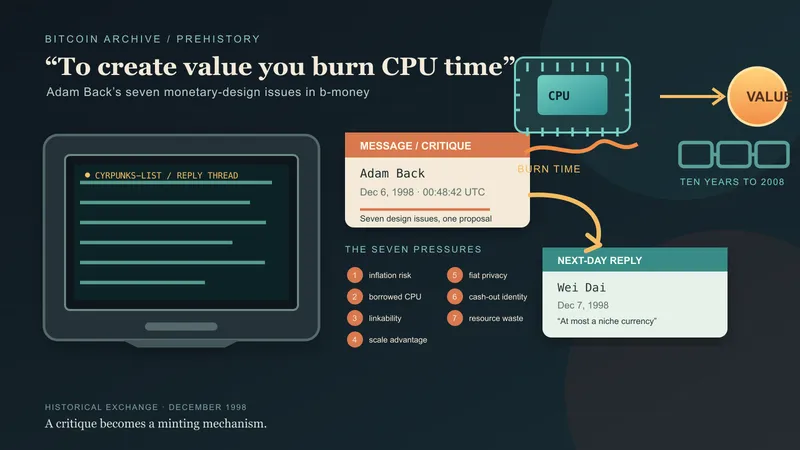
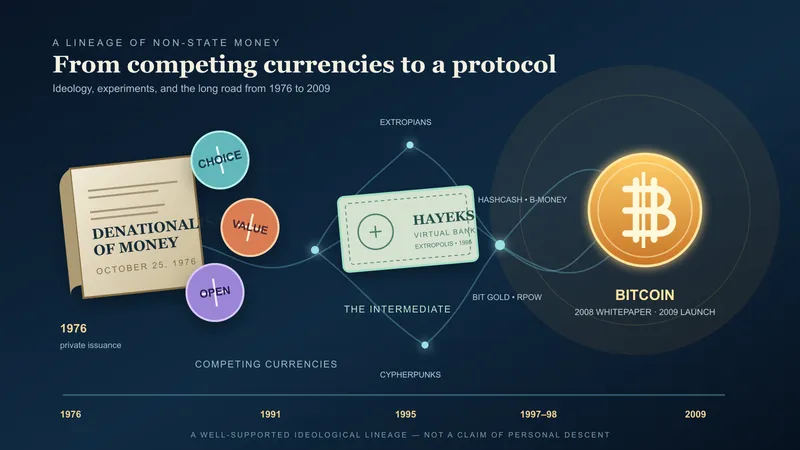
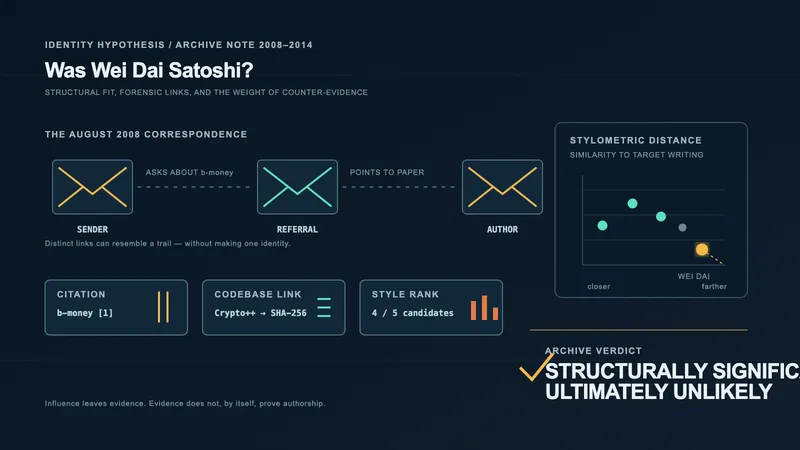
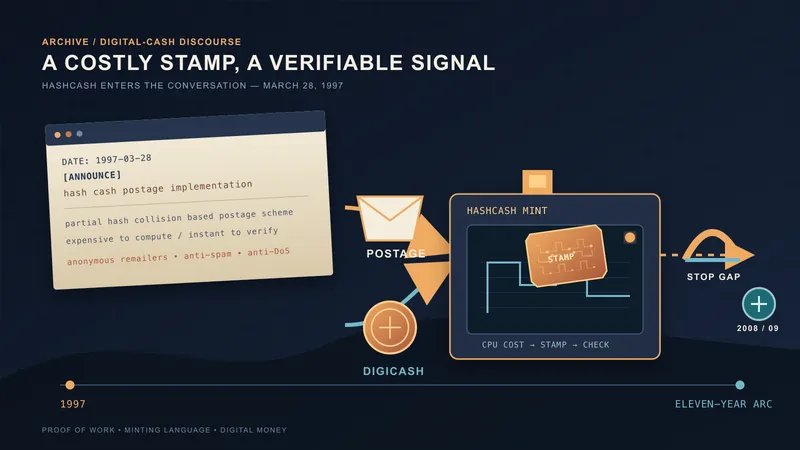
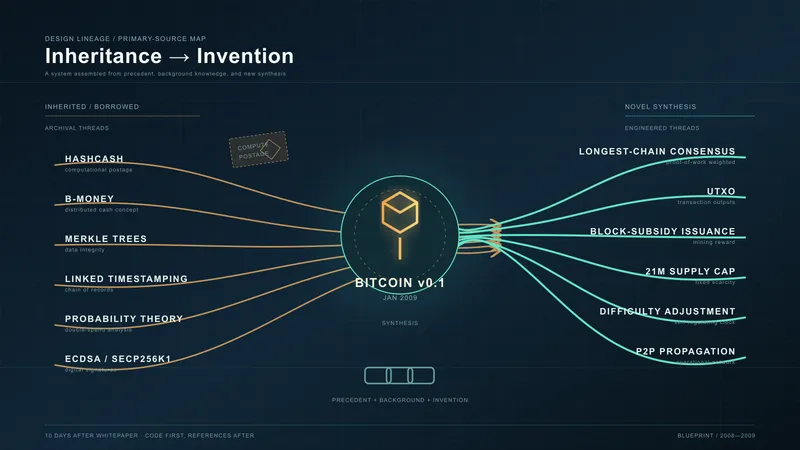
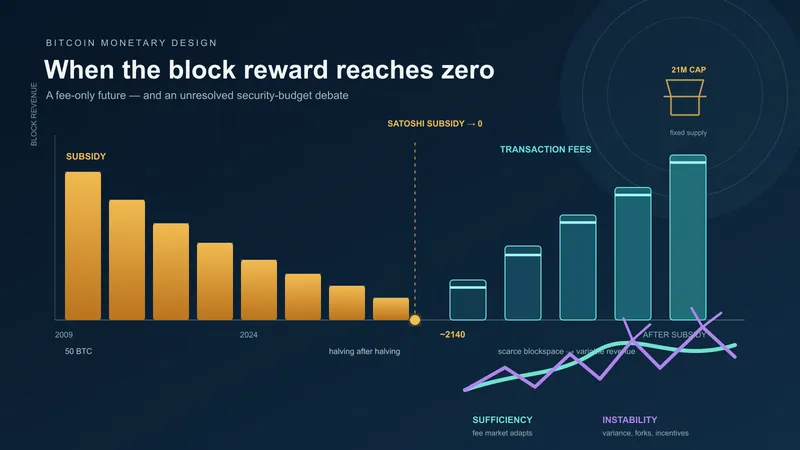
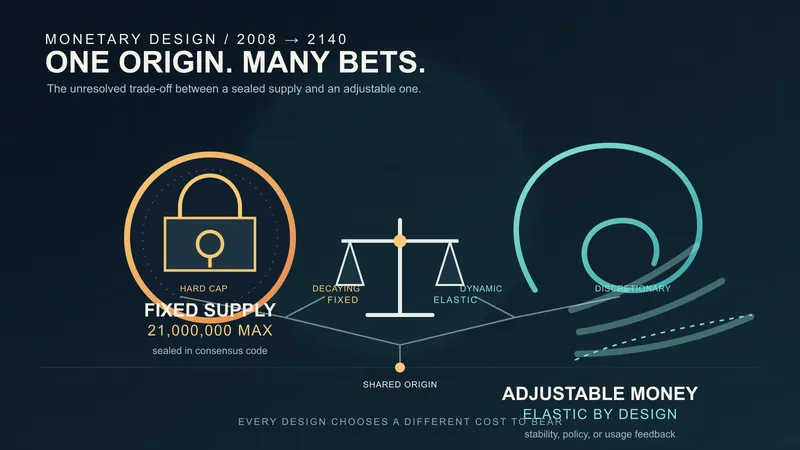
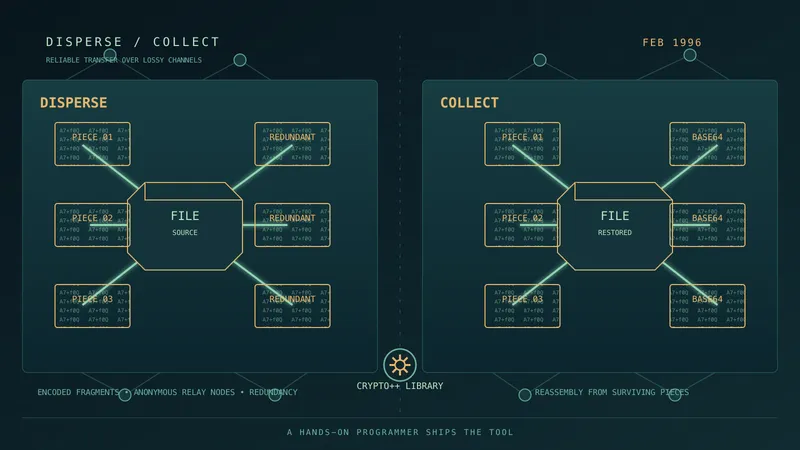
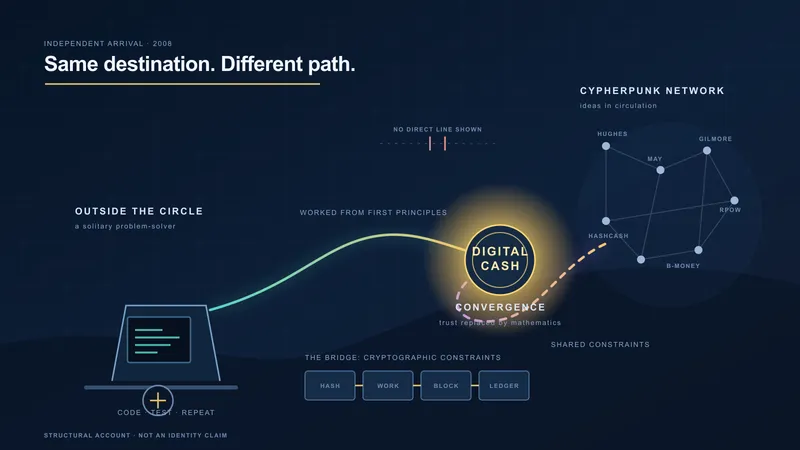
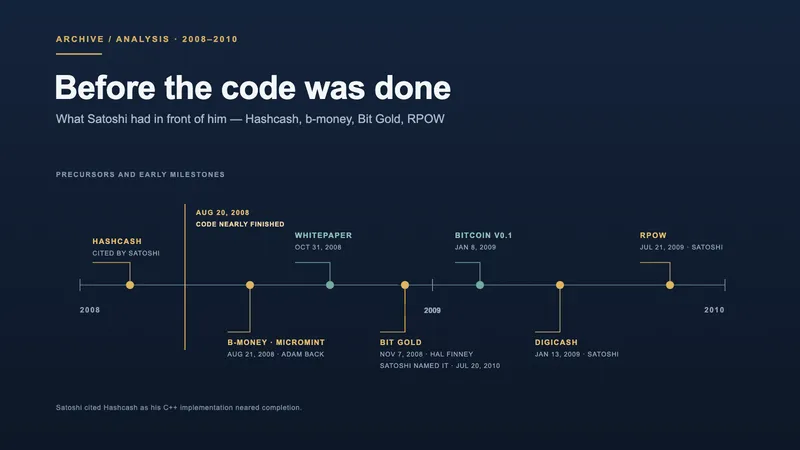
Several later pages on b-money’s place in Bitcoin’s design lineage and in the identity debates rest on this post: the Bitcoin design lineage, the Hayek-Extropians-Bitcoin ideological lineage, the Wei Dai identity hypothesis, the fixed-supply-vs-adjustable-money analysis, and the mining-reward-exhaustion analysis. Satoshi admitted that he “wasn’t aware of the b-money page” until Adam Back pointed him to it in August 2008, by which time his C++ code was nearly finished; this proposal is reread in the light of that admission in the analysis of the cypherpunks’ independent arrival. The Adam Back b-money monetary critique and the Hashcash announcement belong with this announcement to the same-period precursor record, and Dai’s longer story runs through the Wei Dai biography and Wei Dai retrospective on Satoshi. Two years earlier, Dai had posted Disperse/Collect to the same list — evidence that he could ship working code, which makes his not implementing b-money a choice rather than a lack of ability.