
Hal Finney’s Reusable Proofs of Work (RPOW) system, first announced on August 15, 2004, has received growing posthumous recognition as a precursor to Bitcoin. Five years after Finney’s death from ALS in August 2014, the cryptographic community increasingly acknowledged RPOW’s significance in the lineage of digital cash systems.
RPOW was a prototype system that allowed users to exchange proof-of-work tokens. Unlike earlier proof-of-work proposals such as Adam Back’s Hashcash, RPOW tokens were reusable — once created through computational work, they could be transferred from person to person without requiring new proof-of-work computation for each transfer. The system used trusted computing (IBM 4758 secure cryptographic coprocessor) to ensure the server could not forge or duplicate tokens.
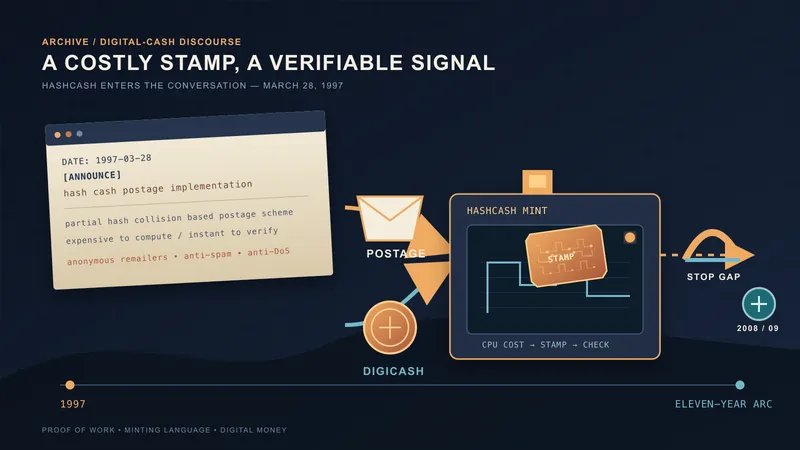
Finney built RPOW on Adam Back’s Hashcash — Finney’s announcement describes the system as receiving hashcash and issuing reusable RSA-signed tokens in exchange. While RPOW relied on a central server (unlike Bitcoin’s decentralized design), its core insight of using proof-of-work as the basis for transferable digital tokens foreshadowed Bitcoin’s approach — a reading made in retrospect: RPOW sits outside the whitepaper’s references.
What the cryptography list asked
Finney posted the announcement to the Cypherpunks list on August 15, 2004, and Robert Hettinga forwarded it to the cryptography mailing list the same day, where it drew a week of questions. Taral asked what stopped Finney from faking the attestation and running a compromised server. Finney answered from the Crypto conference that the attestation rested on a root key IBM published for its 4758 board, and that anyone could hash the published RPOW source and match it against the attestation. Ray Dillinger, posting as “bear,” asked why someone would not run a server that stockpiled proofs of work, or a company that sold them.
Finney replied that “there are no digital cash implementations that I am aware of,” called RPOW tokens “a sort of ‘play money,’” and offered another way to see them: “an implementation of Nick Szabo’s concept of ‘bit gold’” — or, since they lacked gold’s appeal, “bit copper.” David Honig pointed out that with a single clearing house the tokens lacked the anonymity of bearer instruments. Adam Back placed the design as “very like Chaum’s online ecash protocol, but with no blinding (for patent reasons),” with its guarantees resting on trust in IBM.
The FAQ on rpow.net answers the same points. The server, Finney wrote there, “may appear to be a bottleneck in the design, but actually it is a crucial element”; any change to its software would wipe the keys on the board and make every token worthless, “Hence, I do not intend ever to change the RPOW server source code.” And: “Keep in mind that this is not money.”
The Satoshi Nakamoto Institute preserved and documented RPOW as part of the historical record of digital cash development. Finney himself wrote about the connection in his celebrated post “Bitcoin and me”:
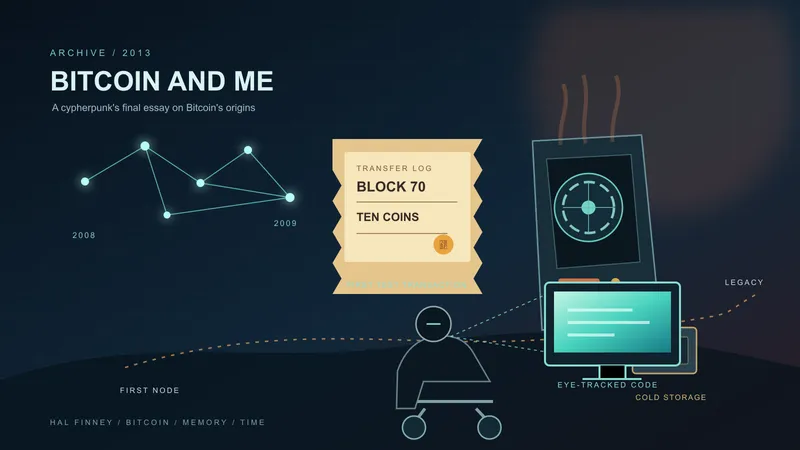
Hal Finney (BitcoinTalk post, March 19, 2013, 8:40:02 PM UTC)I had made an attempt to create my own proof of work based currency, called RPOW. So I found Bitcoin facinating.
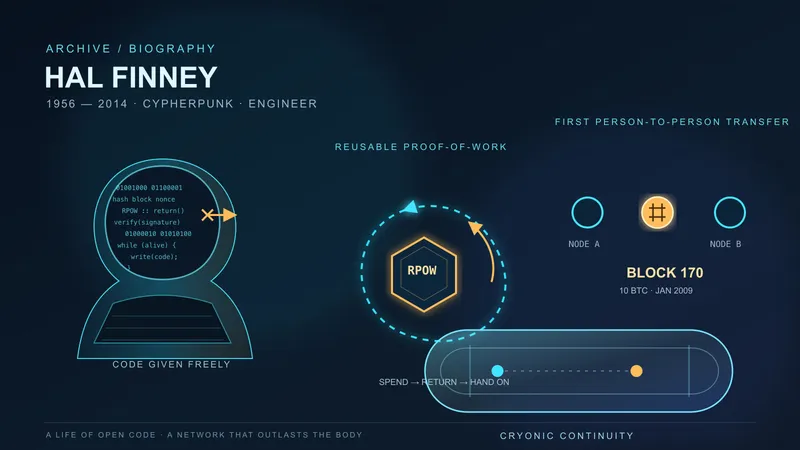
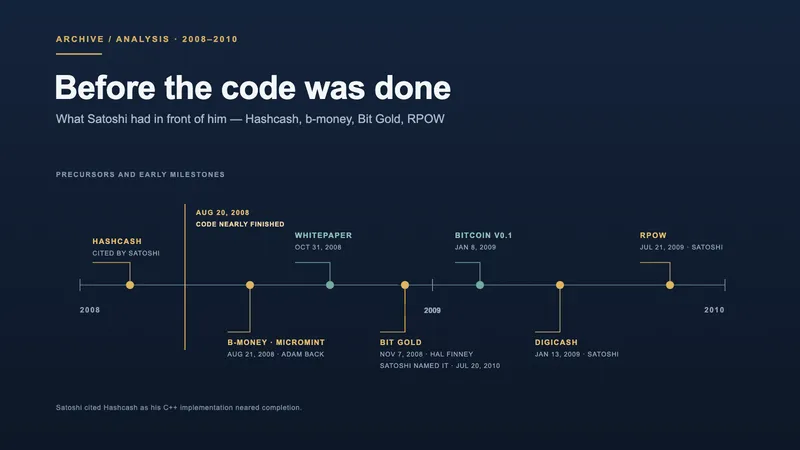
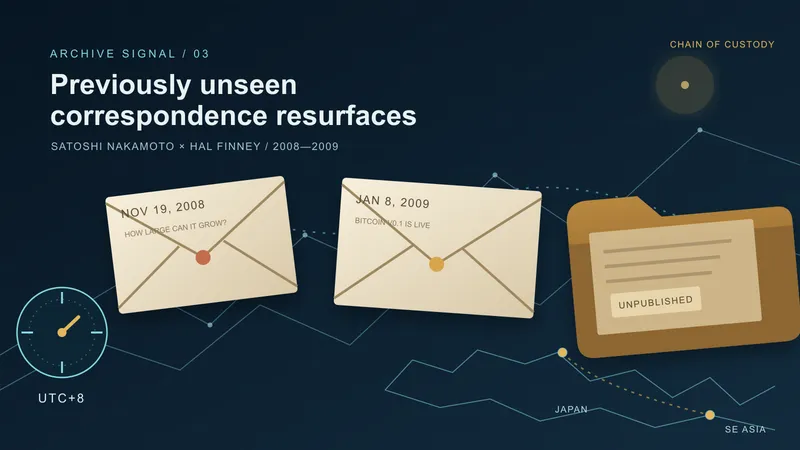
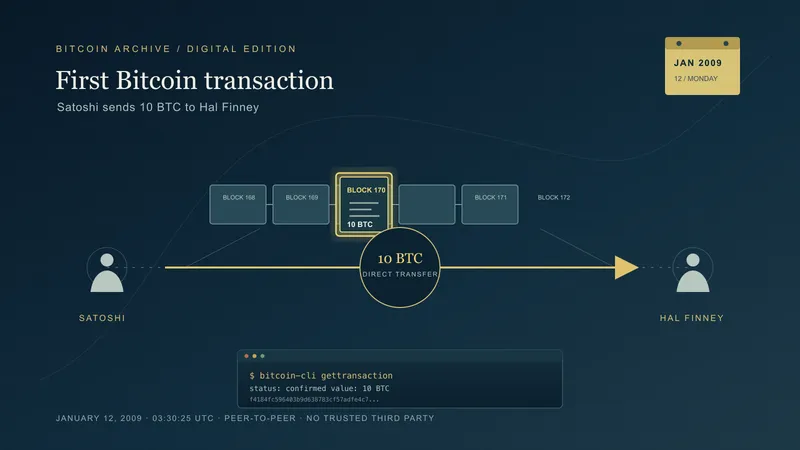
Finney’s contribution was twofold: he built RPOW, the system later recognized as a Bitcoin precursor, and he was the first known person besides Satoshi to run Bitcoin, mine blocks, and receive a Bitcoin transaction — the payment Satoshi sent him in Block 170, the first person-to-person transfer in Bitcoin’s history. Satoshi’s own first recorded mention of RPOW comes in a July 2009 email, after Bitcoin’s launch. For when Satoshi learned of it, relative to the other precursors, see the account of what Satoshi knew before the code was done.