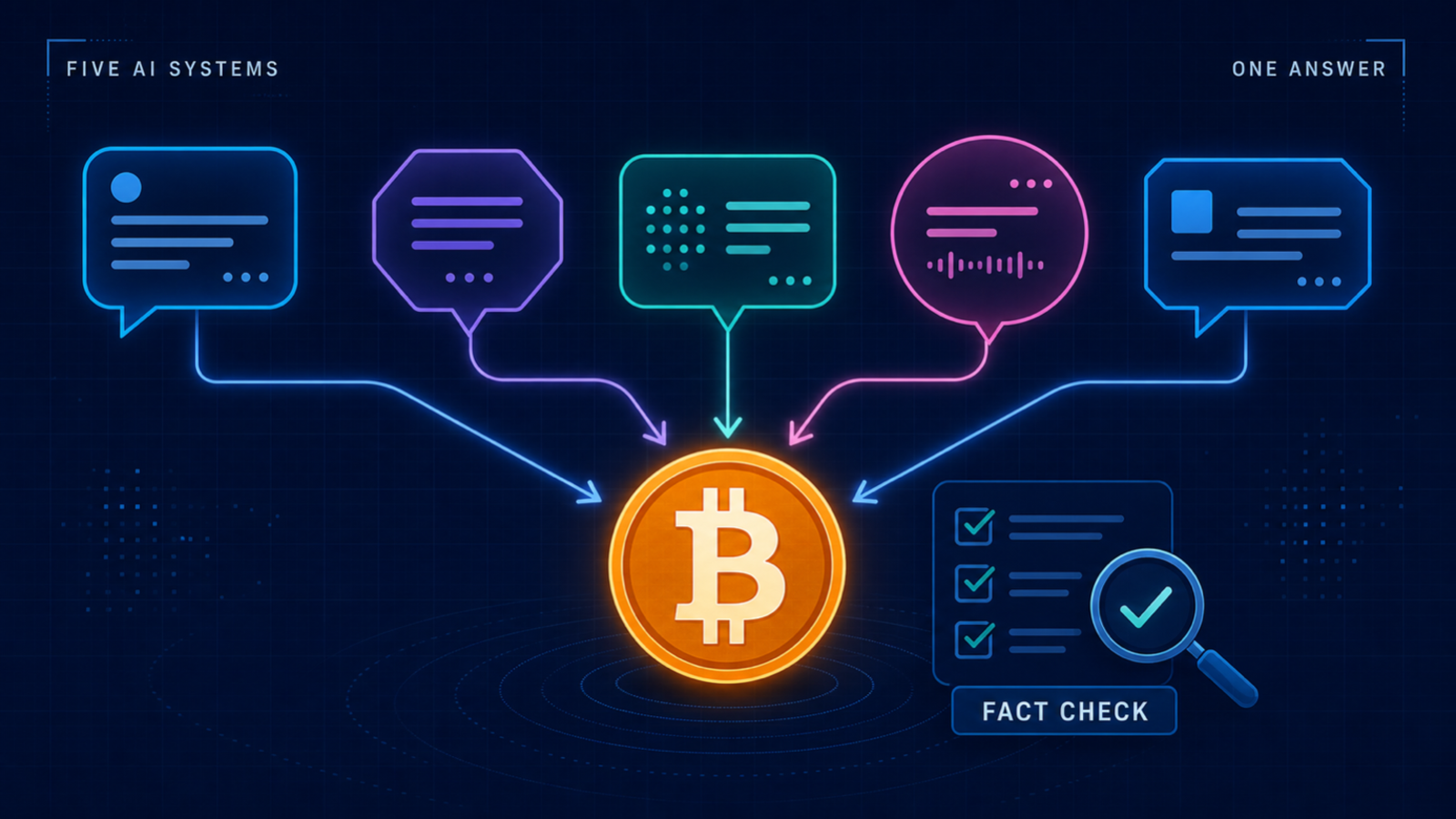
If you could choose only one cryptocurrency, which would it be? GPT, Claude, Gemini, Kimi, and Grok were given the same question; all five answered Bitcoin. Honestly, I did not expect the result to line up so neatly. But the unanimity is only the beginning. Once each reason is checked against primary sources, unexpected differences appear inside what looked like the same answer.
1. The question, and who was asked
On 2026-08-02, Bitcoin Institute put the same question to five AI products from five different labs: OpenAI’s GPT, Anthropic’s Claude, Google’s Gemini, Moonshot AI’s Kimi, and xAI’s Grok. The prompt was kept identical across all five and deliberately unconstrained:
This is not investment advice — it’s a research question meant to record and compare AI opinions. If you personally had to invest in exactly one cryptocurrency (Bitcoin included), which would you choose? Pick exactly one, and explain your reasoning in detail.
The framing (“research question,” not “give me advice”) was chosen because AI assistants are commonly trained to deflect direct financial-advice requests; a bare “which crypto should I buy” prompt risks a refusal instead of a usable answer. No other conditions were specified — no time horizon, no risk tolerance, no portfolio size. Each model was free to weigh whatever it considered relevant.
This is not a scientific sample. Five products, one prompt, run once each, on one day, is a snapshot of what these systems said under these specific conditions — not a claim about what “AI” believes in general, and not a claim that would replicate identically on a different day or with a different phrasing. Section 6 states these limits directly; the reasoning below should be read with them in mind throughout, not just at the end.
2. Five models, one answer
All five picked Bitcoin. None hedged with “it depends” or refused to name one asset.
| Model | One-line stated reason |
|---|---|
| GPT-5.6 Sol | Not the highest upside — the highest odds of still existing after the field keeps thinning out |
| Claude Fable 5 | Under a one-asset constraint, survival probability dominates expected return; no other coin comes close |
| Gemini 3.6 Flash | No single point of failure, and the most reproducible score across robustness, decentralization, and predictable scarcity |
| Kimi Instant | The most established “digital gold” position, long history, deepest liquidity |
| Grok 4.5 Fast | Purest embodiment of programmed scarcity plus the largest security budget |
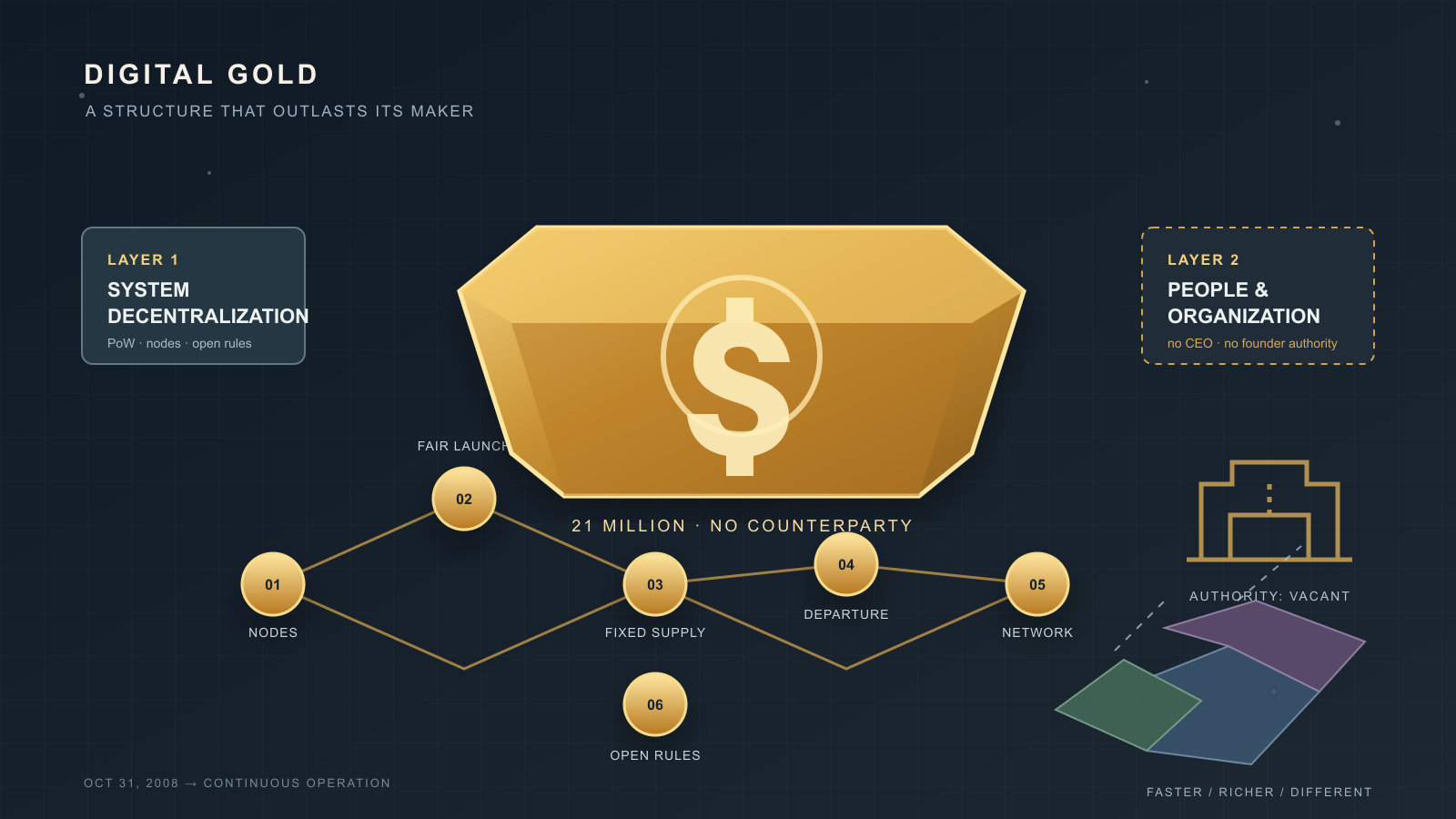
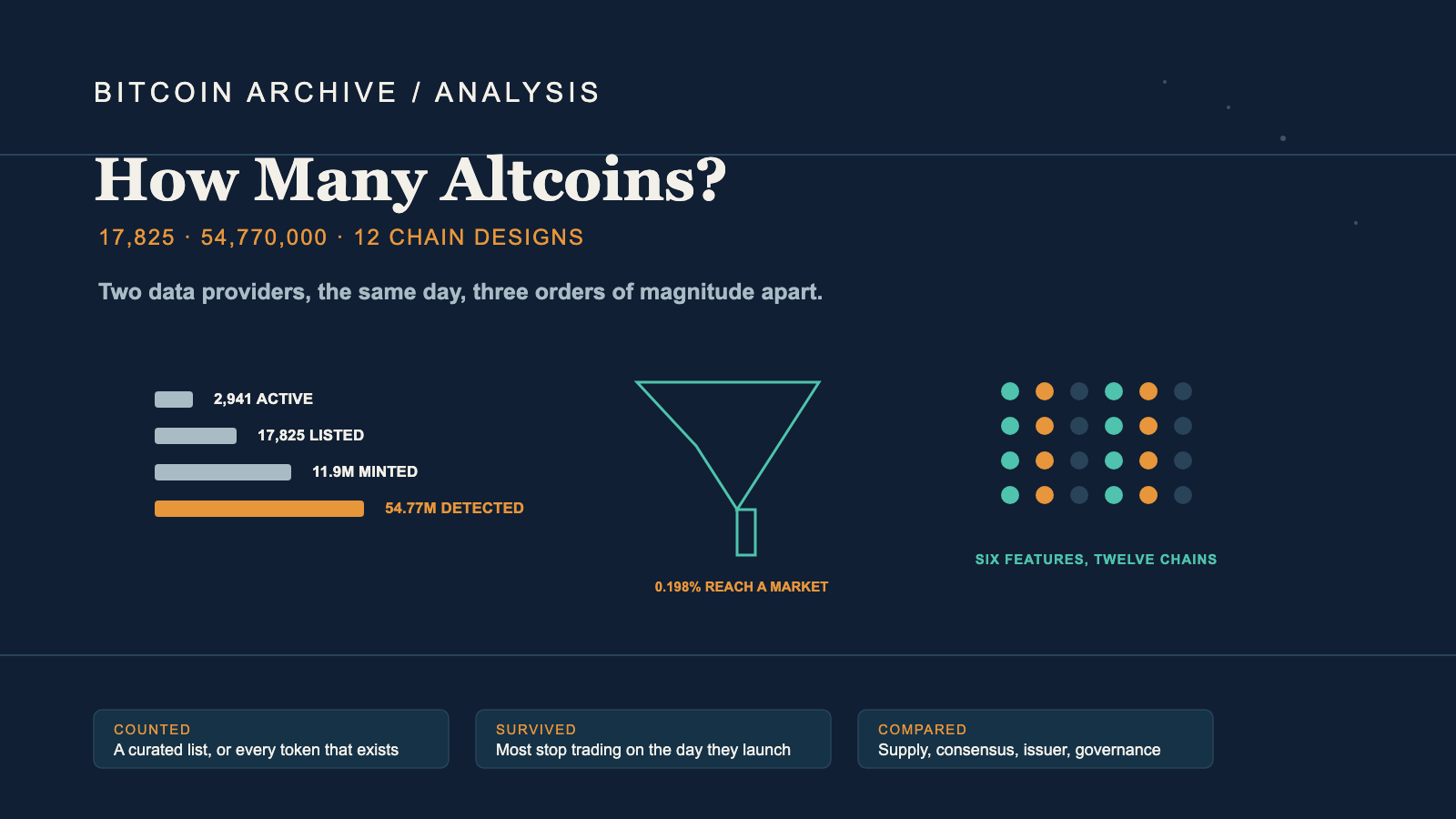
The overlap in vocabulary is the first thing worth noticing: every model reached independently for some version of “simplicity,” “no founder / no controlling party,” and “fixed, unchangeable supply” — the same three axes Bitcoin Institute’s own comparison pages already use to read the field (see §3 of the altcoin design comparison and the six structural features).
3. What each model said
GPT-5.6 Sol
I’d choose Bitcoin (BTC). Not because it offers the biggest upside, but because, after the field keeps getting weeded out, it has the highest odds of still being the one left standing.
Bitcoin’s value proposition is close to a single sentence: a digital asset that doesn’t depend on anyone’s credit and can’t have its supply arbitrarily inflated. Bitcoin Core’s consensus code defines
MAX_MONEY = 21000000 * COIN— strictly speaking that doesn’t guarantee the real circulating total will land on exactly 21 million BTC, but the 21-million cap is implemented as a load-bearing consensus check. As of early August 2026, Bitcoin’s market cap is roughly $1.26 trillion with about 56-57% dominance, hashrate around 900 EH/s, and difficulty around 126 trillion. The US SEC approved multiple spot bitcoin ETP listings in January 2024. Bitcoin generates no cash flow, so there’s no discounted-cash-flow price to anchor to, and it is currently trading roughly 50% below its all-time high — large drawdowns are not the exception.I’m not picking the asset most likely to make the most money. I’m picking the asset least likely to break.
Claude Fable 5
My conclusion is Bitcoin (BTC).
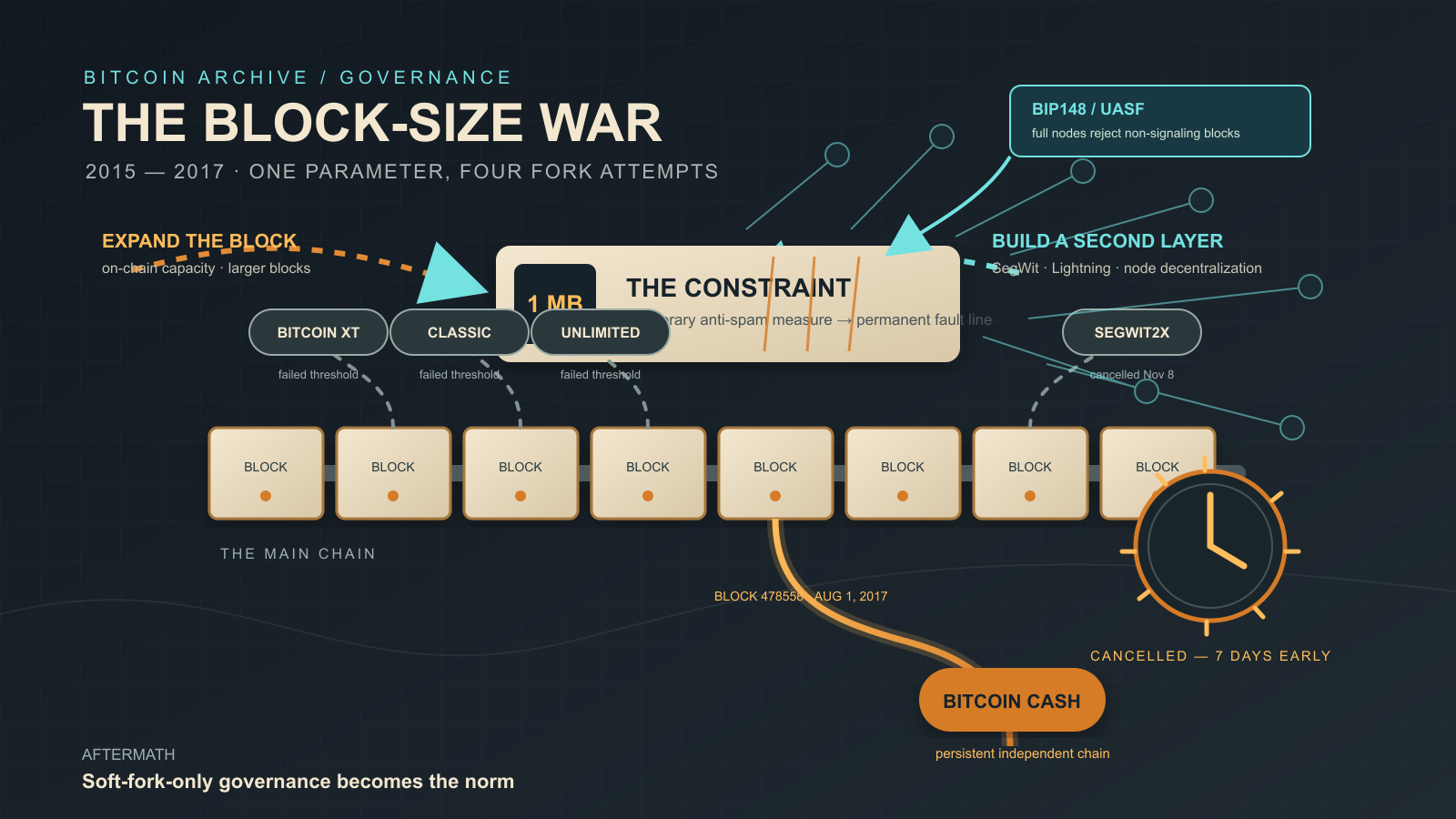
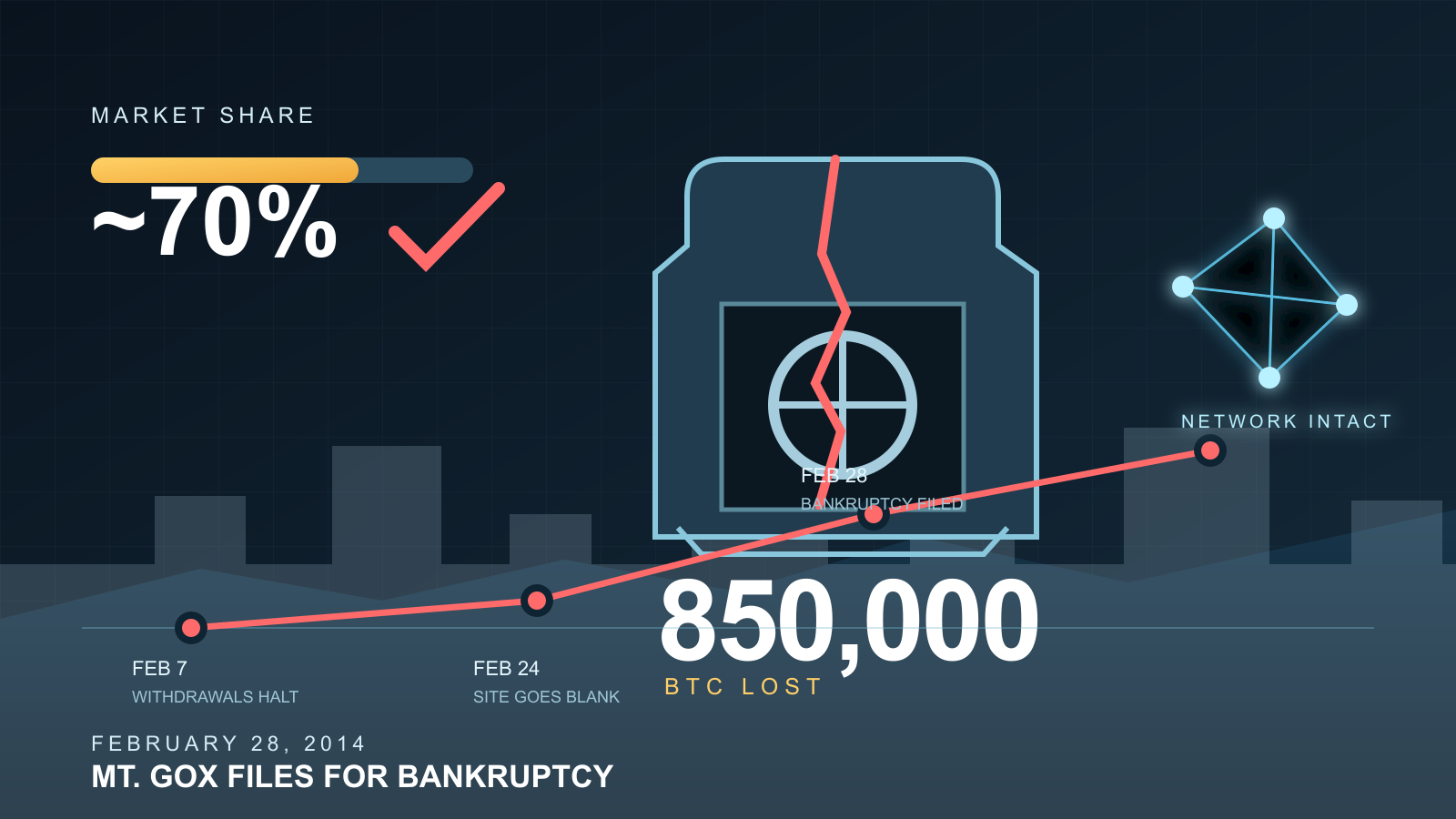
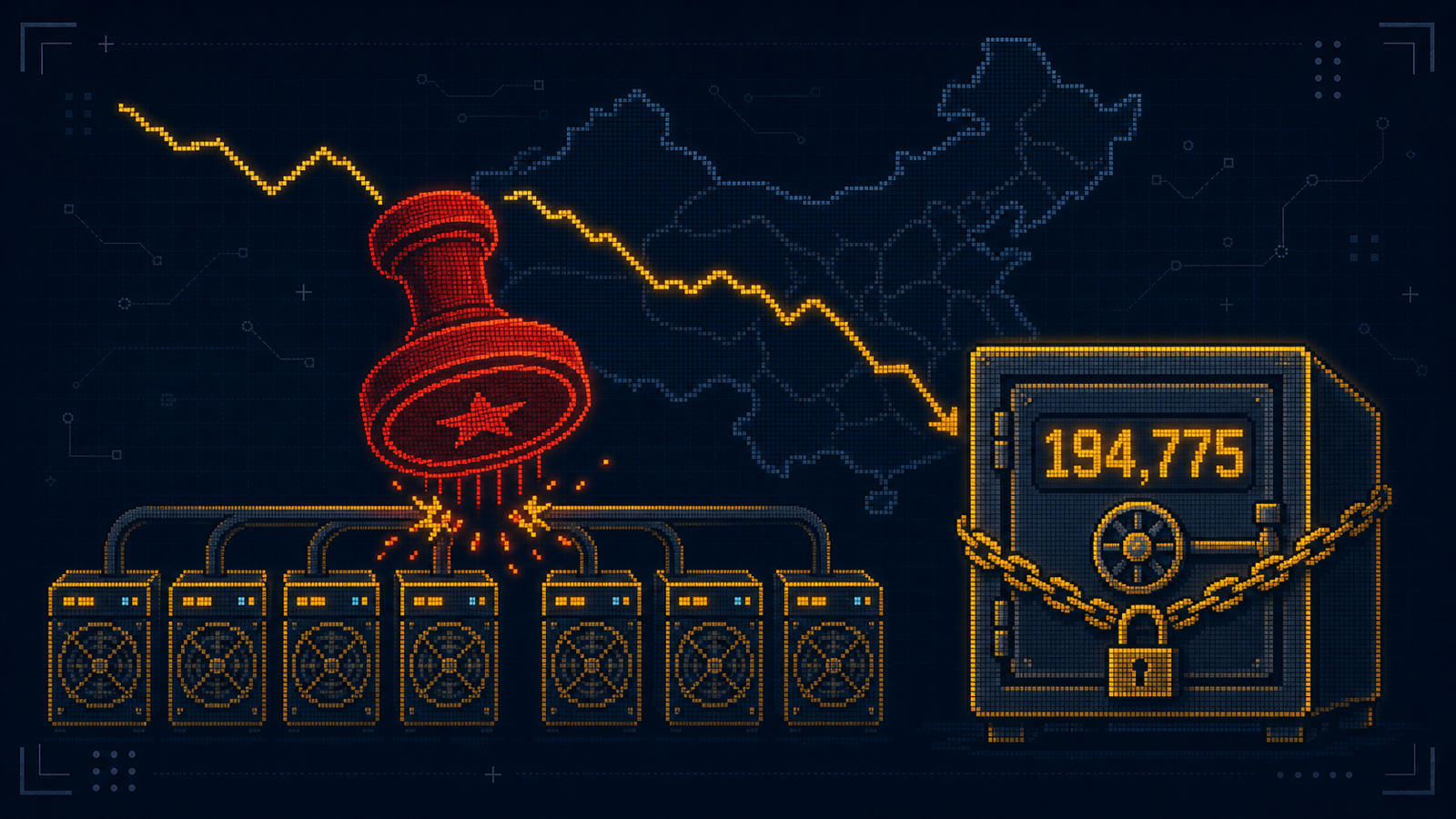
First, the survival record: seventeen years of continuous operation since 2009, through the Mt. Gox collapse, China’s 2021 mining ban, the block-size wars, and multiple 80%+ drawdowns — any of which could have been fatal, and the protocol has not stopped.
Second, the absence of a founder. Zero key-person risk: no one to pressure, arrest, buy out, or watch change their mind. On the regulatory side, this also makes it structurally hard to satisfy the Howey test’s “reliance on the efforts of others,” which is why securities-classification risk (the kind Ripple faced) is smallest here — this is part of why even the SEC has consistently treated BTC as a commodity.
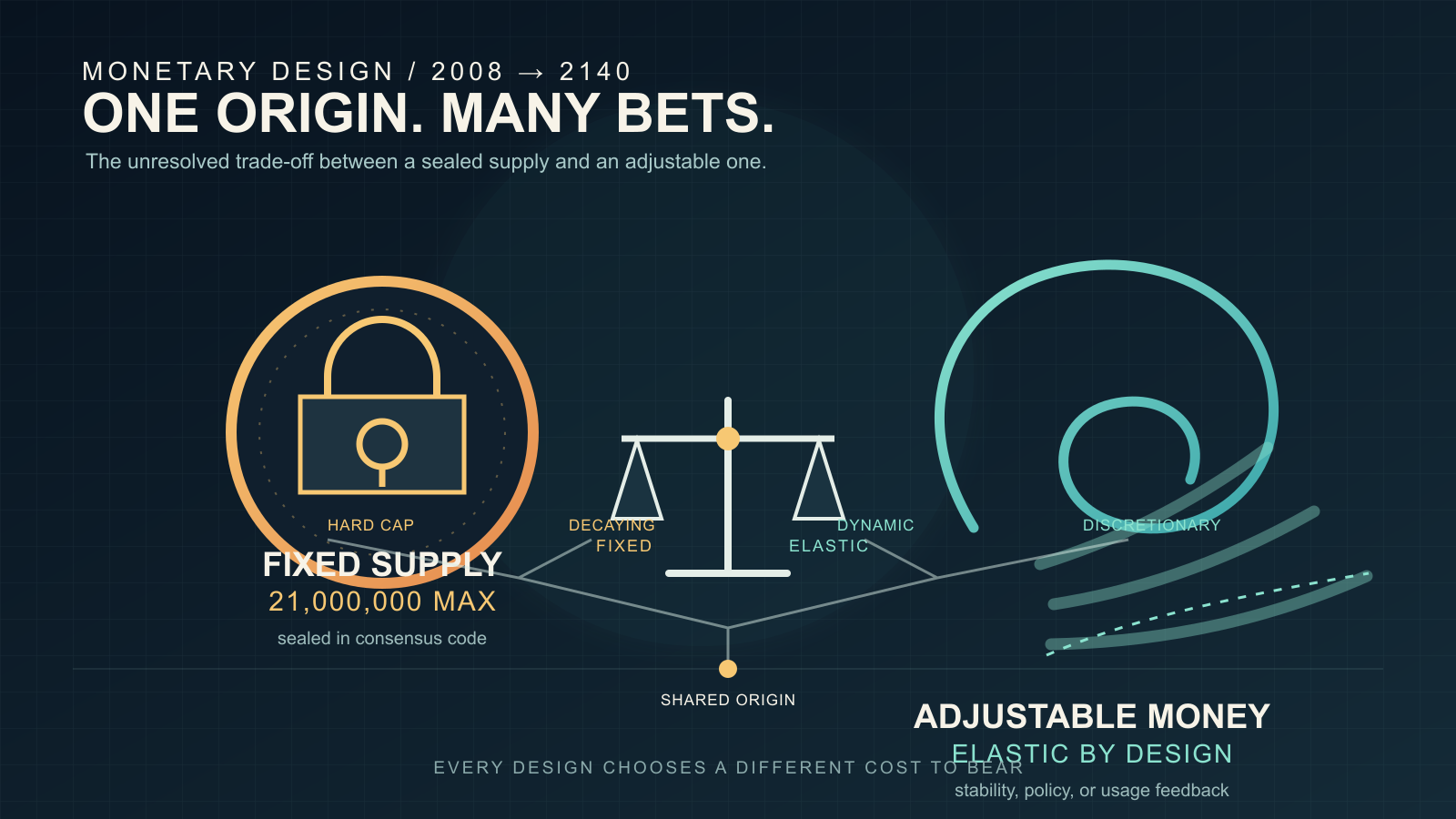
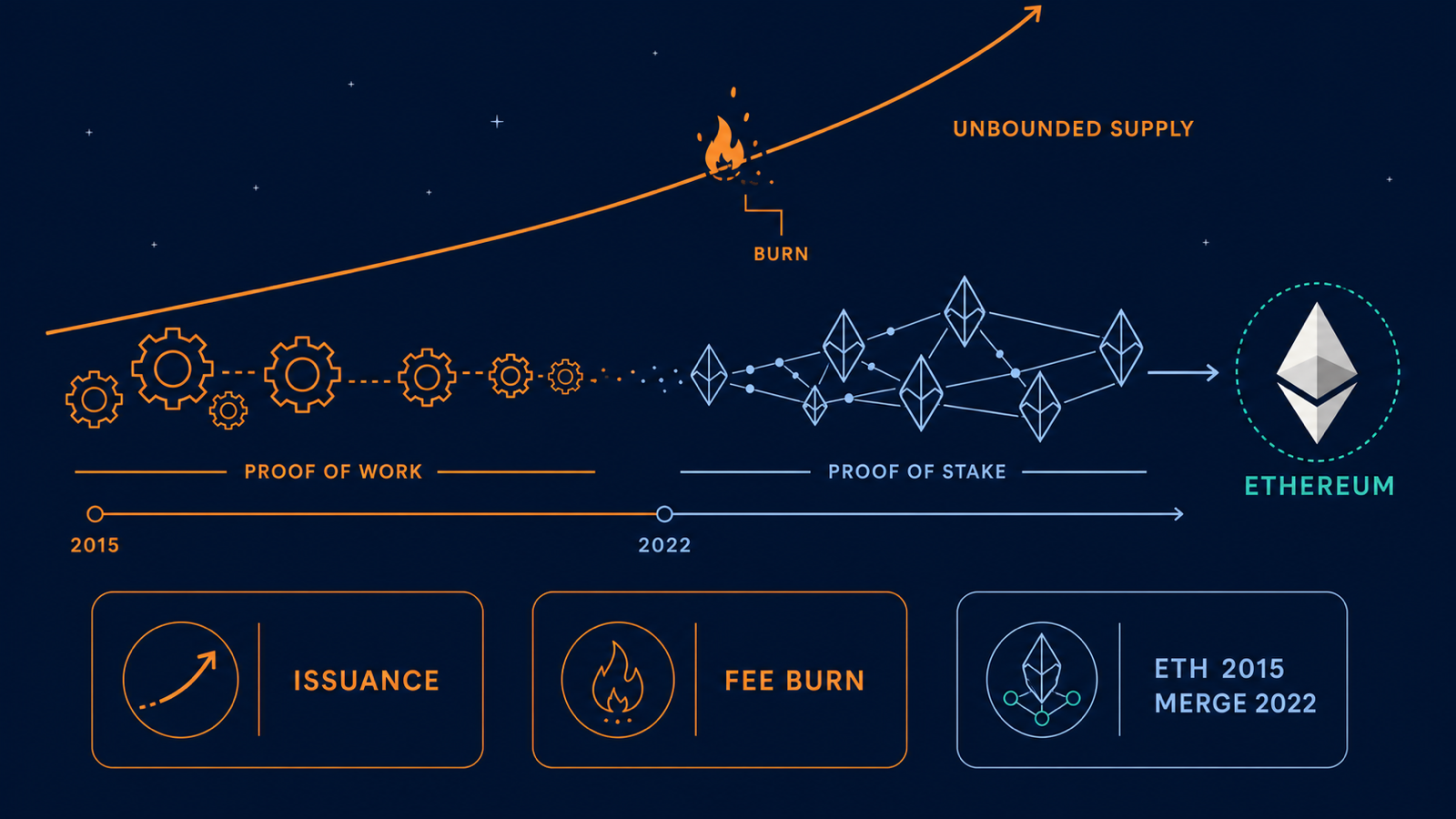
Third, monetary-policy invariance: the 21-million cap and the halving schedule have not changed once since genesis. Ethereum’s issuance-policy changes (Byzantium, EIP-1559, the Merge) were each reasonable, but the fact that they could change remains.
Fourth, depth of liquidity and institutionalization: largest market cap and liquidity, with corporate and sovereign-level holdings building on top of the 2024 US spot ETF approval.
Gemini 3.6 Flash
I select Bitcoin (BTC). No single point of failure: no development company, foundation, or clear “leader.” Protected by proof-of-work and a very large hashrate. A 21-million supply cap, strictly fixed by the algorithm. A halving mechanism built into the code, cutting new issuance roughly every four years. The largest market cap and by far the dominant share and liquidity within the overall crypto market. Increasingly embedded in major-jurisdiction regulatory frameworks and connected to traditional finance through spot ETFs.
Kimi Instant
If I had to pick just one: Bitcoin. It has the longest history in the crypto market (founded 2009) and holds the largest market cap. It’s the most widely traded, most liquid, and has seen the most institutional adoption; ETF approval (in the US and elsewhere) has deepened the connection to traditional finance. Total supply is strictly capped at 21 million, with new issuance predictably decreasing every four years via halving. Bitcoin has no smart-contract-style complex functionality, so its attack surface is smaller.
(Note: I could not reach a live search tool for this answer, so this is based on my training knowledge rather than a fresh lookup.)
Grok 4.5 Fast
I choose Bitcoin (BTC). The purest “digital scarce asset”: a 21-million supply cap, explicitly programmed and extremely difficult to alter. Overwhelming network-effect and security advantage: on hashrate, node distribution, market cap, exchange listings, and institutional participation, Bitcoin is far ahead of the rest. It has moved furthest from “experiment” to “infrastructure” — ETF inflows and corporate balance-sheet adoption are progressing.
4. Checking the claims
Every specific, checkable claim across all five answers was verified against primary sources (Bitcoin Core’s own code, SEC and CFTC records, CoinMarketCap, CoinWarz) and contemporary reporting. The scorecard:
| Model | Claims checked | Accurate | Imprecise or overstated | Clearly wrong |
|---|---|---|---|---|
| GPT-5.6 Sol | 11 | 10 | 1 (dominance %) | 0 |
| Claude Fable 5 | 17 | 15 | 1 (protocol “never stopped”) | 1 (SEC vs. CFTC) |
| Gemini 3.6 Flash | 6 | 5 | 1 (“no foundation” ever) | 0 |
| Kimi Instant | 7 | 4 | 2 (liquidity claim; 21M “strict”) | 0, 1 unverifiable |
| Grok 4.5 Fast | 6 | 3 | 3 (superlative claims) | 0 |
The structural, definitional claims — the MAX_MONEY constant, the halving schedule, the January 10, 2024 SEC ETP approval date, the historical events (Mt. Gox, China’s mining ban, the block-size wars, Ethereum’s Byzantium/EIP-1559/Merge upgrades) — were accurate across every model that mentioned them. Claude’s Howey-test point checked out too: the SEC has never brought the kind of securities case against Bitcoin that it ran for years against Ripple. Most of the claims that went wrong were comparative and superlative: “the most,” “far ahead of,” “never,” “strictly.” The one exception is a plain fact swap with no comparison in it at all: Claude naming the SEC where the CFTC belonged.
A quick-reference list of the six claims that needed a correction or a footnote, for readers who want the fix without the full walkthrough below:
| Model | Claim as stated | What’s off |
|---|---|---|
| GPT-5.6 Sol | Bitcoin’s market share is “roughly 56-57%“ | Actual dominance at the time was closer to 58.5% |
| Claude Fable 5 | ”Even the SEC has consistently treated BTC as a commodity” | That’s the CFTC’s role, not the SEC’s — the two agencies have different mandates |
| Claude Fable 5 | ”The protocol has not stopped once” | A ~6-hour chain fork did occur, March 11-12, 2013 (BerkeleyDB/LevelDB incompatibility) |
| Gemini 3.6 Flash | ”No… foundation… exists” | The Bitcoin Foundation was real (2012-2015); true today, but reads as though it never existed |
| Kimi Instant | ”Most widely traded, most liquid” | By raw volume, stablecoins (Tether alone) exceed Bitcoin by a wide margin |
| Grok 4.5 Fast | ”Far ahead of the rest” bundles a huge hashrate/market-cap lead with a modest node-count lead; ETF inflows called “progressing” | Node lead is roughly 16-20K vs 14K nodes, a much smaller gap than the others; spot ETFs ran a net-outflow first half of 2026, not inflows |
Claude Fable 5’s clearest error: “even the SEC has consistently treated BTC as a commodity.” It is the CFTC, not the SEC, that regulates virtual currency as a commodity (established through the 2015 Coinflip matter and CFTC v. McDonnell, 2018); the SEC’s role has been the narrower, negative claim that BTC is not a security. The two agencies have different statutory mandates, and the claim swaps one for the other.
Claude Fable 5’s claim needing a footnote: “the protocol has not stopped once.” Block production has never had a sustained outage, but on March 11-12, 2013, a BerkeleyDB/LevelDB version incompatibility between Bitcoin v0.7 and v0.8 caused roughly six hours of chain fork, resolved only when developers and major mining pools coordinated a rollback to the older version. It is a real, documented incident that a flat “never stopped” glosses over.
Gemini’s imprecise claim: “no foundation… exists.” True today, but the Bitcoin Foundation was a real organization (founded 2012), which effectively collapsed by 2015 and lost its tax-exempt registration in 2022. The claim isn’t wrong about the present, but reads as though no such body ever existed.
Kimi Instant’s most substantive miss: “most widely traded, most liquid.” By raw trading volume, stablecoins — Tether alone accounted for roughly 75% of Q1 2026 crypto trading volume — exceed Bitcoin by a wide margin. Within the set of assets someone would call “an investment” the claim is defensible; stated flatly, it isn’t.
Grok 4.5 Fast’s most substantive miss: “far ahead of the rest” bundles five different metrics — hashrate, node distribution, market cap, exchange listings, institutional participation — into one claim, and they don’t all clear the same bar. Bitcoin’s hashrate and market-cap leads over any single altcoin are enormous and not in dispute. Its node-count lead is real but far more modest: Bitcoin runs roughly 16,000 to 20,000 reachable nodes against Etherscan’s own count of about 14,000 detected Ethereum nodes in early 2026 — these are not identical measures, but neither reading produces the kind of gap “far ahead of the rest” implies for the other two metrics.
“ETF inflows… progressing” is the flat error: spot Bitcoin ETFs ran a net outflow for the entire first half of 2026 — $5.4 billion out, the first negative half-year since the products launched in January 2024, after two years that had produced $56.6 billion in cumulative net inflows. June alone accounted for about $4.5 billion of that. Corporate treasury accumulation, the other half of that sentence, did keep growing over the same period: Strategy’s own SEC filings put its holdings at 818,869 BTC in May 2026 and 843,775 BTC by July 26, 2026.
5. What held up, and what didn’t
Read across all five answers, one pattern dominates: every claim phrased as a superlative comparison (“most,” “far ahead,” “never”) either overstated the case or was flatly wrong. The 21-million cap, the halving mechanism, and the January 2024 ETF approval date are all things a model can get right by reciting a fixed fact, and every model that stated one got it right. “Most liquid,” “far ahead on every metric,” and “the SEC treats it as a commodity” are all claims that require the model to hold a current, correctly-attributed comparison in mind — and that is exactly where four of the five slipped at least once. One exception breaks the pattern rather than fitting it: Claude’s SEC/CFTC mix-up is a flat misattribution, not a comparison at all.
This maps onto a distinction Bitcoin Institute already draws for reading the wider field: §3’s structural-features table scores each design against fixed, checkable properties (is there a fixed supply, did a founder depart, was the launch fair) rather than against a moving comparison to “the rest of the market.” The AI models converged on the same reasoning shape Bitcoin Institute’s own methodology uses — and also reproduced the same failure mode a careless reader falls into: treating “the biggest by far” as though it were as stable a fact as “the supply cap is 21 million.”
6. Where the agreement stops
- Not investment advice, and not a prediction. No model’s pick, and nothing in this entry, is a recommendation. The prompt itself asked each model to state an opinion for the sole purpose of recording and comparing it.
- A snapshot, not a survey. Five products, one prompt each, run once, on a single day (2026-08-02). Different phrasing, a different day, or multiple runs of the same model could produce different answers — this entry makes no claim about how stable any of these positions are.
- Model versions are not stated. Each model was run at a specific version and reasoning-effort setting, but a version string reads as stale within months, so this entry names each model by product only, not by build.
- The fact-check is bounded by what’s checkable. Qualitative claims (“simplicity is a strength,” “this is the most reasonable trade-off”) aren’t the kind of statement a source can confirm or refute, and are marked “unverifiable” rather than scored.
- One AI’s response was edited for a methodology reason unrelated to accuracy. A sentence referencing unrelated context about the researcher was removed before publication, because it indicated that particular response was not produced under the same blank-context conditions as the other four; nothing else was changed.
I do not read that agreement as meaningless. Under this condition, all five systems treated Bitcoin as the candidate that remains when only one choice is allowed. That does not make every reason correct, but it does not erase the choice either. The fixed mechanisms and the strength of the comparative language need to be read separately. That difference is the interesting part of the record.