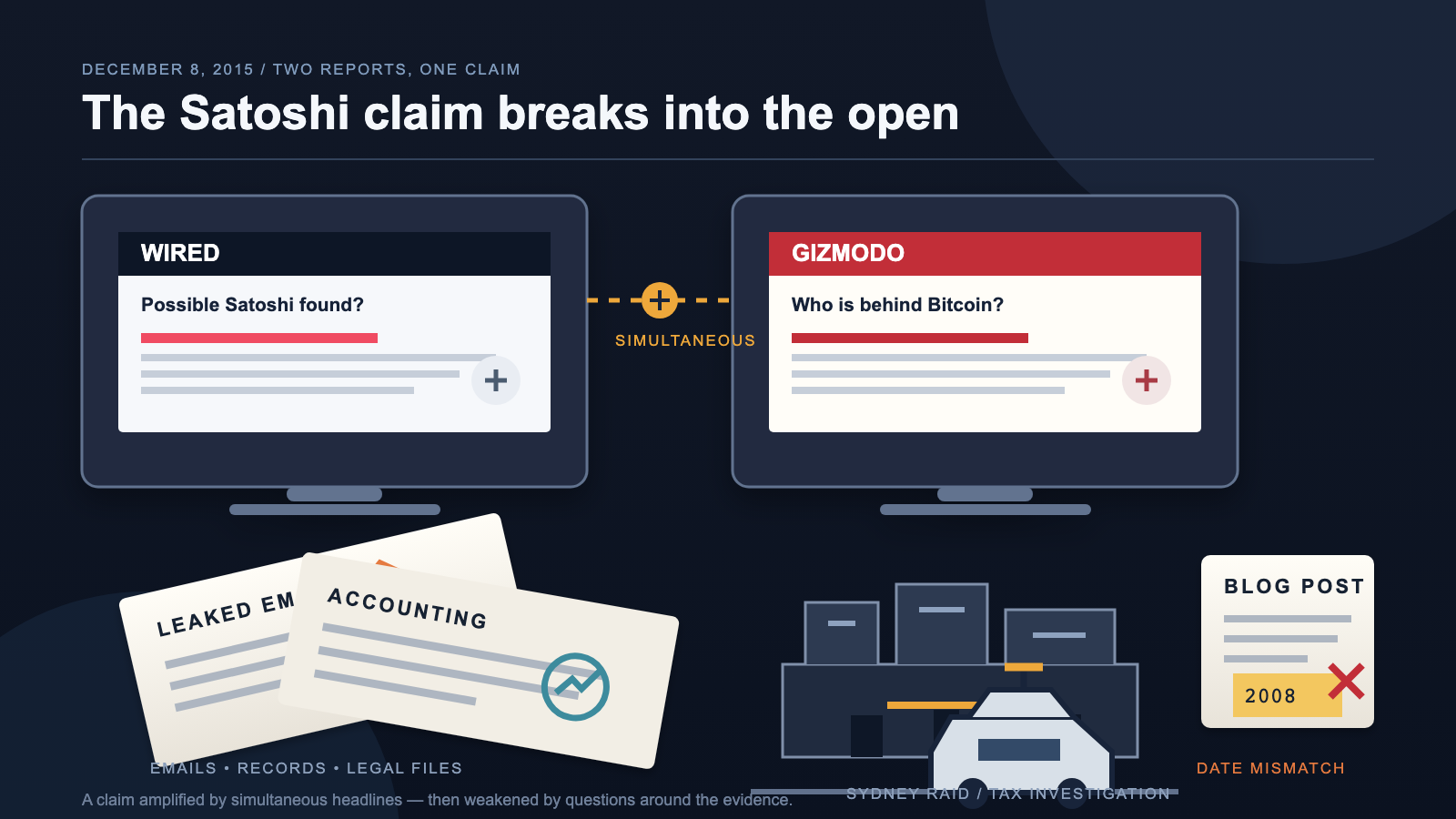
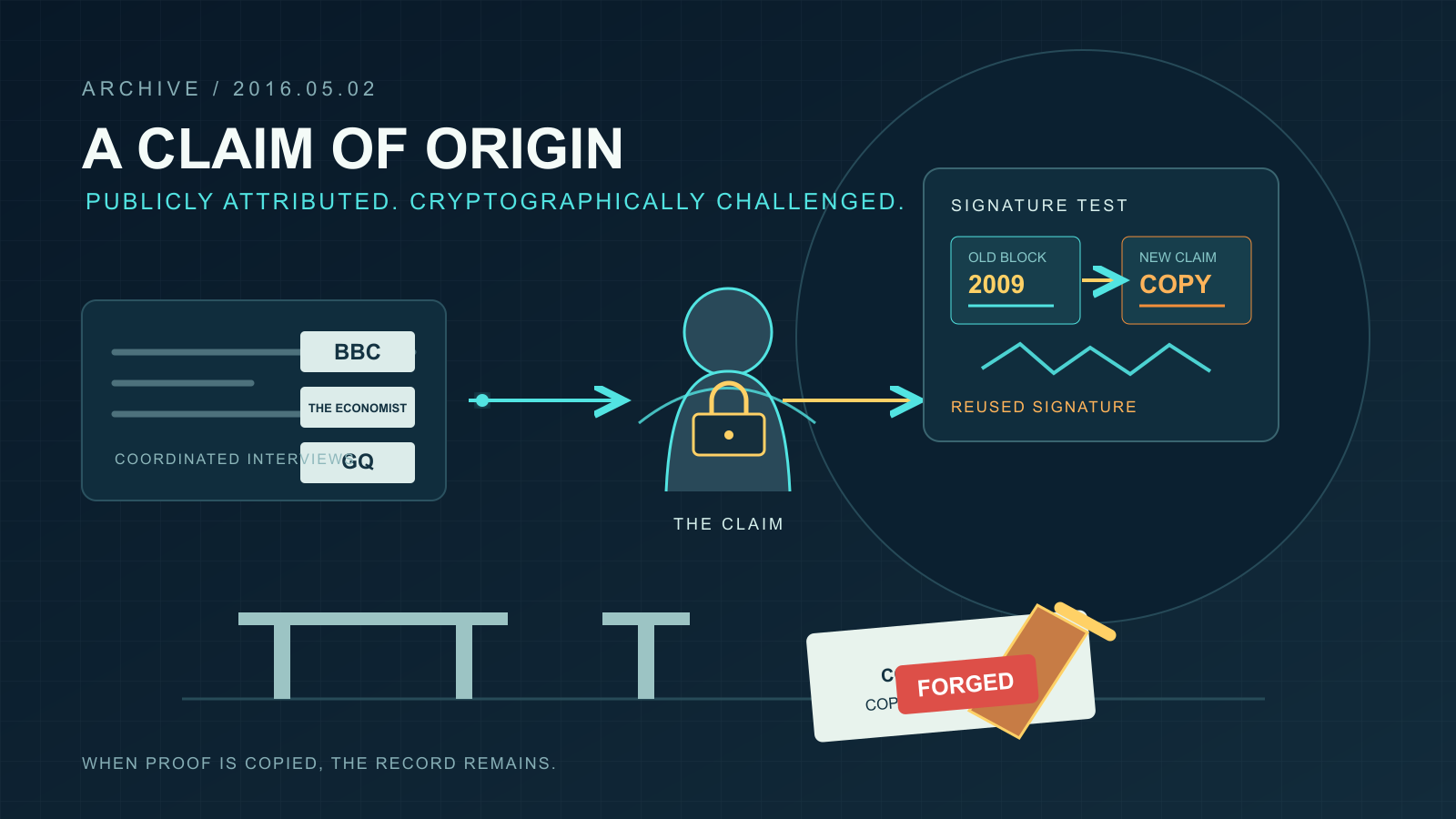
On May 2, 2016, Australian businessman Craig Wright publicly claimed to be Satoshi Nakamoto in coordinated interviews with the BBC, The Economist, and GQ magazine.
Wright published a blog post on his website (drcraigwright.net) offering what he said was cryptographic proof: he digitally signed a message using encryption keys associated with early Bitcoin blocks from 2009.
The BBC reported:
“Mr Wright has provided technical proof to back up his claim using coins known to be owned by Bitcoin’s creator.”
The Economist took a more skeptical stance:
“Our conclusion is that he could well be Mr Nakamoto, but that nagging questions remain.”
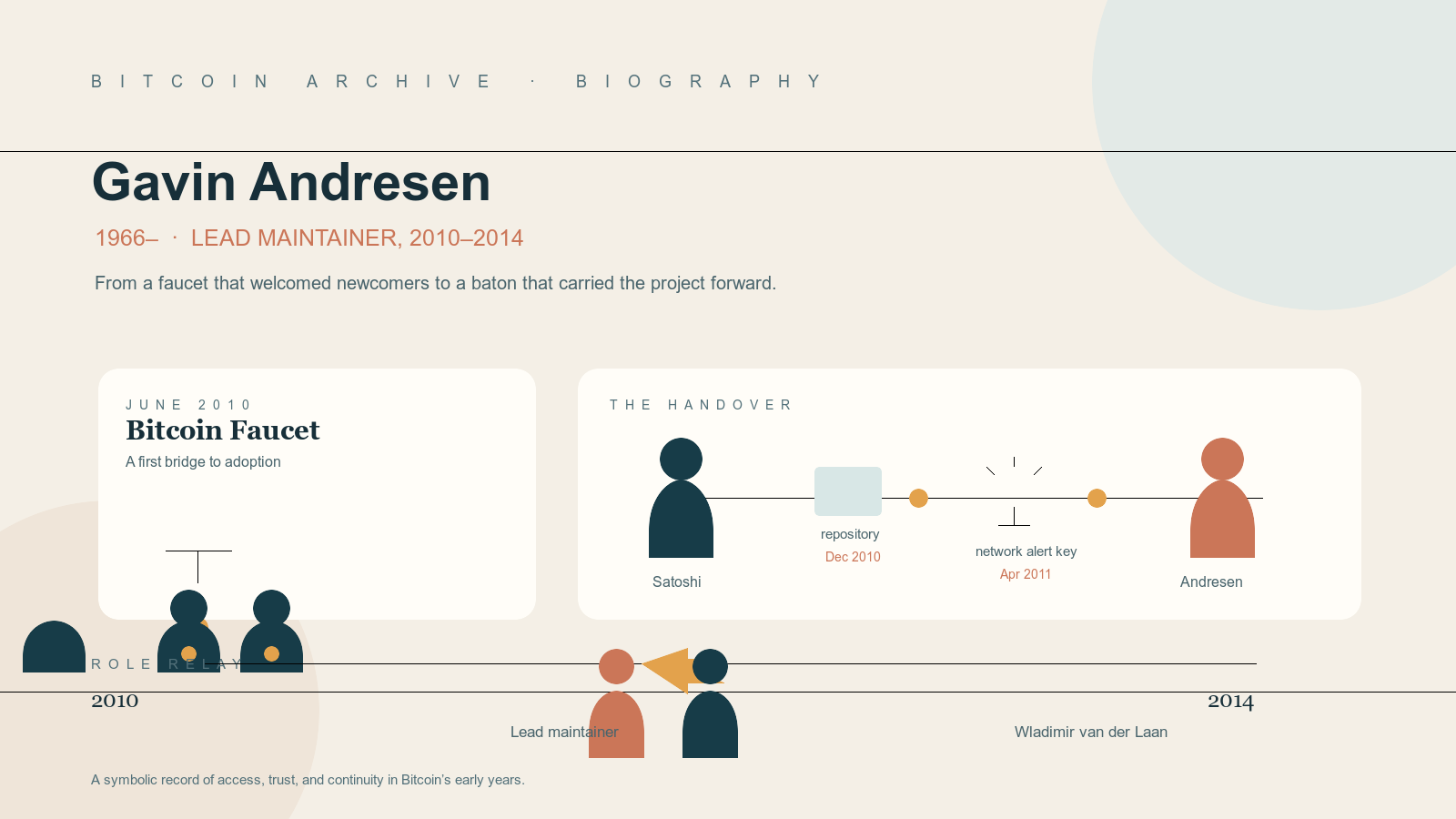
Gavin Andresen initially stated on his blog that he believed Wright was Satoshi after a private demonstration in London, lending significant credibility to the claim.
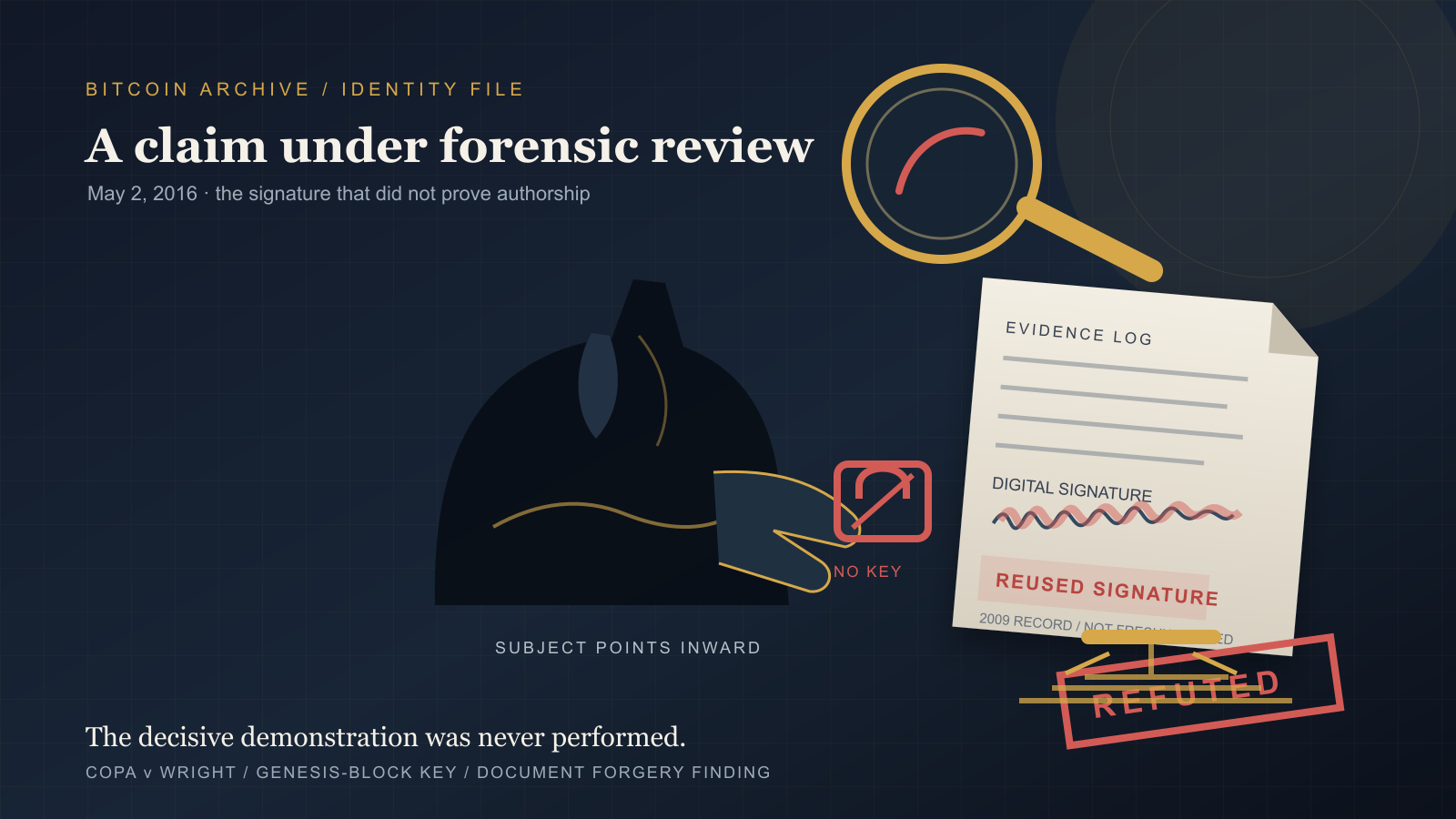
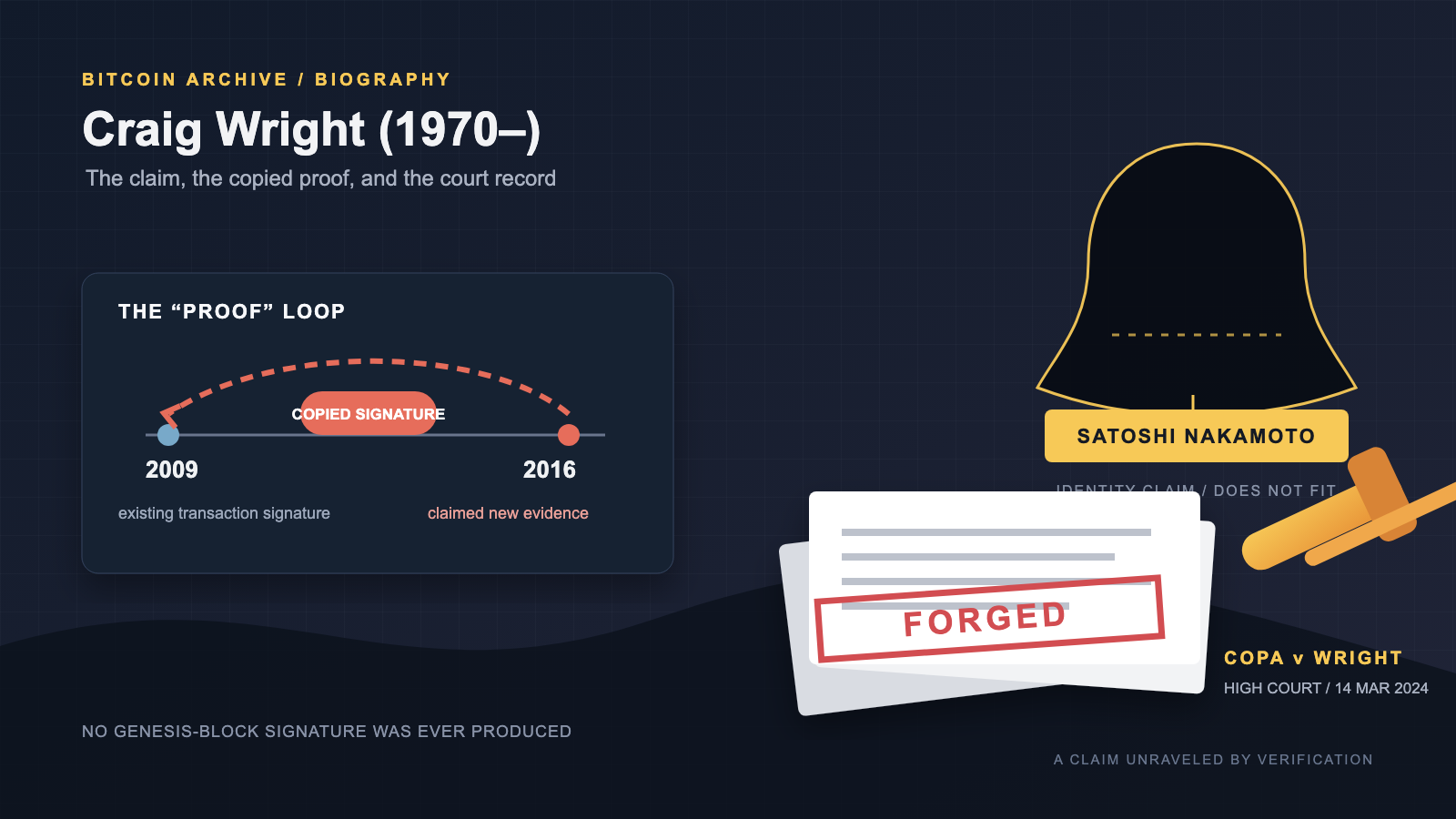
However, the cryptographic “proof” published on Wright’s blog was quickly debunked by the Bitcoin community. Security researcher Dan Kaminsky and others demonstrated that Wright had reused an existing signature from a 2009 Bitcoin transaction rather than producing a new signature with the claimed keys. The blog post proved nothing.
Wright promised to provide further evidence but never did. Three days after the claim, he replaced his site with an apology that opened:
Quote from: Craig Wright on May 05, 2016“I believed that I could do this. I believed that I could put the years of anonymity and hiding behind me. But, as the events of this week unfolded and I prepared to publish the proof of access to the earliest keys, I broke. I do not have the courage. I cannot.”
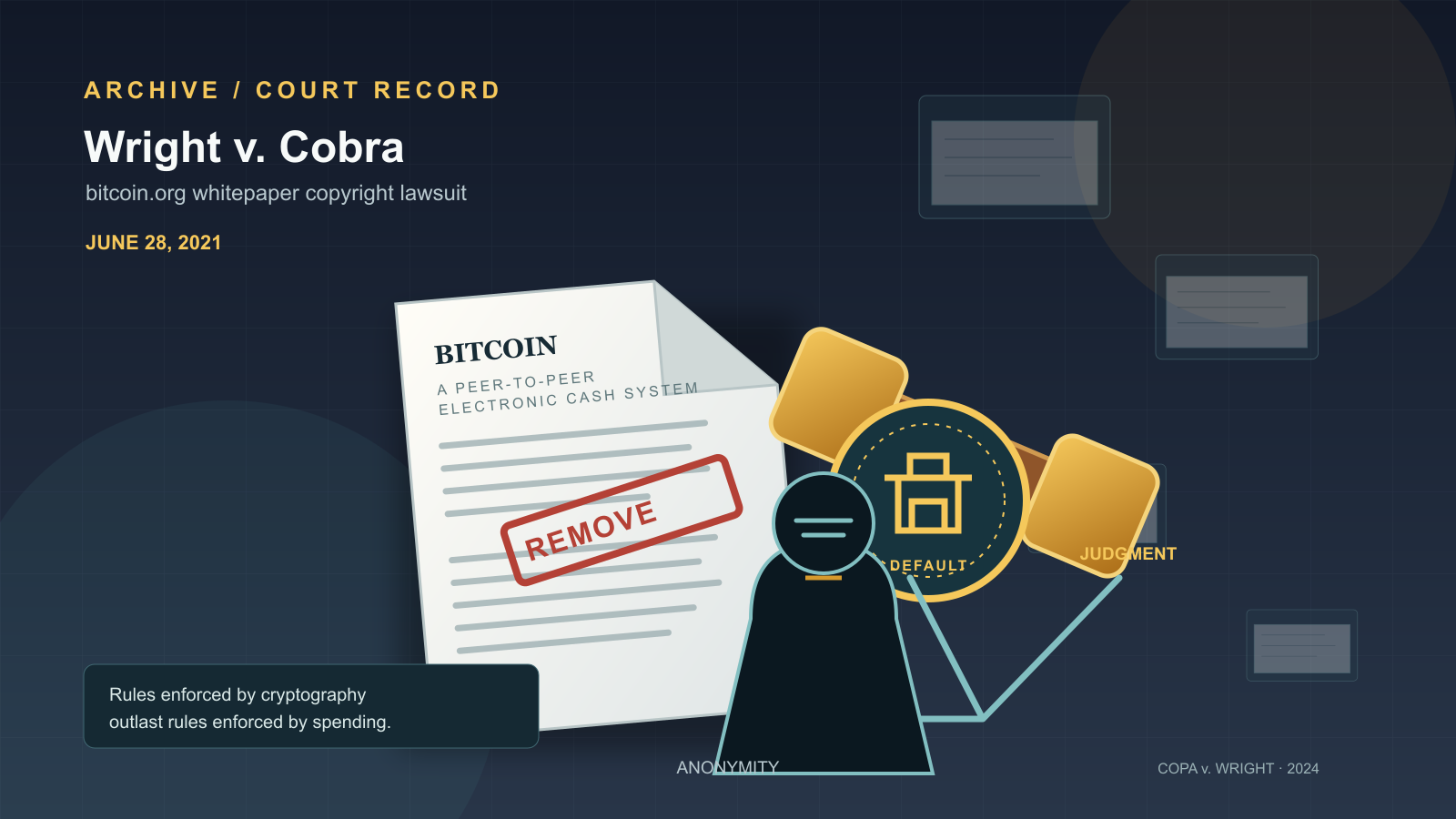
In March 2024, the UK High Court definitively ruled in COPA v. Wright that Craig Wright is not Satoshi Nakamoto, finding that he had “lied to the court extensively and repeatedly” and that documents submitted as evidence were forgeries. The archive’s own weighing of this claim sets the reused signature, the ruling, and the forgery finding against each other in full.