CTransaction::GetHash() and CBlock::GetHash() do not hash the same kind of object. The first serializes a transaction object. The second hashes the memory range from nVersion through nNonce; the transaction vector is outside that range. Its contents enter the header through hashMerkleRoot instead.
That split controls every path that follows. The same serialization framework serves network messages, block files, object identifiers, and signature digests, but each caller selects a context or transforms the object first. “Serialized transaction” is not one universal byte sequence in v0.1.
1. One serializer, three primary contexts
src/serialize.h declares three primary actions:
| Context | Role in v0.1 |
|---|---|
SER_NETWORK | Serialize objects carried in peer-to-peer messages. |
SER_DISK | Serialize objects stored in block files and database records. |
SER_GETHASH | Serialize the bytes used as an object or signature-hash input. |
SER_SKIPSIG and SER_BLOCKHEADERONLY are modifiers rather than separate serialization worlds. The IMPLEMENT_SERIALIZE macro expands one field description into three operations: calculate its size, write it, and read it. The stream passes nType and nVersion into that description, so the object can make context-sensitive choices without maintaining separate field lists.
The design is compact, but the consequences are not. A field can be present in a network or disk record and absent from a hash input. The caller’s context is part of the byte-level meaning.
The implementation ranges are fixed in the v0.1 source: src/serialize.h:28–79 carries the stream contexts; src/main.h:193–395 defines transaction fields and hashing; src/main.h:805–884 defines the block header, Merkle root, and block hash; src/script.cpp:692–712, 818–901 handles signature checking and SignatureHash; src/net.h:434–494, 565–675 frames network messages; src/main.h:919–959 frames block-file records; src/db.cpp:186–201 creates the transaction index; and src/util.h:363–390 supplies the hash functions.
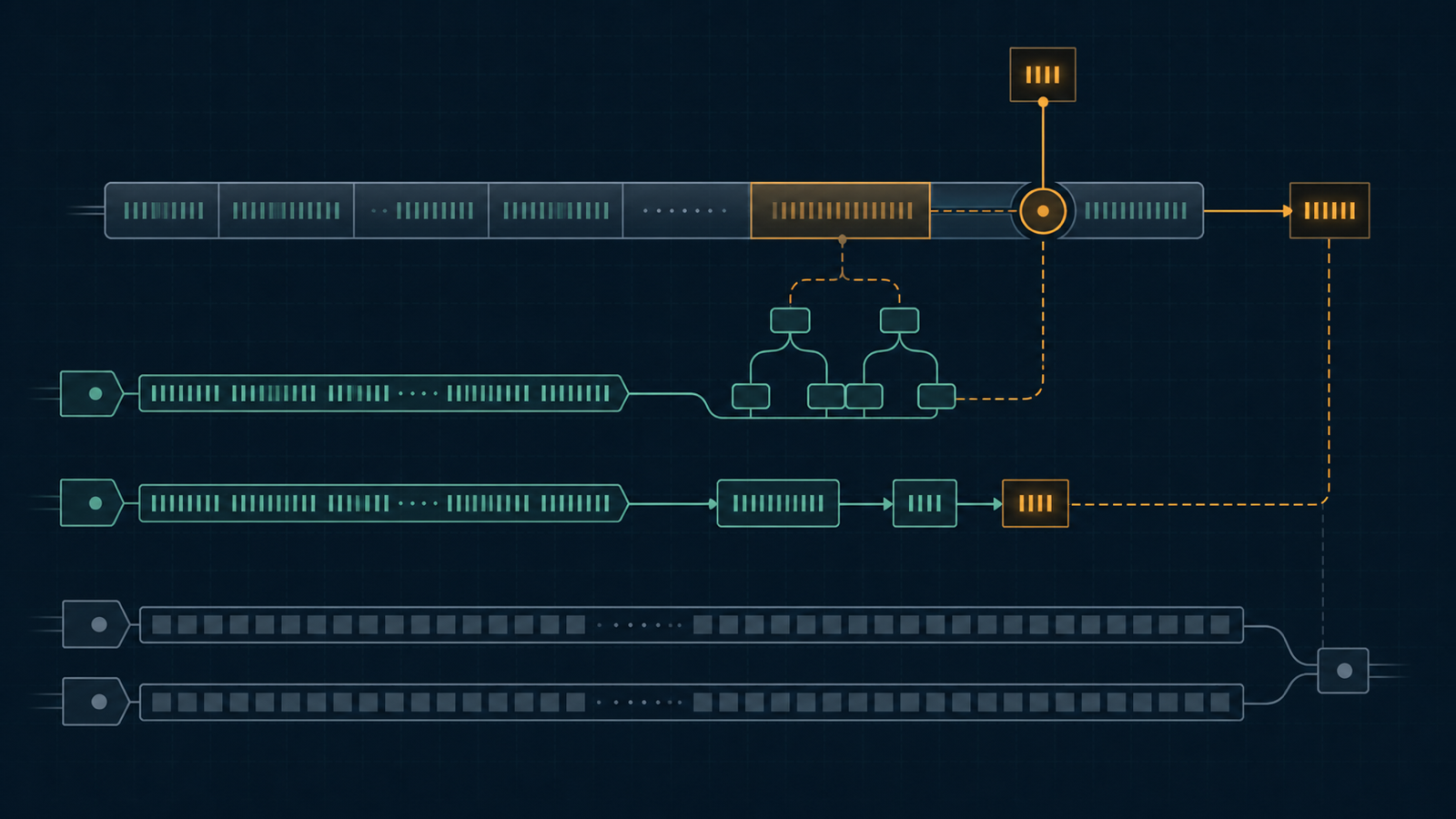
The byte paths divide at the stream type. SER_GETHASH reaches the transaction identifier and signature digest, SER_NETWORK reaches peer payloads, and SER_DISK reaches stored records. The block identifier is the separate header-range path; the Merkle root carries transaction hashes into that header.
2. The transaction hash covers the v0.1 transaction object
CTransaction in src/main.h contains four top-level serialized fields, in order:
nVersionvinvoutnLockTime
Each input contributes its prevout, scriptSig, and nSequence. Each output contributes nValue and scriptPubKey. CTransaction::GetHash() calls SerializeHash(*this). SerializeHash creates a CDataStream with SER_GETHASH, serializes the object, and applies the source’s double-SHA-256 Hash function.
There is no witness field in v0.1 and no separate txid/wtxid path. Because the v0.1 input serializer includes scriptSig and does not exclude it for SER_GETHASH, the transaction hash covers the signature bytes as they exist in the transaction object. That is a statement about this implementation, not a description of every later Bitcoin transaction identifier.
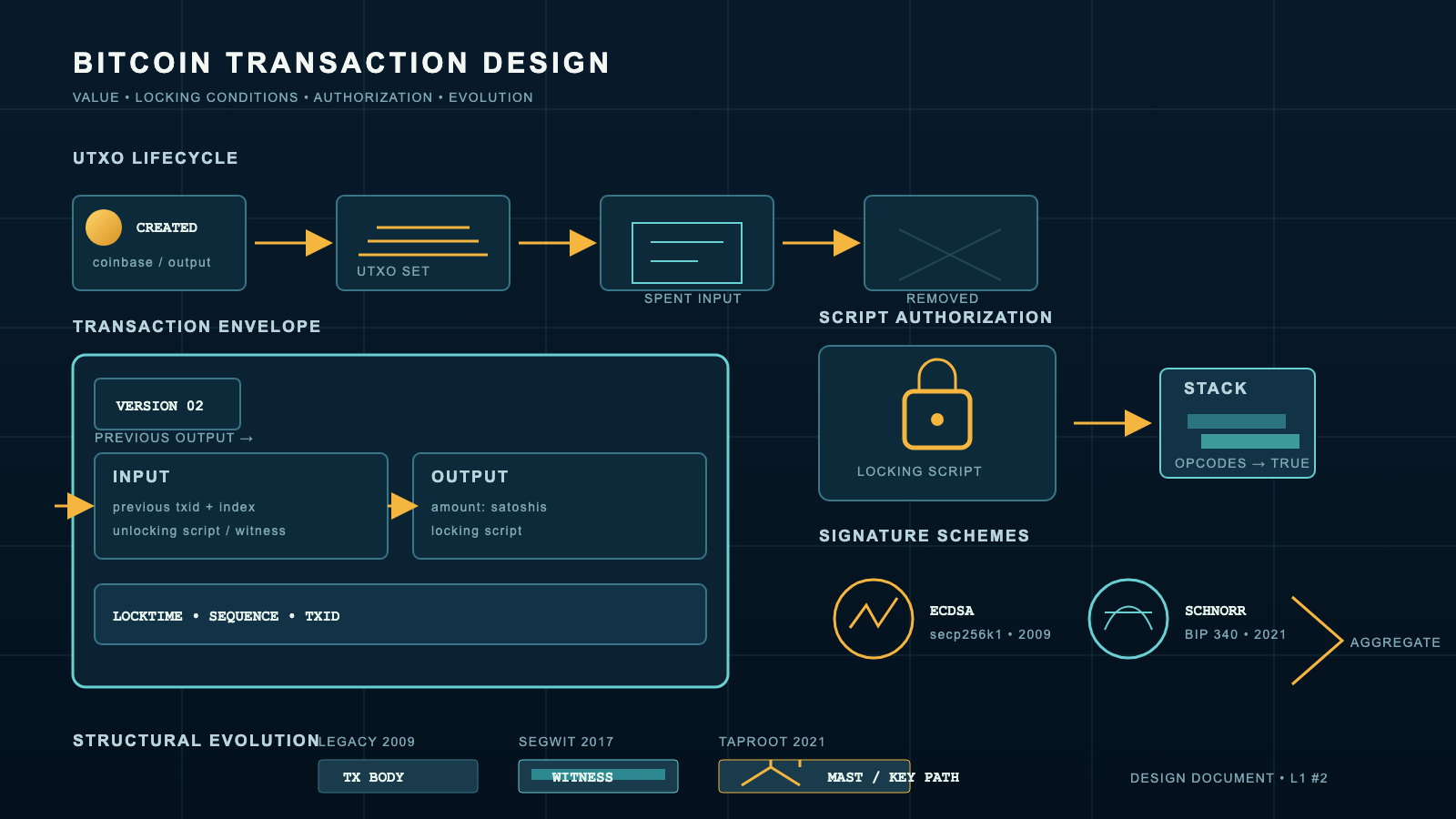
The transaction design explains what those inputs and outputs mean as a payment system. The narrower question is which bytes become the object’s identifier.
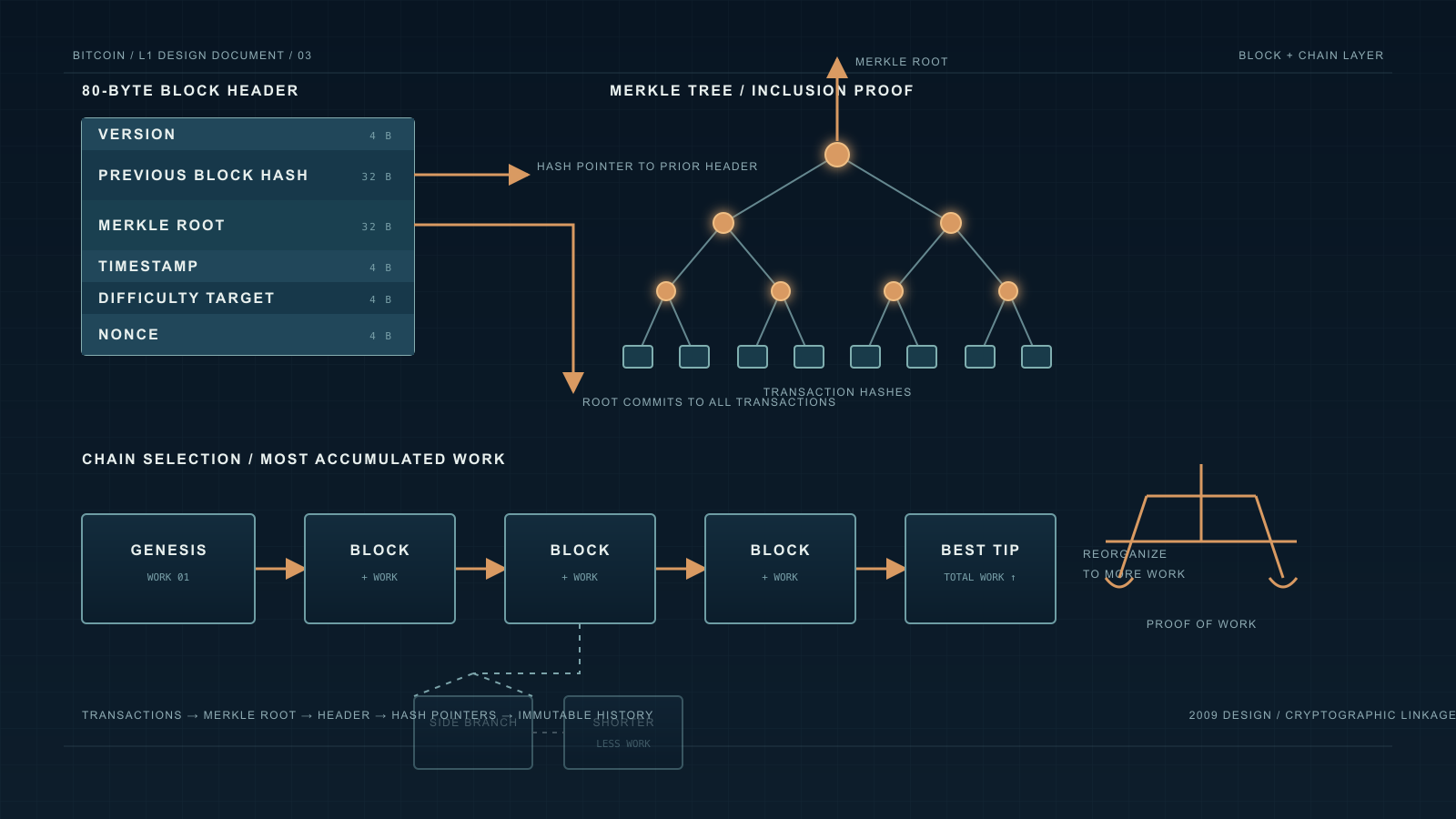
3. The block hash stops at the header
CBlock declares its header first:
nVersion, hashPrevBlock, hashMerkleRoot, nTime, nBits, and nNonce.
The vtx transaction vector follows as network and disk data. Its serializer writes vtx unless nType contains SER_GETHASH or SER_BLOCKHEADERONLY. CBlock::GetHash() calls Hash(BEGIN(nVersion), END(nNonce)), so the direct hash input is the header range, not the full block object.
BuildMerkleTree() supplies the missing connection. It starts with tx.GetHash() for each transaction, combines the hashes pairwise, and returns the final root. Changing a transaction changes hashMerkleRoot; changing that header field changes the block hash. The transaction list is therefore committed indirectly, through the header, rather than by being included in the block-hash byte range.
The block and chain design follows that root into chain linking and proof of work. Earlier in the path, the Merkle root is the boundary between transaction data and the block identifier.
4. A signature digest is a transformed transaction
OP_CHECKSIG does not ask for txTo.GetHash() directly. In src/script.cpp, the interpreter takes the script from the most recent OP_CODESEPARATOR, removes the signature being checked, and passes that scriptCode to CheckSig.
SignatureHash then copies the transaction and changes the copy before hashing it:
- it clears every input’s
scriptSig; - it assigns the selected
scriptCodeto the current input; SIGHASH_NONEremoves every output and zeroes the other input sequences;SIGHASH_SINGLEkeeps outputs through the current input index and nulls the earlier outputs;SIGHASH_ANYONECANPAYkeeps only the current input;- it serializes the altered transaction with
SER_GETHASHand appendsnHashTypebefore applying the double hash.
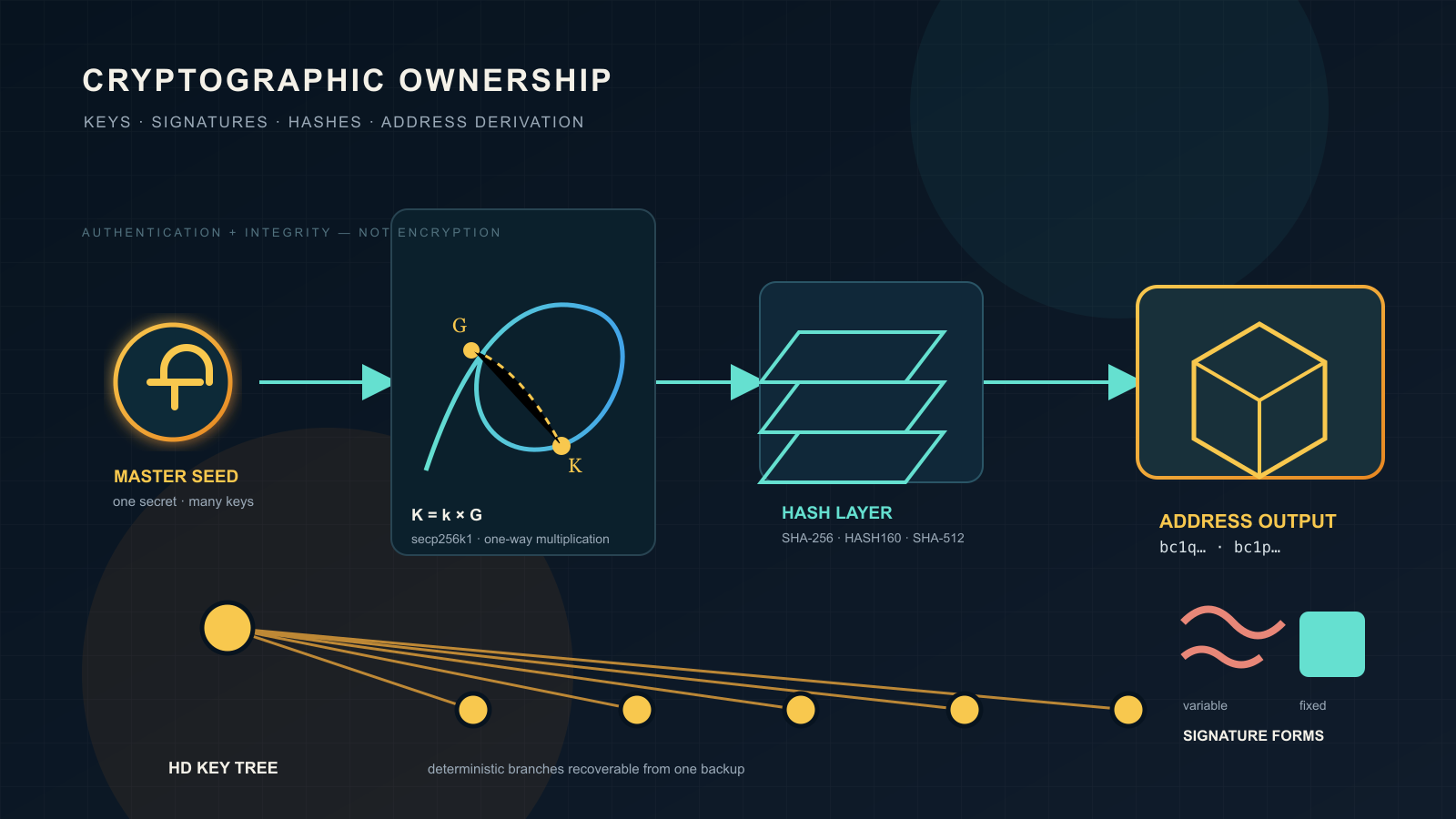
The signature therefore commits to a deliberately constructed view of the transaction. The cryptography design page places this same SignatureHash routine inside the broader ECDSA/Schnorr signing-and-verification picture; this entry stays at the byte level of that one function. Three byte sequences must be kept apart:
- the original serialized transaction used by
CTransaction::GetHash(); - the modified copy used by
SignatureHash; - the network or disk serialization of the transaction object.
Calling all three simply “the transaction bytes” hides the rule that controls signature validity.
5. Network delivery reuses the object serializer
The CNode constructor sets both vSend and vRecv to SER_NETWORK. BeginMessage writes a CMessageHeader into the send stream. PushMessage then serializes its arguments with operator<<, and EndMessage patches the payload size into the header.
The path is:
CNode::PushMessage(command, object)
    → CMessageHeader(command, size)
    → CDataStream(SER_NETWORK) << object
    → serialized payload
The message header is transport framing. It is not part of CTransaction::GetHash() or CBlock::GetHash(). A transaction can use the same object serializer for network delivery and for other paths while its identifier remains independent of the message command and peer-specific framing.
6. Disk storage adds framing and position
CBlock::WriteToDisk obtains a block file, optionally sets SER_BLOCKHEADERONLY, calculates the serialized size, writes the network magic and size prefix, and then writes the block. ReadFromDisk reverses that operation and checks the header hash after deserialization. The file record wraps the object; it does not create a second block identifier. The storage-design page traces this same magic-number-plus-size framing forward to the present-day blk*.dat format — the v0.1 origin of a structure that has not changed.
The transaction database uses the same distinction. CTxDB::AddTxIndex calculates tx.GetHash() as the key, then stores a CTxIndex containing the disk position and output count:
transaction object
    → CTransaction::GetHash()
    → Berkeley DB key: ("tx", transaction hash)
    → CTxIndex: disk position + output count
    → serialized transaction in the block file
The hash identifies the transaction. The index tells the node where to recover its serialized bytes. Those are related operations, not interchangeable ones.
7. The boundaries in one view
| Path | Context or operation | Direct input or result |
|---|---|---|
| Transaction identifier | SerializeHash with SER_GETHASH | Full serialized CTransaction, including v0.1 scriptSig bytes |
| Block identifier | CBlock::GetHash() | Header range from nVersion through nNonce |
| Merkle commitment | BuildMerkleTree() | Pairwise hashes beginning with each tx.GetHash() |
| Signature digest | SignatureHash() | Modified transaction plus nHashType |
| Network payload | CDataStream(SER_NETWORK) | Object payload inside a CMessageHeader |
| Block-file record | SER_DISK, optionally SER_BLOCKHEADERONLY | Framed object bytes and a disk position |
| Transaction index | CTxDB::AddTxIndex() | Database key ("tx", tx.GetHash()) plus CTxIndex |
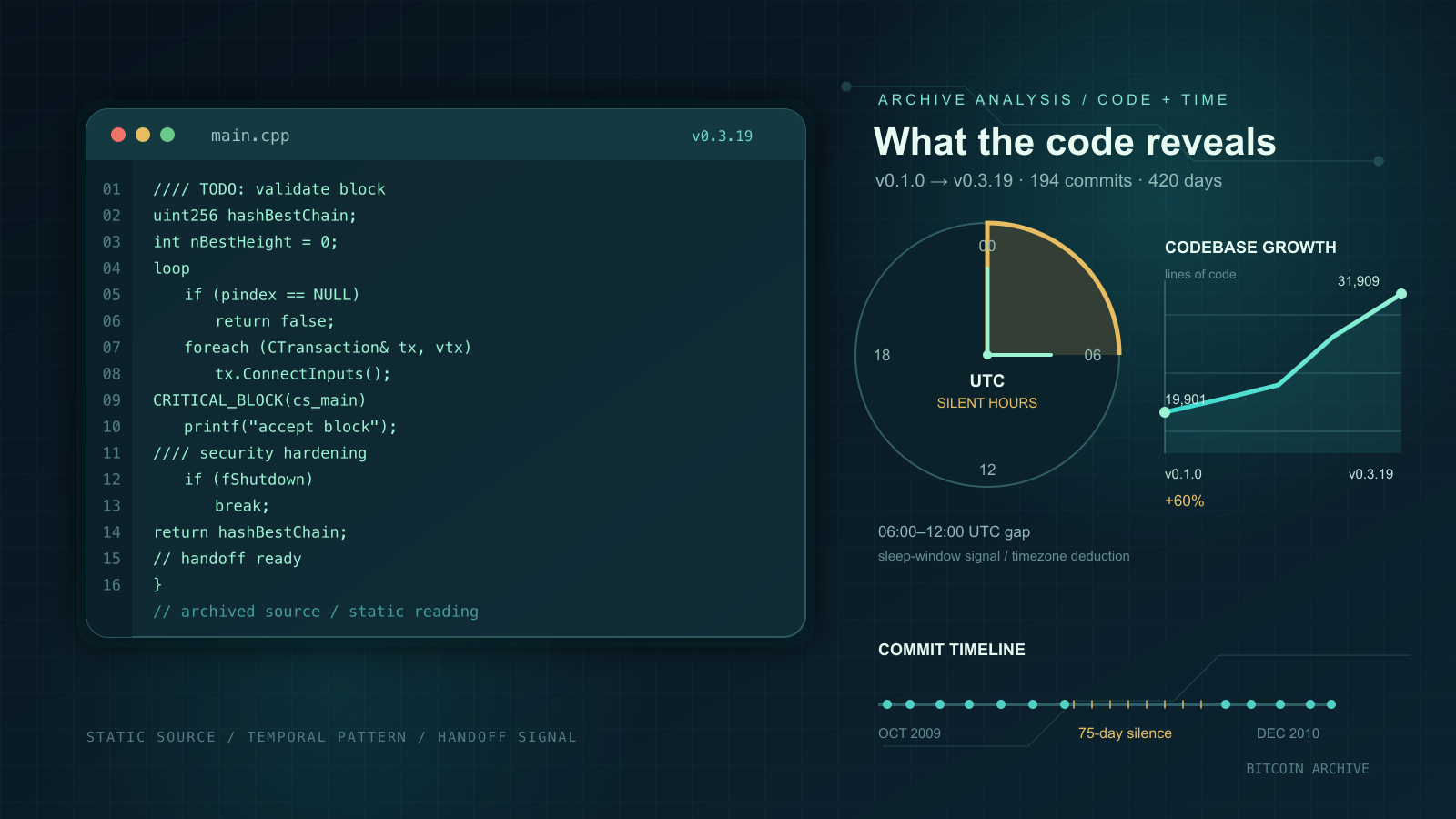
The Satoshi code analysis studies coding style, commit patterns, and codebase evolution. Those questions concern who changed the code and when; the field and call boundaries concern what the early implementation does when it runs.
8. What the v0.1 source establishes
The source leaves four implementation facts unambiguous:
- transaction identity is tied to the complete legacy transaction serialization, including
scriptSig; - block identity is tied to the header, with transaction contents entering through
hashMerkleRoot; - signature verification uses a transformed transaction and a hash-type integer, not the transaction identifier directly;
- network delivery, disk persistence, and database indexing reuse serialization primitives without redefining those identifiers.
These statements belong to the fixed v0.1 source. They do not imply that current Bitcoin Core retains the same source layout or every internal call path. Later changes to transaction formats, witness handling, and chainstate storage need their own source and version boundaries.